
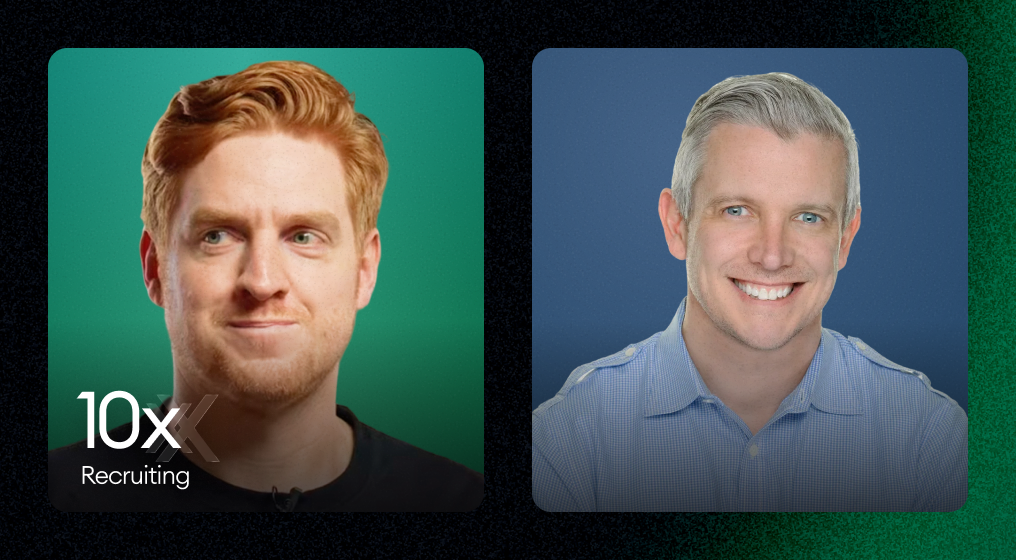
Most interview advice is theory. Rob Stevenson hosts hundreds of long-form interviews on Talk Talent To Me, and the recordings sit there as a free, near-perfect dataset for asking: what does a great interviewer actually do? A few years ago we ran one of his episodes through Metaview to find out. The data was clear: Rob listens more than he talks, asks crisp questions, and barely uses filler words. As an interviewer, he is the standard most hiring managers should be benchmarked against.
That post landed in 2022. What is different now is that the same analysis Metaview ran one episode at a time is something every team can run on every interview that happens inside their hiring funnel. The unlock is not "podcasts have great interviewers". It is that the techniques Rob uses on a podcast are the same techniques that separate a hire-quality interview from a coin-flip interview, and AI capture finally makes them measurable at scale.
This is a refreshed look at what the original Rob Stevenson analysis revealed, what we have learned about good interviewing since, and how the move from "interview ran, no record exists" to "every interview is structured data" changes who gets to coach interviewers and how fast they get better.
Why we ran an interview podcast through Metaview
The original post had a simple premise. Rob Stevenson hosts Talk Talent To Me on Hired. He runs the same conversation many times a month with sharp TA leaders, founders, and operators. If you want a near-controlled experiment for what good interviewing looks like, a podcast host doing 200+ structured interviews a year is closer to that than the average company's hiring loop is. So we ran the episode I appeared on through Metaview's interview intelligence and looked at the metrics that actually correlate with a good interview.
The framing matters because most "how to interview" content is opinion. It is one person's experience, dressed up as universal advice. What we wanted to test was the opposite: take a recognized practitioner, run his behavior through the same scorecard we apply to enterprise interview loops, and see what the data says about why his interviews work.
The earlier posts in this series did the same thing with William Tincup and Hung Lee. Different hosts, same method. The patterns rhymed.
The most important thing as an interviewer is to understand the competencies you want to know about by the time you leave that interview.”
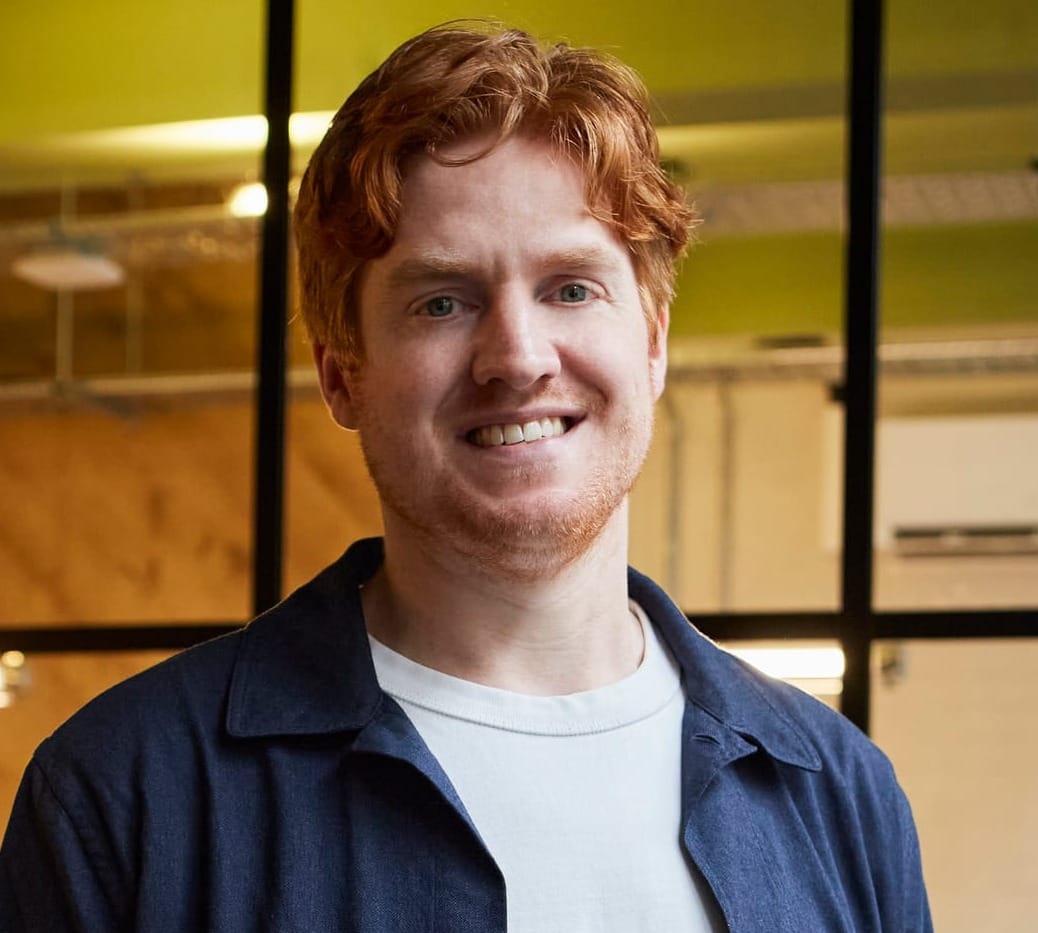
What Rob Stevenson did well on the tape
Three things stood out when we ran the episode through Metaview. The first was talk ratio. Rob gave his guest the majority of the airtime. That sounds obvious for a podcast, but it is exactly the failure mode most hiring managers fall into. They walk into an interview to assess a candidate and end up spending more minutes describing the company than listening to the person.
The second was question quality. Rob's questions were short, specific, and almost always set up a longer answer rather than a yes/no. They were the kind of questions an interviewer asks when they actually want to learn something, not the kind they ask to fill the next 90 seconds. Short, open-ended questions are the single biggest lever on candidate signal, and they are the easiest thing to coach once you can see the data.
The third was filler control. Rob used 111 filler words across the whole conversation, the lowest count we had seen across the podcast hosts we reviewed at the time. Filler is a proxy for preparation. Interviewers who go in cold fill the gaps with "um" and "you know"; interviewers who know what competency they are testing keep the air clean for the candidate.
We are just trying to augment people's ability to run great interviews and make great decisions.”
What the data still flagged for improvement
Rob is a good interviewer. The original post made that clear. But the analysis also surfaced one specific area where even a podcasting pro could push further. The longest interviewee monologue in the episode was about a minute and a half. That is shorter than the depth a strong question can pull out of a guest. The pattern was: ask, get a tight answer, move on. The improvement was: ask, get the answer, then pull on the thread once more.
The deepest signal in any interview lives in the follow-up. Candidates answer the first version of a question with their rehearsed framing. The follow-up ("tell me more about that", "what would you have done differently?", "who else was in the room?") is where the actual story comes out. Great interviewers leave room for the follow-up. Average ones rush to the next bullet on the rubric.
What changes when every interview is captured
The 2022 version of this analysis was a one-off. We ran one podcast episode through Metaview and pulled out four metrics. What is different in 2026 is that the same analysis runs automatically on every interview a team conducts, not just the ones a coach happens to sit in on. Capture is the unlock. Without it, "is this interviewer any good?" is a question no recruiting leader can answer with data.
Before AI capture, interview coaching looked like this: a senior interviewer sat in on a junior interviewer's loop a few times a year, took notes, gave verbal feedback. Maybe twice. Then the junior interviewer ran another 40 interviews unobserved. Good interviewer / bad interviewer patterns went unnoticed for months because nobody had the tape.
With interview notes running on every loop, the coaching loop tightens from quarterly to weekly. Every interview becomes a coachable artifact. Talk ratio, question depth, filler count, follow-up rate: all measurable on every interviewer, every week.
- One interview reviewed per coaching session, usually by a manager sitting in
- Feedback is impressionistic: "you talked a lot" instead of "you used 64% of airtime"
- No baseline across the team, so "good" is whatever the loudest interviewer says it is
- Bad patterns calcify for months before anyone notices
- Every interview transcribed, structured, and scored against the rubric
- Coaching feedback tied to specific timestamps and verbatim moments
- Team-wide benchmark for talk ratio, question depth, follow-up rate
- Weekly visibility into who is improving and who needs a sit-down
How this shows up in hire quality
Good interviewing is not an aesthetic. It is the upstream lever on hire quality. When the interview is structured, the signal is clean. When the signal is clean, the decision matches the bar. When the decision matches the bar, the hire stays. Interview quality and 90-day retention are the same metric measured at different points in the funnel.
This matters because hire quality is what every TA leader is measured on, and "we hired the wrong person" almost always traces back to "we did not actually test what we needed to test in the interview." Rob's discipline (short questions, follow-ups, room for the candidate to talk) is the version of this that scales when every interviewer in the building runs the same playbook.
Where AI gives recruiting teams use
The whole point of running an interview podcast through Metaview in 2022 was to prove a thesis: the same techniques that make a podcast host good at long-form interviews are the techniques that separate a high-quality hiring interview from a low-quality one. The proof was clean. The barrier was scale. You could not analyze every interview a team ran, because most of them were never captured.
Live capture on every interview. Verbatim quotes, structured scorecard, time-stamped signal. The base layer that makes every other coaching move possible.
Ranks applicants against the ideal candidate profile so the hours saved upstream get reinvested into the interview itself, where the real signal lives.
Pipeline depth so interviewers are testing the right candidates, not just the available ones. Better top-of-funnel makes the interview more useful, not less.
Interviewer-level dashboards so talk ratio, question depth, and decision calibration get reviewed weekly, not at year-end.
The numbers below are why we keep saying interview quality is a hiring-outcome problem, not a recruiting-experience problem. They come from Metaview's 2026 AI & Hiring Alignment Report, surveying 505 recruiting leaders and hiring managers across North America and EMEA, and they are the clearest read we have on where AI capture is actually mattering.
Coaching is the move that compounds. One interviewer trained up against the bar runs 50+ interviews a year. If 30 of those would have been off-rubric without the coaching, you have moved the quality of 30 hiring decisions with one investment. That is the math that makes talent density a real outcome instead of a slogan.
The operating shift
The Rob Stevenson analysis was a single data point. What we have learned since is that the patterns it surfaced (talk ratio, question depth, follow-up rate, filler control) are the same four levers that show up on every great interviewer's tape. The work for a recruiting leader in 2026 is to make those levers measurable for every interviewer in the building, not just the ones who happen to host a podcast.
One: capture every interview. If the interview was not recorded and transcribed, the coaching loop ends there. Capture is the floor, not the ceiling, of the whole strategy.
Two: pick three metrics, not thirty. Talk ratio, question depth, and follow-up rate are enough to coach against for the first two quarters. Adding more before the team has habituated to those three is how dashboards get ignored.
Three: review interviewers, not just interviews. The unit of analysis is the interviewer over time, not the single interview in isolation. Patterns show up across 20 interviews, not in any single one of them.
Four: feed the data back to the interviewer the same week. The longer the gap between the interview and the coaching note, the less the feedback sticks. Weekly reports beat quarterly reviews on every measure that matters.
Bring Metaview into your hiring stack.
Live notes, structured scorecards, and ATS sync - set up in under 10 minutes.
Frequently asked questions
What makes Rob Stevenson a good interviewer in the Metaview data?
Three things show up on the tape: he gives the interviewee the majority of the airtime, his questions are short and open-ended, and he uses few filler words (111 across the episode we analyzed, the lowest count of any host we reviewed at the time). The pattern is the same one that separates strong hiring-loop interviewers from weak ones.
What did the data flag as an area for improvement?
The longest interviewee monologue was about a minute and a half. Strong follow-up questions can pull longer, richer answers out of guests. The fix is to add one more pull on the thread after the first answer lands, instead of moving straight to the next question.
How does podcast interviewing compare to hiring interviewing?
The techniques are the same: listen more than you speak, ask short clear questions, leave room for follow-ups, do not fill silence with filler words. The difference is volume and stakes. A podcast host runs hundreds of long-form interviews and gets fast feedback on what works. Most hiring managers run a few dozen interviews a year and rarely get any feedback at all, which is the problem AI capture is built to fix.
Can Metaview analyze every interview a team runs, not just one episode?
Yes. The 2022 Rob Stevenson post analyzed a single podcast episode as a proof of concept. The 2026 version of the same product captures and analyzes every interview an integrated team conducts, with interviewer-level dashboards for talk ratio, question depth, and follow-up rate. The coaching loop runs weekly, not once a quarter.
Does interview quality actually move hire quality?
Yes. 67% of hiring managers in the 2026 AI & Hiring Alignment Report named bad interviews as the top cause of bad hires. Teams that coach interviewers from captured data score 3x higher on quality of hire and see lower 90-day attrition. Interview quality is the upstream lever; hire quality is the downstream outcome.
