
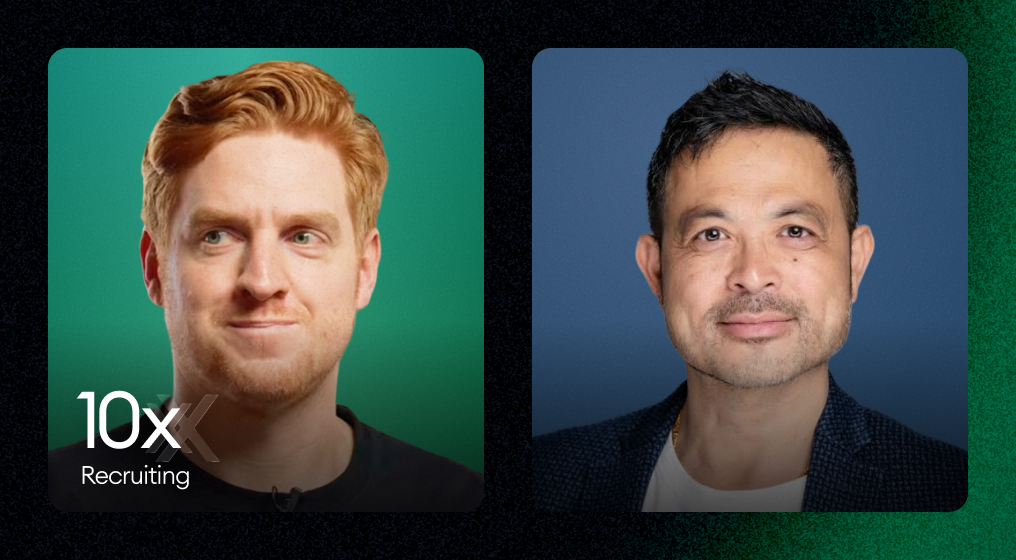
In early 2022, Metaview CEO Siadhal Magos appeared as a guest on Founders Focus, the weekly live event and podcast hosted by Recruiting Brainfood’s Hung Lee.
Halfway through the interview, the Metaview team noticed something. Hung’s questions had many of the hallmarks of a great interviewer.
Podcast interviewing isn’t the same as candidate interviewing. But the patterns are close enough that we got curious about whether the data would back up the intuition.
So we ran Hung’s interview through Metaview’s analysis engine, compared it to Siadhal’s own captured interviews, and looked at what the data said.
What we wanted to find out
Recruiting Brainfood is one of the most-read newsletters in talent acquisition.
Hung Lee’s been running it for years, alongside Founders Focus, his weekly live conversation with founders and operators in the recruiting space.
By 2022, he’d done hundreds of these interviews. The intuition was that someone with that many reps would have a recognizable style: more open-ended questions, a generous share of voice for the guest, less interrupting.
We wanted to know if the data would say the same thing.
The setup was simple. Take one interview, capture it in Metaview, run the analysis, compare to a baseline. The baseline was Siadhal’s own captured interviews on the platform.
How we ran the analysis
Metaview’s analysis engine is built for candidate interviews, but the mechanics work just as well on any structured conversation.
Capture the conversation
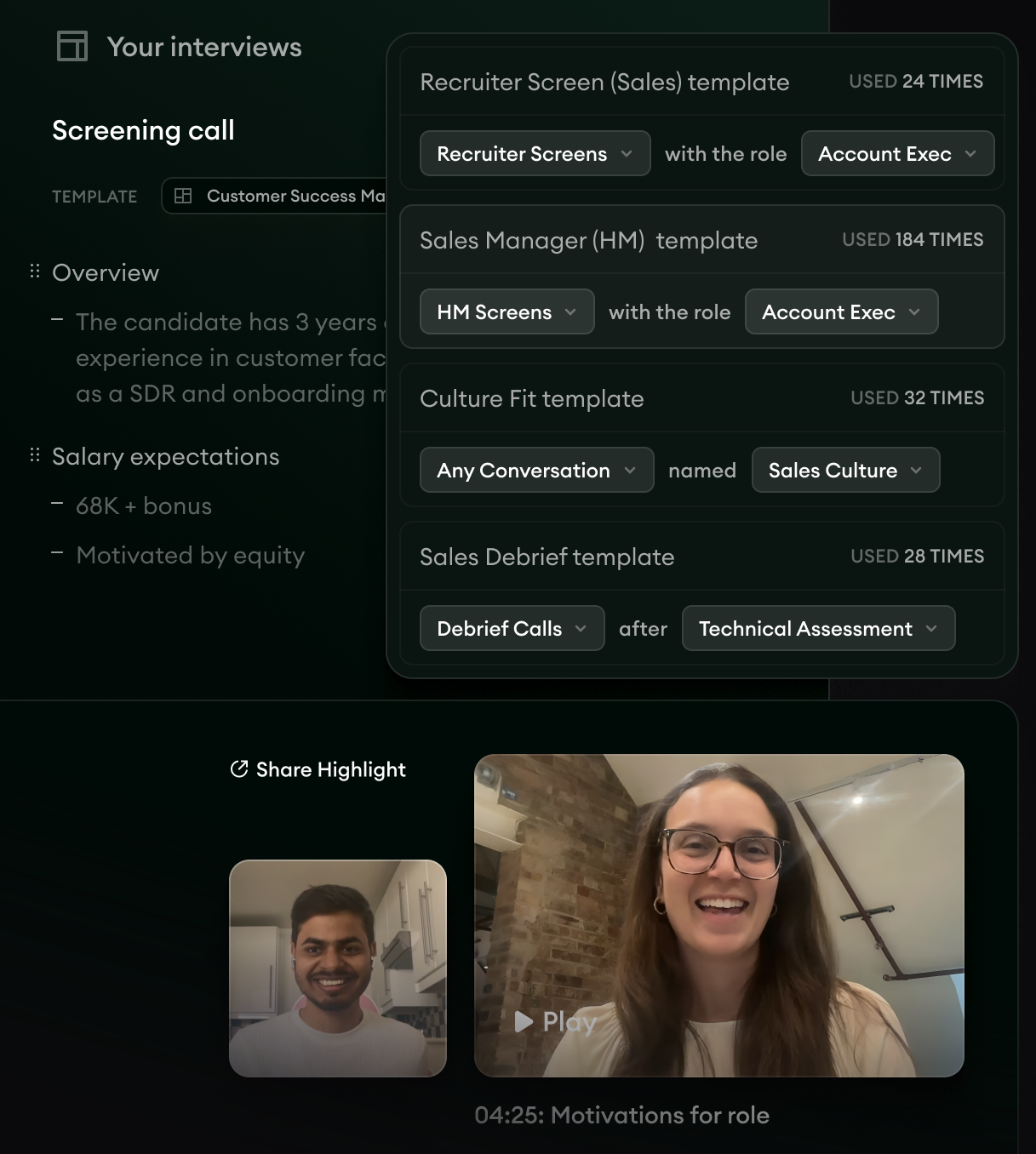
Notetaker handles the capture and transcription. Every spoken word, every question, every pause, attached to the recording and ready for analysis.
For this experiment, we ingested the Founders Focus episode and ran it through the same pipeline a customer interview would take.
Run the patterns Metaview measures
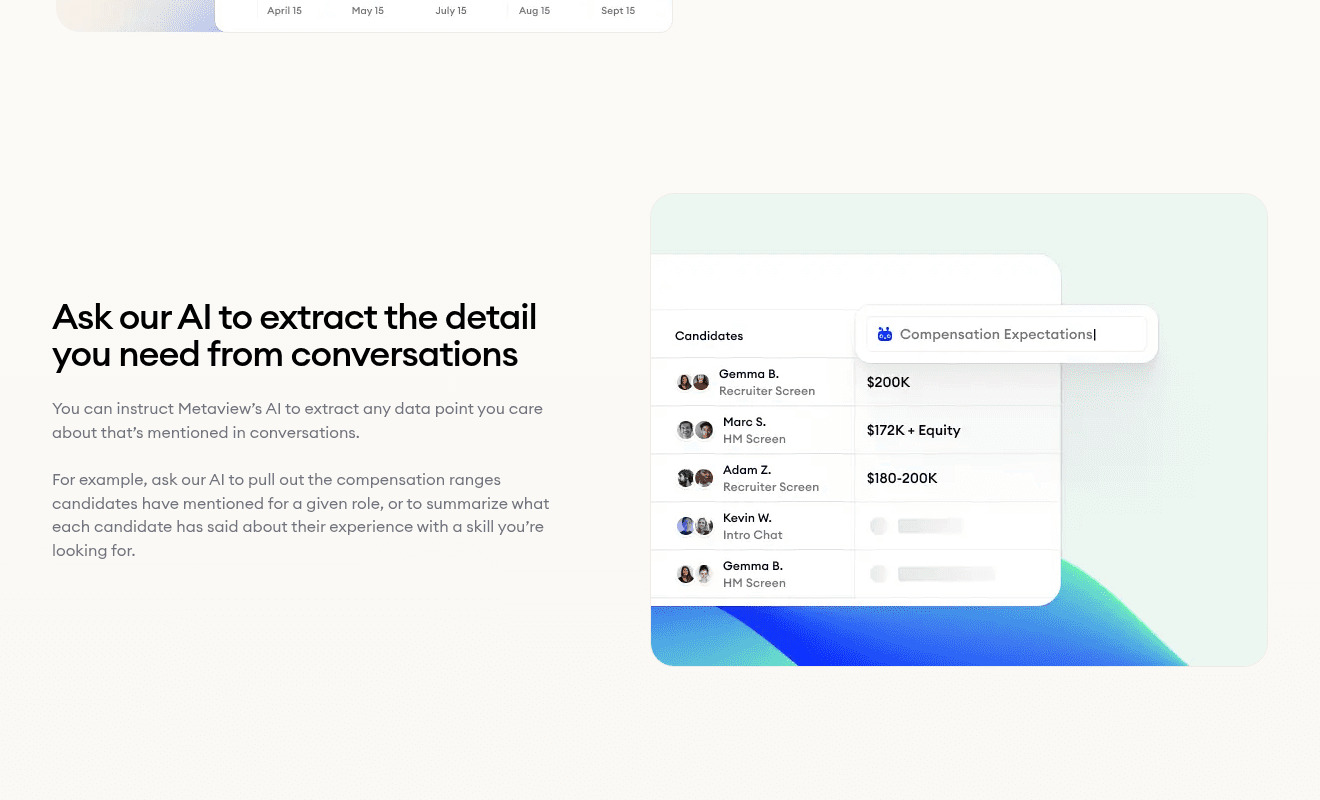
Once the interview was captured, the analysis pulled out the patterns Metaview measures across every interview on the platform.
- Share of voice. How much the interviewer talks versus the candidate.
- Question depth. Open-ended versus closed yes/no questions.
- Follow-up pattern. Whether the interviewer goes deeper or stacks new questions.
- Language signals. Hostile or aggressive language, filler words, longest single answer.
These are the same metrics a Metaview customer would see across their recruiting team. We ran them against Hung’s interview, then compared the results to Siadhal’s baseline.
Compare to a baseline
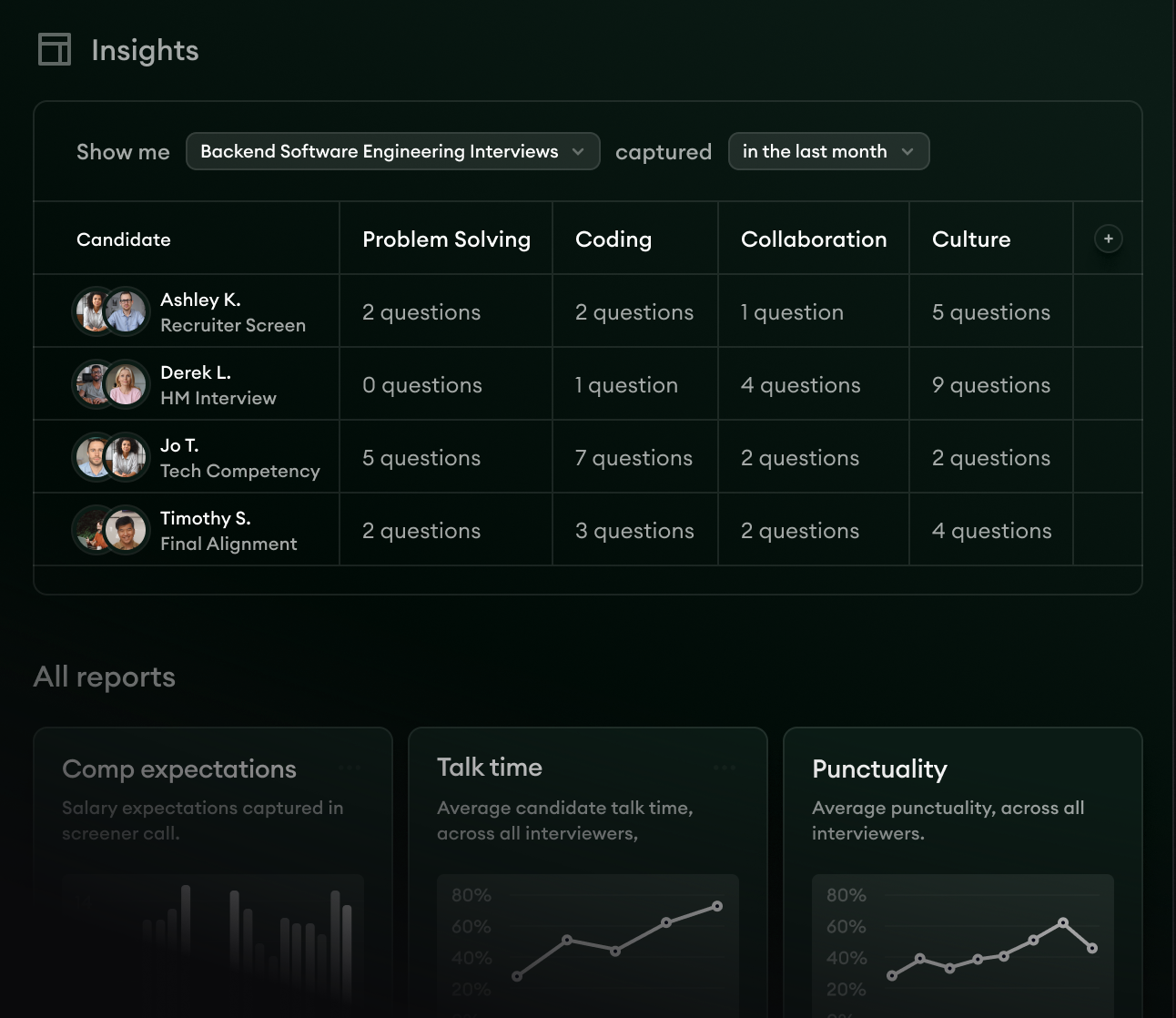
Numbers without a baseline aren’t useful. We compared Hung’s interview to Siadhal’s own captured interviews on Metaview.
That gave us a frame for what high or low actually looked like on each metric, without inventing arbitrary thresholds.
The result
The data backed up the intuition. Hung does what good interviewers do.
- Open-ended questions dominated. The bulk of Hung’s questions invited the guest to reflect rather than recall, which is exactly the pattern that surfaces real content in any kind of interview.
- Low interviewer share of voice. Hung let his guest do the talking. The percentage of words from the interviewer’s side stayed low across the full interview.
- Zero hostile or aggressive language. Across the whole conversation, the model picked up no instances of language that crossed into hostile or aggressive territory.
- Long, descriptive answers. Several of Hung’s questions elicited multi-minute, narrative responses. The longest came in at nearly four minutes.
On the development side, one pattern stood out: filler words.
Across the interview, Hung used more than 550 filler words. Most great interviewers have some version of this habit. It’s easy to underestimate because it doesn’t show up on the transcript the same way the question content does.
Why this matters if you run interviews
Most interviewers can describe how they like to run interviews.
Far fewer can describe how they actually run them. Which questions they lean on, how often they follow up, how much they talk, where their bad habits cluster.
That gap is where Metaview’s analysis sits.
- Goal is a great conversation that an audience wants to listen to
- Open-ended, reflective questions invite the guest to think out loud
- Low interviewer share of voice is a virtue
- Goal is to surface enough behavioral evidence to make a hiring decision
- Same open-ended, reflective questions work, and follow-ups go deeper
- Low interviewer share of voice is the same virtue, often easier said than done
The mechanics that make Hung a strong podcast host travel well to candidate interviews.
Open-ended questions, low interviewer share of voice, reflective prompts that invite the other person to think out loud. Any recruiter or hiring manager can build the same patterns into their interviews, especially with a tool that surfaces where they currently stand.
What we’ve learned
- Even great interviewers have a coaching gap. The 550 filler words are a perfect example. Anyone running interviews benefits from seeing the data on themselves, regardless of how experienced they are.
- The same engine works on any structured conversation. Candidate interviews, podcast interviews, customer interviews, employee skip-levels. The analysis surfaces the same kinds of patterns across all of them.
- Data confirms or rebuts the gut. We had an intuition that Hung was a good interviewer. The data backed it up, then added one specific area to work on. Either outcome would have been useful.
Frequently asked
Who is Hung Lee?
Hung Lee is the curator of Recruiting Brainfood, one of the most-read newsletters in talent acquisition, and the host of Founders Focus, a weekly live event and podcast that interviews founders and operators across the recruiting space.
What makes a question a “good” interview question?
The strongest questions are open-ended and invite the other person to reflect, rather than recall a fact or pick from a binary. They’re also hard to dodge with a short answer. Hung’s leadership-style question is a good example: it asks the guest to evaluate themselves on two dimensions at once, which gives them somewhere to go for several minutes.
How does Metaview analyze an interview?
Notetaker captures and transcribes the full conversation. AI Reports and AI Filters analyze the corpus and surface patterns like question depth, share of voice, hostile language, filler words, and the longest single answer. The output is a profile of how the interviewer is actually running their interviews, not how they think they’re running them.
Are podcast interviewing skills useful for candidate interviewing?
Yes, with a caveat. The mechanics of a great open-ended question, a generous follow-up, and a low interviewer share of voice all transfer cleanly. The difference is in goal: a podcast interview wants an engaging conversation, while a candidate interview wants enough behavioral evidence to make a hiring decision. Same techniques, different downstream use.
Can any team run this kind of analysis on their own interviews?
Yes. Capture the interview in Metaview, then run AI Reports across the recording. The output highlights question depth, share of voice, filler words, and other patterns the interviewer might not notice in real time. Teams use this to coach individuals or to calibrate the bar across a panel.
Bring Metaview into your hiring stack.
Live notes, structured scorecards, and ATS sync - set up in under 10 minutes.
