
Every recruiting team is somewhere on the AI maturity curve. Crawl, walk, run. The crawl stage is where most teams sit. The walk stage is where the better teams are figuring it out. The run stage is where a small number of teams have built something durable, and the line between them is not subtle. You can tell which stage a team is in inside one panel debrief.
The reason this matters in 2026 is that the gap between the stages has widened, not narrowed. Two years ago, a recruiting team could be at crawl and still hit most of its goals because the rest of the market was at crawl too. That changes the moment your competitor's panel debrief is twice as sharp as yours and their candidate-to-offer time is two-thirds. Maturity is a relative position, not an absolute one.
What follows is the version of the curve that a talent leader can act on. Not the abstract framework. The operating description, with the signals that tell you which stage you are in and the single move that gets you to the next one.
The claim, stated plainly
AI maturity in recruiting is not about which model you use or which vendor logo is in your stack. It is about whether the operating habits that turn AI into outcomes are in place. The maturity stages map cleanly onto three operating habits: capture, surface, feed back. A team that captures interviews is at crawl. A team that surfaces the signal from those interviews into the debrief is at walk. A team that feeds the outcome data back into the rubric is at run.
This is the frame that decides everything. Most teams diagnose their stage by the tool they bought, and they get it wrong every time. The tool is the enabler. The habit is the stage.
Read the frame this way and the path to upgrade becomes obvious. You do not need a new vendor. You need the next habit.
The three stages, defined operationally
Crawl: AI helps with note-taking
At crawl, AI is in the workflow but not in the decision. The recruiter uses a notetaker to free their hands during the interview. The scorecard still gets written from memory, in the same shape it always did, two days after the panel. The debrief is unchanged. The hiring decision happens the same way it would have without AI in the room.
This is where the majority of recruiting teams sit in 2026, and that is fine for the first quarter. The note-taking work was real work. Removing it is a real upgrade. The problem is when teams park here and confuse "we use AI" with "AI is part of how we hire." It is not. It is part of how you take notes.
The signal that you are at crawl is simple. If you removed the AI tool tomorrow, would the debrief look different? At crawl, the answer is no. The debrief is the same. The AI was a productivity bump, not an operating change.
Walk: AI surfaces signal
At walk, the AI is in the decision. The notetaker captures the conversation, and the team reads the artifact before the debrief. Talk-ratio, rubric coverage, the candidate's specific words on the question that mattered. The debrief opens on the row where scores disagreed, not on the recruiter's summary. The hiring manager and the recruiter argue against the artifact, not against memory.
This is the stage where the hiring quality lift actually starts to compound. Disagreements collapse faster because everyone is looking at the same evidence. New interviewers calibrate faster because they can hear the moment a senior interviewer flagged a follow-up. The bar moves up by half a step because the panel knows the conversation is going to be read, and panels behave differently when they know the work is visible.
The signal that you are at walk is whether the debrief opens with the artifact. If it opens with "what did everyone think?", you are still at crawl. If it opens with "let's look at the row three split first," you are at walk.
Run: AI feeds the loop
At run, the captured signal feeds back into the rubric. Year-one retention attributes back to the recruiter who ran the loop, the rubric the role used, and the panelists who scored each row. The next quarter's rubric is sharper because the data told you which rows actually predicted a stay and which were noise. The recruiter compensation model rewards retention, not requisitions closed. The hiring manager sees a per-rubric retention report and adjusts before the next role posts.
This is the stage that produces the gap between the 85% goal-hit teams and everyone else. Not because AI is doing more work. Because the operating system around AI is now closing the loop in a way the manual version literally could not.
The signal that you are at run is whether your next rubric was updated based on the last cohort's retention data. If the rubric is the same one you used in 2024, you are not at run. You might be at walk. You might still be at crawl with extra steps.
The signals that tell you which stage you are in
Three signals. Read them honestly. The diagnosis takes ten minutes.
The first signal: who owns the rubric. At crawl, the rubric is wherever the last role's intake doc lives, which is usually a forgotten Google Doc. At walk, the rubric has a named owner per function and gets refreshed when the role refreshes. At run, the rubric owner has a quarterly review meeting that pulls the retention data from the last cohort and proposes specific changes.
The second signal: where the interview signal lives a week after the interview. At crawl, in someone's head. At walk, in the system, readable but not feeding anything downstream. At run, in the system and feeding the next rubric update.
The third signal: what your panel does when scores disagree. At crawl, the senior person decides. At walk, you replay the artifact and discuss until the disagreement collapses. At run, the disagreement gets logged as a calibration moment and shapes the next rubric refresh.
Three signals, three stages. The diagnosis is rarely ambiguous once you read them this way.
The proof, and where Metaview fits
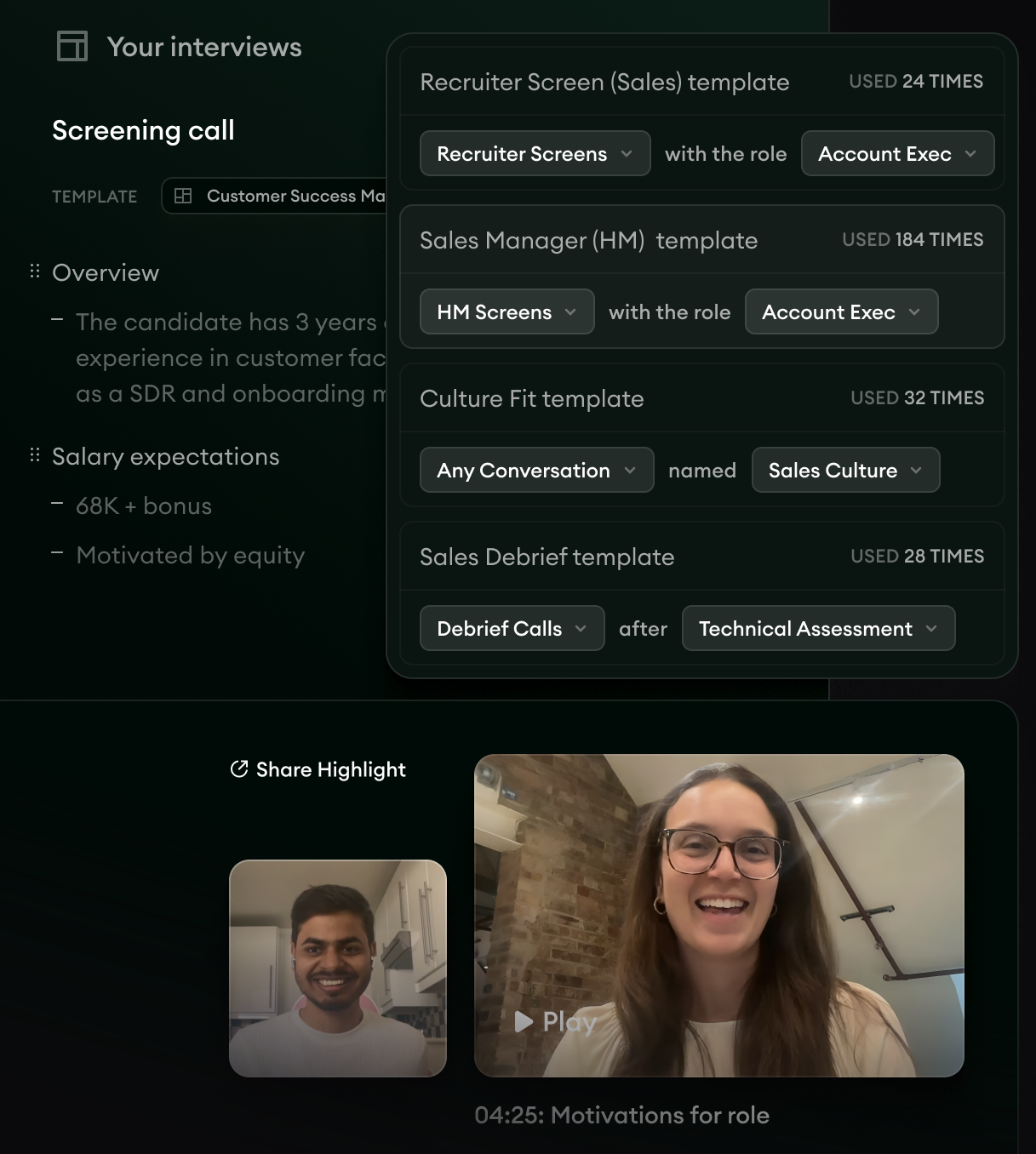
Metaview is the operating layer for the walk-to-run transition. Crawl works with any notetaker. Walk requires the artifact to be readable, searchable, and surfacing the right signals to the debrief. That is what Notetaker is built for. Talk-ratio, rubric coverage, the candidate's exact words on the question the panel disagreed about. All visible, one click away, before the debrief opens.
The market data confirms the gap between stages. According to Metaview's 2026 AI & Hiring Alignment Report, surveying 505 recruiting leaders and hiring managers across North America and EMEA:
The 79% versus 36% line is the run-versus-crawl gap in numbers. Teams that close the loop between interview signal, panel debrief, and rubric refinement double their odds of hitting their hiring numbers. Not because of any single tool. Because the operating habits that AI enables actually got built.
The operating change for talent leaders
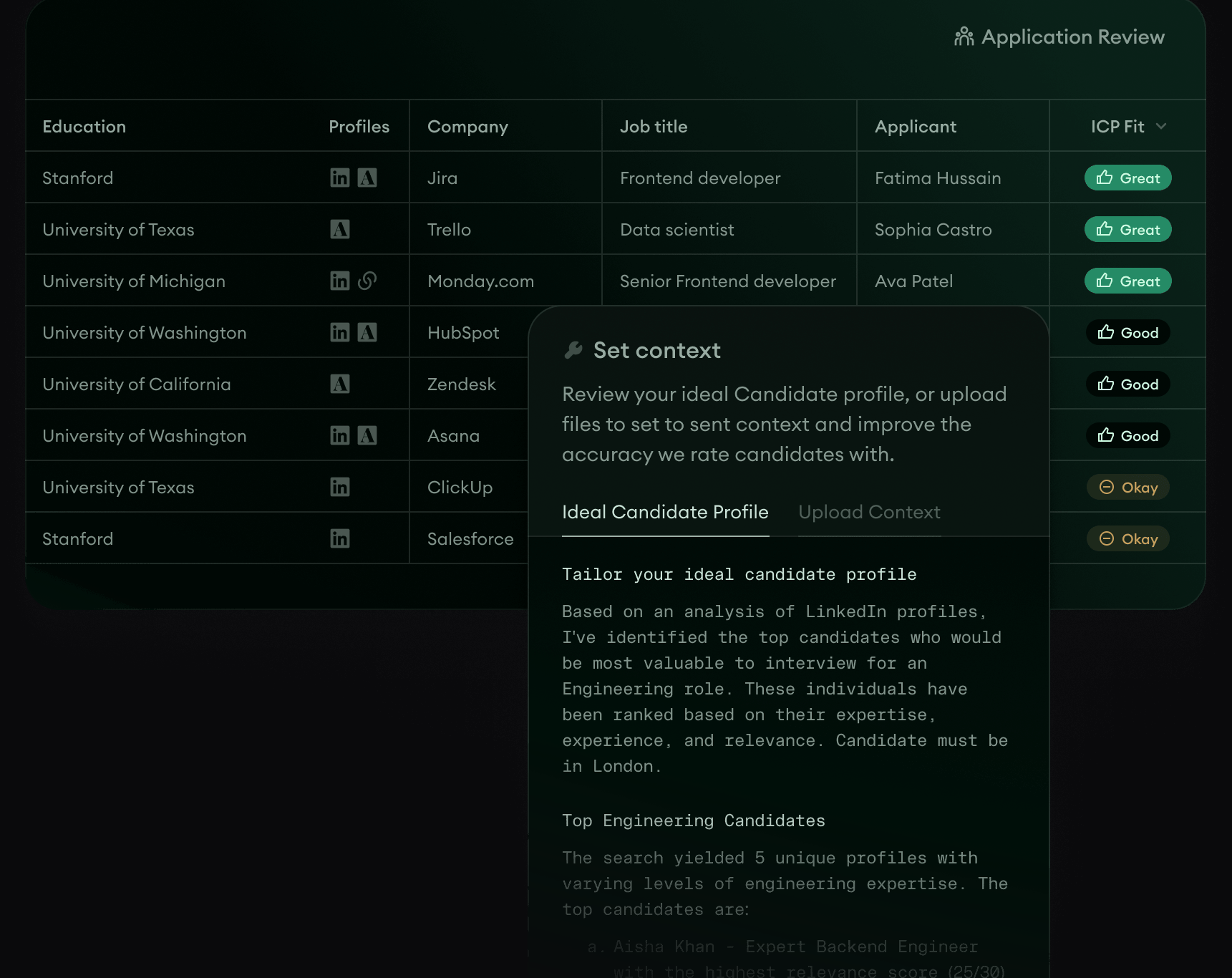
Diagnose the stage. Honestly. Pick one role this quarter and treat it as the upgrade vehicle. If you are at crawl, the move is to capture every interview with Notetaker and read the artifact before the debrief. If you are at walk, the move is to close the loop on retention by attributing the year-one outcome back to the rubric and the recruiter. If you are at run, the move is to make the rubric quarterly refresh a calendared ritual, not a one-off.
Each move is cheap. Each move stalls a team that has not made it. Maturity is not a transformation. It is an operating change. The teams that run it as an operating change make the upgrade in a quarter. The teams that run it as a transformation talk about it for a year and stay where they are.
Pick the move. Assign the owner. Watch the next debrief.
Frequently asked
How do I know which stage we are actually in?
Read three signals: who owns the rubric, where the interview signal lives a week after the interview, and what your panel does when scores disagree. Crawl teams have no rubric owner, no surviving signal, and resolve disagreement by seniority. Walk teams have all three, sometimes. Run teams have all three, always, and the loop closes back to the next role.
Can we skip the walk stage and go straight to run?
No. The discipline that walk teaches, capturing artifacts and using them for coaching, is a prerequisite for run. Teams that try to skip end up running on a foundation that does not hold weight. They look like run for a quarter, then collapse back to crawl when the system finds its first edge case.
Is run just a vendor choice?
No. Run is an operating posture. You can buy the right tool and still be at crawl if the team has not built the habits. The tool makes run possible. The team makes run real.
How long does it take to move one stage?
One quarter if the talent leader runs it as a project with a named owner. Two if it is a side initiative. Never, if it is a strategic priority with no execution slot. Most teams stall because the stage upgrade gets treated like a transformation rather than an operating change.
What is the single highest use move at each stage?
Crawl: capture the interview. Walk: read the artifact before the debrief. Run: feed the year-one retention data back into the rubric. Each move is cheap. Each move stalls a team that has not made it.
Bring Metaview into your hiring stack.
Live notes, structured scorecards, and ATS sync - set up in under 10 minutes.
