

Sourcing after layoffs goes wrong fastest on the first afternoon. A competitor announces cuts, and messages go out to everyone with that company on their LinkedIn profile. But some of those people may not yet know whether they’re affected.
The rush to reach out is somewhat warranted. In Metaview’s 2026 survey of recruiting leaders and hiring managers, 67% of teams lose qualified candidates to competitors who move faster.¹
But I read that figure as a case for being fast later. Build the list the day the news breaks, then hold the send until two things are true:
- The person has said they’re looking
- You have an role open that fits them
Then you're free to detail the role, but you should never ask for anything their old employer keeps private.
This guide walks through when to send and what to write. Then it covers what to ask about their agreements, what never to ask for, and how to be fast once someone replies. It ends with four checks to run on the last batch you sent.
What does good sourcing after layoffs look like?
Sourcing after layoffs means approaching people a competitor has let go or is letting go, about roles you have open. It's ordinary sourcing with the order changed, because the people on your list have just lost their jobs or are waiting to find out.
In practice the flow runs like this:
- The day the news breaks, agree the roles with each hiring manager and build the list.
- Send outreach once they’ve said they want to move and a role you have open fits them.
- Write about the role and how fast your process moves.
- When you first speak, ask about their agreements, and stay away from their old employer’s secrets.
The timing belongs to the candidate, and the speed is yours once they reply.
On the day of the announcement, build the list and send nothing.
A layoff announcement says a company is cutting jobs, but it doesn’t come with the names. A message sent that afternoon reaches people still employed and those who've lost their roles. And both groups know that it went out to everyone.
Spend the day on the part you control. Hold a short intake call with any hiring manager whose open roles could suit people from that company. Settle which roles are open today and what experience carries over from the competitor’s work.
Then get interview time held for the days after the first replies.
Metaview’s AI Sourcing agent makes the list-building quick. Across searches in AI Sourcing run from an intake call, the first shortlist arrived a median of 17.6 minutes after the call ended.² The list is ready long before anyone on it should hear from you.
Search on the work the role needs, but use the competitor’s name as one filter among several. A search on the company name alone returns everyone who works there, including the people the cuts never touched.
Let the candidate set the timing.
The trigger for the first message is the candidate saying they’re looking. They post that they’re open to new roles, or they add their name to an opt-in list of affected staff. From then on, a message from you is one they asked for.
Where a person hasn’t said anything, wait until the company has finished telling people who is affected. Then write only to the people suitable to a role you have open.
Of course you need to be quick. But there's no settled data to suggest the first recruiter to write wins the candidate. I’d rather send the fourth message that names a real role and fit, than the first that focuses only the layoff.
Layoff headlines can run beside a lot of hiring. In the 10x Recruiting episode below, Airwallex’s Head of People and Talent, Richard Yan, talks about the AI layoff headlines and why his team is hiring more than ever.
His rule: hire for judgment over polish. I’d carry that into every first call with someone who has just been let go.
Focus your outreach message on the role.
The first message has one job: to show the candidate a role that fits them and how quickly you could move. Anything about the layoff can wait for them to raise it.
What goes in the first message, and what stays out:
| Put in | Leave out |
|---|---|
| The role, the team, and who the hire reports to. | Any line about the news, sympathy included. |
| The one part of their experience that matches the role. | Their old employer’s name, and any view of how it handled the cuts. |
| How fast your process moves, with interview times this week or next. | A request to bring colleagues with them. |
| An easy way to say “not yet.” | Urgency the role doesn’t have, such as “filling fast.” |
An opening that fits these rules might read: “I’m hiring a [role] for [team], reporting to [manager’s title]. Your work on [the matching project] is similar to what our team does, and I'd love to talk about it this week. If now isn’t the time, a one-line reply is plenty.”
It's critical to match the role offered with the specific person. To see how, here's a great guide to personalizing outreach at scale.
The questions about job security and your own company’s stability will come on the first call, so have answers ready before you send. ("Interviewing in a downturn" covers these questions).
Ask about restrictions and refuse confidential information.
These two things turn a good hire into a dispute with their old employer. Stay clear of both without giving anyone legal advice: ask, and pass it to counsel.
Avoid the agreements they signed.
Non-solicitation clauses commonly appear in employment and separation agreements. A customer clause can restrict a former employee from seeking business from their old employer’s clients, and an employee clause can restrict them from recruiting former colleagues.
Whether a clause covers what they’d do for you, and whether it can be enforced, depends on its wording and on the law that governs it (varies from state to state). So ask on the first call whether they signed anything that limits what they can do next, write down what they say, and send it to counsel before an offer.
The employee clause is the one to remember after the first hire. Don’t ask a new hire to recruit their old team, or to send you names, until counsel has read what they signed.
Don't ask for confidential information from an old employer.
Never ask for anything their old employer keeps private: client lists, pricing, code, plans, or who else is about to be cut. If they offer it, stop them and say why.
U.S. federal trade secret law includes inducing someone to break a duty to keep information secret as an improper way to acquire trade secrets. Even a friendly question about their old pricing or clients can cross that line.
If anyone suggests your company leave another company’s staff alone by agreement, that goes to counsel as well. This guide to building a do-not-contact list explains why, with the January 2025 guidance from the Justice Department and the Federal Trade Commission.
Move fast once they reply.
Here's where speed really matters. Wins come from the hiring manager more than from anything in your outreach message. Our survey split its answer by how teams rated the partnership between recruiters and hiring managers: 80% of teams with good-or-below partnerships lose candidates to faster competitors.¹
That’s an association in a survey, and it can’t say the partnership caused the gap. It does tell me where I’d spend that first day: on the hiring manager agreeing to hold interview times and to send feedback the day a call ends.
At Quora, which is fully remote, Global Head of Recruiting Hannah Wardle discovered a delay in that loop. Writing feedback to hiring managers took her recruiting team a long time, and so did waiting “for hiring managers to share their feedback with recruiting, and then for that feedback to reach candidates.”
After Quora brought in Metaview’s AI-powered notes, she says Quora is “now getting feedback from hiring managers in 10 to 20 minutes.”
A reply also needs an owner the day it lands, and the reasons replies get lost after outbound outreach are their own subject.
Where Metaview fits, and what stays with the recruiter.
A recruiter describes the role in plain language, or lets the search run off an intake call recorded with Metaview, and it returns candidates with the reasoning for each. Then Metaview’s AI Sourcing builds the list. It searches the web, your applicant tracking system, and your team’s past Metaview conversations.
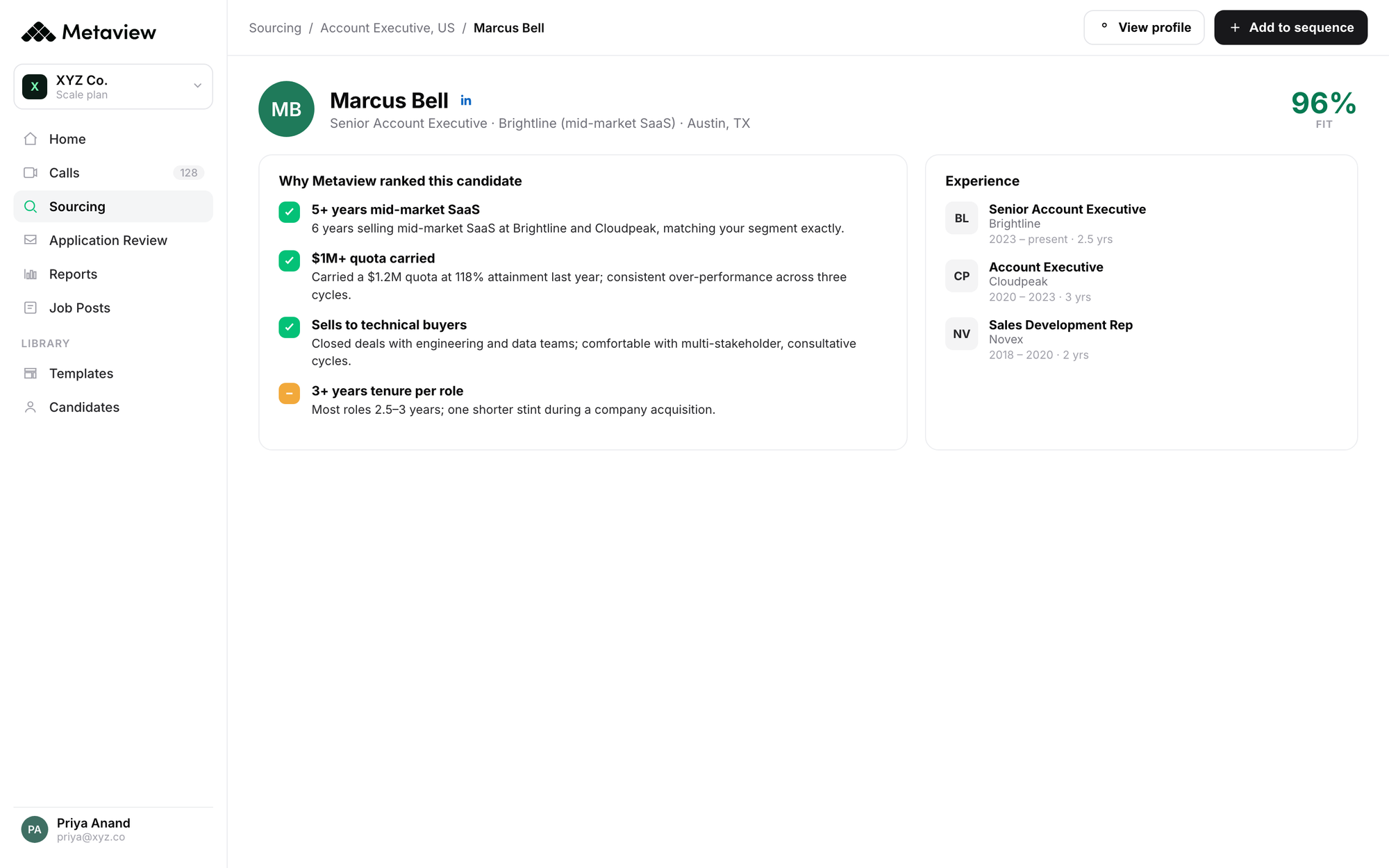
It contacts no one. Which of those candidates hear from you, and when, stays with the recruiter.
Once a recruiter has picked the candidates and written the first message, Metaview’s Outreach sends it as an automated email sequence.
The agreements question needs a written answer. If you record the first call with Metaview’s Notetaker, Metaview captures every spoken word, so what the candidate said about anything they signed is there in their own words when counsel asks.
Four checks before the next announcement.
Run these on the last batch of messages you sent after a competitor’s layoffs:
- Count the messages that named a role. If any went out without a role open that day, the list probably came from the company name, so start the next one from the intake call.
- Check when each one went out. If messages reached people who hadn’t said they were looking, hold the next batch until they have.
- Read three first-call notes. If the agreements question has no written answer, move it into the call’s opening minutes.
- Time the gap from reply to interview. If a reply waited days for a time, settle held slots with the hiring manager before the next send.
The next time a competitor announces cuts, I’d spend the afternoon on intake calls and send nothing. Then I’d write about the role to the people who say they’re looking, and leave what they signed to counsel and their old employer’s secrets with their old employer.
The highest-leverage work in recruiting happens when people are talking to people.”

Shahriar said this about handing the work of building a pipeline to an agent. And it fits here: the agent builds the list and crafts the outreach sequence, but only when you (and the recipient) are ready.
Sources.
¹ The 2026 AI & Hiring Alignment Report, a survey of 505 respondents across North America and Europe, the Middle East, and Africa, run with Cint.
² Aggregated and anonymized Metaview Sourcing data: time from the end of an intake call to the first shortlist, across searches started from an intake call, June 2026 pull.
Build the list the day of the layoffs, and send when they’re ready.
See how Metaview’s AI Sourcing turns an intake call into a shortlist with its reasoning, while a recruiter decides who gets the first message and when.
Frequently asked.
Should I contact people at that company who weren’t laid off?
You can, the way you’d source from any company: about a role, with no mention of the cuts. Don’t ask them who is next or how the company is doing, because that’s their employer’s business and the question puts them in an awkward spot.
What if a candidate offers to bring their team?
Thank them and say you’ll come back to it once counsel has read what they signed. If counsel clears it, approach each colleague yourself, about a role that fits them, the way you’d approach anyone.
What if the candidate brings up the layoff?
Acknowledge it in a sentence and ask what they want next. They raised it, so it’s theirs to expand on, and the rest of the call can be about the role.
Can I send the same message to everyone from that company?
Only the parts about your role and your process. The line about their experience has to be theirs, or the message reads as the afternoon blast this guide argues against.
What if my own company is cutting roles too?
Pause outreach for any role on a team that’s being cut, and be ready to say plainly why the role you’re offering is still open. Candidates who have just been let go will ask.
