
Brex is an intelligent finance platform used by more than 35,000 companies. Founded in 2017, the company has grown to 1,200+ employees across five countries and eight offices.
By the time the recruiting team was hiring engineers across all those offices, Brex had outgrown an interview stage that was running differently depending on who was running it.
Their Values Interview was a stage in the engineering loop, designed to assess how candidates lived Brex’s six core values. In practice, it was running on six interviewers’ interpretations rather than one consistent rubric.
Brex needed every engineer evaluated against the same six values. They needed questions that surfaced values fit, and a rubric every interviewer agreed with.
This is what Metaview was built for, and this is how we helped them.
What Brex needed
Brex’s recruiting team was hiring engineers across five countries and eight offices.
The Values Interview was a fixed stage in the engineering loop. It was designed to assess how candidates lived Brex’s six core values.
Interviewers asked candidates to talk through real situations from their work history that demonstrated each one.
What it actually looked like in practice depended on who was running it.
Different interviewers asked different questions for the same value. Some leaned on culture-fit anecdotes. Others probed for behavioral evidence.
The rubric existed on paper but didn’t translate to consistent scoring in practice.
We may need to know whether a recruiter or hiring panel went deeper on a certain topic. Being able to go back to Metaview, pull those exact notes, and see exactly what was said has been really helpful.”
Brex needed to codify what good looked like for each of the six values, get every interviewer there fast, and train new interviewers on real examples rather than theory.
What they had to work with:
- Six core values that every Brex engineer was expected to embody.
- A scaling engineering team across multiple geographies and time zones.
- A growing panel of interviewers, including newly-promoted hiring managers running their first values interviews.
- An existing Metaview deployment from the broader recruiting org.
How they used Metaview
Brex ran the values-interview rebuild in four moves. Each one cleared a specific bottleneck, and each one compounded on the last.
Capture every values interview
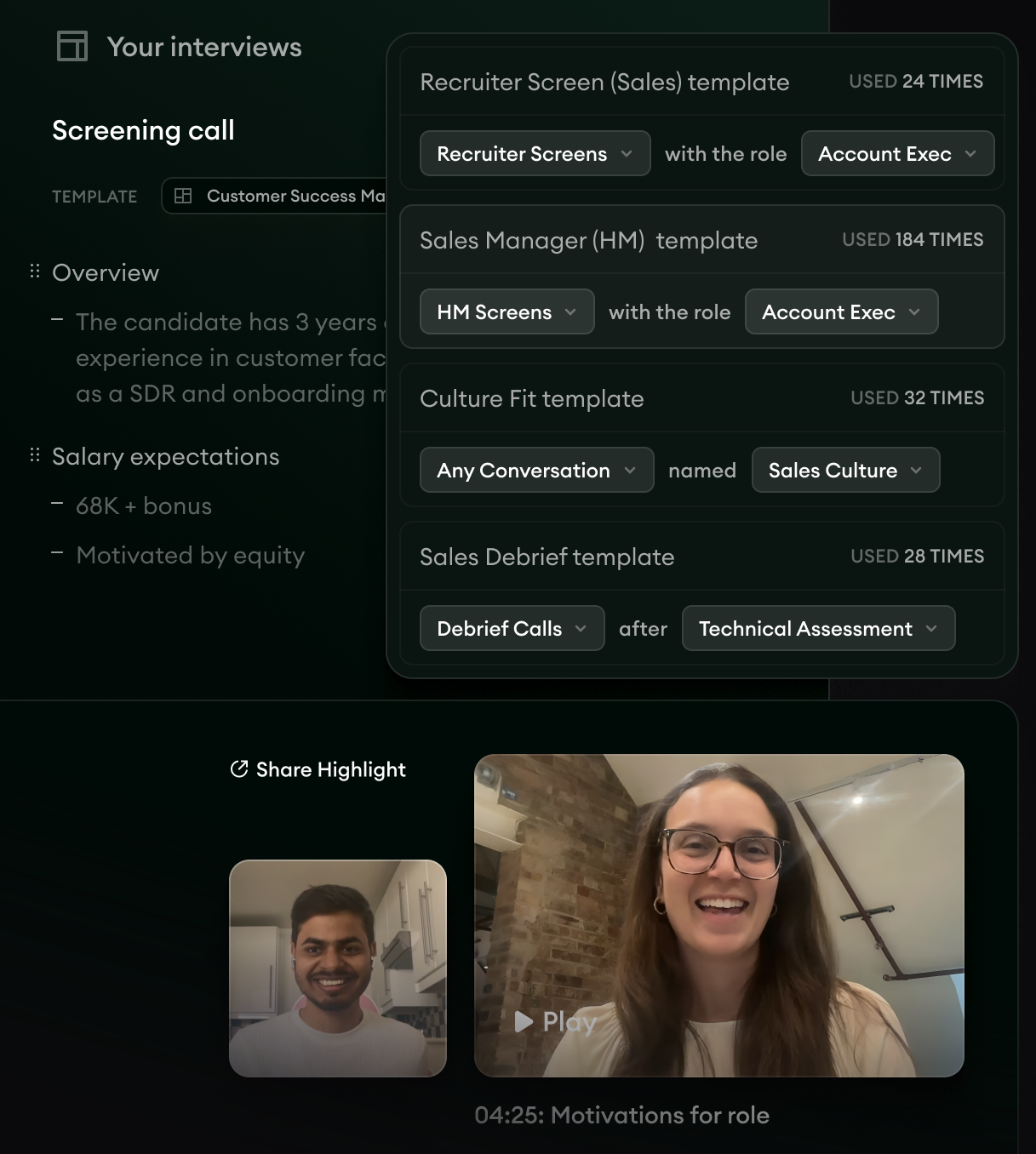
Notetaker joined the Zoom call as a silent participant. It captured the full conversation, transcribed every question and answer, and attached the panel’s debrief notes to the same record.
Every values interview Brex ran from that point on became a complete artifact. Not just a score in Greenhouse, but the actual exchange that produced the score.
Over time, the values interviews built up into a queryable corpus the recruiting team could go back to whenever they needed to.
They used it to audit how a single value was being assessed, to find a strong moment to clip into the training library, or to refine the rubric based on what was working.
Codify the rubric
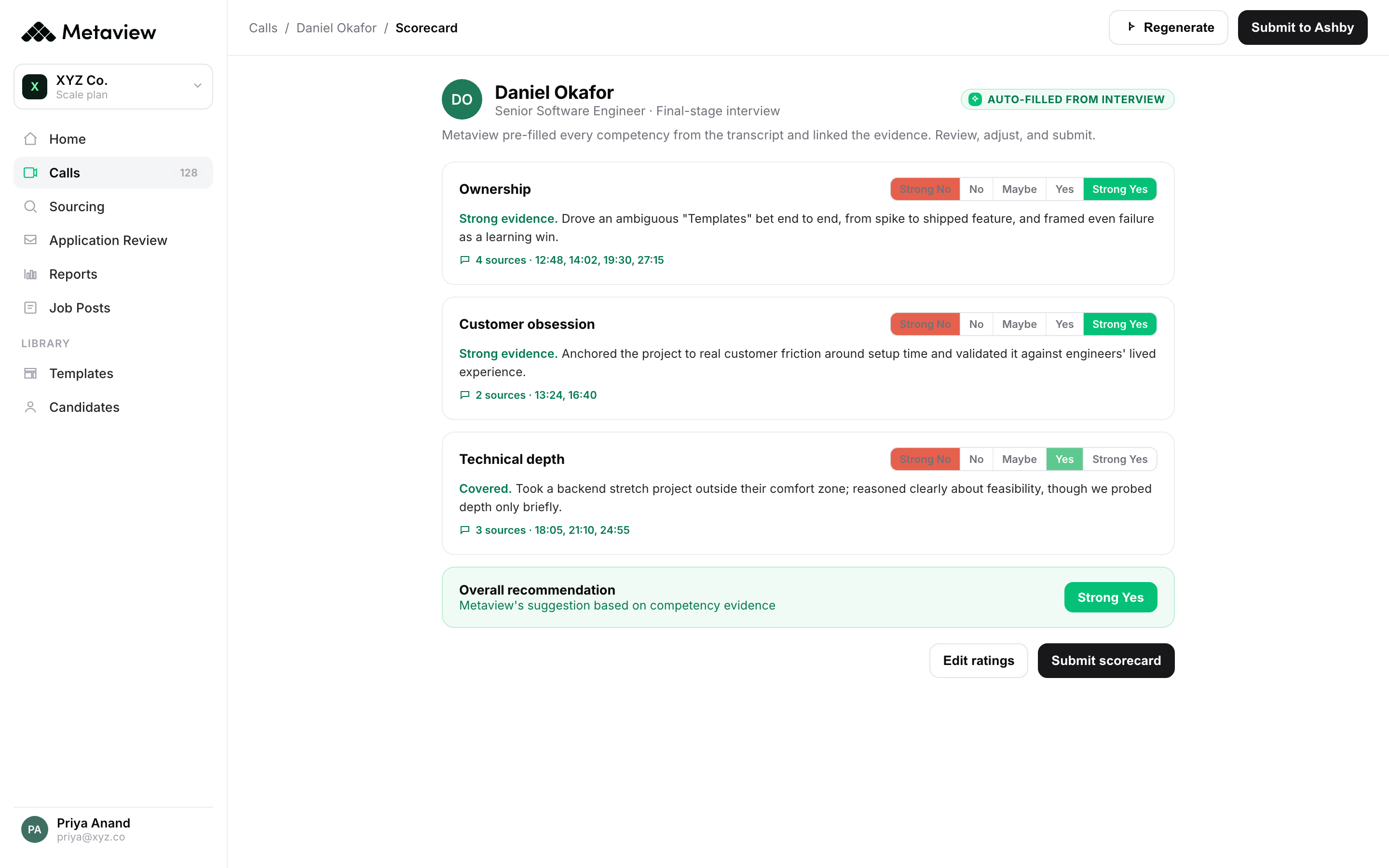
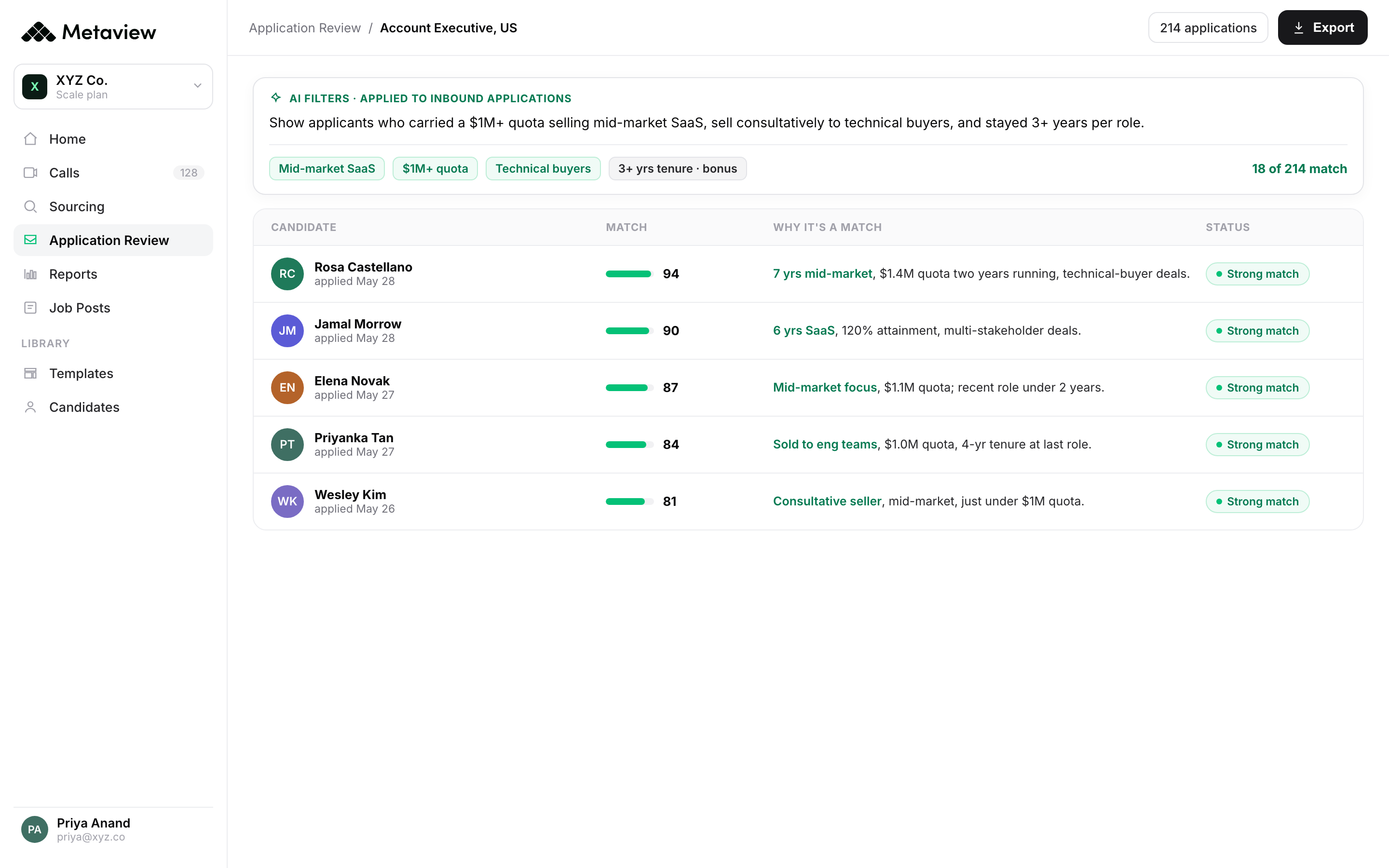
Brex went back through the interview corpus and pulled out the strongest questions for each of the six values.
These were the questions that actually surfaced behavioral evidence rather than rehearsed answers.
Each value got its own question set and its own scoring rubric.
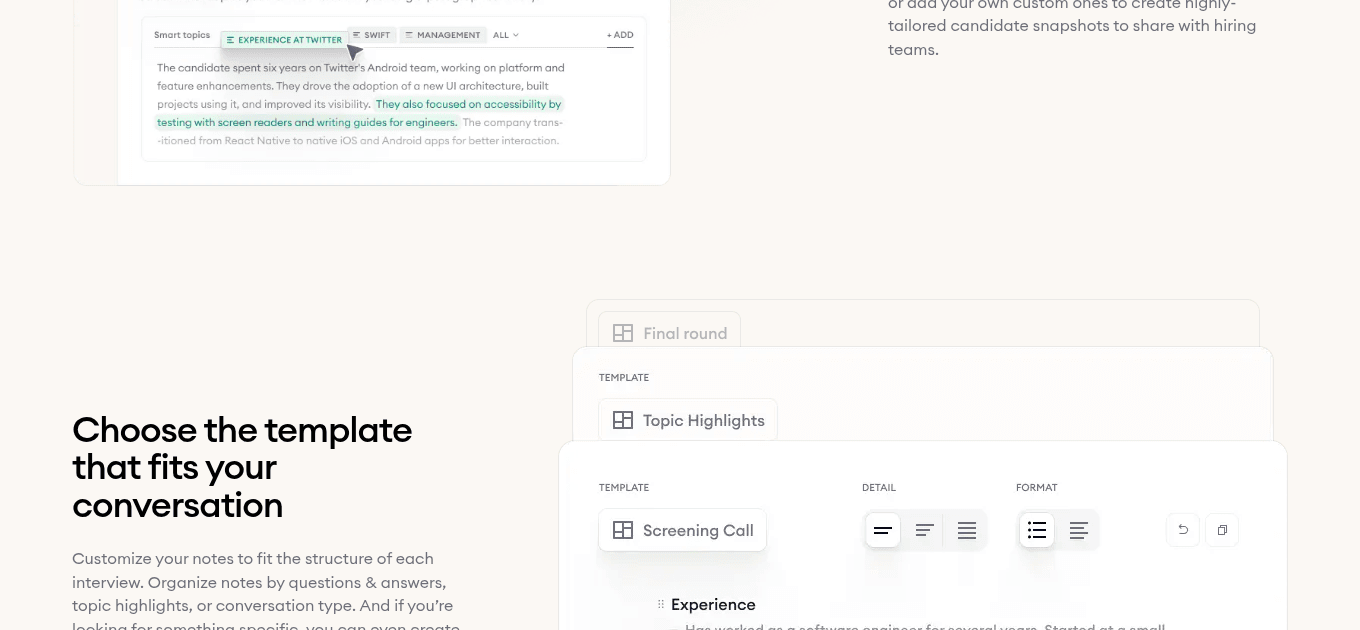
The recruiting team built the rubric into a Metaview template, so every interviewer started from the same scorecard. Six interpretations became one shared definition of what good looked like.
Train new interviewers with Snippets
Brex’s experienced interviewers had built up intuition for what a strong values-interview answer sounded like.
New interviewers, including newly-promoted hiring managers running their first panel, hadn’t.
Instead of putting them through a workshop, Brex used Metaview’s Snippets feature to clip 30-second moments from real interviews.
Strong candidate answers, weak ones, follow-up questions that worked, follow-up questions that didn’t. Each clip showed the actual interaction, not a slide explaining what should happen.
New interviewers watched the clips before running their first panel. Experienced interviewers used the same clips to recalibrate against each other when the rubric got ambiguous.
Audit and refine with AI Reports
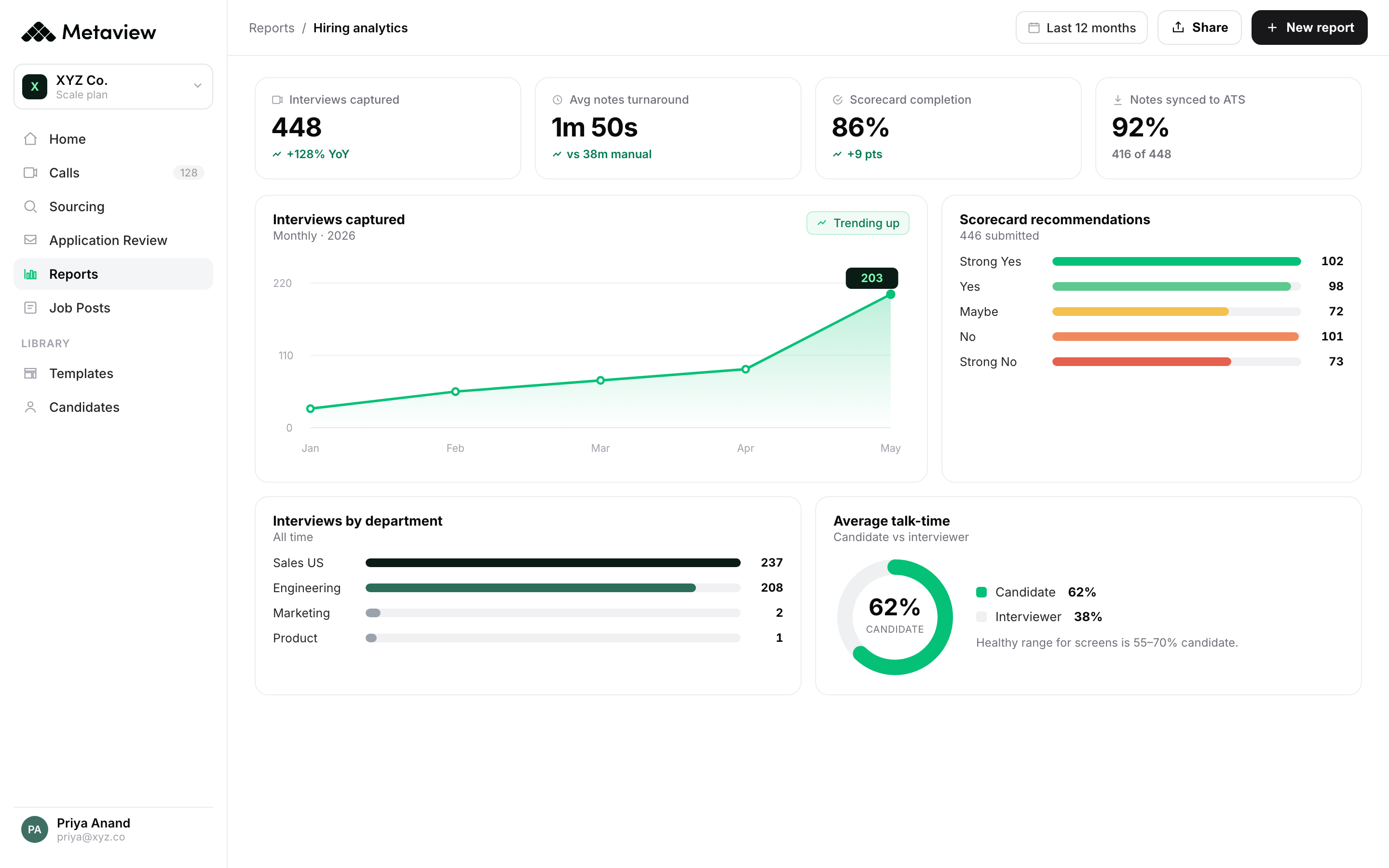
Once a few months of data had accumulated under the new rubric, the recruiting team ran AI Reports across the corpus.
They asked questions like: which values were getting the most behavioral evidence? Which were over-indexing on culture-fit anecdotes? Which interviewers were drifting from the rubric?
The reports surfaced the answers in plain language, written in natural prose, not as dashboards the team had to build themselves.
The result
The values interview at Brex went from six interpretations to one rubric.
- Consistent scoring across panels. Every engineering candidate now gets the same six values, the same questions, and a rubric every interviewer agreed to.
- Faster onboarding for new interviewers. Snippets cut the time from “promoted hiring manager” to “running a values panel” significantly. No half-day workshop required.
- Debriefs on evidence, not memory. When a panel splits on a candidate, anyone can go back to the recorded values interview and find the exact moment in question.
- A growing training library. Every new strong values-interview moment becomes a future training clip. The library compounds with every panel.
Brex is definitely an advocate for candidate experience. Everyone really cares about how we’re running candidates through and building relationships.”
Why this matters if you use Metaview
Most recruiting teams have a stage somewhere in their hiring process where the rubric on paper doesn’t match what’s happening in the room.
It might be the values interview, the culture round, the leadership panel, or something else. Whatever it’s called, the symptom is the same.
Different interviewers ask different things. Hiring managers calibrate on feelings rather than evidence. The panel debrief turns into a memory match rather than an evidence review.
Metaview can help you change that.
- Different interviewers asking different questions for the same value
- Rubric on paper, intuition in practice
- New interviewers trained in a half-day workshop or not at all
- Panel debriefs rely on what someone remembers from the room
- One rubric and one question set, applied across every panel
- Scoring guided by a structured template that lives where the interview is captured
- New interviewers train on real clips from the corpus before their first panel
- Panel debriefs reference exact moments from the recorded interview
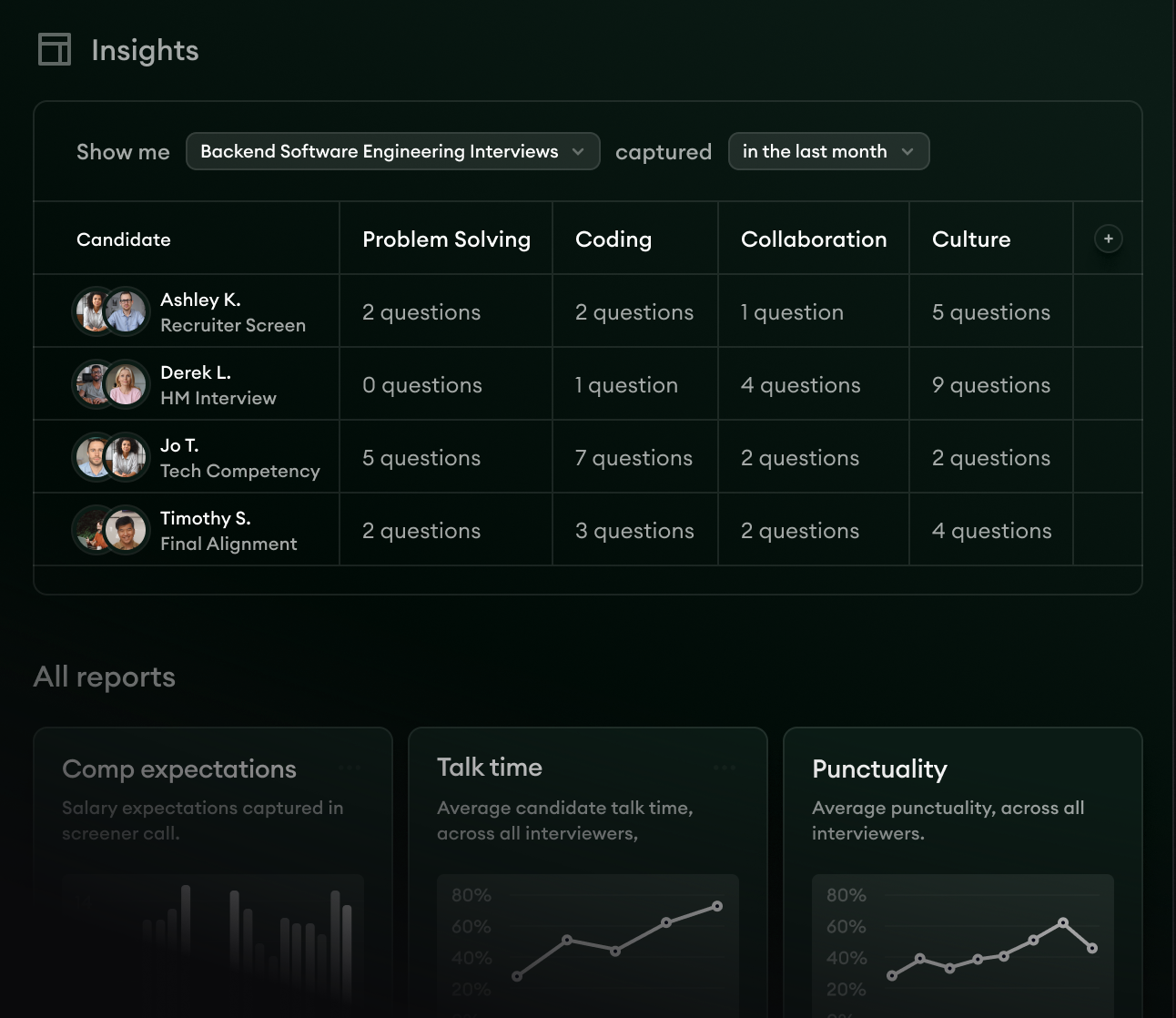
Every interview you capture in Metaview becomes part of the training set for the next one.
The more interviews you run, the more concrete that training set becomes.
Lessons from the Brex rollout
- Capture before you train. Brex recorded every values interview they were already running and listened back through them. The audit showed where the rubric drifted and which interviewers asked the strongest questions. The new rubric came from that audit.
- Codify what good already sounds like. The strongest values-interview questions were already in the corpus, asked by Brex’s best interviewers. The new rubric promoted those to the default and retired the ones that didn’t surface behavioral evidence.
- A clip library beats a workshop. Brex built a library of real values-interview moments that new interviewers watch before their first panel. Adding a new clip costs roughly nothing, and the library gets stronger with every interview.
Bring Metaview into your hiring stack.
Live notes, structured scorecards, and ATS sync - set up in under 10 minutes.
Frequently asked
What is a values interview?
A values interview is a stage in the hiring loop where candidates are asked to talk through real situations from their work history that demonstrate how they live a company’s core values. Most companies that run one do it later in the loop, often with a hiring manager or peer panel, and use it to assess fit alongside the technical and functional rounds.
What questions are asked in a values interview?
The strongest values-interview questions ask candidates to walk through a real situation from their work history that demonstrated one of the company’s values. The point is to surface behavioral evidence rather than rehearsed answers. Brex pulled the strongest examples of these from its own interview corpus, then codified them into a six-value rubric.
What Metaview features did Brex use for the values interview?
Notetaker for the live capture, custom AI Notes templates for the six-value rubric, Snippets for the training clip library, and AI Reports for the cross-interview analysis that surfaced where the rubric was drifting.
How do you train new interviewers to run a consistent values interview?
Capture every interview and then clip the moments that show strong interviewer behavior. New interviewers watch the clips before running their first panel. Experienced interviewers use the same clips to recalibrate when the rubric gets ambiguous. Brex built this whole loop on Metaview’s Snippets feature, without a separate LMS or workshop.
Can other companies run this same playbook?
Yes. The transferable parts are the capture-first audit, the rubric codification step, and the Snippets-based training library. The values themselves are Brex-specific, but the playbook works for any structured competency interview (values, leadership, system design) where consistency across interviewers is the issue.
