
In 2021, Catawiki’s recruiting team set out to hire 300 engineers in twelve months.
Catawiki is an Amsterdam-based marketplace for special objects, with more than 100,000 lots reviewed and sold every week and around 700 people on staff. The 2021 hiring goal was the kind of number that bends a recruiting org out of shape if the workflow isn’t ready.
James Lesner, then Head of Recruitment, framed the brief plainly. They needed to hire the right people, do it quickly, do it at scale, and do it consistently across interviewers. Quality and speed and consistency were not separately optional.
They worked with Metaview through the hiring sprint.
The result: 300 engineers hired, an interviewer training operation that compounded after the year ended, and a recruiting team that now walks into hiring-manager conversations carrying the data instead of the feelings.
What Catawiki needed
They needed to hire new tech engineers across Amsterdam, and a new office was starting up in Lisbon.
James Lesner ran an audit and found that different interviewers were asking different questions for the same role and competency. The interviews were inconsistent.
The big aim was to upskill interviewers and make sure we were asking the most relevant questions.”
Our role was to help standardize what looks good in an interview and make the process more effective.
What they had to work with:
- About 300 engineering hires to make across the year.
- A small in-house recruiting team in Amsterdam, plus a new market in Lisbon with very different candidate expectations.
- A live ATS (Greenhouse) and video stack (Zoom) already in production.
- No appetite to slow the interview loop or add a hand-off step that interviewers wouldn’t actually use.
How they used Metaview
Catawiki ran the rollout in four moves. Each one cleared a specific bottleneck, and each one compounded on the last.
Capture every interview
Notetaker took over scoring and notetaking inside the Zoom interview, leaving the interviewer free to focus on the candidate.
Lesner’s frequently used phrase about Metaview is that it lets the interviewer fully focus on the interview itself. Until then, that was the thing the interviewer couldn’t do.
Build the structured question set
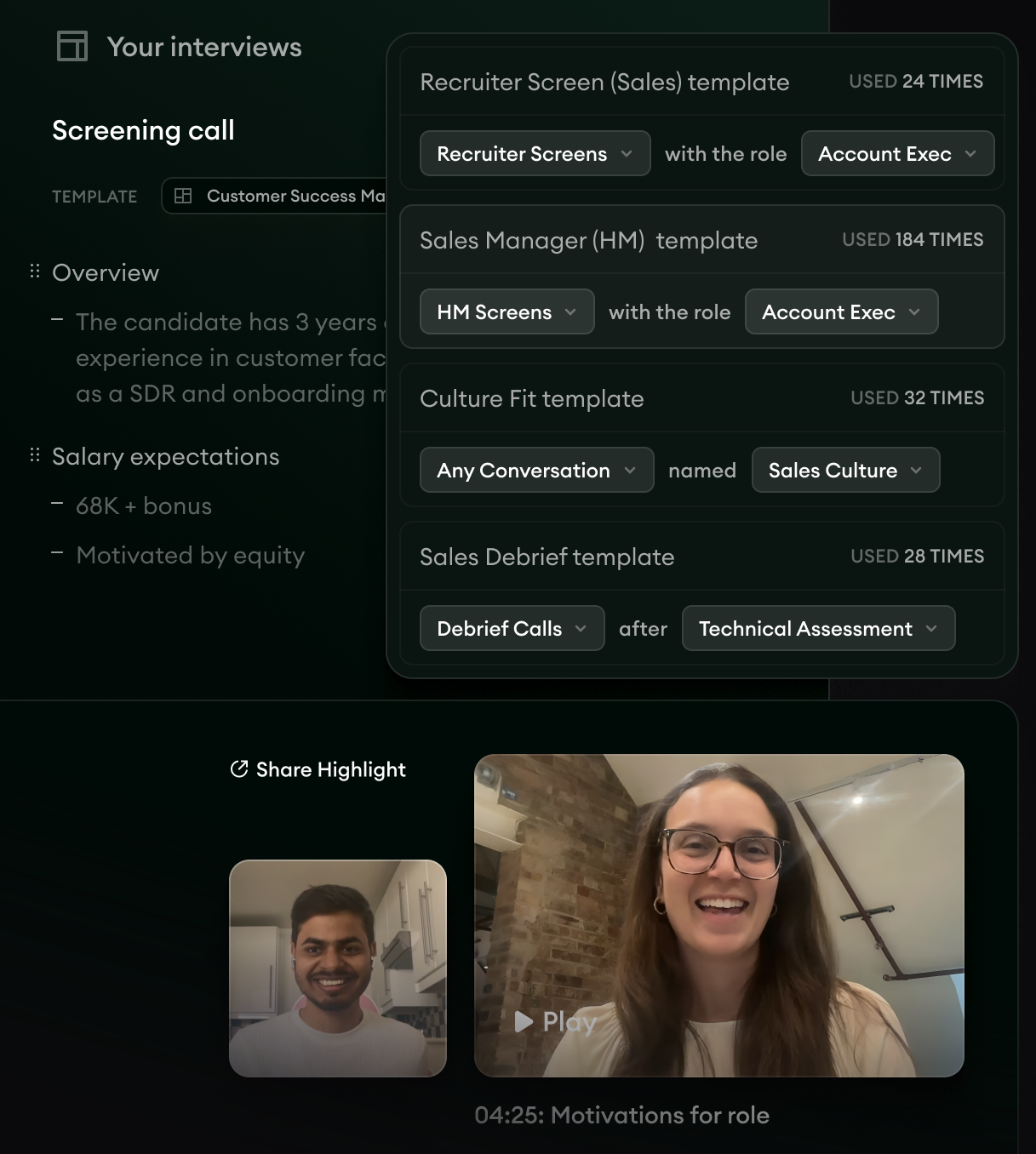
The audit data showed which questions different interviewers were asking for the same role. The recruiting team picked the strongest ones, wrote them up, and made them the default.
Greenhouse held the scorecard. Metaview held the question library, the meeting templates per role, and the auto-detected meeting type that surfaced the right rubric at the start of every call.
Train interviewers with Snippets
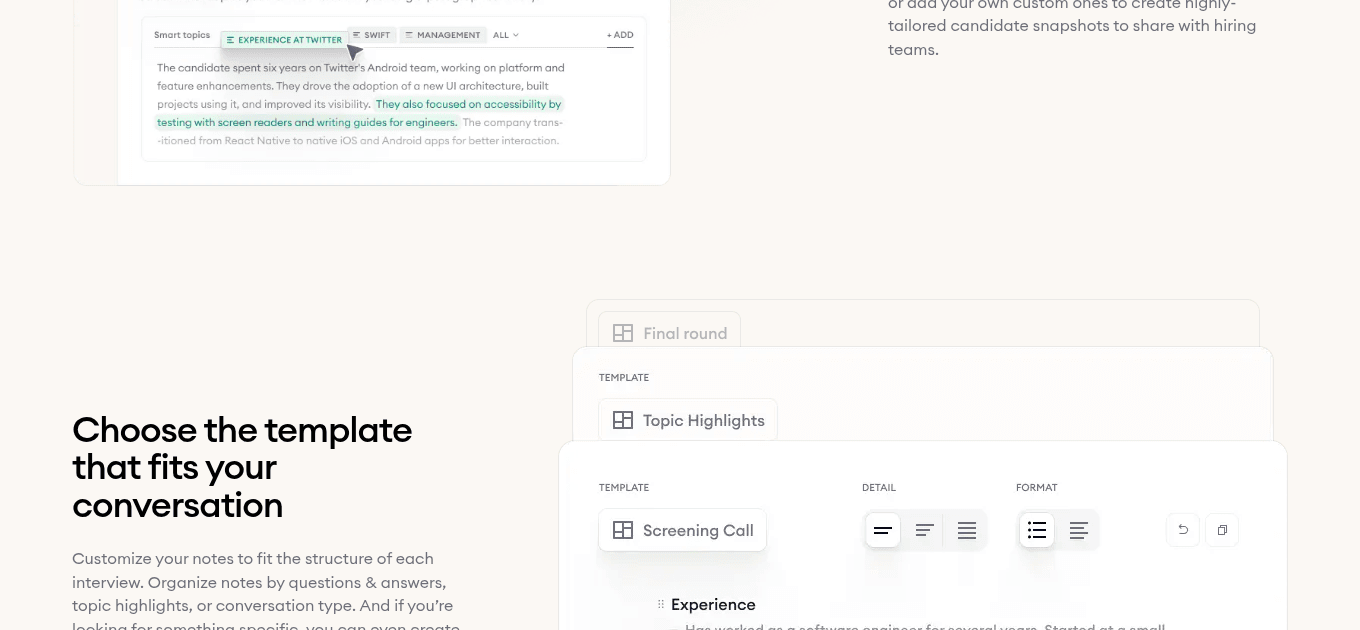
Short clips of strong interviewer behavior, and weaker ones, became the training currency.
New interviewers watched the clips before their first panel. Experienced interviewers used them to calibrate against each other. The rollout didn’t need a separate LMS or a half-day workshop.
Run AI Reports
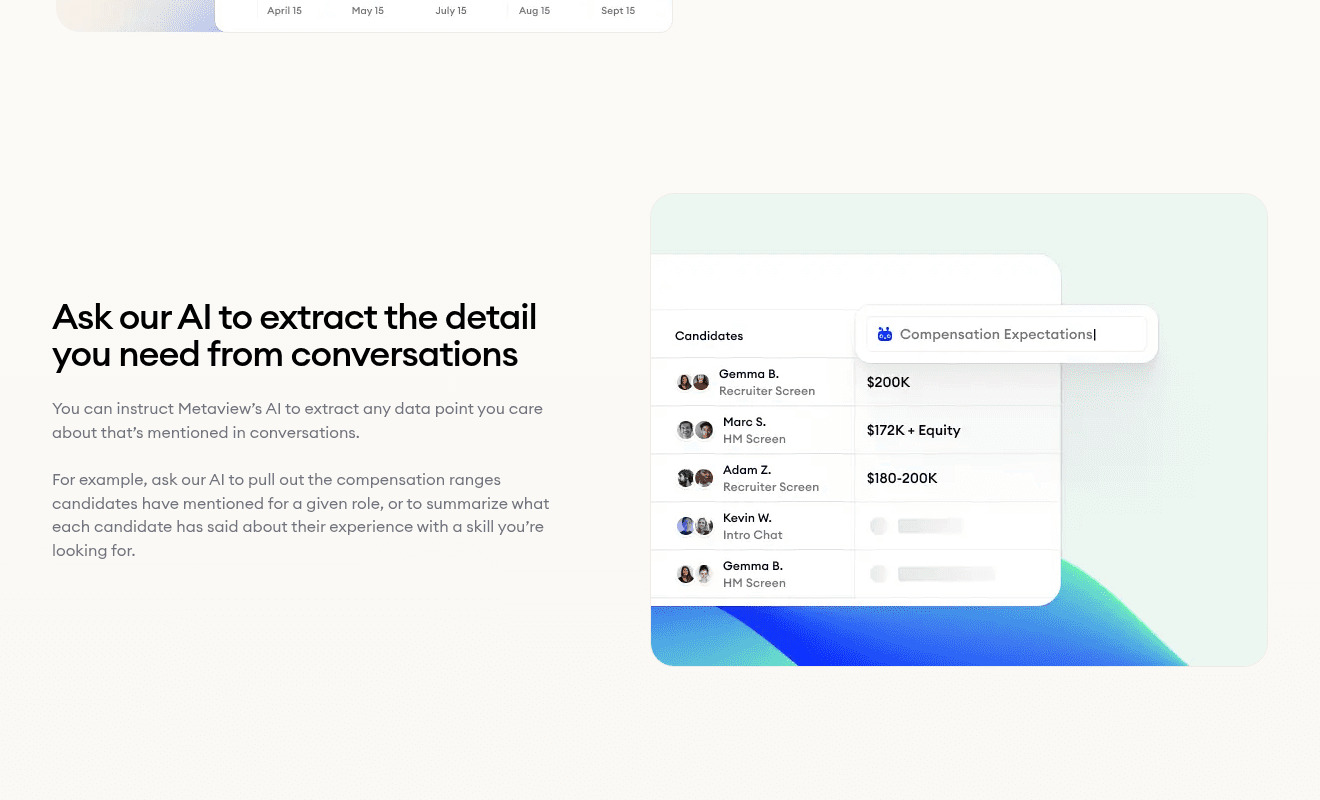
Once the corpus had a few months of interviews in it, the recruiting team started using AI Reports to surface patterns across candidates. That became the unlock for the Lisbon office build, covered below.
The result
300 engineers hired for Catawiki in one year with Metaview. The numbers underneath are what made the year compound.
- Recruiter time back. Between 2 and 6 hours per recruiter per week, depending on the role’s interview volume. The team converted that time into more outreach, deeper intake conversations, and proper offer prep.
- Interview quality. 75% of Catawiki interviewers, in an internal survey, said Metaview helped them make more informed hiring decisions.
- Candidate experience. A 5% candidate-satisfaction lift. The team attributes it to interviewers being more present in the conversation and the post-interview notes being more useful afterwards.
- Bench depth for Lisbon. The data layer the rollout produced became the input for the Lisbon office’s market analysis.
Hiring managers are depending on us recruiters to guide them. They really appreciate that we can back up our recommendations with pure data.”
Lisbon: the market-intel side-effect
When Catawiki opened the Lisbon office, the recruiting team had a market they didn’t yet have signal in.
Salary expectations, working-pattern expectations, and the way Portuguese engineering candidates framed their priorities were all new.
The first 20 backend-engineering screening conversations in Lisbon, captured in Metaview, became the dataset.
The Lisbon market wanted remote work in a way Amsterdam didn’t. Of the first 20 candidates, 15 wanted full remote, 4 were open to hybrid, and 1 wanted on-site.
The recruiting team carried that to hiring managers as a number, not a feeling, and the offer template adjusted within the week.
Why this matters if you use Metaview
Most recruiters don’t know where to start or what they actually need.
Different interviewers ask different things for the same role, there’s not much standardization, and hiring managers’ confidence in the data goes up and down with the interviewer.
Metaview can help you change that.
- Same role, different interviewer, different questions
- Hiring managers calibrate on feelings, not evidence
- 2-6 hours per recruiter per week lost to notes and scorecard wrangling
- New markets sized by intuition, not by candidate data
- Standardized question set across every interviewer on every role
- Hiring managers see the data, not the recruiter’s interpretation of it
- Recruiter time goes back into outreach, intake, and offer prep
- New markets sized by what the first 20 candidates actually want
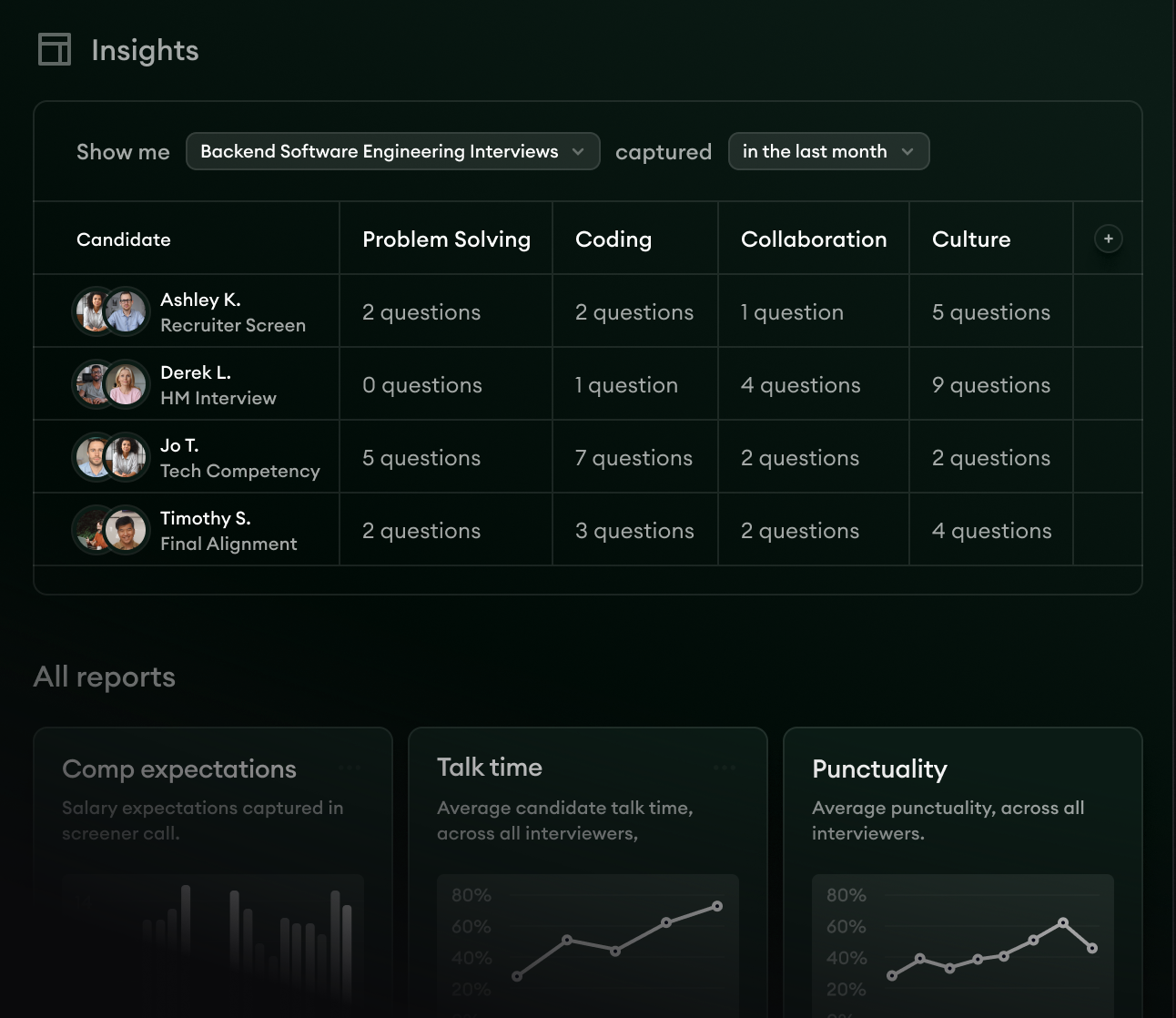
Once the conversation has been captured, structured, and made queryable, every downstream recruiting decision can run on evidence rather than on the recruiter’s memory of how the candidate sounded.
Lessons from the Catawiki rollout
- Audit before you train. Catawiki’s first move wasn’t a new training program. It was listening to their existing interviews and noticing what the workflow already wasn’t doing. The audit told them what to standardize.
- Clips beat workshops. Snippets did more interviewer training than an LMS would have, because the training was always available, always in context, and always specific to the role. The marginal cost of adding a new clip is roughly zero.
- Market entry is research. The Lisbon expansion worked because the first 20 candidates were treated as the dataset, not as early misses. Most teams enter a new market by guessing at the offer template. Catawiki tuned the template against the data within a week.
Frequently asked
How long did Catawiki’s Metaview rollout take?
A few weeks of setup and the rest of 2021 to compound. The Notetaker capture and structured-scorecard piece went live early. The Snippets-based interviewer training and the AI Reports market intel both came online once the first months of interview data were in the corpus.
Which Metaview features did Catawiki use most?
Notetaker for the live capture, Snippets for interviewer training, AI Notes (and custom AI Notes templates per role) for the structured post-interview write-up, and AI Reports for the cross-candidate analysis that drove the Lisbon offer template.
How did Catawiki measure the impact?
Internal interviewer survey for the more-informed-decisions signal (75% of interviewers), recruiter-time reporting for the 2-6 hours saved per week, and candidate satisfaction scores from the existing exit survey. The 300-hire headline number was the year’s hiring plan, hit in twelve months.
Can a smaller recruiting team get the same outcome?
Yes, and Catawiki’s was small relative to the goal. The leverage is in the interviewer count, not the recruiter count. Every interviewer who runs a panel pulls signal into the corpus, which means the data layer compounds whether the recruiting team is three people or thirty.
Does Metaview work with Greenhouse and Zoom?
Yes. Catawiki was already running Greenhouse and Zoom in production before the Metaview rollout. Notetaker joins the Zoom call as a participant; the structured scorecard and AI notes push back to the existing Greenhouse scorecards, so the hiring-manager view doesn’t change.
Bring Metaview into your hiring stack.
Live notes, structured scorecards, and ATS sync - set up in under 10 minutes.
