
Sendwave is one of the world’s leading remittance companies, founded in 2014 and backed by Y Combinator, Founders Fund, and Khosla Ventures.
At the start of 2020, Sendwave was preparing for a year of aggressive growth. The recruiting team needed to scale interviewer capacity to match.
They cared about more than headcount. They wanted to keep the candidate experience consistent and the interview bar high, even as more people came into the recruiting process.
This is what Metaview was built for, and this is how we helped them.
What Sendwave needed
In a high-growth year, bringing on more interviewers usually means a quality dip.
Without strong interviewers, interviews become less rigorous and less consistent. The cost of getting that wrong is real, and it compounds fast at scale.
Sendwave didn’t have a way to see what was actually happening in every interview, or to coach individual interviewers based on their own performance.
We cared about maintaining a great candidate experience and being consistent in how we interviewed, as more people became involved in the recruiting process.”
Sendwave needed three things from the rollout.
- Visibility into how every interview was being run as the panel grew.
- A way to onboard new interviewers without slowing the recruiting team down.
- Ongoing calibration so the bar stayed consistent through hyper-growth.
What they had to work with:
- An existing tech stack on Greenhouse and Zoom.
- A growing interviewer panel including newer team members running their first interviews.
- Aggressive hiring targets that couldn’t wait for a workshop cycle to complete.
How they used Metaview
Sendwave rolled out the program in four moves. Each one cleared a specific bottleneck, and each one compounded on the last.
Capture every interview
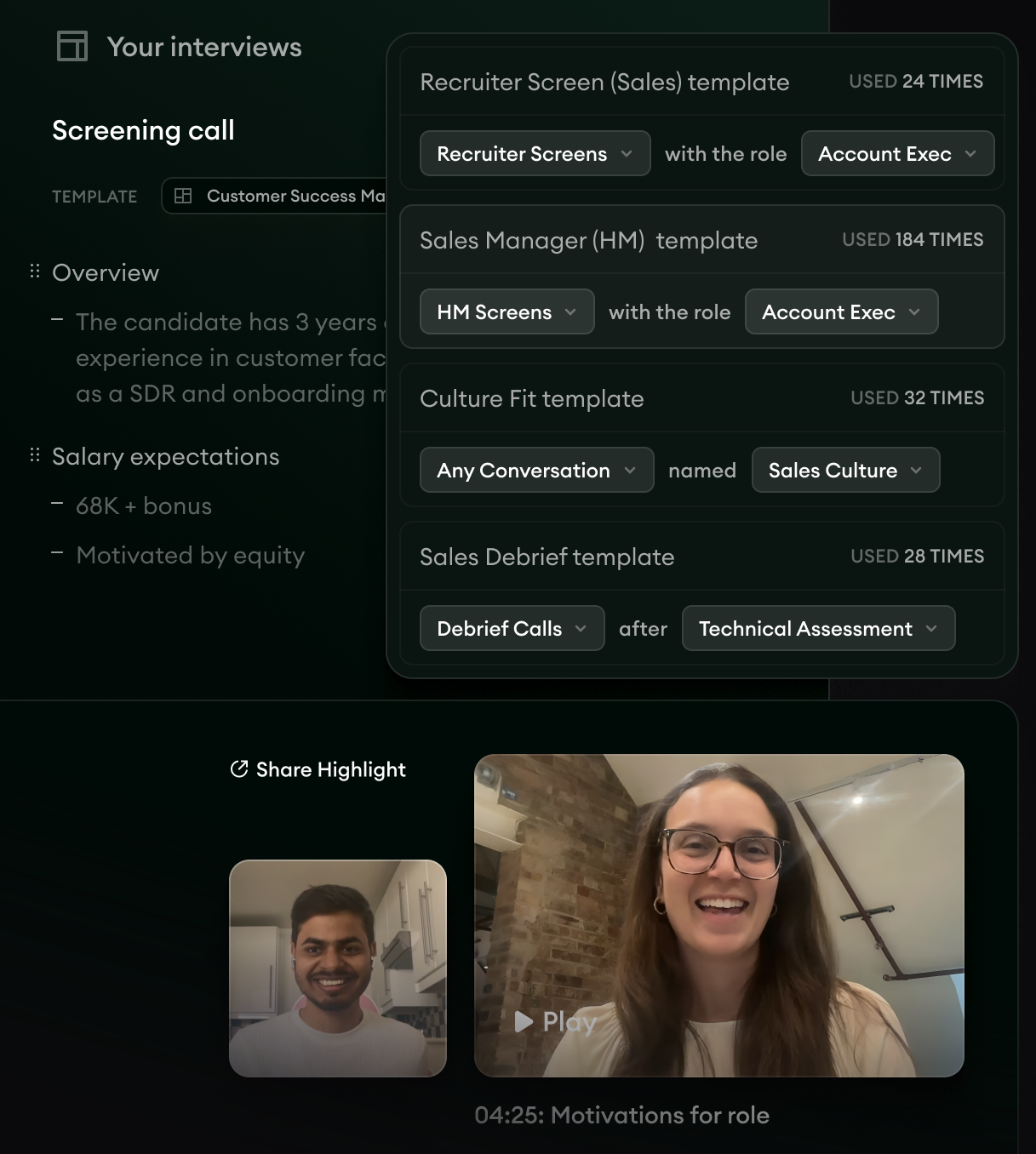
Notetaker joined every Sendwave interview as a silent participant.
It captured the full conversation, transcribed every question and answer, and attached the panel’s scorecard notes to the same record.
This built up into a corpus of 1,065 interviews, the dataset everything else in the rollout would run on.
Onboard interviewers in waves
Sendwave started with their most experienced interviewers. These were the people whose patterns the recruiting team already trusted.
As hiring volume increased, more interviewers were added to the platform. By the end of the rollout, 60 interviewers were being captured and coached on an ongoing basis.
New interviewers were enrolled automatically as they came on the panel. The training wasn’t a workshop; it was built into how every interview worked.
Coach individually after every interview
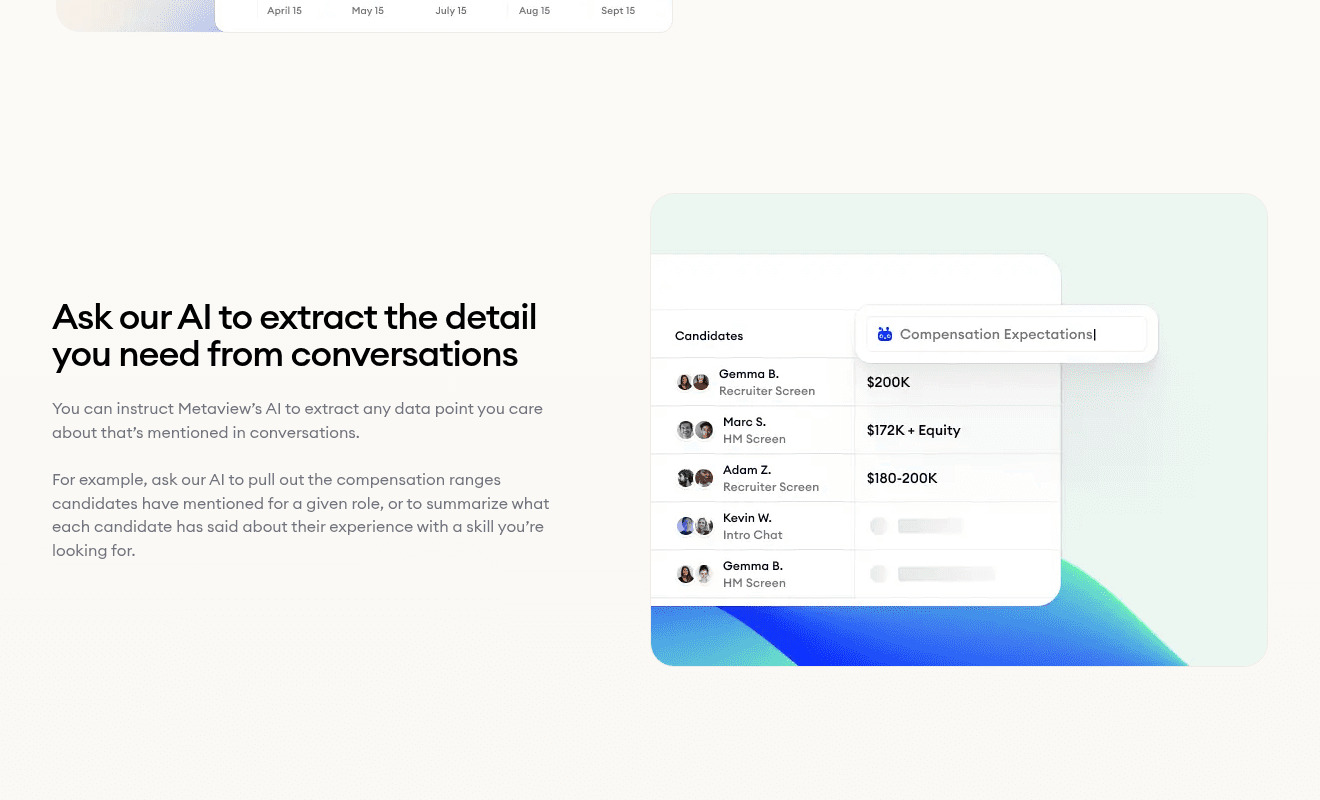
Metaview measured interview quality across the corpus and surfaced the specific areas where each interviewer could improve.
Coaching was personalized to each interviewer’s patterns: question depth, follow-up technique, candidate share of voice. The feedback was specific enough to act on.
Interviewers got immediate feedback after each interview, which meant the next one was already better.
Track improvement at the org level
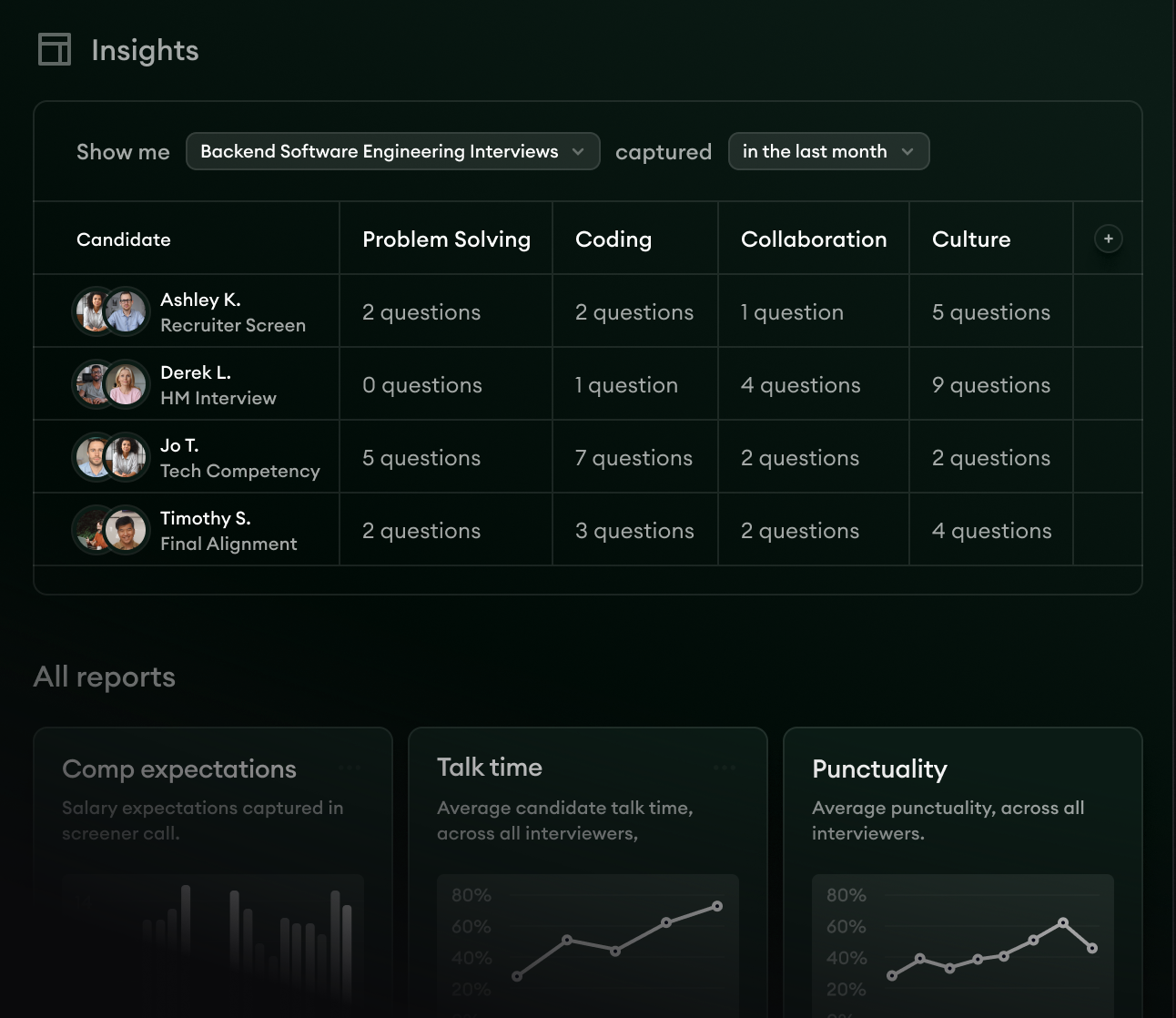
As coaching took effect, the recruiting team tracked the cumulative impact across the org.
They watched interviewer skill improve, interview quality climb, and final-stage candidates get stronger over time.
That visibility was what made the rollout worth defending to leadership during a year of aggressive growth.
The result
Sendwave’s rollout produced four measurable shifts over the year.
- Fewer interviews per hire. A 28% reduction in interviews per hire. Stronger early-stage interviews surfaced the right signal faster, so later rounds didn’t have to re-litigate the same ground.
- Better final-stage outcomes. A 38% improvement in final-stage conversion. Only well-prepared, well-fit candidates were reaching the leadership panel.
- Growth without quality dip. Headcount grew over 50% across the year while interview consistency held steady. The Metaview corpus served as the calibration layer underneath.
- Interviewers who got better round by round. Personalized feedback compounded. Each interviewer’s next interview was a little sharper than the last.
After each interview I’ve gotten immediate and actionable feedback which has improved every subsequent interview and ultimately the hiring decisions we make as a company. If my interviewing skills are the product, Metaview has been the ultimate tool for rapid iteration and ultimately growth.”
Why this matters if you use Metaview
Most companies that grow fast end up with an interviewer panel that’s bigger than the recruiting team can directly coach.
Workshops get stale. One-on-one debriefs don’t scale. The result is variance in how interviews are run, and variance in who ends up in the final round.
Metaview can help you change that.
- Growing interviewer pool with no visibility into how interviews were actually run
- Coaching delivered as one-shot workshops that didn’t stick
- Too many candidates reaching final-stage interviews unprepared
- Hiring slowing down even as headcount targets grew
- Every interview captured, transcribed, and analyzed against the rubric
- Personalized feedback delivered after every interview, so improvement compounded
- Stronger early-stage screens meant only well-prepared candidates reached the final round
- Hiring velocity stayed high through 50%+ headcount growth
Every interview you capture in Metaview becomes part of the dataset you coach against.
The more interviews you run, the more specific the coaching gets, and the smaller the gap between your strongest and weakest interviewers.
Lessons from the Sendwave rollout
- Start with the strongest interviewers. Sendwave onboarded their most experienced interviewers first. Their patterns became the baseline the rest of the panel was coached against.
- Coach round by round, not once a year. Sendwave’s interviewers improved continuously because feedback ran after every interview. A single workshop teaches one lesson; ongoing feedback teaches every lesson the data surfaces.
- Tie the rollout to recruiting outcomes. Sendwave tracked interviews per hire and final-stage conversion, not just interviewer-level metrics. That’s how the team kept leadership invested through a year of aggressive growth.
Frequently asked
How do you scale interviewer training during fast growth?
Capture every interview, analyze the corpus, then deliver feedback specific to each interviewer’s patterns. Workshops don’t scale past a few dozen interviewers. Personalized post-interview feedback does, because it runs whenever an interview runs. Sendwave coached 60 interviewers on an ongoing basis using this exact loop.
How do you reduce interviews per hire?
Strong early-stage interviews surface the right signal faster, so you don’t need extra rounds to fill in gaps. Sendwave cut interviews per hire by 28% because their first-round and screening interviews got more rigorous, which meant later rounds didn’t have to re-litigate the same questions.
What is a final-stage conversion rate?
The percentage of candidates who advance past the final-stage interview and receive an offer. A higher final-stage conversion rate signals that the rounds before the final stage are doing their job: only well-prepared, well-fit candidates are getting to the leadership panel.
What Metaview features did Sendwave use?
Notetaker for the live capture and transcription of every interview, AI Reports and AI Filters for the cross-interview analysis that surfaced patterns and gaps, and per-interviewer feedback dashboards for the personalized coaching delivered after every interview.
Can other companies replicate Sendwave’s results?
The specific numbers are Sendwave’s. The mechanism is transferable. Any company adding interviewers faster than they can train them will benefit from capturing the corpus and coaching individually rather than running workshops that get stale fast.
Bring Metaview into your hiring stack.
Live notes, structured scorecards, and ATS sync - set up in under 10 minutes.
