
A senior engineer resigns on a Tuesday. HR runs a thoughtful 30-minute exit interview, takes notes, files the doc, and mentions it in Monday's standup. Six months later, when two more people quit the same team, no one can quickly point to whether their reasons rhymed.
That's the part of exit interviews that lets companies down. The conversation usually goes fine. Everything after the call is where the program loses compound value: scattered notes, inconsistent capture, no quarterly read across departures.
Below is the 7-step process for turning a handful of scattered exits into one trend HR leaders can act on.
Why exit interviews matter.
Exit interviews give HR access to information current employees rarely share. Once someone has decided to leave, the power dynamics shift and honesty stops requiring courage.
The interview becomes the lowest-friction signal HR will get all year about how the company feels from the inside.
Over enough interviews, those private signals become public patterns. One person leaving because of workload may be anecdotal. Ten people citing unclear priorities is a system finding, and a routing instruction for where to focus limited time and resources.
The signal also compounds at scale. A single exit is a data point. A quarter's worth of exits is leadership-grade input. The work is keeping those conversations close enough together to read the pattern across them.
The 7-step exit interview process.
A simple, repeatable process keeps exit interviews from depending on individual enthusiasm. The goal is consistency, not complexity. Each step below is one move, not a project.
1. Decide which exits warrant interviews.
Not every departure deserves the same depth. Prioritize the roles, tenures, or teams where insight is most valuable: senior hires, regretted exits, anyone leaving a recently restructured team.
A 30-minute interview for every leaver burns time you don't have. The prioritized half produces almost all the signal.
2. Choose the format and interviewer.
Decide whether the conversation is live, written, or both. A neutral interviewer (usually HR or a third party) is the safer default.
Direct managers introduce defensiveness even with the best intentions. The interviewer's job is to listen, not to explain or defend past decisions.
3. Set expectations upfront.
Tell the employee why you're running the interview, how long it will take, and how their feedback will be handled. Naming the purpose explicitly is what creates psychological safety. Trust is the prerequisite for useful insight, and it's built in the first 30 seconds of the call.
4. Conduct the interview and capture insights.
Stick to the structure, listen actively, and avoid reacting defensively. The single biggest failure mode at this step is the interviewer typing notes while the employee is talking. The keyboard noise alone signals you're documenting them, not listening to them.
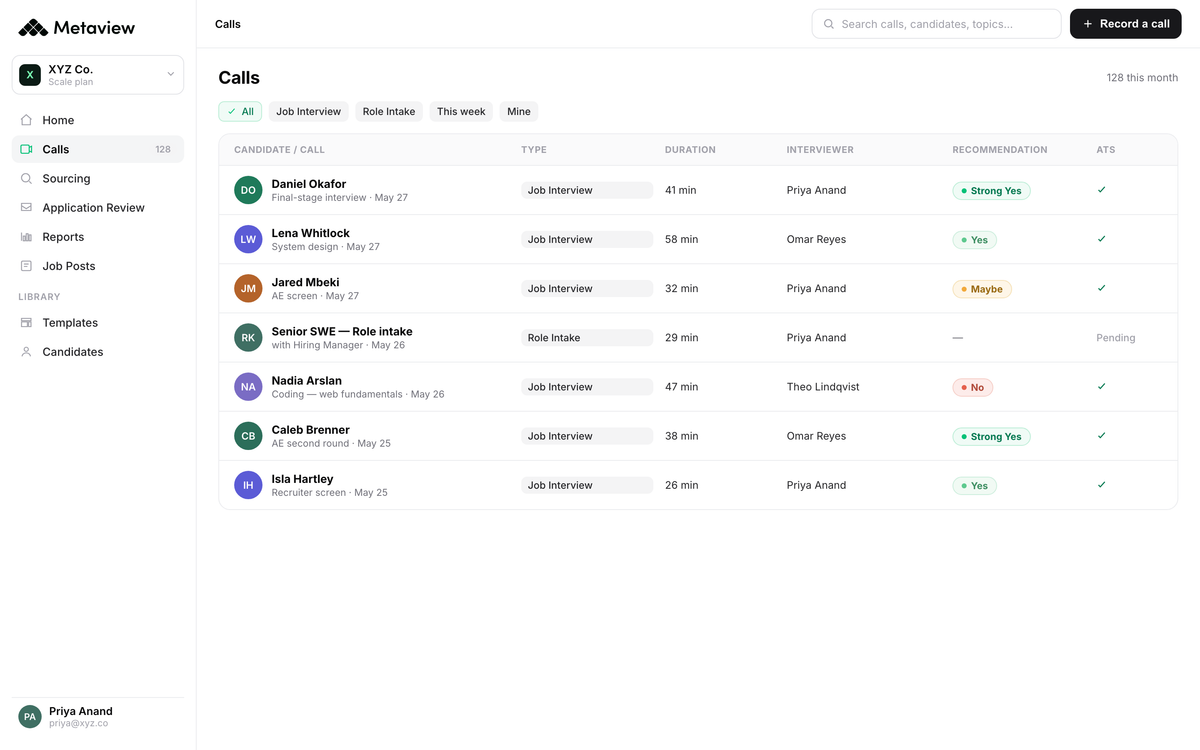
Use a Notetaker that captures the conversation in the background. The HR leader stays fully present, asks the follow-up question that matters, and treats the interview as a reading exercise rather than a documentation one.
5. Review and synthesize themes.
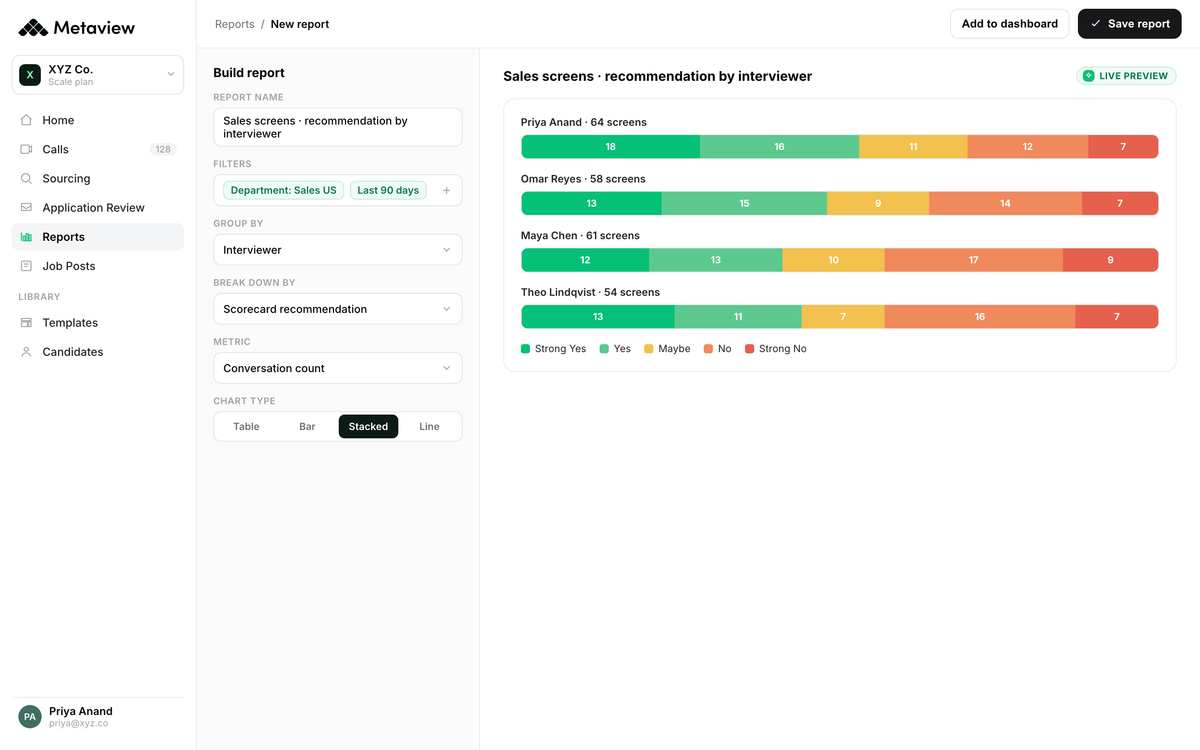
One interview is a data point. The value emerges when themes repeat across roles, teams, or time periods. Look for recurring drivers, not single complaints.
A natural-language query layer over your exit interview corpus turns scattered prose into a searchable theme inventory. The work shifts from reading 15 transcripts cover to cover to asking the dataset: "What did senior engineers cite most often in the last two quarters?"
We had a huge amount of qualitative insights, but they were scattered across all the interviews we had done. We needed a scalable way to extract all the key themes and turn them into data we could use in our programs.”

6. Share insights responsibly.
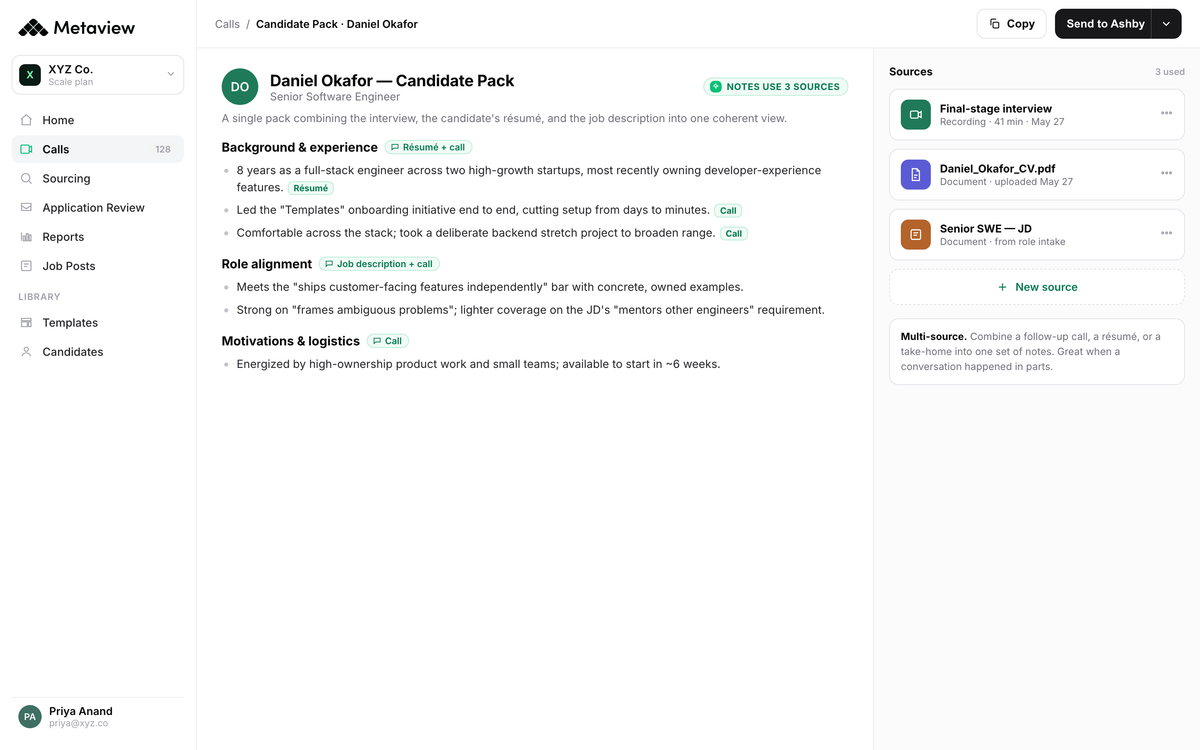
Aggregate themes before sharing with leadership. Protect individual anonymity while still surfacing actionable findings.
A useful share format is a one-page brief: the top three themes, the evidence behind each (number of interviews citing it, sample roles or tenure ranges), and the recommended action.
7. Close the loop where appropriate.
Not all feedback leads to immediate change. But acknowledging recurring themes (and naming the actions you're taking on them) builds credibility over time.
Even a short quarterly note saying "here's what departing employees told us and here's what we're doing about it" reinforces that the listening is real.
The questions that earn their place.
Well-designed exit interview questions balance structure with flexibility. They guide the conversation without boxing people in, and they let you compare interview insights across departures consistently.
Open, neutral questions invite reflection. Leading questions shut it down. The interviewer's job is to stay curious, not corrective.
| Category | Questions to ask |
|---|---|
| Reasons for leaving | What led you to start looking for another role? Was there a specific moment or factor that influenced your decision? |
| Role and expectations | How did the role compare to what you expected when you joined? Which parts of the job felt most and least meaningful? |
| Management and support | How would you describe the support you received from your manager? What could have made that relationship more effective? |
| Team and culture | How did you experience the team and broader company culture? Where did we live up to our values, and where did we fall short? |
| Growth and development | Did you feel you had clear opportunities to grow here? What would have made staying more attractive? |
| Closing reflection | What advice would you give leadership to improve the employee experience? Is there anything else you'd like us to know? |
Rethink your exit interview process.
Exit interviews aren't about persuading people to stay or resolving every issue on the spot. They're about listening carefully and learning consistently across departures.
The 7-step process is what makes the work repeatable. The capture-and-synthesize stack is what makes the program compoundable at scale.
Together, they turn the lowest-friction signal HR will get all year into a steady stream of leadership-grade insight, without demanding excessive calendar time.
Bring Metaview into your hiring stack.
Live notes, structured scorecards, and ATS sync - set up in under 10 minutes.
Frequently asked.
Are exit interviews worth it?
Yes, when they're focused, psychologically safe, and reviewed for patterns rather than one-off complaints. The value compounds around ten interviews: that's roughly where recurring themes become trustworthy signal rather than noise. A quarterly synthesis cadence is enough to inform leadership decisions without turning the program into a project.
Who should run exit interviews?
HR or a neutral third party is usually best. There's one edge case: when HR is itself the departure trigger (for example, a re-org HR led that's driving exits), a peer-team leader or external interviewer produces more candid feedback than the function the employee is leaving in part because of.
Should exit interviews be anonymous?
Anonymity sounds safer but cuts both ways. It reduces follow-up depth and makes cross-interview synthesis harder, because you can't ask the second clarifying question or check whether two interviews from the same team are saying the same thing. Most employees are candid when the process is credible; trust earned over the conversation usually beats anonymity by design.
How long should an exit interview be?
Around 30 minutes is typically enough. A useful alternative for senior or sensitive exits: split the interview into a 15-minute written prompt (covering the structured questions) followed by a 15-minute follow-up call that goes deeper on whatever the written answers surfaced. Longer single sessions rarely produce more insight.
