
Most recruiters source like every req is its own emergency. Job opens, search starts from scratch, the outreach list gets built, the same candidates get DM'd. Then the next req opens, and the rebuild starts again.
The teams that win at hiring run sourcing as a system built once, re-run every week. Five approaches working in concert, with AI doing the precision work the other four can't do at scale.
What sourcing builds for pipeline.
Most recruiting teams treat sourcing like a search bar. Open the req, run the boolean, build the list, hit send. When the candidate doesn't reply, the assumption is the channel is broken or the role is too niche. Neither is usually true.
The real failure is upstream. Sourcing is the discipline before the hunt: the system that decides who you're looking for, where they live, why they'd want to talk, and how you stay in front of them between reqs. Get that upstream right and every channel pulls harder.
The five approaches that move pipeline.
Recruiters who only run one approach miss most of the candidates worth talking to. Pipeline quality comes from running all five in concert, with each approach doing the job the others can't. Here's how they trade off.
| Approach | What it does | Where it wins | Where it struggles |
|---|---|---|---|
| Outbound | Recruiter-initiated outreach to specific candidates | Control over who enters pipeline | Time-intensive, hard to scale |
| Inbound | Candidates apply through job posts and brand | Volume; low marginal cost per applicant | Less control over quality and fit |
| Internal | Re-engaging past applicants and silver medalists | High ROI; candidates already know you | Stale data; manual ATS search is slow |
| Referral | Employee networks surface aligned candidates | Higher response rates, cultural fit | Ad hoc unless systematized |
| AI-driven | AI surfaces, prioritizes, and routes candidates | Precision at scale across the other four | Requires ATS integration and role context |
Two patterns to notice. First, internal sourcing is the most underused approach despite the highest ROI. Every team has a pool of silver medalists already in the ATS, faster to re-engage than any cold candidate.
Second, AI-driven sourcing doesn't replace the first four. It makes them precise enough to run at the volume modern hiring requires.
The workflow that turns five approaches into a system.
Behind every effective sourcing system is a repeatable workflow. The tools change, the channels change, the candidates change. The steps don't.
- Define the role and success criteria. What does "good" look like for this hire? Skills, experience, behaviors. No alignment here means no pipeline downstream.
- Identify target candidate profiles. Industries, companies, career paths, signals of fit. The narrower the targeting, the higher the response rate.
- Build candidate lists. Run the targeting through your sourcing tools, ATS, and networks. Lists are working documents, not deliverables.
- Outreach and engagement. Structured messaging across multiple touchpoints. Generic outreach gets ignored; relevant outreach earns replies.
- Qualification and handoff. Screen interested candidates, move qualified ones into the formal hiring process, and feed everything back into the ATS as data.
Most teams run this workflow informally. The lift comes from running it deliberately, every req: same steps, same definitions, same handoff points. Once the workflow is shared, every channel gets feedback from every other channel.
The strategies that lift pipeline quality.
Strong sourcing comes from doing a few high-impact things consistently. Six strategies separate teams who build repeatable pipelines from teams who build piles of unscreened profiles.
Start with a clear ICP.
The most common sourcing mistake is starting with a vague picture of the role. High-performing teams define a clear ideal candidate profile upfront: specific skills, career paths, companies, and signals of success.
Prioritize quality over volume.
Casting a wider net feels safer when hiring pressure is high. It almost never is. Over-sourcing dilutes attention per candidate and response rates drop. Smaller, higher-candidate quality pools convert faster.
Personalize at scale.
Generic outreach is easy to ignore. Effective outreach messages answer two questions: why this candidate, why this role.
Personalization at scale means structured templates that incorporate specific signals (background, recent work, mutual context). The message feels intentional, with no manual writing every time.
Build talent pipelines continuously.
Strong sourcing keeps running between reqs. Candidates who aren't a fit today may be the right fit in six months. Treating sourcing as an active talent community means future hiring starts warm instead of cold.
Rediscover ATS candidates.
One of the highest-ROI strategies is also the most overlooked. Most ATS platforms hold qualified candidates who interviewed, advanced, and didn't get the offer.
These silver medalists are familiar with your company and faster to re-engage. ATS rediscovery is where modern teams find pipeline without starting from scratch.
Use AI for precision.
Manual sourcing doesn't scale, and pure volume tools don't lift quality. AI-driven sourcing helps you identify relevant candidates faster, prioritize outreach by fit, and surface internal candidates the manual workflow misses.
Precision is the multiplier: it makes the other five strategies work without needing more recruiter hours.
How AI Sourcing closes the precision gap.
The four traditional approaches (outbound, inbound, internal, referral) all work. They also all hit the same ceiling: precision drops as volume rises.
A recruiter running 50 outbound messages a week can hyper-personalize every one. A recruiter running 500 can't. The personalization flattens, response rates fall, and the channel starts looking broken when it's just maxed out.
Our AI Sourcing surface closes that gap. It surfaces candidates from the ATS and from external sources, matches them against the live role context, and prioritizes outreach by fit instead of by recency.
According to Metaview's 2026 AI Hiring Alignment Report, surveying 505 recruiting leaders and hiring managers across North America and EMEA, AI-led teams aren't outpacing the rest by accident. The data is uncomfortable for the manual-only camp.
AI Sourcing earns its place because it acts as the precision layer the four traditional approaches need to scale. The recruiter still runs the outbound playbook, the brand still pulls inbound, the team still works referrals.
AI matches role context to candidate profiles at the speed and breadth no manual workflow can match. The result feeds back into the ATS so every channel gets smarter.
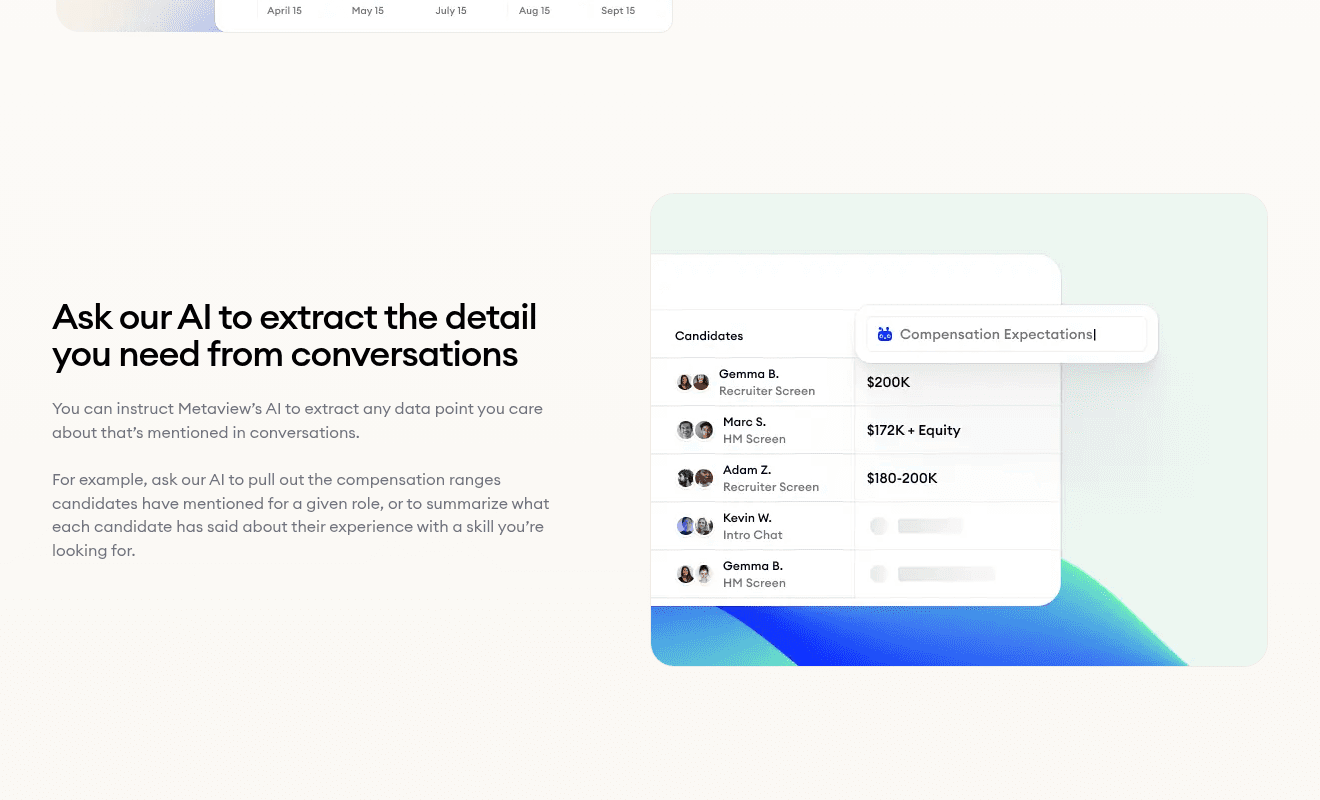
- 1Natural-language query replaces the boolean string.
- 2Role context (skills, level, behaviors) is matched against every candidate profile.
- 3Results prioritized by fit, with reasoning the recruiter can verify.
The cumulative effect is what makes a sourcing system get sharper every hire. Each match feeds the next match. Each accepted profile teaches the model. Each rejected one removes a near-miss pattern from the next query.
The five approaches keep doing what they do best. The system stays sharp because the data layer underneath every approach gets better with every interaction. That's the bet AI Sourcing pays off across every channel the recruiter runs.
Sourcing as a system gets smarter every hire, and the recruiter who runs the system stops choosing between volume and quality.
Bring Metaview into your hiring stack.
Live notes, structured scorecards, and ATS sync - set up in under 10 minutes.
Frequently asked.
What's the difference between HR sourcing and recruiting?
Sourcing sits at the top of the recruiting funnel. It's the proactive identification and engagement of candidates before they apply. Recruiting is the broader discipline that includes screening, interviewing, and offer. The quality of sourcing shapes everything downstream, because pipeline composition is decided at the sourcing stage, not the screening stage.
Which sourcing approach should I start with?
It depends on req urgency, team size, and ATS maturity. High urgency plus a mature ATS argues for internal rediscovery first. Low team size with a strong employer brand argues for inbound and referral. Most teams over a year old benefit from running all five in parallel with AI Sourcing as the prioritization layer that decides where the recruiter's hours go each week.
How does AI Sourcing differ from LinkedIn Recruiter?
LinkedIn Recruiter is built around boolean strings against the LinkedIn graph. AI Sourcing uses natural-language queries against the role context (skills, behaviors, level) and runs across the ATS, external sources, and past pipelines together. The key difference is in the output: LinkedIn returns matches against the query; AI Sourcing returns candidates ranked by fit against the actual role, with the reasoning attached so the recruiter can verify the match.
What sourcing metrics matter most?
Track lead indicators and lag indicators separately. Lead: response rate, interview-stage conversion, time to first reply. Lag: pipeline conversion to offer, quality of hire, retention at 12 months. The lead indicators tell you whether the sourcing is working this week; the lag indicators tell you whether it's working for the business. Most teams overweight lead and never measure lag.
How long does it take to rebuild sourcing as a system?
A 90-day reset is realistic for most teams. Week 1: lock the ICP. Weeks 2-4: define the channel mix and reset the workflow. Weeks 4-12: roll out AI Sourcing against the ATS, layer it into the existing channels, and measure lift against baseline. The discipline is in keeping the workflow the same across reqs so the data layer underneath compounds.
