
Most reference checks are run cold. The recruiter dials in with the same 12 questions they ask for every role, the reference says nothing surprising, the notes get pasted into the ATS, and nobody reads them again. That call should be the highest-signal-per-minute conversation in your funnel. For most teams, it is the lowest.
The gap is not the questions. It is what flows into the call and what flows out of it. Strong reference conversations build on the specific themes you flagged in earlier interviews, probe the gaps the panel left open, and feed back into how you brief the next hiring manager. Weak ones float in their own little bubble at the end of the loop.
This guide is the operating model: how to brief a reference call so it earns its 30 minutes, the question set organized by interview theme, the pitfalls to design out, and how to close the loop so reference signal compounds across hires instead of evaporating after each one.
Why most reference calls under-perform.
The pattern most teams follow: schedule the call, ask 12 questions, write down the answers, paste them into the ATS notes field, move on. Three things go wrong with that workflow, and they are structural, not behavioral.
The first is timing. Most teams run reference calls after the final round, once the hiring manager has effectively decided. By then the conversation is a rubber stamp. Anything the reference says that contradicts the panel will get rationalized away. The team is already invested. The reference call needs to land at the moment the team still has questions it cares about.
The second is inputs. The recruiter goes into the call with the candidate's resume and a generic question bank. They do not go in with the three specific competencies the panel flagged as needs-more-signal, the one moment the senior interviewer noticed but couldn't pin down, or the open question the hiring manager wanted resolved before debrief. So the call doesn't resolve those things.
The third is outputs. The notes are unstructured prose in a textarea. The hiring manager skims them in the offer huddle and pulls one line out of context. Nobody can search across reference notes from previous hires to spot patterns. The signal exists for 24 hours, then dissolves.
This is the trust-gap problem playing out at the reference moment. According to Metaview's 2026 AI & Hiring Alignment Report, surveying 505 recruiting leaders and hiring managers across North America and EMEA, 58% of teams wish they could work around their counterpart, and 67% lose qualified candidates to faster-moving competitors every month. Reference signal that is captured, structured, and shared back to the hiring manager is not a nice-to-have. It is the currency that closes that trust gap. The 3.8x and 40% lifts that come with AI-core hiring are exactly the kind of structural change that turns reference calls from formality into evidence.
The 3-condition framework.
Strong reference signal needs three conditions in place. The questions and the call itself are downstream of these. Get the conditions right and even an average interviewer can run a great reference call. Get them wrong and your best recruiter will produce notes nobody acts on.
Condition 1: The call inherits structured signal from the interviews. Before the call, the recruiter and hiring manager should be able to answer: what specifically do we want this reference to tell us that the panel didn't? If the answer is general impressions, the call has not been scoped. If the answer is the senior eng wants to triangulate on whether this person can lead architecture decisions independently because two interviewers gave them a 7/10 on systems thinking, the call has a job.
Condition 2: The conversation gets captured against the same competencies as the interview loop. Not free-text notes. Structured against the scorecard. So when the hiring manager opens the candidate record, they see the reference signal slotted next to the panel's signal for each competency. Same vocabulary, same shape, side by side. That is what makes it usable in the debrief.
Condition 3: The signal goes back into the next kickoff. Three months later when you brief the next hiring manager for a similar role, the reference signal from the last hire should be visible: what the reference said about how this kind of profile operates, what motivated them, what derailed them. Reference data should compound across hires, not evaporate after each one.
- Recruiter dials in with the same 12 questions for every role
- Reference signal lives in a textarea nobody re-reads
- Each call starts from zero; lessons do not compound across hires
- Call inherits the specific themes the panel did not resolve
- Reference notes slot into the scorecard alongside interview signal
- Patterns surface across hires and brief the next kickoff
We elevated from gut-feel recommendations to evidence-based insights, creating a faster, clearer, and more data-driven experience for everyone involved. Every scorecard and report looks and sounds consistent, regardless of who prepared it.”

The product layer that does the work.
Here is where Metaview slots in. The same intelligence layer that captures interview signal also pre-briefs your reference calls and routes the answers back into the candidate record against the same competency model.
In practice that means three things happen automatically that recruiters normally do by hand. AI Notes captures the reference conversation verbatim and produces a structured summary against the scorecard, so the recruiter is not typing while listening. AI Filters lets the hiring manager ask a question across every reference call we have done for a role, for example what do references typically flag about ramp-up time for senior backend engineers, and get an answer with citations. Multi-Source Summaries cross-reference what the panel said against what the references said, so the hiring manager sees the points of agreement and disagreement laid out before the offer huddle.
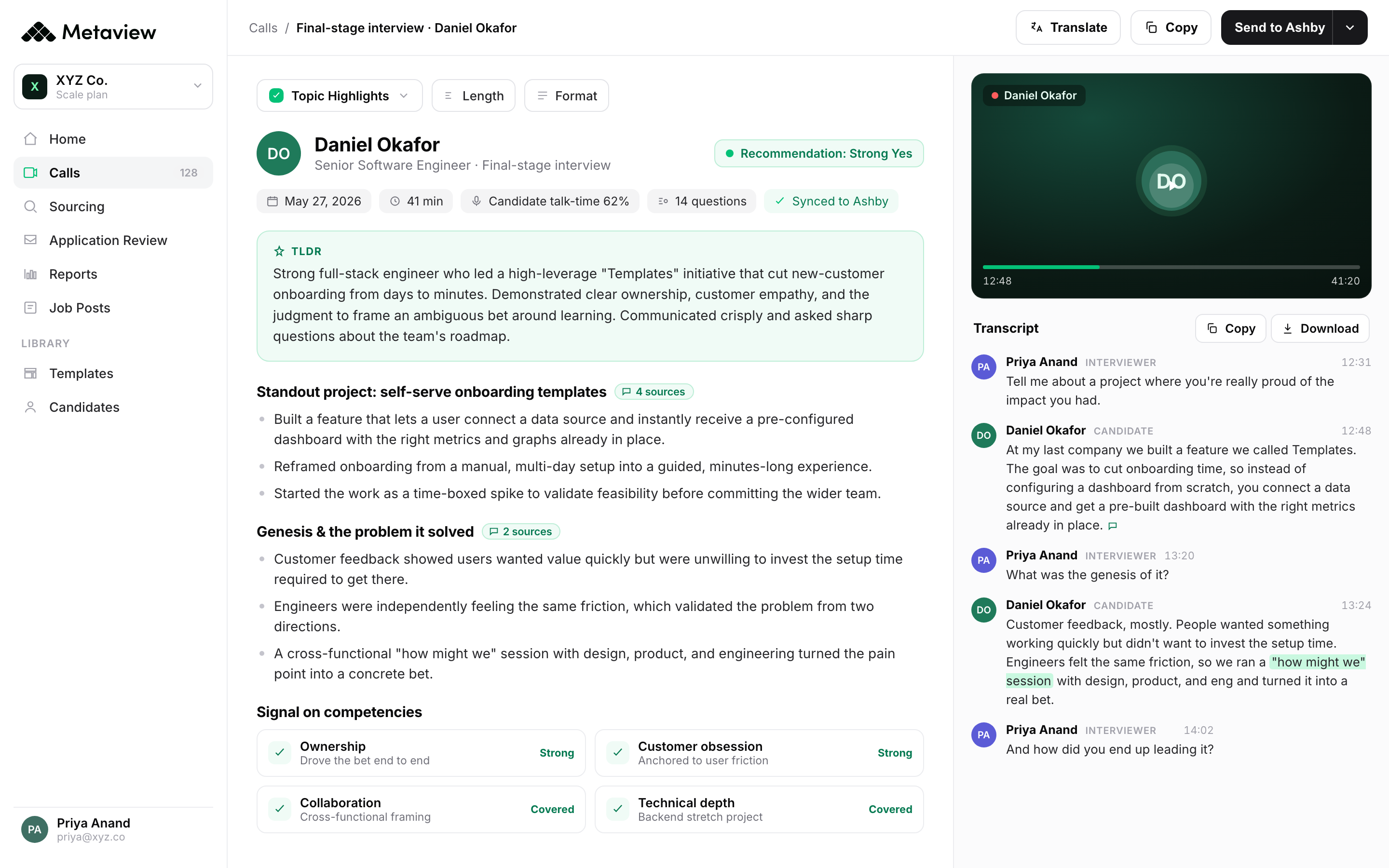
- 1Reference themes captured verbatim during the call, transcribed live so the recruiter is not typing.
- 2Each answer slotted under the same competency the interview panel used, not free-text prose.
- 3Synced to the candidate record, visible to the hiring manager in the offer-prep view.
Key reference check questions, by interview signal.
Good reference questions are open-ended, specific, and grounded in real moments the reference actually witnessed. They invite stories rather than yes/no answers. You will not ask all of these in any one call. A reference call should take 15 to 25 minutes, so pick the four or five that map to what the panel did not resolve.
The frame: organize the questions by the same interview-signal themes you are using on the scorecard. That way the answers come back in a shape your hiring manager can use.
Performance and impact.
- Can you describe the candidate's role and the specific impact they had on your team or on the business?
- What kind of problems did they consistently do well at solving? Walk me through one.
- Where did they add the most value over time, and where did you most miss them after they left?
Strengths and growth areas.
- What would you say are their two standout strengths, with an example of each?
- In what areas did they grow the most while working with you, and what triggered that growth?
- What feedback did they respond well to? Any feedback they struggled with?
Working style and collaboration.
- How did they work with peers and stakeholders, especially under pressure or ambiguity?
- What kind of environment brought out their best work, and what kind did not?
- Describe a moment when they had to disagree with you or with a peer. How did they handle it?
Motivation and engagement.
- What motivates them most in their work, in your experience?
- What do you think they are optimizing their next role for, and what would make them turn it down?
- When did you see them most energized? When did you see them least energized?
Context-setting (for the reference's own role).
- How did you measure success for this role on your team?
- What management style worked best for them, and what did not?
- Is there anything I have not asked that I should have, given what we are hiring for?
What customers running this play are seeing.
The teams that get this right treat reference calls less like a vetting step and more like a closing tool. The reference becomes an ally in landing the offer, and the hiring manager gets a richer picture of the person before signing the comp.
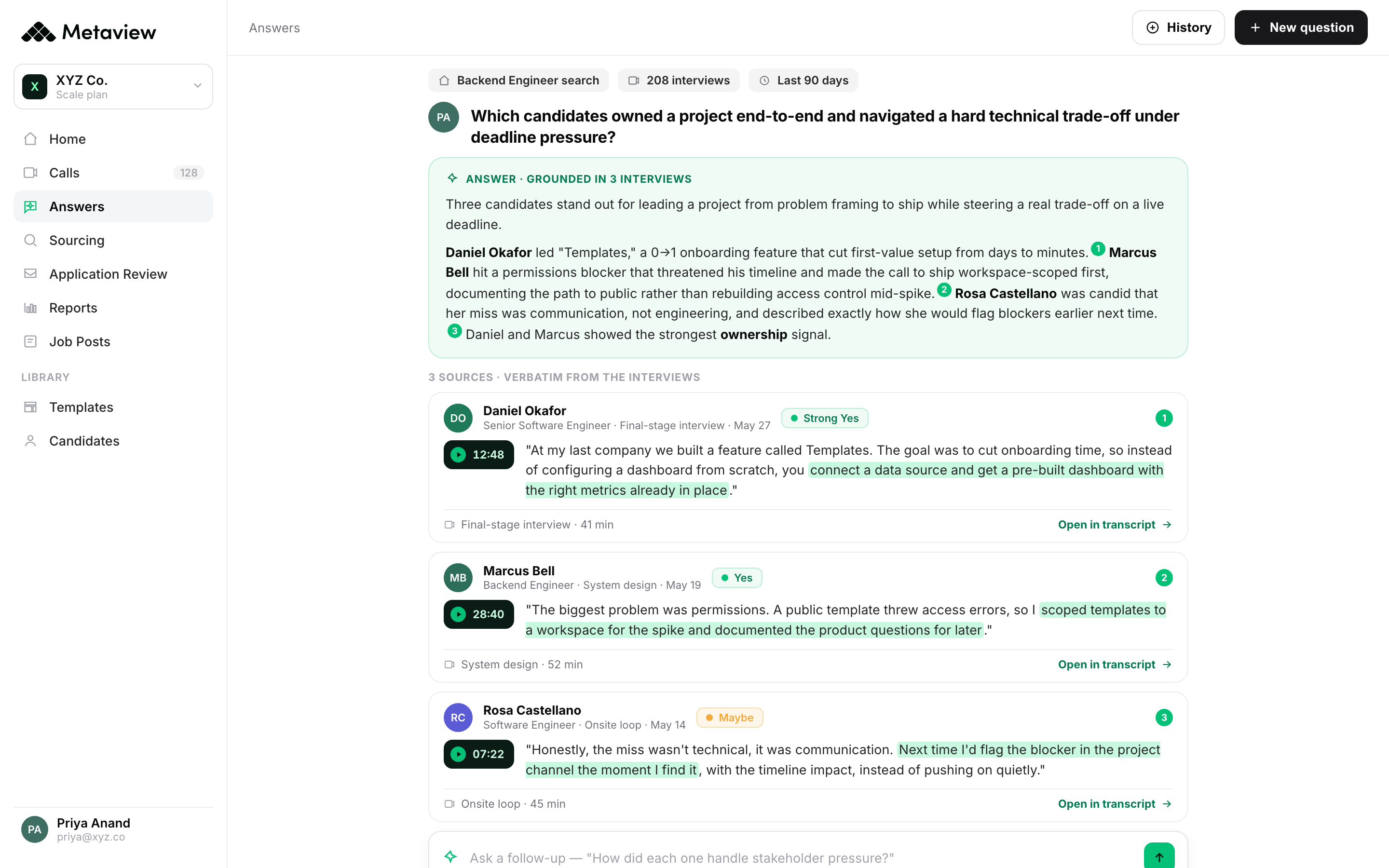
The signal compounds in two directions. Reference data informs the closing pitch (you know what motivates this candidate from someone who watched them at their best), and reference data informs the next kickoff (you know which competencies actually predicted performance in past hires for this role profile).
Hiring managers now see our recruiting team as strategic partners rather than people filling roles. When a hire takes longer than expected, everyone understands why, based on the data, which builds trust and sets appropriate expectations.”

Close the loop into the next kickoff.
The cleanest way to know whether your reference workflow is working: ask whether a hiring manager three months from now, briefing a similar role, can pull up the reference signal from the last hire and use it. If yes, the system compounds. If no, every reference call is starting from zero.
In practice this means three things. Reference notes live next to interview notes on the candidate record, not in a separate document. They are tagged against the same competencies the scorecard uses, so they roll up into the same dashboards. And the patterns surfaced in the Reports view (for example, references for senior engineers consistently flag context-switching as a strength) get pulled into the next intake conversation, not buried in the previous hire's folder.
When that loop closes, the reference call stops being an end-of-funnel formality and becomes an evidence-generating step that improves how you hire for the role going forward. Less admin. Better conversations. Reference calls that actually influence outcomes, both for this hire and the next.
Bring Metaview into your hiring stack.
Live notes, structured scorecards, and ATS sync, set up in under 10 minutes.
Frequently asked.
How many references should you check, and when in the process?
Two to three is the right depth for most roles. The call should land before the hiring manager has emotionally committed, which is usually after the final-round panel debrief but before the offer huddle. By the time the offer is on paper, the team rationalises away anything a reference says that contradicts the panel.
Should reference checks ever disqualify a candidate?
Yes, but rarely on a single comment. Disqualification should come from consistent, well-contextualized concerns echoed across two or more references and tied back to specific competencies the panel had open questions on. A single vague worry from one reference is signal to probe further, not to walk away.
What if references contradict the panel's impression?
That is the most valuable outcome of the call, not a problem. Contradictions usually reveal context the panel did not see: a different working environment, a different scope, a different growth phase for the candidate. Capture the contradiction explicitly and bring it into the debrief instead of resolving it silently.
Are reference checks still relevant for senior hires?
More relevant, not less. Senior roles rely on judgment, influence, and second-order leadership effects that take quarters to surface in interviews. References who watched the candidate operate at that level can compress months of trial-and-error into a 25-minute call.
How do you stop reference insights from getting buried after the call?
Capture them structured against the same scorecard the panel used, link them to the candidate record alongside interview notes, and surface them in the offer-prep summary. If your reference notes live in a separate doc nobody opens after the offer is signed, you do not have a reference workflow. You have a paperwork workflow.
Can AI run reference calls instead of recruiters?
No, and that is the wrong framing. The recruiter still runs the call. The AI handles the part of the workflow that does not need a human: capturing the conversation, structuring it against the scorecard, surfacing it next to interview signal. What you free up is the recruiter's attention, so the call becomes a real conversation instead of a typing exercise.
