

The cold-start scramble is an inventory problem. Every search starts at zero and ends a week later than it needed to.
The fix is treating the hiring pool as the inventory layer underneath every sourcing motion. Past applicants, sourced prospects, and warm leads, all centralized and segmented, so the next req opens against a bench, not a blank query.
Why the pool is the inventory layer.
Most recruiting org charts treat sourcing like a series of campaigns. Pipeline for the senior eng role. A separate one for the SDR ramp. A third for the GTM hires the board just asked about. The pool is something else entirely, a standing inventory the campaigns draw from.
When the pool is the inventory layer, every other sourcing motion either deposits into it or draws from it. Mapping campaigns add prospects. Channels add applications and referrals. Reactivation surfaces candidates the pool has already vetted.
Each move runs against a deeper bench than it would without the inventory layer behind it.
The pool's quality compounds every other motion. A deeper pool means a faster search, a warmer first conversation, a higher response rate.
How to build the pool.
Six maintenance disciplines build the pool. They run continuously, not as one-off setup tasks, and each one earns its place every quarter. Skip one and the pool starts to drift inside three months.
1. Define the scope.
Decide which roles, skill clusters, and regions the pool covers. A specialist agency might run pools for fewer than 10 role families. An enterprise team might run 50, segmented by business unit.
Scope before centralize. Too broad and the data gets noisy. Too narrow and you're back to per-req sourcing for everything outside the scope.
2. Centralize the data.
One system holds the pool. An ATS, a recruiting CRM, or a combination, never spreadsheet sprawl. Centralization is what makes segmentation possible.
Sync inbound from every source: applications from the careers page, sourced prospects from LinkedIn, referrals from internal forms, event scans. All tagged at the source, ready for segmentation. The de-dupe alone justifies the work.
3. Segment the pool.
Tags, lists, custom fields. Segment by role family, skill cluster, seniority band, location, last-touch date, and status (active / passive / dormant / silver medalist).
A search for "Senior Frontend, Bay Area, last-touch within 12 months" should return a usable shortlist in seconds, not a sift through 4,000 entries. The segment IS the search.
4. Nurture engagement.
The pool stays warm only when you stay in touch. Quarterly company-update emails. Role-family newsletters when a comp band shifts. A short note when a candidate's role-family lead opens up.
The cadence matters less than the consistency. Candidates remember a recruiter who messaged once a quarter for two years. They don't remember one who sourced them once and went silent.
5. Re-engage past applicants.
Silver medalists, near-miss finalists, and dormant warm leads are the highest-signal segment in the pool. They've vetted your brand, your process, your offer band.
Silver-medalist reactivation is the discipline most teams skip and most regret skipping. The reactivation rate on a clean silver-medalist segment regularly beats cold outreach by 3-4x on response rate.
6. Measure engagement.
Track the pool the way you'd track a product. Open rates on nurture sends. Response rates on outreach. Reapplication numbers from past candidates. Time-to-shortlist per segment.
Use the numbers to refine cadence and surface segments that drift. A segment with a falling response rate needs a content refresh. One with no reapplications might need pruning.
Why a pool-first team moves faster.
The math on every req shifts. Time-to-fill comes down because the shortlist is already half-built. Cost per hire drops because you spend less on job boards and agencies.
Quality of hire rises because the second conversation with a known candidate carries more signal than the first with a stranger.
It's reduced my screening time by up to 50%. Both strong and weak profiles are reviewed within a couple of seconds.”

That screening lift is what a pool-first team produces at scale. The inventory layer surfaces the right candidates against the open req fast enough that the recruiter spends time on conversation, not on triage.
- Sourcing starts cold for every req
- Past applicants get re-sourced or forgotten
- Recruiters duplicate outreach across the team
- Nurture is ad-hoc and candidates go silent
- Sourcing volume scales with recruiter headcount
- The shortlist starts half-built from the pool
- Silver medalists surface against new reqs
- One centralized system de-dupes by default
- Quarterly touches keep candidates warm
- Sourcing depth scales with pool quality
The first req against a pool-led system is the slowest one. By the fourth or fifth, the recruiter pulls a usable shortlist before the kickoff call ends.
How AI Sourcing keeps the pool dynamic.
A pool that doesn't refresh decays. Profiles go stale. Candidates change jobs. Comp bands shift. Manual cleanups can't keep pace at 50 open reqs.
According to Metaview's 2026 AI Hiring Alignment Report, surveying 505 recruiting leaders and hiring managers across North America and EMEA, the teams keeping pace share one common lever.
AI Sourcing is the lever that makes pool maintenance feasible at scale. Our AI Sourcing agents continuously scan professional networks, refresh profiles, and surface re-engagement candidates against new reqs.
Agents fill the pool against role briefs. Drop a JD or a short prompt, and the agent returns a ranked shortlist. New prospects flow into the pool tagged by the brief, so the next search against the same role family draws on a deeper bench.
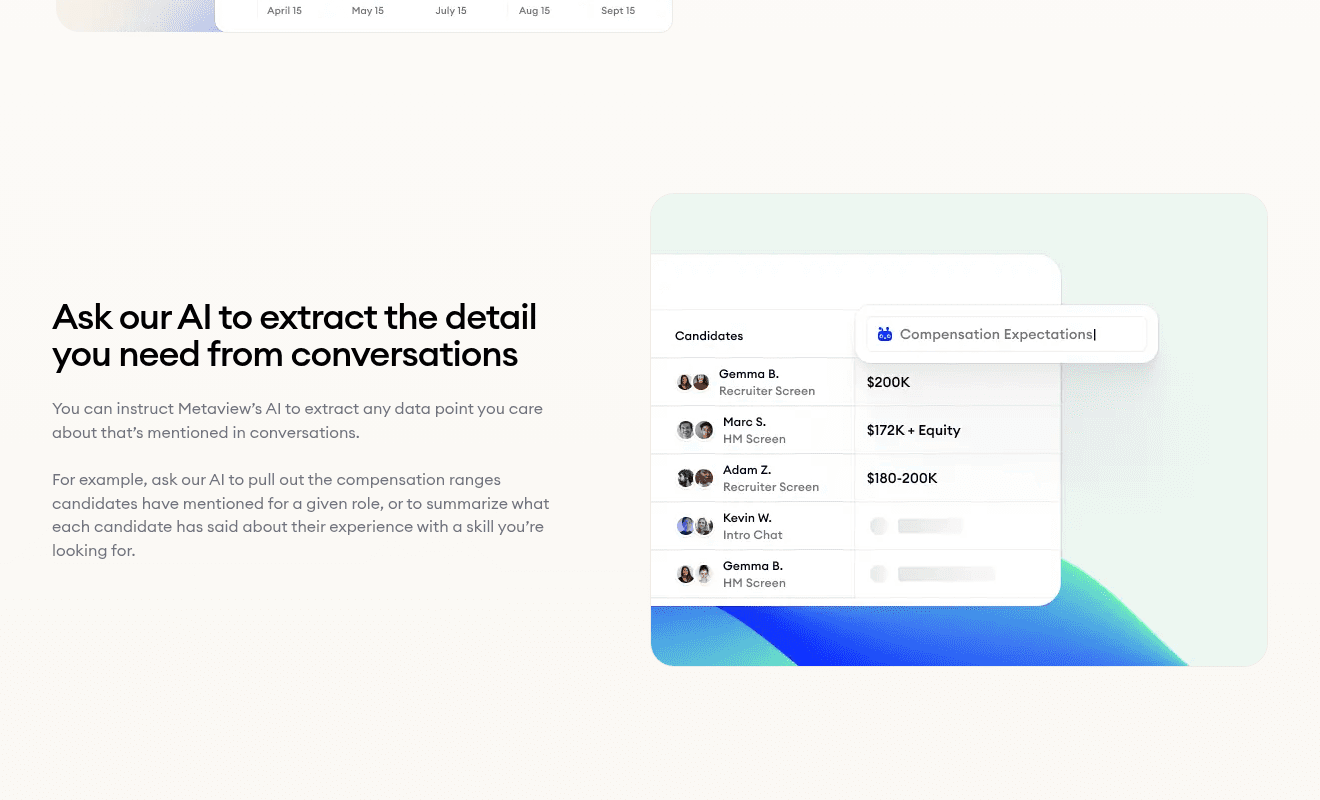
- 1Drop a JD or a natural-language prompt to brief the agent.
- 2The agent returns a ranked shortlist against the brief's signal.
- 3New prospects flow into the pool segmented by the brief's tags.
Application Review surfaces the right candidates per req. Inbound applications get scored against role context and ICP-fit signal. The segment most aligned with the open req lands at the top, with reasoning the recruiter can read, not a black-box score.
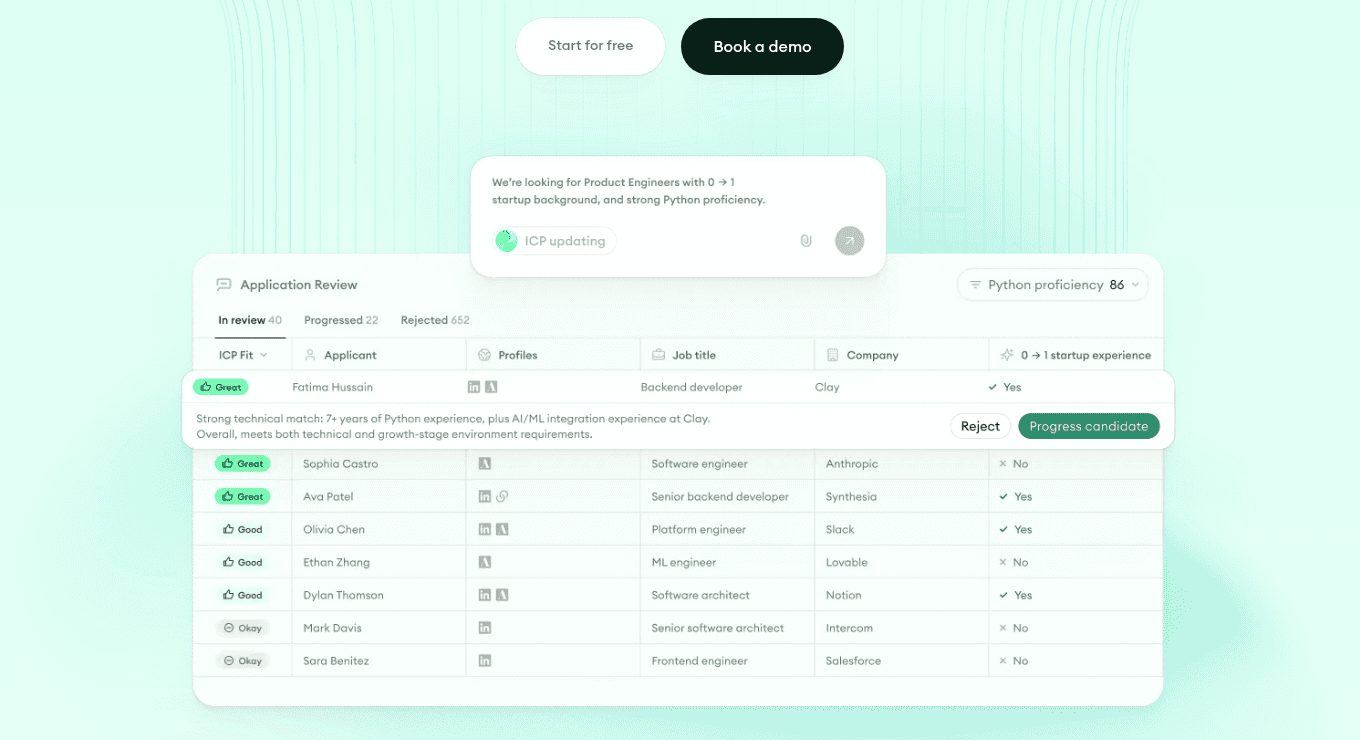
- 1Inbound pool entries scored against role context and ICP signal.
- 2Highest-fit segment lands at the top with readable reasoning.
- 3Reject or progress in one click, with the decision feeding the pool.
Reports surface patterns over time. Which segments produced the highest-quality hires? Which channels lead to the longest tenure? The patterns refine the next quarter's pool maintenance. Segments that aren't producing get pruned. Segments that compound get more nurture cadence.
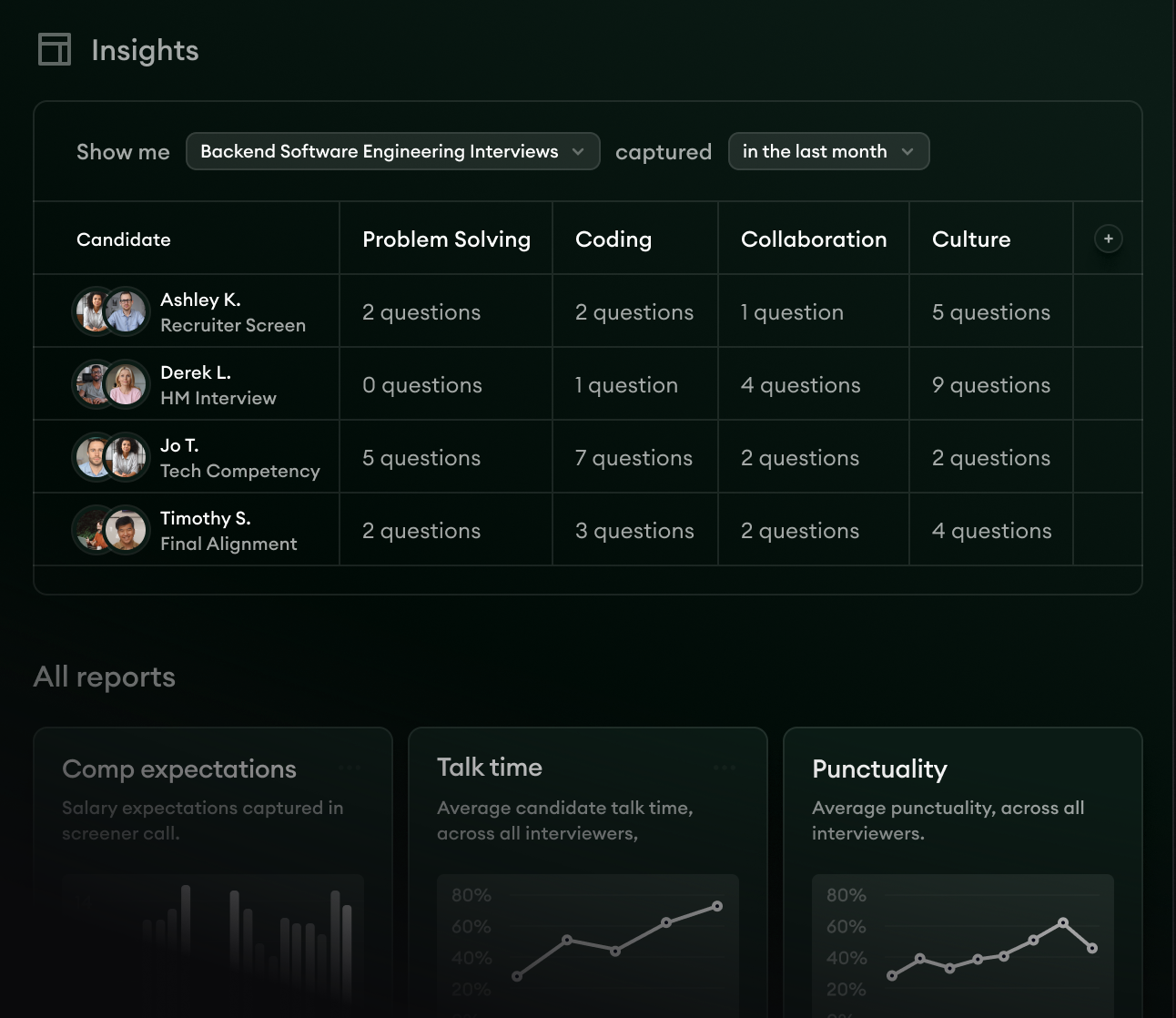
- 1Per-segment hire quality, tenure, and conversion patterns.
- 2Channel-to-pool patterns showing where the inventory layer earns its leverage.
- 3Refinements feed back into next quarter's nurture cadence.
Across the three surfaces, AI Sourcing fills the pool, Application Review triages it, and Reports surface what's working. The inventory layer compounds quarter on quarter, and the recruiter's job shifts from per-req sourcing to portfolio management.
Frequently asked.
What's the difference between a hiring pool and a hiring pipeline?
The pool is the standing inventory of every candidate who has shown interest or applied. The pipeline is the active subset moving through specific open reqs. The pool feeds the pipeline. A team can run many pipelines off one healthy pool, but a pipeline without a pool behind it restarts from scratch for each new role.
How often should we refresh the pool?
A quarterly review is the floor: prune stale profiles, audit segments for drift, refresh nurture content. Outside that cadence, watch for trigger signals like a sustained drop in segment response rate, a six-month silence on a role family, or a comp-band shift. Each calls for an ad-hoc refresh on the affected segment.
Can AI Sourcing keep the pool dynamic for small or specialist role families?
Yes, and the agent's leverage is higher on small pools than large ones. For a 50-person specialist role family, three new qualified prospects a week is a 6% pool refresh rate. The smaller the talent universe, the more precise the ranked shortlist.
How do small teams maintain a large pool without burnout?
The staffing math depends on automation. One recruiter can maintain roughly 500-1,000 pool entries when AI Sourcing handles continuous refresh and Application Review handles triage. Without automation, the realistic ceiling is closer to 150-200. The discipline isn't headcount; it's the share of maintenance moves that get automated.
How does Metaview's AI Sourcing keep the pool in sync with our ATS?
The sync runs bi-directionally with supported ATSes. New pool entries from AI Sourcing write into the ATS so the rest of the team sees them. ATS updates (status changes, notes, scorecards) flow back into the Metaview pool so segmentation stays current. The live list on the integrations page is the source of truth.
The pool is a system the team maintains continuously, with scope, centralization, segmentation, nurture, re-engagement, and measurement as standing practices, and with AI Sourcing handling the refresh that makes the math work at scale.
The shift is structural. Sourcing stops being a campaign you start each Monday and becomes a standing asset the team draws from. Open the next req against the pool, not a blank search bar.
Each move the pool plugs into has its own playbook:
- Talent mapping is the upstream market research that deposits new prospects into the pool before the req opens.
- Recruitment sourcing channels are the inflow pipes (referrals, careers page, communities, AI sourcing) that feed the pool every week.
- Candidate rediscovery in your ATS is the activation move on dormant pool segments and silver medalists.
- Active sourcing is the outreach work on the pool's warmest segments.
Bring Metaview into your hiring stack.
Live notes, structured scorecards, and ATS sync - set up in under 10 minutes.
