
Gem brings applicant tracking, candidate sourcing, outreach, and recruiting analytics into one platform. If you want to manage your entire hiring process in one place, it's a strong option.
But it won't be the right fit for every recruiting team.
You might need a more flexible ATS, better reporting, or stronger candidate relationship management. Or you might want AI agents that do more than assist your recruiters. Agents that actively source, screen, and engage candidates for you.
There are excellent Gem recruiting alternatives for both approaches.
We've compared nine leading platforms, from established ATS providers to AI recruiting platforms, to help you find the right fit.
The 9 best Gem recruiting alternatives at a glance
The best Gem alternatives range from full applicant tracking systems to specialized AI recruiting platforms.
| Platform | Best for | Key strength |
|---|---|---|
| 1. Metaview | End-to-end AI recruiting | Connected AI agents for sourcing, screening, and interviewing |
| 2. Ashby | Data-driven recruiting teams | Customizable ATS workflows and advanced analytics |
| 3. Greenhouse | Structured hiring at scale | Consistent evaluations and hiring governance |
| 4. Lever | ATS and CRM combined | Candidate relationship management and pipeline nurturing |
| 5. Workable | Small and growing teams | Accessible applicant tracking and recruiting tools |
| 6. SmartRecruiters | Enterprise recruiting | Complex hiring workflows and global recruiting operations |
| 7. Loxo | Recruitment agencies | Integrated sourcing, CRM, and applicant tracking |
| 8. hireEZ | Outbound talent sourcing | AI candidate discovery and outreach |
| 9. Teamtailor | Employer branding and candidate experience | Career sites, recruitment marketing, and ATS functionality |
Some of these platforms can replace Gem's ATS entirely. Others focus on improving specific parts of the recruiting process.
What is Gem recruiting software?
Gem is an all-in-one recruiting platform that combines applicant tracking, candidate relationship management, talent sourcing, and recruiting analytics.
Known for its recruiting CRM and automated outreach capabilities, Gem has become a more complete talent acquisition platform. It helps recruiting teams manage candidates from initial discovery through the hiring process, with AI features designed to reduce repetitive work.
What does Gem do best?
Gem recruiting software offers several core capabilities:
- Applicant tracking: Manage job openings, applications, hiring stages, and candidate pipelines through Gem's native ATS.
- Recruiting CRM: Build talent pools, organize candidate relationships, and reconnect with promising people from previous searches.
- AI candidate sourcing: Search a large talent database, identify potential candidates, and find contact information for outreach.
- Automated outreach: Create personalized email sequences, manage follow-ups, and engage passive candidates at scale.
- Recruiting analytics: Track pipeline performance, outreach effectiveness, and hiring outcomes to understand where recruiting efforts are working.
- AI recruiting automation: Prioritize applications, identify potential candidate fraud, and streamline administrative tasks like interview scheduling.
Gem appeals most to teams that want to consolidate their ATS, CRM, and sourcing tools into one recruiting workspace.
But having all these capabilities in one platform doesn't automatically make it the best choice for every hiring team. Some alternatives offer more specialized ATS functionality, while others use AI to take on substantially more of the recruiting process.
Why look for Gem recruiting alternatives?
Depending on your team's needs, other tools may offer a better fit. Consider an alternative if you specifically need:
- More advanced AI recruiting. Gem offers AI sourcing and application review, but you may want agents that execute outreach, scheduling, conversational screening, and interview intelligence.
- Different ATS capabilities. Platforms like Greenhouse, Ashby, and Lever bring different strengths in structured hiring, workflow customization, reporting, and candidate relationship management.
- Better recruiting without replacing your ATS. If your existing ATS works well, you may prefer to add specialized AI capabilities rather than migrate your data and rebuild your workflows.
- Pricing and implementation. An all-in-one platform isn't always the most practical choice. A simpler ATS or specialized recruiting tool may better suit your budget, hiring volume, and team structure.
The 9 best Gem recruiting alternatives
1. Metaview: Best for end-to-end AI recruiting
Best for: Recruiting teams that want AI to actively source, engage, screen, and evaluate candidates.
Metaview uses connected AI agents to execute recruiting work across the hiring process. Instead of asking recruiters to trawl through candidate databases, manually evaluate applicants, conduct initial screening calls, and document interviews, Metaview automates much of that work.
And because its agents share recruiting context, they can learn from hiring manager feedback, interview evidence, and previous recruiting decisions.
Key Metaview features
- AI sourcing agents. Find and evaluate candidates against your actual hiring criteria, using role requirements, company context, and feedback to build curated shortlists.
- Autonomous outreach and scheduling. Metaview's fillmore agent researches candidates, writes personalized outreach, manages follow-ups and replies, and schedules interviews.
- AI application review. Inbound applications against role requirements, prioritize promising candidates, and identify potential fraud without manually reviewing every resume.
- Conversational AI screening. Dynamic screening interviews that ask relevant follow-up questions, explore candidate experience, and gather richer evidence than a rigid questionnaire.
- Interview intelligence. Automatically capture interview notes, generate structured scorecards, and turn interview conversations into useful hiring insights.
- Connected recruiting workflows. Use context from intake meetings, interviews, approvals, and rejections to improve future sourcing and screening decisions.
This is the key difference between Metaview and traditional recruiting software: Metaview doesn't just help recruiters manage their work; AI agents actively do the work alongside them.
Recruiters remain in control of hiring decisions, but spend less time on repetitive sourcing, screening, coordination, and documentation.
Where Metaview differs from Gem: Metaview isn't designed to replace your ATS. Instead, it integrates with platforms like Greenhouse, Lever, and Workday, adding advanced AI recruiting capabilities to your existing workflows.
2. Ashby: Data-driven applicant tracking
Best for: Established recruiting teams that want customizable hiring workflows, detailed reporting, and strong recruiting operations in one platform.
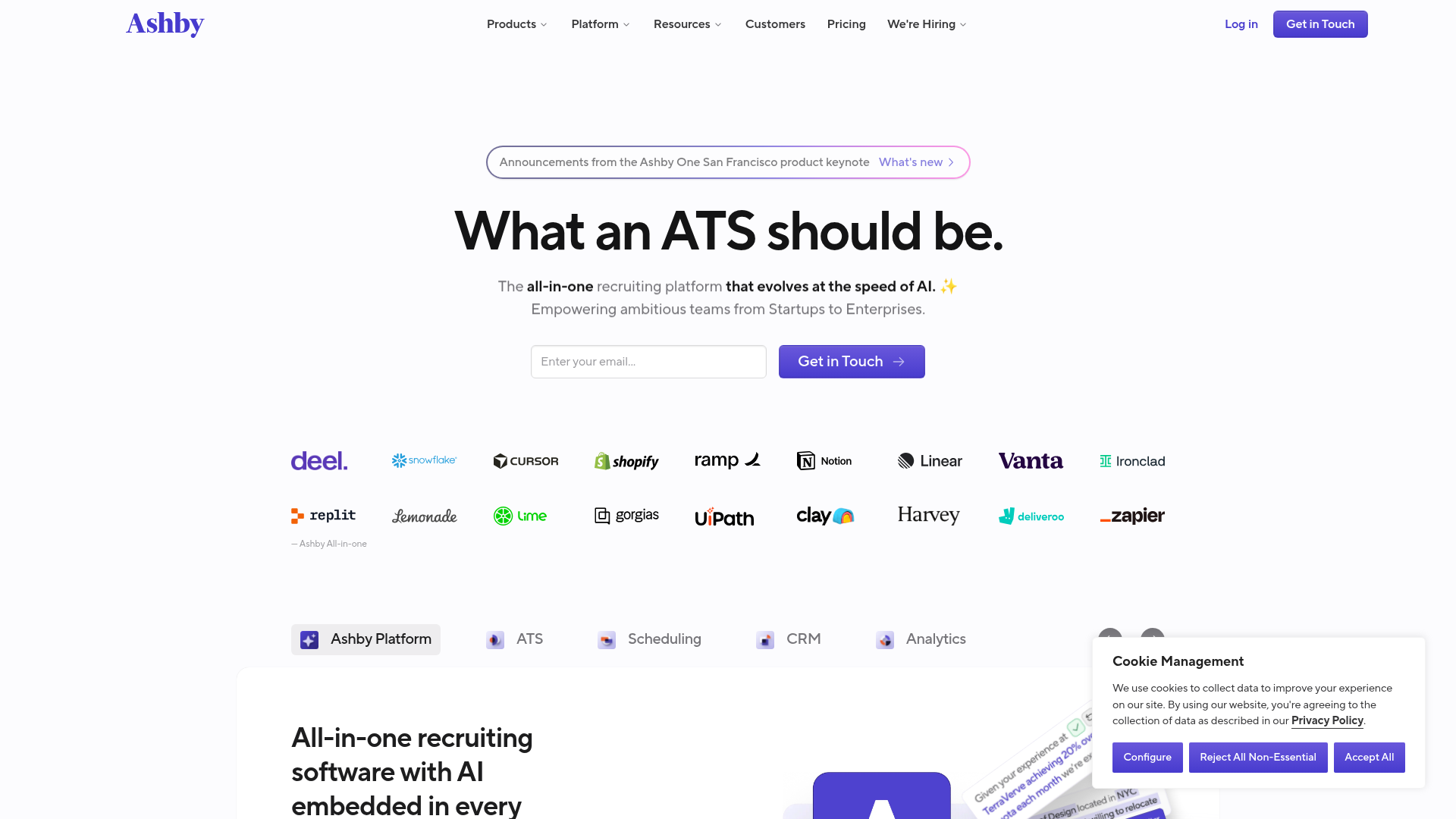
Ashby is an all-in-one recruiting platform combining applicant tracking, candidate relationship management, interview scheduling, and analytics.
Ashby consolidates multiple recruiting tools into one system. But while Gem built its reputation around sourcing, outreach, and candidate engagement, Ashby is well known for its recruiting analytics and customizable workflows.
This makes it a strong Gem alternative for talent acquisition teams that want greater visibility into hiring performance and more control over their internal processes.
Key Ashby features
- Customizable ATS: Build hiring pipelines, configure approval processes, and adapt recruiting workflows to different teams and roles.
- Advanced recruiting analytics: Track hiring funnel conversion, time to hire, recruiter productivity, and other performance metrics through detailed reports.
- Interview scheduling: Coordinate interviews, manage interviewer availability, and automate scheduling workflows.
- Recruiting CRM: Build candidate pipelines, manage talent pools, and nurture relationships with prospective hires.
- AI-assisted recruiting: Use AI to support recruiting tasks, summarize information, and reduce manual administration.
Ashby is especially appealing where you rely heavily on data to understand hiring performance and identify bottlenecks.
Where Ashby falls short: Although Ashby offers sourcing and AI capabilities, its primary strength is managing and optimizing recruiting operations. For autonomous sourcing, conversational screening, and connected AI recruiting agents, you may prefer Metaview.
3. Greenhouse: Structured hiring and applicant tracking at scale
Best for: Organizations that want consistent interview processes, standardized candidate evaluations, and greater alignment between recruiters and hiring managers.
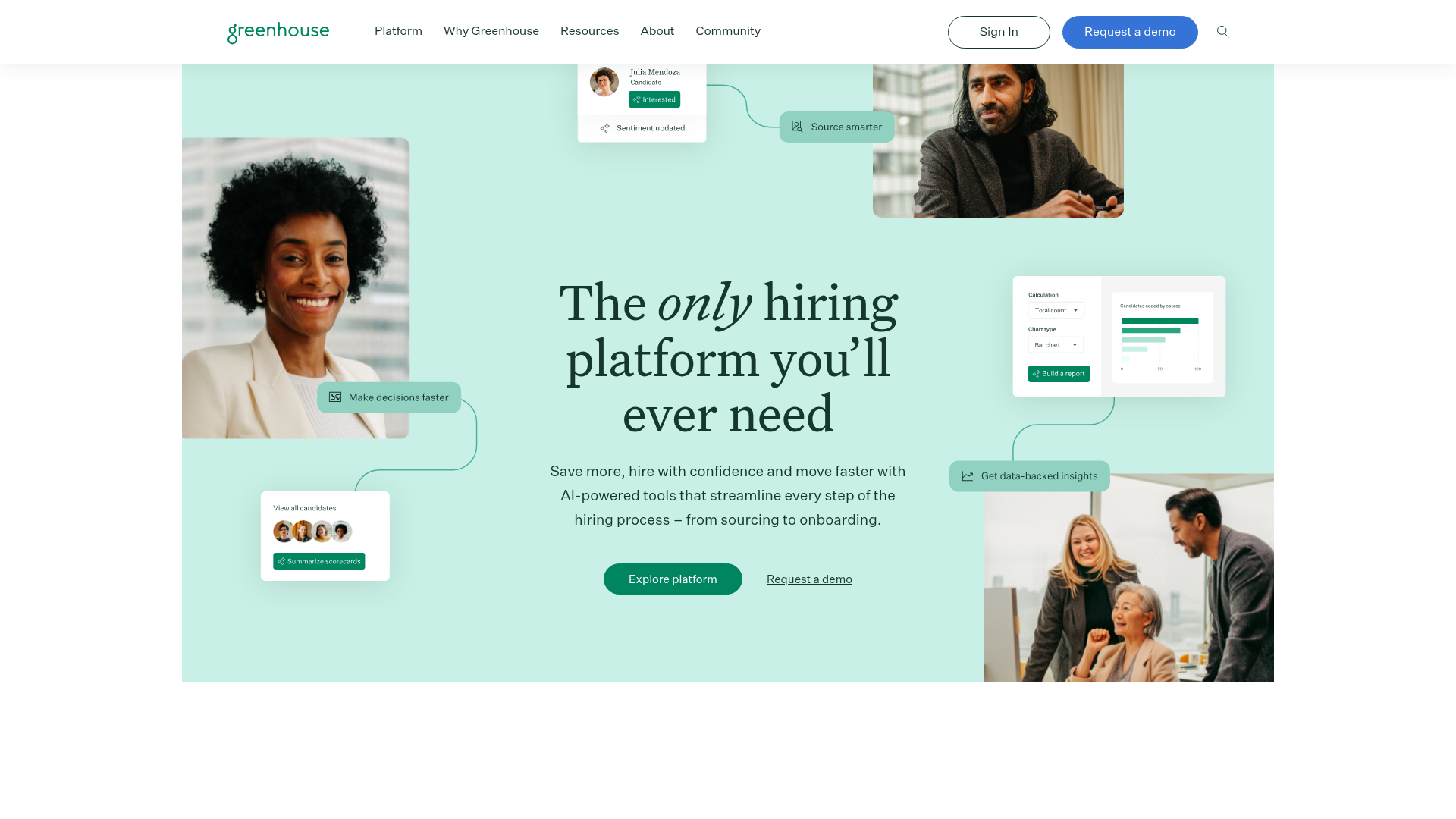
Greenhouse is a well-established applicant tracking system, particularly common among growing and enterprise organizations. While Gem combines applicant tracking with sourcing and candidate engagement, Greenhouse is built around helping teams run structured, repeatable hiring processes.
It emphasizes clear evaluation criteria, consistent interview practices, and collaborative hiring decisions. This makes it a compelling alternative to improve the quality and consistency of your hiring process.
Key Greenhouse features
- Structured hiring workflows: Define interview stages, evaluation criteria, and hiring processes for different roles.
- Interview scorecards: Give interviewers standardized frameworks to evaluate candidates against job requirements.
- Hiring team collaboration: Coordinate feedback, interview assignments, and decisions across recruiters and hiring managers.
- Recruiting analytics: Monitor pipeline performance, hiring efficiency, and recruiting outcomes.
- Extensive integrations: Connect Greenhouse with sourcing, assessment, interview intelligence, and other recruiting tools.
Greenhouse fits organizations where multiple interviewers and hiring managers need to evaluate candidates consistently. Its integration ecosystem also makes it possible to build a recruiting stack around specialized tools, rather than relying on one platform for everything.
Where Greenhouse falls short: Greenhouse isn't primarily an outbound sourcing or candidate engagement platform. Gem is stronger for proactive talent discovery and personalized outreach.
4. Lever: Combined ATS and recruiting CRM
Best for: Recruiting teams that want to manage active applicants and long-term candidate relationships in the same platform.
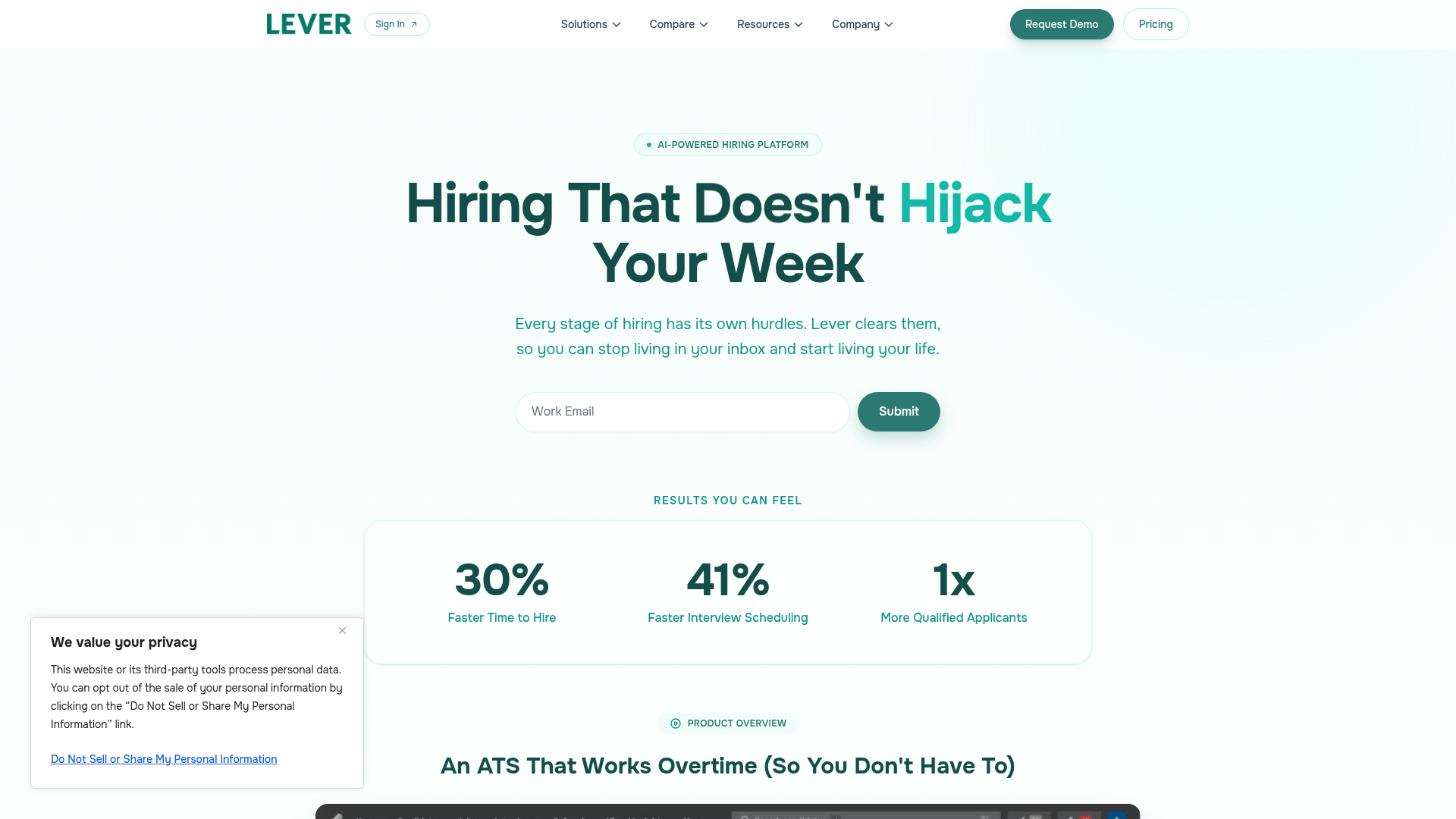
Lever is one of Gem's closest competitors in terms of its approach to candidate relationship management. Like Gem, Lever combines applicant tracking with CRM capabilities. Recruiters confidently manage candidates through the hiring process while maintaining relationships with potential future hires.
Rather than treating each job opening as an isolated search, Lever helps you build ongoing relationships with candidates and revisit those relationships when relevant opportunities arise.
Key Lever features
- Integrated ATS and CRM: Manage active applicants, passive candidates, and long-term talent pipelines in one system.
- Candidate nurturing: Build outreach campaigns and maintain relationships with prospective candidates over time.
- Pipeline management: Track candidates through hiring stages and collaborate with hiring managers on next steps.
- Interview coordination: Organize interviews, collect feedback, and support hiring team collaboration.
- Recruiting analytics: Monitor pipeline activity, hiring performance, and candidate engagement.
Lever is a natural Gem alternative if CRM functionality is as important as applicant tracking.
Both platforms help you move beyond reactive recruiting with a strong candidate database for future roles.
Where Lever falls short: Lever's primary focus remains ATS and CRM functionality. Teams seeking more advanced autonomous sourcing, AI screening interviews, or connected recruiting agents need complementary software.
5. Workable: ATS for small and growing recruiting teams
Best for: Small and mid-sized businesses that want an accessible ATS with sourcing, candidate management, and hiring collaboration features.
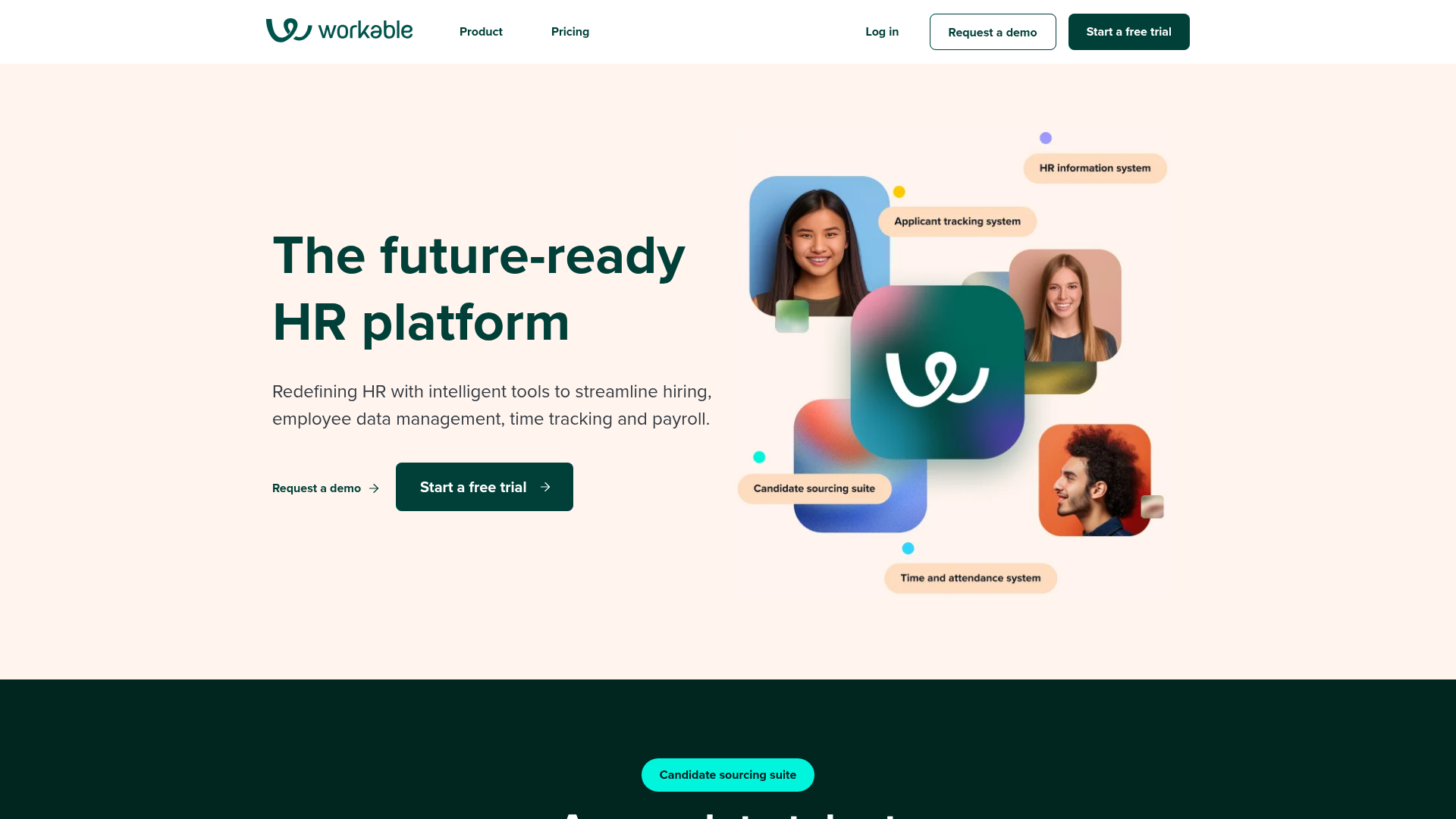
Workable is an all-in-one recruiting platform designed to make hiring more manageable without requiring a complex recruiting technology stack.
Like Gem, Workable combines applicant tracking with candidate sourcing, interview coordination, and recruiting automation. But Workable is particularly appealing to smaller teams that want to get up and running quickly.
Its straightforward interface and broad feature set make it a practical Gem recruiting alternative for companies that need reliable hiring software without extensive configuration.
Key Workable features
- Applicant tracking: Manage job postings, applications, hiring pipelines, and candidate communications from one platform.
- Job distribution: Publish vacancies across multiple job boards and attract applicants through a centralized workflow.
- AI-assisted sourcing: Discover potential candidates and get recommendations based on job requirements.
- Interview management: Coordinate interviews, collect feedback, and collaborate with hiring managers.
- Recruiting automation: Automate routine communications, candidate updates, and administrative tasks.
Workable is especially useful for companies where hiring is managed by a small HR team rather than a dedicated recruiting operations department.
Where Workable falls short: Organizations with complex enterprise hiring requirements may need more extensive customization and reporting.
6. SmartRecruiters: Enterprise recruiting operations
Best for: Large organizations managing complex hiring processes across multiple teams, business units, and locations.
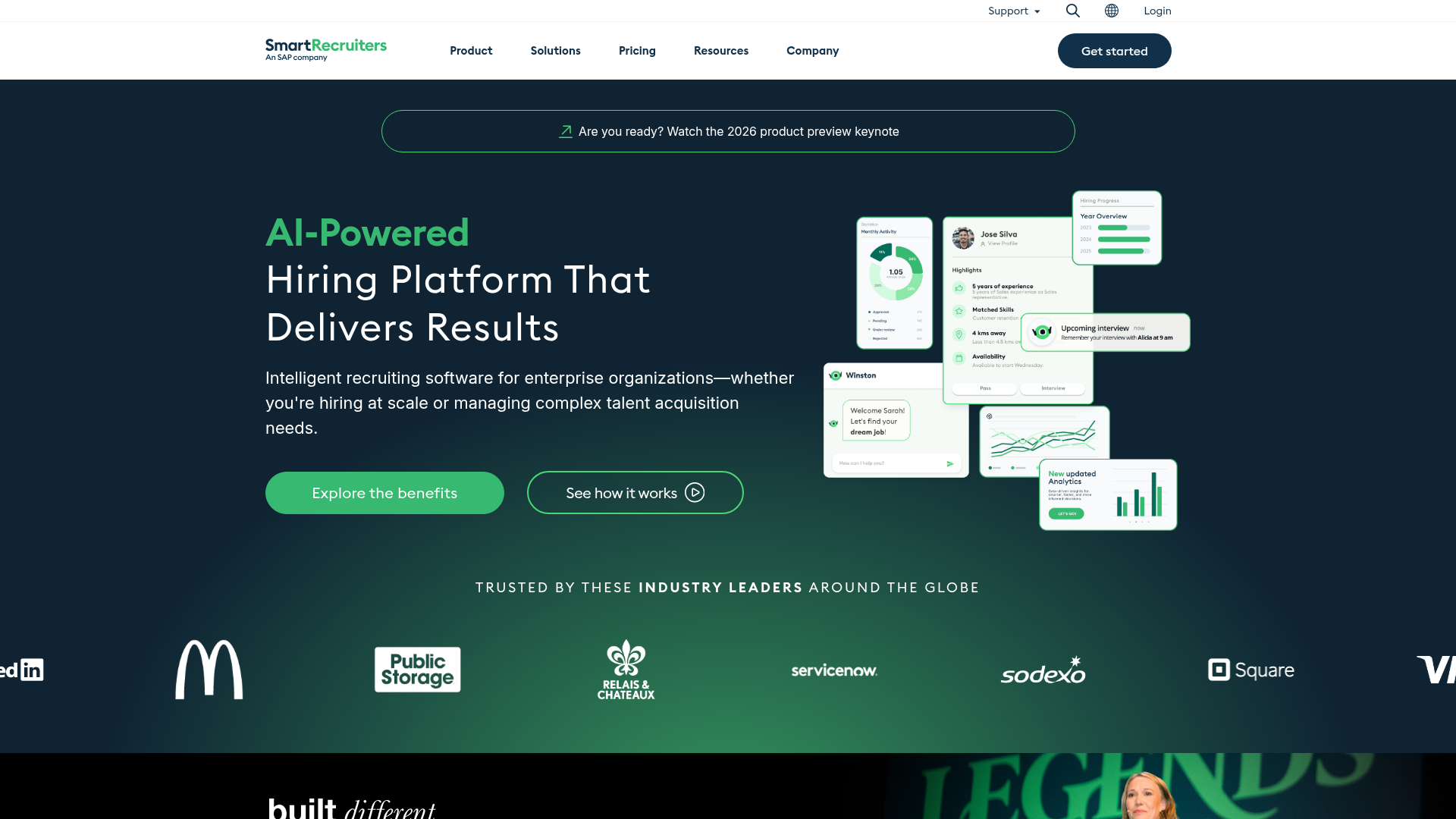
SmartRecruiters is an enterprise talent acquisition platform for high-volume and multinational recruiting operations. While Gem combines ATS, CRM, and sourcing functionality, SmartRecruiters emphasizes enterprise recruiting infrastructure, configurable workflows, and coordination across large organizations.
AI-powered recruiting capabilities give you scalable automation as part of enterprise-grade applicant tracking.
Key SmartRecruiters features
- Enterprise ATS: Manage hiring processes, applications, and candidate records across departments and locations.
- Configurable workflows: Adapt approvals, hiring stages, and recruiting processes to different business requirements.
- AI recruiting capabilities: AI-assisted matching, screening, and workflow automation to support recruiting teams.
- Recruiting analytics: Monitor hiring performance, pipeline activity, and recruiting efficiency across the organization.
- Integrations and governance: Connect recruiting systems with enterprise security, permissions, and compliance requirements.
SmartRecruiters is particularly appealing to organizations where recruiting needs to operate consistently across different countries, departments, and hiring teams.
Where SmartRecruiters falls short: Its enterprise focus can make implementation and administration tricky for small teams.
7. Loxo: Recruitment platform for agencies and outbound-focused teams
Best for: Recruitment agencies and staffing teams that want candidate sourcing, relationship management, and applicant tracking in one platform.
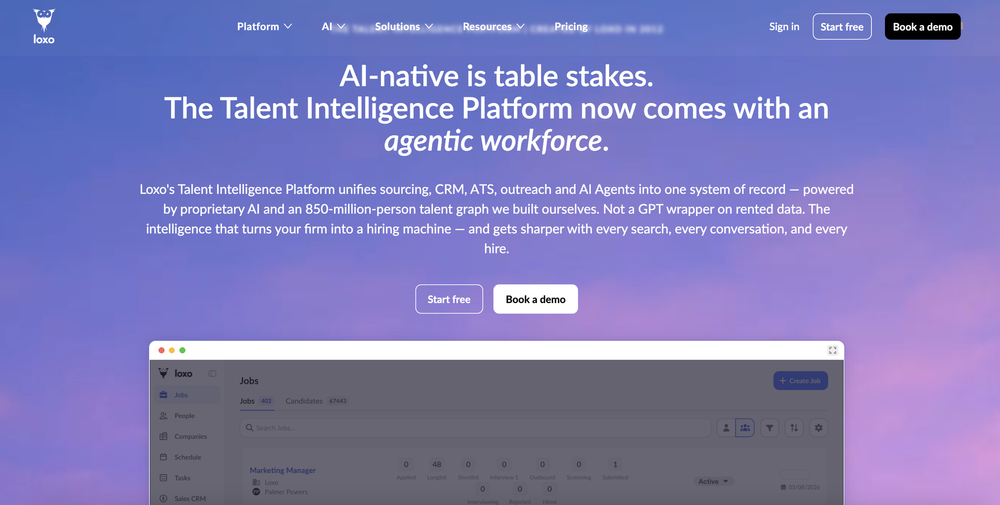
Loxo delivers AI-powered applicant tracking, candidate relationship management, sourcing, and outreach automation. In fact, it’s one of the more direct Gem alternatives in terms of functionality. Both platforms help recruiters discover candidates, maintain talent pipelines, and manage recruiting activity without constantly switching between tools.
But Loxo has a stronger focus on recruitment agencies and search firms, where outbound sourcing and candidate relationship management are central to daily work.
Key Loxo features
- Applicant tracking and CRM: Manage candidates, job openings, client relationships, and recruiting pipelines.
- AI candidate sourcing: Search a large talent database to identify potential candidates for open roles.
- Contact information: Access candidate contact details to support direct outreach.
- Outreach automation: Build multichannel engagement campaigns and automate follow ups.
- Recruiting workflow management: Track candidate activity and coordinate recruiting processes from sourcing through placement.
Loxo is especially relevant for recruiters who spend much of their time identifying passive candidates and building relationships across multiple searches.
Its combination of ATS, CRM, and sourcing features can reduce the need for separate tools.
Where Loxo falls short: Loxo's agency-oriented workflows may be less suitable for internal talent acquisition teams that prioritize structured interviews, hiring manager collaboration, and enterprise recruiting governance.
8. hireEZ: Best for outbound talent sourcing
Best for: Recruiting teams that want to discover passive candidates, automate outreach, and build stronger talent pipelines.
hireEZ is an AI-powered recruiting platform to find, engage, and manage potential candidates. Like Gem, hireEZ has built its reputation around proactive recruiting. Both platforms help recruiters search beyond inbound applications, identify promising candidates, and reach out to people who may not be actively looking for work.
However, hireEZ places particular emphasis on AI-powered talent discovery and outbound recruiting workflows. It’s a useful Gem alternative where your main priority is finding and engaging hard-to-reach candidates.
Key hireEZ features
- AI candidate sourcing: Discover potential candidates across multiple talent sources using skills, experience, and other search criteria.
- Candidate matching: Identify prospects who align with role requirements and recruiting priorities.
- Contact enrichment: Find candidate contact information to support personalized outreach.
- Automated engagement: Create outreach campaigns, manage follow-ups, and nurture relationships with passive candidates.
- Talent pipeline management: Organize prospects and track candidate engagement throughout the sourcing process.
hireEZ is particularly relevant for teams recruiting specialized talent or filling roles where qualified applicants are unlikely to come through job postings alone.
Where hireEZ falls short: Although hireEZ has expanded its recruiting automation capabilities, it's not a like-for-like replacement for Gem's complete ATS and CRM suite.
9. Teamtailor: Best for employer branding and candidate experience
Best for: Growing companies that need to attract more applicants, build a stronger employer brand, and create a better candidate experience.
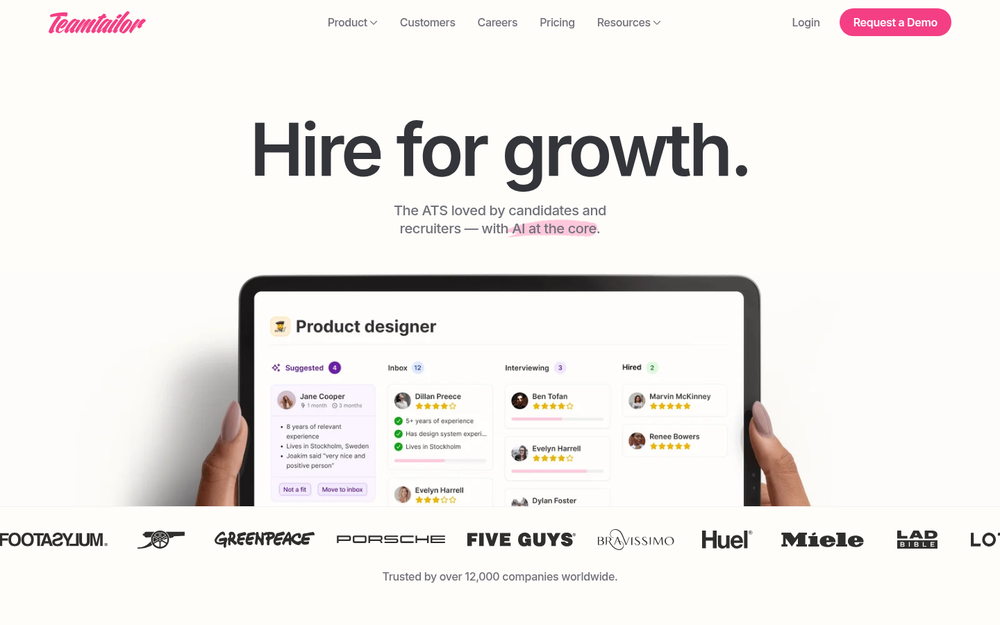
Teamtailor is an ATS that combines candidate management with recruitment marketing and employer branding tools. While Gem is particularly well known for outbound sourcing and candidate relationship management, Teamtailor takes a more attraction-focused approach.
Its customizable career sites, talent pools, and candidate communication features help companies showcase their employer brand and build relationships with potential hires.
Teamtailor is a useful Gem alternative for teams that want to improve inbound recruiting alongside their applicant tracking processes.
Key Teamtailor features
- Applicant tracking: Manage applications, hiring stages, candidate evaluations, and recruiting workflows.
- Customizable career sites: Build branded careers pages that showcase company culture, open roles, and employee experiences.
- Recruitment marketing: Promote job opportunities and attract candidates through employer branding campaigns.
- Candidate relationship management: Create talent pools and nurture relationships with prospective applicants.
- Recruiting automation: Automate candidate communications, workflow updates, and routine hiring tasks.
Teamtailor helps you compete for talent through your employer brand and deliver a polished candidate experience.
Where Teamtailor falls short: Teams that rely heavily on outbound sourcing and automated candidate discovery may find Gem's sourcing capabilities more relevant.
How to choose the right Gem recruiting alternative
The best Gem alternative depends on which parts of your recruiting process you want to improve.
- For applicant tracking: Consider Ashby, Greenhouse, Lever, Workable, or SmartRecruiters. Compare their strengths in reporting, workflow customization, structured hiring, and ease of use.
- For AI sourcing and outreach: Metaview, hireEZ, and Loxo help teams discover and engage candidates. Metaview goes further with autonomous outreach, scheduling, and screening.
- For employer branding: Teamtailor offers customizable career sites, recruitment marketing, and candidate relationship management.
- For end-to-end AI recruiting: Metaview connects sourcing, application review, screening, and interview intelligence through AI agents that work alongside your existing ATS.
Focus on the capabilities your team actually needs, rather than choosing the platform with the longest feature list.
Gem vs. Metaview: What's the difference?
Gem and Metaview both use AI to make recruiting more efficient, but they approach the problem differently.
| Capability | Gem | Metaview |
|---|---|---|
| Applicant tracking | Native ATS | Integrates with existing ATS platforms |
| Candidate sourcing | AI-powered talent search and matching | AI agents that build curated shortlists and learn from feedback |
| Candidate outreach | Personalized outreach sequences | Autonomous outreach, follow-ups, reply management, and scheduling |
| Application review | AI application ranking and fraud detection | AI application evaluation, prioritization, and fraud detection |
| Candidate screening | Screening workflows and integrations | Conversational AI screening with dynamic follow-up questions |
| Interview intelligence | Interview integrations and scorecard assistance | Automated notes, structured scorecards, and interview insights |
| Recruiting analytics | Pipeline, outreach, and hiring performance | Interview intelligence and recruiting performance insights |
Gem is primarily a recruiting management platform. It combines applicant tracking, CRM, sourcing, outreach, and analytics to help teams organize and coordinate hiring.
Metaview is an agentic recruiting platform. Its connected AI agents actively execute recruiting workflows, from finding candidates and managing outreach to conducting screening interviews and capturing interview intelligence.
There's also no need to replace your existing ATS to use Metaview. It integrates with systems like Greenhouse, Lever, and Workday, adding advanced AI recruiting capabilities to the tools your team already uses.
Go beyond traditional recruiting software with Metaview
The best Gem recruiting alternatives offer different strengths. Some provide more specialized ATS functionality, while others focus on candidate sourcing, employer branding, or enterprise recruiting operations.
Metaview takes recruiting automation further.
Its connected AI agents help teams find qualified candidates, manage outreach, review applications, conduct screening interviews, and capture valuable interview insights.
The result is less administrative work, more consistent recruiting processes, and more time for recruiters to focus on candidates and hiring decisions.
And you don't need to replace your ATS to get started.
Bring Metaview into your hiring stack.
Live notes, structured scorecards, and ATS sync - set up in under 10 minutes.
Gem recruiting alternatives FAQs
What’s the best alternative to Gem recruiting?
Metaview is a leading Gem alternative for teams that want more advanced AI recruiting capabilities, including autonomous sourcing, outreach, screening, and interview intelligence.
For organizations specifically looking to replace Gem's ATS, Ashby, Greenhouse, and Lever are strong options. The best choice depends on whether you prioritize applicant tracking, candidate relationship management, recruiting analytics, or automation.
Is Gem an ATS or a recruiting CRM?
Gem is both an applicant tracking system and a recruiting CRM. It originally became popular for candidate relationship management, sourcing, and automated outreach before expanding into a broader recruiting platform.
Today, Gem recruiting software combines applicant tracking, talent sourcing, candidate engagement, recruiting analytics, and AI-powered automation.
What are the best Gem alternatives for AI sourcing?
Metaview, hireEZ, and Loxo are strong Gem alternatives for AI-powered candidate sourcing. hireEZ focuses on talent discovery and outbound engagement, while Loxo combines sourcing with recruiting CRM and ATS functionality.
Metaview offers AI sourcing agents that evaluate candidates against hiring criteria, learn from recruiter feedback, and connect sourcing with outreach, screening, and other recruiting workflows.
How does Gem compare with Greenhouse and Ashby?
Gem is particularly well known for sourcing, CRM, and candidate engagement. Greenhouse emphasizes structured hiring, standardized evaluations, and hiring team collaboration. Ashby stands out for customizable recruiting workflows and detailed analytics.
Organizations should compare these platforms based on their recruiting processes, reporting needs, and existing technology stack.
What should you look for in Gem recruiting software alternatives?
Start by identifying which Gem capabilities matter most to your team. If you need a replacement ATS, prioritize workflow customization, reporting, integrations, and ease of use. If sourcing is your main challenge, evaluate candidate search quality, outreach automation, and CRM functionality.
For teams exploring AI recruiting software, consider how much work the platform can execute independently, how it uses hiring feedback, and whether it integrates with your existing recruiting systems.
