
The best talent acquisition platforms help recruiters find great people, evaluate their potential, and move them through the hiring process faster. That means less time on administrative work and more time connecting with the right candidates.
Today's AI talent acquisition platforms actively source candidates, conduct screening interviews, coordinate schedules, and ultimate help teams make better hiring decisions. And if you’re not using at least one, you’re being left behind.
We've compared 12 of the best talent acquisition software platforms for 2027, from established applicant tracking systems to autonomous AI recruiting agents. Here's how they compare, what each does best, and which tools are worth considering for your team.
What is a talent acquisition platform?
A talent acquisition platform is software that helps organizations find, attract, evaluate, and hire candidates. It brings together recruiting tools and workflows to make hiring more efficient, consistent, and effective.
Traditional talent acquisition software platforms typically focus on managing recruitment. They help teams publish job openings, track applications, organize candidate pipelines, schedule interviews, and report on hiring performance.
Modern AI talent acquisition platforms go further. They actively perform recruiting tasks that previously required significant manual effort, including:
- Candidate sourcing: Finding and researching qualified candidates across multiple sources.
- Application review: Evaluating inbound applicants against job requirements and identifying promising candidates.
- AI screening: Conducting candidate interviews and gathering evidence about skills, experience, and motivations.
- Candidate outreach: Creating personalized messages, managing replies, and following up with prospects.
- Interview scheduling: Coordinating availability and moving candidates into interviews.
- Talent intelligence: Capturing interview insights, organizing feedback, and helping teams make informed decisions.
For recruiting teams, that means the opportunity to do more than simply work faster. They spend less time on repetitive tasks while improving the quality and consistency of their hiring decisions.
The 12 best talent acquisition platforms for 2027.
The right platform depends on your hiring volume, existing recruiting stack, and where your team spends the most time. Here's how our top 12 compare.
| Platform | Best for |
|---|---|
| 1. Metaview | End-to-end AI recruiting and better hiring decisions |
| 2. fillmore | Autonomous sourcing, outreach, and interview scheduling |
| 3. Greenhouse | Structured hiring and ATS workflows |
| 4 Ashby | Recruiting analytics and pipeline management |
| 5. Workable | Small and midsize recruiting teams |
| 6. Lever | Candidate relationship management |
| 7. SmartRecruiters | Enterprise talent acquisition operations |
| 8. Eightfold AI | Skills intelligence and talent matching |
| 9. iCIMS | Complex enterprise recruiting workflows |
| 10. Gem | Candidate engagement and recruiting CRM |
| 11. GoodTime | Automated interview scheduling |
| 12. Phenom | Candidate experience and recruitment marketing |
While all 12 platforms can improve recruiting efficiency, they solve different problems. Let's look at their strengths, key features, and limitations.
1. Metaview: Best overall AI talent acquisition platform.
Best for: Recruiting teams that want to automate sourcing, screening, and interviewing while making better hiring decisions.
Metaview is an end-to-end AI talent acquisition platform that helps recruiting teams find, evaluate, and hire great candidates faster. From sourcing qualified candidates to screening applicants and capturing interview insights, Metaview connects the entire hiring process.
Agents work together, using context from recruiters, hiring managers, and previous interactions to understand what makes a great candidate. This means recruiters spend less time on repetitive work and more time building relationships, evaluating talent, and making confident hiring decisions.
Key features
- AI Sourcing: Find and research qualified candidates based on your hiring criteria, with agents that learn from recruiter and hiring manager feedback.
- Application Review: Automatically evaluate inbound applications, prioritize promising candidates, and identify potential fraudulent applicants.
- AI Screening: Conduct conversational screening interviews that ask dynamic follow-up questions and explore candidates' skills, experience, and motivations.
- Interview intelligence: Capture interview notes, generate structured summaries, and help teams evaluate candidates against consistent criteria.
- Automated recruiting workflows: Coordinate sourcing, outreach, screening, and scheduling to move qualified candidates through the hiring process.
- ATS integrations: Connect with existing recruiting systems to keep candidate records, interview insights, and hiring workflows aligned.
Where Metaview stands out: Most talent acquisition software platforms focus on individual parts of recruiting. Metaview brings sourcing, screening, and interview intelligence together, giving teams AI agents that actively move hiring forward.
2. fillmore by Metaview: Best for autonomous sourcing and interview scheduling.
Best for: Recruiting teams that want to automate outbound candidate sourcing, outreach, and interview scheduling without sacrificing candidate quality.
fillmore is an autonomous AI recruiting agent from Metaview that takes ownership of the outbound recruiting process. Give it a role to fill, explain what great candidates look like, and it gets to work finding, researching, and engaging potential hires.
Unlike traditional sourcing tools that produce lists to pore over, fillmore actually turns promising candidates into booked interviews. It researches each prospect, creates individualized outreach, manages follow-ups, responds to interested candidates, and coordinates scheduling.
All with as much or as little input as you choose to give.
Manage the entire process through Slack or desktop, with flexible approval settings determining how independently the agent operates.
Key features
- Autonomous candidate sourcing: Search for and evaluate candidates against your ICP, producing curated shortlists rather than endless results.
- In-depth candidate research: Explore each prospect's background, experience, and relevant work to understand their suitability before outreach.
- Personalized multichannel outreach: Create tailored messages and engage candidates through email, LinkedIn, and WhatsApp.
- Reply and follow-up management: Keep candidate conversations moving without recruiters manually managing every interaction.
- Automated interview scheduling: Coordinate with interested candidates and get interviews onto recruiters' calendars.
- Slack-native control: Brief fillmore, approve candidates, adjust requirements, and manage activity directly through Slack.
Where fillmore stands out: fillmore owns the complete outbound workflow, from identifying great-fit candidates to scheduling interviews. Approval controls let recruiters decide how much autonomy to give the agent.
3. Greenhouse: Structured hiring and ATS workflows.
Best for: Growing and established recruiting teams that want consistent hiring processes, structured interviews, and centralized applicant tracking.
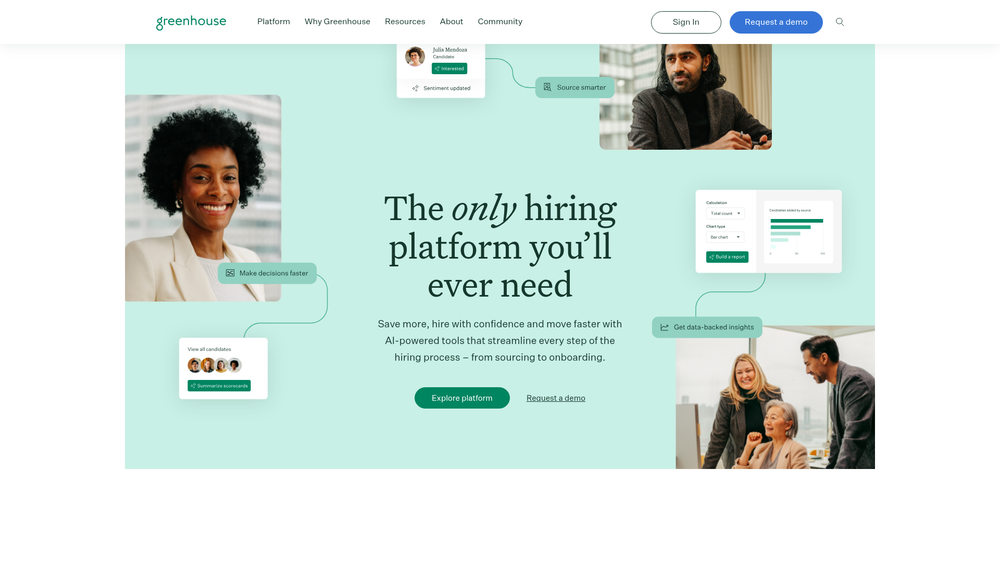
Greenhouse is a widely used talent acquisition software platform for structured hiring. It manages job openings, tracks candidates, coordinates interviews, and collects feedback throughout the recruitment process.
Its strength is creating repeatable hiring workflows. Teams establish evaluation criteria, standardize interviews, and give hiring managers a shared framework for assessing candidates.
Greenhouse’s integrations, reports, and automation help recruiting teams manage hiring operations at scale.
Key features
- Applicant tracking: Manage job openings, applications, candidate pipelines, and hiring stages in one system.
- Structured interviewing: Create interview kits, evaluation criteria, and scorecards to support consistent candidate assessment.
- Interview scheduling: Coordinate interviews and candidate communications through connected scheduling workflows.
- Recruiting analytics: Monitor hiring activity, pipeline performance, and recruiting outcomes.
- Integrations: Connect with sourcing, screening, assessment, and other recruiting tools.
- Workflow automation: Reduce administrative work through configurable hiring processes and automated actions.
Where Greenhouse falls short: Greenhouse is built to manage hiring workflows, not execute them autonomously. Advanced AI sourcing, conversational screening, and personalized outbound recruiting may require additional tools.
4. Ashby: Recruiting analytics and pipeline management.
Best for: Data-driven recruiting teams that want advanced analytics, applicant tracking, and recruiting operations in one platform.
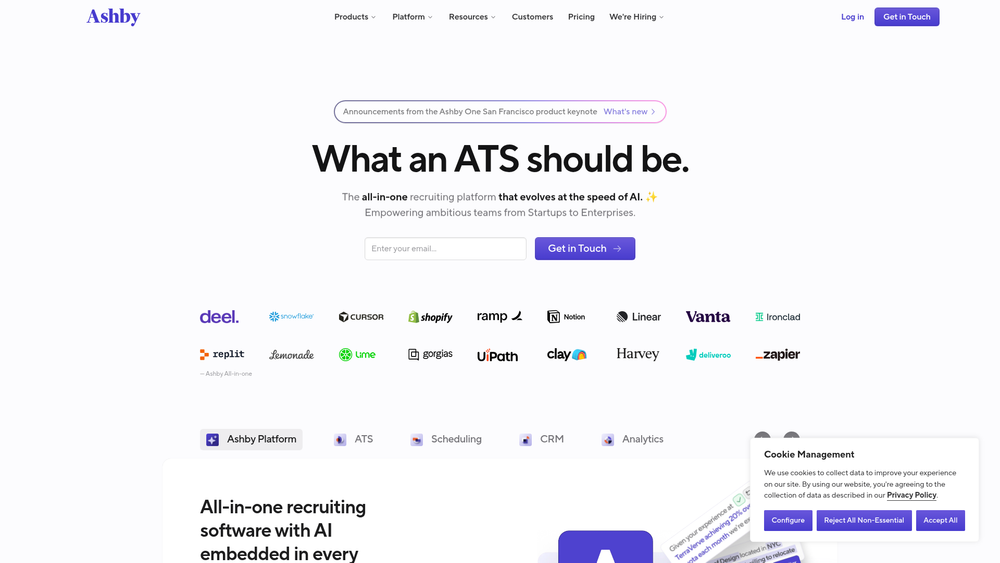
Ashby is a talent acquisition platform that combines applicant tracking, candidate relationship management, interview scheduling, and recruiting analytics.
Its biggest strength is bringing recruiting data and workflows together. Rather than relying on separate tools for pipeline management, reporting, and scheduling, teams can manage these activities within a single system.
Ashby is particularly useful for growing organizations that want detailed visibility into recruiting performance without sacrificing operational efficiency.
Key features
- Applicant tracking: Manage candidates, job openings, and hiring workflows through a centralized ATS.
- Recruiting analytics: Build dashboards and reports to monitor pipeline conversion, hiring velocity, and team performance.
- Candidate relationship management: Organize talent pools and maintain relationships with prospective candidates.
- Interview scheduling: Coordinate interviews, manage availability, and automate scheduling workflows.
- Sourcing and outreach: Find prospective candidates and manage personalized outreach campaigns.
- Workflow automation: Configure recruiting processes and automate repetitive administrative tasks. Integrate Ashby with other recruiting and HR platforms.
Where Ashby falls short: Ashby excels at recruiting operations and analytics, but its autonomous sourcing and conversational AI screening capabilities are more limited than those of specialized AI recruiting agents.
5. Workable: Best for small and midsize recruiting teams.
Best for: Small and midsize businesses that want accessible recruiting software with applicant tracking, candidate sourcing, and AI-assisted hiring features.
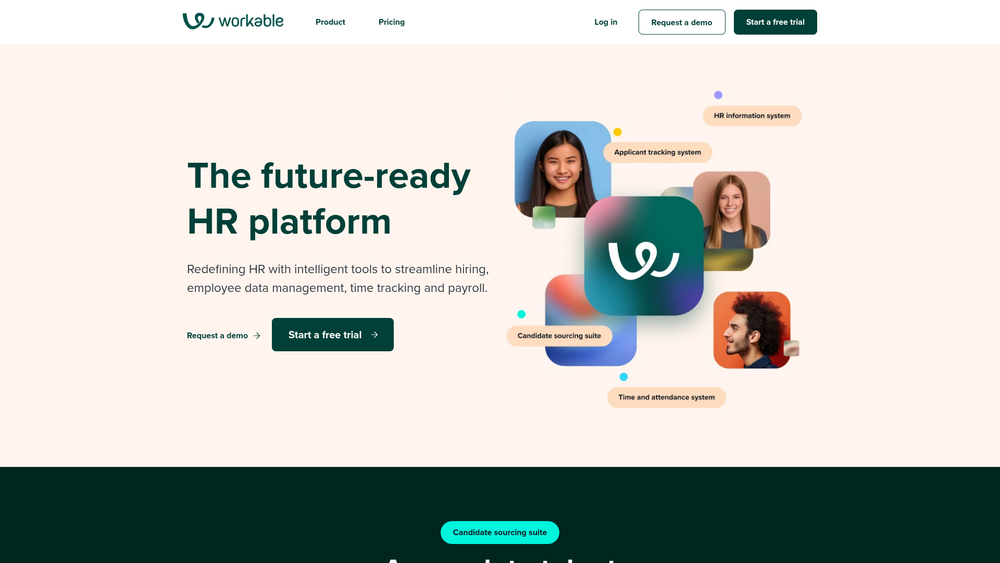
Workable is a talent acquisition software platform that makes recruiting easier for teams without large recruiting operations departments.
It brings job posting, applicant tracking, candidate sourcing, and interview management into one system. Straightforward workflows make it particularly appealing to businesses that need to manage hiring efficiently without extensive setup or customization.
Workable also includes AI-assisted features that identify relevant candidates and reduce manual recruiting work.
Key features
- Job distribution: Publish openings across multiple job boards and recruiting channels.
- Applicant tracking: Organize applications, manage hiring pipelines, and collaborate with hiring managers.
- AI-assisted sourcing: Discover potential candidates and receive recommendations based on job requirements.
- Candidate screening: Use screening questions and assessments to evaluate applicants.
- Interview scheduling: Coordinate interviews and manage candidate communications.
- Recruiting reports: Track hiring activity, candidate pipelines, and recruiting performance.
Where Workable falls short: Workable's AI capabilities focus largely on assisting recruiters rather than independently executing complex recruiting workflows. Teams needing advanced autonomous sourcing and screening may require additional software.
6. Lever: Best for candidate relationship management.
Best for: Recruiting teams that want to combine applicant tracking with proactive candidate engagement and long-term talent pipeline management.
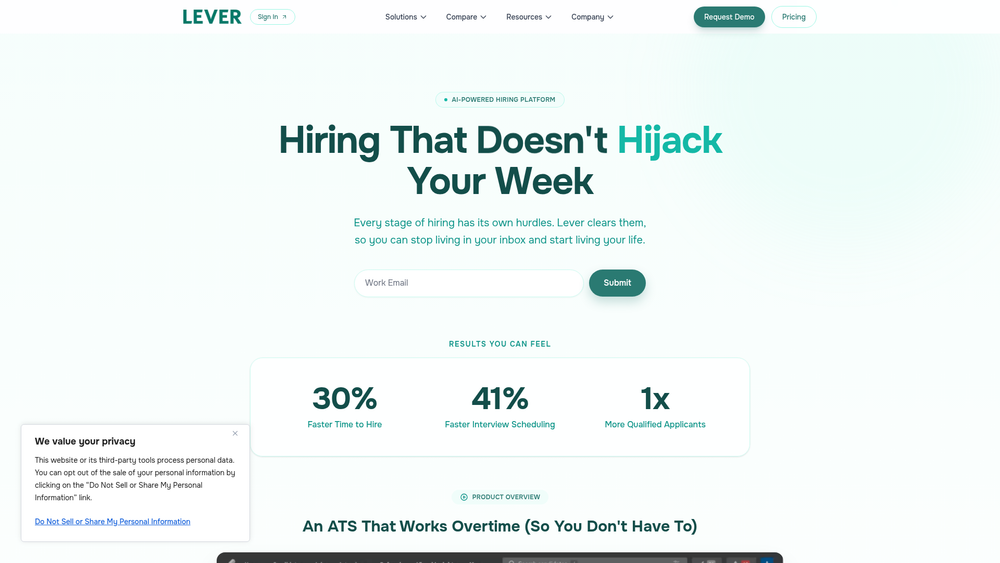
Lever is a talent acquisition platform that combines applicant tracking and candidate relationship management (CRM) capabilities. It helps recruiters build relationships with prospective talent and maintain engagement over time.
This makes it particularly useful for organizations with ongoing hiring needs, established talent communities, or recruiting teams that regularly revisit previous candidates.
Lever’s integrated ATS and CRM capabilities also help teams manage candidate relationships without constantly switching between systems.
Key features
- Applicant tracking: Manage job openings, applications, candidate stages, and hiring workflows.
- Recruiting CRM: Build talent pools, organize candidate relationships, and nurture prospective hires.
- Candidate outreach: Create and manage personalized email campaigns and follow-up sequences.
- Pipeline management: Track candidates across active opportunities and longer-term talent pools.
- Interview coordination: Schedule interviews, collect feedback, and manage hiring team collaboration.
- Recruiting analytics: Monitor pipeline performance, sourcing effectiveness, and hiring outcomes.
Where Lever falls short: Lever helps teams manage candidate relationships and outreach, but recruiters still handle much of the research, screening, and engagement themselves
7. SmartRecruiters: Best for enterprise talent acquisition operations.
Best for: Large organizations that need a comprehensive talent acquisition platform to manage complex hiring processes across departments, locations, and teams.
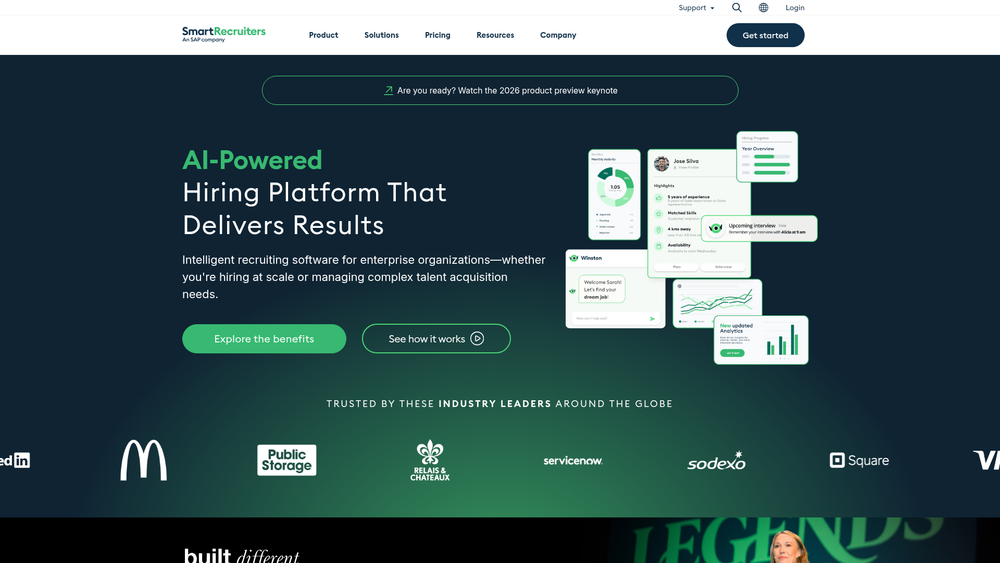
SmartRecruiters is an enterprise talent acquisition platform that combines applicant tracking, recruiting automation, and AI-powered hiring capabilities.
It's designed to help large recruiting teams manage hiring at scale, with configurable workflows, centralized candidate data, and tools for collaboration between recruiters and hiring managers.
SmartRecruiters also offers AI capabilities to support candidate matching, recruiting workflows, and hiring efficiency.
Key features
- Applicant tracking: Manage job openings, candidate applications, and hiring pipelines across multiple teams and locations.
- AI-assisted recruiting: Use AI capabilities to support candidate matching, screening, and recruiting workflows.
- Workflow automation: Configure hiring processes and automate repetitive recruiting tasks.
- Interview management: Coordinate interviews, collect feedback, and support hiring team collaboration.
- Recruiting analytics: Track hiring performance, pipeline activity, and recruitment outcomes.
- Enterprise integrations: Connect with HR systems, assessments, background checks, and other recruiting software.
Where SmartRecruiters falls short: Its enterprise focus can mean more implementation complexity, configuration, and administrative overhead than smaller recruiting teams need.
8. Eightfold AI: Best for skills intelligence and talent matching.
Best for: Enterprises that want to use AI to understand workforce skills, identify talent, and support both external recruiting and internal mobility.
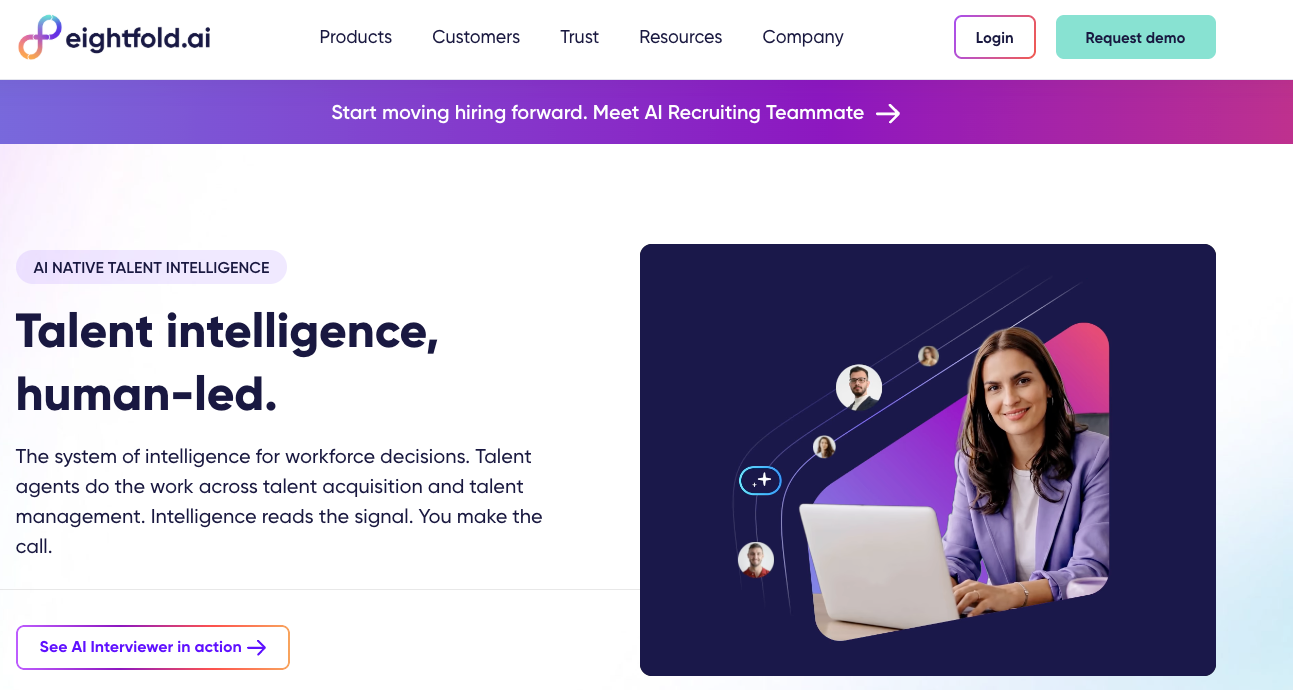
Eightfold AI is a talent intelligence platform that uses AI to help organizations understand candidates' skills, experience, and potential.
Its approach extends beyond traditional recruiting. Alongside external talent acquisition, Eightfold supports internal mobility, workforce planning, and employee development.
This makes it particularly relevant for large organizations that want to connect hiring decisions with broader workforce strategies.
Key features
- AI talent matching: Match candidates with opportunities based on skills, experience, and inferred capabilities.
- Talent intelligence: Analyze talent data to identify relevant candidates and understand workforce capabilities.
- Candidate discovery: Search for prospective hires using AI-powered recommendations and matching.
- Internal mobility: Identify existing employees who may be suitable for new roles or career opportunities.
- Skills intelligence: Build a clearer picture of workforce skills and potential development opportunities.
- Workforce insights: Support strategic decisions about talent availability, skills gaps, and hiring needs.
Where Eightfold AI falls short: Eightfold emphasizes talent intelligence, skills matching, and workforce planning rather than end-to-end autonomous recruiting execution. Teams focused on outbound engagement and interview automation may need additional tools.
9. iCIMS: Best for complex enterprise recruiting workflows.
Best for: Large organizations that need configurable talent acquisition software, extensive integrations, and support for high-volume or complex hiring processes.
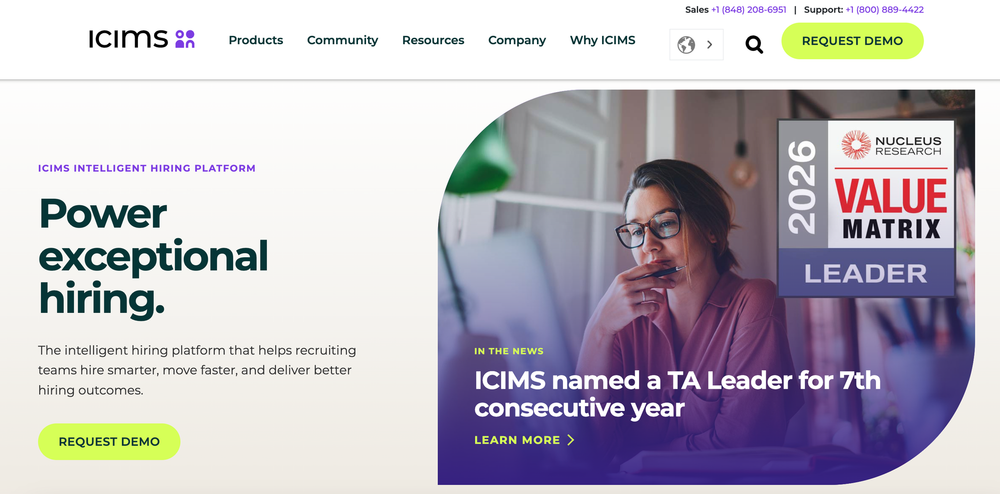
iCIMS is an enterprise talent acquisition platform that helps organizations manage recruiting operations, candidate engagement, and hiring workflows.
It's designed for businesses with substantial hiring requirements, including organizations recruiting across multiple departments, locations, and job categories.
Alongside its applicant tracking capabilities, iCIMS provides tools for recruitment marketing, candidate relationship management, and recruiting automation.
Key features
- Applicant tracking: Manage job requisitions, applications, candidate pipelines, and hiring workflows.
- Candidate relationship management: Build talent pools and maintain engagement with prospective candidates.
- Recruitment marketing: Promote job opportunities and attract candidates through career sites and campaigns.
- AI-assisted recruiting: Support candidate matching, recommendations, and recruiting efficiency.
- Workflow automation: Standardize hiring processes and reduce repetitive administrative work.
- Enterprise iCIMS integrations: Connect recruiting workflows with HRIS platforms and other business systems.
Where iCIMS falls short: iCIMS can be complex to implement and manage, particularly for smaller teams. Its enterprise recruiting infrastructure may be excessive for organizations primarily seeking fast, autonomous AI recruiting.
10. Gem: Best for candidate engagement and recruiting CRM.
Best for: Recruiting teams that want to manage candidate relationships, automate outreach, and track recruiting performance in one platform.
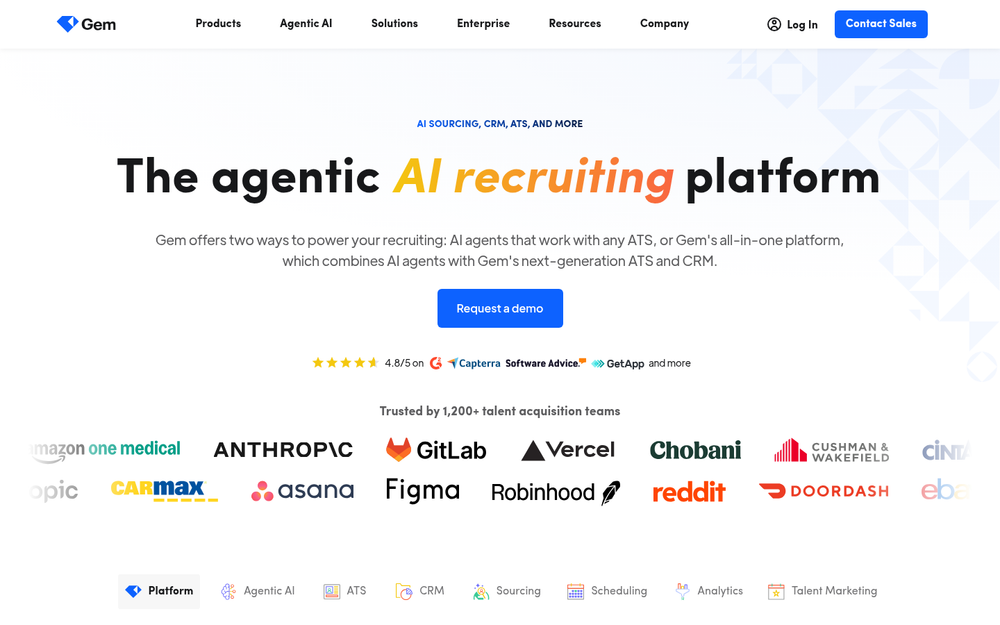
Gem is a talent acquisition platform that combines applicant tracking, candidate relationship management, sourcing, and recruiting analytics.
Originally focused on recruiting CRM and outbound engagement, Gem has expanded into a broader recruiting platform. It helps teams build talent pipelines, engage prospective candidates, and manage hiring workflows.
Its combination of outreach automation and pipeline analytics makes it particularly useful for recruiting teams that want better visibility into their sourcing efforts.
Key features
- Candidate sourcing: Find prospective candidates and add them to recruiting pipelines.
- Recruiting CRM: Organize talent pools and manage relationships with potential hires.
- Automated outreach: Create personalized email sequences and manage candidate follow-ups.
- Applicant tracking: Manage applications, hiring stages, and recruiting workflows.
- Recruiting analytics: Measure sourcing performance, outreach effectiveness, and pipeline conversion.
- Talent rediscovery: Search existing candidate databases to identify people who may suit new opportunities.
Where Gem falls short: Gem provides sourcing and outreach automation, but its capabilities for autonomous candidate engagement, conversational AI screening, and interview intelligence are less comprehensive than dedicated agentic recruiting platforms.
11. GoodTime: Best for automated interview scheduling.
Best for: Recruiting teams that coordinate large numbers of interviews and want to reduce scheduling administration.
GoodTime is an interview scheduling and recruiting coordination platform designed to simplify one of the most time-consuming parts of talent acquisition.
It helps recruiting teams coordinate calendars, organize interview panels, and manage scheduling workflows without relying on endless emails and manual availability checks.
GoodTime is particularly useful for organizations with complex interview processes involving multiple interviewers, hiring managers, and candidates.
Key features
- Automated interview scheduling: Coordinate candidate and interviewer availability to reduce manual scheduling.
- Panel interview coordination: Organize interviews involving multiple participants and scheduling requirements.
- Calendar integrations: Connect with existing calendars to manage availability and scheduling.
- Interviewer management: Help distribute interview responsibilities and manage interviewer workloads.
- Candidate communications: Send scheduling invitations, confirmations, and reminders.
- Scheduling analytics: Monitor scheduling efficiency and identify bottlenecks in interview coordination.
Where GoodTime falls short: GoodTime specializes in interview scheduling, not end-to-end recruiting. It doesn't replace tools for candidate sourcing, application review, or comprehensive candidate evaluation.
12. Phenom: Best for candidate experience and recruitment marketing.
Best for: Enterprise recruiting teams that want to attract candidates, improve career site experiences, and build long-term talent pipelines.
Phenom is an AI-powered talent acquisition and talent experience platform designed to help organizations attract, engage, and develop talent.
Its capabilities extend beyond applicant tracking to include recruitment marketing, candidate relationship management, career sites, and talent matching.
Phenom is particularly relevant for large organizations that receive significant candidate traffic and want to improve how prospective employees discover opportunities and interact with their employer brand.
Key features
- Personalized career sites: Deliver tailored job recommendations and career site experiences.
- Recruitment marketing: Promote opportunities and attract candidates through targeted campaigns.
- Candidate relationship management: Build talent communities and nurture prospective applicants.
- AI talent matching: Recommend relevant opportunities based on candidate skills and experience.
- Conversational AI: Support candidate engagement and recruiting interactions through AI-powered assistants.
- Talent rediscovery: Identify promising candidates within existing talent databases.
Where Phenom falls short: Phenom's broad enterprise talent experience platform can be complex to implement. Teams focused on autonomous outbound sourcing, screening, and interview execution may find much of its functionality unnecessary.
What features should you look for in talent acquisition software?
The best talent acquisition software platforms help recruiters spend less time managing processes and more time making great hires.
Here are six features worth prioritizing:
- AI candidate sourcing. Look for tools that evaluate candidates against your actual hiring criteria rather than relying exclusively on keyword matching.
- Automated screening. Advanced AI screening tools can conduct conversational interviews, ask relevant follow-up questions, and explore candidates' experience and motivations.
- Candidate engagement. Autonomous AI agents personalize outreach, manage follow-ups, and keep candidates engaged throughout the hiring process.
- Interview scheduling. Look for scheduling automation that connects naturally with sourcing, screening, and candidate communications.
- Interview intelligence. Capture accurate interview notes, structure candidate feedback, and help hiring teams make evidence-based decisions.
- ATS integrations and reporting. Reporting should help teams understand pipeline quality, hiring efficiency, and opportunities for improvement.
Traditional vs. AI talent acquisition platforms: What's the difference?
Traditional talent acquisition platforms were primarily designed to organize and manage recruiting. AI talent acquisition platforms increasingly help execute recruiting tasks themselves.
| Traditional talent acquisition platforms | AI talent acquisition platforms |
|---|---|
| Track applicants through hiring stages | Find, evaluate, and prioritize candidates |
| Store candidate profiles and resumes | Research candidates and assess their suitability |
| Manage outreach campaigns | Generate personalized outreach and manage replies |
| Coordinate interview scheduling | Automate screening and scheduling workflows |
| Collect interviewer feedback | Capture interview insights and structure evaluations |
| Report on recruiting activity | Surface insights to support hiring decisions |
These categories aren't mutually exclusive. Many established ATS providers now offer AI capabilities, while AI-native recruiting platforms often integrate with traditional applicant tracking systems.
How to choose the right talent acquisition platform.
The right platform depends on your existing recruiting stack, hiring volume, and biggest operational challenges.
Consider these five factors before choosing:
- Identify your biggest recruiting bottleneck. If your team struggles with candidate discovery, prioritize AI sourcing. If application volumes are overwhelming, look for automated review and screening. If interview coordination is slowing hiring, scheduling automation may deliver the fastest improvements.
- Decide whether you need an ATS or autonomous AI agents. An ATS helps organize recruiting workflows and candidate records. AI agents can actively execute sourcing, outreach, screening, and other tasks. Many teams benefit from using both.
- Look for connected recruiting workflows. Automating individual tasks is useful, but disconnected tools can create more administration. Prioritize platforms that share recruiting context and move candidates smoothly between stages.
- Check integrations and implementation requirements. Your talent acquisition software should work with your existing ATS, calendars, and collaboration tools. Consider how quickly your team can start using it and how much configuration is required.
- Evaluate hiring quality alongside efficiency. Saving recruiter hours matters, but so does finding stronger candidates and making better decisions. Look for tools that improve candidate evaluation, hiring consistency, and overall recruiting outcomes.
Choose a talent acquisition platform that helps you hire.
The best talent acquisition platforms don't just make recruiting easier to manage. They help teams find better candidates, move faster, and make more confident hiring decisions.
Metaview brings AI sourcing, application review, screening, and interview intelligence together in one agentic recruiting platform. And with fillmore, teams can automate outbound candidate sourcing, personalized outreach, and interview scheduling.
Together, they help recruiters spend less time on repetitive work and more time making the right hires.
Bring Metaview into your hiring stack.
Live notes, structured scorecards, and ATS sync - set up in under 10 minutes.
Talent acquisition platform FAQs
What’s the best talent acquisition platform?
Metaview is a strong choice for teams looking for an end-to-end AI talent acquisition platform. Its connected AI agents support candidate sourcing, application review, screening, and interview intelligence.
For organizations primarily focused on applicant tracking and structured hiring workflows, platforms like Greenhouse and Ashby are also worth considering.
What are the best AI talent acquisition platforms?
Leading AI talent acquisition platforms include Metaview, fillmore, Eightfold AI, Phenom, and SmartRecruiters. Each focuses on different recruiting needs. Metaview specializes in end-to-end agentic recruiting, fillmore automates outbound sourcing and engagement, while Eightfold emphasizes talent intelligence and skills matching.
What's the difference between talent acquisition software and an ATS?
An applicant tracking system (ATS) manages applications, candidate records, and hiring workflows. Talent acquisition software is a broader category that can also include candidate sourcing, recruitment marketing, screening, outreach, interview scheduling, and hiring intelligence.
An ATS is often one component of a company's wider talent acquisition technology stack.
Can AI talent acquisition platforms automate sourcing and screening?
Yes. Advanced AI talent acquisition platforms can find and research prospective candidates, evaluate inbound applications, and conduct automated screening interviews.
Metaview's AI agents can assess candidates against hiring criteria and ask dynamic follow-up questions, helping recruiters identify promising talent without manually reviewing or screening every applicant.
Do AI talent acquisition platforms integrate with existing ATS software?
Many AI talent acquisition platforms integrate with established applicant tracking systems, including Greenhouse, Lever, Workday, and iCIMS. These integrations help recruiting teams add AI capabilities without replacing their existing systems.
Depending on the integration, candidate records, screening results, interview notes, and other recruiting data can flow between platforms.
