Four December ships chain into one tighter recruiter loop. Your ATS documents seed your AI Notes. The structured notes drop into your inbox as PDFs the moment the call ends. AI Sourcing summaries tell you why each candidate showed up. And personal knowledge keeps the next search sharper than the last.
That's the shape of what we shipped to close out 2025.
Here's what changes Monday morning, feature by feature.
Smarter AI Notes
Two ships made our AI Notes richer at the input layer and easier to use at the output layer.
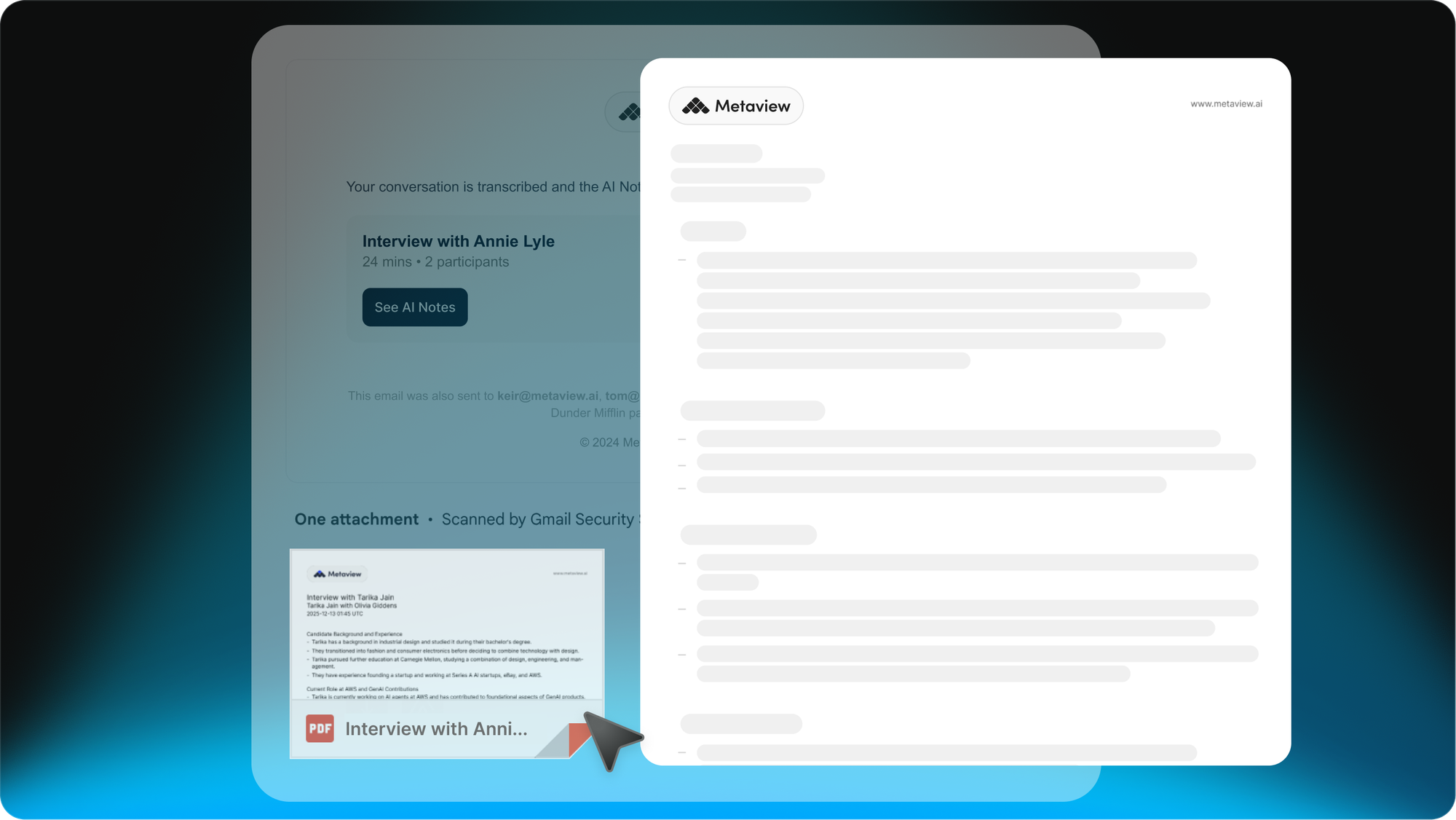
PDF AI Notes delivered to your inbox
The moment a call ends and the notes are ready, a PDF copy lands in the interviewer's email.
This is for the teams whose hiring managers live in their inbox, the recruiters who want to forward a clean record to a panel, and the orgs that need a portable artifact for their own systems of record. No more screen-shotting the notes view just to share what happened on the call.
To turn it on for your workspace, ask our support team. We'll flip the workspace preference on the back end.
Your ATS documents now feed your AI Notes
We now pull structured notes from the right context, not just the transcript.
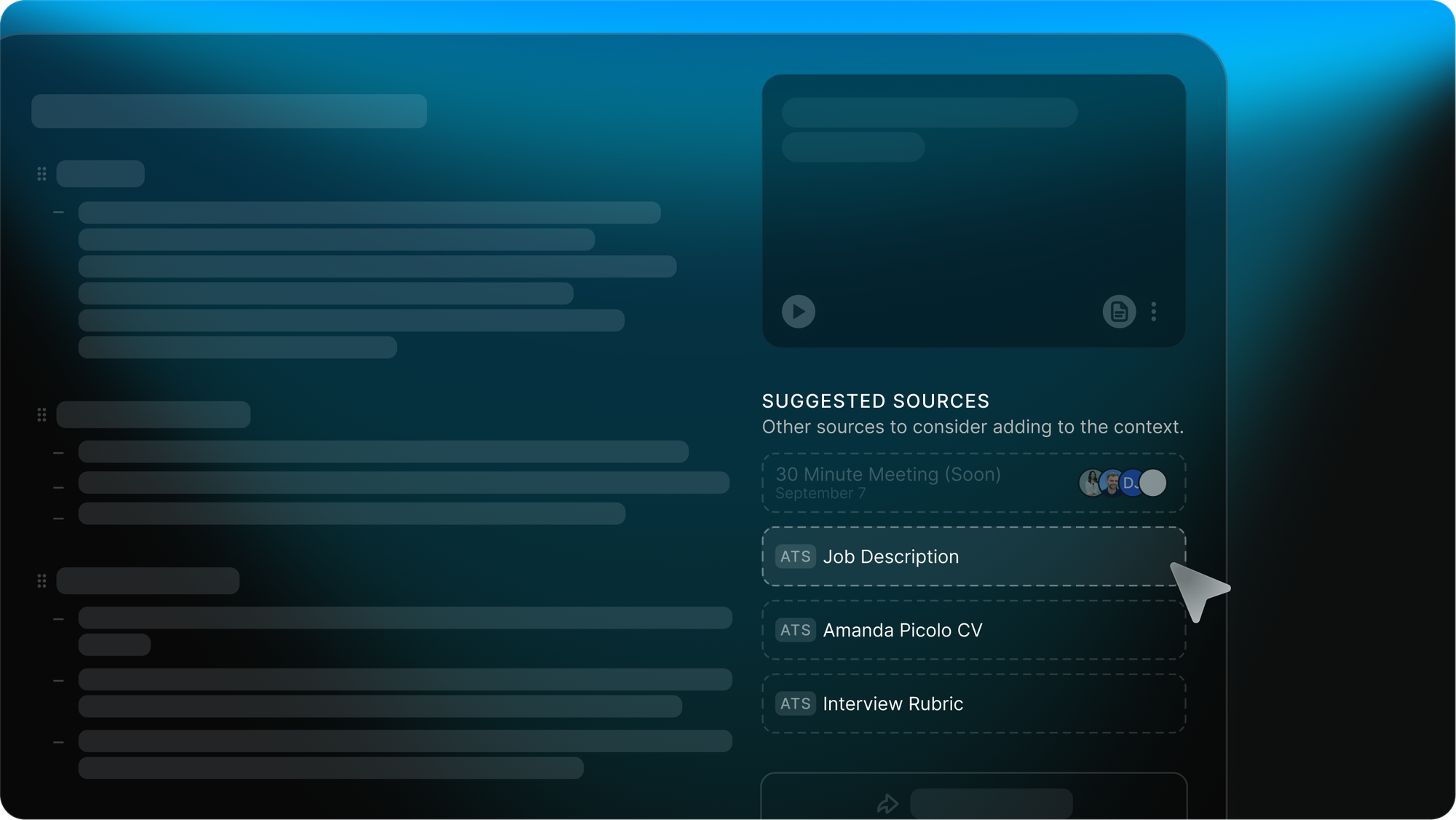
When you open notes for a candidate, we surface their CV from your ATS as a suggested source on the right side. Click the + button and the AI regenerates the notes with that context. The summary lands grounded in the actual role and the actual person, not just what got said in the room.
Supported ATSes at launch: Greenhouse and Ashby. More on the way. The suggestion currently surfaces one document at a time, usually the CV; if your team needs additional document types prioritized, flag it to your account team.
Sharper AI Sourcing
Two ships made our AI Sourcing agents more transparent at the output layer and more personalized at the input layer.
See why each candidate surfaced
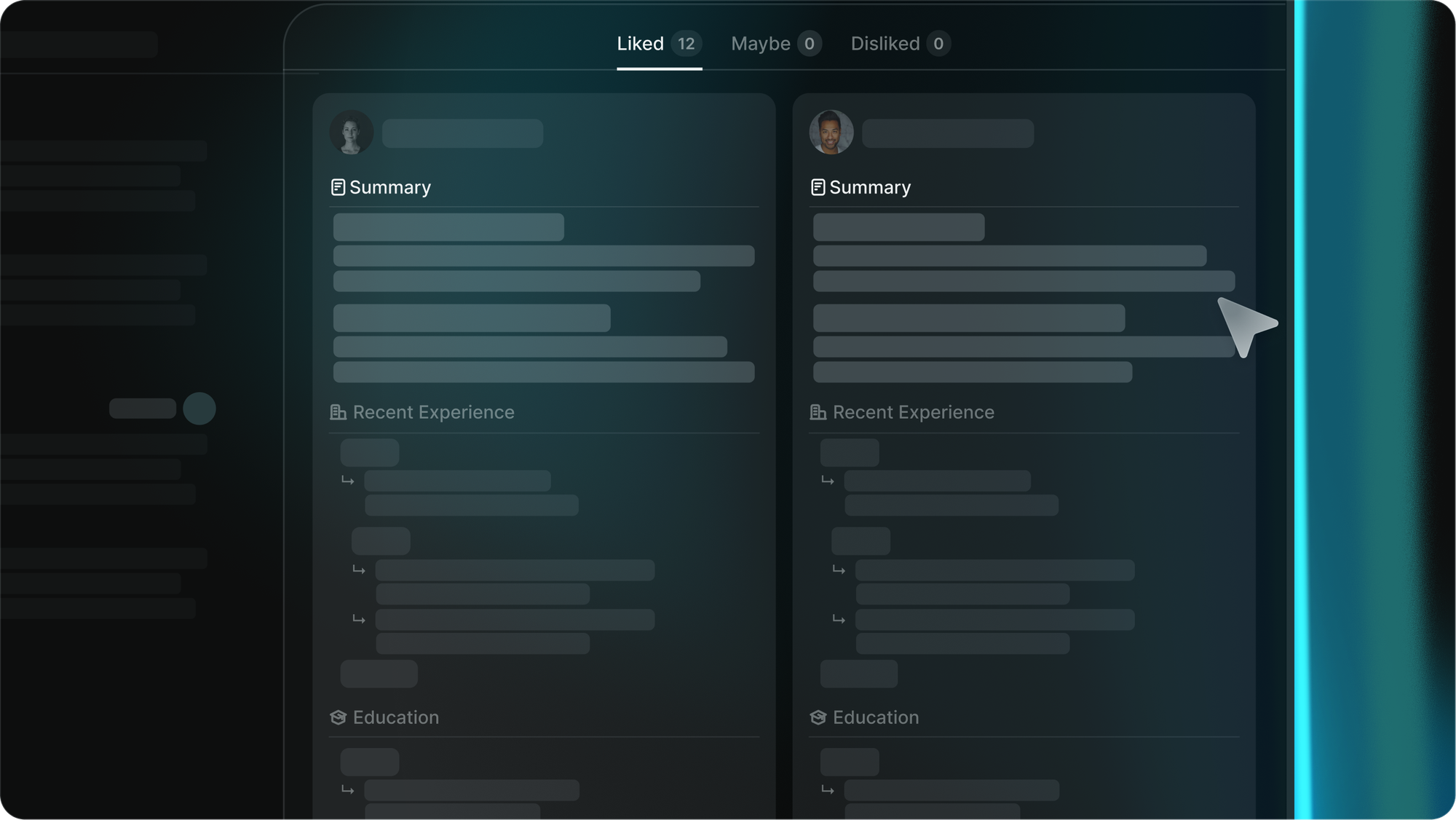
Every candidate card now carries a short Summary section explaining why our sourcing agent picked them. The reasoning is generated by comparing the candidate to the latest ICP for your search.
This was the most-requested visibility feature across our customer base. With the reasoning surfaced, you can validate matches faster, build trust in what the agent is doing, and tighten your next prompt against any pattern you want to push on.
One detail to know: the summaries appear on candidates surfaced from this point forward, not on historical search results.
Personal knowledge, tailored to each user
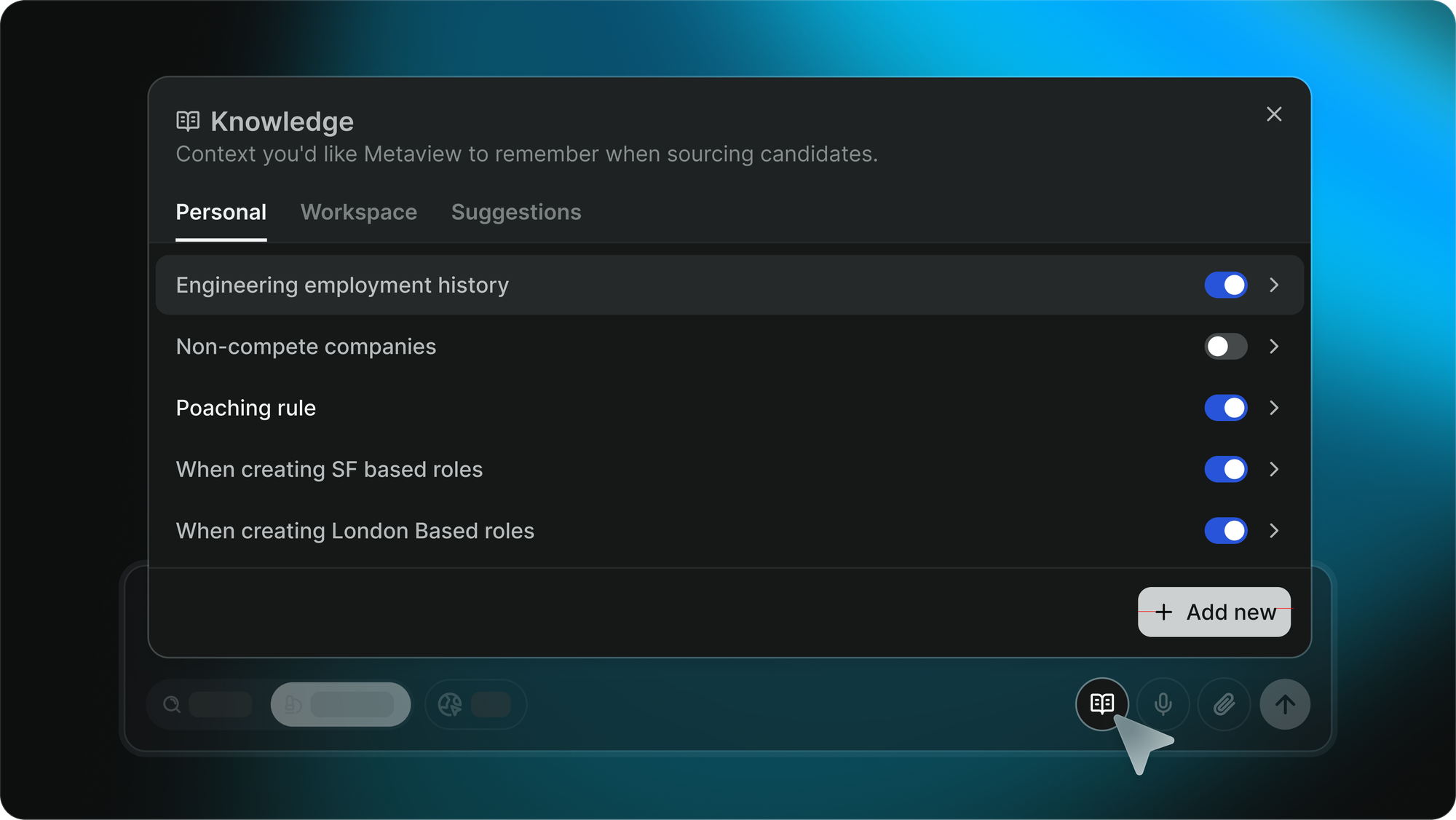
Last month we shipped workspace-level knowledge so teams could codify shared sourcing preferences. This month, each user can layer their own knowledge on top.
Define your role nuances, your sourcing priorities, what "great" looks like to you. The personal layer applies only to your searches; the workspace layer stays consistent across the team. More control, less noise, and a sourcing experience that adapts to how you actually work.
What this looks like in practice
The four ships are linked by intent: every artifact our AI produces should be grounded in what your team already knows about the role, the candidate, and the way you hire.
We've saved so much time not having to type up very detailed notes. For me personally, I really appreciate being able to look at my notes and see exactly what we talked about. Now it's way more standardized, and way more efficient."
Leslie's point about standardization is the through-line for December.
ATS documents feed the same structured notes every interviewer reads. PDFs deliver the same artifact to every stakeholder. AI Sourcing summaries reason against the same ICP for every candidate on the card. Personal knowledge keeps each recruiter's voice in their own search without breaking the team's shared rubric.
What's next
The two themes we leaned into this month, smarter AI Notes and sharper AI Sourcing, are the two we'll keep building on through Q1 2026.
The Suggested Sources surface is expanding beyond Greenhouse and Ashby. The AI Sourcing reasoning layer is being applied earlier in the search flow, not just on the surfaced card. And the workspace-plus-personal knowledge model we shipped this month is the foundation for richer shared context across the team.
All four features are live in every Metaview workspace today. Switch them on for your next interview, or book a demo below if your team wants a walk-through first.
Frequently asked
How do I turn on PDF AI Notes for my workspace?
Ask our support team. PDF delivery is a workspace-level preference that we enable on the back end. Once it's on, every interviewer on the workspace gets the PDF alongside the standard summary-ready email.
Which ATSes feed candidate documents into AI Notes today?
Greenhouse and Ashby at launch. We're adding more, and the rest of our 62+ native integrations already cover ATS sync for the structured notes themselves.
Does the AI Sourcing reasoning show up on candidates I sourced last month?
No. The reasoning summaries appear on candidates surfaced from this point forward. Past searches stay as they were.
How does personal knowledge interact with workspace-level knowledge?
Personal knowledge layers on top of workspace knowledge for your searches only. The workspace knowledge stays consistent across the team. The two are additive; one doesn't override the other.
Will the AI summary fall over if the ATS suggests the wrong document?
No. The suggestion is optional. We surface one document at a time on the right side of the notes view; you decide whether to add it as a source. If you skip the suggestion, the AI Notes generate as normal from the transcript and any sources you've manually added.
Bring Metaview into your hiring stack.
Live notes, structured scorecards, and ATS sync - set up in under 10 minutes.