
Most wash-up meetings end with somebody asking, "so, are we moving forward?" and the loudest voice in the room answering. The recruiter writes "team aligned" in the ATS, the offer goes out, and a week later the hiring manager wants to revisit the call.
That isn't a decision. That's a consensus ritual dressed up as one.
The wash-up only earns its hour when somebody facilitates it. That somebody is the recruiter, not the hiring manager, and the lift comes from how you manage the room, not from collecting opinions.
This guide walks through the six facilitation plays that turn the wash-up from a vibe debrief into a signal-aligning move. The middle play, active bias management, is the one most teams skip.
What a wash-up meeting is.
A wash-up meeting is the structured session after a round of interviews where the panel reviews evidence, weighs it against the rubric, and lands a decision on the candidate. The recruiter convenes it. The hiring manager owns the outcome. The panel brings the signal.
Three roles, one hour. It is not a status update, a Slack thread reconciliation, or a vote.
Inside the hour, the wash-up does three jobs. It surfaces every interviewer's independent read before the loudest voice locks the room. It pressure-tests vague claims against concrete behaviors from the interviews. It ends with a named outcome and an owner for the next step.
Skip the hour, or run it as a chat, and the cost shows up two ways. The hiring manager goes back and forth with the panel for days, slowing time-to-hire. And the candidate, who is already in conversations elsewhere, takes the faster offer.
Why the recruiter is the right facilitator.
The hiring manager is the decision-maker. The interviewers are the panel of evidence. The recruiter is the facilitator, and the three jobs do not collapse cleanly into two.
Recruiters sit across multiple loops at once. You see the patterns that any single hiring manager only sees for one role: which interviewers always grade high, which competencies always come back thin, which feedback shapes drift toward the comfortable hire.
That cross-loop view is what makes the room defensible, not the hiring manager's preference for this candidate.
Facilitating the wash-up is also where you earn the right to push back on a marginal hire. When the hiring manager has run the meeting, the recruiter has no leverage to slow the train down.
When the recruiter has run it, the question "what did the panel see?" carries weight because it was the recruiter's job to surface that signal.
- No goal stated, the meeting drifts into opinion-sharing
- Senior voice lands the read first, the rest of the panel follows
- "Culture fit," "vibes off," and "trust my gut" carry the call
- Decisions get re-litigated for a week in Slack
- No record of how the call was made when the next role opens
- Goal named in the first 30 seconds, the room knows what it's leaving with
- Independent reads on the table before discussion opens
- Every vague claim converts to a behavior the panel can name
- Bias patterns get called out the moment they enter the room
- A decision, an owner, and a written rationale that feeds the next loop
The six plays the recruiter runs.
Each play is a piece of facilitation work the recruiter does before, during, or at the close. Done together, they compress a 60-minute room into a 25-minute decision. The order matters, because each play sets up the next.
1. Goal-lock the room.
Open with the decision the meeting will reach: advance to offer, decline, or extend to one more conversation. Name it in the first 30 seconds.
The goal statement is what stops the wash-up from drifting into opinion-sharing. Without it, the panel defaults to general impressions, and the hiring manager spends the first 10 minutes figuring out which question the meeting is supposed to answer.
Write the goal at the top of your facilitation notes before the meeting opens. Reading it aloud takes 5 seconds. It earns you the next 25 minutes.
2. Anchor to the rubric.
The competencies the role was opened against, the bar set at calibration, and the evidence types each interviewer was supposed to surface. Keep a printed or open copy at the top of the discussion.
The rubric is the anchor. It is what makes the wash-up about this role and not about whether the panel personally clicked with the candidate.
Pull the rubric forward whenever someone uses a word the rubric doesn't define (collaborative, leadership, communication) and ask what the rubric says it should look like.
The discipline of returning to the rubric in the room is what makes the post-meeting rationale defensible weeks later, when the next opening surfaces a similar candidate and the team needs to make a comparable call.
3. Require written feedback before the meeting.
Every interviewer submits structured notes before the meeting opens. The submission is the input integrity check. If half the panel is writing during the meeting, the reads get shaped by who spoke first.
Make this the bar that lets the meeting happen at all. If the feedback isn't in, the meeting moves. Schedule the wash-up first and let the deadline pull the feedback forward, rather than waiting for feedback and then trying to find a calendar slot.
The quality of the wash-up is directly tied to the quality of this input. If interviewers default to "I'll write it after," they're really saying "I'll let the meeting shape my read."
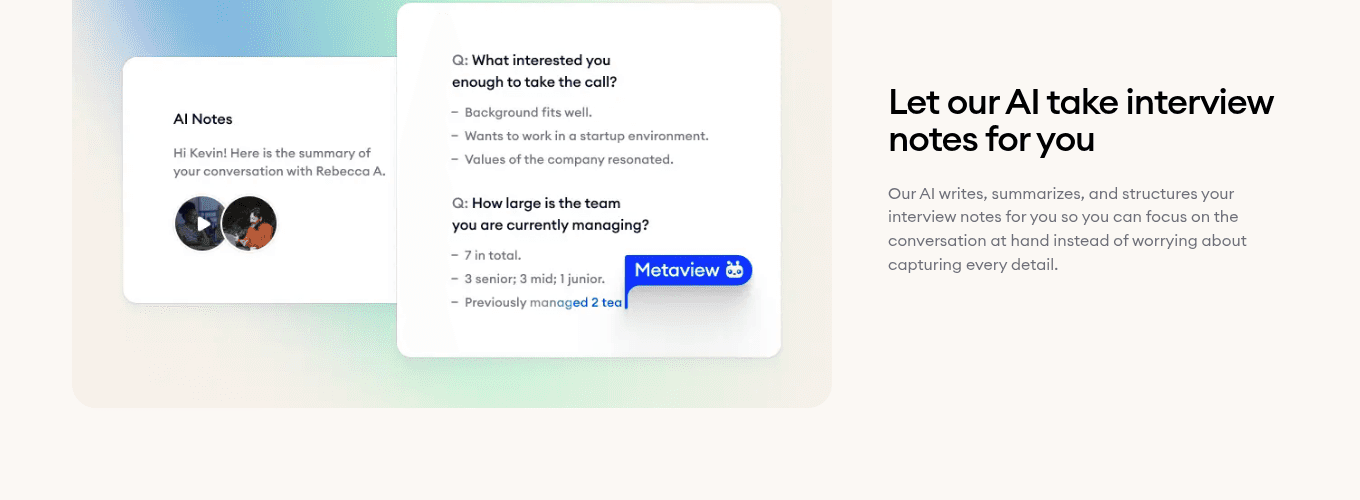
- 1Per-interviewer structured notes that satisfy play three's input gate.
- 2Question-by-question signal the recruiter scans before opening the meeting.
- 3Topic chips surface where the panel agrees and where the splits are.
4. Apply evidence pressure.
Every claim gets followed with "what did you see?" or "where in the interview did that show up?"
The "strong communicator" reads become "explained their decision tree without notes." The "not quite senior enough" reads become "couldn't name the failure mode when I asked twice."
Vague claims that survive this question are usually thin signal dressed up as judgment. The recruiter's job is to ask the question every time, even when the answer feels obvious. The discipline is what protects the room from confirmation bias.
5. Manage bias live.
Three patterns to call out in real time: halo effects (one strong moment colors the whole evaluation), culture-fit shorthand (coded language for "looks like the rest of us"), and senior-voice dominance (the most tenured interviewer's read shaping every read after).
The next section covers each in detail, with a 30-second reset move per pattern. For now, treat bias management as a piece of facilitation work, not a category of awareness.
6. Time-box the close.
A wash-up that runs past 30 minutes is signaling that the inputs failed, not that the meeting is hard.
Close with the named outcome, the rationale, the owner of the next step, and the date the candidate hears back. Write the rationale into the ATS the same day, so the next opening has a record to learn from.
The close is also where you set up the next loop. A wash-up that lands cleanly trains the panel to bring the inputs the next time. A wash-up that runs long teaches the opposite.
The plays are sequential, not optional. Skipping play three collapses play four, because there's nothing structured to pressure-test against. Skipping play five collapses the whole hour. The loudest voice carries the room by default.
Active bias management is the play most teams skip.
Most bias training stops at "be aware of bias." Awareness is not facilitation. Bias gets managed by naming the pattern in the moment, then resetting the conversation to evidence.
Three patterns recur often enough that the recruiter should be watching for them on every wash-up.
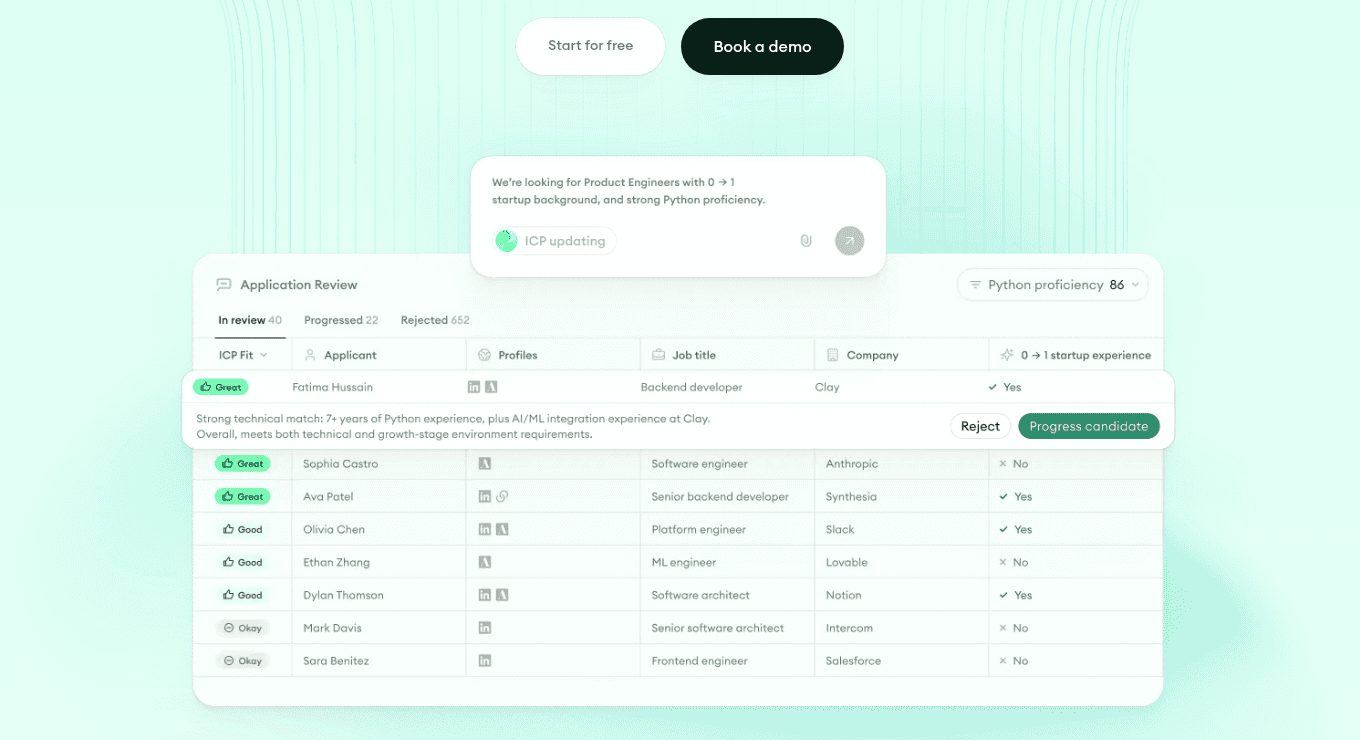
- 1Cross-candidate context that catches halo effects before they shape the call.
- 2Reasoning trail per candidate, ready to challenge "feels off" reads.
- 3Flags surface where one interviewer's read is out of line with the rest.
The reset moves take 30 seconds each. The room learns the moves after two or three wash-ups, and the calibration starts compounding across loops.
How our Notetaker, Application Review, and AI insights make this work.
Facilitation is mostly work, and the work is mostly preparation. Three Metaview surfaces compress that prep so the recruiter walks into the wash-up with structure already on the page.
AI Notes via the Notetaker. Every interviewer ships structured notes per the rubric, written by our AI while the conversation was happening.
That satisfies play three (written feedback before) without forcing interviewers to spend an hour reconstructing the conversation. The notes are anchored to the questions asked and the answers given, which is what makes play four (evidence pressure) cheap to run in the room.
Application Review for cross-candidate context. Before the wash-up, the recruiter opens Application Review on the role and sees how this candidate compares against the rest of the pipeline.
That is the view that catches halo effects. A "best candidate we've seen" read against twelve stronger candidates already in the pipeline is the halo, not the bar.
AI insights for cross-round patterns. When the panel ran two or three rounds, the cross-round summary surfaces themes the recruiter would have to synthesize by hand.
Where the rounds disagree, where the same question got asked twice, where the signal is thin, all there before the meeting opens. That is what makes the closing rationale (the one that goes into the ATS) defensible the moment the wash-up ends.
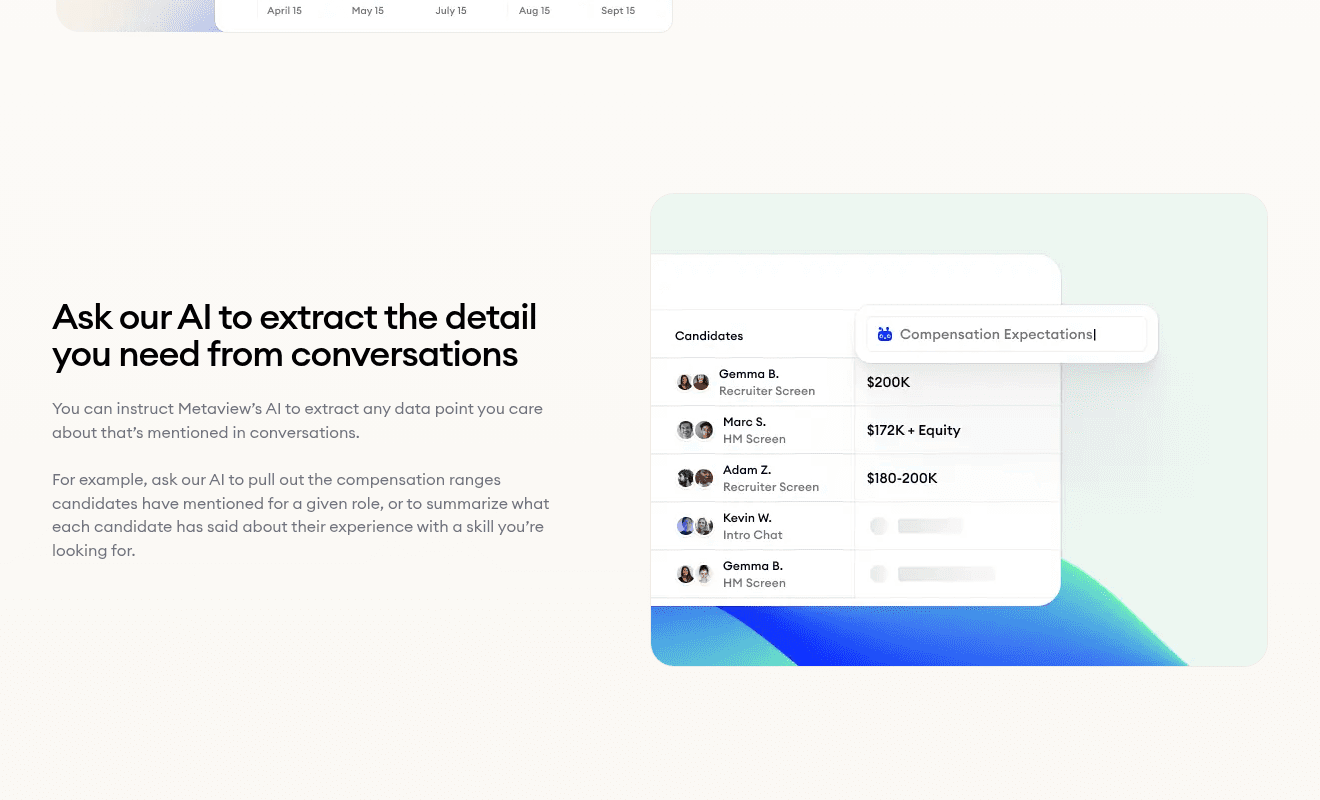
- 1Natural-language query: "where did the panel disagree?" answered in seconds.
- 2Per-competency summary across every round the candidate ran.
- 3Direct jump back to the moment in the interview that drove each read.
None of the three surfaces replace the recruiter. They strip out the synthesis work that used to consume the first 15 minutes of the meeting, so the wash-up opens with the structure already there.
The shift is procedural, not personal. Same room, sharper inputs. The first 15 minutes go from "catch the hiring manager up" to "name where the panel splits," and the closing rationale lands defensible the moment the meeting ends.
Frequently asked.
What's the difference between a wash-up meeting and an interview debrief?
In practice, the terms split by region. "Wash-up" is the common phrasing across EMEA recruiting teams. "Interview debrief" is the North American default. The workflow is identical and the playbooks are interchangeable. If your team uses both, pick one for written process docs so the calendar invite, the ATS step, and the recruiter handover all match.
How long should a wash-up meeting last?
Fifteen minutes covers three or fewer interviewers with clean scorecards in advance. Thirty minutes is the ceiling for four or more interviewers, or where the panel has split judgments to work through. Anything beyond 30 minutes is signal that the inputs failed (missing written feedback, unclear rubric, no goal stated) rather than a sign the meeting was hard.
Who should run the wash-up meeting when the hiring manager is the most senior person in the room?
The recruiter still facilitates. Brief the hiring manager once, before the first wash-up, on the recruiter-as-facilitator setup so the role split lands without friction. The hiring manager keeps decision authority and still speaks last in the round. The recruiter keeps facilitation authority and keeps the room on the six plays.
What do I do when written feedback isn't in before the meeting?
Move the meeting by 30 minutes and request a three-sentence written summary from every interviewer who is still outstanding. If the summaries don't arrive in that window, reschedule the wash-up entirely rather than run it on missing inputs. Running the meeting without written reads is how the loudest voice ends up driving the call.
Which Metaview surfaces help the recruiter facilitate?
The Notetaker turns every interview into structured notes anchored to the rubric, satisfying the written-feedback-before play. Application Review shows the candidate against the rest of the pipeline, which catches halo reads before they shape the call. AI insights surface cross-round themes so the closing rationale is defensible the moment the wash-up ends. Email support@metaview.ai if you want a walkthrough on your roles.
The facilitation work compounds. A team that runs three or four wash-ups in this shape stops needing the playbook in their hand; the moves become how the room operates.
The payoff isn't a single better hire. It's a defensible decision the team can stand behind, a record the next opening can learn from, and a quality-of-hire loop that tightens with every round.
If your team's wash-ups still close with a shrug and a "team aligned" note in the ATS, the place to start is play one. Goal-lock the next meeting, name the decision the room will reach, and watch how the rest of the hour reorganizes around it.
Bring Metaview into your hiring stack.
Live notes, structured scorecards, and ATS sync - set up in under 10 minutes.
