
Closing a job post takes one click. Knowing when to close a job posting is harder, and I suspect most teams decide on a feeling. Someone scrolls the inbox, the pile looks big enough, and the post comes down. Whoever applied after that person stopped scrolling may never get a look, and no one ever decided that they shouldn’t.
The pile is also bigger than it used to be. In the application data Metaview studied, jobs opened in 2026 drew a median of 45 applications each, against 5 for jobs opened in 2022. The 2026 average was 180.6, because a few roles draw far more than the rest.¹ With piles that size, the close stops being a small admin call. It decides who gets read at all, and late applicants pay for it.
My answer is a stopping rule you write before the post opens. The post closes once it has drawn a set number of qualified applicants, meaning people whose applications show the role’s written must-haves. You size that number against the interviews your team can run, one person makes the call, and a set date forces a check. Closing stops new applications, and it doesn’t stop the review of the ones already in.
Below, you’ll find how to set that rule for your kind of role. You’ll also see what to do with the applications still waiting when the post comes down.
When should you close a job posting?
Close it when the post has drawn enough qualified applicants to fill the interviews you have room for. Set that number, as a multiple, before the post opens. A qualified applicant is one whose application shows what the role requires, judged against the same written standard as everyone else who applied.
That makes the close a decision you write down in advance. The rule has four parts, and each one stops a different way the close goes wrong:
- The multiple: how many qualified applications you want for each interview you can run. Your team picks it, and without it “enough” means whatever the pile looks like on the day.
- The count: the multiple times the interviews you can run for the role. That’s the number of qualified applications that closes the post.
- The decider: the one person who closes the post when it hits the count. Without a name, the post closes whenever someone gets around to it.
- The review date: the day the decider checks the rule, whether or not the count was reached. Without it, a post that draws too few applicants stays open with no one deciding anything.
Where you set each part depends on how applications arrive. Volume roles draw more applicants than the team can interview. Specialist roles draw few qualified ones. Evergreen roles stay open because the team hires for them all year. This is the whole rule for each kind of role:
| Volume role | Specialist role | Evergreen role | |
|---|---|---|---|
| The multiple | Set it low, because the post can reopen if too few qualified applicants reach an interview | Set it against the interviews you can run, and expect the review date to do more of the work | Set it for each review period, against the interviews in that period |
| The count | Qualified applications; expect to hit it early | Qualified applications, with a second look at the near misses before the review date | Qualified applications received since the last review |
| The decider | The role’s recruiter | The recruiter, with the hiring manager agreeing to any extension | Whoever runs that role’s pipeline |
| The review date | A few days after the post opens, in case the count arrives before anyone checks it | Further out, with a decision to widen the search or keep waiting | A standing date on the team’s calendar, when the decider pauses the post if it has hit the count |
Why total volume is the wrong trigger.
Total volume counts arrivals. It can’t tell an application that meets every key requirement from one that only shares a job title. So a post can look full while holding very few people worth a call. That’s why the rule counts qualified applications only.
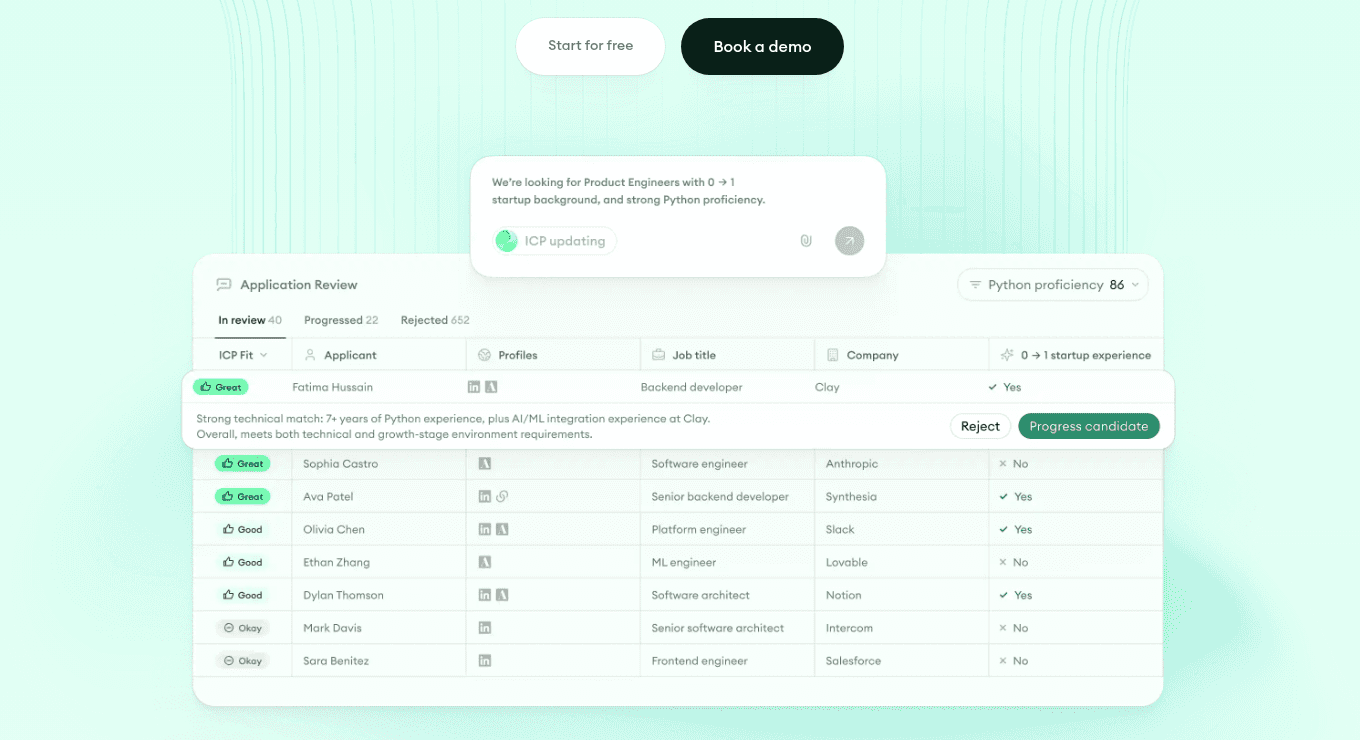
Counting them takes a written profile of who the role needs, agreed before anyone reads an application. Without software, the count is the applications a recruiter marks as meeting every must-have. Metaview’s Application Review reads each application against the role’s Ideal Candidate Profile, which a person approves, and places it in a fit bucket, “Great,” “Good,” “Okay,” or “Poor,” with its reasoning shown. If you use it, your team decides which ratings count toward the rule.
Applications rated “Great” advanced at 17.2% and those rated “Good” at 12.1%, against 7.8% for “Okay” and 5.6% for “Poor.”² Each step down the scale advanced less often. The rating lines up with what recruiters went on to do, which makes it a sensible thing to count on. Where you draw the line is your team’s call.
Don’t read more into those rates than they hold. Recruiters could see the rating when they decided, so part of the gap is recruiters following the rating. The data also stops at the decision to advance, so it says nothing about how anyone did once hired. I’d use it for one job: deciding which applications count toward the rule.
A raw total also counts applications a person should look at twice. Of 905,562 applications that Application Review’s fraud detection checked, 28.59% were flagged as medium or high risk by the fraud-detection model.³ A flag isn’t confirmed fraud. Each one comes with a risk level and a plain-language explanation for a person to check.
All three figures in this guide carry the same limits, and they’re worth knowing before you lean on any of them.
Write the rule before the post goes live.
Once the pile exists, every number feels negotiable. A rule written after the post opens gets bent to fit whatever has already arrived, so write it while the inbox is still empty.
Workleap, a people management company for growing businesses, shows how fast the pile arrives. Its case study describes the recruiting team seeing hundreds of applications per role within days. “It quickly becomes difficult to manage,” Senior Recruiter, Johnny Drexhage, says. “Especially if you want to give every candidate a fair and thoughtful review.” Whoever writes the rule on day three writes it under that pressure.
The hardest part to set is the multiple, and I’m not giving you a number for it. I’d be wary of anyone who does. It depends on how many conversations your team can run in a week and how many of those turn into a second round. Only your own pipeline can tell you that. If you want to price each of those interviews, the guide to the return on recruitment software works through it.
I’d make the recruiter who owns the role the decider. The hiring manager agrees to the rule up front, so the close holds no surprises for either of them.
Use the review date for roles no one can predict.
You can’t know in advance which posts will flood, a question the data on application volume digs into. So the rule carries a date as well as a count: whatever the pile does, the review date forces a decision anyway. On that date the decider looks at where the count stands and makes one of three calls:
- If the count arrived early, the post should already be closed. Write down how fast the count came, because the next post for this role should plan around it.
- If the count isn’t there and the pile is mostly weak fits, read a handful of them before touching the post. If the profile asks for something the market doesn’t have, talk to the hiring manager. If the profile is right, the post needs sourcing behind it.
- If the pile is thin and the count is short, keep the post open and set the next review date. Then decide whether it needs a sourcing push now.
If you’ve already interviewed a few people for the role, what they said is the best check on the profile. Metaview’s Notetaker records and transcribes those interviews and captures every spoken word. That gives the decider the candidates’ own answers to reread before changing the profile.
Close the post, then finish reading the pile.
When the post hits the count, the decider closes it in the ATS. That stops new applications and does nothing for the ones already in. Those applicants applied in time, so the review carries on after the close.
Reading that backlog by hand is the part that wears a team down, and Metaview’s chief executive has a blunt view of it.
No one gets into recruiting to be a human spam filter. With Application Review, recruiters can respond at the speed candidates expect without sacrificing quality or burning out their teams.”

Application Review makes the rule cheap to keep. It rates each application already received against the same profile. An application that arrived an hour before the close gets the same read as the first one in. A recruiter then reviews them with each rating’s reasoning in front of them. At Workleap, Johnny put the change this way: “It’s reduced my screening time by up to 50%.” The guide to how Application Review reads inbound applications covers the rest.
If your posts flood the way Deel’s do, the backlog after the close is the real work. In episode 33 of 10x Recruiting, Metaview’s podcast, host Nolan Church talks with Alan Price, Deel’s Global Head of Talent Acquisition. They cover hiring at that scale without burning out the team or breaking candidate experience.
Either way, the close only works if the pile behind it gets finished.
Check whether your stopping rule is working.
Run these three checks once a few posts have closed under the rule. Each one names its fix:
- Find the last application anyone reviewed on each closed post. If it arrived well before the close, the backlog stopped getting reviewed, so make finishing the pile part of the decider’s job.
- Compare the qualified count at the close with the interviews the team ran. If the team interviewed well short of what it planned, the multiple was too low, so raise it before the next post opens.
- Count the review dates that passed without a decision. If any did, the decider is a name on paper, so put the date on their calendar and invite the hiring manager.
When all three come back clean, the post closed because it drew the qualified applicants your interviews needed. And everyone who applied before the close stayed in the running. I’d write the next rule the day someone approves the next role.
See every applicant rated on fit before you close the post.
Application Review rates the applications that arrive the day before you close against the same profile as the first ones in.
Frequently asked.
How long should a job posting stay open?
As long as it takes to reach the qualified count you set, checked on the review date. A fixed number of days treats a role that floods in a weekend the same as one that draws a handful of applicants in a month.
Should a job posting close early when it draws a flood of applications?
Close it when it hits the qualified count, whether that’s early or late. A flood of applications is only a reason to close if enough of them are qualified, so check the count before you take the post down.
What happens to applications after a job posting closes?
They still get a decision. Tell applicants the post has closed and that their application is still being reviewed, so the people who applied in time aren’t left guessing.
What if the hiring manager wants the post open longer?
Show them the rule they agreed to and where the count stands. If they still want it open, treat that as a change to the rule and write it down, so the next post for the role starts from the new number.
Does Application Review close job posts or reject applicants?
No. Closing a post is a step a person takes. Application Review rates each application and shows its reasoning, and the recruiter makes every progress and reject call.
What happens to the ratings if the profile changes while the post is open?
When someone updates the Ideal Candidate Profile, Application Review rates the applications again against it, and the profile also learns from your team’s accept and reject decisions, so ratings can change. Note any change beside the rule, because your count was set for the original profile.
Sources.
¹ Aggregated and anonymized ATS application data in Metaview’s research: median and mean applications per job, by the year the job opened, with 2026 limited to jobs opened January to June.
² Aggregated and anonymized Metaview application review data: the share of rated applications a recruiter advanced, by fit rating, of those with a decision.
³ Fraud-detection flags in aggregated and anonymized Metaview application review data: applications the model rated medium or high risk, of 905,562 checked.
