
Most JDs read like a wishlist of skills no single candidate has, written by a hiring manager who hasn't reviewed a real profile in eighteen months. Recruiters then spend the first two weeks of the search fielding rejections from the spec before circling back to renegotiate it.
The fix sits upstream of the JD. Talent mapping is the research a recruiter does before any specific role opens, so the kickoff conversation runs on real candidate profiles instead of adjectives, and the sourcing plan exists on day one of the search instead of week three.
Why talent mapping turns sourcing from reactive into strategic.
Most teams treat the candidate hunt as something that starts when the req opens. It doesn't.
By the time the hiring manager has finalized the JD, the recruiter has lost a week of warm-up. The candidates the team needed to engage two months ago are already mid-process with three other companies.
Talent mapping flips the timing. It's the upstream research that builds a working picture of the candidate marketplace before any specific role is on the table, so the team can move on day one of the search instead of catching up to Wednesday.
The reason mapping is worth the upfront cost is that the biggest payoff is alignment with the hiring manager, not a list of candidates.
When a recruiter walks into a kickoff with real profiles instead of a JD wishlist, the conversation about what qualified means is concrete, fast, and over in twenty minutes instead of three rounds of revision.
That alignment compounds.
According to Metaview's 2026 AI Hiring Alignment Report, surveying 505 recruiting leaders and hiring managers across North America and EMEA, teams with excellent relationships and high alignment hit their business goals at more than double the rate of teams without.
Talent mapping is one of the most direct ways a recruiter operationalizes that alignment, because it forces the calibration conversation before either side has any pressure to defend a position.
Sourcing with vs without a talent map.
The clearest way to see what talent mapping does is to compare the same sourcing job done with and without one. The work doesn't change. The prep does, and the prep is what decides whether the team ships a target list on day one or builds the picture in real time.
- Sourcing starts cold every time
- JD is a wishlist not grounded in real profiles
- Hiring manager calibration takes three rounds
- Recruiter loses a week to research per req
- Each new role rebuilds the same picture
- Sourcing starts with a target list
- JD reflects who actually exists in the market
- Calibration runs in twenty minutes on real profiles
- Recruiter ships a sourcing plan on day one
- The map serves every role in the function
The output isn't a different kind of sourcing. It's the same sourcing with the prep work already done. Without the map, every sourcing strategy rebuilds the marketplace understanding from scratch every time a req opens.
How to build a talent map, step by step.
The mapping move runs in six steps. The first three define the target. The next two find candidates and pool size. The last grounds the map in your own hiring history so the definition of qualified is calibrated to your environment, not an industry-generic spec.
1. Define the hiring goal.
Map against the role you expect to hire for, not the JD that's already been written. Work with the hiring manager to nail the core responsibilities, the impact the position carries, the must-have skills, and the level of seniority.
The goal at this stage is a shared understanding of what kind of candidate you're looking for, in enough detail to start research against. The finalized JD comes later.
This is where the biggest cost-of-mistake lives. A talent map built against a fuzzy hiring goal produces a fuzzy candidate landscape. The spec drives the map.
2. Identify target companies and adjacent industries.
Once the role is defined, the question is where the relevant talent currently works. Start with direct competitors, companies with similar products or technologies, and organizations known for strong talent in that function. Those become your starting list. For a first pass at that list, HireBoost includes target company and title mapping in the playbooks it generates from your intake notes.
Then expand into adjacent industries where the same skills are developing. A platform engineer might come from a fintech, but also from a logistics company that built its own observability stack. Adjacent industries are where the under-priced talent often hides.
3. Build candidate profiles and personas.
With the target list in hand, the next step is reading individual profiles to understand what strong candidates look like in this market. Pay attention to:
- Common job titles and career progression
- Years of experience and seniority signals
- Technical or functional skills
- Domain context and industry specialization
- Education paths and certifications
The pattern matters more than any single profile.
The output is an ideal candidate profile, or ICP, that downstream sourcing will run against. The ICP should be sharp enough that two recruiters reading it would reach for the same kind of person.
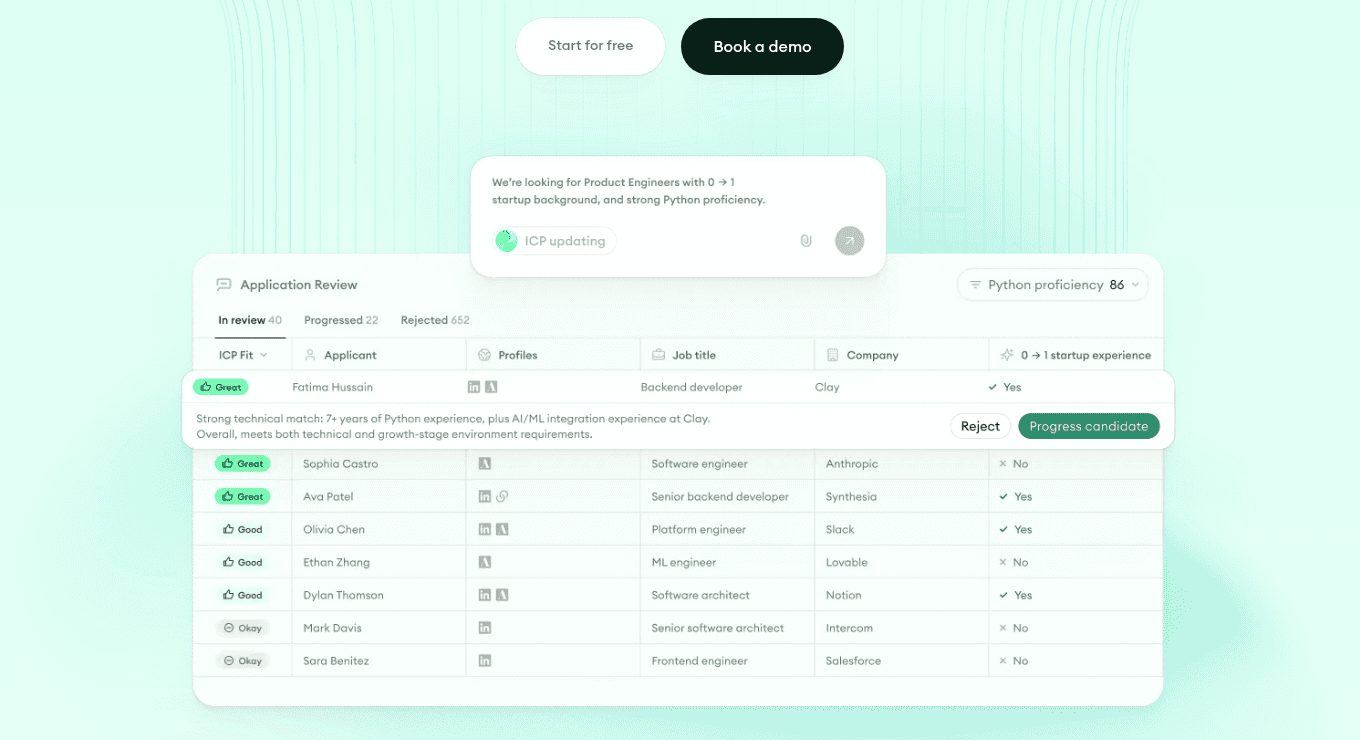
- 1Each candidate carries an ICP-fit signal, so the persona becomes scannable across a hundred profiles in one pass.
- 2Progress or reject actions feed back into the map. The ICP sharpens with every accept-or-reject call.
- 3Patterns surface across candidates so the persona's must-haves get grounded in what your team actually reaches for.
4. Estimate pool size and pull example candidates.
This is two questions in one move because the data is the same. How many candidates that match the ICP exist in the market, and which five would the hiring manager react to on a one-page brief?
Pool size sets the hiring manager's expectations on competitiveness and timeline. Example candidates make the persona concrete. To see which other companies are hiring for the same role right now and competing for the same pool, check JobsPipe for normalized, deduplicated postings from more than 30 ATS feeds and job boards.
Together they're the artifact that drives the calibration conversation, because the hiring manager can react to a real profile in a way they can't react to a JD.
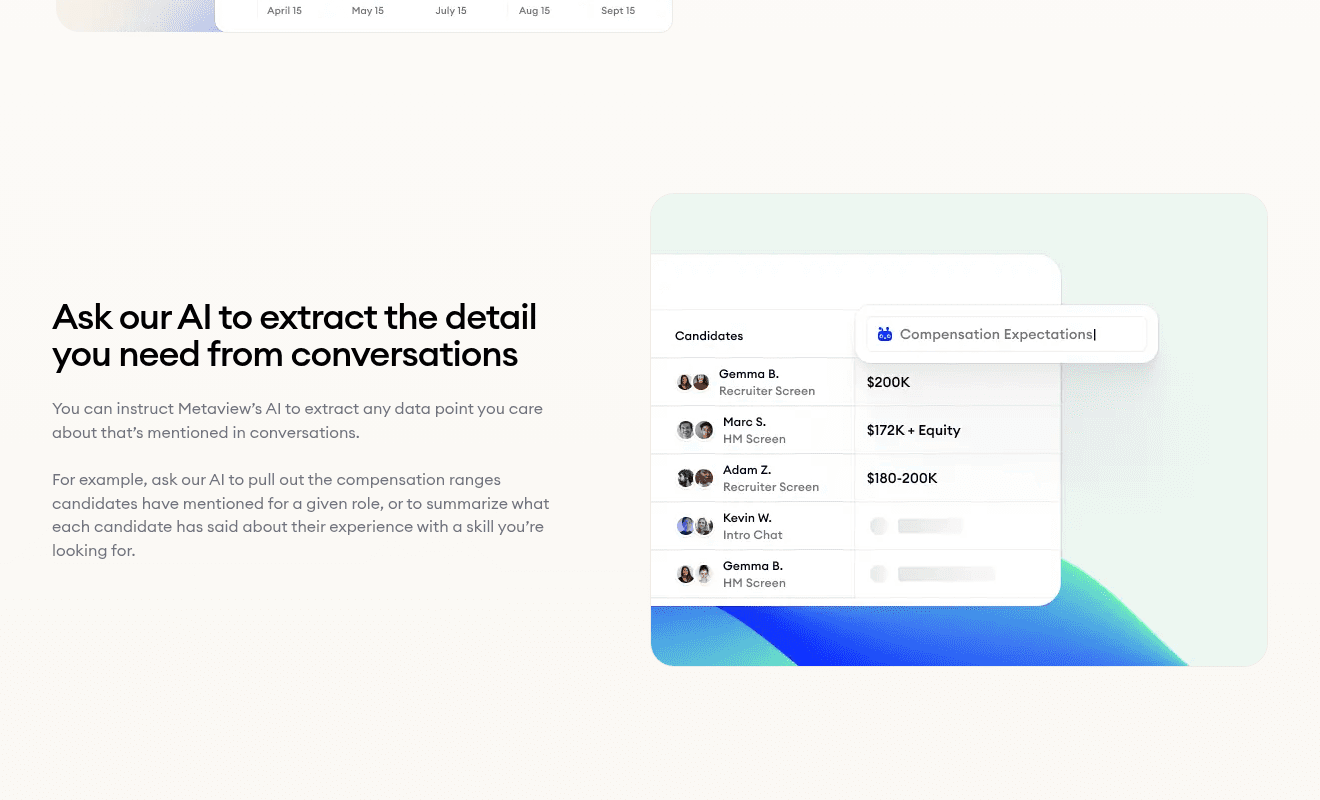
- 1The ICP itself becomes the query. The recruiter writes the persona in plain English and skips the Boolean tooling layer entirely.
- 2Each result surfaces with provenance: where the candidate came from and how their profile maps to the persona.
- 3Pool-size signals appear inline, so the team can scope the talent market without leaving the search.
5. Review your internal hiring data.
External market research is one half. The other half is reading your own hiring history to understand which candidate qualities have actually led to success inside the organization.
Interview feedback, hire-or-no-hire decisions, performance of past hires. The pattern in your own data is what makes qualified mean something specific to your team, not an industry-generic spec.
The catch is that most teams' hiring data lives across an ATS, a notes app, a few recruiters' heads, and a spreadsheet that hasn't been updated since Q2. Pulling it together is the work.
Reports consolidates the signal across captured interviews so the talent map isn't just an external view.
6. Translate the map into a sourcing strategy.
The last step turns the artifact into action. Target companies become a source-of-hire shortlist. The ICP becomes the spec the sourcing agent runs against.
Pool size becomes the timeline conversation with the hiring manager. Internal hiring data becomes the calibration loop that sharpens the next pass.
The unlock at this step is recognizing that the map serves a function, not a single requisition.
One map for backend engineering serves three reqs over six months. The per-req cost of mapping drops with every role the same map serves. Rebuilding the same picture every time a similar req opens is the waste teams default to without realizing it.
How Metaview accelerates talent mapping.
Most of the talent-mapping work is research: reviewing profiles, building personas, estimating pool sizes, and cross-referencing against past hires. Done manually, it's a week of recruiter time per function.
We built Metaview to compress most of that work into hours so the map can be a recurring artifact, not a one-off project.
AI Sourcing turns the ICP into a running query that surfaces matching candidates on demand. The persona becomes the search spec, calibration is feedback the agent reads, and the example-candidates step happens in the same surface as the pool-size question.
Reports reads your captured interview corpus and finds the patterns that define what qualified means inside your team. The map's internal-data layer stops being a Q2 spreadsheet.
And the dormant candidates already in your ATS are often a closer match for new roles than anyone you'd source externally. Rediscovering past candidates is the cheapest first move on any new search, and it folds straight into the talent map as the warm-start layer.
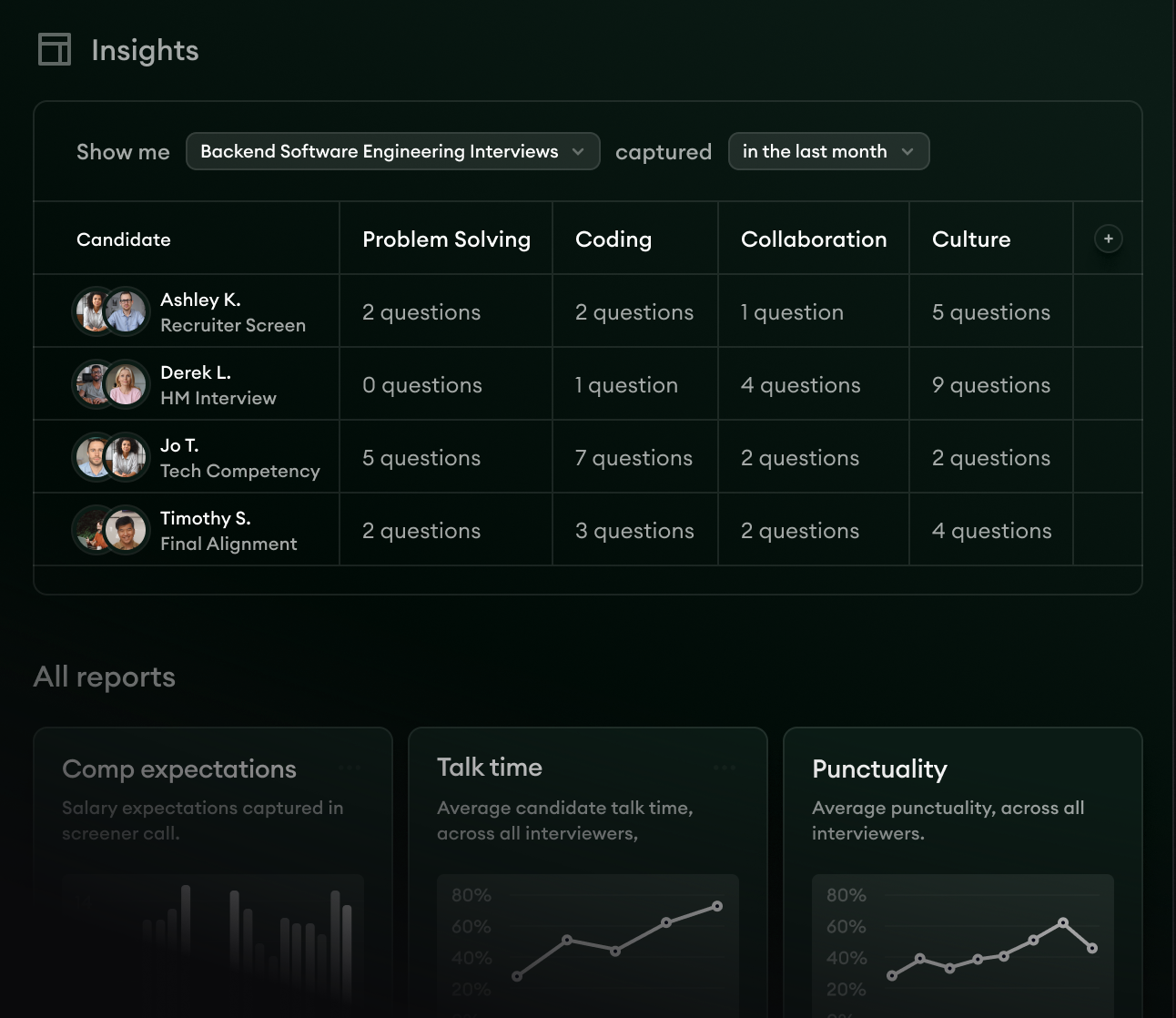
- 1Per-competency capture across every captured interview, so the team can see what signal the panel actually heard.
- 2Patterns across candidates surface what qualified looks like inside your team, not against an industry benchmark.
- 3The Reports layer is what makes a talent map self-calibrating. Every interview tightens the next persona.
The best AI sourcing tool I've seen. After 3 calibration loops, it is hovering at around 80%-90% success rate on candidates to message.”
The calibration loops are the talent map running in production. Each pass tightens the next, which is what turns the map from a one-off artifact into a hiring asset.
Frequently asked.
Who owns talent mapping, recruiters, hiring managers, or talent intelligence teams?
In lean teams, recruiters own the work and hiring managers co-define the spec. In scaled teams, a talent intelligence or recruiting-operations function usually owns the underlying dataset and recruiters operationalize the map per req. Either way, the recruiter and hiring manager have to be the two voices in the calibration conversation, because the map's value lives there.
How is talent mapping different from a candidate pipeline?
A pipeline is the set of engaged candidates moving through stages on an open role. A talent map is the market-level picture that pre-dates any specific candidate engagement. The map feeds the pipeline. The two are different artifacts on different cadences, and confusing them is what makes both feel chaotic.
How often should a talent map be refreshed?
High-velocity functions like engineering or sales benefit from a quarterly refresh. Lower-velocity executive and specialist roles can run annually, with a light pass when a req opens. Trigger-based refreshes also help when compensation benchmarks shift or competitor activity creates a talent-supply event in the market.
What does a talent map deliverable actually look like?
Most teams ship a one-page brief for hiring manager calibration: target companies, the ICP persona, a pool-size estimate, and five to ten example profiles. The underlying data layer lives in the ATS or sourcing tool, so the one-pager is the calibration artifact while the searchable corpus does the operational work.
Does talent mapping need to happen before sourcing, or can the team map while sourcing?
Most teams do both. A lightweight map runs first to scope the marketplace and align with the hiring manager, often in an hour or two. A deeper map develops in parallel with first-wave sourcing as the team learns what's actually in the market. The before-versus-during framing is a false binary, the rule is just that some mapping always precedes outreach.
Talent mapping is the leverage that compounds across reqs. The teams that ship the map first stop starting cold, stop relitigating what qualified means every Monday, and stop losing a week per role to research that should already be on the shelf. The map is the leverage.
Once it's built, every new role in the function uses it. The hiring manager calibrates faster. The sourcing agent runs against a sharper persona. The internal-data layer keeps the definition of qualified honest.
To see what talent mapping looks like when AI Sourcing, Reports, and ATS rediscovery run as a continuous loop, book a walkthrough below.
Bring Metaview into your hiring stack.
Live notes, structured scorecards, and ATS sync - set up in under 10 minutes.
