
The best candidates aren't actively applying to your job posts.
They're the senior engineer at a competitor. The director at a quiet Fortune 500. The cleared analyst working out of a SCIF in Northern Virginia. They're already employed, they're not browsing job boards, and they need a reason to talk to you.
Sourcing tools are how recruiters find those people and start the conversation. And the category has changed fast.
The old "Boolean operator on LinkedIn" workflow has been replaced by AI engines that surface 750M+ profiles, automate the outreach, and learn from which candidates you actually moved forward.
We tested 10 of the most-used sourcing tools in 2026. Each section covers what the tool actually finds, where it falls short, and who it fits.
All 10 tools at a glance
| Tool | Category | Best for | Pricing |
|---|---|---|---|
| Metaview | AI sourcing + interview intelligence | Recruiting-native AI across sourcing and interviews | Free with work email |
| fillmore | Outbound recruiting automation | Autonomous top-of-funnel recruiting to fill your calendar | Based on successful hires |
| LinkedIn Recruiter | Talent database | Sourcing candidate profiles from a huge pool | Per seat, monthly |
| HireEZ | AI cross-platform sourcing | Passive-candidate sourcing across 45+ networks | Quote-based |
| Gem | Sourcing + outreach automation | High-volume outbound campaigns | Quote-based |
| SeekOut | Specialized talent intelligence | Cleared, diverse, and deep technical talent | From $833/seat/month |
| Findem | AI talent intelligence | Attribute-based sourcing and workforce planning | Quote-based |
| AmazingHiring | Technical sourcing | Hidden engineering talent across GitHub, Stack Overflow | Quote-based |
| Fetcher | Automated sourcing | Always-on outbound for busy in-house teams | Quote-based |
| Loxo | Agency sourcing + ATS | Recruiting firms consolidating a fragmented stack | Free tier; paid on request |
What are recruiting sourcing tools?
Recruiting sourcing tools help recruiters find, evaluate, and engage potential candidates before they enter the traditional application process. They can include large candidate databases, search and enrichment platforms, outreach tools, and newer AI sourcing agents that actively find candidates on a recruiter's behalf.
The best candidate sourcing tools increasingly do more than provide another search box. AI sourcing platforms can work from a role brief, search across multiple sources, research potential candidates, and learn from recruiter feedback to produce a more relevant shortlist.
That changes the role of sourcing software. Instead of helping recruiters conduct more manual searches, the best sourcing tools reduce how much manual searching recruiters need to do in the first place.
The 10 best sourcing tools for recruiters
1. Metaview
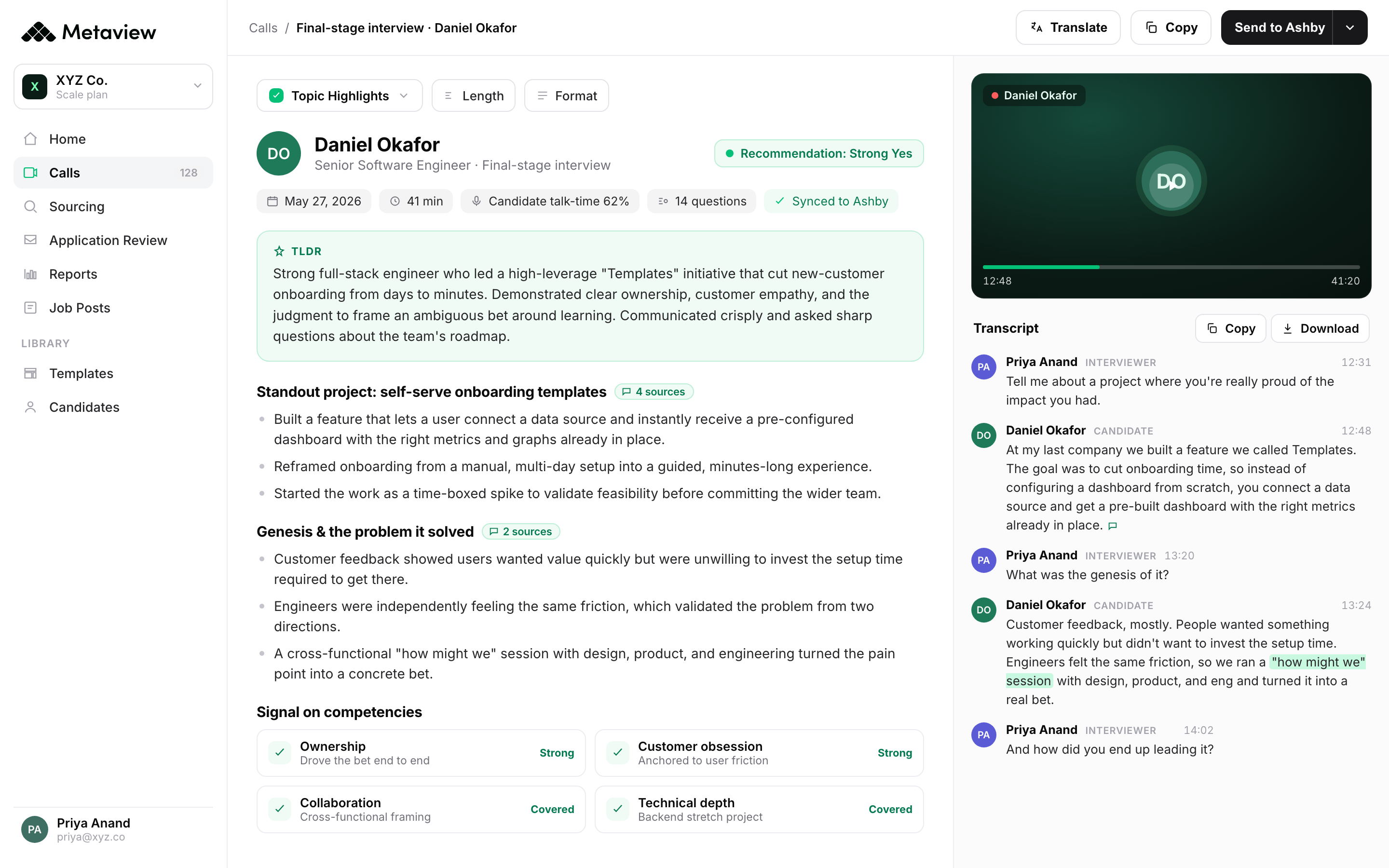
Best for: Recruiting teams that want AI agents to find and evaluate excellent-fit candidates, rather than spending hours manually searching talent databases.
Metaview Sourcing turns your hiring context into an always-on candidate search. Give the agent a job description, intake notes, examples of great candidates, or other context you already have. And it builds a deep understanding of who you're actually looking for.
From there, Metaview searches for potential candidates, researches their experience in depth, and evaluates them against your criteria. Recruiters and hiring managers can approve or reject candidates and give feedback, helping the agent refine its understanding of the hiring bar as the search continues.
Instead of giving recruiters more candidates to search through, the goal is to deliver a smaller set of people who are genuinely worth their attention.
And sourcing is only one part of Metaview's Agentic Recruiting Platform. The same recruiting context flows through outreach, application review, screening, interviews, and hiring decisions.
What you get on day one:
- AI sourcing agents that work from your role and hiring context
- Candidate search across the web and your existing talent data
- In-depth candidate research and evaluation
- Calibration based on recruiter and hiring manager feedback
- Personalized candidate outreach
- Candidate rediscovery from your ATS
- Slack-based sourcing workflows
- Connected AI agents for screening, application review, and interviews
It really shows that Metaview is tailored to recruitment processes, not just an AI notetaking tool. We're using it exclusively for recruiters - 45 of them across three global teams. Recruiters already see the difference in accuracy and capturing the right things.”
Our pick: any recruiting team that wants AI tuned to recruiting, not retrofitted from a generic meeting tool.
2. fillmore
Best for: Recruiting teams that want an AI agent to source, research, engage, and follow up with candidates until an interview is booked.
fillmore is an AI recruiting agent that owns the entire top of the funnel. Instead of giving recruiters another sourcing platform to search, it takes on the work required to turn a new role into qualified candidate conversations.
Brief fillmore like you would a recruiter: give it a job description, intake notes, example profiles, or other context you already have. From there, fillmore handles the rest. It sources and evaluates potential candidates, writes personalized outreach in your team's voice, manages follow-ups and candidate replies, and handles scheduling until the first conversation is booked.
Recruiters set the level of autonomy for each role and put guardrails around who fillmore contacts and how it operates.
The result is less time spent manually searching profiles, and more time actually speaking with high-fit candidates.
What you get:
- AI sourcing based on your role and hiring context
- Candidate evaluation against your specific hiring bar
- In-depth research before outreach
- Personalized outreach in your team's voice
- Automated follow-ups and reply handling
- Interview scheduling
- Role-specific autonomy and approval controls
- Exclusions, guardrails, and outreach pacing
- Continuous learning from recruiter feedback
Where it falls short: fillmore is purpose-built for outbound recruiting. If you only want access to a large candidate database for recruiters to search manually, or you're primarily trying to manage inbound applicants, you'll want a different kind of sourcing tool.
Our pick: Choose fillmore if you want to automate the entire outbound recruiting workflow, not just candidate discovery. Launch more proactive searches without any manual sourcing, outreach, and scheduling work.
3. LinkedIn Recruiter
Best for: Recruiters who want direct access to LinkedIn's enormous professional network and powerful manual candidate search tools.
LinkedIn Recruiter remains one of the default sourcing platforms for recruiting teams for good reason. It gives recruiters advanced search filters, candidate recommendations, InMail, saved searches, projects, and visibility into an enormous pool of professionals.
Its biggest advantage is also the most obvious: candidates already maintain their professional identities on LinkedIn. For many roles, that makes it one of the first places recruiters naturally look.
But LinkedIn Recruiter still puts much of the sourcing work on the recruiter. You need to build searches, work through results, evaluate profiles, and decide who deserves outreach. That's increasingly different from AI sourcing agents that can take on more of the search and evaluation process themselves.
What you get:
- Access to LinkedIn's professional network
- Advanced candidate search filters
- Recommended matches
- InMail messaging
- Search alerts and saved searches
- Candidate projects and collaboration tools
- ATS integrations
Where it falls short: LinkedIn Recruiter gives recruiters exceptional access to candidates, but still requires considerable manual searching and evaluation. Teams hiring across multiple roles can spend significant amounts of recruiter time working through searches and profiles.
Our pick: Choose LinkedIn Recruiter if access to LinkedIn's network is central to your sourcing strategy and your recruiters want hands-on control over search.
4. HireEZ
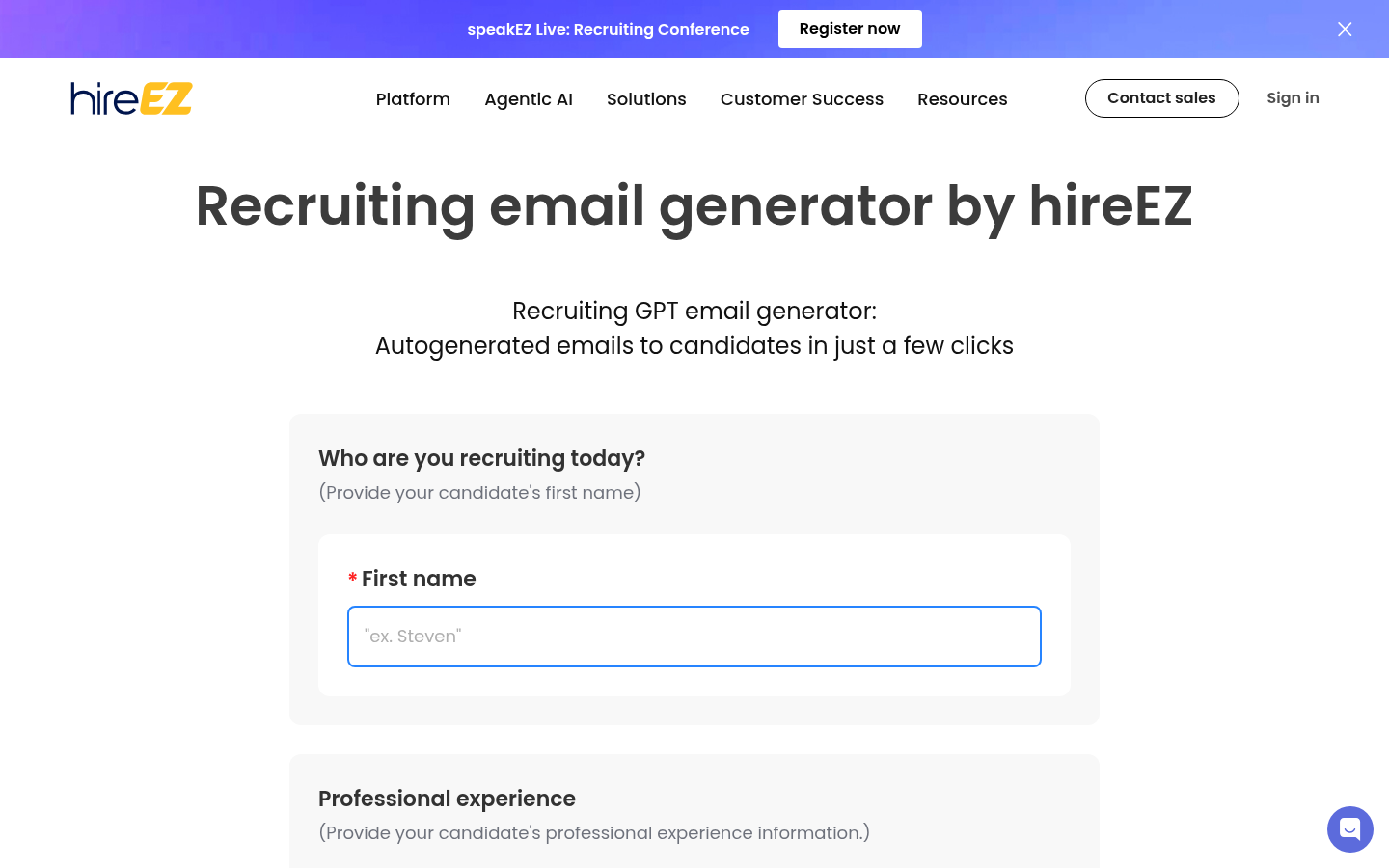
Best for: mid to large in-house teams running active sourcing at scale.
HireEZ is the leading AI sourcing platform for passive candidate discovery. 750M+ profiles indexed from 45+ platforms, with AI matching across all of them.
What you get:
- Cross-platform sourcing engine (LinkedIn, GitHub, Stack Overflow, Behance).
- AI candidate matching against your role brief.
- Automated email outreach with personalization tokens.
- Native ATS integrations for Greenhouse, Lever, Workday, Bullhorn.
Where it falls short: Contact accuracy is uneven. G2 reviewers consistently flag bounce rates as high as 30% on some segments. Verify contact data before sending high-volume sequences.
Our pick: mid to large in-house teams where outbound volume drives the pipeline. See our HireEZ alternatives guide for budget-conscious teams.
5. Gem
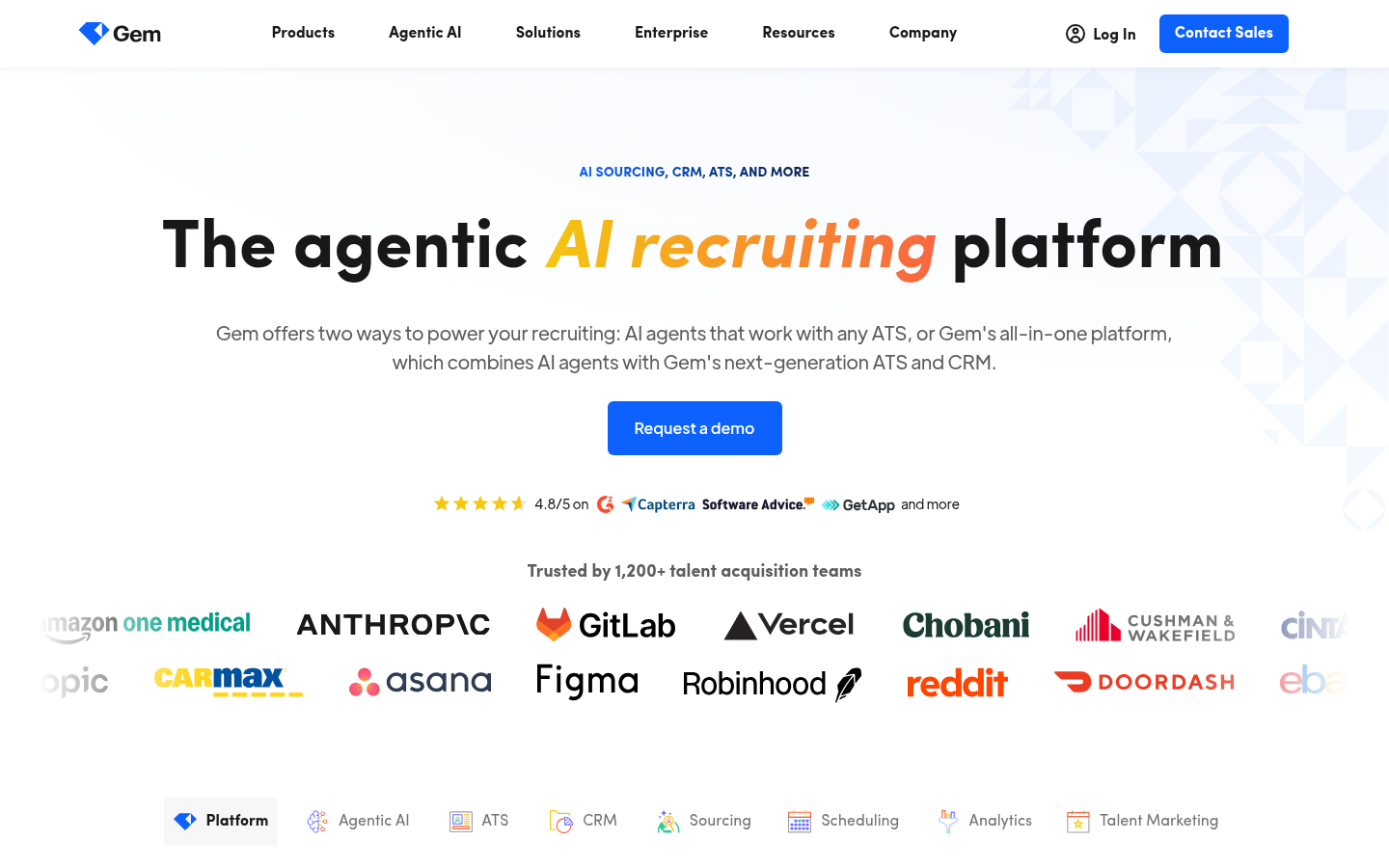
Best for: in-house teams running heavy outbound where reply rates drive the pipeline.
Gem is the sourcing and outreach platform that has expanded into a full ATS+CRM since acquiring ModernLoop. For teams running outbound at scale, Gem is the center of the campaign workflow.
What you get:
- 800M+ profile sourcing engine.
- Email outreach with sequence analytics across reply rates and conversion.
- ATS and CRM unified, with native scheduling via ModernLoop.
- AI-led talent CRM with the Taylor AI assistant layer.
Where it falls short: Enterprise-only pricing. The all-in-one push has slowed some legacy sourcing features.
Our pick: in-house GTM and engineering recruiting teams where outbound campaigns drive placements.
6. SeekOut
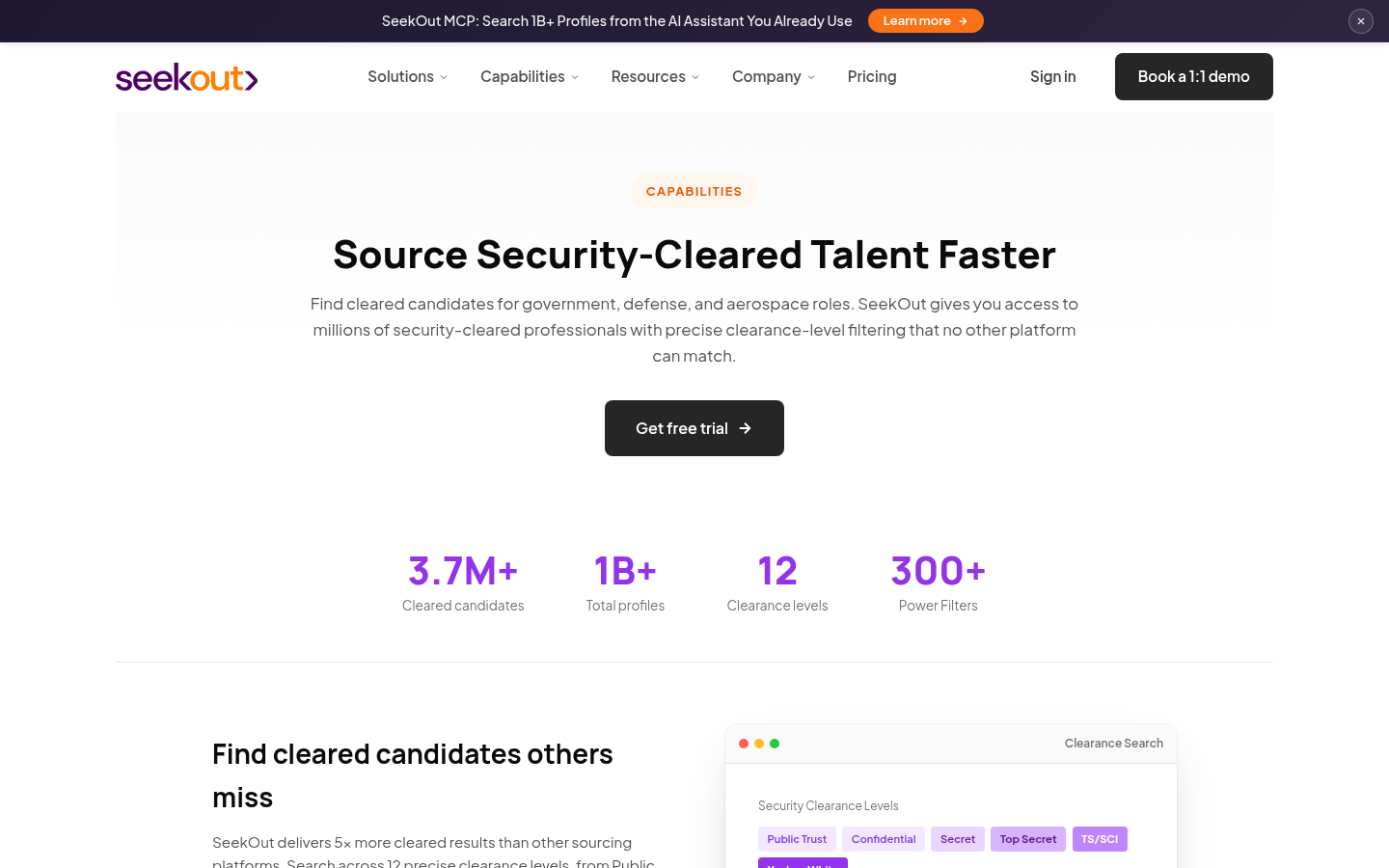
Best for: cleared, diverse, and deep technical talent search.
SeekOut is an enterprise talent intelligence platform with unusually deep specialized filters. 1B+ profiles, 3.7M+ security-cleared profiles, plus rich diversity and veteran data.
What you get:
- Full-graph sourcing with specialized filters (clearance, diversity, technical skills, GitHub activity).
- SeekOut Assist: paste a JD, get auto-built Boolean and filter strings.
- ATS rediscovery on Greenhouse, Lever, Workday.
- 14-day trial available.
Where it falls short: No perpetual free SKU. After the trial, paid seats run at $833 per seat per month or more.
Our pick: defense-adjacent, cleared-civilian, or specialized technical recruiting. See our SeekOut alternatives roundup for the wider landscape.
7. Findem

Best for: attribute-based sourcing where the role brief is more nuanced than a job title.
Findem is an AI talent intelligence platform that combines sourcing with workforce planning. The differentiator is the attribute layer: instead of searching by title, you search by traits the role actually requires.
What you get:
- Attribute-based talent search across enriched profile data.
- Talent CRM with engagement signal tracking.
- Workforce planning analytics for talent gaps and supply.
- Integrations with major ATSs.
Where it falls short: The attribute layer takes setup time to calibrate to a role's actual criteria. Best when you have hiring profiles already documented, not when you're guessing.
Our pick: enterprise TA functions where the role brief is non-obvious and traditional title-based sourcing misses the candidates that matter.
8. AmazingHiring
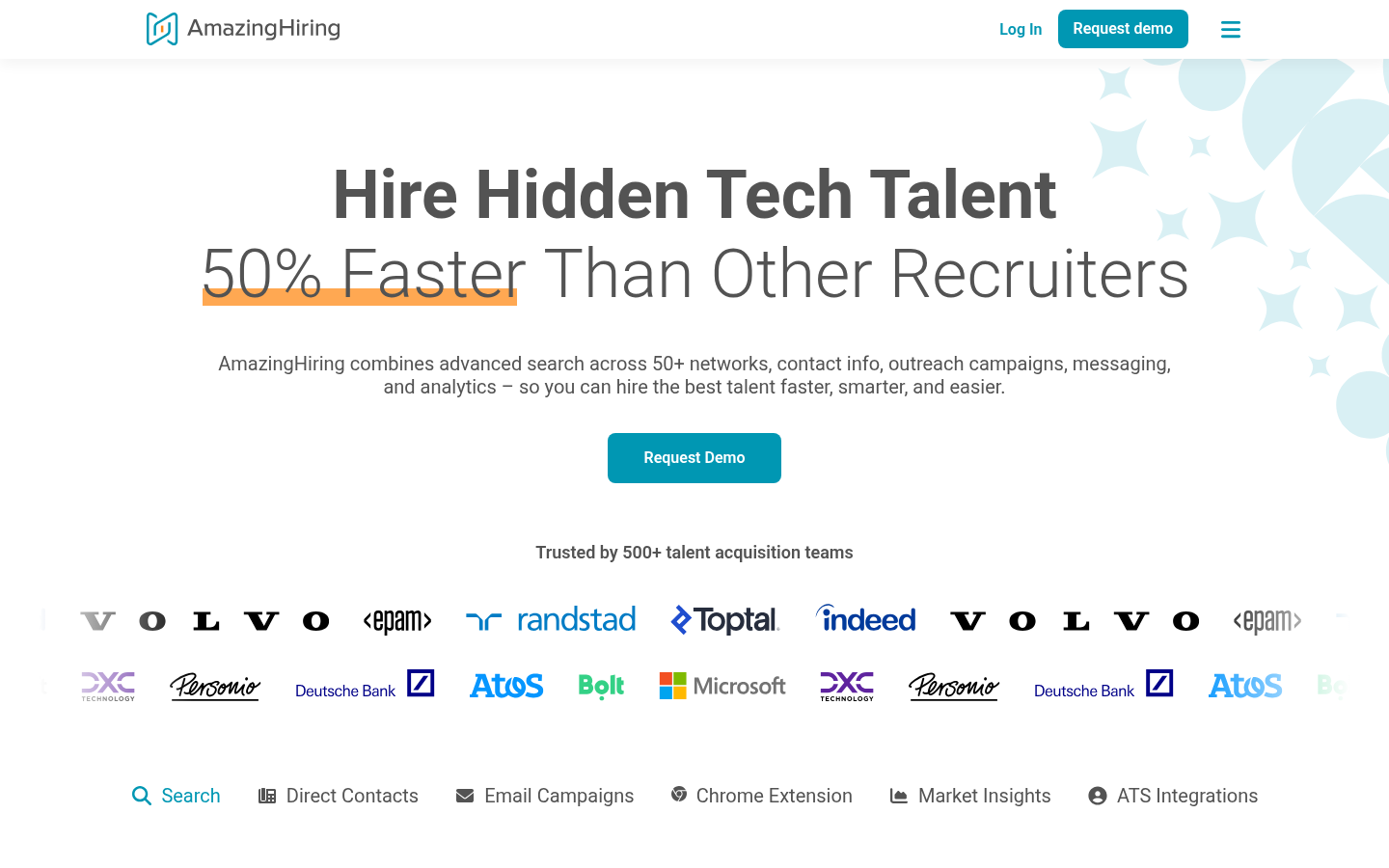
Best for: technical sourcing across GitHub, Stack Overflow, Kaggle, and developer communities.
AmazingHiring is the sourcing tool for engineering teams that need to look beyond LinkedIn. The aggregator pulls from 50+ professional networks, including the developer-specific ones LinkedIn underweights.
What you get:
- Cross-network candidate search across 50+ sources.
- Contact discovery and outreach campaigns.
- Messaging and analytics in one workflow.
- Chrome extension for one-click profile import.
Where it falls short: Strongest for technical roles. Less differentiated for non-engineering positions where LinkedIn covers most candidates anyway.
Our pick: tech recruiters and engineering-led hiring teams who need to find the developers LinkedIn doesn't surface.
9. Fetcher
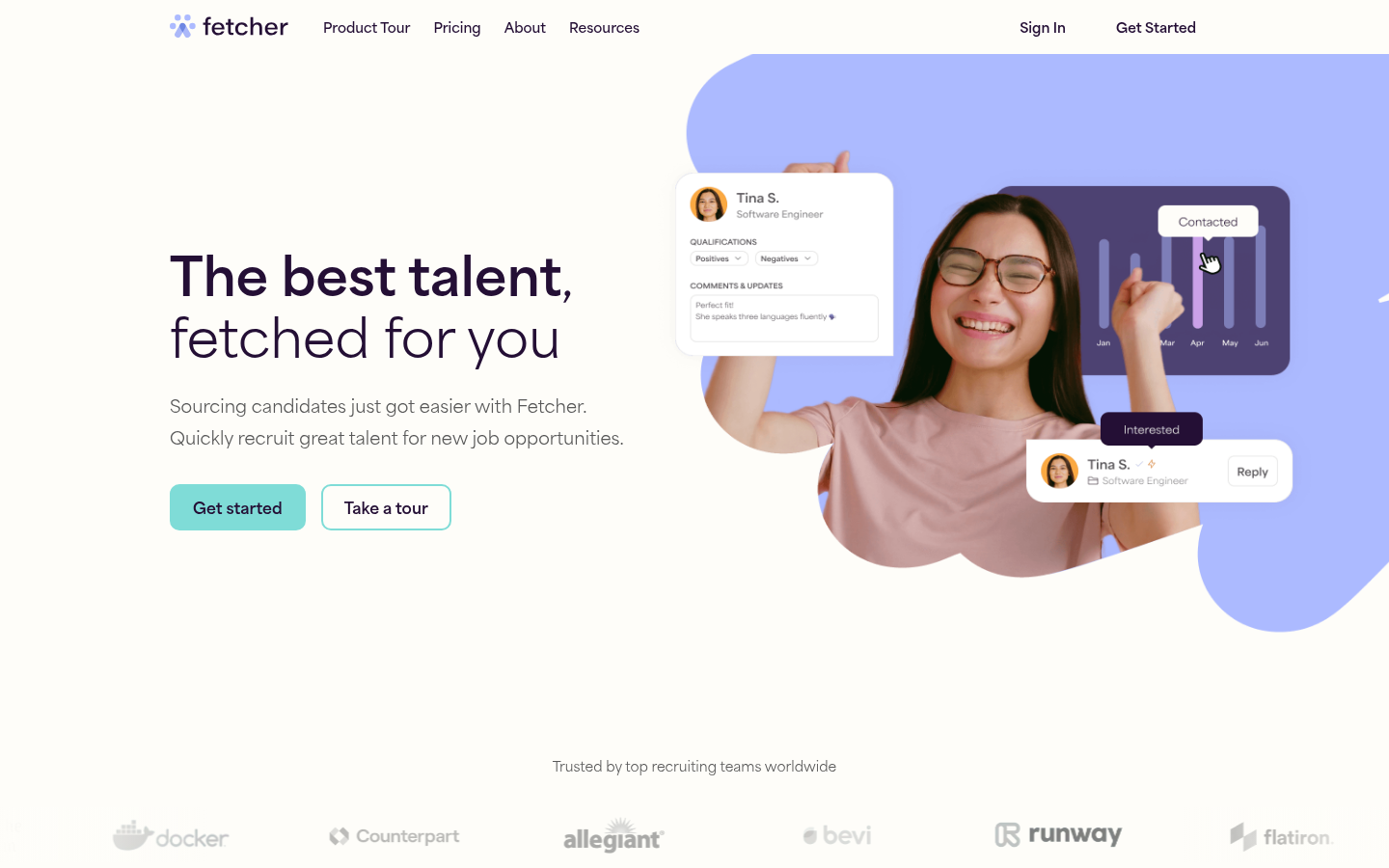
Best for: busy in-house teams that want sourcing to run on autopilot.
Fetcher takes the "AI recruiter" framing literally. The platform sources candidates, sends outreach, manages replies, and books interviews on the recruiter's behalf.
What you get:
- Automated candidate sourcing tuned to your role brief.
- Email outreach with sequence-based follow-ups.
- Calendar booking handled inside the platform.
- Integrations with major ATSs for handoff.
Where it falls short: The automation pushes recruiters toward a "set it and forget it" workflow that can miss the senior or executive hires where the personal touch matters most.
Our pick: in-house TA teams hiring at volume where the recruiter cannot manually source every role.
10. Loxo
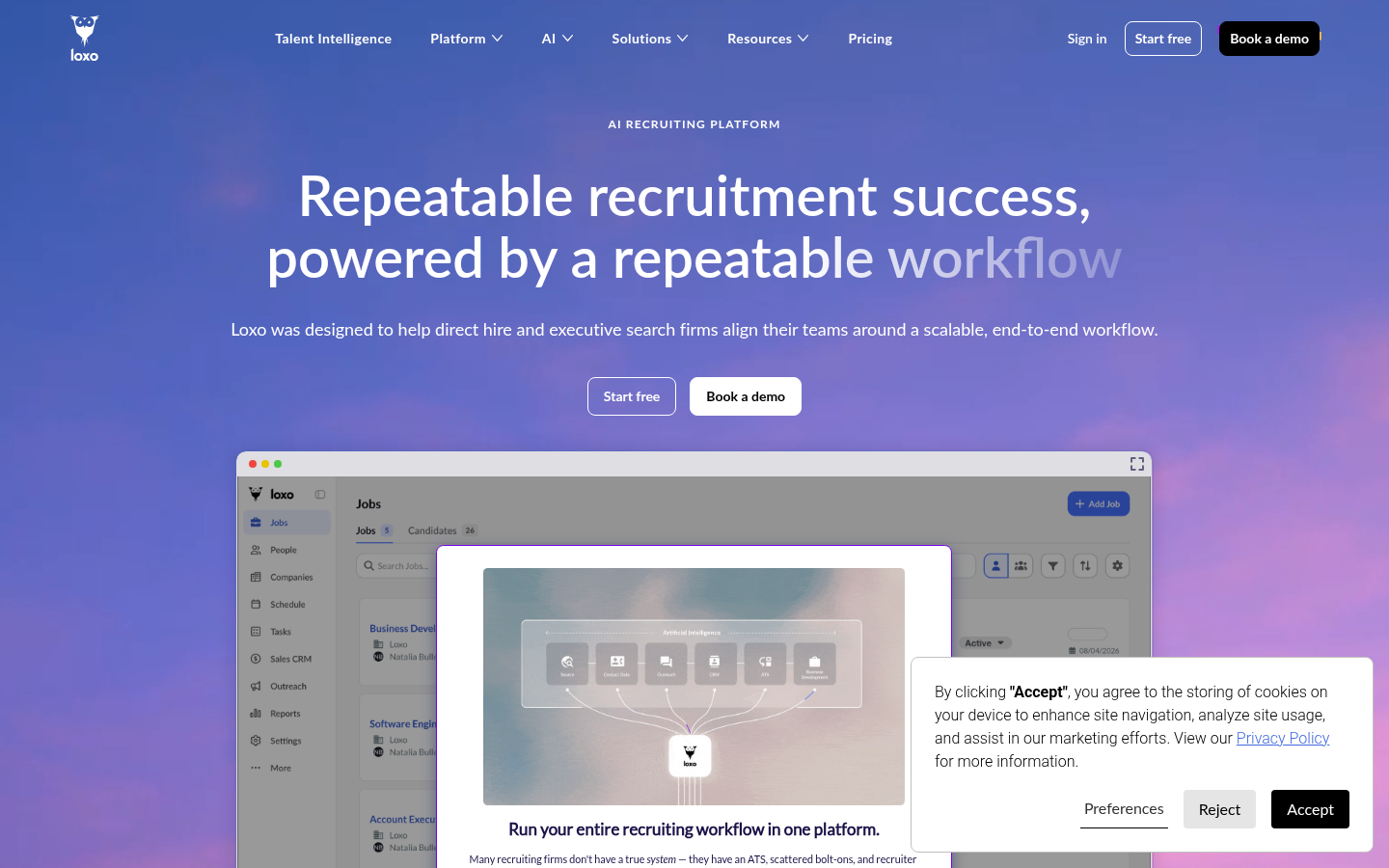
Best for: agencies tired of running 5 separate tools.
Loxo is the agency platform built to replace a messy multi-tool stack. ATS, CRM, sourcing, outreach, and AI assistants all live in one product.
The pitch is consolidation. For agencies that have grown into a patchwork, the appeal is real.
What you get:
- Full ATS, CRM, and AI sourcing engine in one place.
- 1.2B+ candidate profiles indexed for sourcing.
- AI outreach with email sequencing and analytics.
- Native phone, SMS, and email built into the platform.
Where it falls short: Doing many things means doing fewer of them deeply. Specialist sourcing tools (HireEZ, SeekOut) still have an edge on filter depth.
Our pick: agencies that want one bill, one login, and one place to look in the morning.
How to choose the right sourcing tool
There's no single best sourcing tool for every recruiting team. The right choice depends on the roles you hire for, where your candidates are likely to be found, and how much of the sourcing process you want technology to handle.
Here are five factors worth comparing.
Candidate quality and precision
A sourcing platform isn't useful simply because it can find millions of profiles. What matters is how quickly it gets recruiters to candidates who genuinely meet the hiring bar.
Look at the quality of the shortlist, not just database size. A smaller number of highly relevant candidates can save far more recruiter time than hundreds of loose matches.
Ability to learn your hiring bar
Job descriptions rarely capture everything that makes someone a great fit.
The best AI sourcing tools incorporate intake notes, example candidates, company context, and feedback from recruiters and hiring managers. They become more precise as your team approves and rejects candidates, rather than repeatedly starting from a static search.
Candidate coverage
Different sourcing platforms search different pools of talent. Some rely on proprietary databases, while others search professional networks, public web data, your ATS, or specialist sources.
Consider where the people you hire actually show up. Technical recruiting, executive search, healthcare hiring, and high-volume recruiting can require very different sources.
Outreach capabilities
Finding someone doesn't mean they'll reply. If outbound recruiting is an important part of your strategy, look at whether the platform can research candidates, personalize messages, manage follow-ups, and help move interested candidates toward an interview.
This removes another significant block of manual sourcing work.
Workflow and ATS integration
Your sourcing platform shouldn't create another isolated candidate database.
Look for integrations with your ATS and the other tools your recruiting team already uses. Ideally, candidate information, activity, and feedback should flow between systems without recruiters constantly copying and updating data manually.
Bring Metaview into your hiring stack.
Live notes, structured scorecards, and ATS sync - set up in under 10 minutes.
Recruiting sourcing tools FAQs
What are the best sourcing tools for recruiters?
The best sourcing tools depend on how your team recruits. Metaview is a strong choice for teams that want AI agents to actively find and evaluate candidates, and fillmore is the choice to automate the most repetitive top-of-funnel tasks. Specialist platforms can be better suited to particular talent pools, industries, or sourcing workflows.
What should you look for in a candidate sourcing tool?
Start with candidate quality rather than database size. Look at how accurately the tool identifies relevant candidates, where it sources them from, how much manual searching recruiters still need to do, whether it supports outreach, and how well it integrates with your ATS and existing workflow.
For AI sourcing platforms, also consider how well the tool can understand your hiring context and learn from recruiter and hiring manager feedback.
What is the difference between LinkedIn Recruiter and an AI sourcing platform?
LinkedIn Recruiter primarily gives recruiters tools to search LinkedIn's professional network themselves. Recruiters build searches, review profiles, choose candidates, and conduct outreach.
AI sourcing platforms can take on more of that work. An AI sourcing agent can interpret a hiring brief, search for candidates, research and evaluate them, and refine its recommendations based on your feedback. The two approaches can also work together rather than being mutually exclusive.
How much do recruiting sourcing tools cost?
Pricing ranges from free tiers (Metaview, Loxo, ContactOut) through $99/month entry points (ContactOut, Recruit CRM) to enterprise quote-based contracts for HireEZ, Gem, SeekOut, Findem, and AmazingHiring. Most in-house teams running serious outbound should expect to spend $15K-$50K per year per seat on the AI sourcing layer.
Can sourcing tools find passive candidates?
Yes. In fact, reaching passive talent is one of the main reasons recruiting teams use sourcing platforms. These tools help recruiters identify people who fit a role even if they haven't applied or aren't actively looking for a new job.
AI sourcing tools can go further by researching potential candidates and evaluating their likely fit before a recruiter decides whether to engage them.
Do AI sourcing tools replace recruiters?
No. The strongest use case is removing the repetitive work surrounding sourcing rather than removing recruiters from the process.
AI can search, research, evaluate, and sometimes engage candidates at much greater scale. Recruiters can then spend more time calibrating the search, building relationships with strong candidates, working with hiring managers, and making nuanced decisions.
