
The massive gains in recruiting AI have exposed a strange contradiction: recruiters have never been more productive, yet hiring organizations don’t necessarily feel more effective.
One recruiter can now complete 5-10x the day-to-day tasks they could even six months ago. Sourcing is accelerating, outreach is automated, and huge inbound volume can be screened in seconds.
All of which is exciting. So why do I keep hearing from talent leaders that they’re under more pressure than ever?
Because hiring is a relay race, not a 100-yard dash.
AI has made individual recruiters faster. But talent acquisition was never a solo sport.
And I’m convinced that the real opportunity in recruiting AI is not automation alone, but coordination and shared intelligence at scale.

We’re measuring recruiter productivity. We should be focused on outcomes.
AI is rapidly unshackling recruiters from the most time-consuming, low value-adding work. But while individual recruiters are enjoying huge productivity gains, the broader hiring teams they sit within largely haven't transformed.
Why?
Most recruiting AI vendors are selling pure efficiency in one or two key tasks. But our data shows that efficiency without wider orchestration doesn't move hiring outcomes.
Hebbia CEO George Sivulka makes a parallel argument, emphasizing the need for institutional AI and arguing that AI productivity gains get lost in transit unless companies redesign the systems around them.
In recruiting, real results come from coordination and shared context, with recruiters, hiring managers, interviewers, and leadership building on the same information and signal.
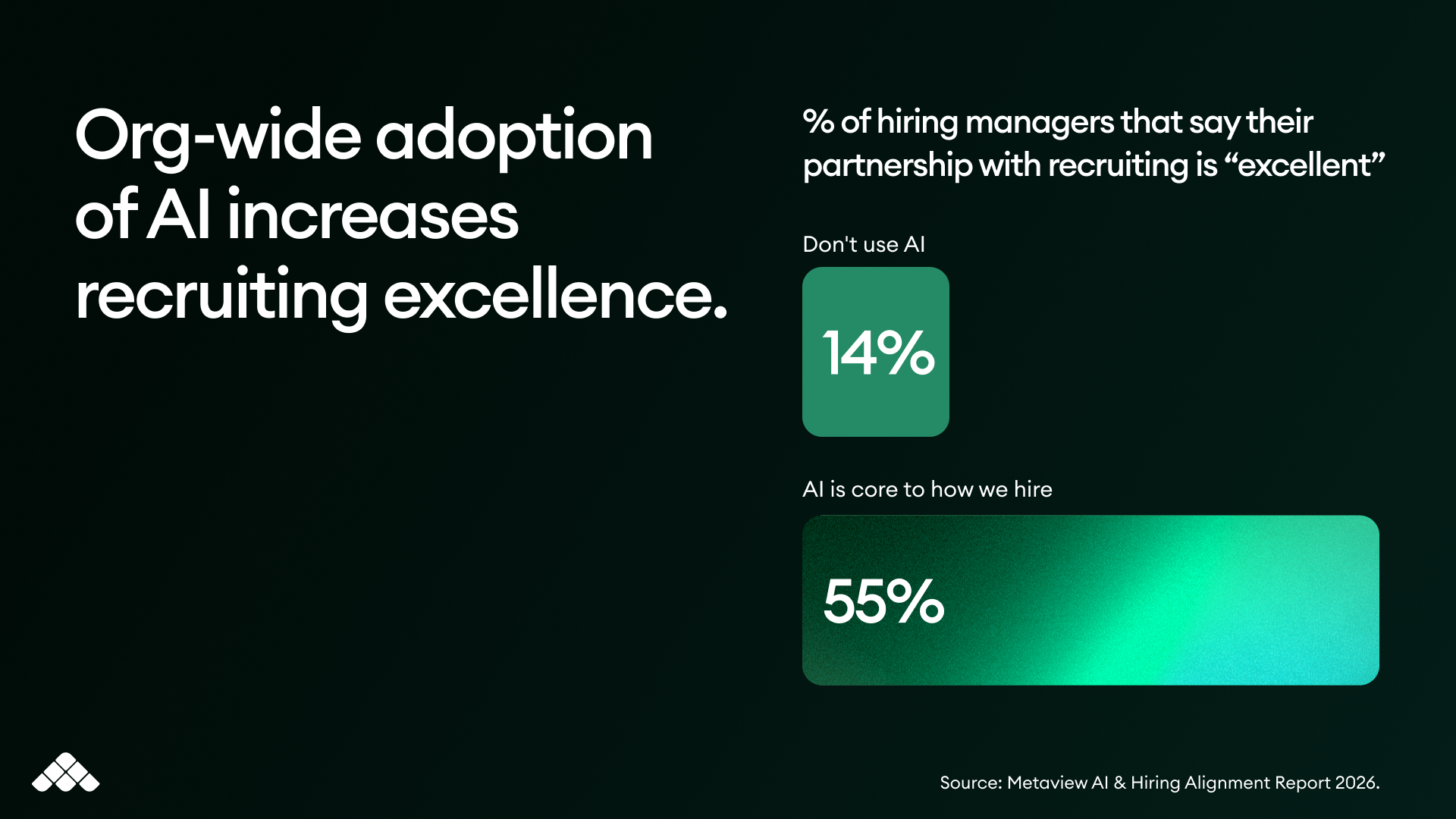
AI in sync: four pillars for agentic orchestration.
Agentic systems become exponentially more powerful when they operate across shared context, rather than isolated tasks. I’ve seen that recruiting organizations that capitalize fully are building around four new foundational properties.
1. 24/7 recruiting.
Every major recruiting workflow today relies on butts in seats. Sourcing only happens during work hours, inbound gets reviewed in batches, and hot Friday applications don’t get seen until Monday.
That’s all about to change.
AI recruiting workflows run continuously. An agent is automatically assigned to every potential candidate, and immediately studies their case. Inbound applications are evaluated in seconds, no matter when they’re received.
The system recruits at 2am, on weekends, and on public holidays.
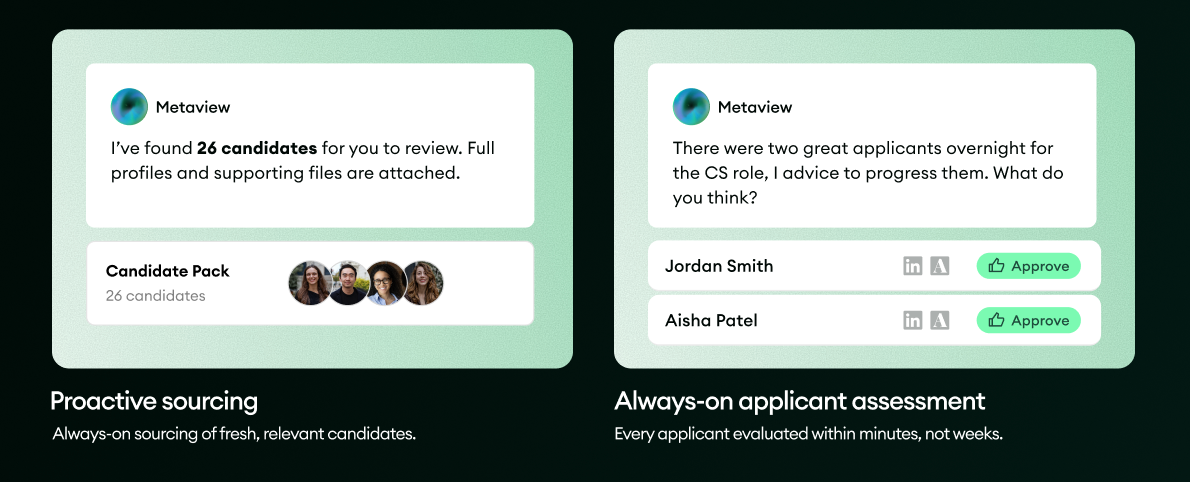
Recruiting workflows are now always-on, by default. Teams resisting this have already fallen behind.
2.Continuous learning.
Most AI tools work the same on day one as on day 90. That feels like a plus: your new AI tool puts you on an even footing with customers who’ve used it for months or years.
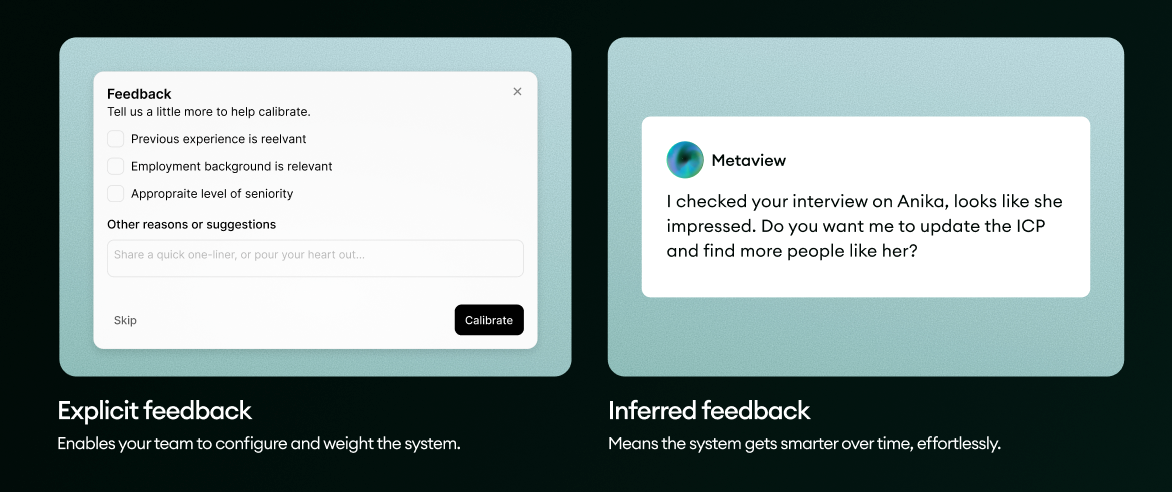
But this is actually a major negative in recruiting. Hiring processes are highly contextual, and truly impactful AI must learn alongside you.
Every accepted and rejected candidate reshapes what good looks like. As hiring data compounds, the AI platform should look increasingly like your organization, not the product the vendor shipped.
If your AI is the same on day 90 as it was on day one, you bought the wrong system.
3. Scaled experience.
I've observed from the field that AI productivity gains are often concentrated to a handful of orchestrators and superusers. Individuals who were already top performers are 10-xing their individual outputs.
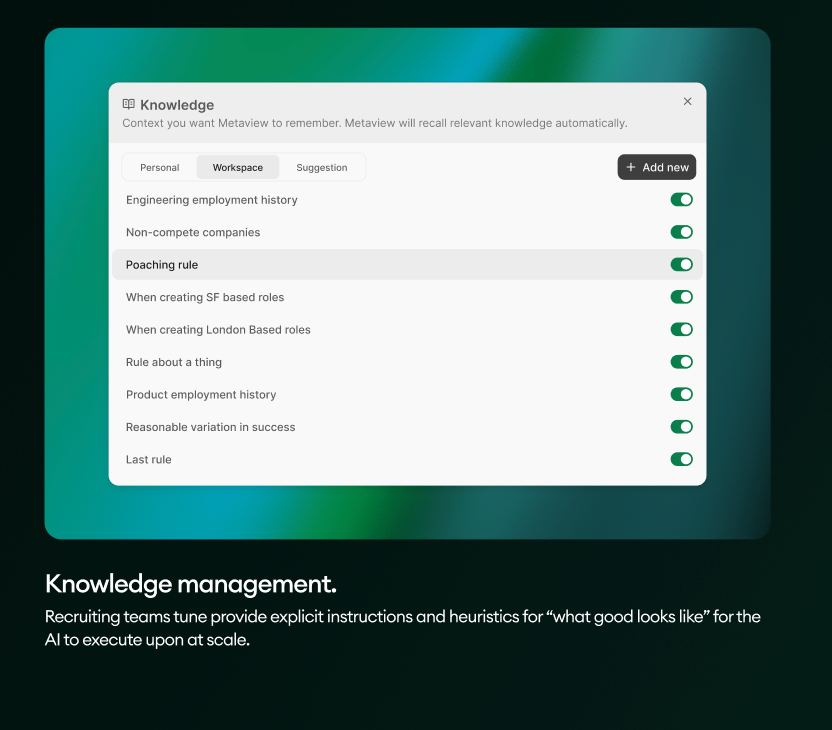
But we need systems that scale expertise across the entire team, without leaving people behind. The leader who knows what good looks like trains the system once. Then every recruiter, every agent, and every workflow has that knowledge baked in.
That way, individual excellence becomes an organizational asset. Your best operator’s great taste becomes the floor for your whole team.
4. Human-powered → Compute-powered.
At a higher level, recruiting work needs to shift from execution to orchestration. Recruiting leaders can move away from day-to-day tasks. They should be iterating and improving the system itself, not obsessing over individual entries.
That means less time managing pipeline and aggregating opinions, and more time defining what great looks like, then setting intent for the whole system.
Adoption was the first step. Now orchestration is the mission.
The next few years will reshape recruiting more than any period in our careers. But the companies that benefit most from AI won’t be the ones with the most tools. They’ll be the ones that build shared intelligence across hiring, where every conversation, decision, and interaction improves the system itself.
That’s the shift we’re building toward at Metaview.
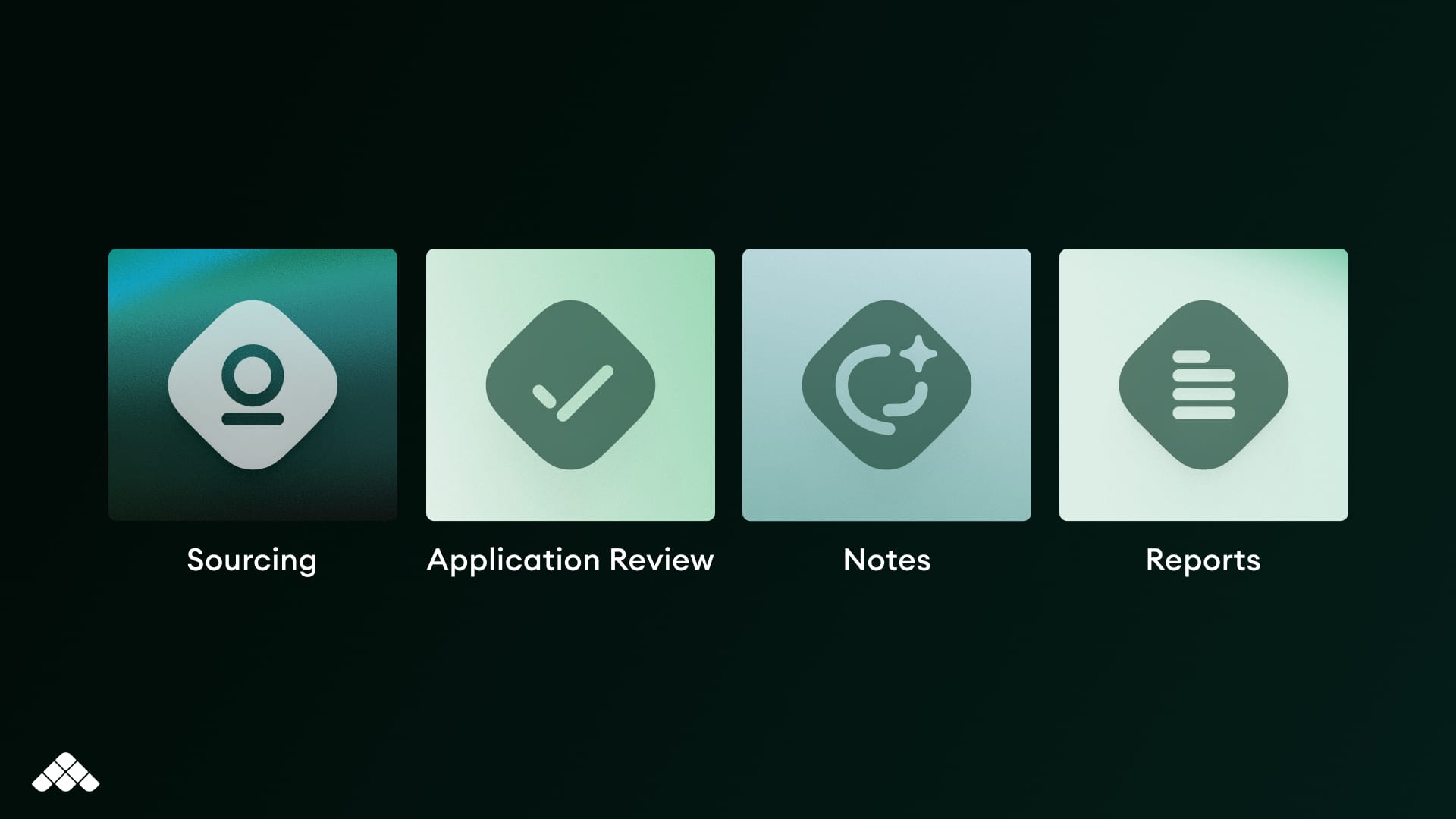
Not AI deployed individual by individual, but an Agentic Recruiting Platform built for the entire hiring organization. A system of specialist agents that do real recruiting work, while sharing context, memory, and signal across the whole team.
AI is already creating superpowered individuals.
The harder and more important challenge is turning that lift into a superpowered organization.
