
Remote recruiting is now indisputably the norm. 81% of organizations use virtual recruitment for candidate screening, per Mercer, while 60% use it for interviews across all positions. And those figures almost feel low.
Remote hiring gives you access to a much bigger talent pool. And it eases the pressure of putting hiring managers and candidates in the same room at the same time.
But it also adds complexities for recruiters.
Candidates, recruiters, and hiring managers may never meet in person, or even be in the same time zone. Sourcing, screening, interviews, assessments, feedback, and offers all need to run smoothly without relying on meetings and manual coordination.
Luckily, we have the tech. The best tools for remote recruitment make that possible. Some automate recruiting work, while others help you assess candidates, collaborate remotely, or employ people in different countries. Let’s dig in.
In brief: best remote hiring tools.
| Tool | Best for | How it helps with remote hiring |
|---|---|---|
| Metaview | Complete AI recruiting | Uses AI agents for sourcing, application review, screening, interviews, and rich recruiting insights |
| fillmore | Outbound recruiting automation | Finds candidates, personalizes outreach, handles replies, and books interviews in your calendar |
| GoPerfect | Specialist AI sourcing | Finds and engages potential candidates across large external talent pools |
| Ribbon | AI candidate screening | Runs AI-powered screening interviews without adding more recruiter calls |
| LinkedIn Talent Insights | Talent market intelligence | Helps teams understand talent pools, locations, skills, and market trends |
| HackerRank Chakra | Autonomous technical interviews | Conducts AI-led technical interviews and evaluates candidate skills remotely |
| TestGorilla | Pre-employment assessments | Tests job-specific skills and other candidate capabilities online |
| Miro | Collaborative interviews | Creates a shared workspace for remote exercises, workshops, and case interviews |
| Checkr | Background checks | Manages candidate background screening remotely |
| DocuSign | Offers and contracts | Handles electronic signatures for offers, contracts, and hiring paperwork |
| Deel | International hiring | Helps companies hire, pay, and manage employees and contractors globally |
| Remote | Global employment | Supports international employment, payroll, benefits, and compliance |
What are remote hiring tools?
Remote hiring tools help companies recruit candidates without everyone needing to be in the same physical location. They support everything from finding candidates to signing the final employment contract.
Remote recruitment involves much more than moving interviews onto video calls. You need to evaluate applicants consistently, coordinate across time zones, assess skills remotely, share hiring context, and potentially employ someone in another country. When the best candidate lives somewhere you don’t have a legal entity, Employer of Record services can employ them on your behalf and get them on payroll quickly.
There isn't one perfect tool for all of this. A strong remote stack combines recruiting-specific technology with specialist tools for assessment, collaboration, compliance, and global employment.
How AI is changing remote recruitment.
The first generation of remote hiring tools mostly moved existing recruiting processes online. Video calls replaced meeting rooms, online assessments replaced on-site tests, and electronic signatures replaced physical paperwork.
AI recruiting tools go further by actually taking on parts of the work. Agents can find candidates, review applications, conduct initial screening conversations, manage outreach, and turn interviews into structured evidence.
That’s particularly useful for distributed teams. Instead of compensating for distance with more meetings and manual coordination, recruiters can automate routine work and keep the important context available to everyone involved in the hire.
12 best tools for remote recruitment.
Remote recruitment demands that each stage of hiring moves without everyone being in the same place or online at the same time. These 12 tools help teams find, screen, assess, interview, and hire great candidates wherever they are based.
1. Metaview: best AI recruiting tool for remote hiring.
Remote hiring creates a lot of information that needs to move between people. Recruiters need to understand what hiring managers want, candidates need to be evaluated consistently, and interview feedback needs to reach the right people even when nobody is working in the same place.
Metaview's AI recruiting platform helps connect those steps. Agents source candidates, review every inbound application, conduct initial screening conversations, and capture structured evidence from human interviews.
For remote teams, the biggest advantage is less dependence on synchronous coordination. Recruiters and hiring managers can stay aligned on candidates and decisions without turning every hiring update into another call.
Key features
- AI Sourcing: Find and rank candidates based on your role requirements, company context, and examples of what good looks like.
- Application Review: Review every inbound application against your actual hiring criteria and prioritize the strongest candidates.
- Fraud detection: Flag suspicious applications and likely fake candidates before recruiters spend time screening them.
- AI Screening: Give candidates an initial screening conversation without requiring a recruiter to be available at the same time.
- Interview intelligence: Automatically capture interview notes, evidence, and scorecards from recruiting conversations.
- Hiring context: Carry insights and preferences across the recruiting process so recruiters and hiring managers stay aligned.
- ATS integrations: Send recruiting data back to your existing ATS so it remains the system of record.
Best for: Recruiting teams that want AI to support the hiring process from candidate discovery through interviews.
2. fillmore: best outbound recruiting agent.
Outbound recruiting gets harder when you're searching across countries, time zones, and large talent pools. Recruiters spend hours finding candidates, writing messages, chasing replies, and coordinating calendars.
fillmore owns that workflow. Brief it like a teammate, and it finds suitable candidates, reaches out in your voice, follows up, handles responses, and keeps working until interviews are booked.
You control how independently fillmore operates for each role, from reviewing its work closely to letting it run the process autonomously. It also works directly through Slack, so recruiters and hiring managers can give feedback in their normal workspaces.
In short, outbound hiring flows even when recruiters aren’t online. And recruiters can focus their time on the excellent candidates fillmore delivers.
Key features
- AI candidate sourcing: Finds candidates that match your role requirements and learns from recruiter and hiring manager feedback.
- Candidate research: Analyzes each prospect before deciding how to approach them.
- Personalized outreach: Writes messages in a team member’s name based on the candidate and role, rather than relying on fixed templates.
- Automated follow-ups: Keeps conversations moving and handles candidate replies without constant recruiter involvement.
- Interview scheduling: Coordinates availability and books qualified candidates directly into calendars.
- Adjustable autonomy: Lets teams control how independently fillmore works for each role, from close review to full autonomy.
- Slack-native collaboration: Recruiters and hiring managers can brief fillmore, review candidates, and provide feedback directly from Slack.
Best for: Recruiting teams that want an AI agent to own outbound work from sourcing through the booked interview.
3. GoPerfect: AI-powered candidate sourcing.
GoPerfect puts a strong focus on candidate sourcing and engagement. Its AI searches hundreds of millions of candidate profiles and ranks potential matches based on the requirements of your role.
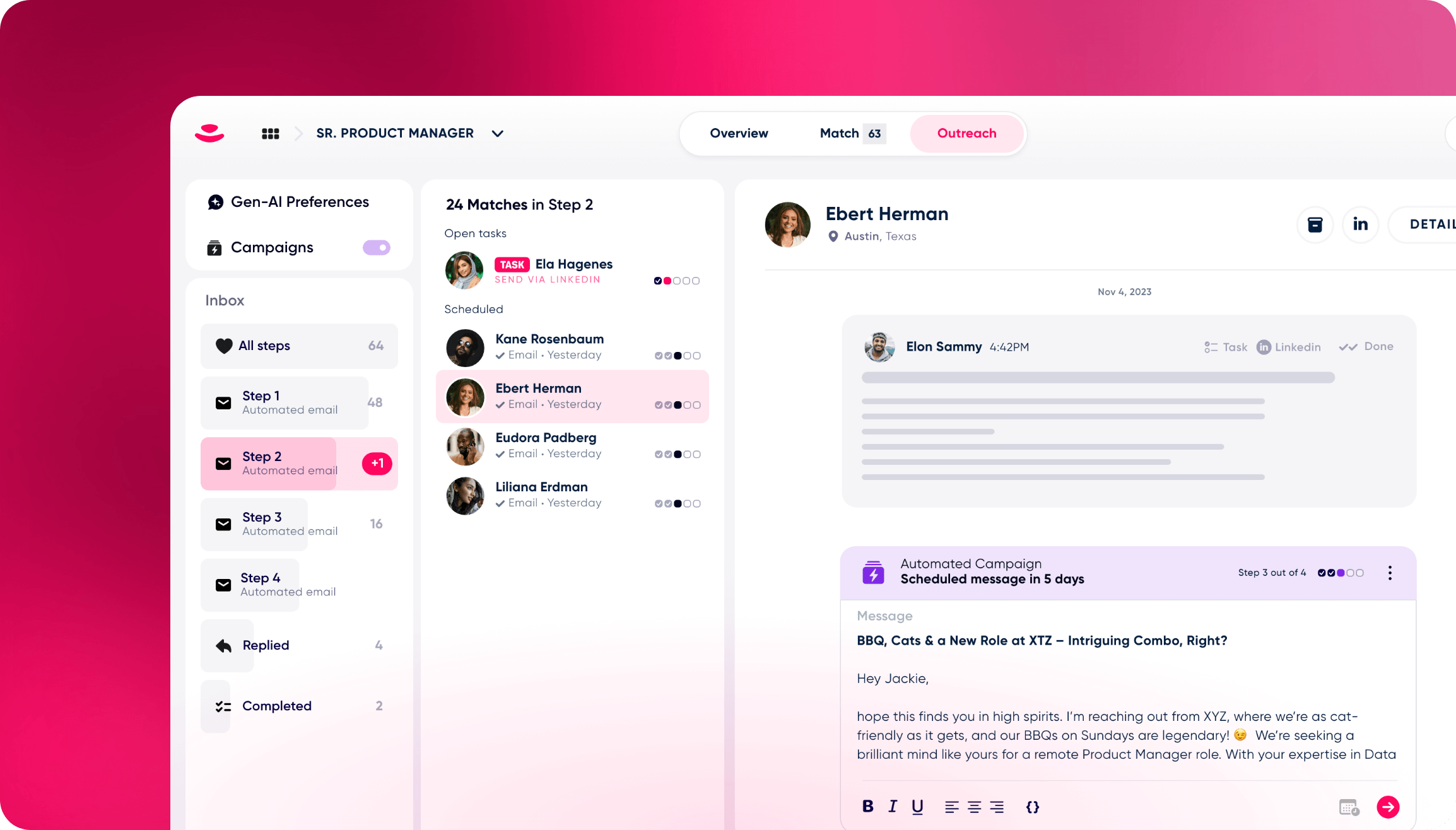
Recruiters can refine results with feedback, then use the platform to run personalized outreach across multiple channels.
For remote hiring, GoPerfect helps teams search beyond their usual networks and local talent markets. This makes it easier to build targeted pipelines across different cities, countries, and regions without manually searching each one.
Key features
- AI-powered candidate search and matching
- Large external candidate database
- Candidate ranking and match explanations
- Personalized outreach
- Multichannel engagement
- Feedback that helps refine candidate recommendations
Best for: Recruiting teams that want to find and engage candidates across large, distributed talent pools.
4. Ribbon: AI candidate screening.
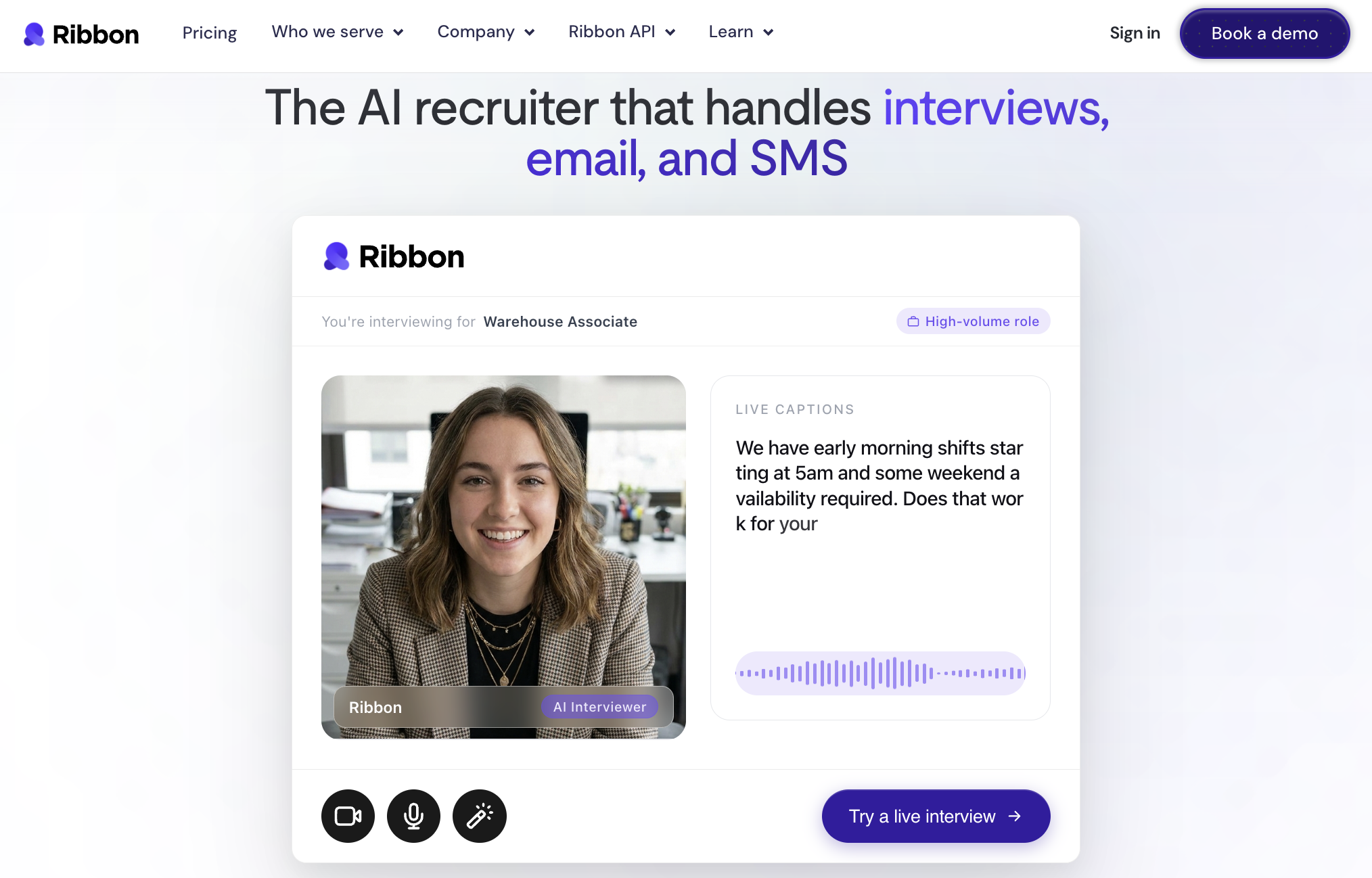
Ribbon uses AI to conduct candidate screening interviews. Applicants get an initial conversation without needing to coordinate directly with a recruiter.
Teams therefore use it to gather information about experience, skills, motivation, and role fit, before deciding who should move forward.
This is particularly useful for remote recruiting, where time zones can make even a 20-minute screening call difficult to schedule. Candidates get more flexibility over when they interview, while recruiters can spend their time on the people who warrant a deeper conversation.
Key features
- AI-led candidate interviews
- Configurable screening questions
- Automated candidate evaluation
- Interview summaries and insights
- Candidate screening at scale
- Asynchronous screening workflows
Best for: Teams that want to screen more candidates without adding more recruiter calls.
5. LinkedIn Talent Insights: remote talent market intelligence.
LinkedIn Talent Insights helps recruiters understand the talent landscape before they start sourcing. Teams can explore talent pools by location, skills, experience, employer, and other factors using data from LinkedIn's professional network.
That’s particularly valuable when hiring remotely. Instead of guessing where the best talent pools are, you can compare markets, see where skills are concentrated, and make more informed decisions about where to search.
Key features
- Talent pool analysis
- Location and skills insights
- Talent supply and demand data
- Company and competitor insights
- Workforce benchmarking
- Data for recruiting and workforce planning
Best for: Recruiting teams deciding where to look for talent and how to approach a new market.
6. HackerRank Chakra: autonomous technical interviews.
Chakra is HackerRank's AI interviewer to conduct autonomous interviews with candidates. For technical roles, candidates can solve coding problems in an integrated editor while Chakra asks follow-up questions about their decisions, reasoning, and approach.
This gives remote teams a more interactive way to assess technical ability than a traditional take-home test. Candidates can complete interviews on their own schedule, while engineering teams get structured evidence to review before committing time to a live technical interview.
Key features
- Autonomous AI-led interviews
- Integrated coding environment
- Follow-up questions based on candidate responses
- Customizable interviews based on the role
- Structured interview reports
- Support for technical and non-technical interviews
Best for: Engineering teams that want to assess technical candidates remotely without requiring an interviewer for every first-round interview.
7. TestGorilla: remote pre-employment assessments.
TestGorilla is a pre-employment testing platform with assessments covering job-specific skills, cognitive abilities, language proficiency, software knowledge, and other capabilities.
Recruiters can combine multiple tests into an assessment tailored to a particular role.
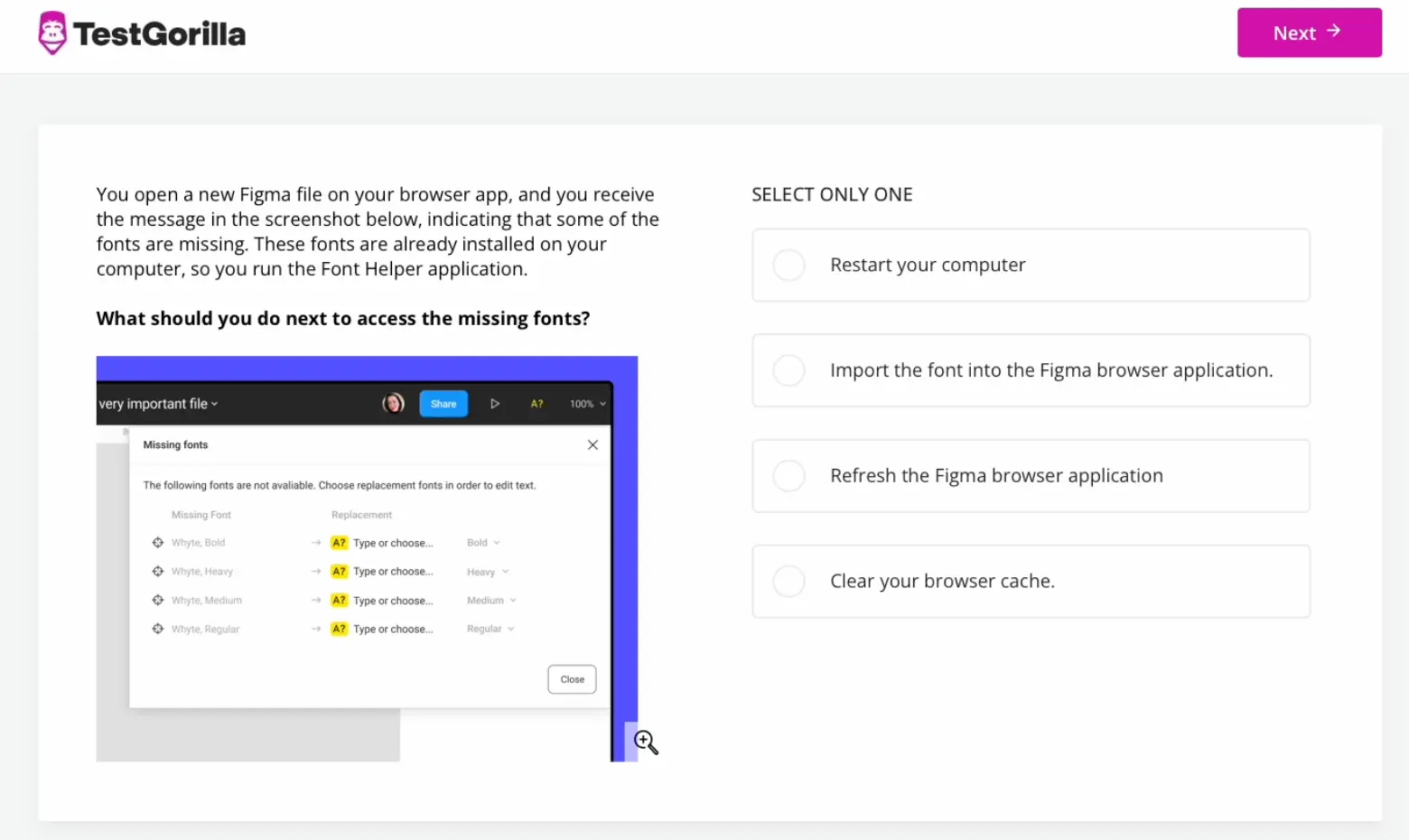
For remote hiring, this gives you a standardized way to gather additional evidence before an interview. Candidates complete assessments from anywhere, and recruiters compare results without relying entirely on resumes or first impressions.
Key features
- Large library of pre-employment tests
- Job-specific skills assessments
- Cognitive and language tests
- Custom questions
- Candidate comparison and scoring
- Remote assessment workflows
Best for: Teams that want to assess candidate skills consistently before progressing to interviews.
8. Miro: collaborative remote interviews.
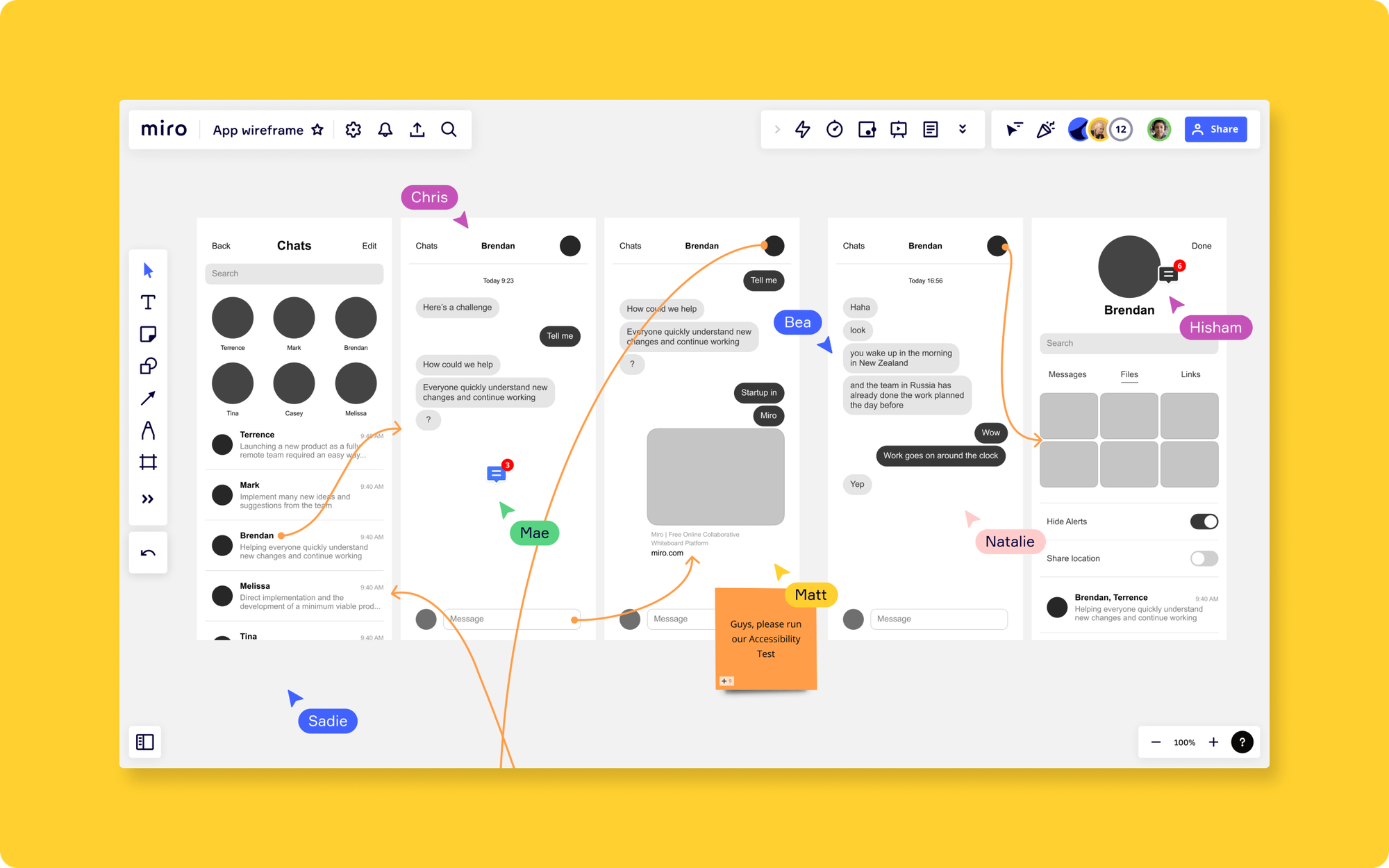
Some interviews are difficult to recreate with a standard video call. Miro gives candidates and interviewers a shared visual workspace to map ideas, solve problems, work through exercises, and collaborate in real time.
It’s particularly useful for product, design, strategy, and other roles where teams want to see how candidates approach a problem rather than simply hear their answers.
Templates also help standardize exercises so candidates get a more consistent interview experience.
Key features
- Collaborative online whiteboards
- Interview and workshop templates
- Real-time candidate collaboration
- Diagramming and visual problem solving
- Comments and asynchronous feedback
- Integrations with common workplace tools
Best for: Teams running case studies, workshops, presentations, and collaborative exercises during remote interviews.
9. Checkr: remote background checks.
Checkr is a background screening platform that helps employers run checks on candidates digitally. Recruiters can initiate screens, track progress, and manage results from one place.
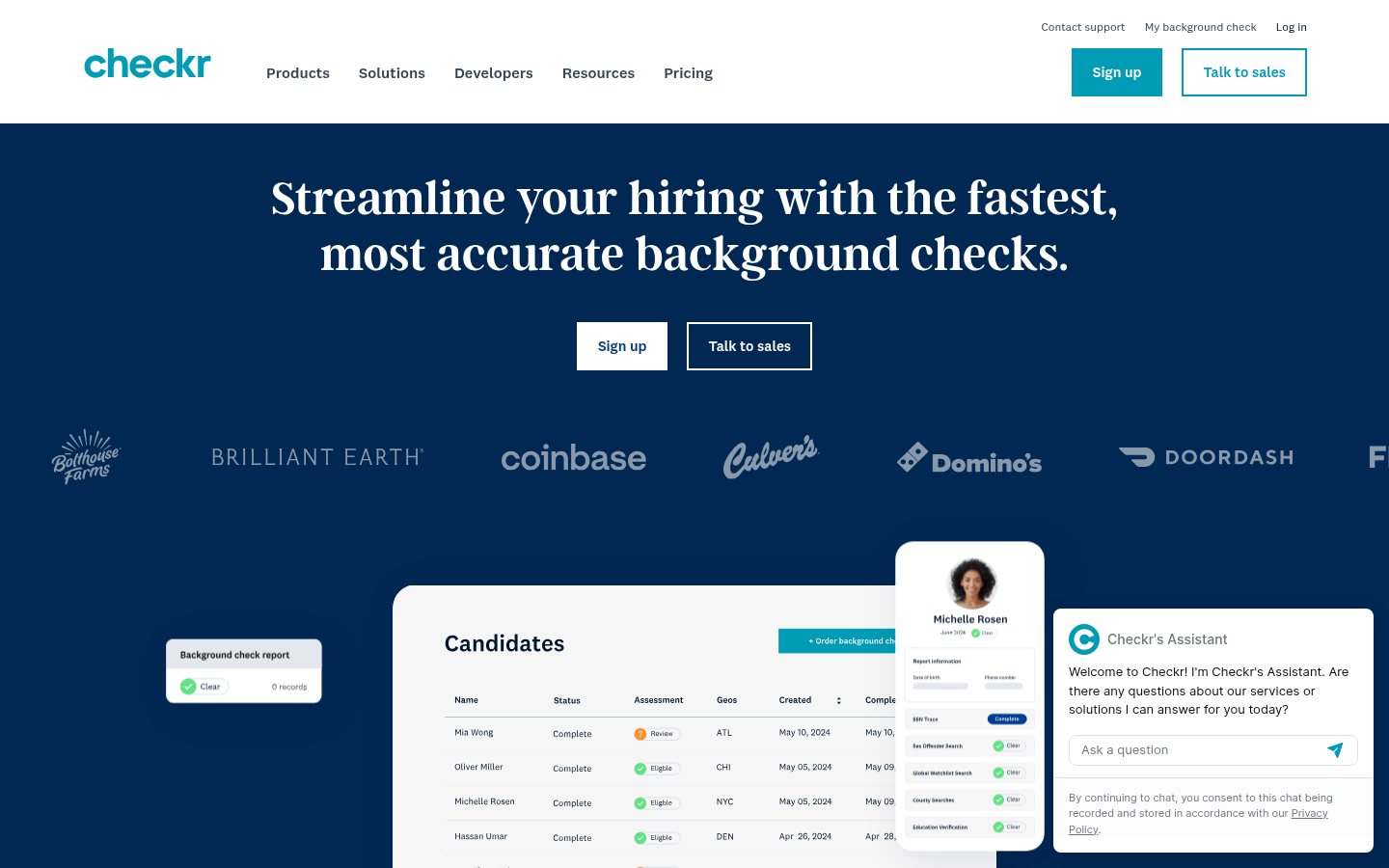
For remote teams, this helps move candidates from final interview to hire without introducing a slow, manual verification process. Checkr also integrates with many ATS and HR platforms, so screening can fit into an existing hiring workflow.
Key features
- Digital background checks
- Criminal record searches
- Employment and education verification
- Candidate status tracking
- Automated screening workflows
- ATS and HR platform integrations
Best for: Teams that want to manage pre-employment background checks without slowing down a remote hiring process.
10. DocuSign: remote offers and contracts.
DocuSign makes it easy to send, sign, and manage employment documents electronically. Recruiting and HR teams use it for offer letters, employment agreements, NDAs, and other paperwork that would otherwise require printing or manual signatures.
It’s a straightforward but important part of remote hiring. Once a candidate says yes, documents can be completed quickly without location becoming another source of friction.
Key features
- Electronic signatures
- Reusable document templates
- Automated reminders
- Signing status tracking
- Multi-party signing workflows
- Integrations with HR and recruiting software
Best for: Teams that need a simple way to complete hiring paperwork with candidates anywhere.
11. Deel: global hiring operations.
Remote recruiting lets companies find great candidates almost anywhere. But employing those candidates can be considerably more complicated.
Deel helps companies manage international employment, contracts, payroll, benefits, and compliance across different markets.
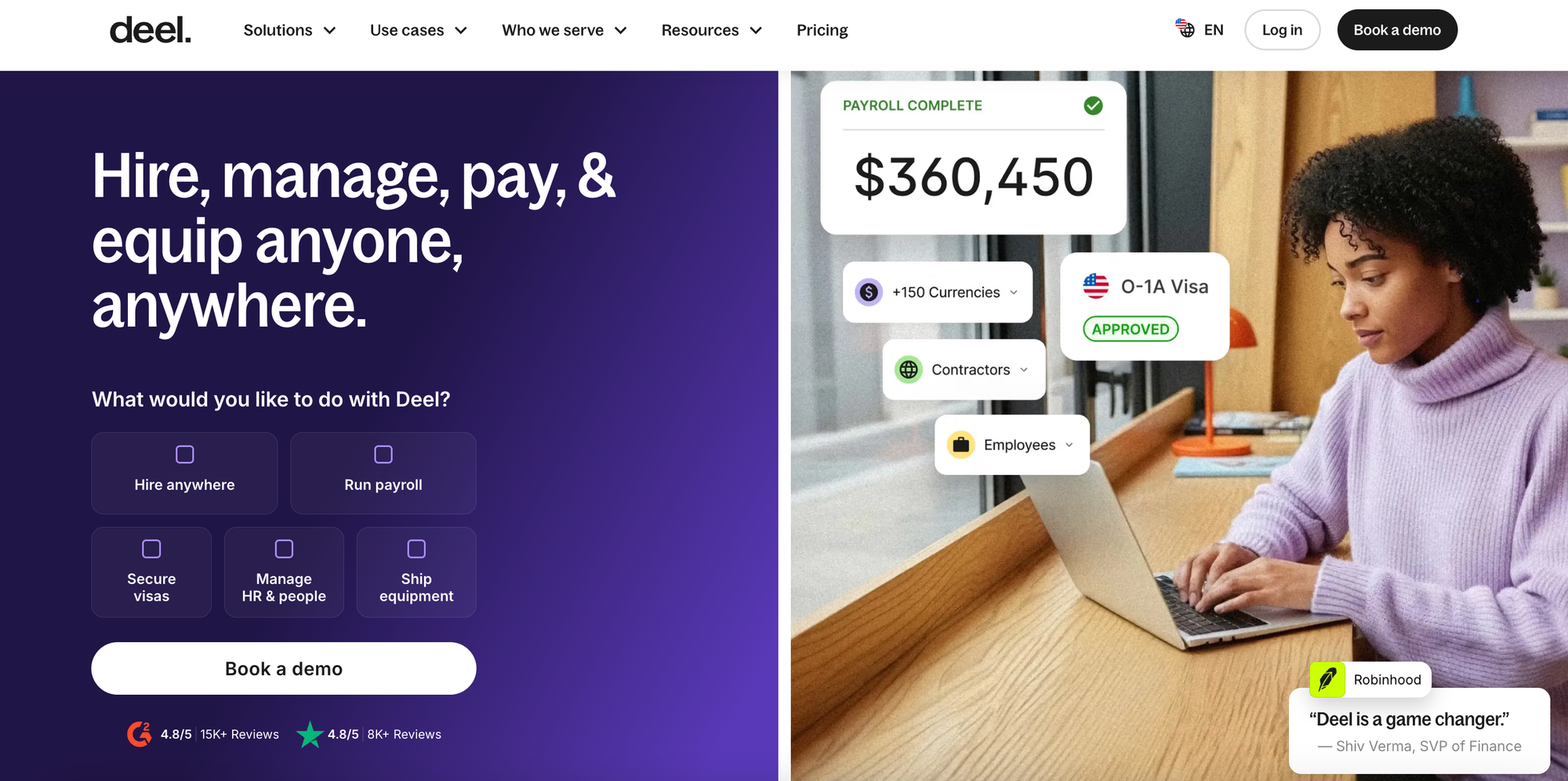
Its Employer of Record services let you employ people in countries where you don’t have a local entity. That makes Deel particularly useful when a remote recruiting strategy starts turning into a genuinely international workforce.
Key features
- Employer of Record services
- Global payroll
- International contractor management
- Localized contracts
- Benefits administration
- Compliance support across multiple countries
Best for: Companies that want to hire employees and contractors in countries where they do not have their own legal entity.
12. Remote: employing distributed teams.
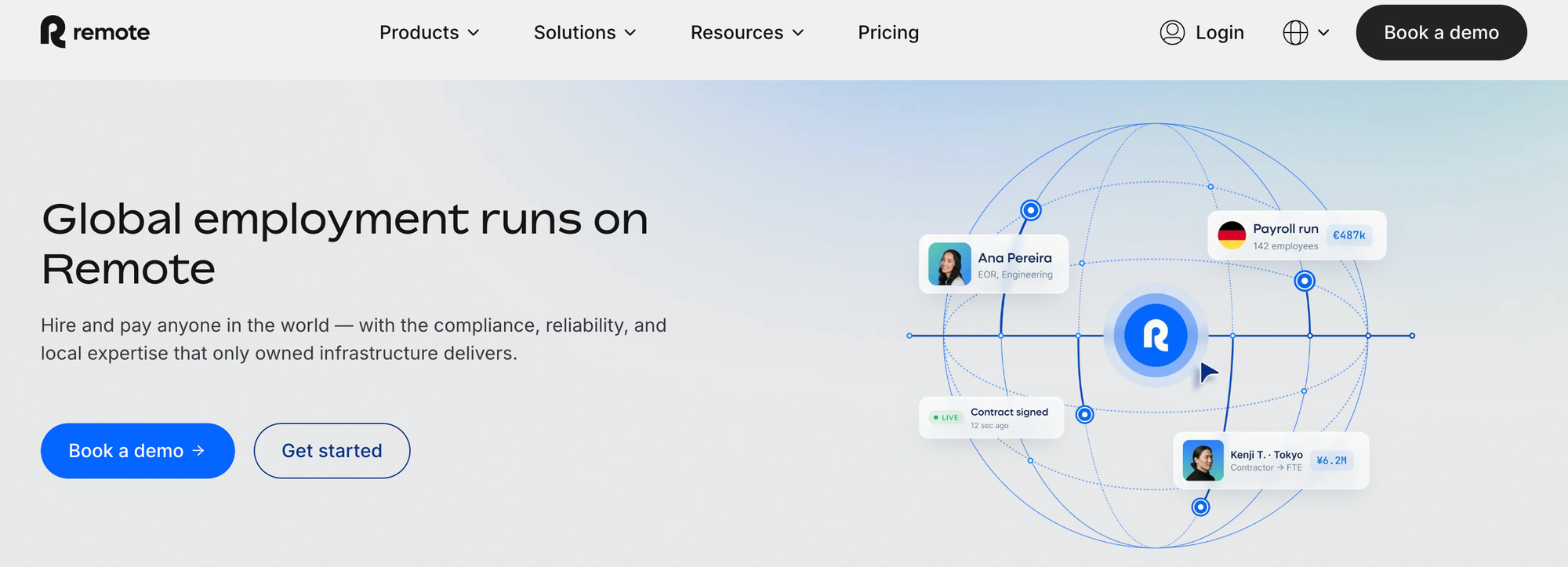
Remote helps companies hire, pay, and manage employees internationally. Its platform covers Employer of Record services, payroll, benefits, contractor management, and other parts of employing people across borders.
Similar to Deel, Remote removes geography as a constraint during hiring. Consider candidates in markets where you don’t have a registered entity, then hand off the employment and compliance work once they find the right person.
Key features
- Employer of Record services
- Global payroll
- International contractor management
- Benefits administration
- Localized employment contracts
- Global employment and compliance support
Best for: Companies building international teams and managing employees across multiple countries.
What should you look for in remote recruitment tools?
The right remote hiring stack should reduce the extra coordination that comes with recruiting across locations and time zones. Look for tools that enable the following.
Async-friendly workflows.
Remote hiring shouldn’t require recruiters, hiring managers, and candidates to constantly coordinate calendars. Application reviews, assessments, screening, feedback, and other steps should be asynchronous where appropriate.
Strong integrations.
Every additional tool can create another information silo. Prioritize software that integrates with your ATS, HRIS, calendars, and other systems so candidate information doesn’t need to be manually copied between platforms.
A good candidate experience.
Convenience for recruiters can’t come at the candidate’s expense. Remote hiring tools should be easy to access, explain the process to candidates, and avoid adding unnecessary steps.
Contextual automation.
Automation is most useful when it understands the role and your hiring bar. Choose tools that use real recruiting context rather than applying the same generic rules to every candidate and vacancy.
Support for distributed hiring teams.
Remote hiring doesn’t only apply to candidates. Recruiters, interviewers, and hiring managers may also be distributed. So tools should make it easy to share evidence, feedback, and decisions without requiring another meeting.
Security and compliance.
Recruiting involves sensitive candidate data, and international hiring can introduce additional regulatory requirements. Check how vendors handle data security, privacy, permissions, and compliance in the markets where you operate.
Build a remote hiring process that works from anywhere.
Remote recruitment should give you access to more talent, not create more admin. The right tools help every stage of hiring move forward without relying on recruiters, candidates, and hiring managers being in the same place at the same time.
And with AI increasingly able to handle sourcing, screening, application review, and recruiting admin, distributed teams can spend more time on conversations and decisions where people add real value.
Metaview brings that intelligence together across the recruiting process. See how Metaview can help your team find, examine, and hire great candidates wherever they are.
Bring Metaview into your hiring stack.
Live notes, structured scorecards, and ATS sync - set up in under 10 minutes.
Remote hiring tools FAQs.
What are the best tools for remote recruitment?
The best tools depend on which parts of remote hiring you need to improve. Metaview supports AI-powered sourcing, application review, screening, and interviews, while specialist tools can help with technical assessments, background checks, contracts, and international employment.
A good remote recruiting stack typically combines several of these capabilities.
What software do you need to hire remote employees?
Most teams need an ATS software alongside tools for sourcing, interviews, assessments, communication, and offer management. If you’re hiring internationally, you may also need an Employer of Record or global employment platform like Deel or Remote.
AI recruiting tools can automate more of the work that happens between these systems.
How do you recruit remote employees?
Define the role and decide where you’re prepared to hire. Then source or attract candidates, screen applications, conduct remote interviews and assessments, gather structured feedback, and complete background checks and employment paperwork digitally.
The process should make it easy for candidates and hiring teams to participate, regardless of location.
How can AI help with remote hiring?
AI can take on recruiting tasks that would otherwise require significant manual work or synchronous coordination. This can include finding candidates, reviewing applications, running initial screening conversations, managing outbound outreach, capturing interview notes, and creating scorecards.
Recruiters can then focus more of their time on candidate relationships and hiring decisions.
How do you assess candidates remotely?
Remote teams can combine structured interviews with skills assessments, technical interviews, work samples, and collaborative exercises. Tools like Metaview, TestGorilla, HackerRank Chakra, and Miro support different types of remote evaluation.
Whatever format you choose, candidates should be assessed against consistent criteria that relate directly to the role.
How can you make remote recruitment more efficient?
Reduce unnecessary synchronous steps and automate repetitive work wherever it makes sense. Application review, sourcing, outreach, scheduling, initial screening, interview documentation, and other administrative tasks can increasingly happen without constant recruiter involvement.
The goal is to keep hiring moving, while preserving enough context for recruiters and hiring managers to make informed decisions.
