
Rejection sucks. Especially when you're the hiring manager who just lost a really good candidate.
Let's face it, candidates aren't the only ones trying to earn a yes.
Your top candidates are often weighing other companies at the same time, and somewhere in that process you become the one doing the convincing.
What tips their decision is rarely the offer alone. Candidates read your hiring process as a preview of the job itself, and some of what they see in it sends them elsewhere.
Here are five deal breakers that could be sitting in your hiring process right now and what to do about each one.
Five interview deal breakers that could cause a candidate to reject your company.
Each of these is something the candidate experiences inside the interview process itself, which is why they shape your candidate experience long before any offer conversation.
And each one is fixable, once you can see it.
1. The process moves slower than your competitors.
From the inside, every delay has a reason. The panel needed another week, the debrief kept slipping, the offer sat with finance. But most candidates aren't ready to wait for the internal processes to conclude.
67% of teams lose qualified candidates every month to competitors who move faster, according to our 2026 AI & Hiring Alignment Report, which surveyed 505 recruiting leaders and hiring managers across North America and EMEA.
Speed is also the one deal breaker your competitors can use against you directly. Look at the days between a candidate's first conversation and your decision, and put an owner on every gap you find.
2. Candidates repeat themselves in every round.
Four conversations, the same walk through the resume, the same three questions about the last project.
Each interviewer starts from zero because the previous round/s feedback never reached them.
Strong candidates notice, and they read it as a preview of how decisions get made after they join. A company that can't share notes withing departments is asking the candidate to do the work of holding it together.
3. The interview gets the talk balance wrong.
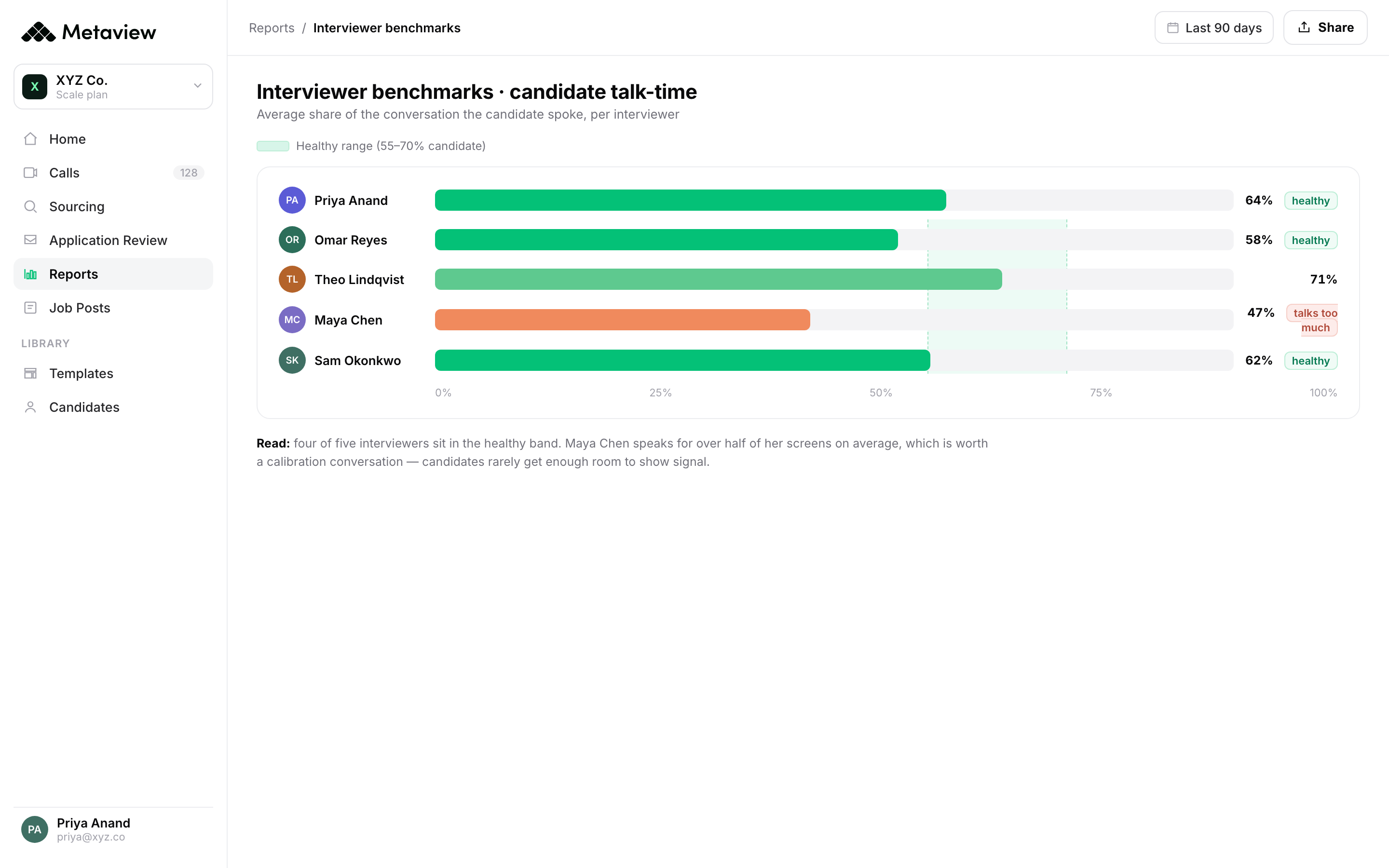
Some interviews turn into a pitch. The interviewer spends the hour on the company story, the roadmap and their own path into the team, and the candidate barely gets to show their work.
Others tip the opposite way, and the candidate talks through the whole slot without learning anything real about the job they're weighing.
Both versions cost you, because a strong candidate treats an unbalanced hour as a sample of how the team listens.
4. Interviews run over the scheduled time.
A candidate plans their day around your slot, often around a job they still have. Then the interview runs long into whatever they had next.
Of 174,558 interviews with a scheduled end time in the conversations we capture, 54.3% ran past it, and the typical overrun was about 12 minutes.
5. Every interviewer describes a different job.
By the final round the candidate has heard the role described three different ways: a build-it role from the manager, a keep-it-running role from the engineer, something in between from the recruiter.
It happens when the interviewers never agreed on the role in advance. Each one answers from their own corner of the team, and to the candidate the differences read as a team that hasn't decided what it's hiring for.
How to spot these deal breakers in your hiring process.
You'll rarely be told about any of them. A candidate who withdraws says something polite about timing or fit, and the real reason walks out the Google Meet with them.
The harder problem is visibility, most processes keep no record of the conversation at all, and even where interviews are captured, the paperwork rarely follows.
Across the interviews captured on Metaview, only 31.2% get a scorecard attached, which is 1.6 million out of 5.2 million.
For a real win in the hiring process, our Metaview Notetaker joins the interview as a participant with consent, records the conversation, and turns it into structured notes where each section links back to the moment in the transcript it came from.
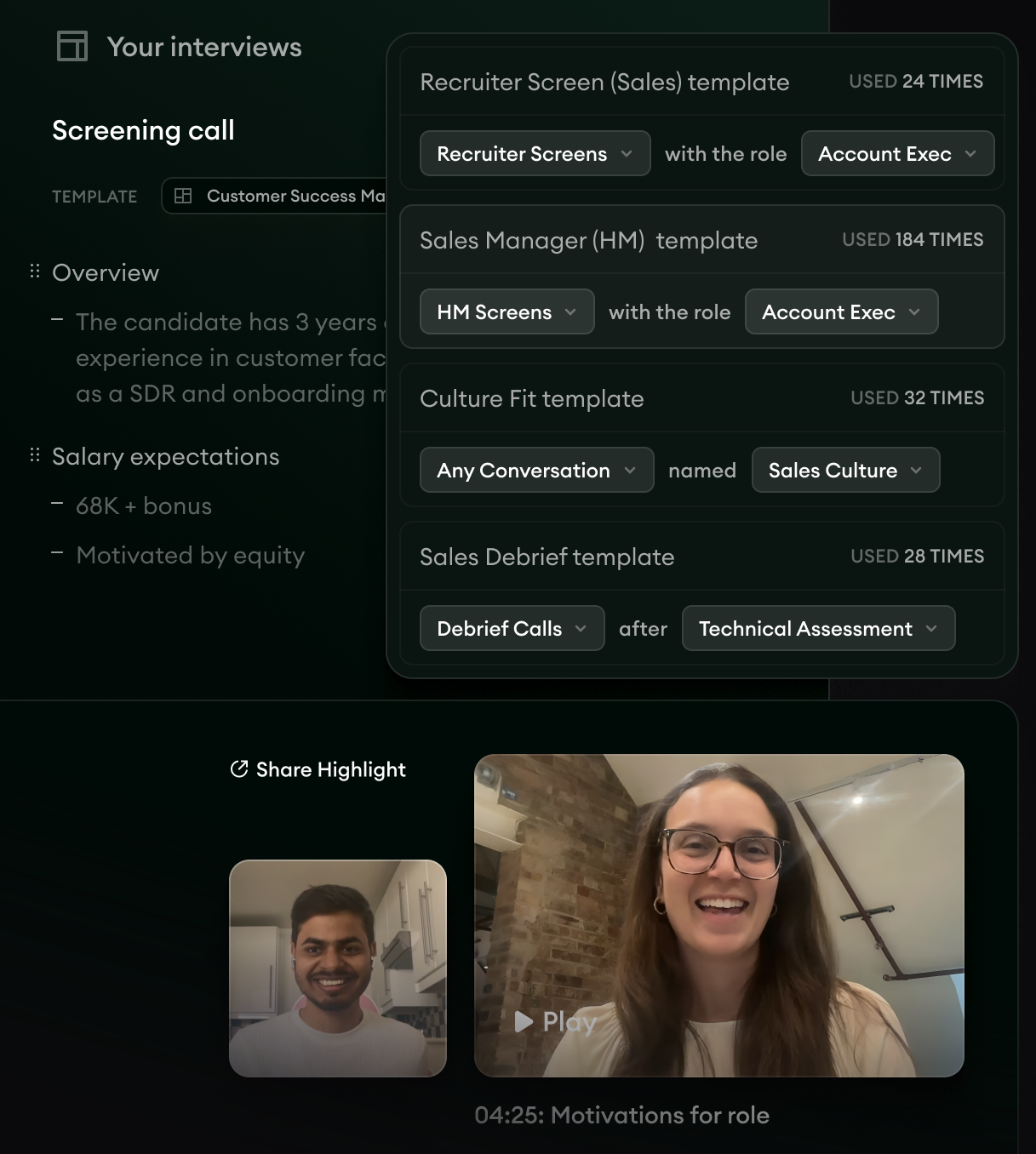
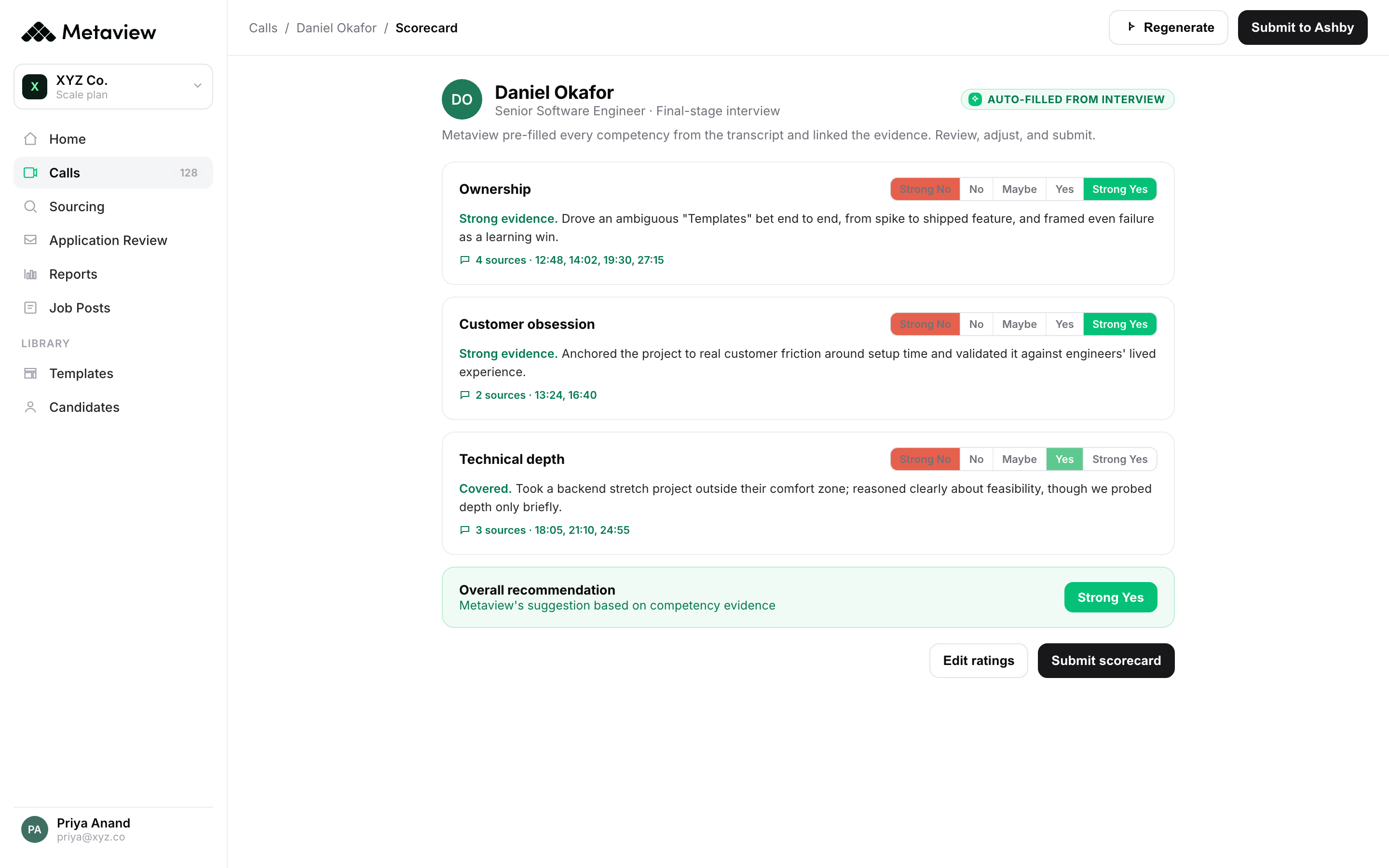
It then drafts the scorecard from that conversation. The interviewer reviews it, rates the candidate and submits it, and the hiring recommendation is always theirs to make.
Once the record exists, each deal breaker has something you can look at: the days between rounds, the questions that repeat across the loop, who held the talking time in each interview, and the scheduled end time against the actual one.
Where to start.
You don't need to rebuild the process to fix this.
Take the role you're hiring for now and walk the loop from the candidate's side. Count the days between rounds, the questions that repeat, and the number of different ways the job gets described.
Then put an owner on speed. Of the 811,298 submitted scorecards we can put a time on, half landed within just over two hours of the interview ending, but nearly one in five took more than two days, and the debrief waits for the slowest one.
Brief the panel before the first interview. Determine who covers what, which questions belong to which round, and create one shared description of the role. That's most of what structured interviews buy you.
Use a scorecard template so feedback lands the same way every time, and keep a record of each conversation so the next round builds on the last one instead of repeating it.
Among companies that exceeded their hiring goals, 85% use AI in hiring.
When a good candidate turns you down, the reason usually sits somewhere in these five dealbreakers. Now you know where to look and how to fix it.
Bring Metaview into your hiring stack.
Live notes, structured scorecards, and ATS sync.
Frequently asked.
Why do good candidates drop out of the hiring process?
Usually because of the process rather than the offer. Candidates with options walk away from slow processes, repeated questions, interviews where they barely spoke, and roles that change description between rounds. By the time an offer lands, the decision is often already made.
How long should a hiring process take?
There's no universal number, but momentum matters more than total length. Candidates tend to forgive a process that moves every few days, while a long silence between rounds reads as a decision. Give every gap an owner and give feedback a deadline.
What makes a bad interview experience for candidates?
Repeated questions in every round, interviews that run over their scheduled time, barely getting a chance to speak, and a role that sounds different in each conversation. Candidates rarely say any of this out loud: the warning signs are slower replies, fewer questions about the role, and scheduling that suddenly gets harder.
How do you stop losing candidates to faster competitors?
Make speed a property of the process. Put an owner on every handoff, set a deadline for interview feedback, brief panels so rounds don't repeat, and keep a record of each conversation so debriefs start from evidence instead of memory.
Source: Metaview's product data, analyzed in aggregate across 5.2 million candidate interviews to June 2026. The scorecard comparison runs on a capped sample of 120,000 scorecards with no random assignment. Survey figures come from Metaview's 2026 AI & Hiring Alignment Report of 505 recruiting leaders and hiring managers across North America and EMEA.
