

SeekOut does sourcing. It does not do interviews, application review, or hiring decisions.
That is the honest read on why teams look at SeekOut alternatives. The platform is fine at the top of the funnel. The reason recruiters end up searching for what else is out there is that sourcing is one slice of the work, and SeekOut only covers that slice.
Most of the 10 alternatives below are also specialized. They solve outreach, or CRM, or screening, or scheduling. Picking three of them is how teams end up with five recruiting tools instead of one.
Here is each option, organized by what it actually solves. Plus the one platform on this list that spans the full hiring workflow rather than just a slice of it.
The 10 alternatives at a glance.
One full-funnel platform, two close sourcing competitors, and seven adjacent tools that own a different part of the funnel.
| Alternative | Category | Best for |
|---|---|---|
| Metaview | End-to-end recruiting intelligence | Teams that want one platform for sourcing, screening, interviews, and analytics |
| hireEZ | Outbound sourcing + outreach automation | Teams scaling outbound recruiting and engagement |
| AmazingHiring | Technical talent sourcing | Engineering and developer hiring |
| Gem | Recruiting CRM + pipeline analytics | Teams adding CRM visibility on top of existing sourcing |
| Rival Recruit | Sourcing + recruiting operations | Teams that want sourcing plus core ATS workflows in one tool |
| Eightfold AI | Talent intelligence + workforce planning | Large enterprises focused on internal mobility |
| Fetcher | Curated AI sourcing | Lean teams without a dedicated sourcing function |
| Humanly | AI screening + early-stage engagement | Teams automating early-funnel candidate qualification |
| GoodTime | Interview scheduling automation | Teams where scheduling friction is the bottleneck |
| LinkedIn Recruiter | Native LinkedIn sourcing | Teams sourcing from the LinkedIn talent pool |
Where SeekOut falls short.
SeekOut is genuinely good at sourcing and data enrichment. The candidate database is broad, the filters are flexible, and outreach is built in.
Where teams reach for alternatives is in the work that happens after a candidate enters the funnel.
Inbound application review is largely manual. Once volume picks up, recruiters miss strong candidates simply because they cannot review them all.
Interview capture does not exist. The conversation that actually decides whether the candidate moves forward is not structured, not searchable, and not feeding back into sourcing.
Hiring decisions are made without consistent data. Recruiters and hiring managers align based on whatever they remember from the panel, not based on a structured signal.
These are not sourcing problems. Swapping SeekOut for another sourcing tool does not fix them.
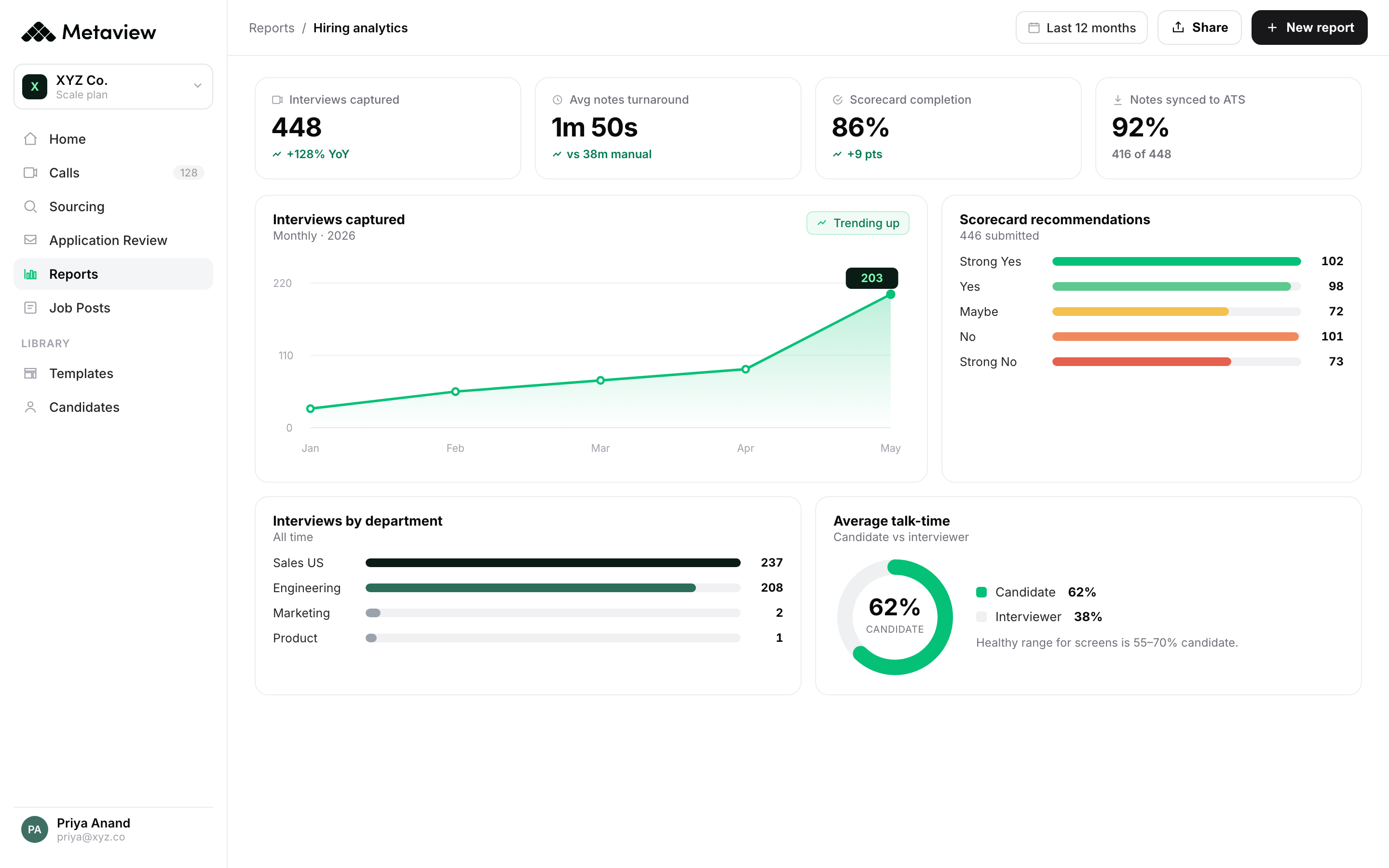
This is the gap that pushes teams to look past sourcing tools. Metaview turns every interview into reporting that shows what good actually looks like across the pipeline:
1. Metaview.
Category: End-to-end recruiting intelligence
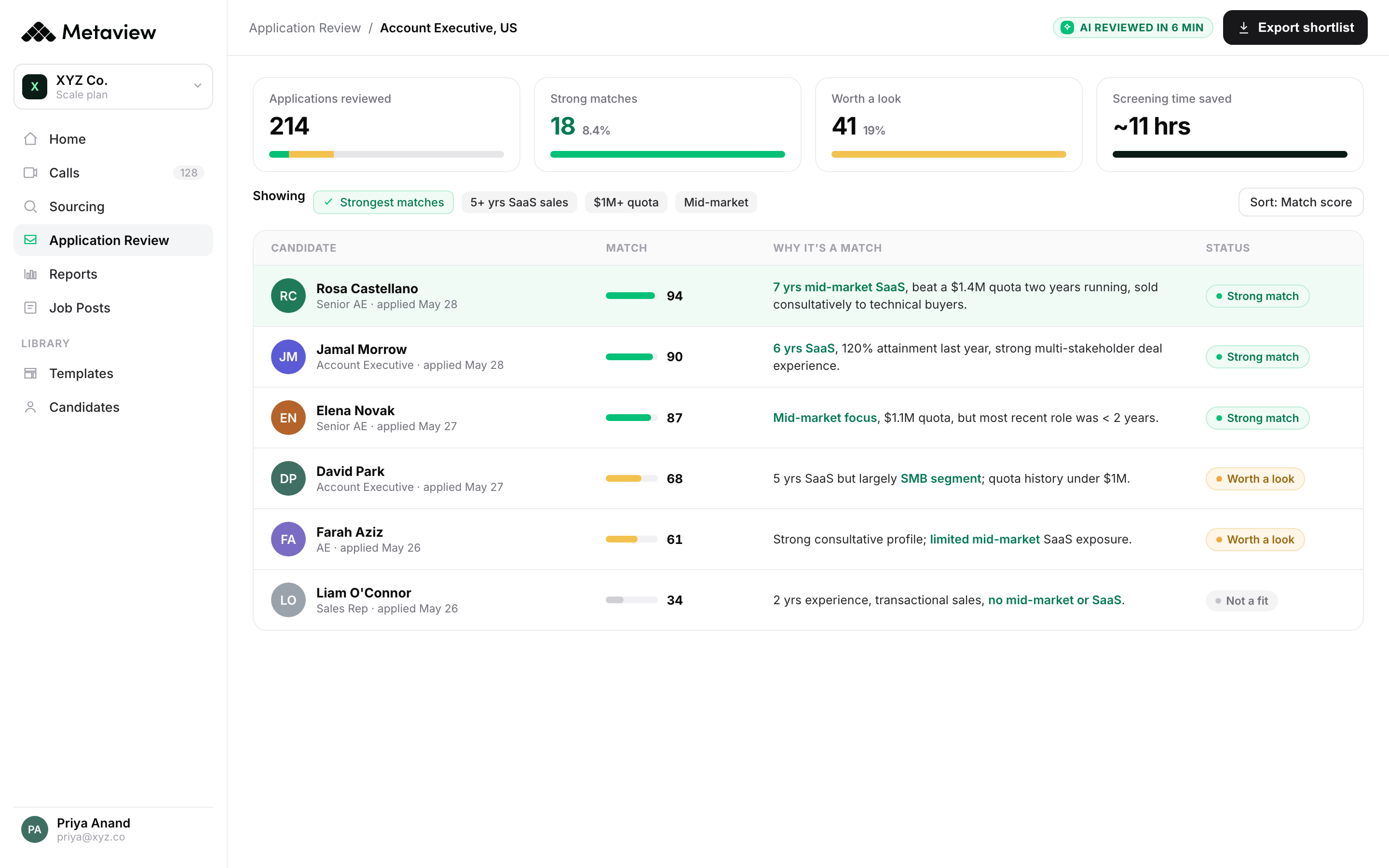
Metaview is the only alternative on this list that spans the full hiring workflow. AI sourcing, outreach, application review, interview intelligence, and analytics in one platform.
Where SeekOut helps you find candidates, Metaview helps you understand them, prioritize them, and decide on them faster. The interview itself becomes structured data that feeds every other stage.
The result is one collaborative system that replaces multiple point solutions and gives recruiters and hiring managers a single view into what is actually happening across the funnel.
What it covers:
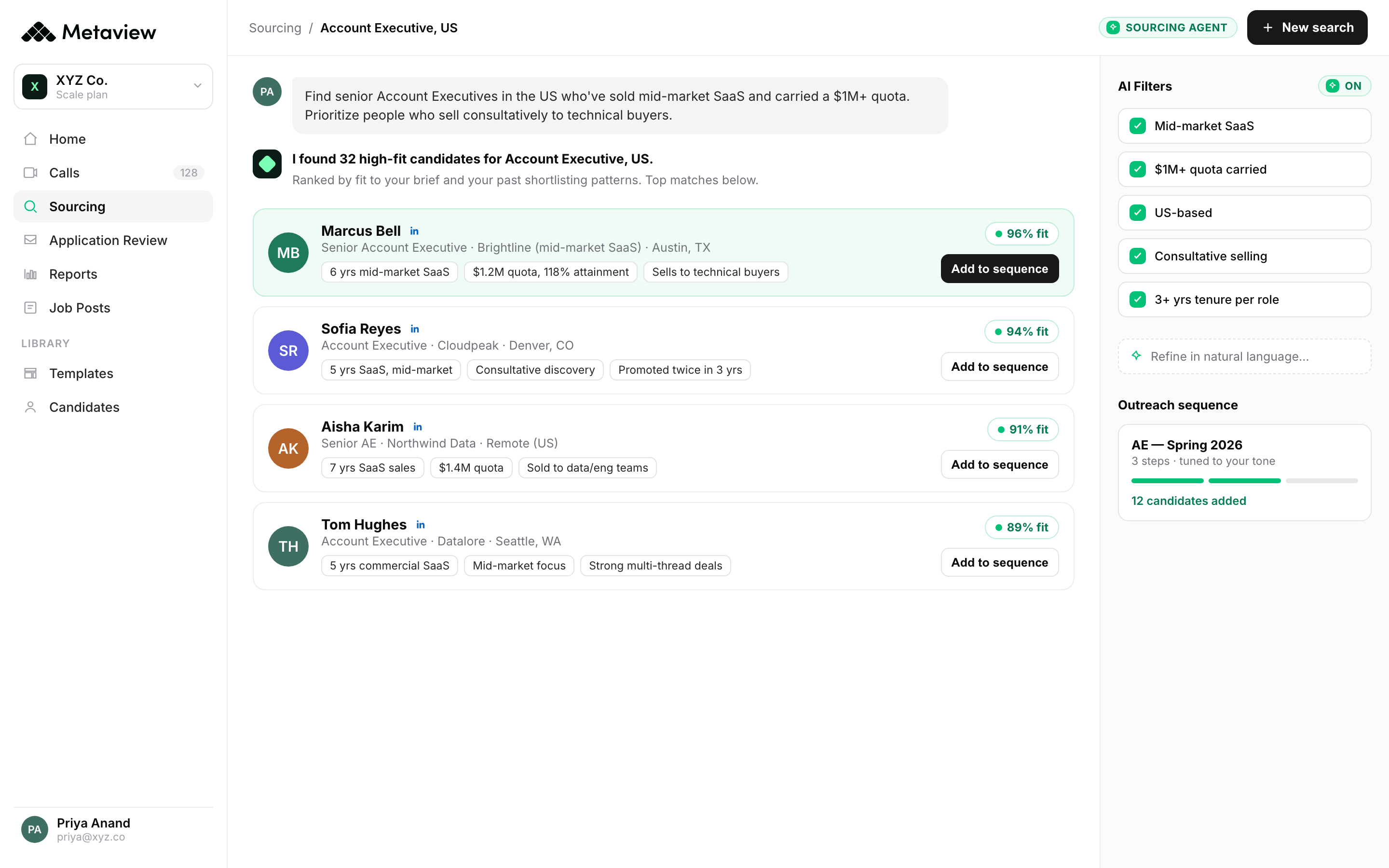
- AI sourcing agents that build pipeline from natural-language intent, not Boolean
- Automated outreach across email and other channels
- Automatic application review for inbound candidates
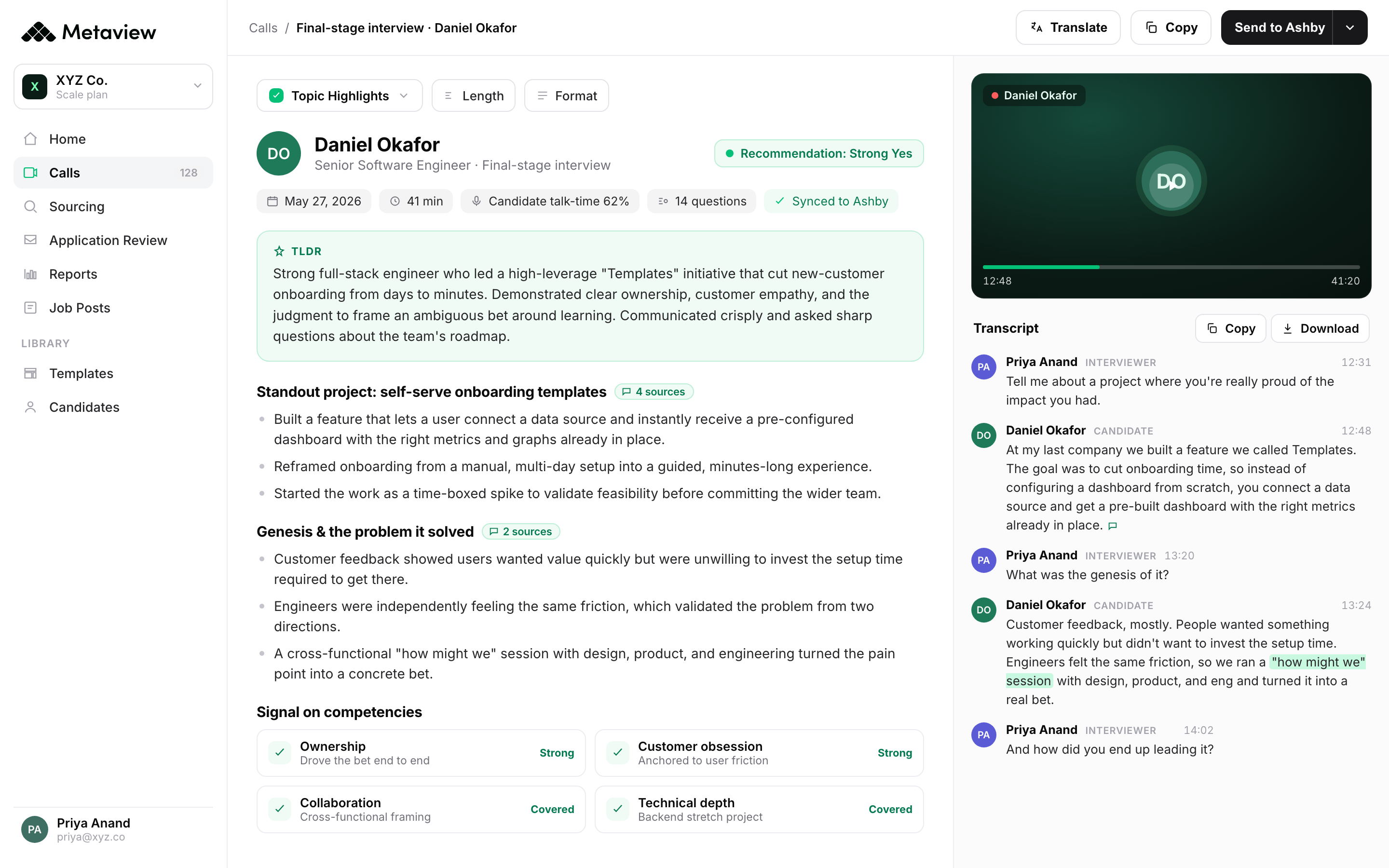
- Interview transcripts and structured scorecards captured automatically
- Reporting on what differentiates successful hires
- Native integrations with Greenhouse, Ashby, Lever, Workday, and 40+ ATSs
Where it falls short: Metaview is more than a 1:1 SeekOut replacement. If your only need is sourcing data enrichment for an existing outbound function, Metaview is more product than you need.
Best for: teams that want a single platform to manage sourcing, screening, interviews, and hiring insights end-to-end.
Every time the AI presents a candidate, the recruiter says fit or not. That feedback flows into the ideal-candidate profile. Over time, it becomes a company-wide read on what good looks like.”

2. hireEZ.
Category: Outbound sourcing + outreach automation
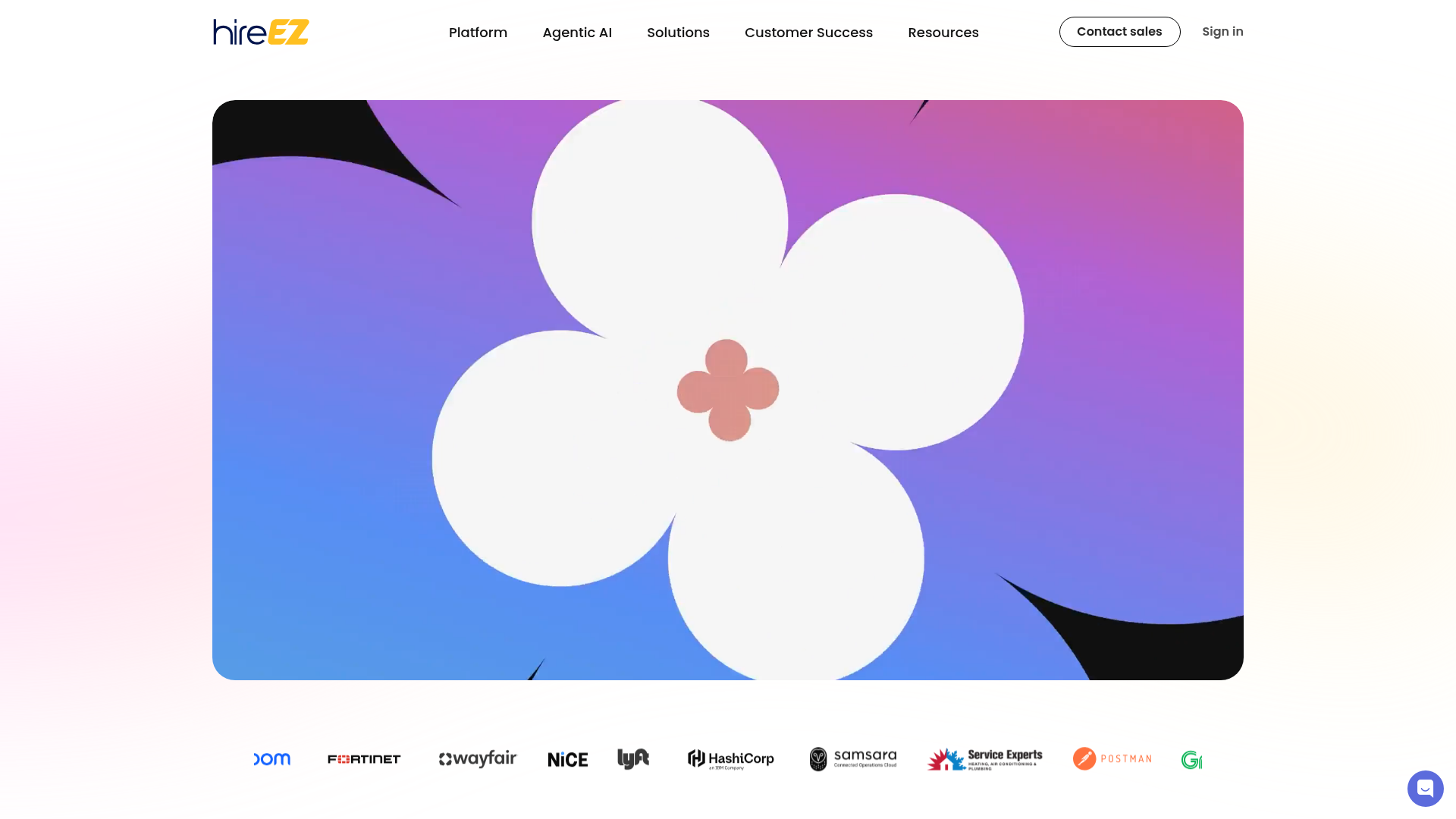
hireEZ is the closest direct alternative to SeekOut for teams focused on outbound sourcing, with a stronger emphasis on engagement and automation.
Where SeekOut excels at surfacing talent insights, hireEZ leans into helping recruiters reach and convert those candidates through built-in outreach workflows.
What it covers:
- AI-powered candidate sourcing across multiple channels
- Built-in email sequencing and outreach campaigns
- Candidate enrichment and contact data
Where it falls short: still primarily top-of-funnel. Limited support for inbound review, interview capture, or hiring outcomes.
Best for: teams focused on scaling outbound sourcing and candidate engagement.
3. AmazingHiring.
Category: Technical talent sourcing
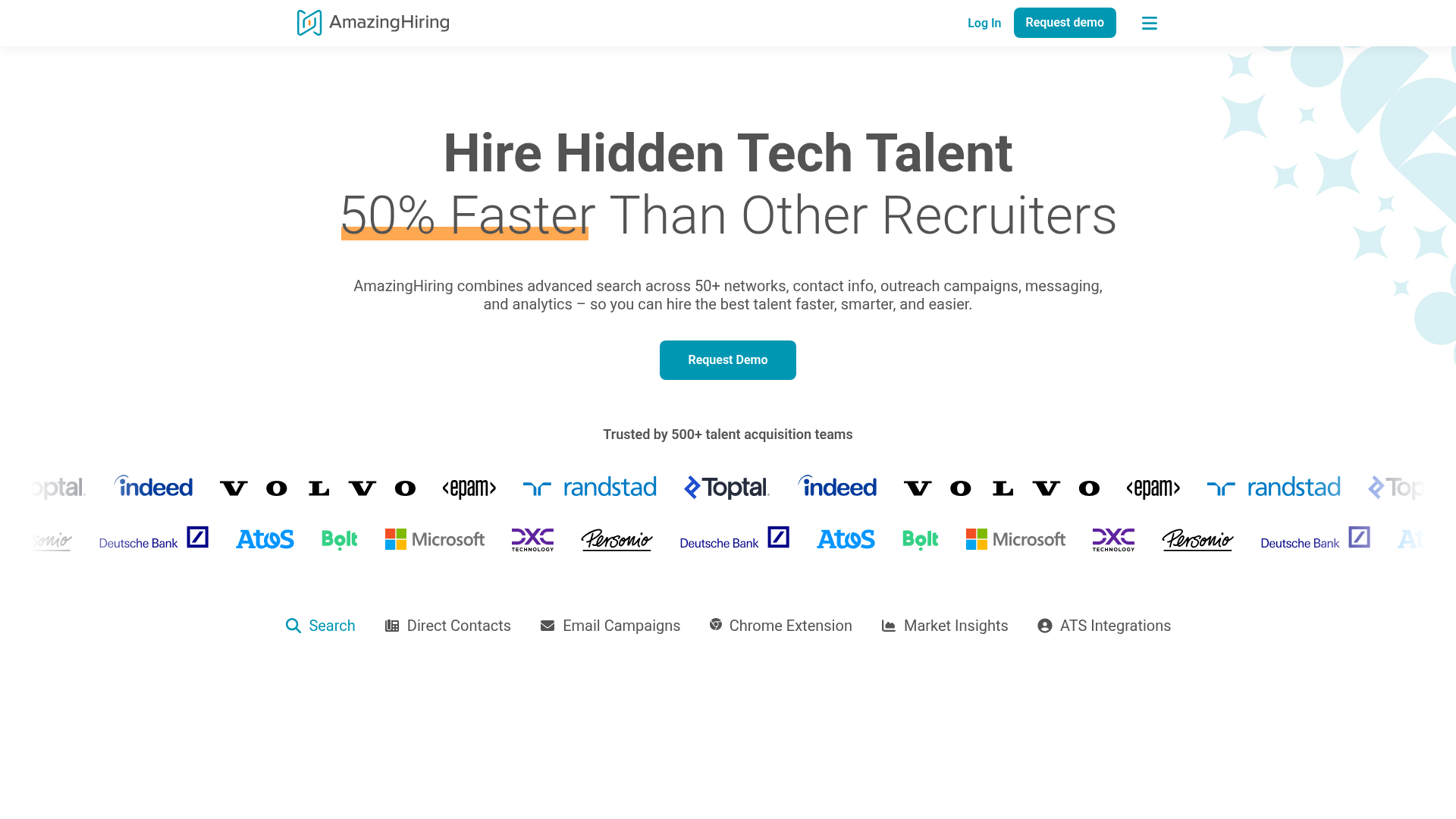
AmazingHiring is a specialized sourcing platform for technical talent. It aggregates profiles from GitHub, Stack Overflow, Kaggle, and similar developer platforms.
Where SeekOut is broad across industries, AmazingHiring is deep in engineering. The trade-off is reach: it does not help with non-technical roles or diversity-focused sourcing.
What it covers:
- Aggregated profiles from developer platforms
- Advanced technical filtering and candidate ranking
- Deep visibility into engineering activity and contributions
Where it falls short: limited to technical and engineering roles. No support for outreach scale, inbound review, or hiring workflows.
Best for: teams hiring technical talent who need deeper visibility into developer profiles.
4. Gem.
Category: Recruiting CRM + pipeline analytics
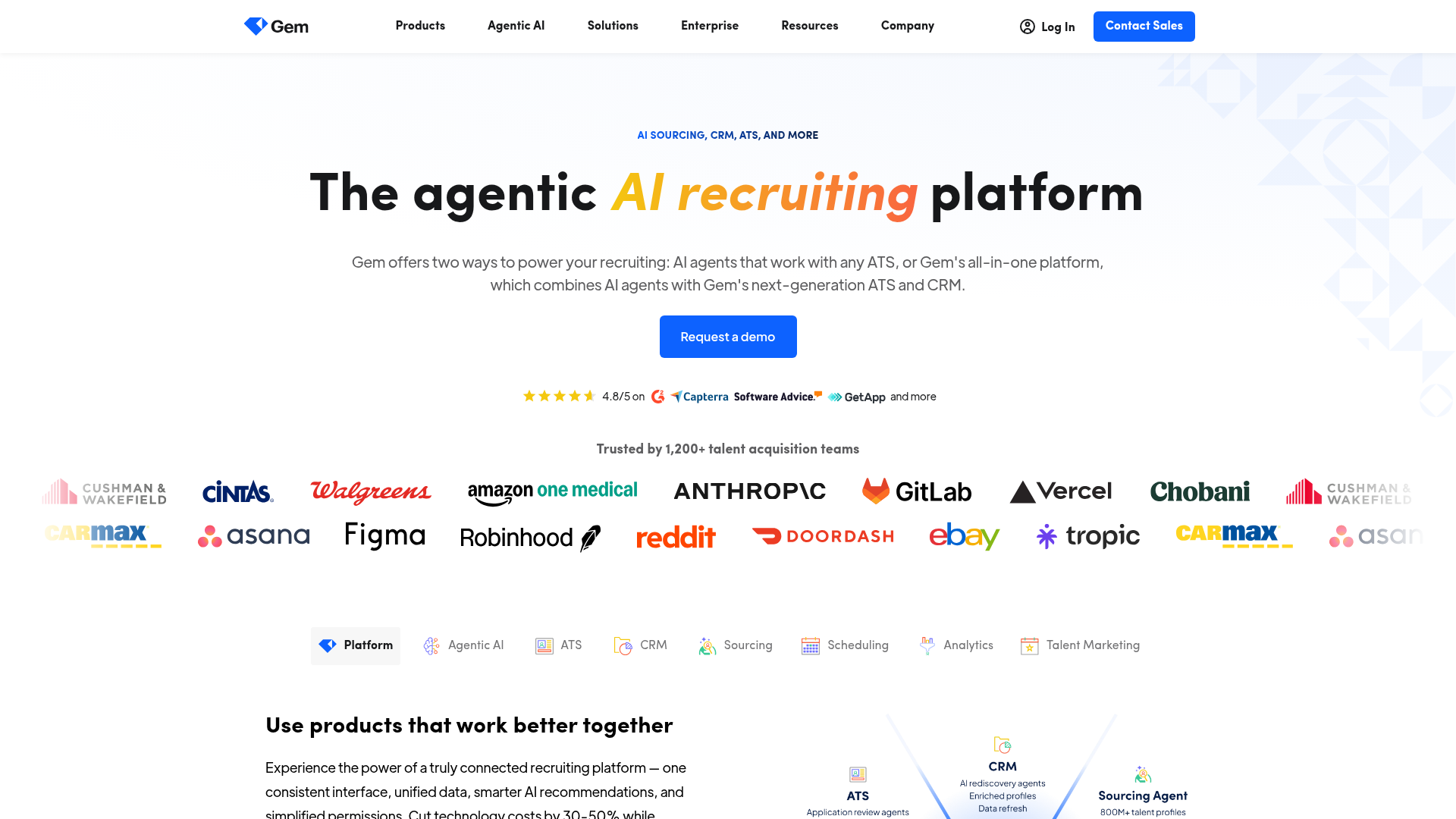
Gem is the CRM layer that sits on top of your sourcing tools. It centralizes candidate interactions, tracks outreach performance, and provides detailed pipeline analytics.
Where SeekOut focuses on sourcing, Gem is designed to help teams manage and nurture those candidates over time.
What it covers:
- Recruiting CRM for managing candidate relationships
- Outreach tracking and engagement analytics
- Pipeline and diversity reporting
Where it falls short: requires separate tools for sourcing. No interview capture or evaluation.
Best for: teams that want better pipeline visibility and CRM capabilities on top of an existing sourcing stack.
5. Rival Recruit.
Category: Sourcing + recruiting operations
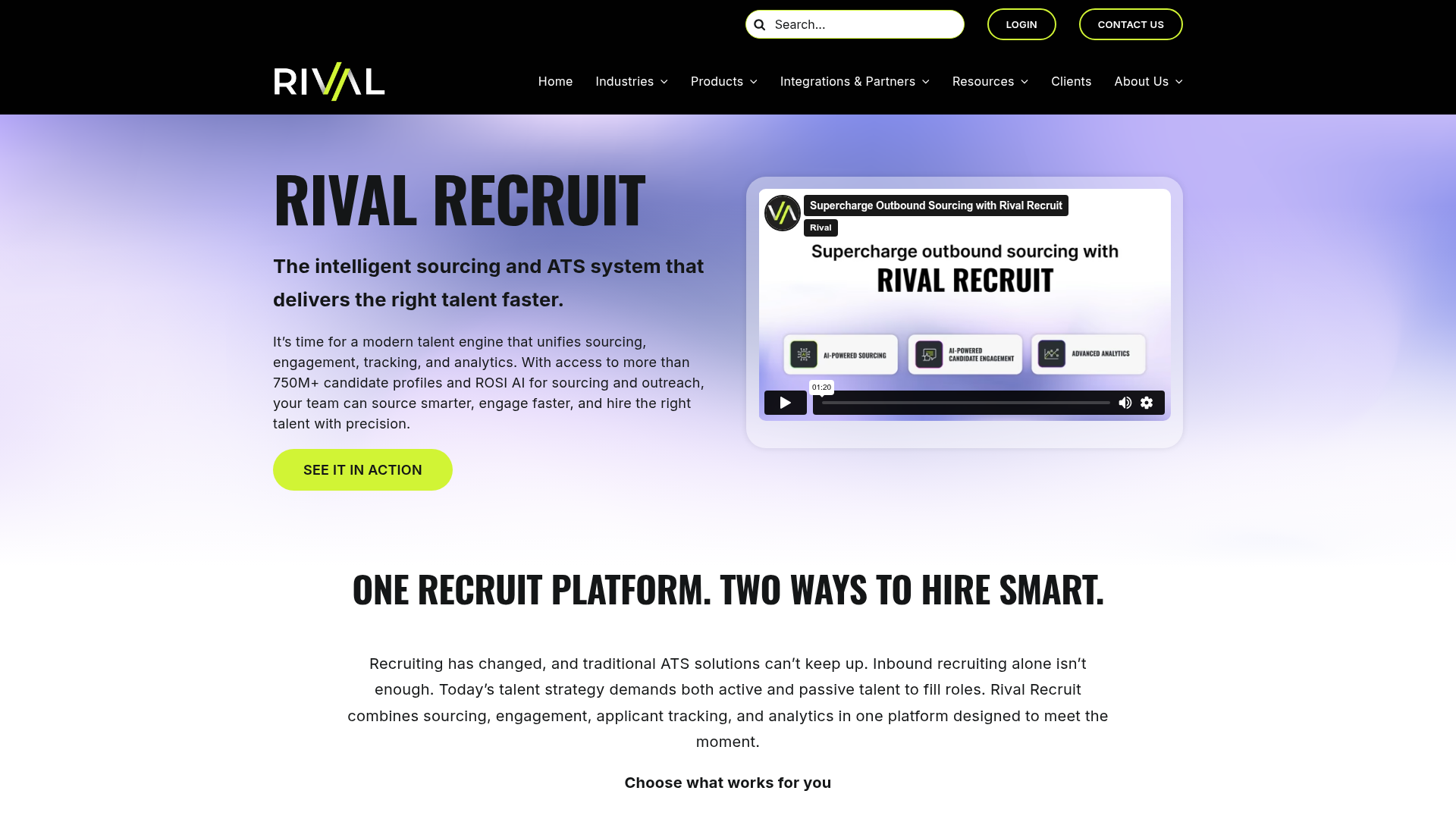
Rival Recruit (formerly Entelo) has evolved from a sourcing tool into a more comprehensive recruiting platform. It combines candidate discovery with workflow management and lightweight ATS functionality.
Where SeekOut is sourcing-centric, Rival Recruit covers more ground in one tool. The trade-off is depth: it sits between a sourcing tool and a real recruiting platform without fully owning either.
What it covers:
- Candidate sourcing and talent discovery
- Outreach and engagement workflows
- Built-in ATS functionality and pipeline management
- Recruiting analytics and reporting
Where it falls short: less specialized than best-in-class point solutions in each category. Interview capture and structured evaluation are thin.
Best for: teams that want sourcing plus core recruiting workflows in a single platform.
6. Eightfold AI.
Category: Talent intelligence + workforce planning
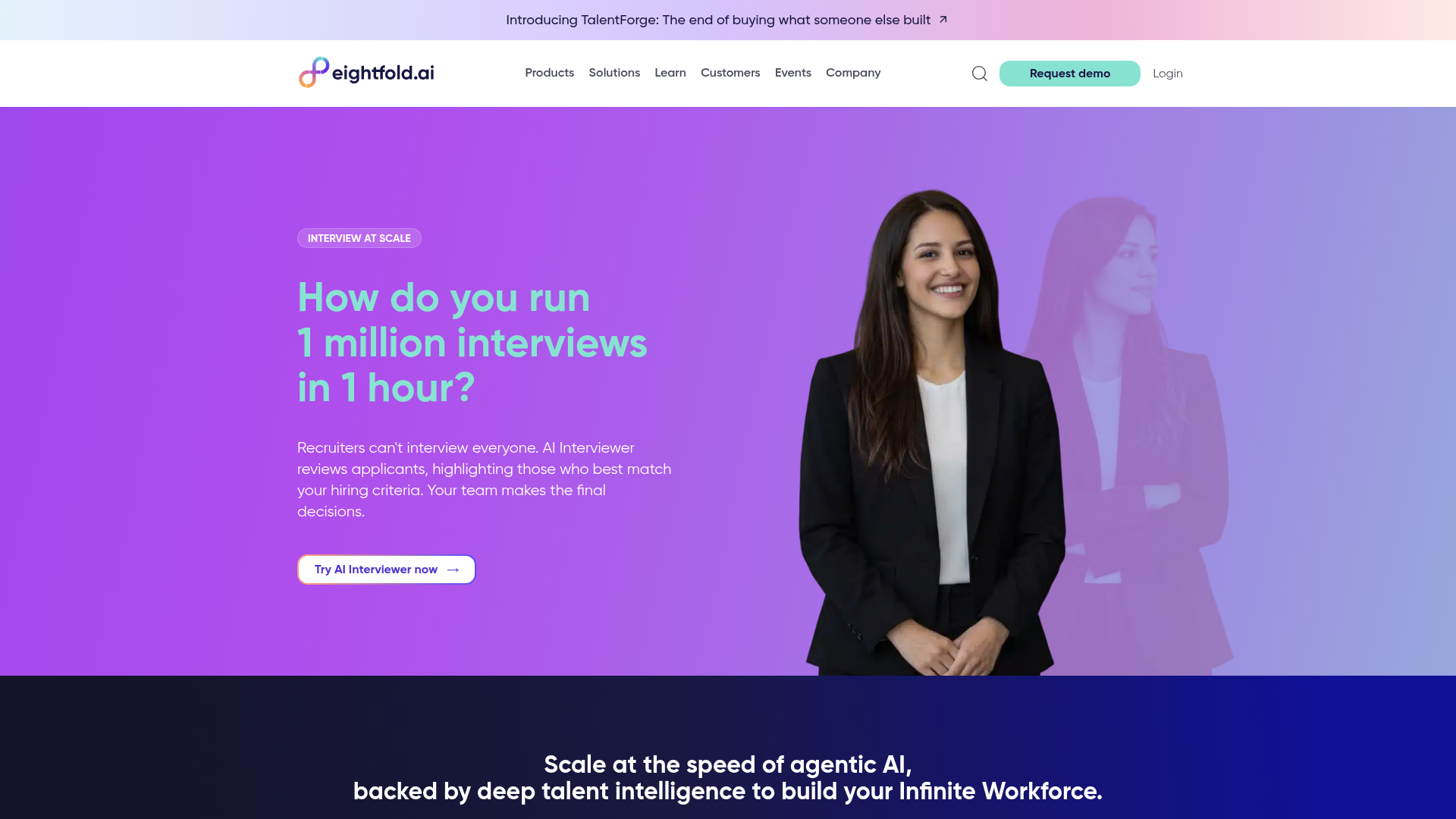
Eightfold AI takes a broader view: not just external sourcing but internal mobility and workforce planning. It builds a skills graph across your workforce to match employees to new roles and identify skill gaps.
Where SeekOut is a day-to-day recruiter tool, Eightfold is a long-horizon talent management platform. The two solve different problems.
What it covers:
- AI-powered skills graph and talent matching
- Internal mobility and workforce planning tools
- External candidate sourcing
Where it falls short: complex, enterprise-focused implementation. Less optimized for day-to-day recruiting workflows like outreach.
Best for: large organizations focused on internal mobility and long-term talent strategy.
7. Fetcher.
Category: Curated AI sourcing
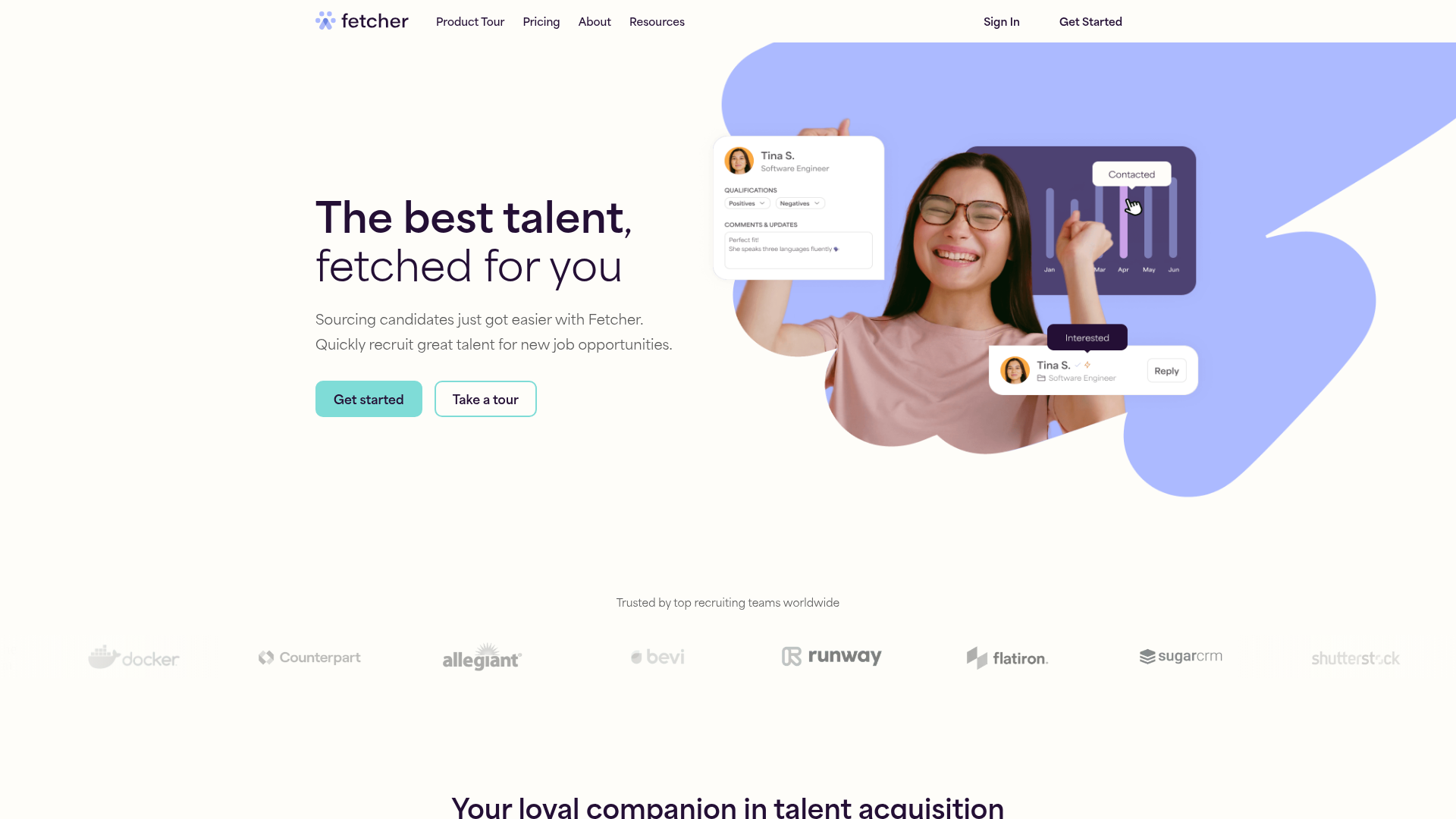
Fetcher combines AI with human review to deliver curated candidate lists. Unlike SeekOut, which gives recruiters powerful search tools, Fetcher proactively sends qualified candidates based on role requirements.
It is the lean-team move: outsource the sourcing function instead of running it. The trade-off is control.
What it covers:
- AI-powered candidate sourcing with human verification
- Curated candidate lists delivered regularly
- Basic outreach support
Where it falls short: limited control over sourcing criteria and process. No support for downstream hiring workflows.
Best for: teams that want to outsource or automate sourcing without building a dedicated sourcing function.
8. Humanly.
Category: AI screening + early-stage engagement
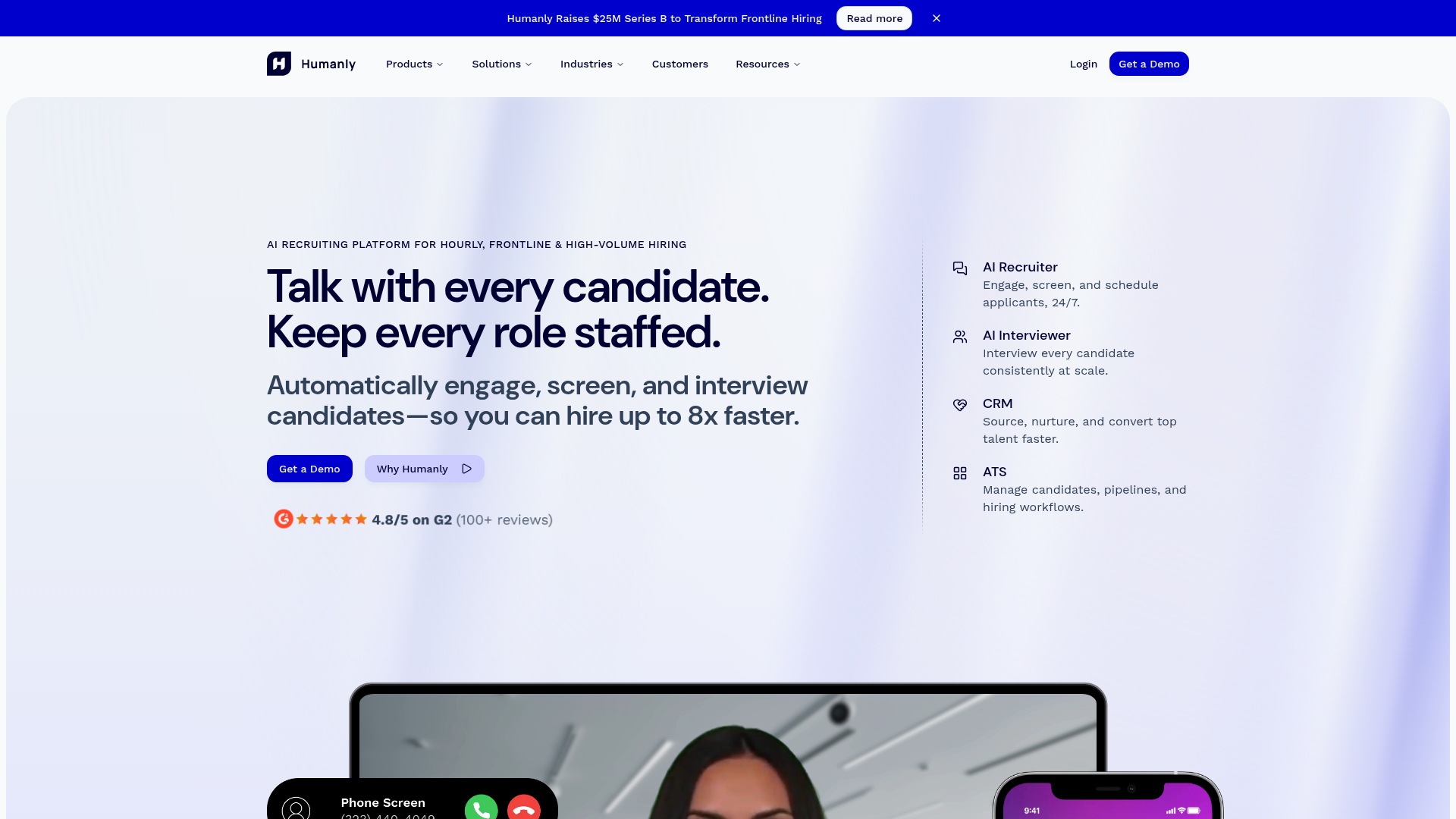
Humanly focuses on improving early-stage recruiting. Where SeekOut helps you find candidates, Humanly helps you qualify them once they enter the pipeline through AI-driven chat and screening workflows.
It handles initial conversations, structured questions, and scheduling, which reduces the manual workload on recruiters. It is a complement to sourcing, not a replacement.
What it covers:
- AI-powered chat-based candidate screening
- Automated interview scheduling
- Structured data capture from candidate interactions
Where it falls short: does not support candidate sourcing. Limited functionality beyond early-stage screening.
Best for: teams looking to automate screening and reduce manual recruiter workload in early stages.
9. GoodTime.
Category: Interview scheduling automation
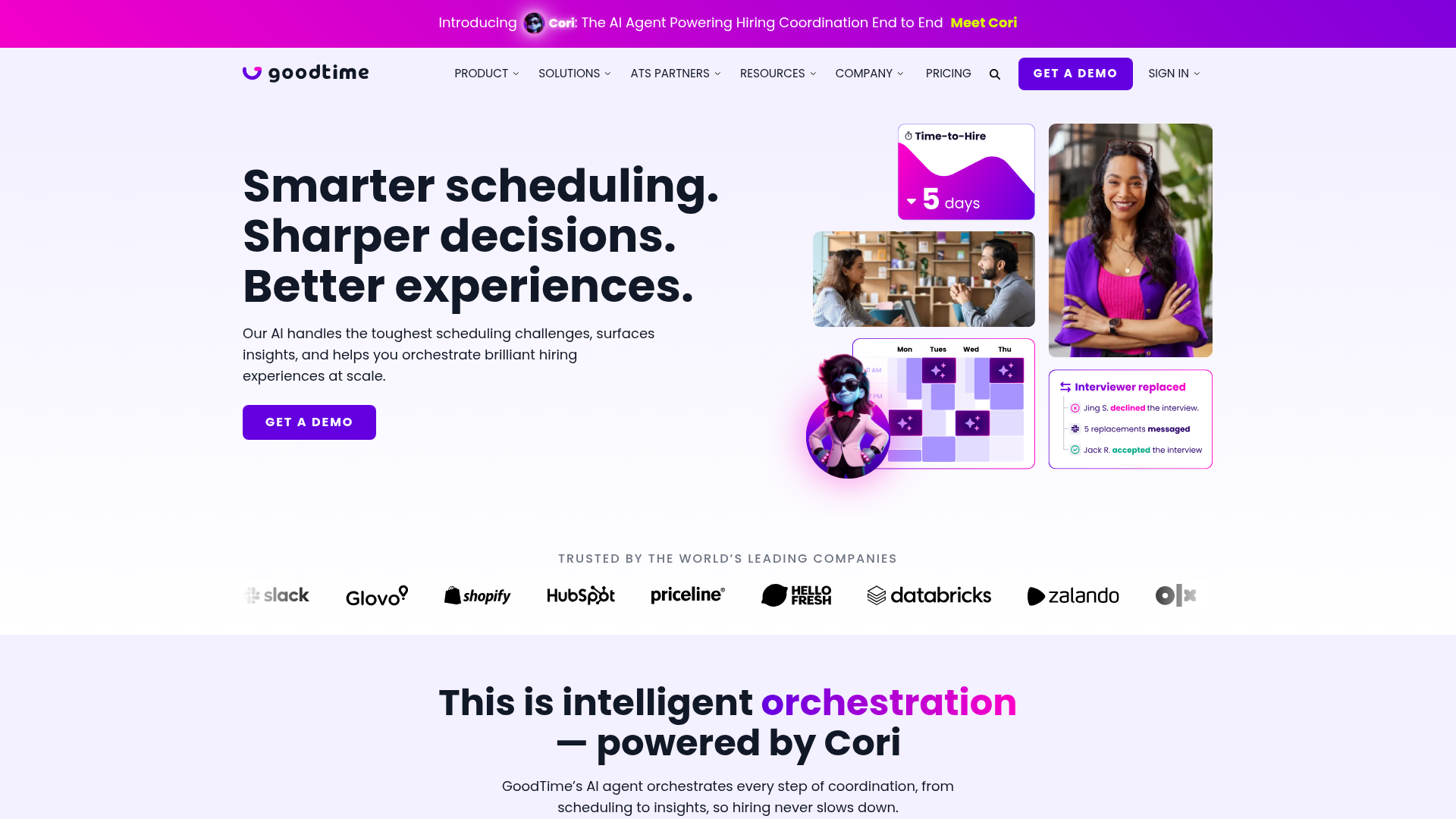
GoodTime is a specialized tool for one of the most time-consuming parts of recruiting: interview scheduling. It automates coordination across candidates, recruiters, and hiring managers.
Where SeekOut builds pipeline, GoodTime makes sure once candidates are in the process, interviews actually happen. It operates in the mid-funnel and offers no sourcing capability.
What it covers:
- Automated interview scheduling and coordination
- Calendar syncing across stakeholders
- Candidate experience optimization
Where it falls short: limited to scheduling and coordination. No sourcing, screening, or hiring insights.
Best for: teams that want to tighten interview scheduling and reduce coordination overhead.
10. LinkedIn Recruiter.
Category: Native LinkedIn sourcing
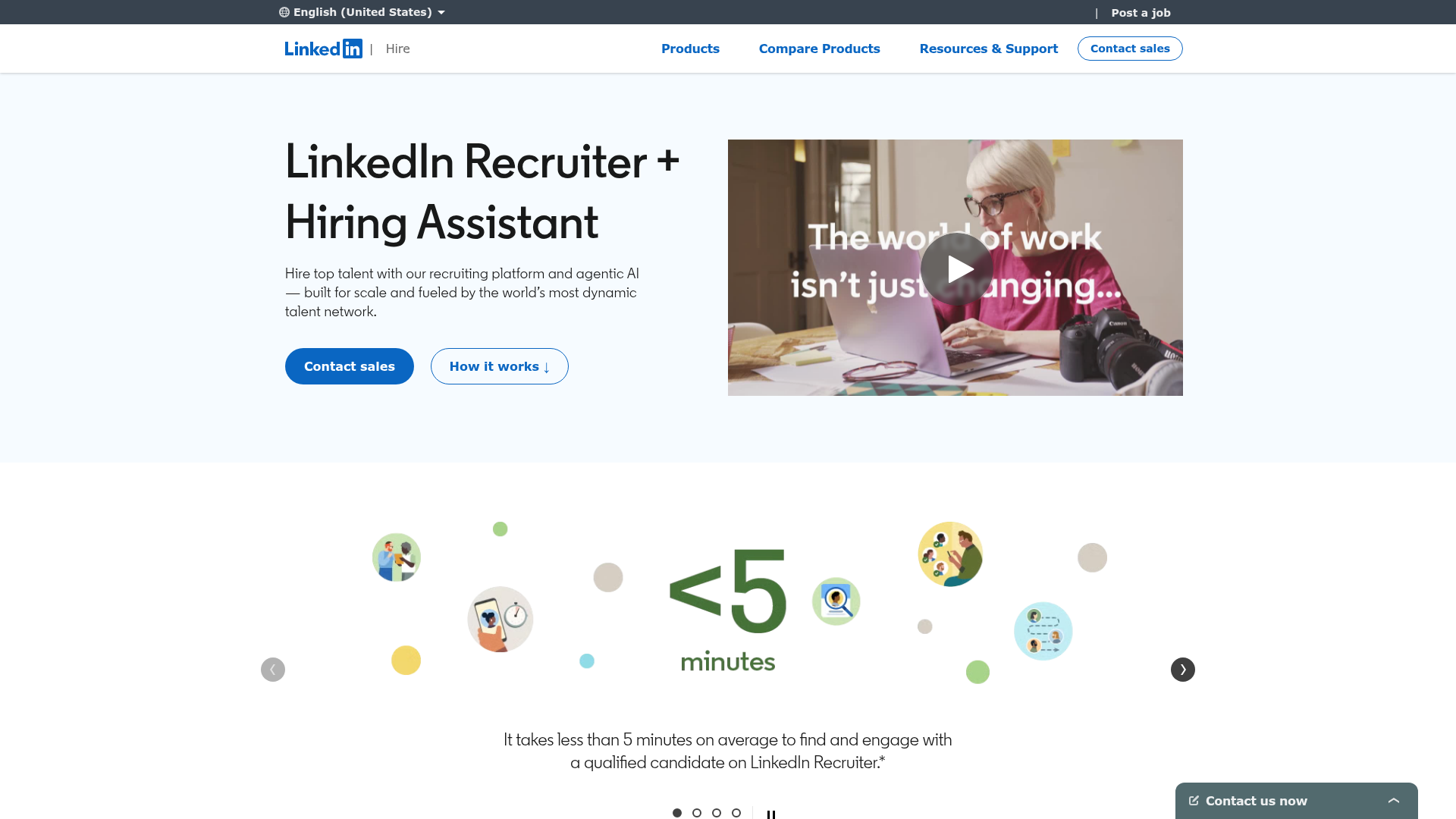
LinkedIn Recruiter is the baseline sourcing tool for most teams. Direct access to the world’s largest professional network, with strong filters and InMail outreach.
Where SeekOut expands beyond LinkedIn with broader data aggregation, LinkedIn Recruiter is the deep, native version of one source. It is rarely a sole strategy but it is rarely missing from one.
What it covers:
- Direct access to LinkedIn’s global talent network
- Advanced search and filtering on LinkedIn profiles
- InMail messaging and candidate engagement
- LinkedIn Hiring Assistant for AI-assisted sourcing
Where it falls short: limited talent insights compared to SeekOut. No support for inbound review or downstream hiring workflows.
Best for: teams that want direct access to LinkedIn’s talent pool for sourcing and outreach.
How to choose between SeekOut and the alternatives.
Match your situation to the scenarios below. Each callout points at the alternative we would pick first.
For the deeper read on Lever-style ATS choices, see our Lever alternatives guide. For broader Indeed-vs-Boards thinking, see Indeed alternatives.
Bring Metaview into your hiring stack.
Live notes, structured scorecards, and ATS sync - set up in under 10 minutes.
Frequently asked.
What is the best alternative to SeekOut?
It depends on the slice you need. For direct outbound sourcing replacements: hireEZ, AmazingHiring (tech), or LinkedIn Recruiter. For pipeline visibility on top of sourcing: Gem. For full-funnel coverage (sourcing through interviews through decisions): Metaview.
Why do teams look for SeekOut alternatives?
Usually not because SeekOut’s sourcing is broken. The common reasons: inbound applications still get reviewed manually, interview signal is not captured anywhere, hiring decisions feel inconsistent, and the recruiting stack has too many disconnected tools.
Is SeekOut only a sourcing tool?
Primarily, yes. SeekOut covers sourcing and talent intelligence with light outreach. It does not handle inbound application review, structured interview evaluation, or end-to-end hiring workflow management.
What tools pair well with SeekOut?
Most teams pair SeekOut with a screening tool (Humanly), a scheduling tool (GoodTime), a CRM (Gem), and an interview-intelligence layer. The trade-off is operational fragmentation across five vendors.
What makes Metaview different from the other alternatives?
Most alternatives solve one slice of the funnel. Metaview combines AI sourcing, outreach, application review, interview capture, and hiring analytics in one platform. The interview itself becomes structured data that feeds every other stage, which no point-solution alternative can do.
