
There are at least thirteen viable ways into your candidate pipeline today. No recruiter has the bandwidth to run all thirteen well. The audit pressure usually says we should try anyway.
The teams hitting their numbers aren't trying. They pick four to six channels by where their actual hires come from, then instrument those for source-of-hire signal.
AI Sourcing handles the always-on surface work across the survivors. The fewer-channels-measured frame beats the many-channels-unmeasured one, every quarter we've watched the data.
This post walks through the channel inventory, the source-of-hire move that picks your four to six, the cut decision, and where AI sourcing sits as the always-on layer across the channels you keep.
Recruitment channels at a glance.
A recruitment channel is any path a candidate takes into your pipeline.
Some run on active candidate intent (job boards, careers pages). Some run on network-vetted trust (referrals, internal mobility). Some run on always-on AI inference (the AI Sourcing layer that sits across your other channels).
Here's the inventory in one view, organized by the signal each channel produces, the role family it tends to suit, and the conditions under which it earns its place in your mix.
| Channel | Signal type | Role-fit | When it earns its place |
|---|---|---|---|
| Job boards | Active candidate intent | Hourly to senior IC | Volume role, time-sensitive, broad-skill match |
| Company careers page | Brand affinity | Any role | Candidates already know you exist |
| Employee referrals | Network-vetted trust | Senior IC, leadership | Culture-critical hire, high-trust role |
| Social media | Brand affinity, long-game | Junior to mid IC | Long-game pipeline for passive talent |
| Recruiting agencies | Vetted credentialing | Niche, senior leadership | Niche role plus thin internal sourcing |
| Internal mobility | Internal trust | Manager, senior IC | Role a known employee can grow into |
| Events and campus | Early-career pipeline | Junior IC, early-career | Building two- to three-year talent pipelines |
| AI sourcing | Continuous match | Senior IC, leadership, specialists | Always-on layer across other channels |
| Niche communities | Specialist proximity | Engineering, design, specialist roles | Stack or portfolio-defined roles |
| ATS rediscovery | Warm history | Any | ATS holds 1,000-plus past applicants |
| Remote-work networks | Remote-first fit | Async-friendly roles | Distributed-first cultures |
| Diversity platforms | Underrepresented reach | Any | DEI hiring goals need pipeline coverage |
| Employer branding | Inbound brand pull | Senior IC, leadership | Brand attracts qualified inbound already |
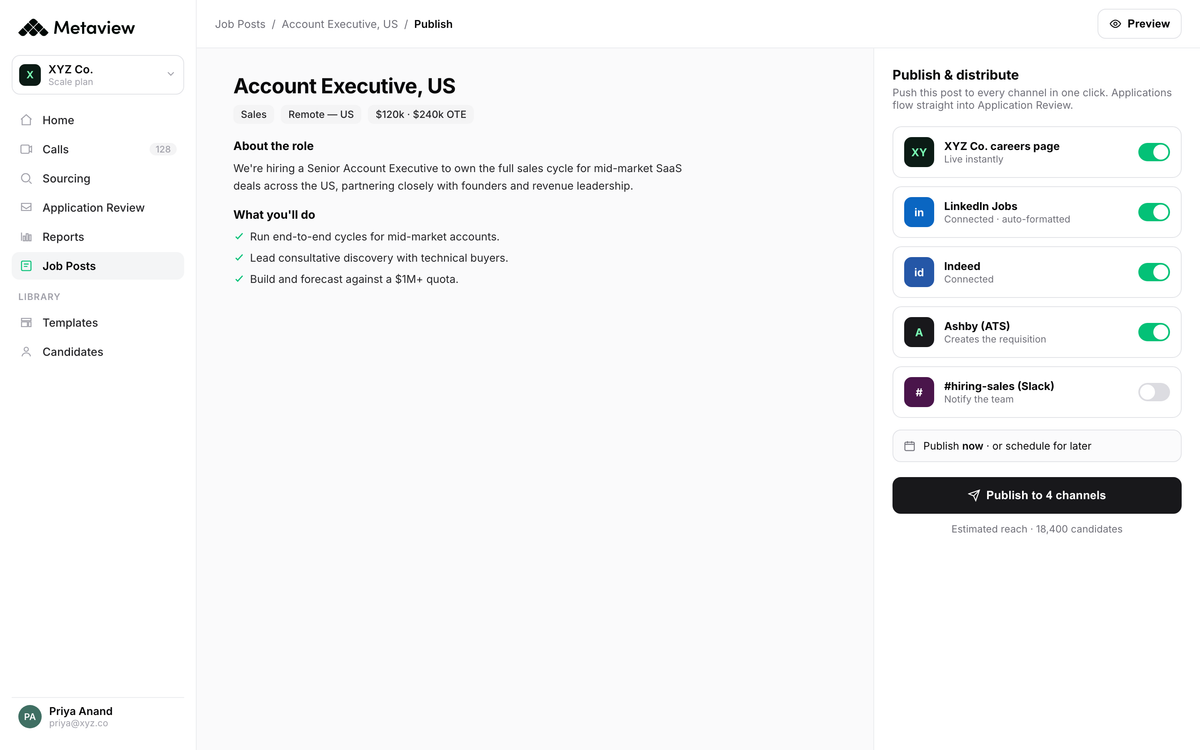
The point isn't that every channel can work. It's that no team can run all thirteen at signal strength, so the move is choosing which four to six to invest in. The next section covers how to make that call from data, not gut.
The signal that picks your channels.
Most teams don't pick channels from data. They pick from the previous quarter's habit, the channel that produced the loudest hire conversation, or whatever the talent lead used at their last company. That's a guess in a costume.
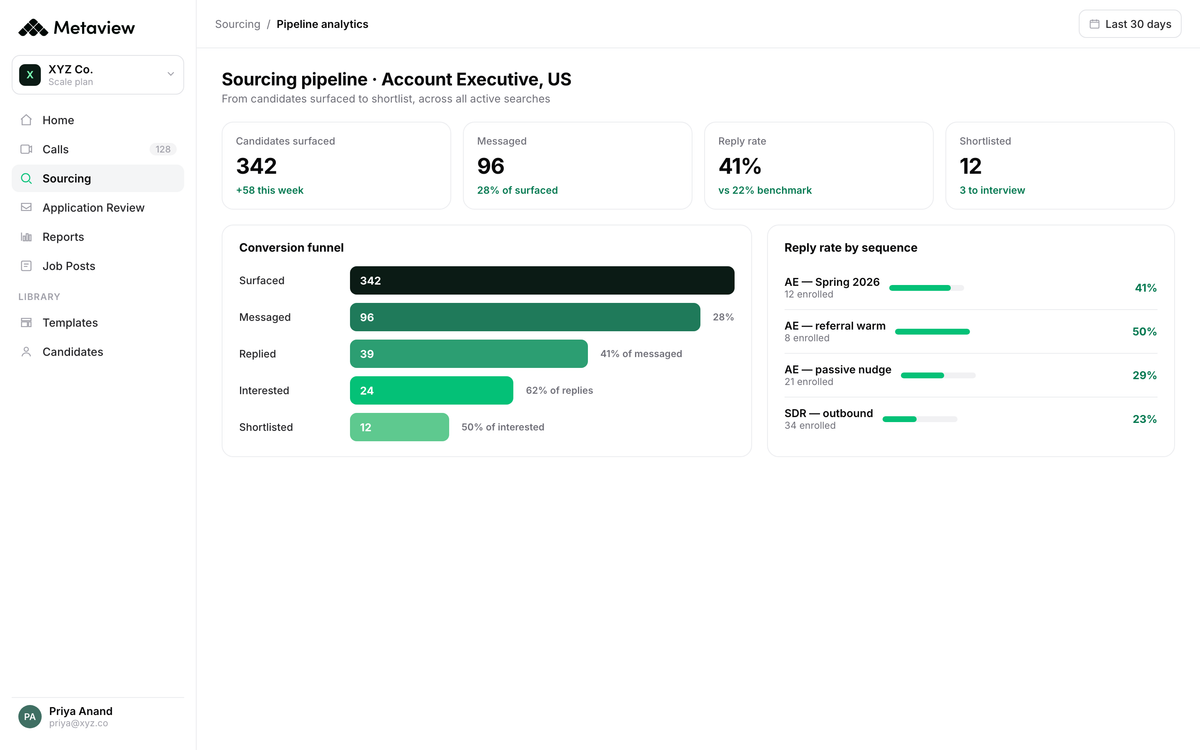
The single metric that should govern channel selection is source of hire, weighted by quality of hire and cost per channel. The source-of-hire view is what separates teams that hit their numbers from teams that retrospectively explain why they didn't.
According to Metaview's 2026 AI Hiring Alignment Report, surveying 505 recruiting leaders and hiring managers across North America and EMEA, the cost of skipping that visibility shows up in lost candidates and missed business goals.
The reading is uncomfortable but clean. When channel selection runs on habit instead of evidence, the candidates that should have been your hires end up in someone else's offer process.
The fix isn't another tool. It's a source-of-hire view your team treats as the operating compass.
Three things make that data usable. It lands automatically, with no spreadsheet entry between the recruiter and the metric.
It ties to outcomes that matter, like offer accepted and day-90 retained, not just application counts. And it surfaces in a view the team opens at every recruiting review.
The ATS integrations layer is where this typically lives: your ATS, your Notetaker, and your sourcing tools all feeding the same hire-level record.
Signal beats coverage. Run the audit. The next move is making the cut.
Cut the channels that don't earn their place.
Once the source-of-hire view is honest, the audit move is straightforward but uncomfortable. The channels that don't make the top four to six by quality-weighted hire share get cut.
Most teams that run the audit converge on a similar four to six. The ones that usually win combine signal density with low operational tax, plus an always-on layer to cover gaps.
- Employee referrals. Network-vetted hires come in pre-trusted by someone on your team, with higher retention and the lowest cost per hire of any channel in the inventory.
- AI sourcing. The always-on layer that runs across whichever channels you keep, refreshing candidate pools daily while the recruiter focuses on engagement and judgment.
- ATS rediscovery. Past applicants you've already vetted are the highest-signal warm pool you own, cutting time-to-fill on roles that match prior pipelines.
- Company careers page. Inbound from brand-affinity candidates who already know your company. Conversion rates here usually outperform paid channels.
- Niche communities. Stack Overflow, GitHub, Dribbble, Behance, vertical Slack groups. Specialist proximity beats broad reach for technical and design roles.
- Internal mobility. The fastest time-to-fill for roles a known employee can grow into, with onboarding compressed and culture risk near zero.
That set is the default. Your audit will adjust it for role mix, geography, and stage.
A channel earns its place when at least one of three tests is true.
It produced a quality hire for the role families you're hiring against in the last two quarters. It has measurably faster time-to-fill than your other channels for the same role family.
Or it's the only viable surface for a specific candidate population, like events for early-career hires and diversity platforms for DEI goals. For campus and event recruiting, bulk posters with a QR code that links to the application page let teams reach candidates at several sites at once.
A cut channel can come back, but only with a hypothesis, a time bound, and a kill criterion.
Three months of structured trial, a defined signal you're testing, and a defined kill criterion, the same discipline you'd apply to any other recruiting experiment.
Without the kill criterion the channel just creeps back into the rotation under a new name.
Fewer channels, instrumented beats more channels, unmeasured. That's the whole game.
How AI sourcing becomes the always-on layer.
The reason most teams resist cutting channels is that fewer channels mean more dependency on each one. If LinkedIn dries up and it's one of your four, you feel exposed.
The answer isn't reaching for more channels. It's running an always-on AI sourcing layer across the channels you've already chosen.
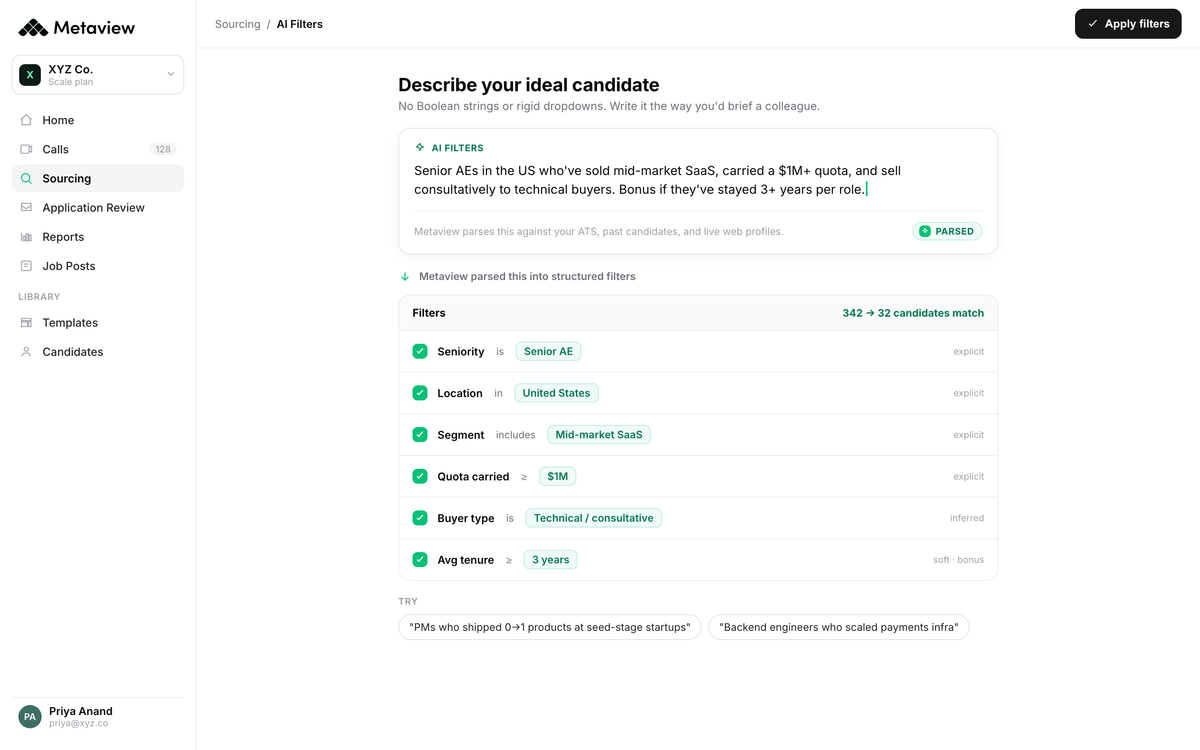
Our AI Sourcing agent searches continuously across the channels you've prioritized: job boards, social profiles, professional networks, and your ATS itself.
You provide the role, the criteria, and the priority signal (typed or voice). The agent does the surface work, refreshed daily.
Pinned searches keep your priority briefs running between sessions. The Ashby and Greenhouse connectors push the candidates you keep into your ATS as soon as you flag them.
What stays human is the part that doesn't compress: which channels deserve the next quarter's investment, what the outreach says when it lands, and whether a high-signal candidate is the right match for the role.
Channel selection stays human. The agent is the always-on layer. The strategic moves stay with the recruiter.
The two together are how a recruiting team of three runs the surface area a team of twelve used to need.
Make your channel mix decisive.
Channel selection isn't a checklist. It's a signal-density decision.
Pick four to six channels with the strongest source-of-hire evidence for your roles. Instrument them on quality of hire and cost per channel. Audit quarterly.
AI sourcing handles the always-on surface work across the survivors.
Your ATS is one of those four to six for almost every team. Past applicants are the highest-signal channel almost no one runs intentionally. The candidate rediscovery playbook covers how to make the ATS itself searchable, so it operates as a channel instead of a graveyard.
The teams hitting their numbers aren't running the most channels. They're running the right ones, measured, with the always-on layer doing the surface work behind every one.
Frequently asked.
How many recruitment channels should a company use?
Four to six is the operating range for most teams, but the number isn't the rule. The rule is that every channel you keep has source-of-hire evidence behind it. A two-hundred-req-per-year team running six channels well will outhire a fifty-req team running twelve poorly. Audit on hire share, not channel count.
Which channels deliver the best signal?
It shifts by role family and company stage. Engineering hires often run highest signal through niche communities and AI sourcing. GTM hires lean on referrals and AI sourcing. Early-career runs through events and campus. The ranking changes again when your brand becomes a recognizable inbound force, usually past two hundred employees.
Can AI sourcing replace traditional channels?
No. AI sourcing isn't a channel substitute; it's an always-on layer that runs across the four to six channels you keep. The recruiter retains the channel-mix call, the outreach writing, and the signal-vs-noise judgment on individual candidates. The agent handles the continuous-search workload no human can run at scale.
How do I know if a channel is working?
Track source of hire, quality of hire (day-ninety retention or first-cycle performance review), and cost per channel side by side. Review monthly. A channel earns its place when it produces a quality hire for the role families you're hiring against in the last two quarters. Anything outside that gets a kill date.
Bring Metaview into your hiring stack.
Live notes, structured scorecards, and ATS sync - set up in under 10 minutes.
