

Lever does a lot. It’s also why teams outgrow it.
Most “Lever alternatives” lists default to comparing one ATS to another. That’s the wrong default for 2026.
The real question for HR and recruiting leaders isn’t which other ATS to switch to. It’s what your hiring system needs that Lever alone can’t give you.
Here are 9 alternatives worth knowing, organized by what each one actually solves. The right pick depends on what’s slowing your hiring down.
The 9 alternatives at a glance.
Three of these replace Lever. Six of them layer on top of it. The grouping below tells you which is which.
| Tool | Category | Best for |
|---|---|---|
| Metaview | End-to-end AI hiring layer | Teams whose bottleneck is screening, interview quality, or decisions |
| Ashby | ATS + analytics | Teams that want a more flexible, data-driven ATS replacement |
| Greenhouse | ATS + structured hiring | Enterprise teams enforcing interview consistency at scale |
| Workable | ATS + lightweight CRM | Small and mid-sized teams that want a simpler all-in-one platform |
| SeekOut | AI sourcing | Teams whose challenge is generating pipeline for niche or technical roles |
| Gem | CRM + outreach | Teams improving candidate engagement and outreach conversion |
| Paradox | Recruiting automation | High-volume hiring where scheduling and candidate comms are the bottleneck |
| Humanly | AI screening | Teams automating early-stage candidate qualification |
| Findem | Talent intelligence | Teams unlocking value from existing ATS candidate data |
Where Lever falls short.
Lever is a strong ATS with built-in CRM. It treats applicants and prospects as one pipeline, automates the repetitive coordination, and centralizes candidate data. For most teams, that part works.
Where teams reach for alternatives is in the parts Lever doesn’t go deep on:
- Resume screening and candidate prioritization
- Interview quality and structured evaluation
- Decision-making and stakeholder alignment
These three are not pipeline-tracking problems. They’re signal-quality problems. Swapping Lever for another ATS will not fix them, because no ATS does.
The alternatives below split into two groups. The first three (Ashby, Greenhouse, Workable) are ATS+CRM replacements you’d pick if Lever’s core is the wrong fit. The remaining six are specialized tools that plug a specific gap, including Metaview as the AI layer that addresses all three of the signal-quality problems above.
1. Metaview.
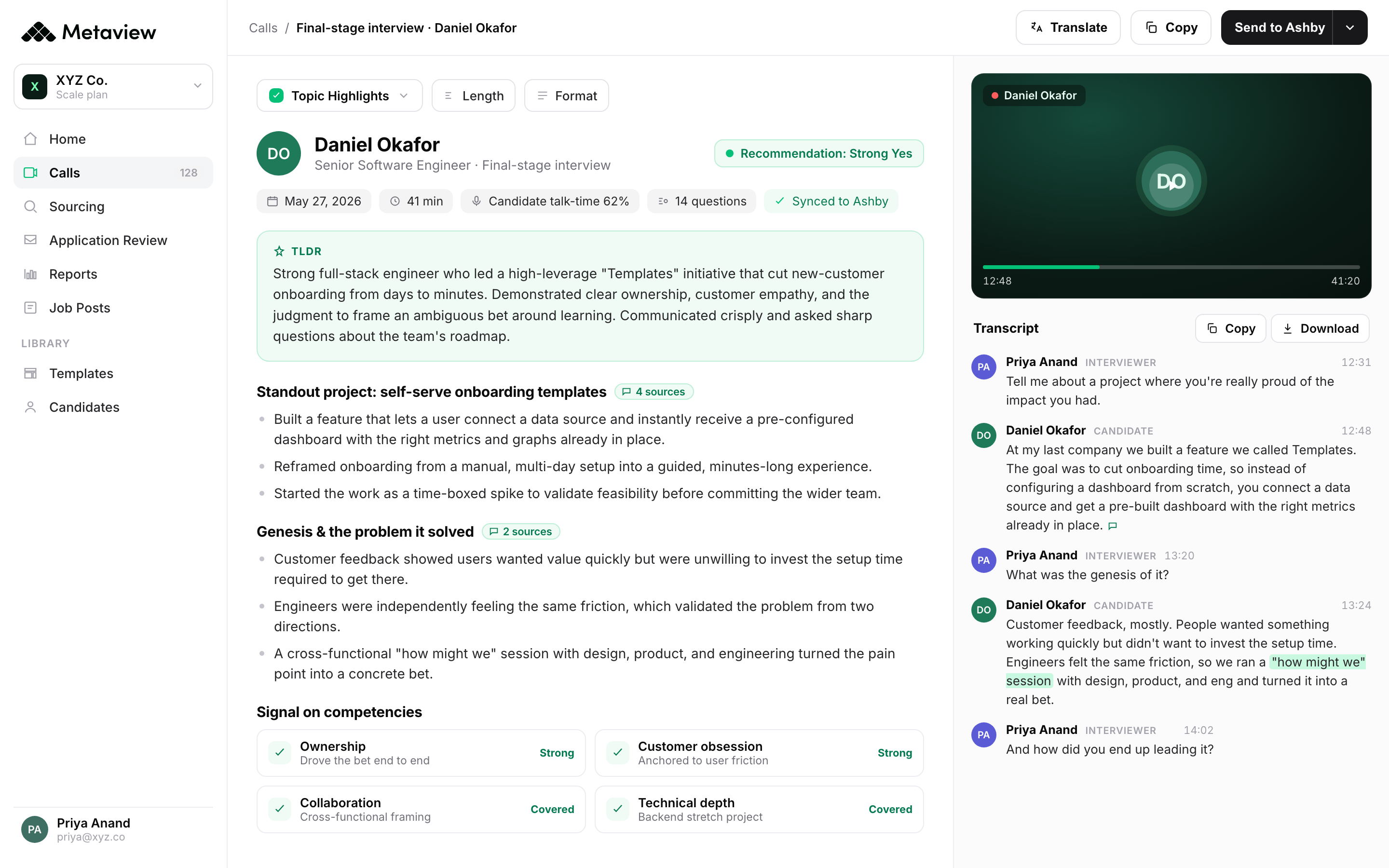
Category: End-to-end AI hiring layer
Metaview doesn’t replace Lever the way another ATS would. It sits above whichever ATS you run and structures the parts Lever can’t reach: the interview itself, the resume-screening logic, the candidate prioritization, the hiring decision.
Where Lever helps you manage candidates, Metaview helps you understand them, prioritize them, and decide on them faster.
The product spans sourcing, screening, interview intelligence, and decision support, with the interview as the central data layer that ties the rest together.
What it covers:
- AI sourcing and candidate rediscovery from your existing ATS
- Resume screening and prioritization based on real role fit
- Automatic interview notetaking and structured data capture
- Structured interview scorecards and hiring rubrics
- Candidate feedback synthesis and stakeholder alignment
- Reporting and insights across the full hiring funnel
Where it falls short: Metaview is not a 1:1 ATS replacement. If your only pain is pipeline tracking and your screening / interview-quality bottlenecks are mild, Metaview on its own is overkill. Pair it with your existing ATS instead.
Best for: teams that want one AI layer to improve speed, consistency, and decision-making across the whole recruiting workflow.
Every time the AI presents a candidate, the recruiter says fit or not. That feedback flows into the ideal-candidate profile. Over time, it becomes a company-wide read on what good looks like.”

2. Ashby.
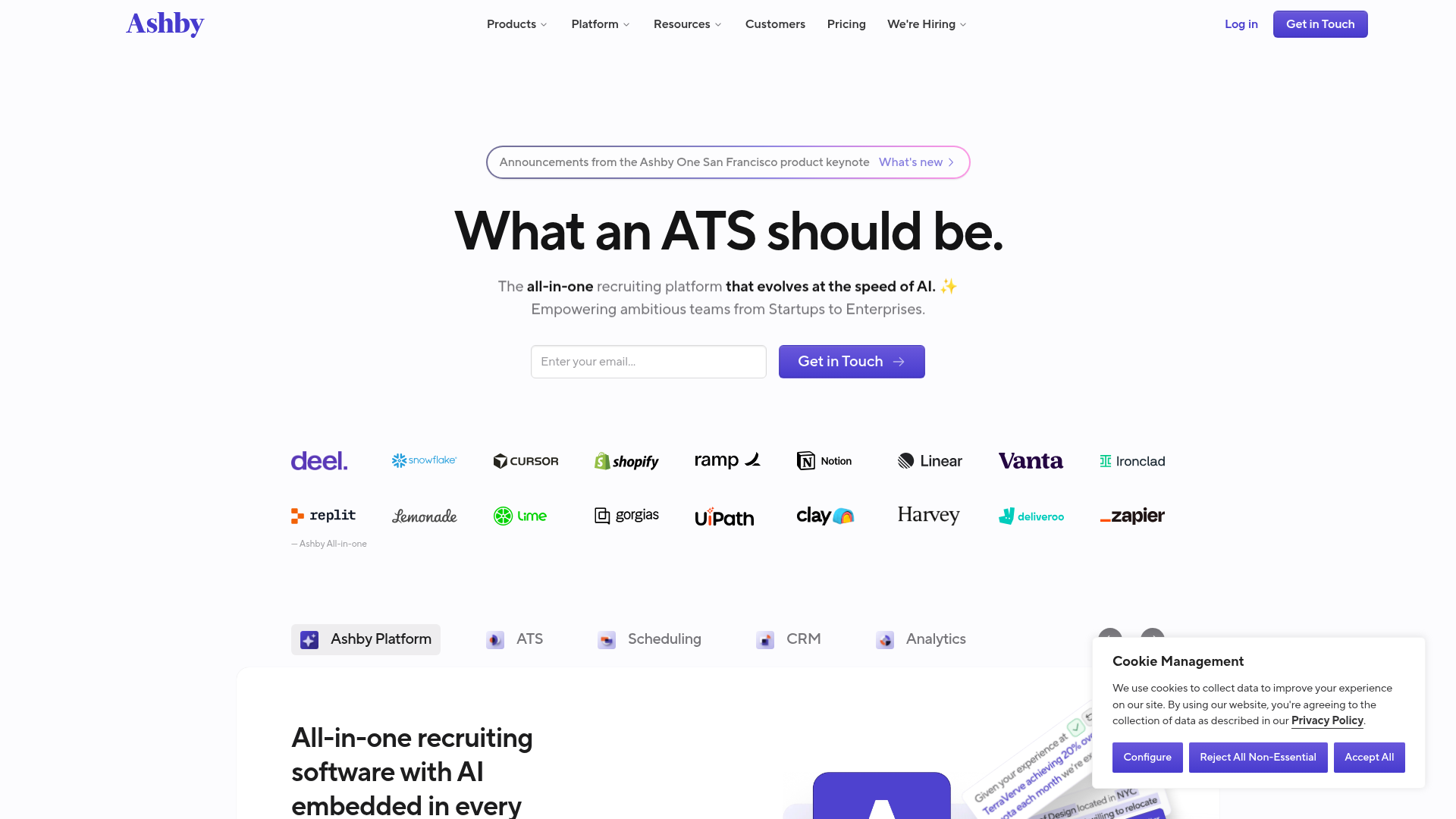
Category: ATS + analytics
Ashby is the closest direct alternative to Lever. It manages pipelines, candidate data, and workflows in the same shape, with stronger analytics and more configurability under the hood.
Operations leaders who want sharper visibility into hiring performance tend to pick Ashby. Recruiters who want to ship fast on day one don’t.
What it covers:
- Full-featured ATS with pipeline and workflow management
- Built-in CRM for candidate engagement
- Advanced analytics and customizable dashboards
- Structured interview and feedback tools
- Wide integration set with HR systems
Where it falls short: configurability cuts both ways. Ashby rewards teams that take the time to set it up properly; teams that don’t will get a shallow version of Lever.
Best for: teams that want a more flexible, data-driven ATS than Lever, with the patience to configure it well.
3. Greenhouse.
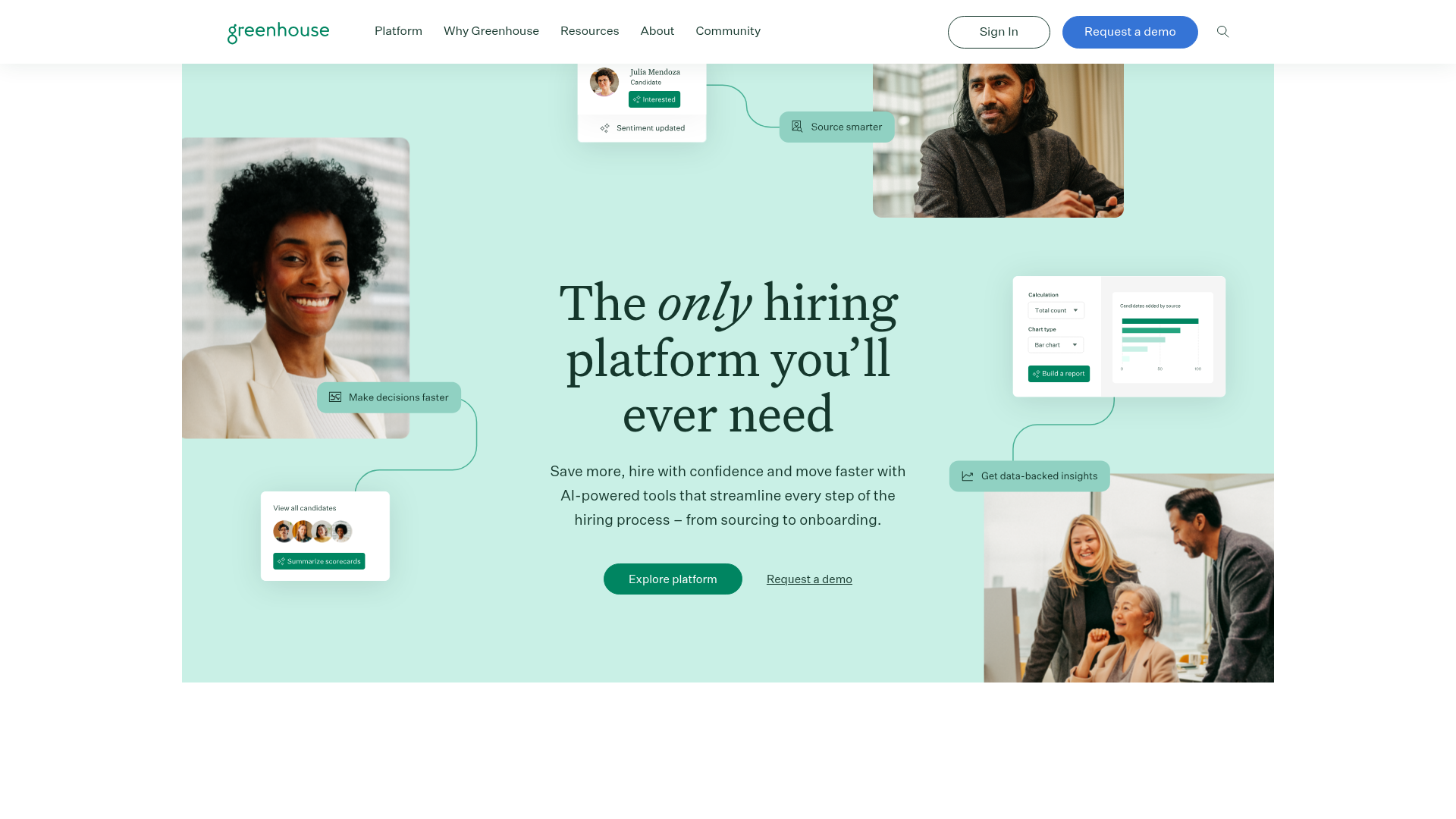
Category: ATS + structured hiring
Greenhouse is the enterprise ATS. It’s built around structured hiring, interview consistency, and the kind of reporting that legal and compliance teams care about.
It’s less candidate-engagement-led than Lever, more workflow-led. The trade-off is structure for warmth.
What it covers:
- Structured interview kits and scorecards
- Pipeline and workflow management
- 400+ integrations with recruiting and HR tools
- Reporting and compliance features
Where it falls short: CRM and candidate-engagement functionality is thinner than Lever’s. Pair with a CRM tool if outreach matters to your funnel.
Best for: organizations that prioritize consistency, fairness, and structure in hiring at scale.
4. Workable.
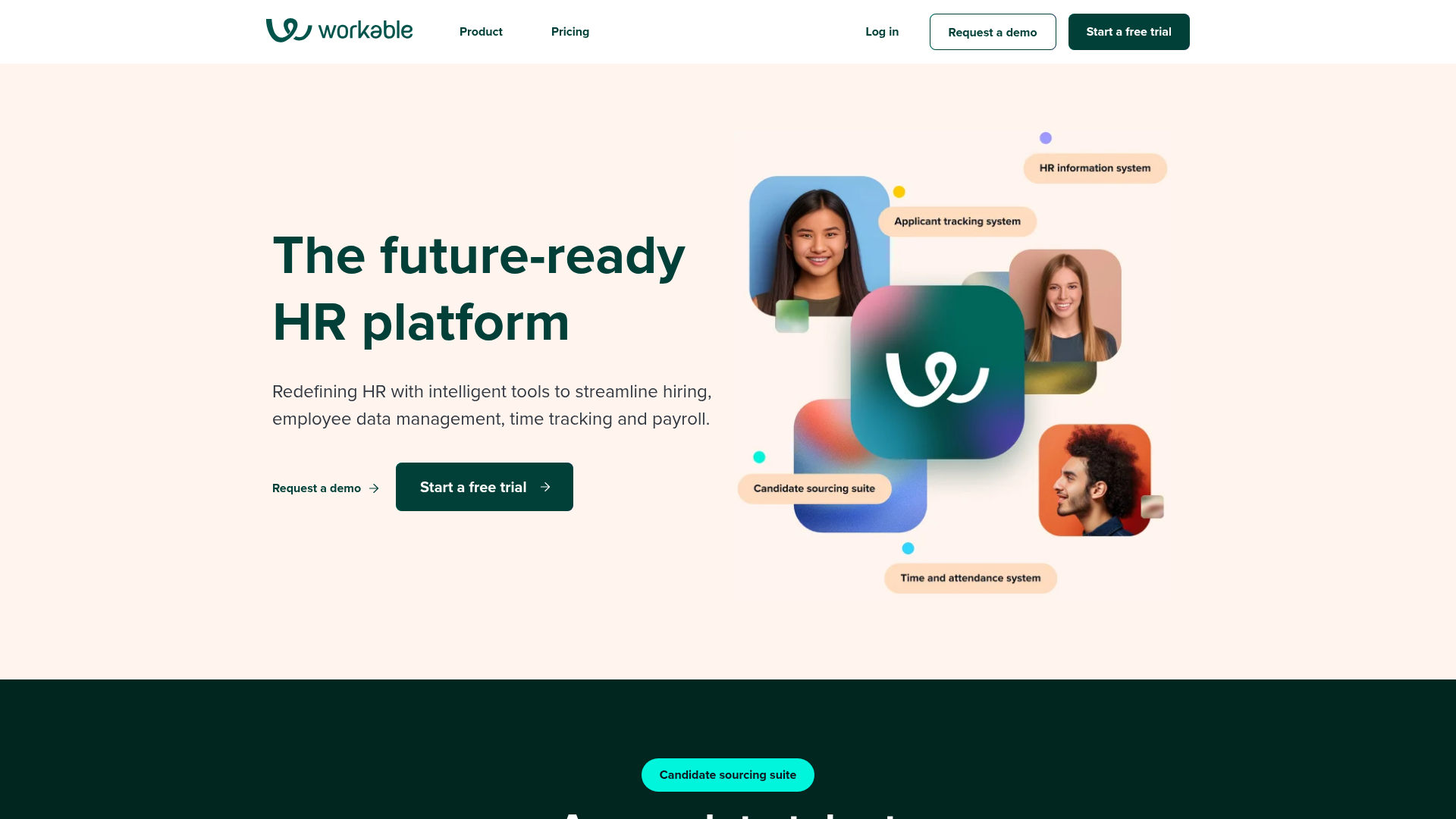
Category: ATS + lightweight CRM
Workable is the simpler-faster cousin of Lever. Easier to set up, more intuitive, with built-in job-board distribution and basic sourcing.
It trades depth for accessibility. Mid-sized teams that don’t want a full implementation program pick it.
What it covers:
- Job posting and distribution across multiple boards
- Pipeline management and candidate tracking
- Built-in candidate database and sourcing tools
- Basic reporting and hiring analytics
Where it falls short: less depth in CRM, analytics, and custom workflows. Teams that outgrow it usually move to Lever, Ashby, or Greenhouse.
Best for: small and mid-sized teams that want a single, simple hiring system without the overhead.
5. SeekOut.
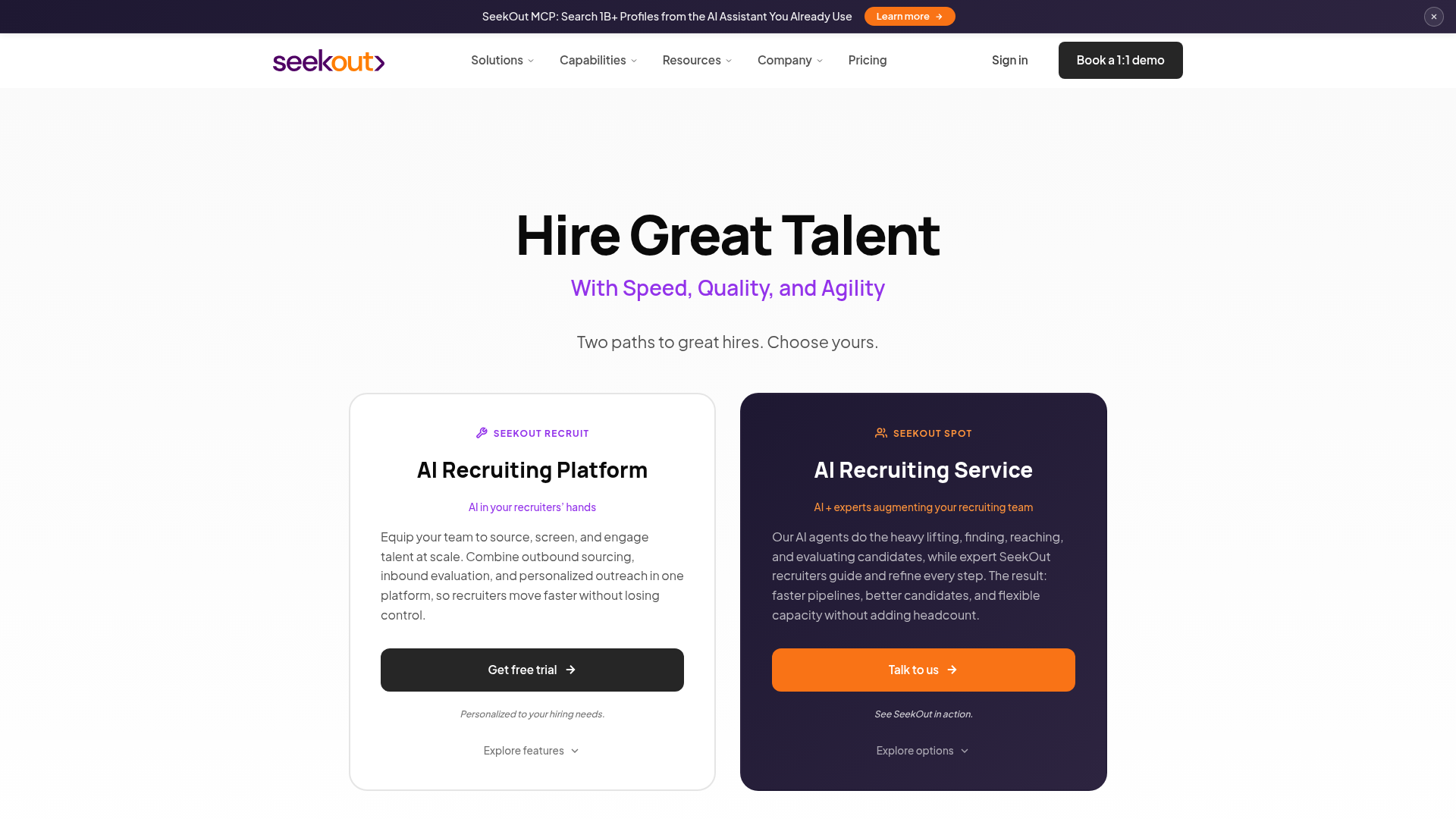
Category: AI sourcing
SeekOut isn’t an ATS. It’s a specialized sourcing platform for finding hard-to-reach, niche, or diverse candidates outside what your job posts pull in.
Where Lever manages the candidates already in your pipeline, SeekOut is about generating that pipeline in the first place.
What it covers:
- AI-powered candidate search across large datasets
- Advanced filters for skills, experience, and diversity
- Talent pool insights and market data
- Tools for identifying passive candidates
Where it falls short: no ATS or workflow management. You need a system of record alongside it.
Best for: teams whose primary bottleneck is generating quality pipeline, especially for technical or niche roles.
6. Gem.
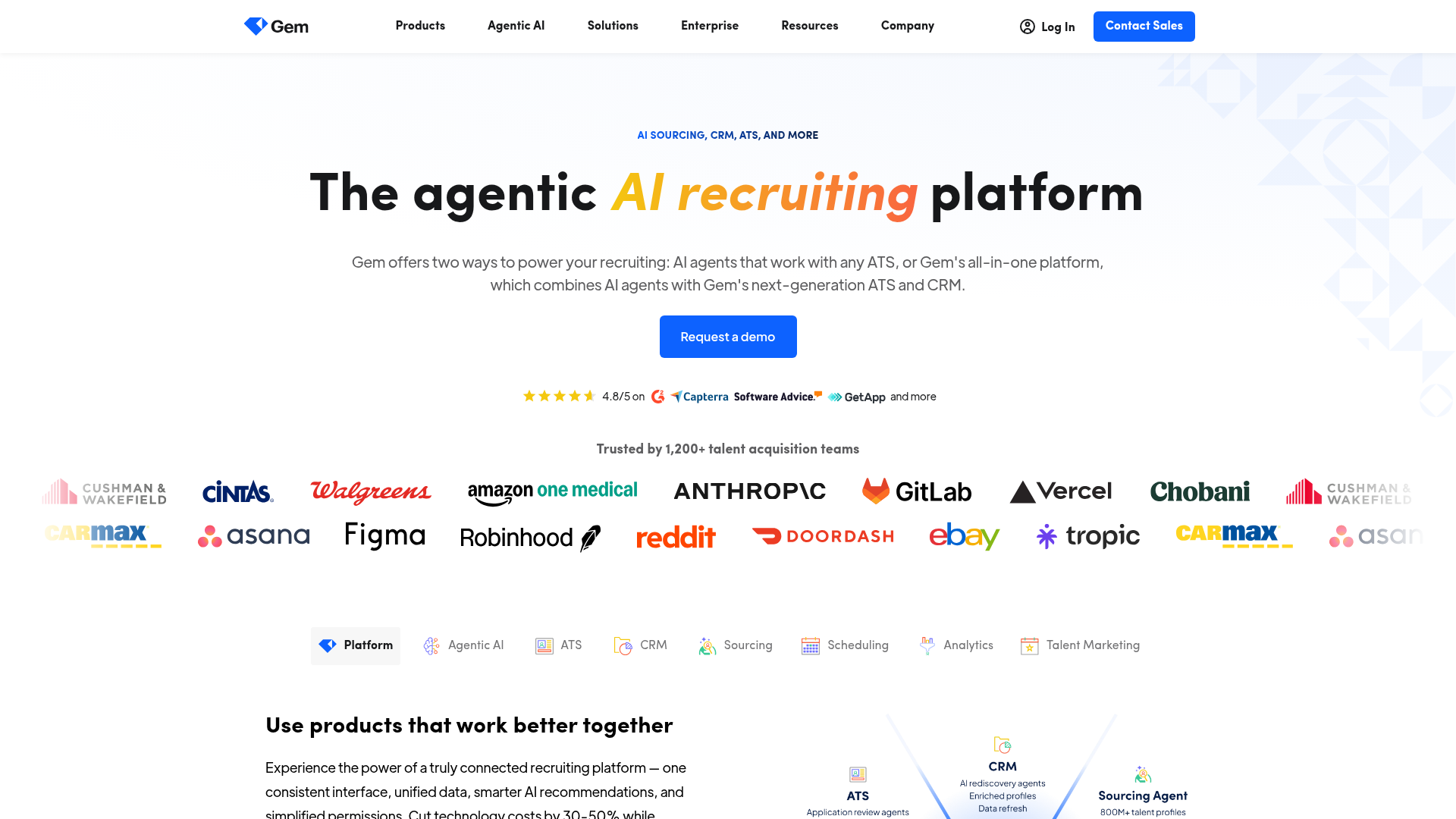
Category: CRM + outreach
Gem is a recruiting CRM that goes deeper than Lever’s built-in CRM. It tracks interactions, manages pipelines, and runs structured outreach campaigns at scale.
It’s the tool to add when your sourcing is working but your conversion and engagement aren’t.
What it covers:
- Candidate relationship management and interaction tracking
- Email sequencing and outreach automation
- Engagement analytics and reporting
- ATS and sourcing-tool integrations
Where it falls short: limited ATS-style pipeline and workflow management. Layer it on top of an ATS, don’t replace one with it.
Best for: teams that want to improve candidate engagement, nurture pipelines, and convert more sourced candidates.
7. Paradox.
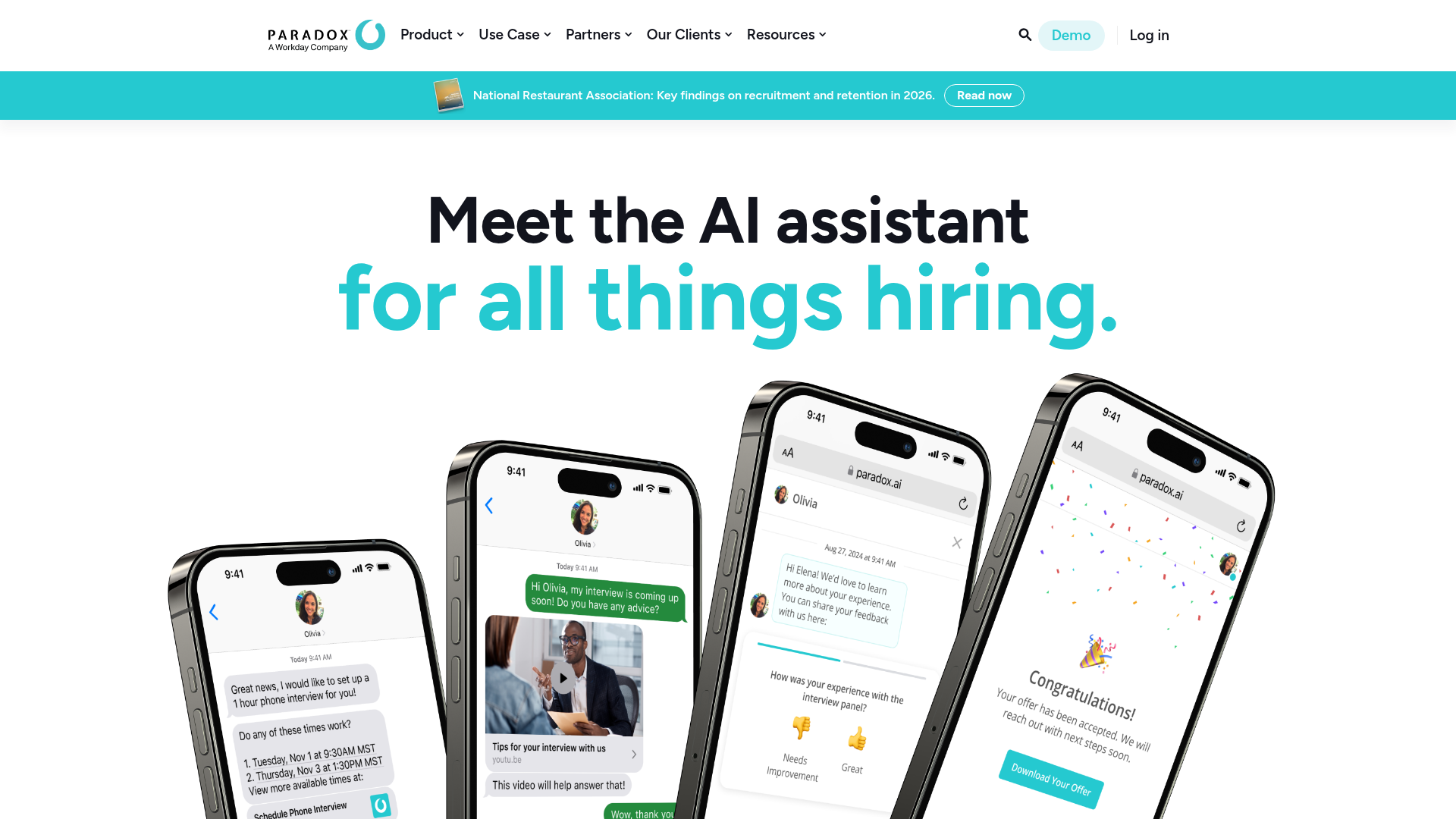
Category: Recruiting automation
Paradox automates the high-volume, repetitive parts of recruiting that Lever leaves to your team: candidate communication, scheduling, and basic qualification.
A conversational AI assistant interacts with candidates and coordinates next steps. The candidates feel responded-to; the recruiters get their calendar back.
What it covers:
- AI-driven candidate communication via chat and messaging
- Automated interview scheduling
- Workflow automation for high-volume hiring
- ATS-platform integrations
Where it falls short: thin on pipeline management and CRM. It’s an automation layer, not a system of record.
Best for: teams running high-volume hiring where coordination and response time are the bottleneck.
8. Humanly.
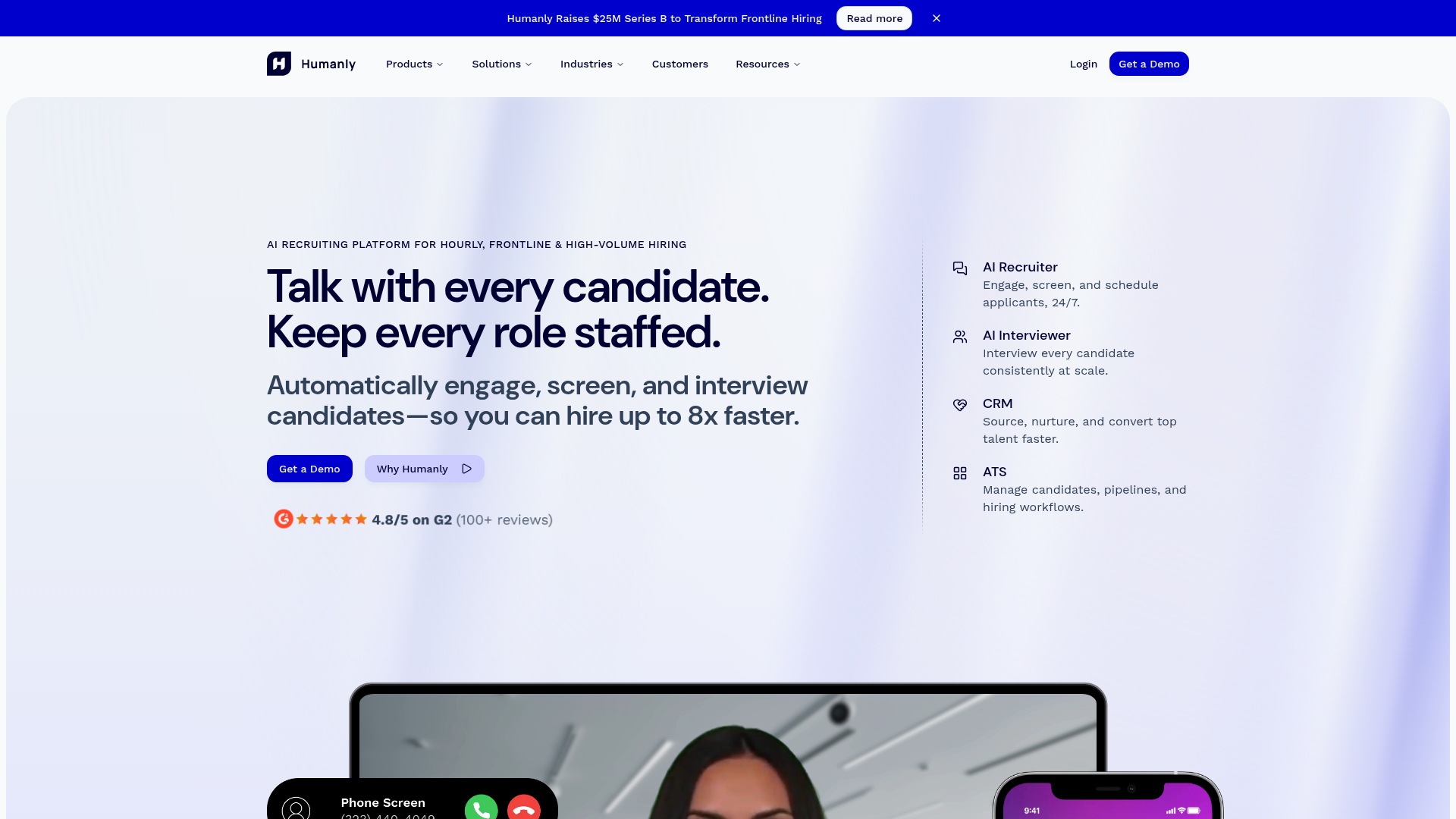
Category: AI screening
Humanly automates early-stage candidate screening through structured chat or voice conversations. It assesses qualifications, availability, and basic role fit before a recruiter ever opens the file.
Where Lever moves candidates through the pipeline, Humanly decides which candidates should enter the pipeline in the first place.
What it covers:
- Conversational AI screening via chat and voice
- Automated qualification workflows
- Structured candidate data collection
- ATS and hiring-system integrations
Where it falls short: no pipeline management or CRM. It’s a screening layer specifically.
Best for: teams that want to automate screening and improve consistency before interviews.
9. Findem.
Category: Talent intelligence
Findem focuses on unifying and understanding talent data. It combines your existing ATS records with external candidate data to surface the people you already engaged but lost track of.
Where Lever stores candidate data, Findem activates it. It’s especially strong on rediscovering candidates from your existing pool.
What it covers:
- AI-driven candidate matching based on attributes and skills
- Unified view of internal and external talent pools
- Candidate rediscovery from existing ATS data
- Talent insights and diversity analytics
Where it falls short: not a system of record, and not a pipeline manager. It’s an intelligence layer over your existing data.
Best for: teams that want to unlock more value from candidates already in their ATS, including silver medalists.
How to choose between Lever and the alternatives.
Five common scenarios. Pick the one that matches your bottleneck.
For the deeper read on ATS vs CRM and how they fit together, see our CRM vs ATS guide. For more on how Metaview slots into your existing stack, see Metaview integrations.
Bring Metaview into your hiring stack.
Live notes, structured scorecards, and ATS sync - set up in under 10 minutes.
Frequently asked.
Why do recruiting teams look for Lever alternatives?
Usually not because Lever’s pipeline management is broken. Most teams look elsewhere when their bottleneck is screening, interview quality, or hiring decisions, which Lever doesn’t go deep on.
What’s the best alternative to Lever?
For a direct ATS replacement, Ashby (data-driven) or Greenhouse (enterprise structure) are the closest analogues. For a different shape of fix, Metaview adds the AI intelligence layer on top of any ATS, including Lever itself.
Should I replace Lever, or add to it?
In most cases, add. Lever’s pipeline tracking and CRM are solid. The right move is to plug the specific gap (sourcing, screening, interview intelligence) with a tool built for it, not to rip out the whole system of record.
Is Lever more of an ATS or a CRM?
Both. Lever is an ATS with built-in CRM features, so applicants and prospects sit in the same pipeline. That’s its core differentiator.
How is AI changing the ATS market?
The shift is from process management to decision support. ATSs are good at tracking; the new layer of AI tools is good at prioritizing candidates, structuring interviews, and surfacing the signal that decides who to hire.
