
Searches that start with high alignment between recruiter and hiring manager hit 68% when AI is core to hiring, and only 49% when it isn’t, according to Metaview’s 2026 AI & Hiring Alignment Report, surveying 505 recruiting leaders and hiring managers across North America and EMEA. That 40% lift doesn’t come from a better template. It comes from what happens to the conversation after the call ends.
Most intake calls don’t fail because the agenda is wrong. They fail because nothing survives the 30 minutes as a record everyone can search two weeks later. The hiring manager remembers senior, scrappy, fintech. The recruiter remembers mid-level, can-train-up, payments background. Both are honest. Neither has a transcript. So by Tuesday of week three, the team is screening for a role that no longer matches what was agreed.
This piece is for the recruiter who wants to run a 30-minute intake that produces a real record, a working sourcing list, and a stakeholder-aligned spec by the time the meeting ends. We cover why most calls miss, the structure that holds, what the recording must capture, and what changes downstream when the call becomes data instead of a memory.
Why most intake calls miss.
The first failure isn’t the call. It’s what doesn’t come out of it. Five patterns repeat across teams, and they compound.
- No structure. The conversation rambles, important detail gets buried, and what gets remembered is whatever the recruiter happened to type into a doc afterward.
- Vague input from stakeholders. “Culture fit” and “self-starter” are not sourcing criteria. They are interpretations, and three recruiters will interpret them three ways.
- Unrealistic expectations. A senior data scientist in a thin regional market in three weeks. Without a hard reset on the call, the recruiter inherits the unrealistic timeline.
- Poor documentation. Notes get summarized into a Slack message that disappears under three other threads by Thursday.
- Inconsistent practice across recruiters. Every recruiter runs intake differently, so the client (or hiring manager) experiences five different processes from one team.
The pattern underneath all five: the intake call exists in two parallel realities. The hiring manager’s memory of it, and the recruiter’s memory of it. They drift apart immediately, and the only correction is when a candidate gets rejected for a reason that “wasn’t in the brief.”
The 30-minute structure that actually holds.
Five components, in order. Run them every time. The shape is what makes intake calls replayable.
- Agenda shared 24 hours in advance. Three lines: role requirements, must-haves vs nice-to-haves, process and timeline. The hiring manager reads it. They show up prepared.
- Open-ended questions, not yes/no. “What does success look like six months in?” beats “Do they need to know Python?” The first surfaces real priorities. The second confirms a guess.
- A consistent template. Same sections every time: role outcomes, deal-breakers, cultural signal, process ownership, timeline. Different recruiters, same shape.
- Documented immediately, shared the same hour. Not the next day, not after a context switch. Hour zero matters. Drift starts at hour four.
- Agreed next steps. “I’ll source five candidates by Friday. You’ll review them Monday and reply by Tuesday EOD.” Specific. Time-boxed. On the record.
Have Metaview on your intake call with your hiring manager. Then you can immediately create a snippet, a short video of the hiring manager selling the job directly. The hiring manager is going to be more compelling than you are at selling the role.”

What the recording must capture.
A great intake call isn’t just a transcript. It’s a structured artifact that downstream work can actually consume. The recording matters less than what gets extracted from it.
Without and with Metaview.
The contrast against a traditional intake is sharpest at the handoff. Same call, two outcomes.
- Recruiter splits attention between listening and note-taking
- Notes summarized into a Slack message, never updated
- Sourcing starts on Monday from the JD, not the call
- Scorecard built ad-hoc by interviewer #1
- Hiring manager says “that’s not what I meant” in week three
- Recruiter is fully present. Transcription is automatic
- Structured summary lands in the shared doc within minutes
- AI sourcing list generated from the intake transcript before the call ends
- Scorecard inherits the call’s must-haves and deal-breakers
- Two-week-later disagreement is settled by searching the transcript, not by memory
Downstream wins.
The 30 minutes you spend on the call decide what the next 30 days look like. Here’s where the structured record pays off.
Sourcing. Instead of a recruiter rewriting the JD into a Boolean string at 4pm on Monday, the AI sourcing agent reads the transcript when the call ends and produces a ranked list before the hiring manager has reopened their inbox. The candidates are seeded from what the hiring manager actually said about success, not what the JD copywriter pasted in.
Scorecards. Every interviewer downstream gets a scorecard pre-populated with the must-haves and deal-breakers agreed on the call. Three different interviewers can’t drift in three different directions because there’s a shared spec.
Debrief. When two interviewers disagree about a candidate, the dispute resolves against the call transcript. Not “I thought we said senior” vs “I thought we said principal.” It’s “let’s search the intake for ‘levels’ and look at what was agreed.”
The instinct that the intake call is undervalued is widely shared in the recruiting community. This LinkedIn post from David McDonald (Metaview) captures it cleanly:
Within 20 minutes of an intake call, I can present multiple candidate profiles to hiring managers on Slack and get immediate feedback. This isn’t just about efficiency; it’s about transforming the relationship between recruiters and hiring managers.”
Alignment as infrastructure.
When recruiters and hiring managers aren’t aligned on the process, hiring slows down. The fix isn’t a one-off kickoff meeting that captures intent. It’s an alignment layer that keeps capturing, structuring, and resurfacing the spec as the search progresses.

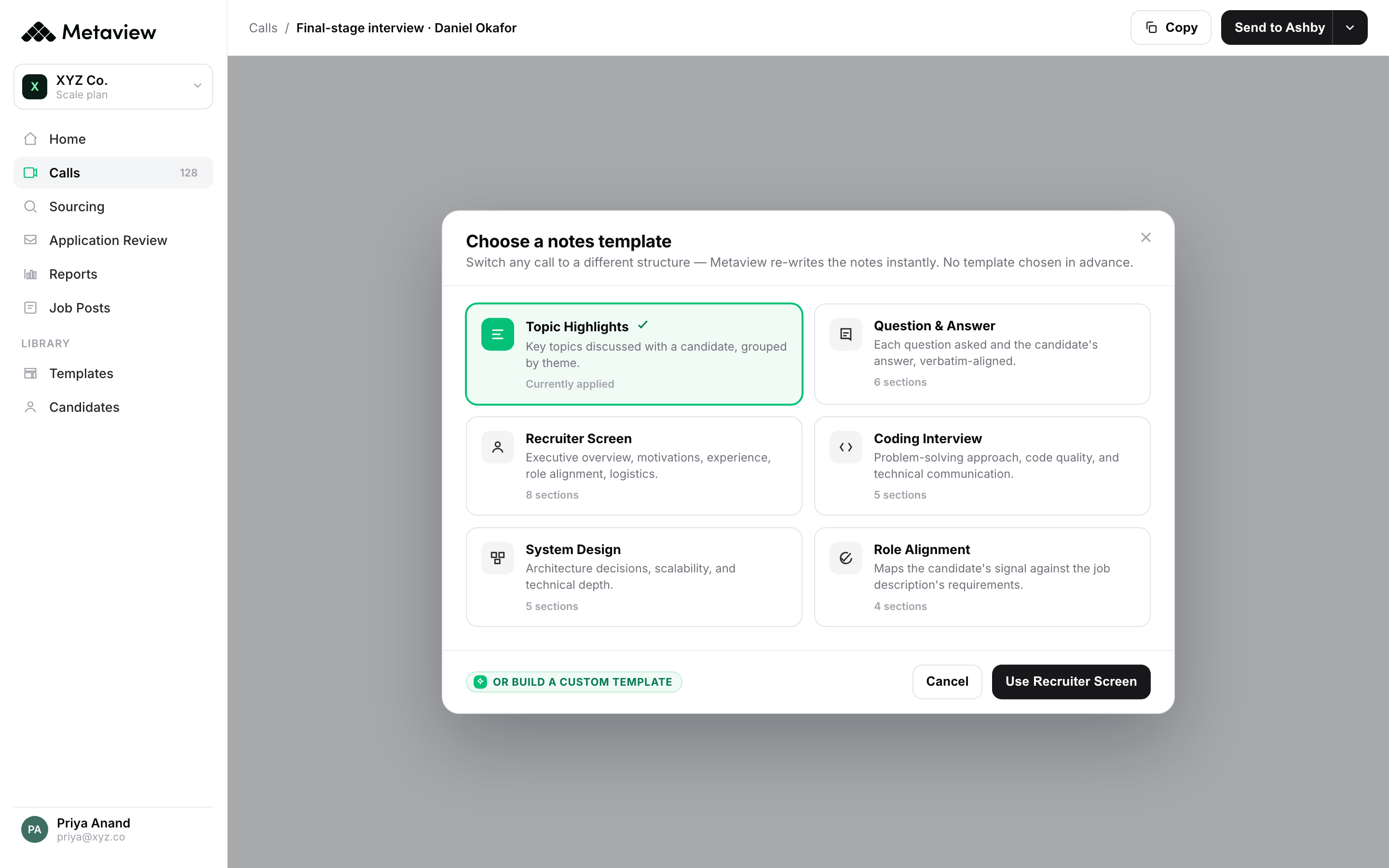
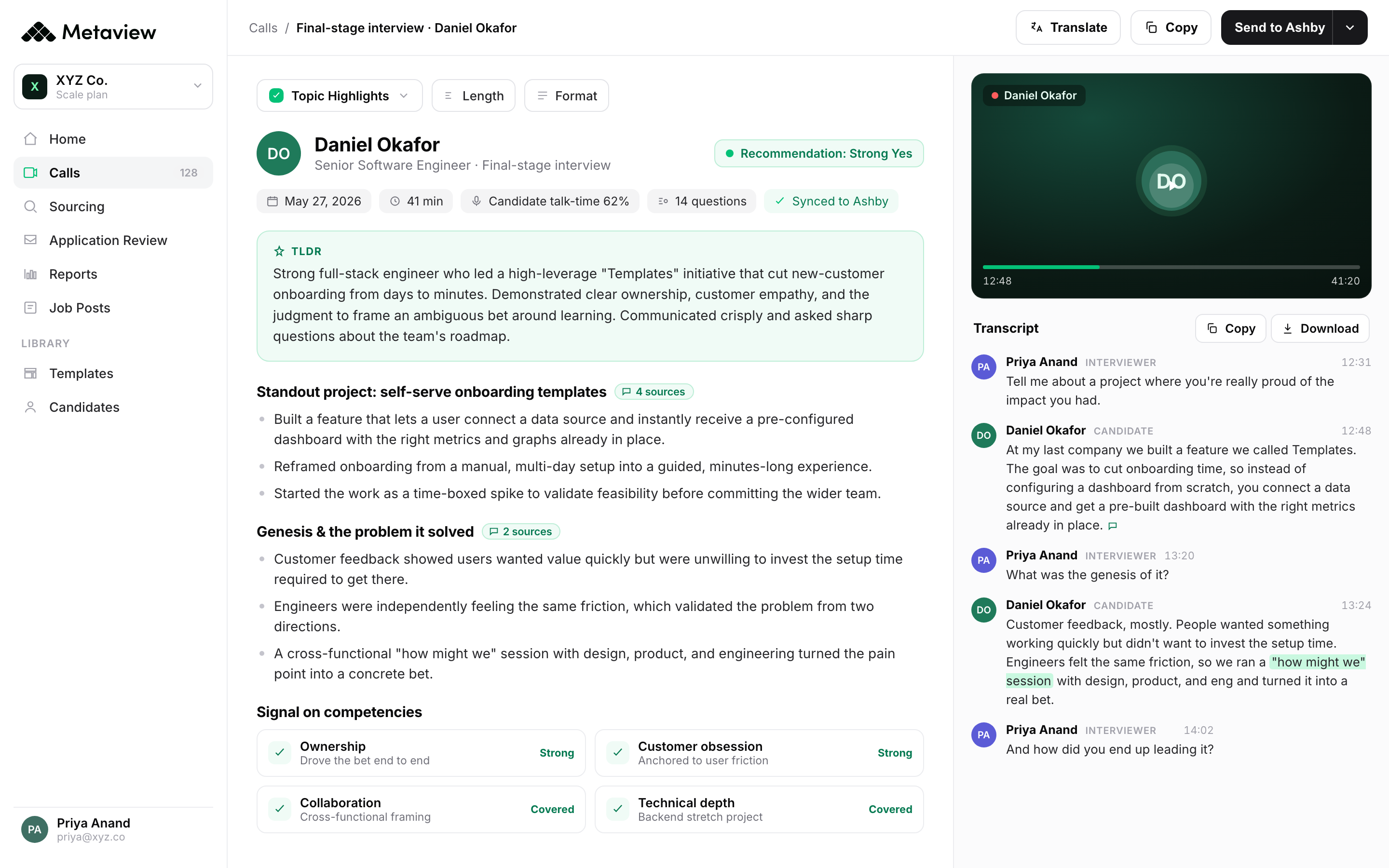
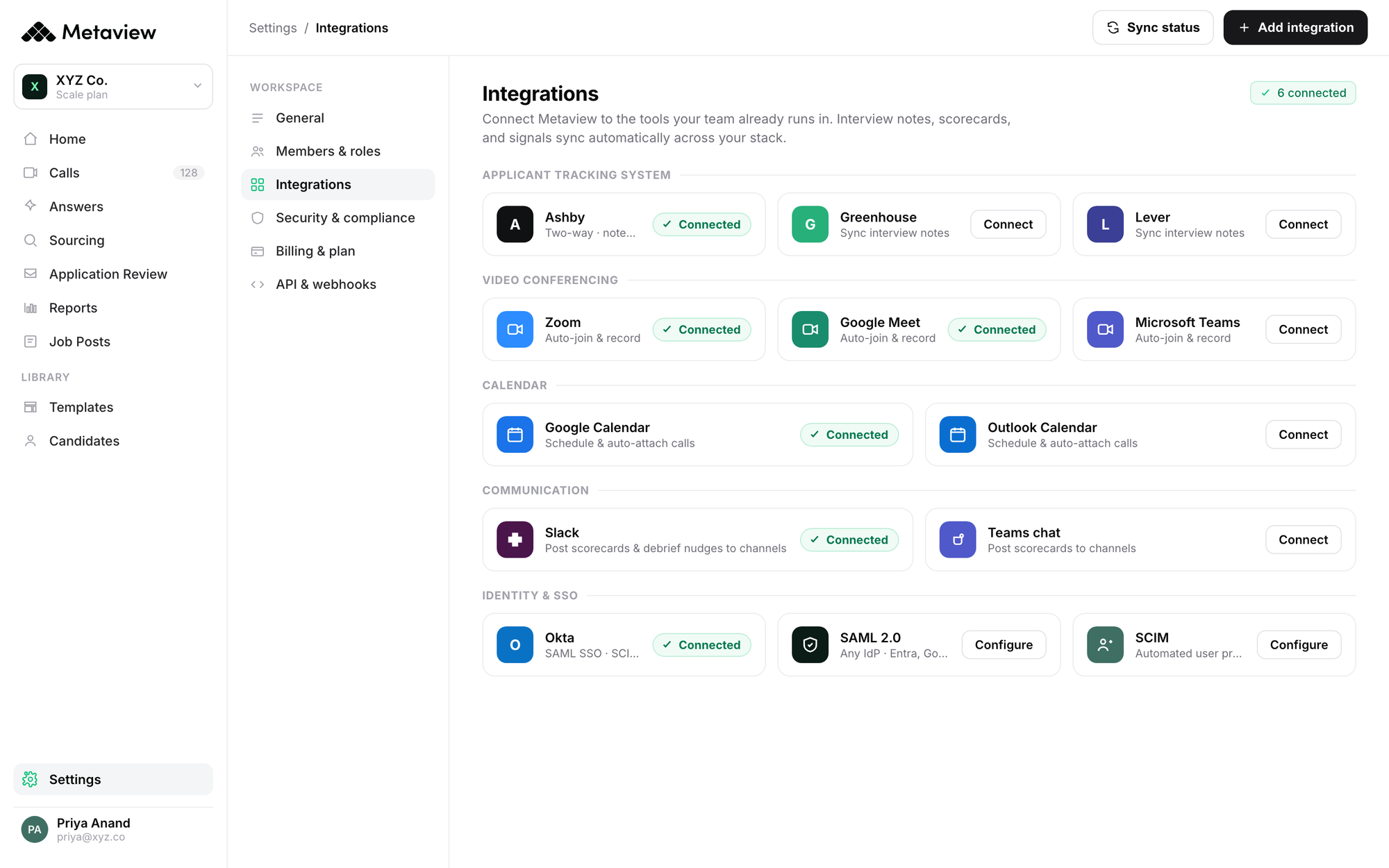
The alignment doesn’t stay inside Metaview either. The post-call summary syncs to your ATS, the must-haves populate the scorecard for interviewers, and the transcript becomes searchable across your stack.
Your 30-minute intake checklist.
Use this every kickoff. Same shape, every call.
- Share the agenda 24 hours before.
- Bring an AI notetaker. (Confirm with the hiring manager beforehand. They will say yes.)
- Open with success: “What does success look like six months in?”
- Lock the must-haves and deal-breakers explicitly. Read them back.
- Set the process: stages, interviewers, time-in-step, SLA on feedback.
- Agree the close: who does what, by when, where the source of truth lives.
- Send the structured summary within the hour. Don’t wait for “later today.”
Bring Metaview into your hiring stack.
Live notes, structured scorecards, and ATS sync - set up in under 10 minutes.
FAQ.
Frequently asked.
What’s the ideal length for an intake call?
30 minutes if you’ve sent the agenda in advance. 45 if it’s a brand-new role or a hiring manager you haven’t worked with before. Anything beyond an hour usually means the questions weren’t focused.
Should the hiring manager send anything before the call?
Yes. A current draft of the JD, the slot of any peer interviewer involved, and a list of “people you’d hire again” from past teams. That last list is gold for the sourcing model.
What if the hiring manager refuses to be recorded?
Rare in 2026, but it happens. Two options: lean harder on structured notes during the call, or run the call with the AI notetaker observing in summary-only mode. Most pushback evaporates after one example of a saved post-call summary.
How does this work for agency recruiters?
Same pattern. The hiring manager is your client contact. The structured transcript becomes the artifact you and the client both reference, which removes the he-said-she-said that kills agency search.
What about technical roles where the recruiter is non-technical?
This is where the recording is most valuable. The recruiter no longer has to pretend they understood the difference between Postgres and Cassandra in real time. The transcript and the AI summary preserve the technical detail for the engineer interview panel.
How long until the AI sourcing list is ready?
Usually before the hiring manager has reopened the post-call summary. Most calls in our 2026 customer base produce a first sourcing slate inside 20 minutes of call end.
