

Indeed is built for applicant volume. It does little to reach the candidate who never applies.
If you're filtering through hundreds of applications per role and ending up with three finalists, your sourcing problem may well be a channel problem. The best candidates for senior, technical, or specialized roles are employed, busy, and probably not scrolling Indeed on a lunch break.
Exa's People Search Benchmark runs 1,400 real-world sourcing queries and scores each system on whether the candidates it returns meet the recruiter's criteria. Metaview's AI Sourcing agent delivered 93.5% precision on it; the closest competitor scored 79%. The benchmark write-up has the full results. Job boards do not enter that comparison, because passive candidates are not on them.
Here are 8 alternatives worth knowing, organized by what each one actually solves. The right pick depends on where Indeed is falling short for you.
The 8 alternatives at a glance.
Five of these are inbound channels that compete with Indeed for active applicants: LinkedIn, Glassdoor, Wellfound, Welcome to the Jungle, and Greenhouse's own job board. The other three reach people who never apply: Metaview sources them, LHH recruits them on your behalf, and GitHub shows you their work.
| Alternative | Category | Best for |
|---|---|---|
| Metaview | AI sourcing agent | Teams that want to source passive candidates without manual searching |
| LinkedIn Talent Solutions | Professional network + job board | Mid-to-senior, knowledge-worker, technical roles |
| Glassdoor | Job board + employer brand | Roles where culture and brand reinforce the apply decision |
| Wellfound | Startup-focused job board | Tech, product, growth roles in early-stage companies |
| Welcome to the Jungle | Curated matching platform | Tech and product roles in growing companies |
| LHH | Talent partner / recruitment agency | Teams prioritizing speed over sourcing control |
| Greenhouse | ATS-native job distribution | Teams already on Greenhouse looking to consolidate inbound |
| GitHub and developer communities | Real-work sourcing | Engineering and technical roles where code is the signal |
Where Indeed falls short.
Indeed is good at one job: putting your role in front of active job seekers. For high-volume entry-level work where the bottleneck is reach, that is enough.
For everything else, three structural limits show up fast.
First, the strongest candidates are passive. They are employed, they are busy, and they are not browsing job boards. Inbound-only strategies never see them.
Second, Indeed relies on static filters and Boolean search. If a candidate did not use your precise keywords in their profile, you will not find them. Real career trajectories rarely map to keyword lists.
Third, candidate review is largely manual. Recruiters sift through CVs one by one. There is almost no automation, so volume becomes a tax, not an asset.
1. Metaview.
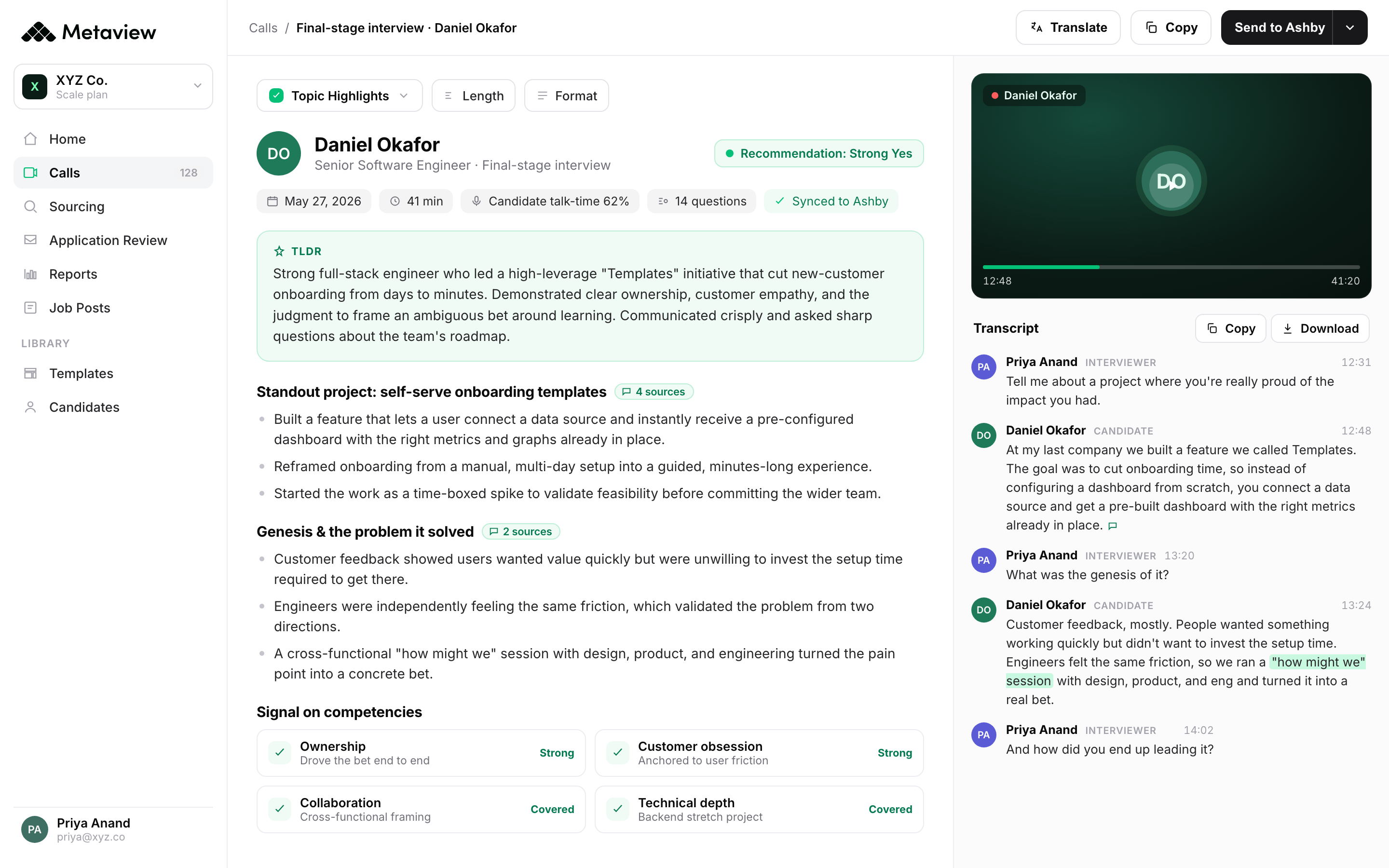
Category: AI sourcing agent
Metaview isn't a job board. It's the outbound layer that fills the gap every inbound board leaves: the candidates who would never apply.
Indeed asks recruiters to translate a role into keywords and Boolean filters. Metaview's AI Sourcing agent works from a natural-language brief instead: a hiring manager's description of the role, a few bullets on what great looks like, or the intake call itself.
From that brief, the agent searches the web, your connected ATS, and your team's past Metaview conversations, and returns a shortlist of passive candidates. On Metaview, the median time from the end of an intake call to the first shortlist is 17.6 minutes. The recruiter never opens a job board.
What it covers:
- AI Sourcing that searches the web, your connected ATS, and your past Metaview conversations from one natural-language brief
- Outreach sequences with contact enrichment for the candidates you source
- Application Review that reads every inbound application against the role's criteria and sorts candidates by fit, with the recruiter making every accept or reject call
- A Notetaker that records and transcribes interviews and drafts scorecards for the interviewer to review and submit
- Reporting over your own interview data
- Integrations with 114 ATSs, including Greenhouse, Ashby, Lever, and Workday
Where it falls short: Metaview does not generate active-seeker inbound traffic, so a high-volume entry-level role still needs a job posting on a board. It does cover the review side of that volume: Application Review reads every inbound application against the role's criteria and sorts candidates by fit, and the recruiter makes every accept or reject call.
Best for: teams whose biggest hiring constraint is reaching the passive candidates who never click apply.
Every time the AI presents a candidate, the recruiter says fit or not. That feedback flows into the ideal-candidate profile. Over time, it becomes a company-wide read on what good looks like.”

2. LinkedIn Talent Solutions.
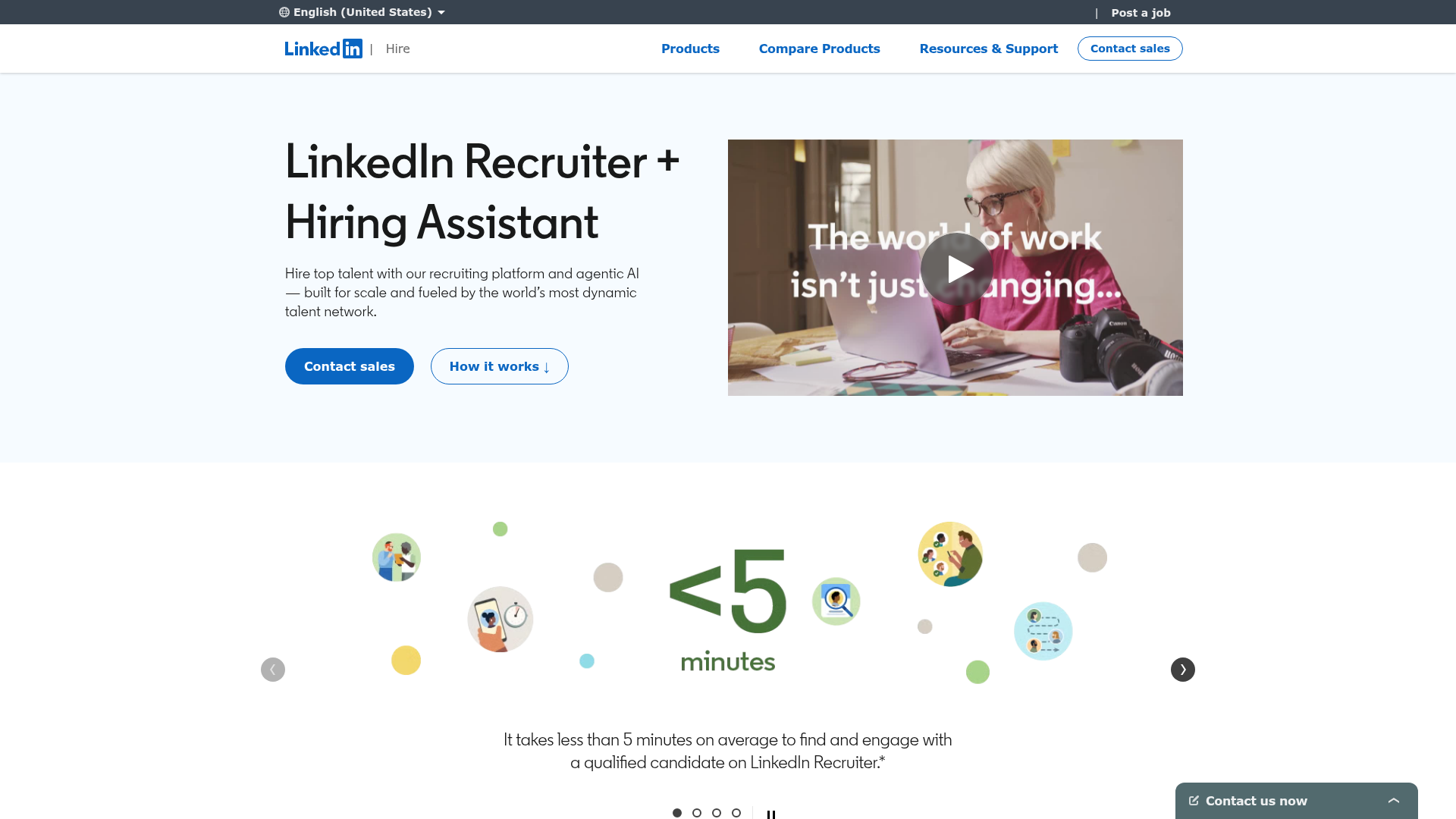
Category: Professional network + job board
LinkedIn is the closest direct alternative to Indeed for professional roles. The platform combines job postings with access to the world’s largest professional network.
Recruiters can run inbound and outbound from the same place. For mid-to-senior, knowledge-worker, or leadership roles, LinkedIn is usually the first non-Indeed channel.
What it covers:
- Massive global professional network
- Strong filters by experience, skills, and company
- Employer branding through company pages
- Integrated InMail outbound messaging
- Strong fit for passive-candidate outreach
Where it falls short: everyone else is also targeting the same candidates. Response rates on InMail have trended down as the inbox load on top professionals has grown.
Best for: mid-to-senior professional and technical hiring where the candidate pool is on LinkedIn.
3. Glassdoor.
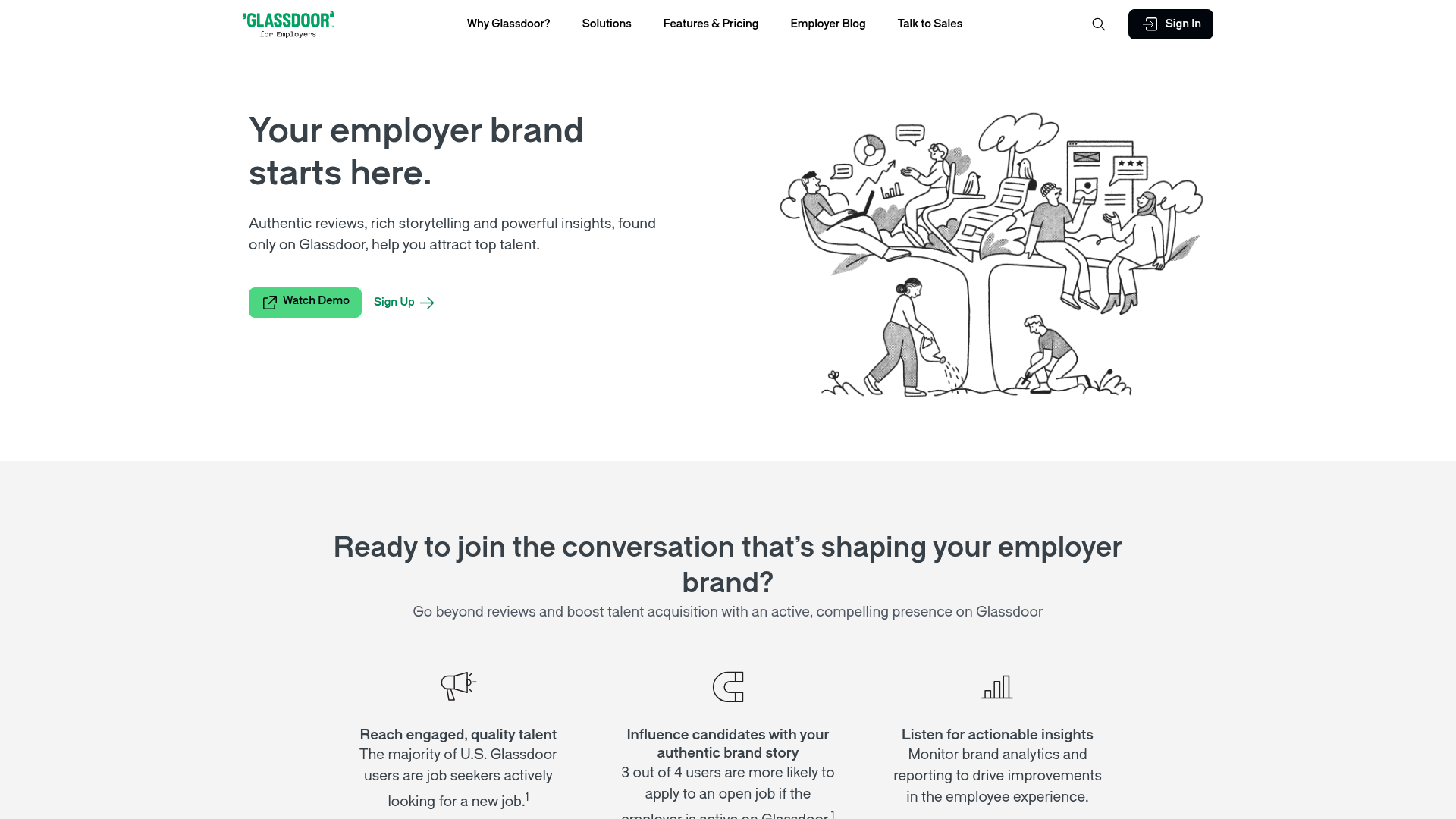
Category: Job board + employer brand
Glassdoor works best as a brand-reinforcement channel. Candidates research companies deeply before applying, which means inbound applicants tend to be more informed and intentional.
It’s rarely a primary sourcing engine on its own. It’s the channel that closes the apply decision after a candidate has already heard about the role elsewhere.
What it covers:
- Employer reviews and ratings on every company page
- Salary and benefits transparency
- Job postings tied to employer brand
- Strong candidate research signals before they apply
Where it falls short: candidate volume is lower than Indeed or LinkedIn. Glassdoor amplifies your brand more than it generates raw pipeline.
Best for: teams where culture, transparency, and review reputation move the apply decision.
4. Wellfound.
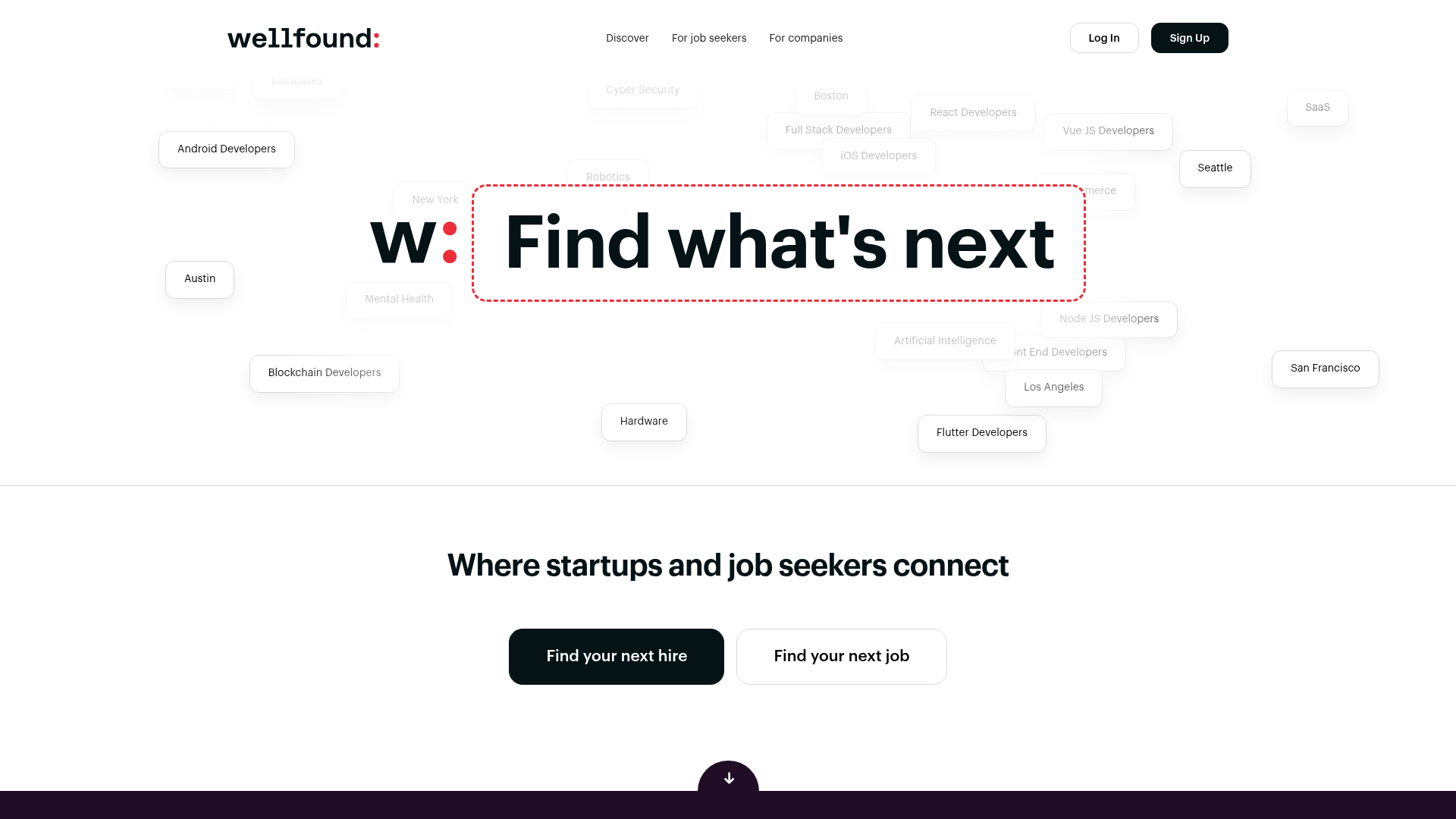
Category: Startup-focused job board
Wellfound (formerly AngelList Talent) is the default board for startup hiring. Candidates skew open to early-stage, equity compensation, and rapid growth.
Recruiters can browse profiles and reach out directly, so the platform plays as both inbound and lightly outbound. The pool is smaller than LinkedIn or Indeed but the intent and alignment are higher.
What it covers:
- Startup-and-scaleup focused talent pool
- Candidate profiles with explicit role preferences
- Direct recruiter outreach to candidates
- Transparency around compensation and equity
- Strong fit for early-stage and tech hiring
Where it falls short: the candidate pool is smaller than LinkedIn by orders of magnitude. For non-startup roles, it’s the wrong channel.
Best for: tech, product, growth, and design roles at early-stage and growth-stage companies.
5. Welcome to the Jungle.

Category: Curated matching platform
Welcome to the Jungle sits between a matchmaker and a job board. Candidates create profiles and roles surface based on fit, interests, and growth goals.
For recruiters this creates a lower-volume, higher-signal candidate flow. The platform leans heavily on culture context and growth story, so it works best for companies that can tell that story well.
What it covers:
- Curated job matching by candidate preference
- Candidate-first application experience
- Strong emphasis on role context and team growth
- High-quality, lower-volume application flow
- Tech and product role focus
Where it falls short: the platform doesn’t scale for high-volume hiring. It’s about precision, not pipeline depth.
Best for: tech, product, marketing, and data roles where storytelling and context drive candidate decisions.
6. LHH.

Category: Talent partner / recruitment agency
LHH is a talent services firm, and its recruitment arm recruits on your behalf. This is agency recruiting rather than a self-service board: you brief a recruiter on the role, they source and screen, and you interview the candidates they present.
Cost per hire is higher than a self-service board. Time to a first conversation is usually shorter, because someone else is doing the sourcing.
What it covers:
- Recruiters who source and screen candidates on your behalf
- Faster time to a first conversation than building the pipeline yourself
- Useful on hard-to-fill specialist roles where your own sourcing is thin
- Career transition and leadership development from the same firm, for teams that want one partner beyond hiring
Where it falls short: less control over the sourcing process. You’re trusting the partner’s vetting, which works until it doesn’t.
Best for: teams prioritizing speed over sourcing control, especially on hard-to-fill technical roles.
7. Greenhouse.

Category: ATS-native job distribution
Greenhouse’s built-in job board is an Indeed alternative for teams already running Greenhouse. It distributes roles across multiple channels and centralizes applicant management.
It’s less a new discovery channel and more a way to consolidate your inbound funnel into one workflow. Candidates can also self-create profiles through the My Greenhouse portal.
What it covers:
- ATS-native job distribution
- Centralized applicant tracking
- Clean candidate-facing application experience
- Tight integration with Greenhouse hiring workflows
- Inbound-focused, with light proactive sourcing
Where it falls short: this is an inbound consolidation play, not a new source of candidates. The same active-seeker traffic you get on Indeed is also what flows through here.
Best for: Greenhouse customers who want to centralize inbound applications and reduce job-board sprawl.
8. GitHub and developer communities.
Category: Real-work sourcing
GitHub lets recruiters source engineers based on actual work, not CVs. Profiles show code, contributions, and collaboration patterns. The signal is deeper than anything a job board can surface.
The same logic applies to other developer communities (Stack Overflow, dev forums, open-source project maintainers). The trade-off is the manual time and the technical literacy needed to read the signal.
What it covers:
- Real-world technical skill signals
- Access to passive engineering talent
- Community-based sourcing into open-source contributors
- Strong signal-to-noise ratio
- Effective for hard-to-source technical specialties
Where it falls short: this requires technical sourcing expertise. Non-technical recruiters often misread the signal or burn time on profiles that look strong but aren’t.
Best for: engineering and deeply technical hiring where code itself is the proof.
How to choose between Indeed and the alternatives.
Match your situation to the scenarios below. Each callout points at the channel we would pick first.
For the deeper read on the ZipRecruiter vs Indeed choice specifically, see our ZipRecruiter vs Indeed guide. For the ATS side of the stack, see our best applicant tracking software guide.
Bring Metaview into your hiring stack.
Live notes, structured scorecards, and ATS sync - set up in under 10 minutes.
Frequently asked.
What is the best alternative to Indeed?
It depends on the role. LinkedIn Talent Solutions is the closest direct equivalent for professional and knowledge-worker hiring. For tech-startup roles, Wellfound. For outbound passive-candidate sourcing, Metaview’s AI sourcing layer beats every inbound board because it reaches candidates who would never apply.
Do recruiters still need job boards at all?
Yes, for active-job-seeker traffic. Job boards are still the most efficient inbound channel for high-volume or entry-level roles. They just shouldn’t be the only channel, especially for senior or specialized hiring.
Are Indeed alternatives better for senior or niche roles?
Usually. Senior, technical, and specialized candidates rarely apply through general job boards. They are reached through outbound sourcing, professional networks, niche communities, or referrals. Indeed is the wrong default for that audience.
Should I cancel Indeed and switch to AI sourcing?
Usually no. Keep Indeed for high-volume active-seeker hiring where it earns its place. Add AI sourcing (Metaview) for the senior, technical, or specialized roles where boards alone cap pipeline quality. The two channels compound.
Can using too many platforms slow recruiting down?
It can. The goal is not to be everywhere. The goal is to pick a small number of complementary platforms, each with a clear job in your sourcing strategy. One inbound board, one outbound sourcing layer, and one niche community is usually enough.
