
The right AI recruiting tools take the work out of recruiting. The wrong ones add a tab to your day.
The category got crowded fast in 2025. Most teams now run between two and six AI-adjacent tools, and most of them aren't earning their seat price.
We see 4,000+ organizations run hiring on Metaview every day. Here are the 10 AI recruiting tools that actually move time-to-hire, candidate experience, and quality of hire in 2026 - with the trade-offs that matter.
All 10 tools at a glance
| Tool | AI layer | Best for | Pricing |
|---|---|---|---|
| Metaview | Capture, sourcing, reports | Recruiting-native AI across the funnel | Free with a work email |
| Maki People | Screening, assessment | High-volume structured screening | Quote-based |
| Findem | Sourcing data | Enterprise sourcing intelligence | Quote-based |
| Workable | ATS + embedded AI | Midsize teams wanting one system of record | From $299/month |
| Humanly | Conversational AI | High-volume hourly screening | Quote-based |
| Skima AI | Matching, enrichment | Teams without a dedicated ATS layer | Quote-based |
| Teamtailor | ATS + employer brand | Candidate-experience-first hiring | Quote-based |
| GoodTime | Scheduling AI | Multi-stage panels at scale | Quote-based |
| Greenhouse Analytics | Reporting | Funnel visibility inside Greenhouse | Quote-based |
| Gloat | Internal mobility | Surfacing internal candidates first | Quote-based |
1. Metaview
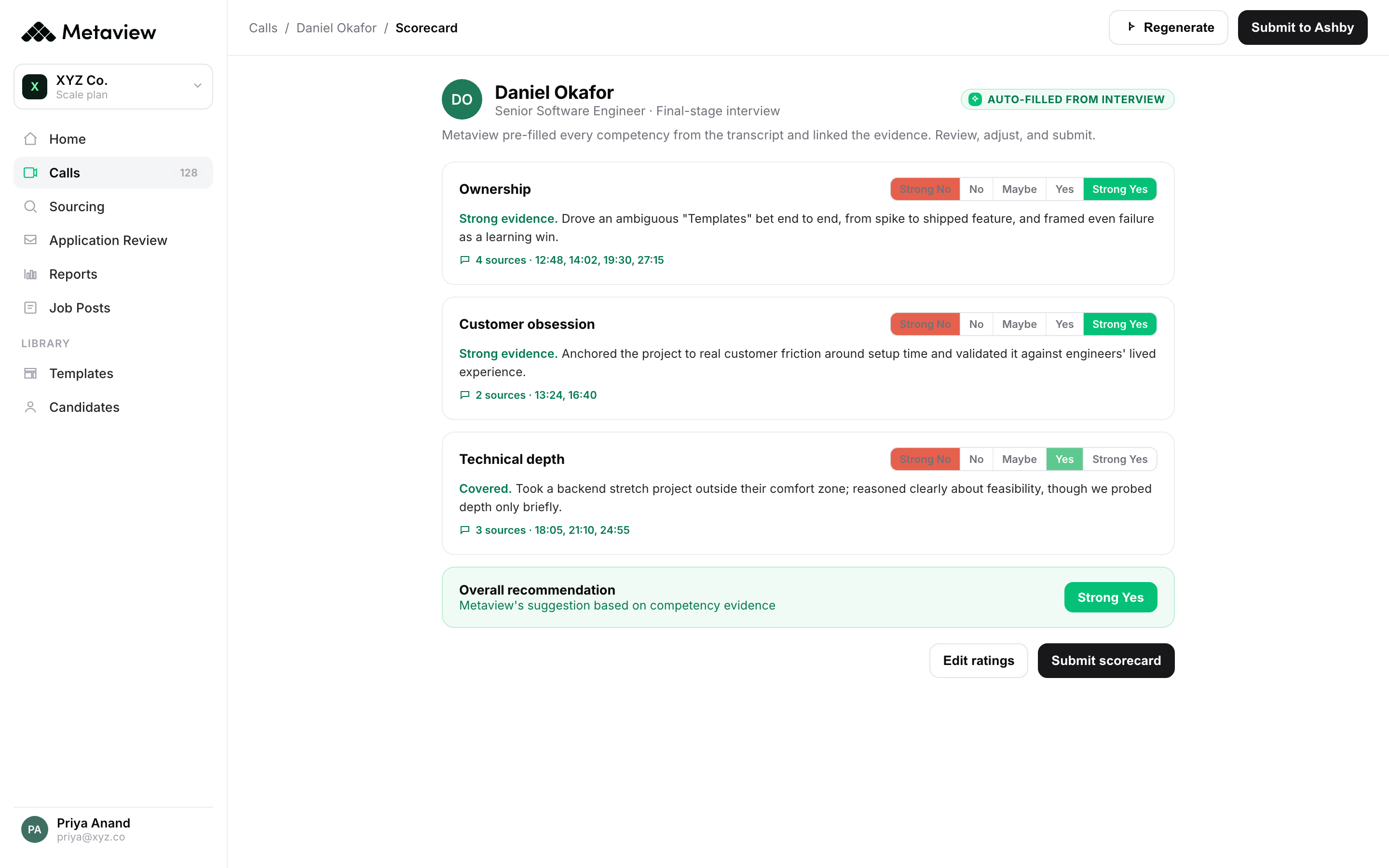
Metaview is the only tool on this list that covers sourcing, interview capture, scorecards, and outreach in a single platform built specifically for recruiting.
The AI Sourcing agent ranks candidates against your past successful hires. Notetaker captures every interview across Zoom, Google Meet, Microsoft Teams, and phone. Reports map answers to your rubric. The structured scorecard writes back to your ATS automatically.
Key features:
- AI Sourcing that runs from a JD, an intake call, or a lookalike candidate.
- Notetaker with 50+ language support and competency-rubric mapping.
- Native integration with 47 ATSs including Greenhouse, Ashby, Lever, Workday, SAP SuccessFactors, Bullhorn, and JazzHR.
- SOC 2 Type II and GDPR-aligned controls on every tier.
- 4,000+ organizations including Brex, Catawiki, Cleo, Quora, Replit, Robinhood, and Automattic.
Pricing: Free with a work email. Paid plans for higher usage and team controls available on request.
With Metaview, our recruiting team has saved over 14 full work weeks. Metaview stood out simply because it's tailored. It's been built for the recruiting function.”
Where it falls short: ATS integration depth varies. Ashby, Greenhouse, Lever, Gem, and SmartRecruiters are first-class; some less common ATSs require workarounds.
Best for: Teams that want recruiting-native AI across the funnel instead of stitching three or four point tools together.
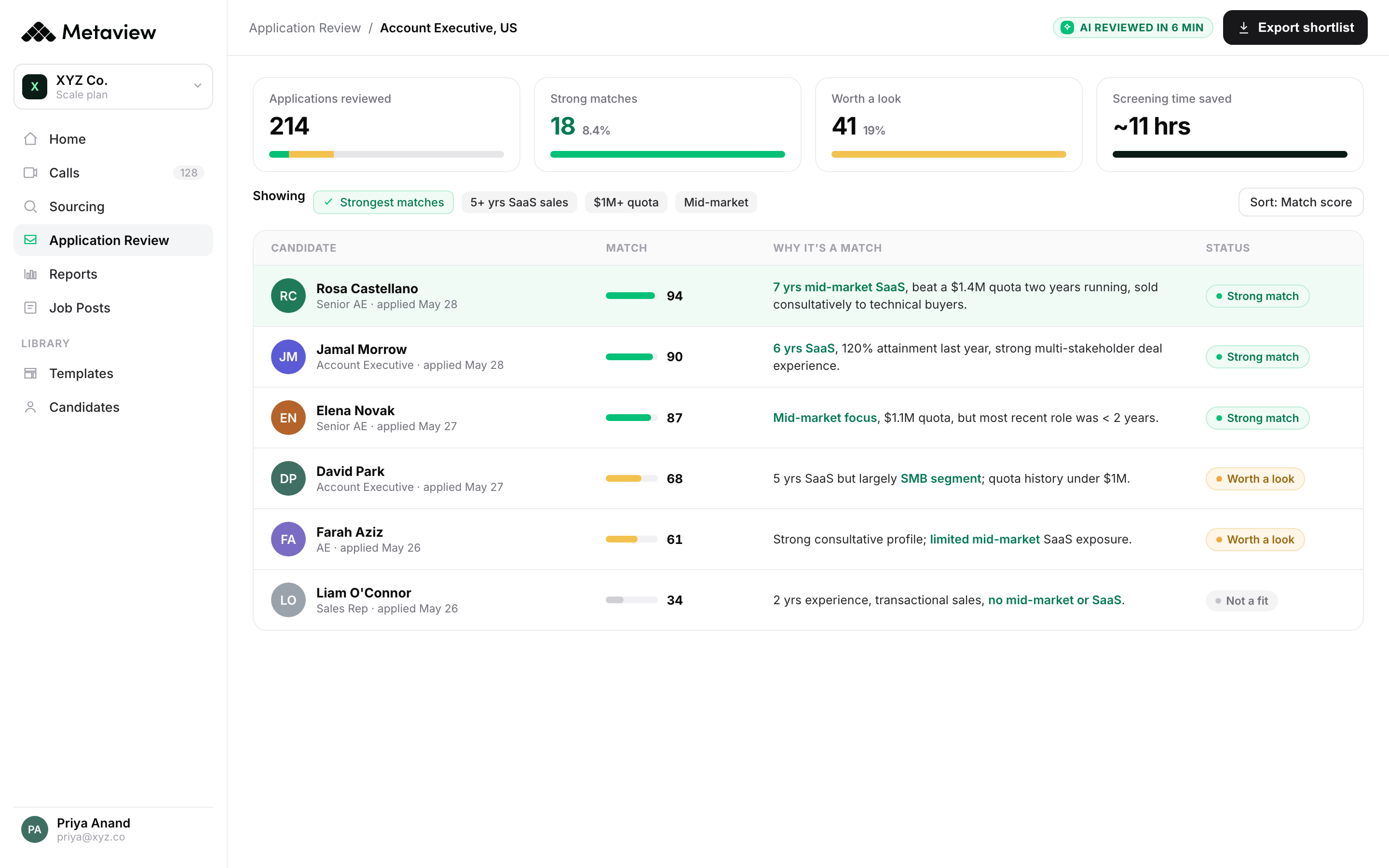
When the question is which inbound applicants are worth a recruiter's time, Metaview ranks the pile against the role and shows the reasoning behind every match:
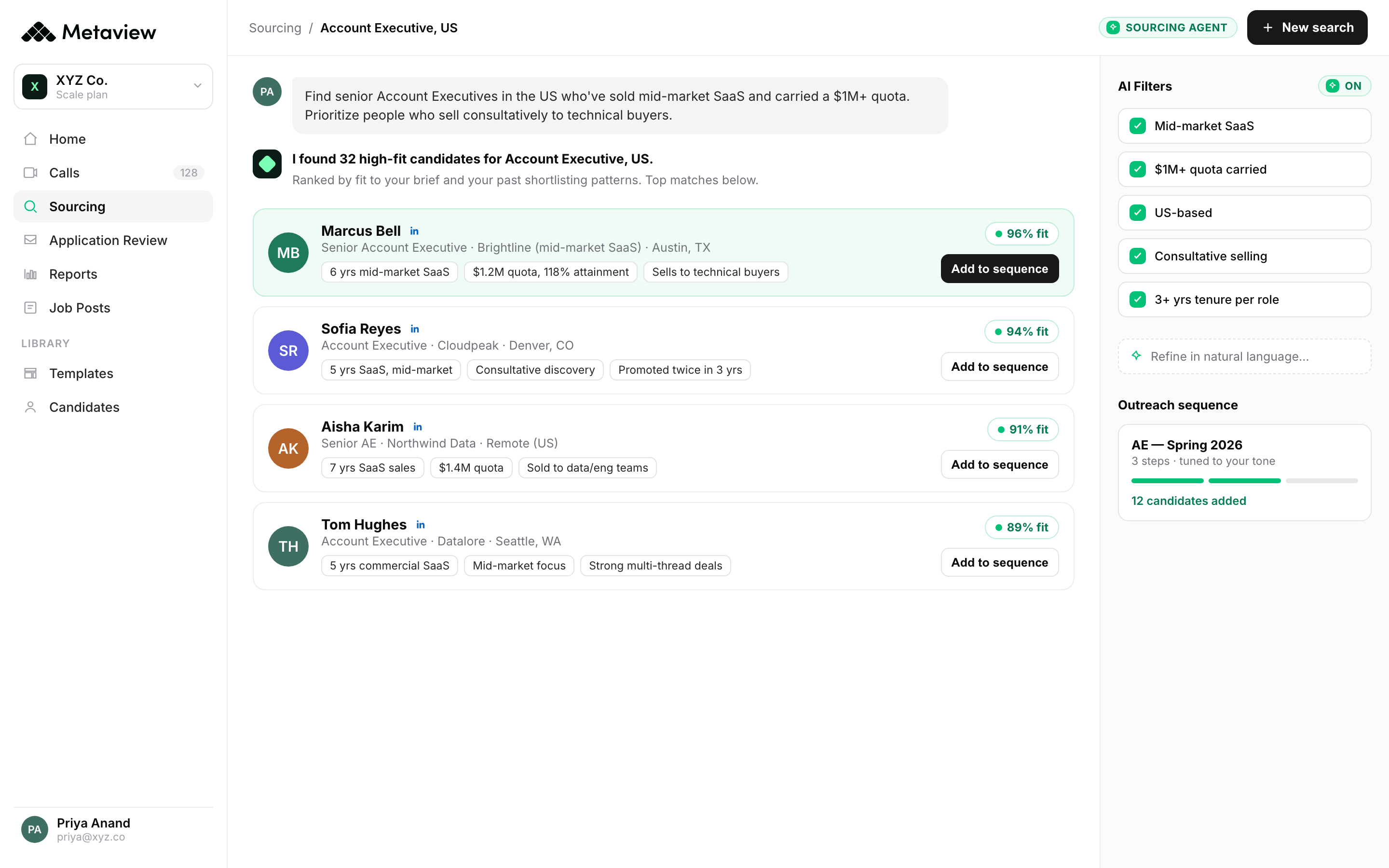
If the goal is a ranked shortlist instead of a raw data dump, Metaview Sourcing turns a role brief into fit-scored candidates you can act on:
2. Maki People
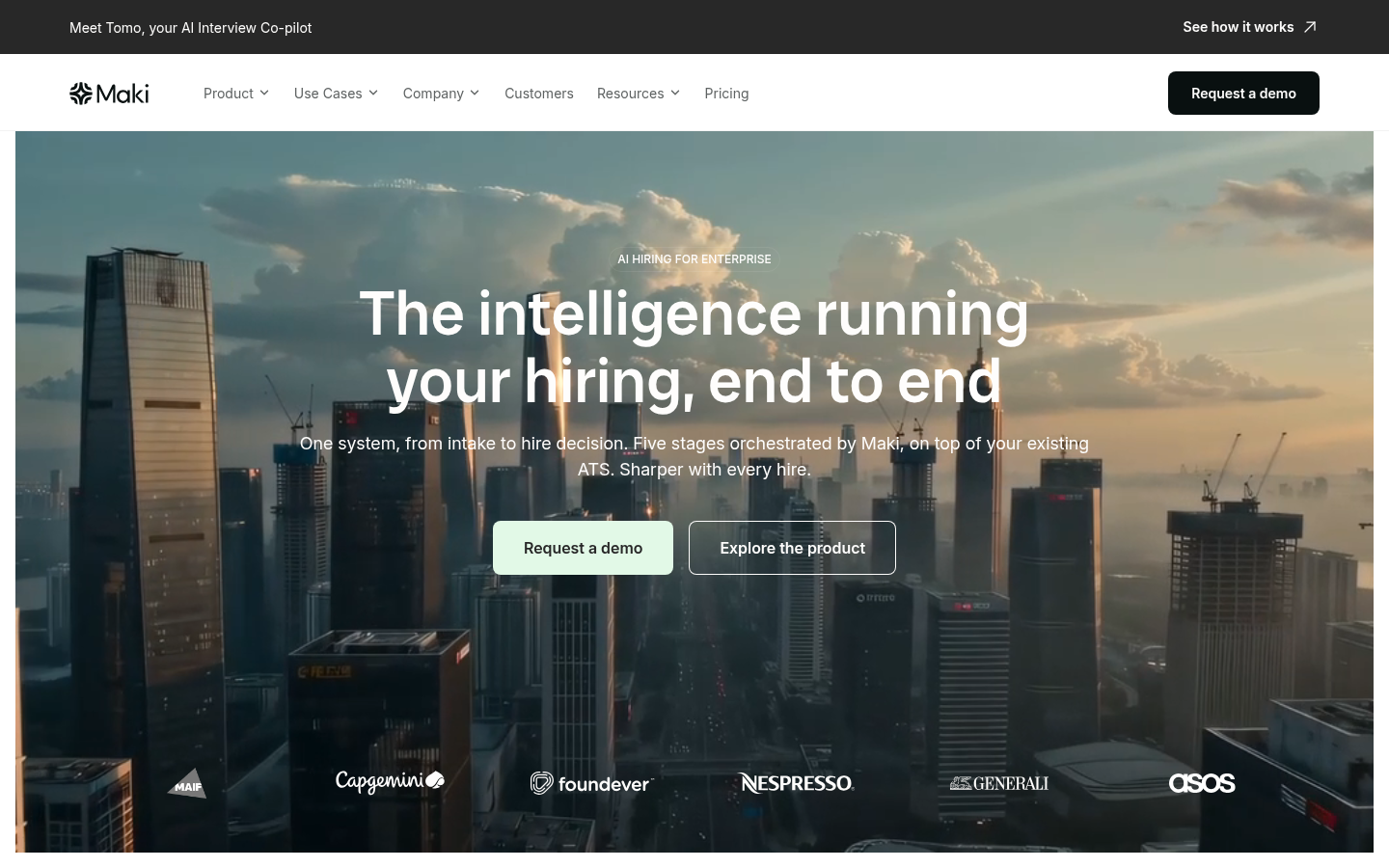
Maki People is a screening-and-assessment platform built for high-volume hiring. AI agents handle the qualifying questions, score against role criteria, and route candidates forward.
It's most useful where applicant volume swamps the recruiter's ability to have a real first conversation: retail, hospitality, contact-center, and high-volume entry-level roles.
Key features:
- AI screening agents with role-specific evaluation.
- Automated assessments tied to role criteria.
- Intelligent scheduling for shortlisted candidates.
- Analytics on screening effectiveness.
- ATS and calendar integration.
Pricing: Quote-based.
Where it falls short: Knowledge-worker roles under 200 hires per year don't justify the chatbot-front-end trade-off on candidate experience.
Best for: 500+ entry-level or hourly hires per year.
3. Findem
Findem is a talent data platform that unifies billions of candidate signals into ranked search outputs.
The strength is breadth of data: it aggregates LinkedIn, GitHub, publications, patents, and public web signal into a single profile per candidate. For enterprise sourcing teams, that breadth saves a tool layer.
Key features:
- Unified candidate profiles enriched from billions of data points.
- AI-driven matching and ranking against role requirements.
- Pipeline visibility dashboards.
- Automated talent-pool management.
Pricing: Quote-based; enterprise pricing band.
Where it falls short: Findem is a sourcing-intelligence tool, not an interview or outreach platform. You'll pair it with capture and outreach elsewhere.
Best for: Enterprise teams that need deep candidate-data enrichment beyond LinkedIn.
4. Workable
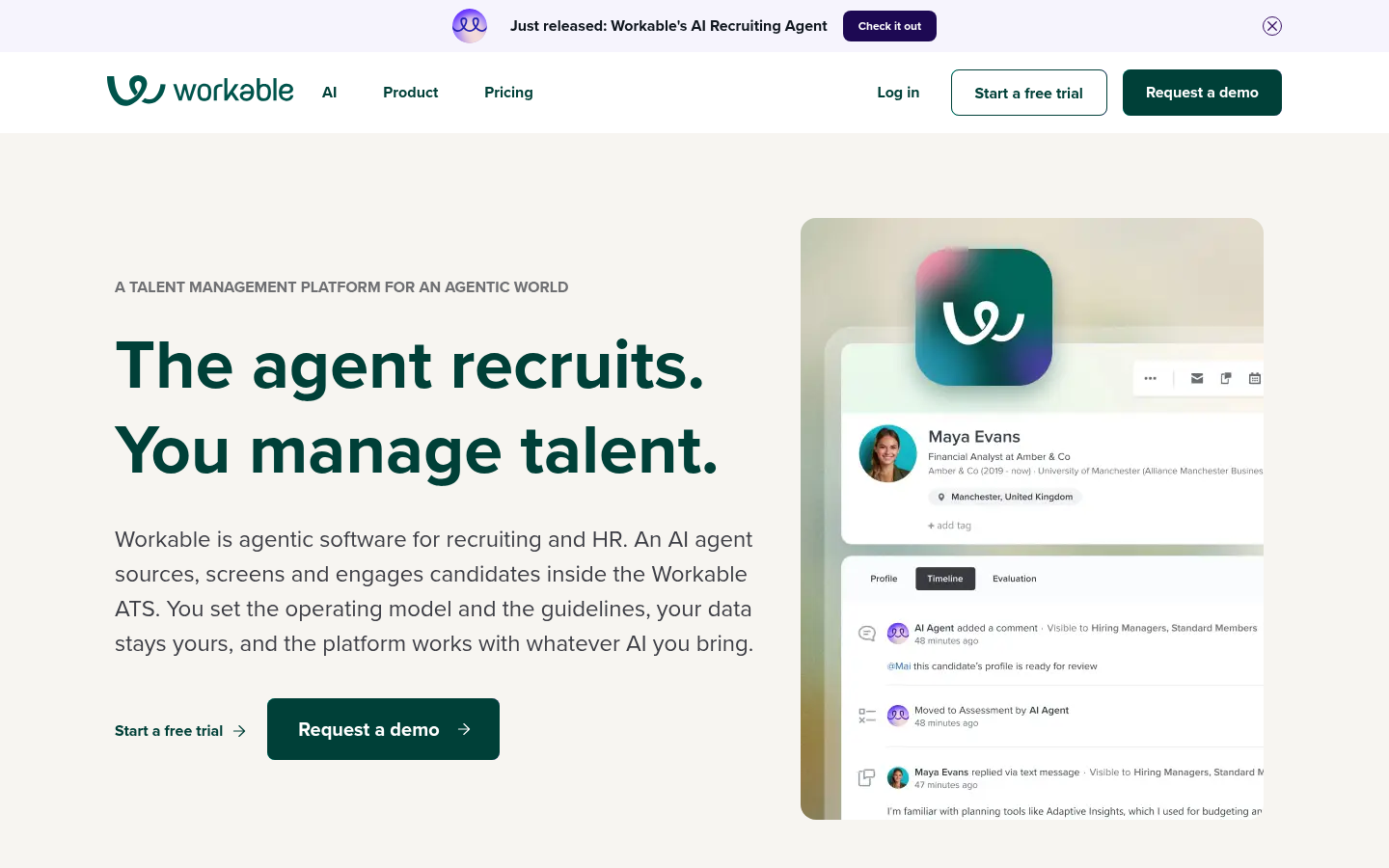
Workable is an ATS-first platform with AI embedded across sourcing, screening, and outreach.
The pitch is integration: one system of record instead of five disconnected tools. For midsize teams who've outgrown spreadsheets but aren't yet ready for Greenhouse or Workday, it's the most common landing spot.
Key features:
- AI-powered sourcing recommendations.
- Resume parsing and scoring.
- Automated outreach and scheduling.
- Custom hiring pipelines.
- Compliance and analytics reporting.
Pricing: Standard from $299/month; Premier from $599/month; Enterprise from $719/month.
Where it falls short: The AI layer is solid but not best-in-class. Teams that need deep AI sourcing or capture typically pair Workable with a specialist.
Best for: Midsize teams (50-300 employees) wanting one ATS with workable AI built in.
5. Humanly
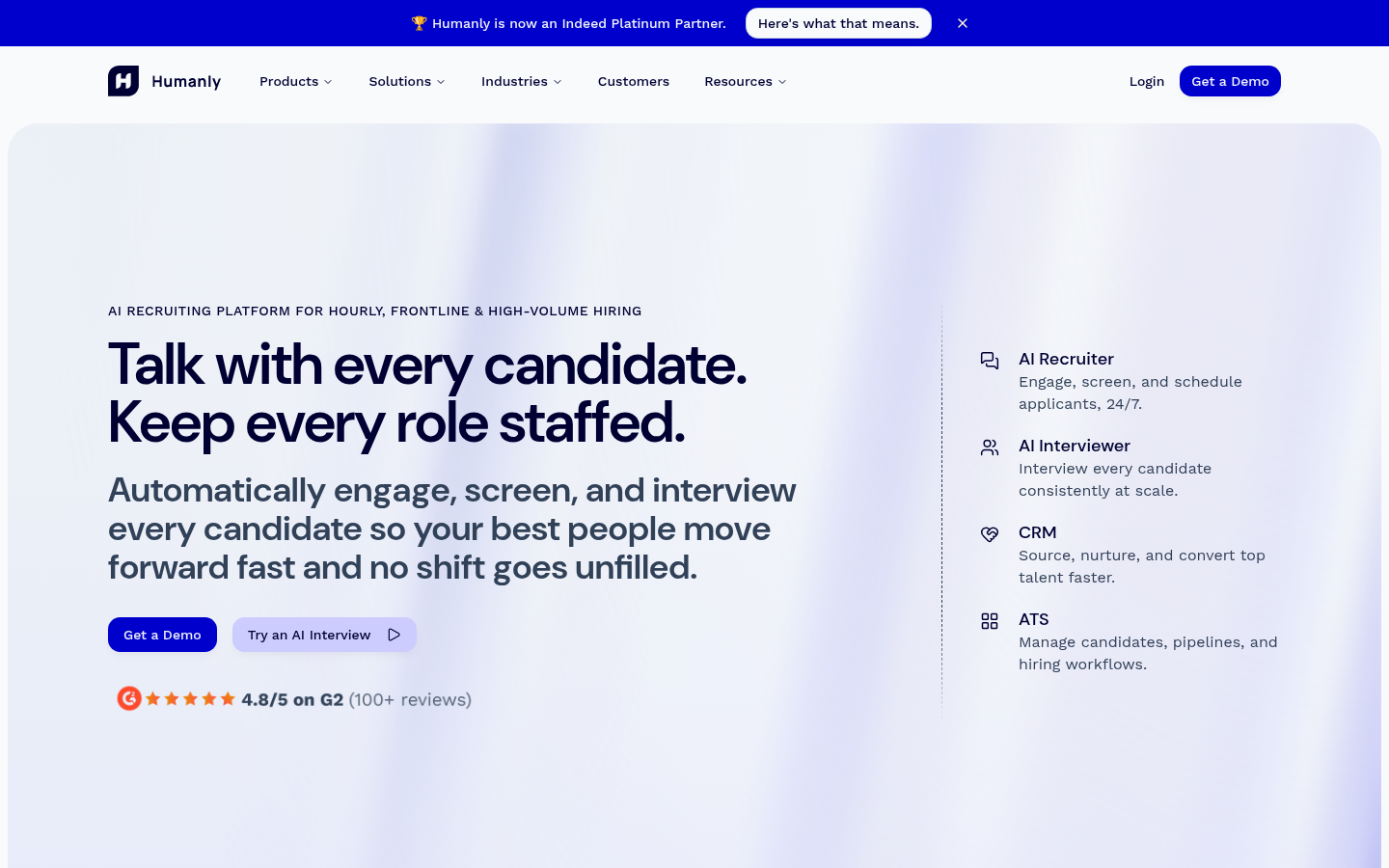
Humanly is a chatbot front-end that handles the first applicant touch at high volume.
The candidate gets a structured screening conversation in web, SMS, or email. The system scores responses and routes the strong matches forward. The recruiter never speaks to the bottom 40% of applicants.
Key features:
- Conversational AI across web, SMS, and email.
- Automated ranking based on responses.
- 24/7 candidate engagement.
- Automated scheduling for screened candidates.
- ATS integration.
Pricing: Quote-based.
Where it falls short: Candidate-experience cost rises with seniority. Below 200 hires per year for knowledge-worker roles, the trade-off isn't worth it.
Best for: Hospitality, retail, and contact-center hiring at 500+ hires per year.
6. Skima AI
Skima AI is a sourcing-and-matching platform for teams that don't have a dedicated ATS but still want AI-driven candidate ranking.
It functions as a lightweight stack-in-one: sourcing, parsing, matching, and outreach in a single tool. Teams under 50 employees who haven't standardized on Greenhouse or Ashby use it as their core recruiting infrastructure.
Key features:
- AI search and matching across resume data and candidate signals.
- Custom AI matching models per hiring criteria.
- Talent pipeline management.
- Integrated outreach.
Pricing: Quote-based.
Where it falls short: As teams scale to 100+ employees and adopt a proper ATS, Skima's all-in-one becomes harder to justify against best-in-class point tools.
Best for: Teams under 50 employees that need core recruiting infrastructure in one tool.
7. Teamtailor
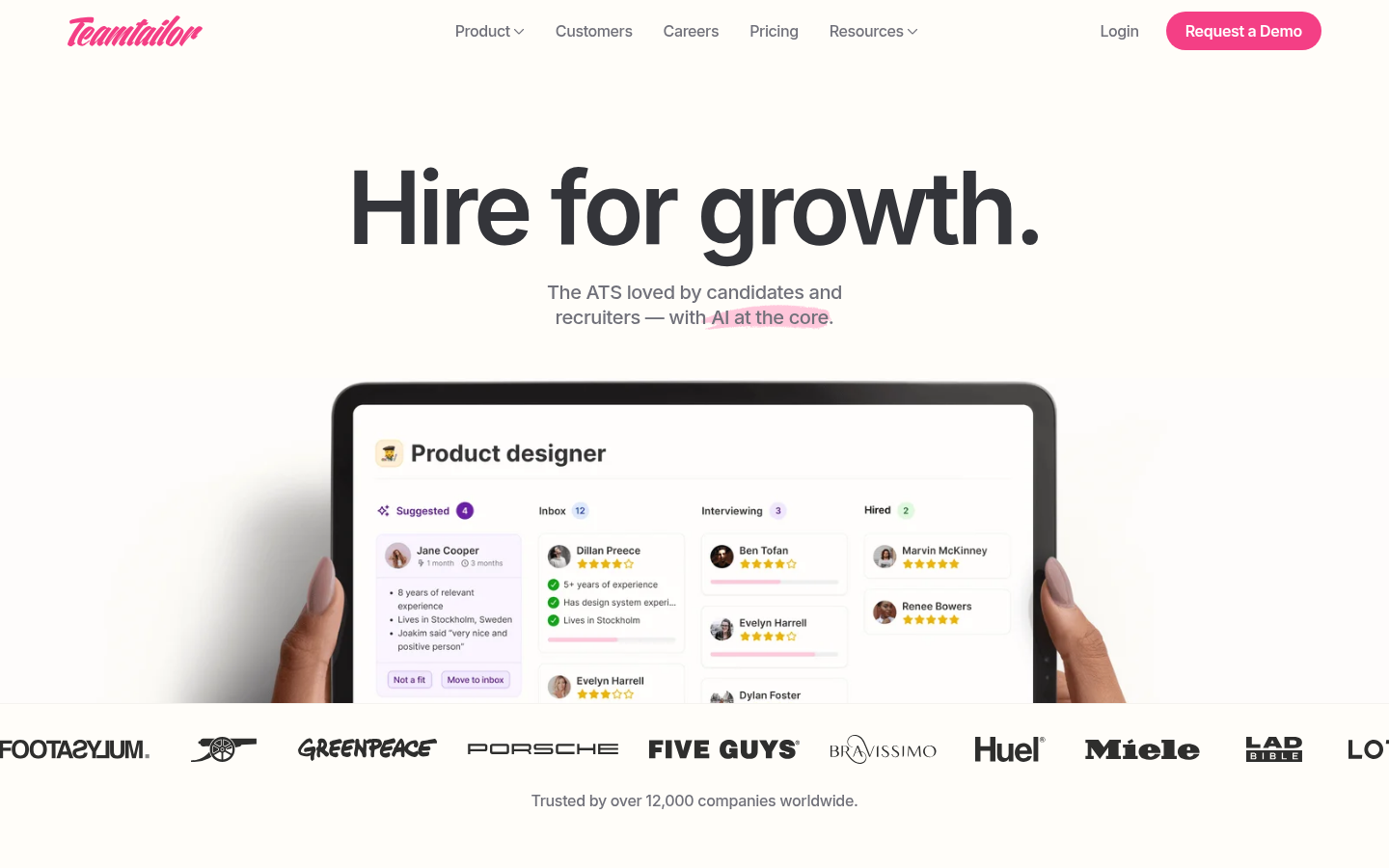
Teamtailor combines ATS, AI, and a candidate-experience layer into a single platform.
The differentiator is employer brand: the platform's career-page builder and candidate-facing experience are best-in-class. For teams where employer brand carries weight in conversion, that matters more than a marginal AI feature.
Key features:
- AI candidate-fit recommendations.
- Automated job posting distribution.
- Custom career-page builder.
- Collaboration and communication tools.
Pricing: Quote-based.
Where it falls short: AI capabilities are baseline, not differentiating. Teams that need advanced sourcing or capture will pair Teamtailor with a specialist.
Best for: Scale-up teams where employer brand and candidate experience drive conversion.
8. GoodTime
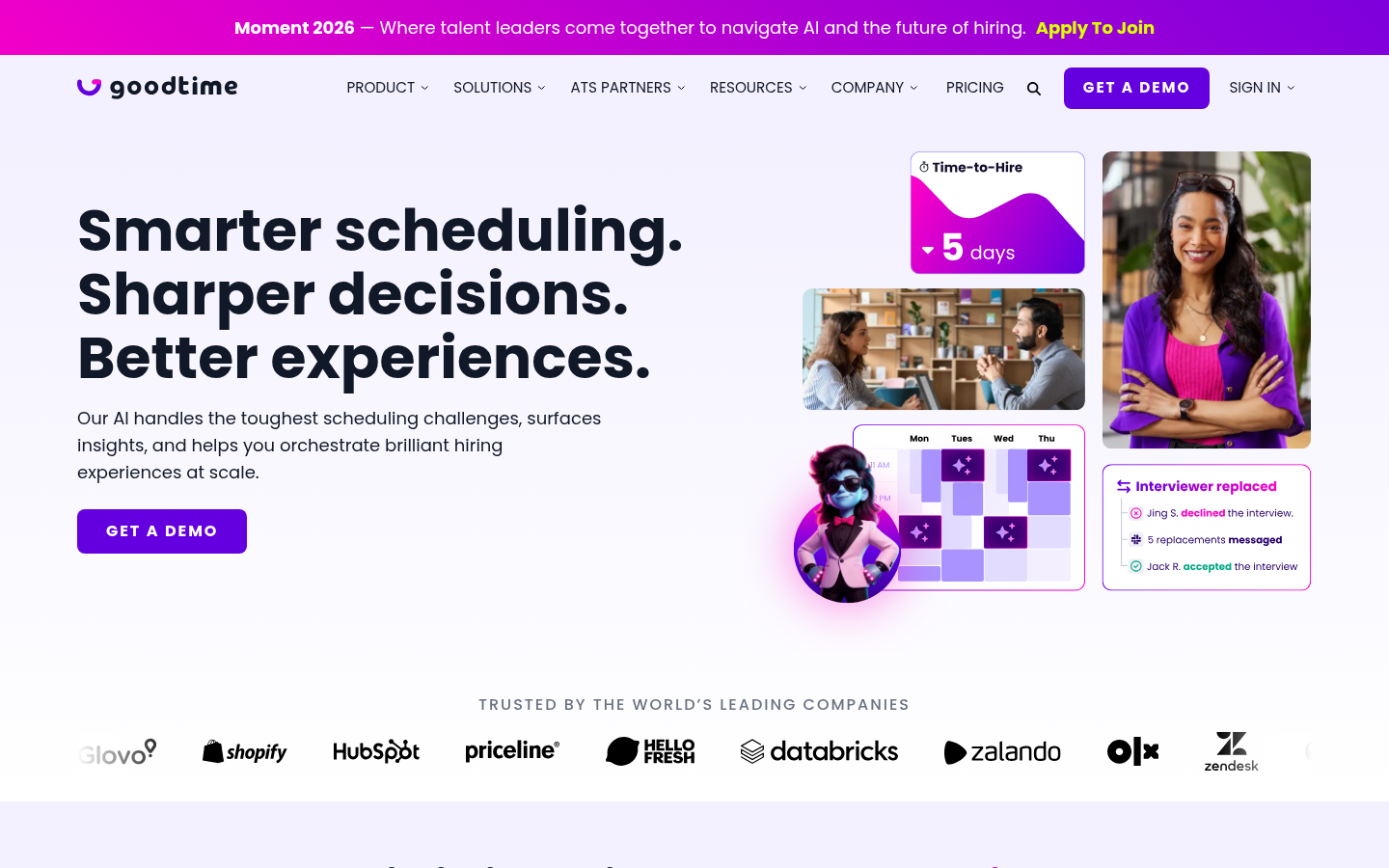
GoodTime is the AI-driven interview-coordination platform purpose-built for complex panels.
It solves the unglamorous problem that compounds across every active role: calendar tetris. Algorithms find optimal slots, balance interviewer workloads, and handle reschedules without recruiter intervention.
Key features:
- AI scheduling for single, multi-step, and panel interviews.
- Interviewer load balancing.
- Branded candidate self-scheduling.
- SMS, WhatsApp, and email candidate messaging.
- Scheduling analytics.
Pricing: Quote-based.
Where it falls short: GoodTime is scheduling-only. Pair it with capture and sourcing elsewhere.
Best for: Teams running multi-stage panel interviews at 50+ active reqs.
9. Greenhouse Analytics
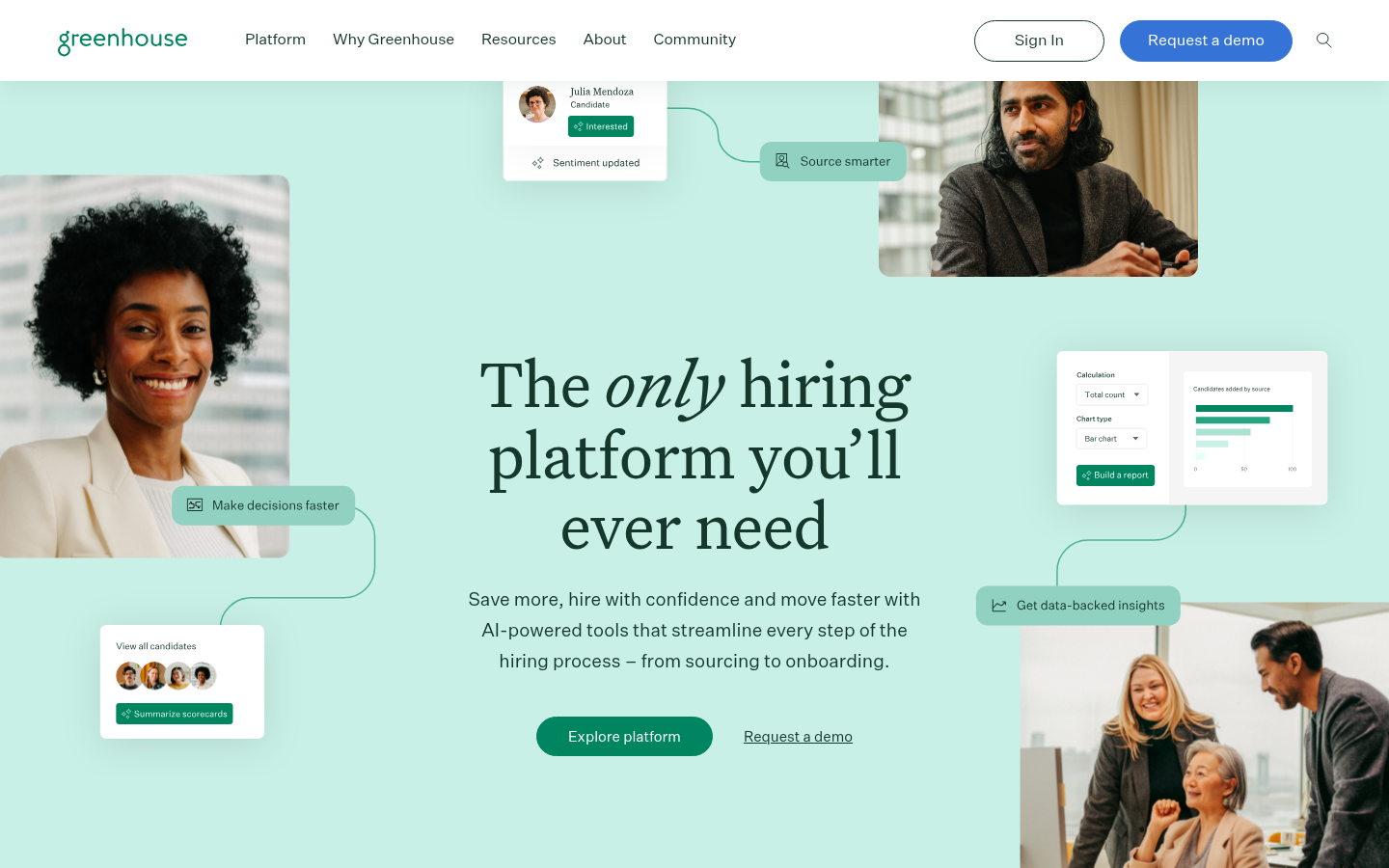
Greenhouse Analytics is the reporting layer inside Greenhouse, not a standalone tool. For teams already on Greenhouse, it's the lowest-friction way to get pipeline visibility without exporting to a BI tool.
Key features:
- Custom dashboards and reports.
- Pre-built recruiting metrics (time-to-hire, pipeline, source effectiveness).
- Filterable by role, team, stage, and demographic segment.
- Real-time analytics with drill-down.
Pricing: Quote-based; tiered Essential, Advanced, Expert plans.
Where it falls short: Locked to Greenhouse. Teams on Ashby, Lever, or Workday need to look at their ATS-native analytics or a third-party BI layer.
Best for: Greenhouse customers who want analytics inside the same tool.
10. Gloat
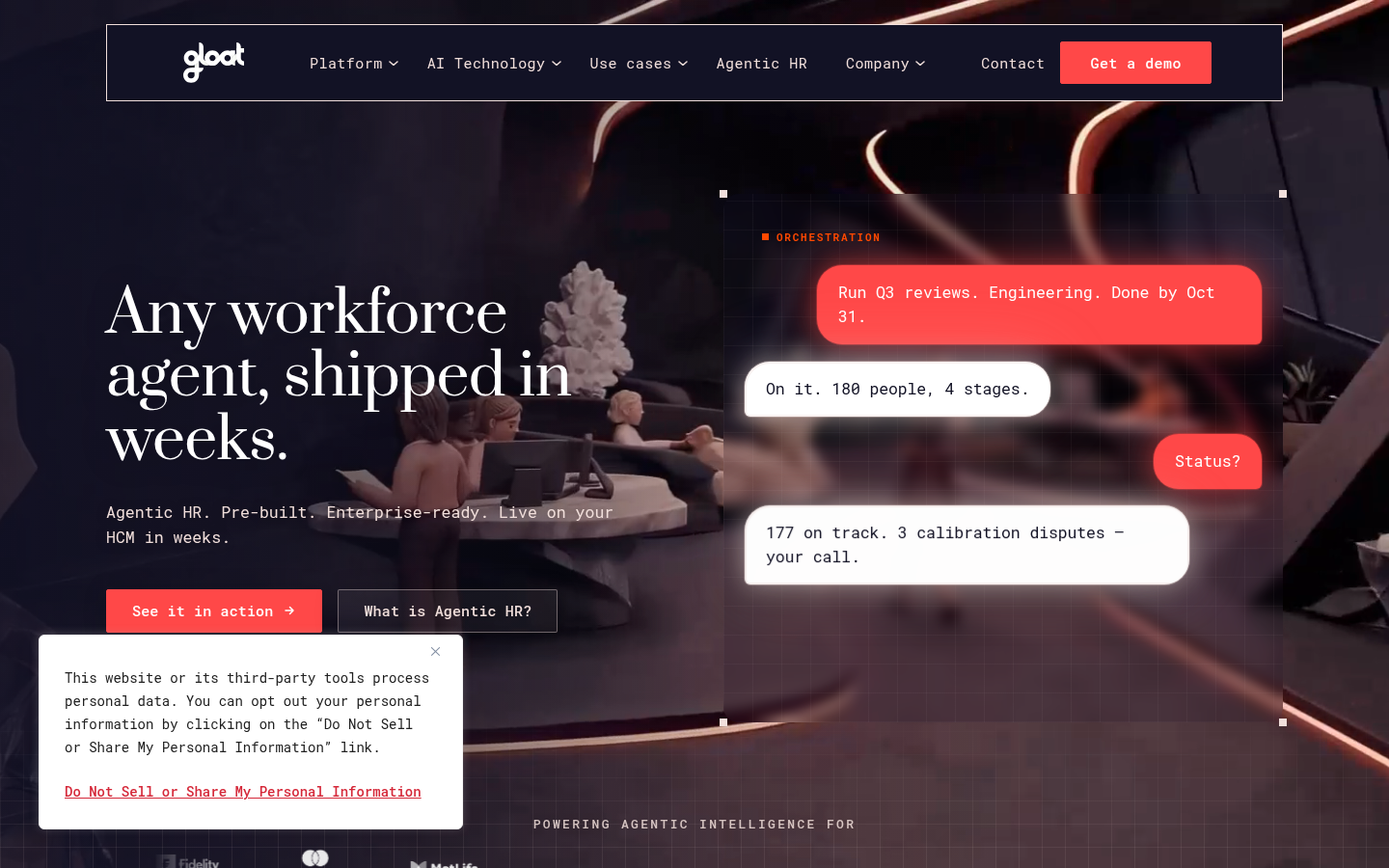
Gloat is an internal talent marketplace that matches existing employees to open roles, projects, and career opportunities.
The pitch is internal-mobility-first hiring: surface the internal candidate before opening the external search. For enterprise teams with 1,000+ employees, the time-to-fill compression and retention impact are meaningful.
Key features:
- AI matching of employees to internal jobs and projects.
- Skills and capability visualizations across the workforce.
- Career pathing recommendations.
- Project and gig-work support.
- HRIS integration.
Pricing: Quote-based; enterprise pricing band.
Where it falls short: Below 500 employees the internal marketplace doesn't have enough density to justify the cost.
Best for: Enterprise teams prioritizing internal mobility before external hiring.
How to choose the right tool
The framework that works for most teams: start with the highest-leverage layer and add one specialist tool per quarter.
The highest-leverage layer in 2026 is interview capture. Metaview's free tier covers it without adding line-item cost. The structured scorecards write back to your ATS automatically and the time-to-feedback compression cascades into every other metric.
Add sourcing AI next. Manual sourcing is the largest single tax on recruiting time; AI sourcing tools (Metaview, Findem) cut it from days to hours.
Add a scheduling tool when calendar coordination becomes a coordinator-hours problem. GoodTime if you're running panels; built-in ATS scheduling if you're not.
Most teams don't need 10 of the tools on this list. They need three of them deeply integrated. The audit worth doing each quarter is "what would happen if we cut the third-most-used tool?" The answer often surprises.
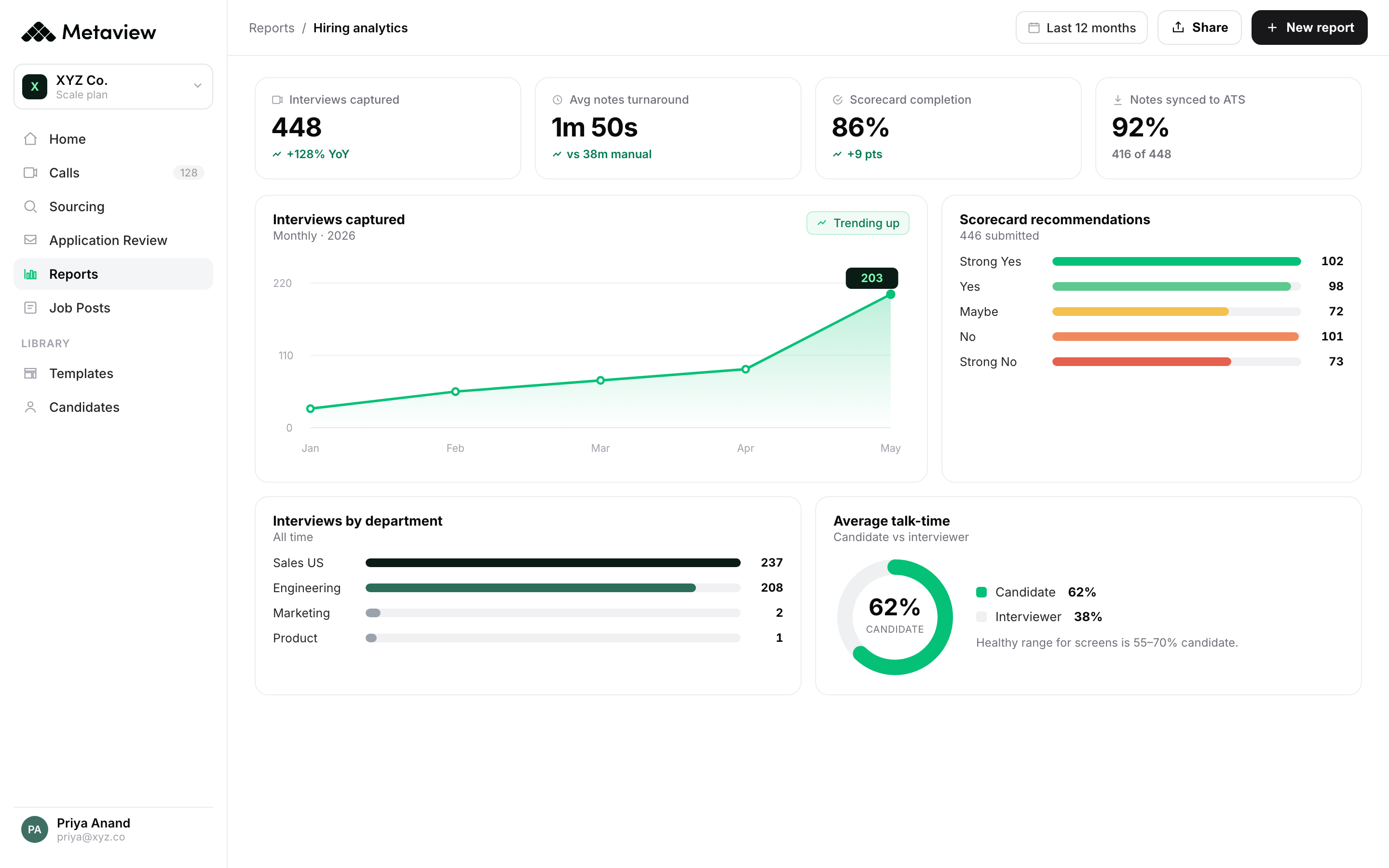
For teams that want funnel visibility without being locked to one ATS, Metaview Reports tracks the capture-to-write-back numbers across every interview:
Bring Metaview into your hiring stack.
Live notes, structured scorecards, and ATS sync, set up in under 10 minutes.
Frequently asked
What's the best AI recruiting tool in 2026?
Metaview, for any team that runs interviews. It's the only platform on this list built specifically for recruiting that covers sourcing, capture, and reports in one stack with native ATS write-back.
Will AI replace recruiters?
No. It absorbs the 40-60% of recruiter time that goes to admin. The strategic and relationship work moves to the center of the recruiter's day, not out of it.
How many AI recruiting tools should I use?
Two to three layered deeply usually outperforms six layered lightly. A capture layer, a sourcing layer, and a scheduling layer covers most teams. Audit the rest quarterly.
What should I look for in an AI recruiting tool?
ATS write-back is the integration that matters. A tool that doesn't push structured data back to your ATS makes you pay twice for the same work. Look for it before any other feature.
Are free AI recruiting tools good enough?
For interview capture and sourcing, yes. Metaview's free tier covers both for any team running under 50 hires a year and remains competitive at higher volumes too. Most other tools restrict their free option to a 14-day trial.
Is AI in recruiting safe for candidate data?
Depends on the vendor. Look for SOC 2 Type II, GDPR-aligned controls, candidate opt-out flows, and a published data-processing addendum. Verify before uploading PII to any free tier.
