
Tired of hiring stalling because the one person who has to interview a candidate isn’t around?
A strong candidate is ready for the next interview, but scheduling it depends on someone who isn’t free. The hiring manager is traveling for work, or the senior leader who has to meet them is booked solid for weeks.
The candidate waits, and might take another offer in the meantime. Then you’re settling for someone else, or the role stays open.
In our 2026 survey of recruiting leaders and hiring managers, 67% said they lose qualified candidates to faster-moving competitors every month. Every week a loop sits idle gives those competitors more time.
Hiring managers should still meet the people they hire, and the process shouldn’t run entirely without them. But stand-ins can run the other rounds and catch the manager up with strong notes. Here’s how to set that up.
Is the hiring manager on a work trip, on leave, or in another time zone?
Start by working out what kind of absence you’re planning around, because each one needs a different plan.
On a work trip, the manager can usually still take a call and read notes, just not at their usual times. On leave, they’re off work entirely. In another time zone, they’re available, but often at hours that don’t suit the candidate.
All of this applies to any senior person who has to meet your finalists, like a department head or a founder. If they’re around but hard to pin down, get their slot in the calendar now, so it doesn’t drift.
Here are the usual situations, and what each one leaves you:
| Absence | What they can still do | What to plan |
|---|---|---|
| A conference | Short calls between sessions, and reading early or late | Their interview on a lighter day late in the trip |
| Customer visits or a roadshow | Very little during the day | Their interview on a free day near the end, or in the week after |
| A few weeks in another office or time zone | A normal working day, at shifted hours | Their interview late in the stay |
| Leave or a holiday | Nothing | Their interview once they’re back, or the person covering for them on a long leave |
| A long-haul flight | Nothing on the travel day, and little the morning after | Their interview kept off the travel day and the next morning |
For a trip, ask for their itinerary first, with the dates, the cities, and the days already full of meetings. Use their itinerary to insert interviews if possible.
But leave is another story, and needs its own rules. If the manager will be back within a week or two, run the other rounds now and book their interview for the week they return. Tell the candidate the date, so the gap has an end.
For longer absences (like parental leave), find out who’ll cover and manage the new hire until they’re back. That person steps in as hiring manager for this role, from the final interview through to the offer. If your approval rules name someone else for the decision, bring that person in for it.
Which interviews can go ahead without the hiring manager?
In most loops, all but one. The interview where each finalist meets their future manager has to be live. A stand-in can run every other round, and the hiring manager can still make the final call by phone or in writing.
To sort the rounds, ask what each one checks. If it’s something only the manager can judge, or the candidate needs to judge their future manager, that round waits for them. If not, it goes to a stand-in.
A typical loop maps out like this:
| Step | Who usually runs it | While the manager travels |
|---|---|---|
| Hiring manager screen | The manager | A peer manager who has sat in on it, using the manager’s scorecard |
| Skills or case round | A peer, sometimes the manager | A peer who has interviewed for this team |
| Final interview with the manager | The manager | The manager, live by video, after the stand-in rounds |
| Debrief and decision | The recruiter runs it, and the manager decides | The manager, remotely, on a date set before the trip |
| Offer approval and closing call | The manager | The manager, with the closing call by phone |
Your hiring manager may push back; wanting to meet every finalist at every stage is a fair instinct. Ask what they’d test in a round that a stand-in couldn’t.
If they can name it, keep them in that round. If they can’t, they can read the stand-in’s notes instead.
Then go into that conversation (and every hiring process) as their partner in hiring.
How to partner effectively with leaders.
In the recorded session below, tech recruiting leader Blake Stockman talks with Siadhal Magos, Metaview’s co-founder and chief executive, about how Blake partners with engineering leaders.
Choosing a stand-in.
Pick someone who has interviewed for this team before, ideally someone who has sat in on the manager’s round. A peer manager suits the hiring manager screen. For the skills round, a senior peer works.
Brief them with the scorecard the manager would use and the questions the manager would probe. Put both in a written hiring brief so nothing depends on memory, and name a backup for each stand-in in case someone’s out sick on the day.
Ask each stand-in to finish their notes with what they couldn’t settle in the time they had. Those open questions are the agenda for the manager’s own interview, which is why it comes last.
Who can turn a candidate down while the manager is away?
Agree this before the manager leaves. The recruiter turns a candidate down only when every round says no, under a rule the manager signed off on. When the rounds disagree, the manager settles the split with the evidence from each side.
So treat a stand-in’s no as one view for the manager to weigh.
When it’s better to wait.
Pause the loop only if one of these is true, whether the manager is traveling or on leave:
- The absence is short, and the finalist has told you the timing works for them
- The manager is the only person on the team who can judge the work, which happens on a new team’s first hires
- The finalist wants to meet their manager before going any further
- The role is senior enough that the relationship with the manager is most of the job
Otherwise, keep the other rounds going with stand-ins, and set a date for the manager’s interview.
A five-step plan for interview scheduling around hiring manager travel.
Start about a week before the trip, or as soon as you hear about it.
1. Hold a planning call before the trip.
Go through the interviews with the manager and agree:
- A stand-in for each round they’ll miss, plus a backup
- The rule for turning a candidate down while they’re away
- A delegate for the decision, the offer, and the closing call, if the manager can’t be reached and your approval rules allow it
Write it down where the recruiter and the stand-ins can see it.
2. Give the manager interview a date.
If the stand-in rounds are already done, book it before the trip. If not, look for a lighter day near the end of the trip. If there isn’t one, use a fixed slot in the week they return.
Whichever you choose, put it after the stand-in rounds, and rule out “when I’m back”. An open-ended hold leaves the candidate with nothing to plan around.
3. Check time zones and clock changes.
For an interview during the trip, offer times where both working days overlap, and keep the first morning after a long flight free.
Watch daylight saving too. The United States and the United Kingdom change their clocks on different weekends, so for a few weeks each spring and about a week each fall, New York and London are an hour closer than usual.
If there’s barely any overlap, a standing interview block gives the manager one fixed window a week.
4. Tell candidates what’s happening.
Without a date, a candidate has to guess what a gap means. Tell each finalist who they’ll meet while the manager is away, and when they’ll meet the manager.
Agree the longest gap you’ll allow between rounds, too. If the manager’s interview can’t fit inside it, tell the candidate now.
5. Set the decision date before the trip.
Book the debrief for soon after the manager’s interview, and ask them to read every stand-in’s notes first.
The manager can join the interview debrief by phone from a hotel or send written comments. Aim to make the decision on that date, from the written evidence.
How Metaview helps a traveling hiring manager keep up with interviews.
A manager on a trip can keep up by reading the notes from each interview soon after it ends. Someone has to write those notes, and for recorded interviews, AI can do it for you.
The Metaview Notetaker, part of Metaview’s Agentic Recruiting Platform, records and transcribes a stand-in’s video interview if consent is given. Metaview structures notes from the transcript, ready for the manager to read.
The multi-source notes combine recorded interviews with documents you attach, like the resume and the job description, into one set of notes.
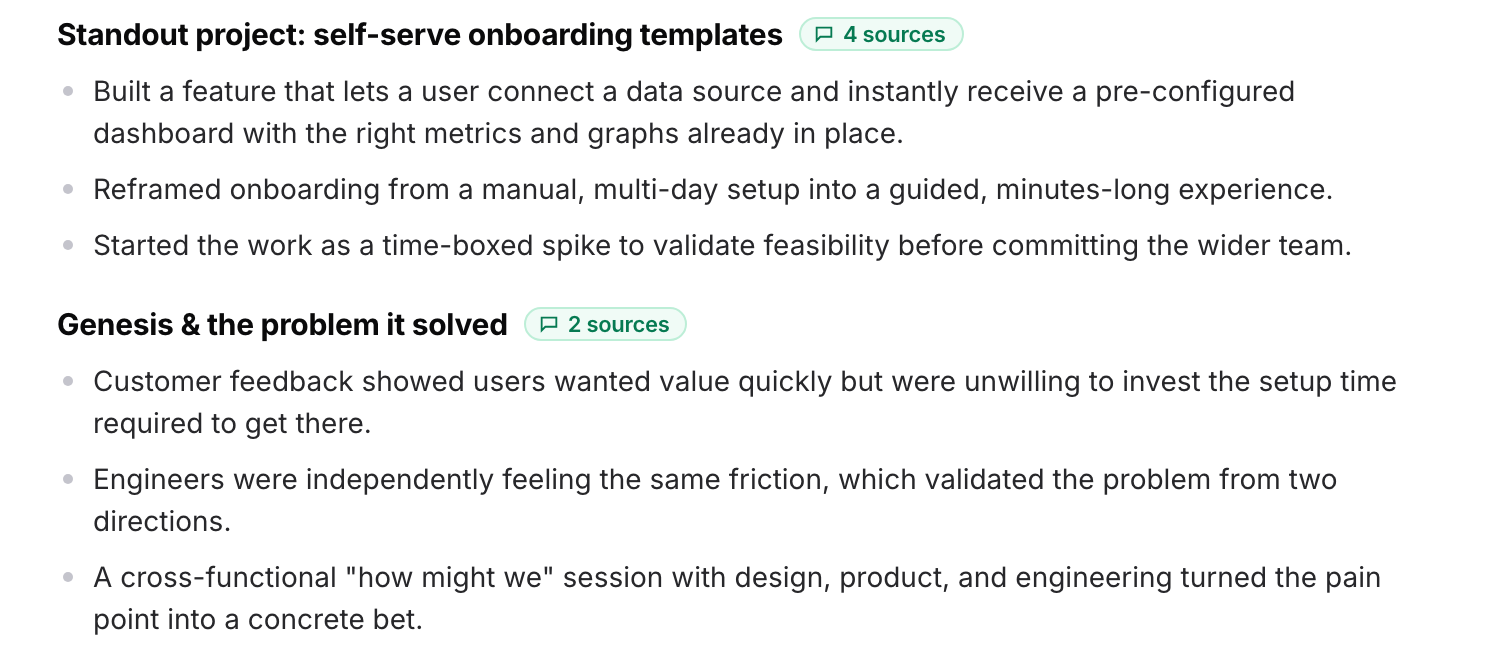
Because Metaview captures every spoken word of a recorded interview, the manager can check exactly what the candidate said before the debrief.
For a recorded interview, the stand-in reviews the scorecard draft Metaview prepares, rates the candidate, and submits it. They add their open questions in their own words, since only they know what they couldn’t settle.
Per Metaview data, half of submitted scorecards come in within 2.3 hours of the interview ending, and 74.7% within 24 hours. A manager who checks daily will find most of their scorecards already waiting for them.
Interviewers should note things they wish they could contribute to or what they would need to know to have a more confident opinion to evaluate candidates, but didn’t have the time.”

If the manager has a question between reading slots, the Metaview Assistant answers it from the recorded interviews. They can ask what a finalist said about leading a remote team, and it recalls the details.
How Quora manages remote recruiting.
Quora’s recruiters face a similar problem daily. Quora is fully remote, with recruiting and hiring teams spread around the globe. Global Head of Recruiting Hannah Wardle describes: “If I’m 8,000 miles away from my hiring manager, I don’t know what’s going on in their interviews or what they’re really looking to assess.”
With Metaview’s summaries and recordings, recruiters “can have a full contextual understanding of what’s going on in interviews.” Hannah also says hiring managers’ feedback now comes back faster. “We’re now getting feedback from hiring managers in 10 to 20 minutes.”
The same kind of record is ideal to keep traveling managers on top of interviews.
How to handle last-minute changes and check that hiring kept moving.
Trips change at short notice. The following fixes cover the usual cases:
- If the trip is announced on Friday for Monday, hold the planning call that day and brief each stand-in with the manager’s scorecard before the weekend.
- When a candidate declines recording, the stand-in writes full notes straight after the interview, with what they couldn’t settle at the top.
- A stand-in who drops out that morning is replaced by the named backup, and the recruiter tells the candidate before the interview starts.
- For an itinerary that changes mid-trip, rebook the manager’s interview, keeping it last, and tell the candidate the new date.
Once the manager is back, compare the trip with the weeks before it:
- Did the gaps between rounds grow? Find the round that waited and ask whether it had to.
- Count the candidates who pulled out during the trip, and read what they said when they did.
- Check whether the manager read each stand-in’s notes before their own interview. If not, move the reading slot to a time they’ll keep.
- Was the decision made on its date? If it was late, find out what held it up.
One trip is a small sample, so one poor result doesn’t mean the approach failed. Use it to fix the weakest step before the manager’s next trip.
See a stand-in’s interview the way a traveling manager would.
Book a demo of the Metaview Notetaker and see a recorded interview turned into notes a hiring manager can read on a trip.
Frequently asked.
Should you pause hiring while the hiring manager is traveling?
Rarely. Run the other rounds with stand-ins, and book the manager’s interview before, during, or right after the trip, once those rounds are done. Pause only for a short trip the finalist is happy to wait out, work only the manager can judge, a finalist who wants to meet them first, or a senior role built around working with the manager.
What if the hiring manager is on leave instead of traveling?
Don’t ask them to interview from leave. After a short leave, stand-ins run the other rounds and the manager’s interview goes in the week they return. For a long leave, the person covering for them takes the final interview and, within your approval rules, the decision, unless the role is worth waiting for, like a senior one built around working with the manager.
Can someone else make the hiring decision when the hiring manager is away?
On a trip, only someone the manager names in the planning call, and only if your approval rules allow it. The manager can usually still decide by phone or in writing, so keep that delegate for the day they can’t be reached. On a long leave, the person covering for the manager decides, under the same rules.
How do you handle candidate scheduling when the hiring manager is in another time zone?
Start from the candidate’s working day and look for overlap with the manager’s. If there’s none, ask the candidate whether an early or late call works for them before you offer one, and write both local times in the invite.
Do candidates mind meeting a stand-in instead of the hiring manager?
Some may, so ask. Every finalist meets the person they’ll report to before any decision, just later in the loop. If a finalist wants that conversation first, it’s worth waiting for it.
Can Metaview schedule interviews around the manager’s trip?
No. Metaview does not schedule or book interviews. Your team books them in its own calendar and scheduling tools, and Metaview connects to tools such as Google Calendar, Microsoft Outlook, and GoodTime through its integrations.
Is it okay to record the interviews a hiring manager misses?
It can be, if your policy and local law allow it, and this guide to recording interviews covers the wider case. Metaview informs candidates through touchpoints your team controls and configures, and recording only happens if consent is given. Its example consent message reads, “If both you and the interviewer consent, you will see a ‘Metaview Notetaker’ appear as a participant during the interview,” and your team can change that wording.
