
hireEZ is a strong outbound sourcing tool. It finds candidates, runs the outreach, and tracks who responded.
The bottleneck for most recruiting teams in 2026 is not finding people. It is what happens after. Hundreds of inbound applications need triaging. Screening calls need capturing. Interview signal needs to make it back into the next batch of decisions.
That is where teams look for alternatives. Not a hireEZ replacement, exactly, but tools that solve the slices hireEZ leaves behind.
This guide compares the 9 hireEZ alternatives recruiters most often consider, what each one is good at, and where each one falls short.
The 9 alternatives at a glance.
Quick read on what each platform is built for and where it fits relative to hireEZ. Details and honest trade-offs in the per-tool sections below.
| Alternative | Category | Best for |
|---|---|---|
| Metaview | End-to-end AI recruiting platform | Teams that want sourcing, screening, interview capture, and analytics in one tool |
| SeekOut | Deep sourcing for technical talent | Niche or hard-to-find sourcing in engineering and specialist roles |
| Gem | Recruiting CRM and outreach | Teams that already source well and want stronger engagement and pipeline tracking |
| Findem | Talent intelligence and rediscovery | Teams that want to mine their ATS plus external data for better matching |
| Eightfold AI | Enterprise talent intelligence | Large organizations connecting hiring with internal mobility |
| Ashby | ATS with analytics-led workflows | High-growth tech teams that need pipeline visibility and structure |
| Paradox | Conversational AI scheduling and screening | High-volume hiring where speed and mobile UX matter most |
| Humanly | Conversational AI screening | Teams dealing with high inbound volume that need structured early qualification |
| AmazingHiring | Technical sourcing across developer communities | Engineering hiring with deep GitHub, Stack Overflow, and community signal |
Where hireEZ falls short.
hireEZ does sourcing and outreach. Everything past the first response is someone else's job.
Inbound application review is not the focus. If half your pipeline comes from job board applies, hireEZ does not help you triage them faster.
Screening call capture is not built in. The recruiter learns the candidate is wrong on motivation in minute 3, and that signal never makes it back into the platform.
Interview structure and rubric-mapped notes live somewhere else. So does the data that should be telling you which interviewers are over-rating, which roles are slipping, and where in the funnel you are losing the best candidates.
And the ATS is still where the workflow happens. hireEZ pushes candidates in, but the structured signal that should be flowing back stays inside whatever screening, interview, and decision tools you bolt on.
1. Metaview.
Category: End-to-end AI recruiting platform
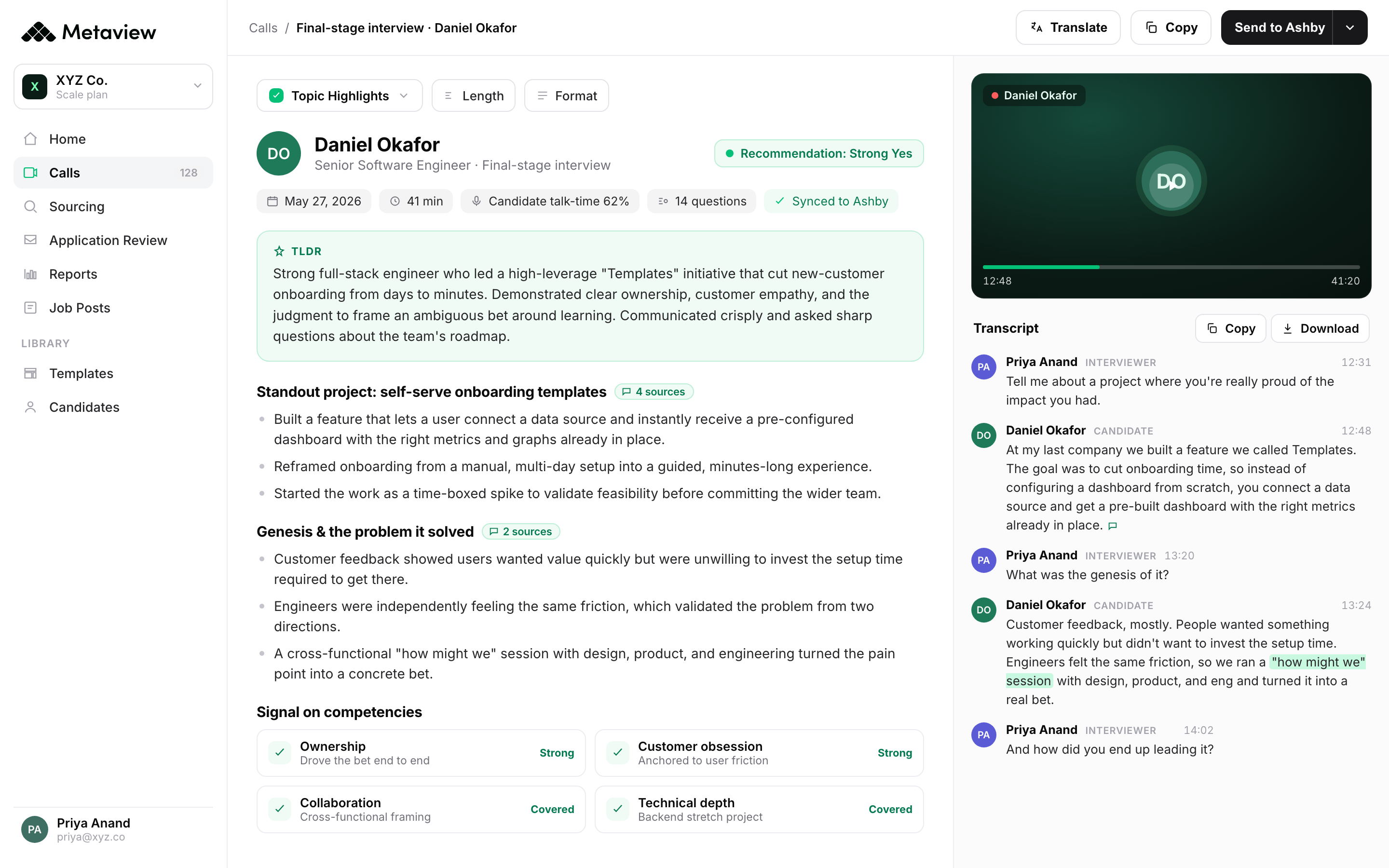
Metaview is the AI recruiting platform that covers the whole funnel, with the interview itself as the data anchor. AI Sourcing surfaces candidates against your intake-call criteria. Application Review triages inbound. Notetaker captures the interview as structured data. Reports tie it all together.
Where hireEZ ends at engagement, Metaview keeps going. The interview signal feeds back into sourcing, screening, and the next hiring decision.
What it covers:
- AI sourcing calibrated from intake calls and recruiter feedback
- Application Review with self-calibrating Ideal Candidate Profile
- Notetaker that turns every interview into rubric-mapped structured data
- Reports and pipeline analytics across the full funnel
- Native ATS sync with Greenhouse, Ashby, Lever, Workable, Teamtailor, and more
- Built-in fraud detection on by default
Where it falls short: more than a 1:1 hireEZ replacement. If your only need is outbound sourcing data enrichment for an existing pipeline, Metaview is more product than you need.
Best for: teams that want one platform for sourcing, screening, interviews, and analytics, with the interview itself feeding every stage upstream.
Talent leaders using Metaview's AI Sourcing report the time savings hit the moment the agent runs off an intake call. Matthew Parker, a Talent Acquisition Leader using Metaview AI Sourcing, described the shift.
It really quickly can solve for ‘time to final brief’ by providing recruiters and hiring teams with benchmark candidates within minutes. It will save teams hundreds of hours a year reviewing irrelevant applications and improve quality of hire.”
2. SeekOut.
Category: Deep sourcing for technical talent
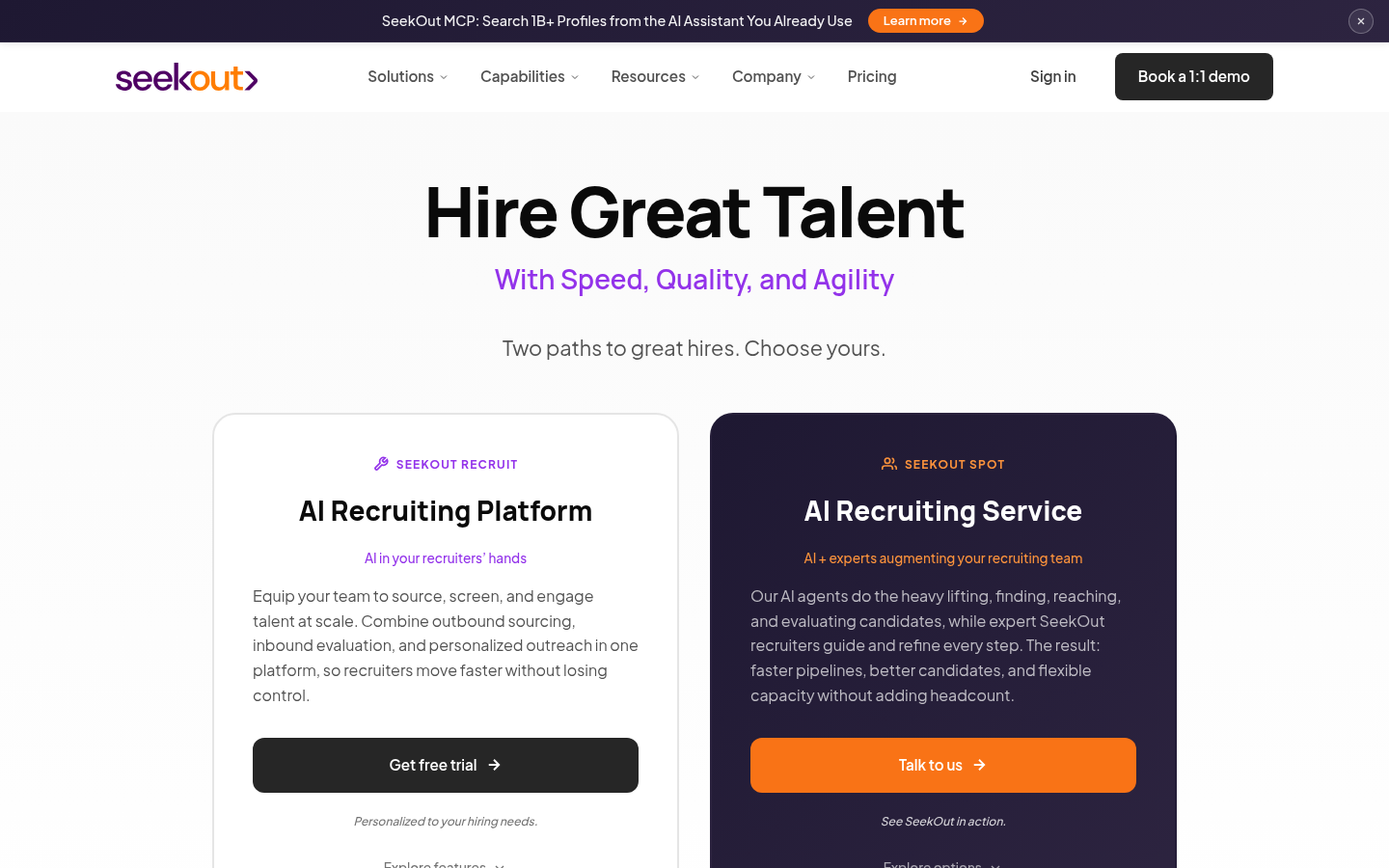
SeekOut is one of the closest direct sourcing alternatives to hireEZ, with a deeper bench on niche and technical talent. It aggregates 1B+ profiles and uses AI-powered search to surface candidates for hard-to-fill roles.
Where hireEZ leans into outreach automation, SeekOut leans into search depth. Engineering teams hiring for rare skill combinations tend to land here.
What it covers:
- Deep search across multiple talent datasets
- Advanced filtering for skills, certifications, and experience
- Diversity sourcing filters and talent market insights
- Light outreach and engagement layer
Where it falls short: outbound sourcing is the focus. Inbound application review, interview capture, and hiring decisions sit outside the platform.
Best for: engineering and specialist teams whose primary problem is finding the right candidates, not what to do with them after.
3. Gem.
Category: Recruiting CRM and outreach
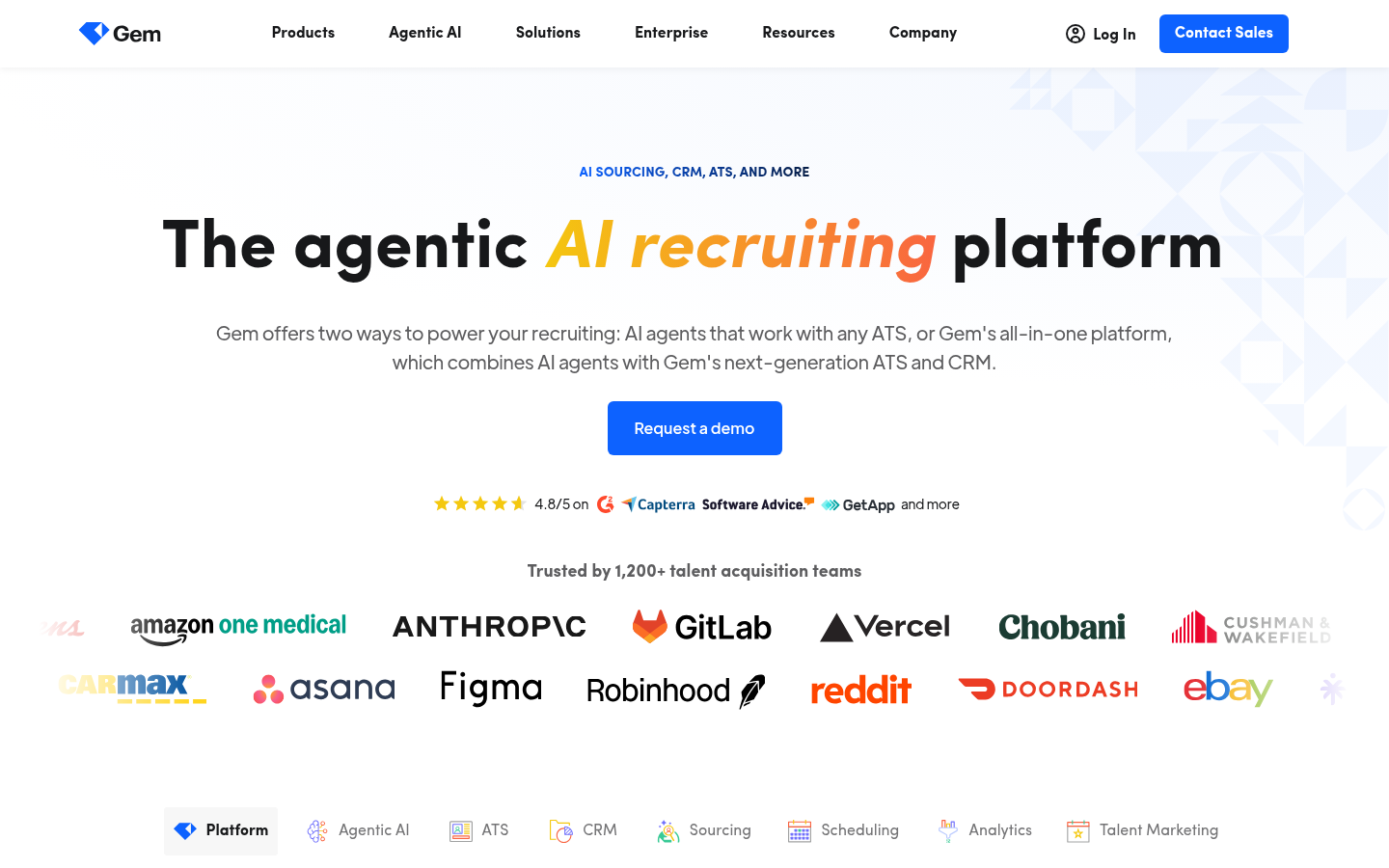
Gem is the recruiting CRM that anchors most outbound teams. It tracks every candidate touchpoint, structures outreach campaigns, and gives recruiters visibility into pipeline conversion at every stage.
Where hireEZ combines sourcing and engagement in one tool, Gem is more focused on the engagement layer. Teams that already source well pair Gem on top to manage the pipeline and convert more responses.
What it covers:
- Candidate relationship management and pipeline tracking
- Email sequencing and outreach automation
- Engagement analytics and conversion tracking
- Integration with ATS and sourcing tools
Where it falls short: the screening layer is light. Once a candidate engages, the structured qualification still has to happen elsewhere.
Best for: teams whose sourcing already works but whose pipeline conversion needs structure.
4. Findem.
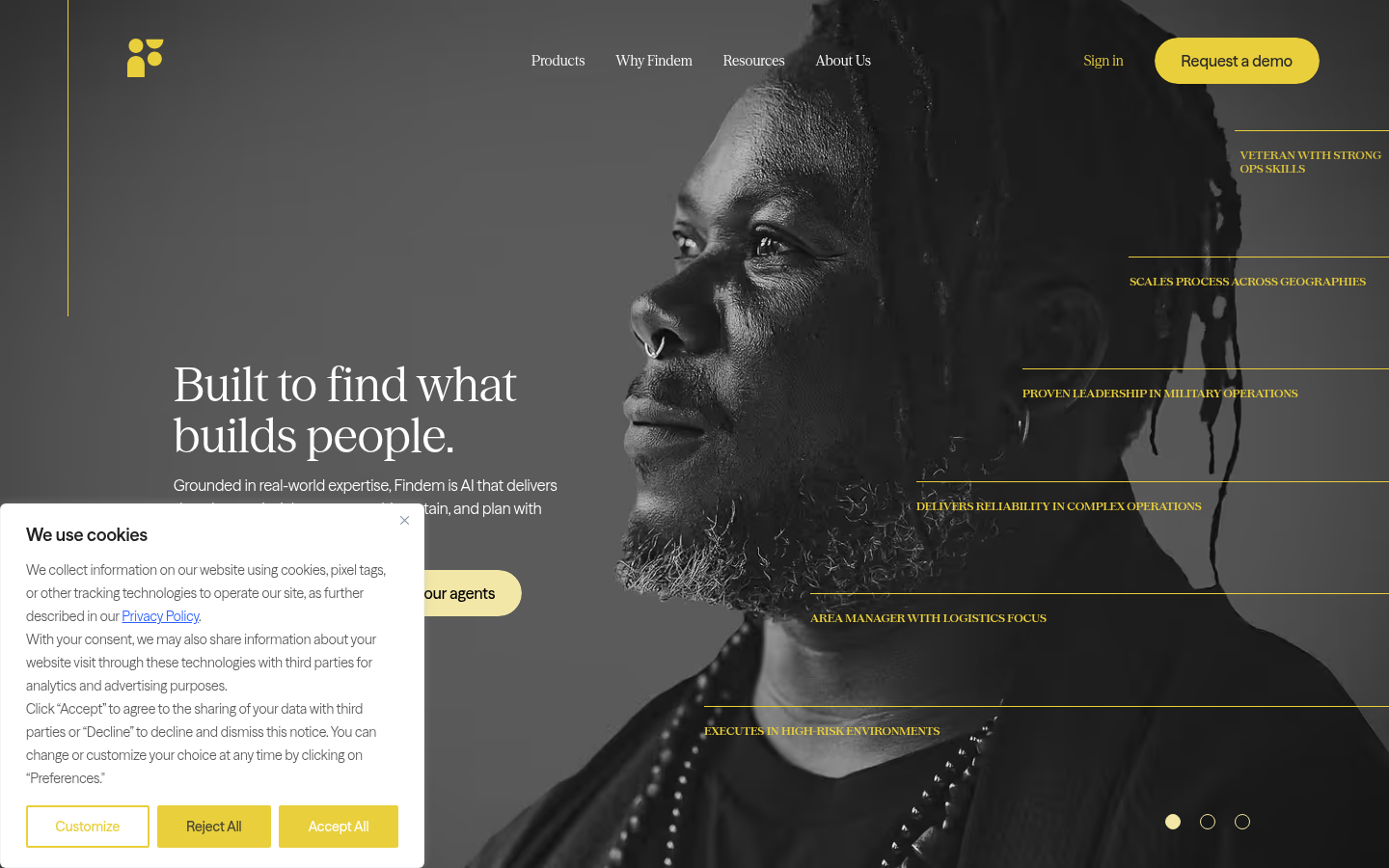
Category: Talent intelligence and rediscovery
Findem unifies internal ATS data with external candidate data to produce a more complete view of talent. The strongest use case is rediscovering candidates already inside your tracker.
Where hireEZ focuses on outbound candidate discovery, Findem focuses on data-driven matching across both your existing database and the external market.
What it covers:
- Attribute-based candidate matching beyond keywords
- Unified view of internal and external talent pools
- AI-driven talent rediscovery and prioritization
- Diversity and skills-based hiring insights
Where it falls short: less optimized for active outbound campaigns. Recruiter-led outreach workflows still need a separate tool.
Best for: teams that want to mine their ATS plus external data for sharper matching and rediscovery.
5. Eightfold AI.
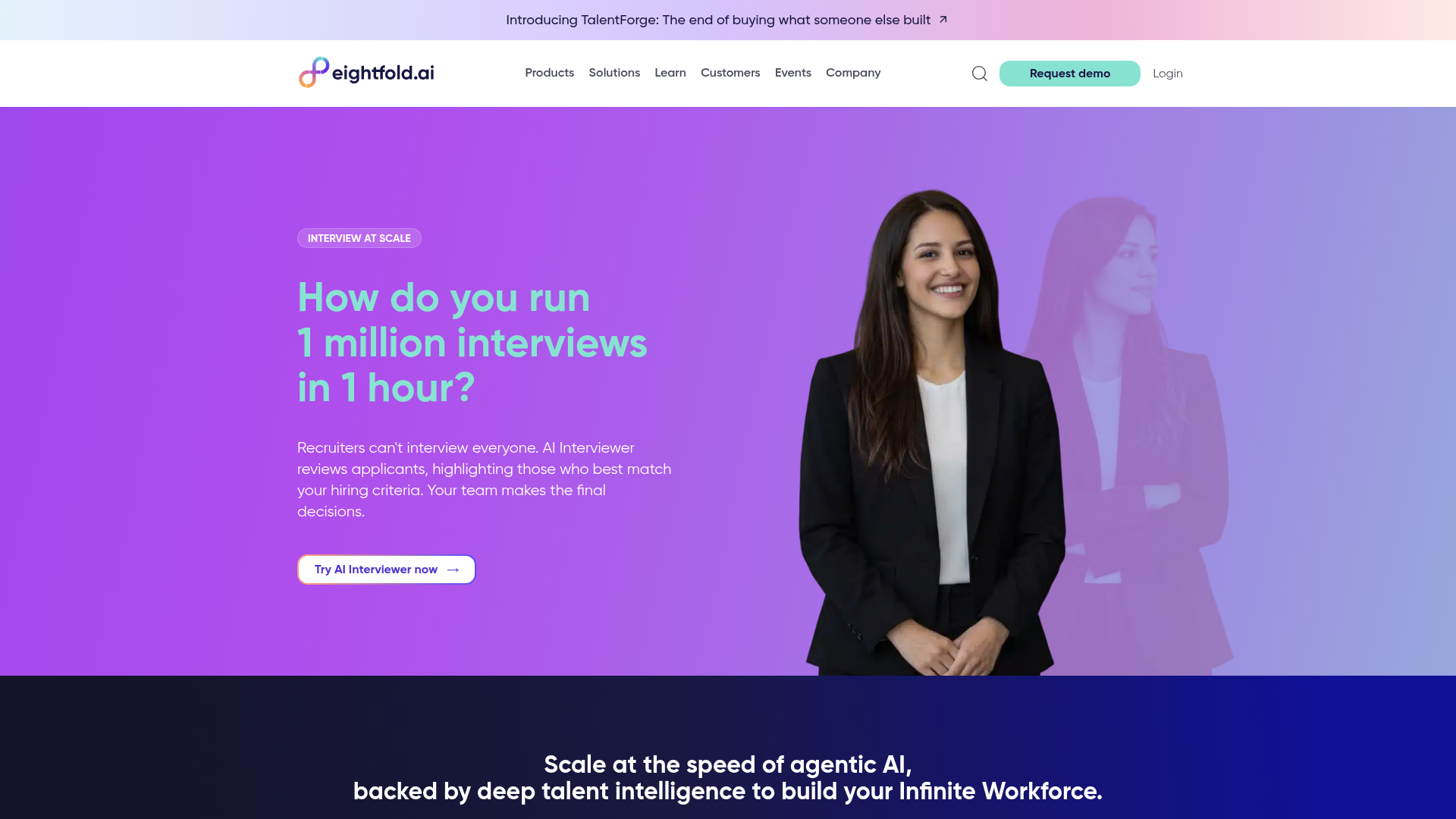
Category: Enterprise talent intelligence
Eightfold AI connects external hiring with internal mobility through a skills graph that maps declared, inferred, and adjacent capabilities. The model is built for enterprise scale, not active req sourcing.
Where hireEZ is built for active sourcing, Eightfold is built for long-term talent strategy across many job families.
What it covers:
- AI-driven skills and career path matching
- Internal mobility and redeployment tools
- Talent intelligence and workforce planning insights
- Unified view of internal and external candidates
Where it falls short: heavy implementation footprint. For sub-enterprise teams the skills graph is more model than you need.
Best for: enterprise organizations connecting recruiting with broader talent strategy and internal mobility.
6. Ashby.
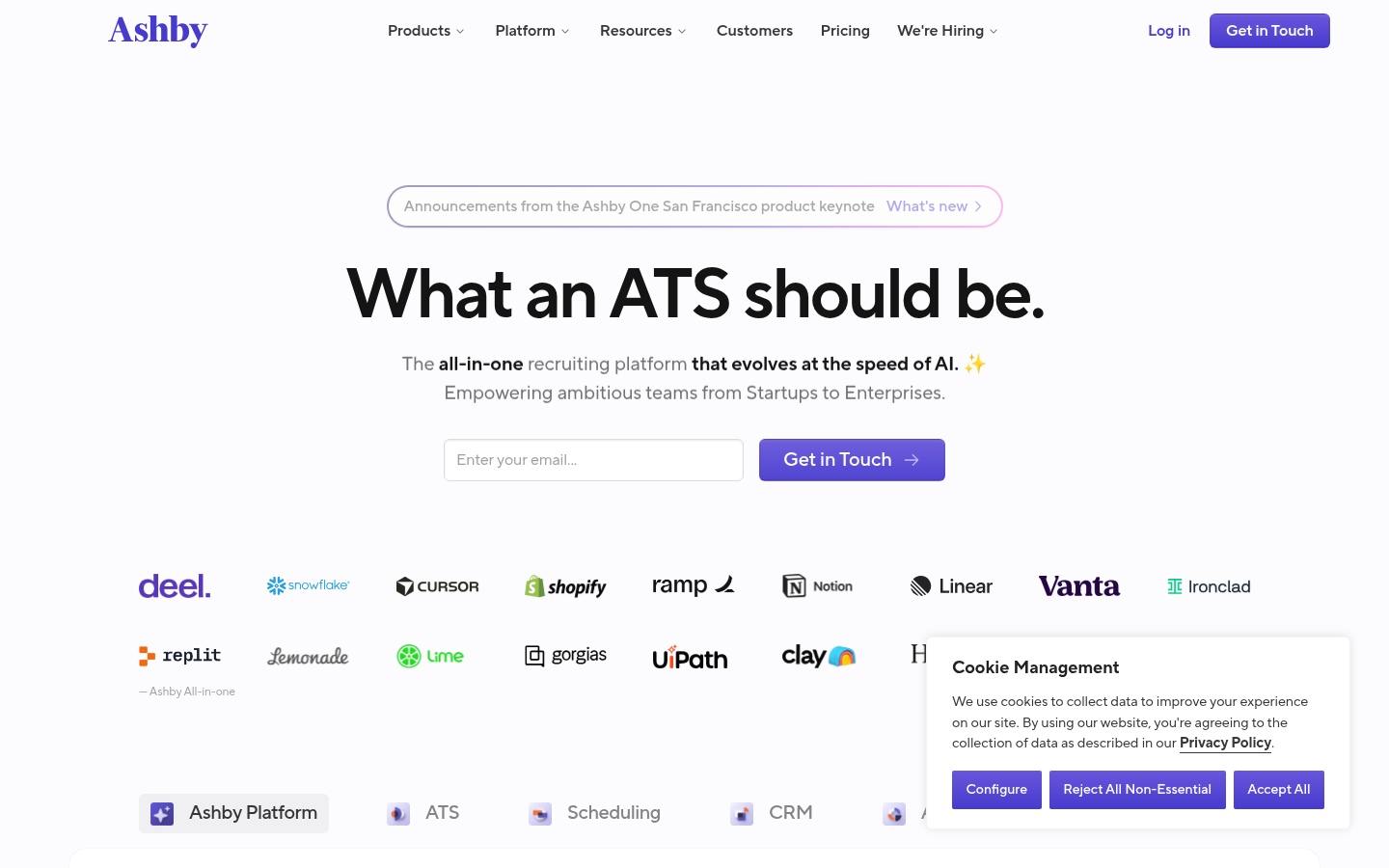
Category: ATS with analytics-led workflows
Ashby is the modern ATS most high-growth tech teams pick when they outgrow a basic tracker. The analytics layer is the differentiator: pipeline conversion by source, role, and interviewer in one view.
Where hireEZ does the outbound work, Ashby does the in-tool workflow management once candidates land.
What it covers:
- Full-featured ATS with customizable workflows
- Advanced recruiting dashboards and analytics
- Structured interview and feedback processes
- Clean integrations with sourcing and recruiting tools
Where it falls short: not a sourcing platform. Outbound discovery and engagement still need a separate layer.
Best for: high-growth tech teams that want visibility, structure, and data across the hiring process.
7. Paradox.
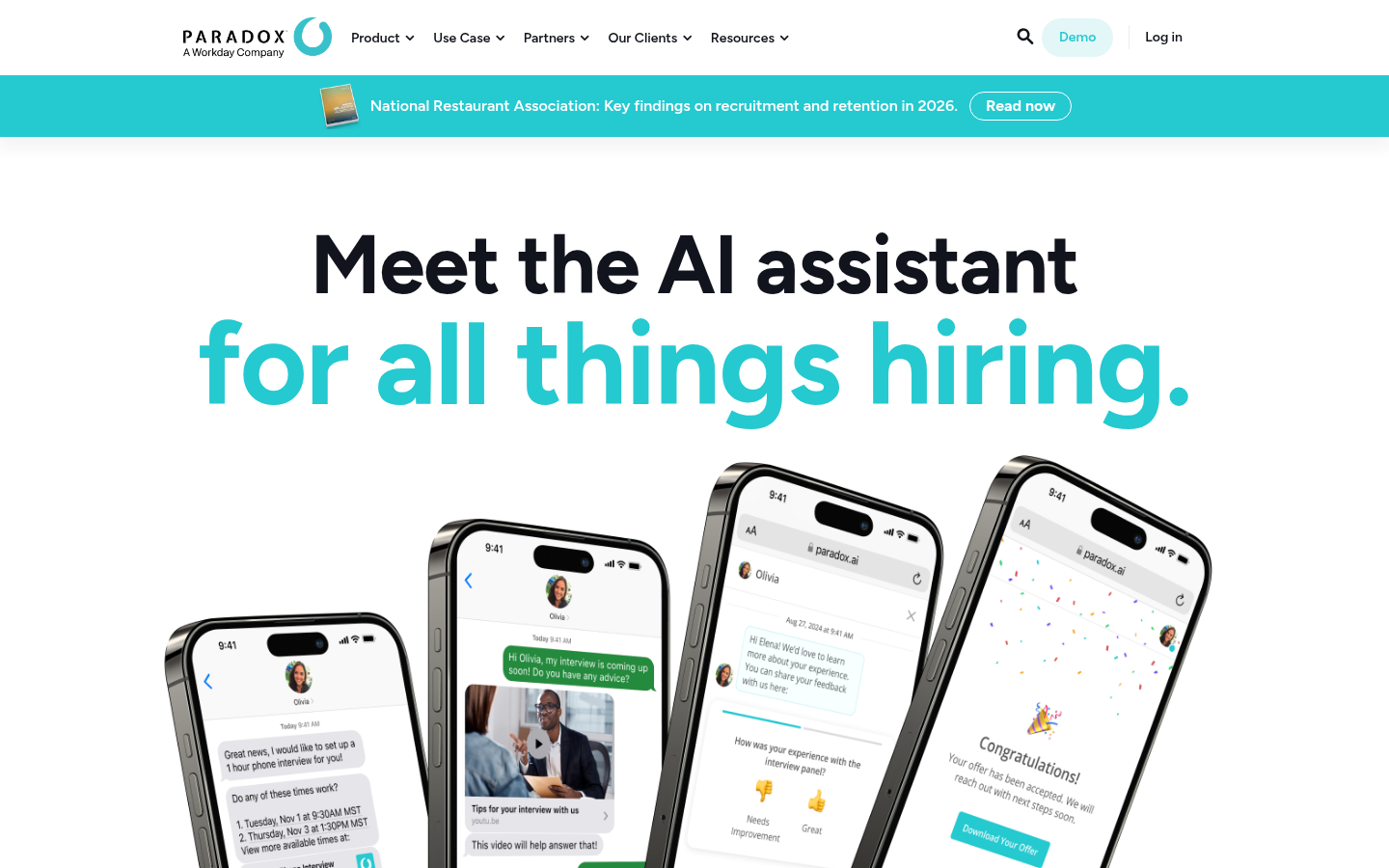
Category: Conversational AI scheduling and screening
Paradox automates the candidate communication and scheduling layers through a conversational AI assistant. For high-volume shift, retail, and frontline hiring, it is the fastest way to qualify and book candidates.
Where hireEZ helps you find and engage candidates, Paradox helps you move them through the early process without manual coordination.
What it covers:
- AI-driven candidate communication and chat workflows
- Automated interview scheduling
- High-volume hiring workflows and automation
- Integration with ATS and recruiting systems
Where it falls short: the screening is rule-based and high-volume oriented. For knowledge-work or senior roles, the chat layer is too narrow.
Best for: high-volume operational hiring where speed and mobile UX matter most.
8. Humanly.
Category: Conversational AI screening
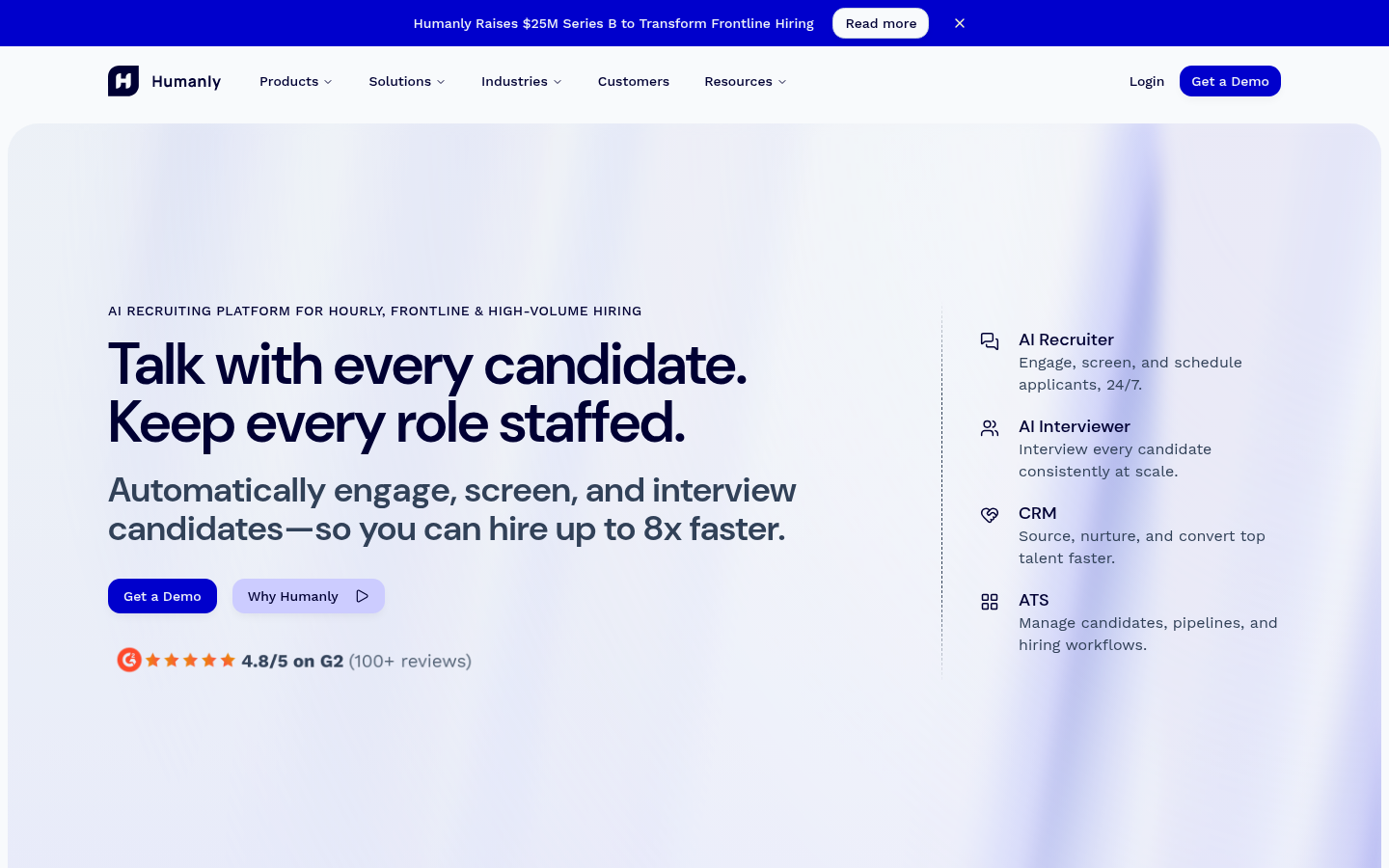
Humanly automates early-stage screening through structured conversations. Candidates answer qualifying questions via chat or voice, and the platform captures the structured data into your ATS.
Where hireEZ helps you find candidates, Humanly helps you qualify them once they enter the funnel. The two tools are complementary more than alternative.
What it covers:
- Conversational AI screening across chat and voice
- Automated candidate qualification workflows
- Structured data capture from candidate responses
- Integration with ATS and hiring workflows
Where it falls short: no sourcing or outbound tools. You still need a tool to fill the funnel before Humanly qualifies it.
Best for: teams dealing with high inbound volume that need structured early qualification before recruiter screens.
9. AmazingHiring.
Category: Technical sourcing across developer communities
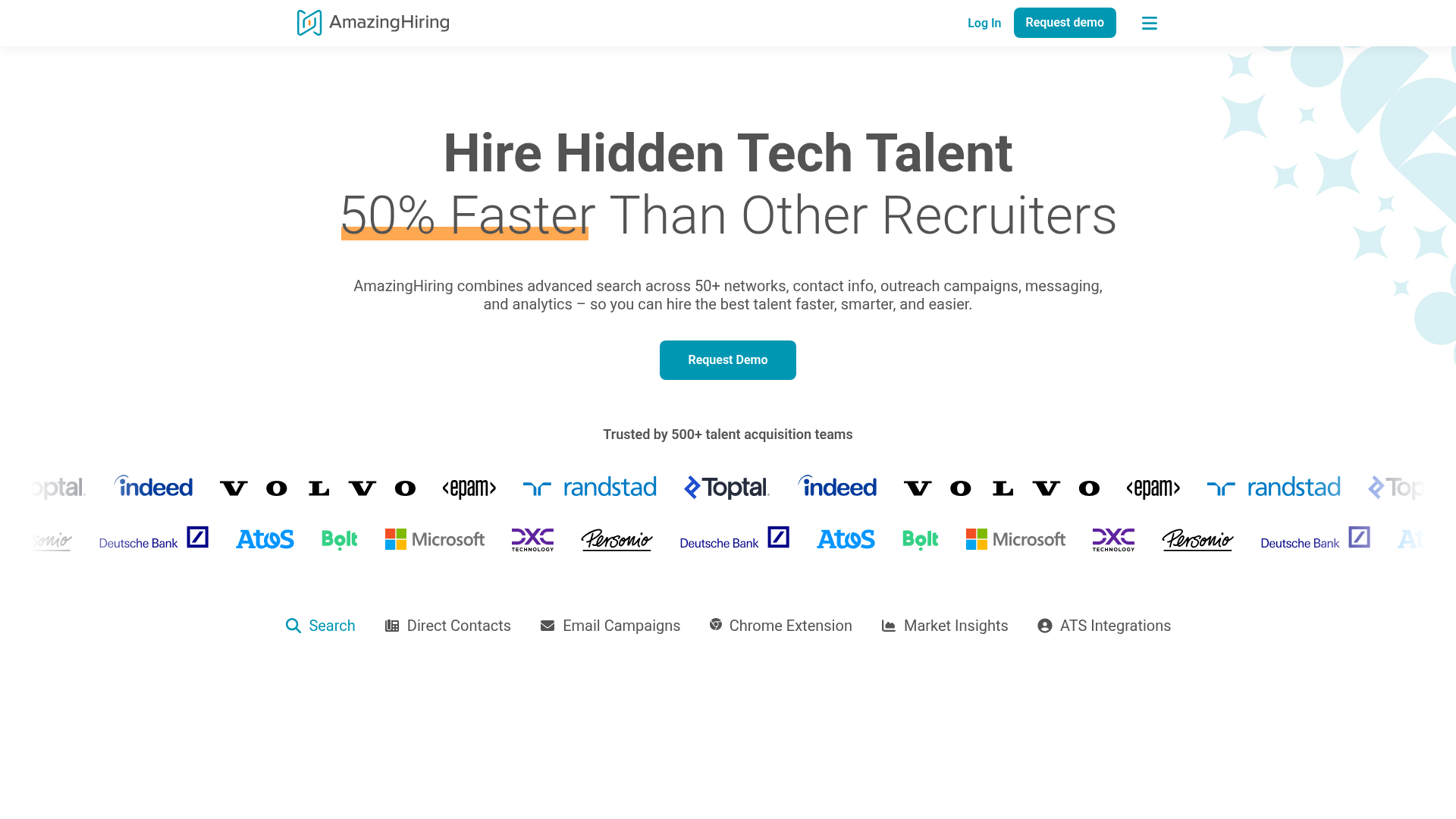
AmazingHiring aggregates technical profiles from GitHub, Stack Overflow, and other developer communities. For engineering hiring, the depth on technical signal is the strongest on this list.
Where hireEZ covers broad sourcing, AmazingHiring goes narrower and deeper on the technical domain.
What it covers:
- Aggregated technical profiles across multiple developer platforms
- Advanced filters for programming languages and skills
- Insights into candidate activity and open-source contributions
- Tools for identifying passive technical talent
Where it falls short: narrow by design. Non-technical hiring needs a different tool, and the platform does not cover screening or interviews.
Best for: teams hiring engineers at scale who need deep GitHub, Stack Overflow, and community signal.
How to choose between hireEZ and the alternatives.
Pick based on the slice that is actually broken. Six scenarios below.
Comparing alternatives at adjacent layers of the recruiting stack? See our guides on SeekOut alternatives and Lever alternatives.
Bring Metaview into your hiring stack.
Live notes, structured scorecards, and ATS sync - set up in under 10 minutes.
Frequently asked.
What is the best alternative to hireEZ?
It depends on the slice that is broken. For deeper sourcing replacements: SeekOut, AmazingHiring (technical), or Findem (data-driven matching). For CRM and engagement: Gem. For ATS plus analytics: Ashby. For automation at high volume: Paradox or Humanly. For full-funnel coverage from sourcing through interviews through hiring decisions: Metaview.
Why do recruiters look for hireEZ alternatives?
Usually not because hireEZ is broken at sourcing. The common reasons: screening still happens manually, interview signal does not get captured, decisions feel inconsistent, and the recruiting stack has too many tools that do not talk to each other.
Is hireEZ only a sourcing tool?
No. hireEZ covers sourcing, CRM, outreach, and light screening. But sourcing is where it is strongest. Most teams that adopt hireEZ end up using it primarily for outbound discovery and engagement, then pair it with downstream tools for everything else.
What tools pair well with hireEZ?
Most teams pair hireEZ with an ATS (Ashby, Greenhouse, Lever), a screening tool (Humanly), a scheduler (Paradox), and an interview-intelligence layer. The trade-off is operational fragmentation across four or five vendors.
What makes Metaview different from the other alternatives?
Most alternatives solve one slice of the funnel. Metaview combines AI sourcing, application review, interview capture, and hiring analytics in one platform. The interview becomes structured data that feeds every other stage, which no point-solution alternative can do.
