
The CRM is only as smart as the data inside it. For most recruiting teams, that data is a graveyard.
Half-completed touchpoints. Notes copy-pasted from interviews two weeks ago. Tags that meant something to the recruiter who set them and nothing to the one inheriting them.
A recruiting CRM is supposed to make long-cycle hiring possible: senior roles, executive search, talent communities, alumni rehires. The 10 platforms below are the ones doing that work in 2026, and the trade-offs that decide which fits your team.
All 10 CRMs at a glance.
| CRM | Best for | Pricing |
|---|---|---|
| Gem | Scale-up teams running senior outbound nurture | From $135/month |
| Beamery | Enterprise talent communities and skills-based nurture | Quote-based |
| Avature | Highly customizable enterprise CRM workflows | Quote-based |
| SmartRecruiters | Mid-market all-in-one ATS plus CRM | Quote-based |
| iCIMS | Large enterprise with deep HR-tech integration needs | Quote-based |
| Jobvite | Mid-market teams wanting integrated nurture | Quote-based |
| Bullhorn | Staffing and executive search agencies | Quote-based |
| Phenom | Enterprise candidate experience platform | Quote-based |
| Eightfold | Enterprise talent intelligence layer | Quote-based |
| Zoho Recruit | Small teams and agencies needing affordable CRM | From $25/user/month |
CRM vs ATS: what's the difference.
The simplest version: an ATS tracks candidates against open reqs. A CRM tracks candidates regardless of whether you have a req open.
If your roles close inside 30 days from req opening, an ATS alone is enough. If your roles take three to six months from first candidate contact to offer (senior or executive hiring), you need both.
The CRM is where the nurture lives: past applicants you might re-engage, alumni who might rehire, referrals introduced months before the right req opens, passive candidates kept warm for a future opportunity.
1. Gem.
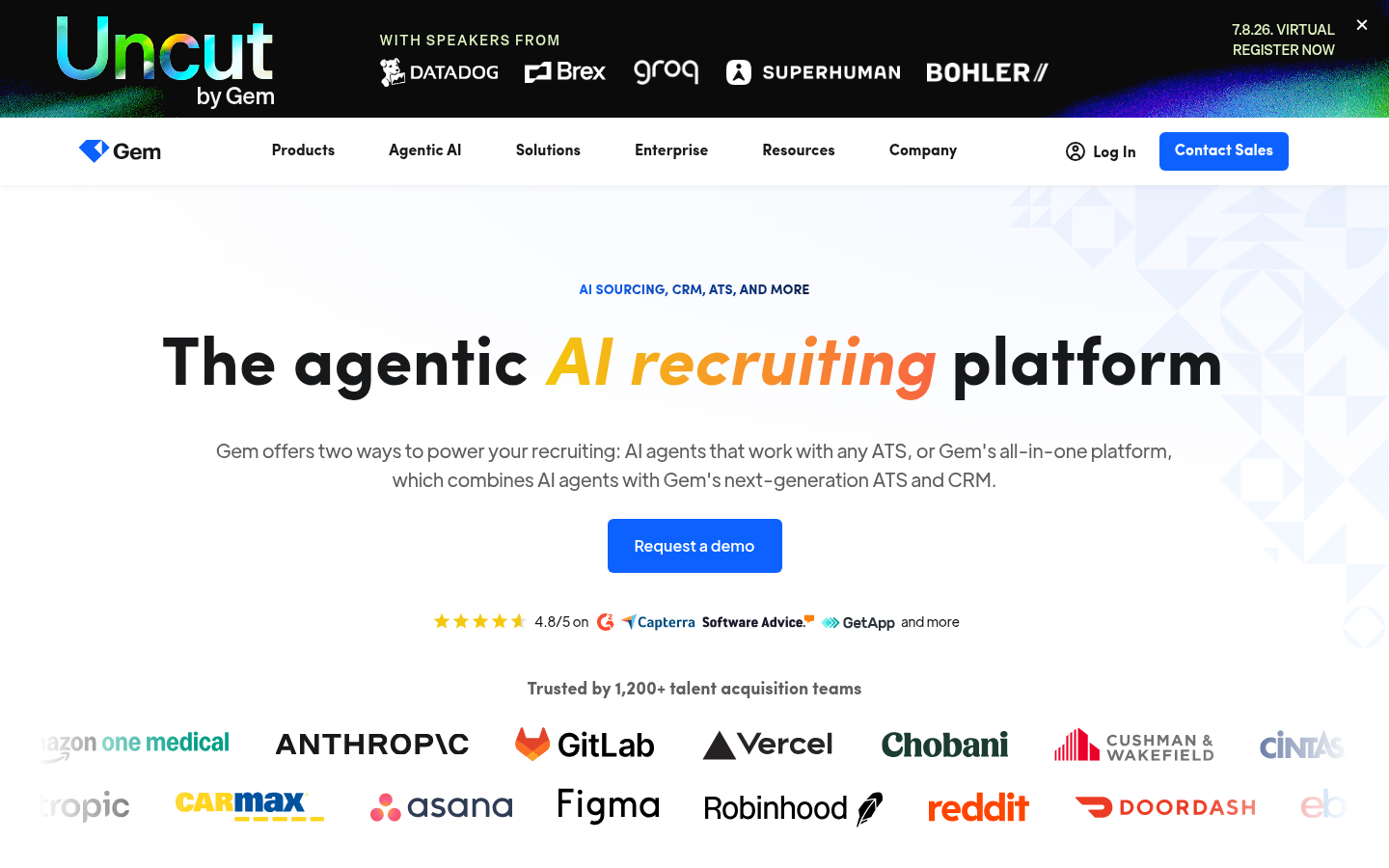
The dominant sourcing CRM for scale-up recruiting teams.
Gem's strength is the layer between sourcing tools and outreach: candidate touchpoints, sequence analytics, and pipeline visualization across senior outbound.
Key features:
- Centralized CRM for every candidate touchpoint.
- Email sequencing with A/B testing and reply tracking.
- Pipeline visualization across roles and recruiters.
- LinkedIn, Gmail, and major ATS integrations.
- Performance analytics by sequence and recruiter.
Pricing: Startup from $135/month. Growth and Enterprise on request.
Where it falls short: Gem doesn't find new candidates. You'll pair it with sourcing upstream.
Best for: Scale-up teams running multi-month nurture on senior roles.
2. Beamery.
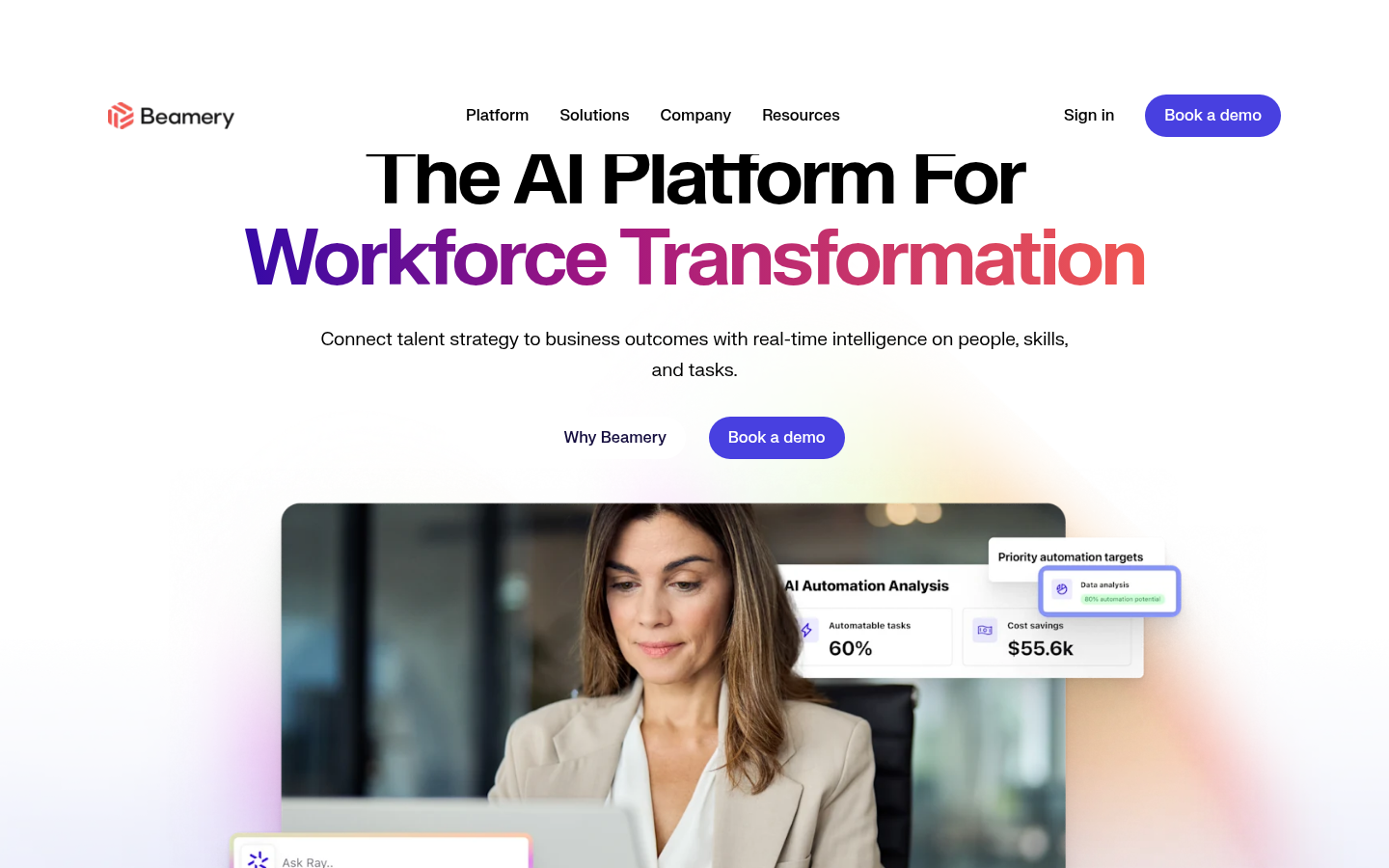
The enterprise talent CRM with the strongest skills-based architecture in the category.
Beamery is built around skills taxonomy, which means the CRM can re-match candidates against new role requirements as they emerge. Useful for enterprise teams running internal-mobility and external recruiting from the same platform.
Key features:
- Skills-graph-based candidate matching.
- Talent-community management with segmented nurture.
- Integrated career-site builder.
- Diversity and DEI analytics.
- Native integration with major ATSs and HRISs.
Pricing: Quote-based; enterprise pricing band.
Where it falls short: Enterprise complexity is the trade-off. Below 1,000 employees, Beamery's depth often outruns the team's ability to operate it.
Best for: Enterprise teams running skills-based hiring at 1,000+ employees.
3. Avature.
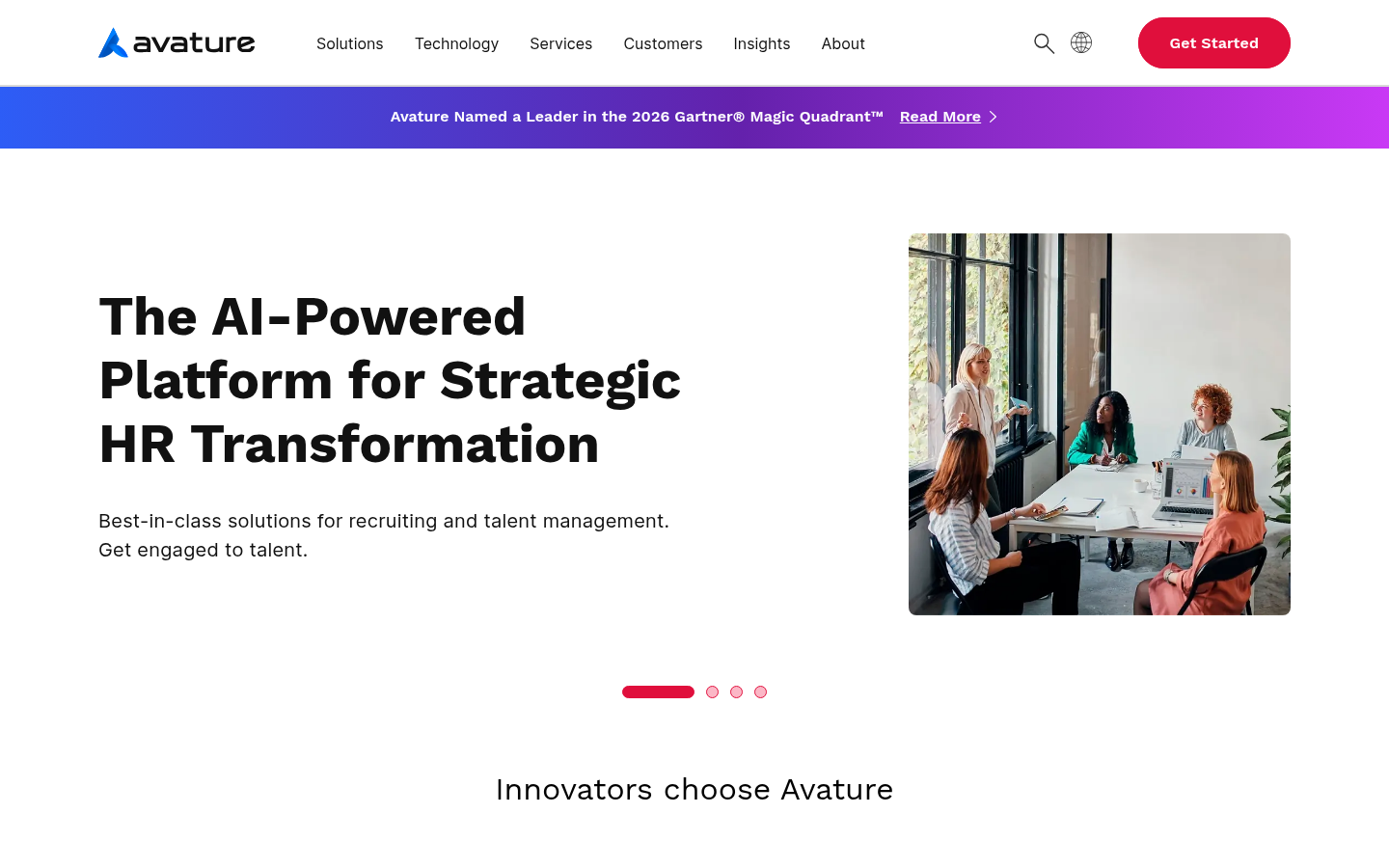
The most customizable enterprise CRM. Avature ships as a configurable platform rather than a fixed product.
Key features:
- Highly configurable workflows per business unit.
- Multi-language support across 50+ languages.
- Native integration with major ATSs and HRISs.
- Career-site and candidate-portal builder.
- Diversity reporting.
Pricing: Quote-based; enterprise pricing band.
Where it falls short: The configurability that's the selling point is also the implementation cost. Plan a 6-12-month rollout.
Best for: Enterprise teams with dedicated recruiting-ops capacity to configure and maintain.
It's unimaginable to go back to a time before Metaview where we'd have to take notes during interviews and rely on guesswork for improving our processes.”

4. SmartRecruiters.
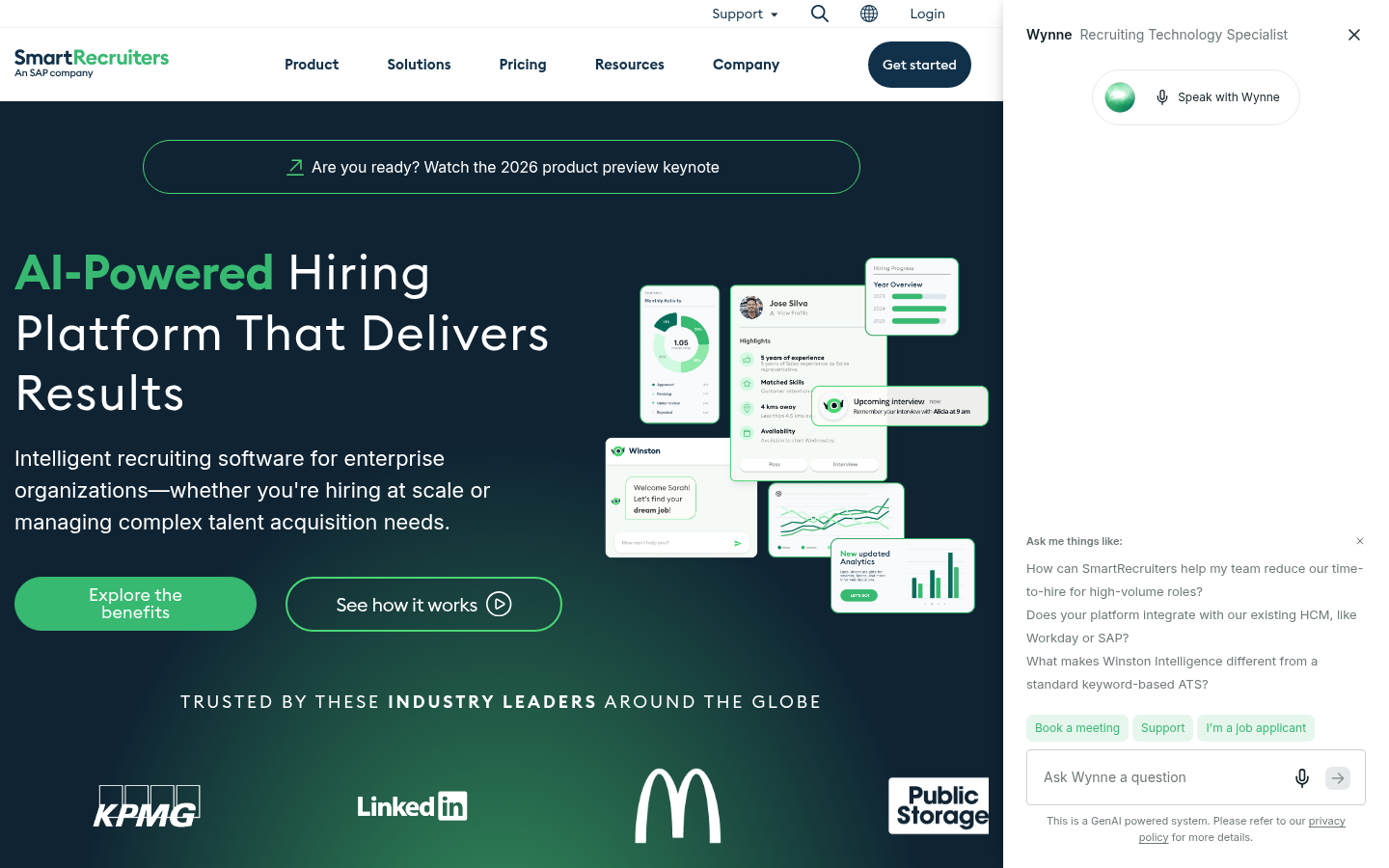
An all-in-one ATS plus CRM aimed at mid-market.
The pitch is consolidation: one system for the open req and the nurture pipeline. For teams who'd otherwise run Greenhouse plus Gem, SmartRecruiters often comes in at a lower total cost.
Key features:
- Combined ATS and CRM in a single platform.
- AI-driven candidate matching.
- Career-site builder.
- Integration with major sourcing and assessment tools.
- Analytics on pipeline health.
Pricing: Quote-based.
Where it falls short: Neither the ATS nor the CRM is best-in-class. The all-in-one trade-off works for some teams; for others it's worse than two specialist tools.
Best for: Mid-market teams (200-1,000 employees) wanting one platform for ATS + CRM.
5. iCIMS.
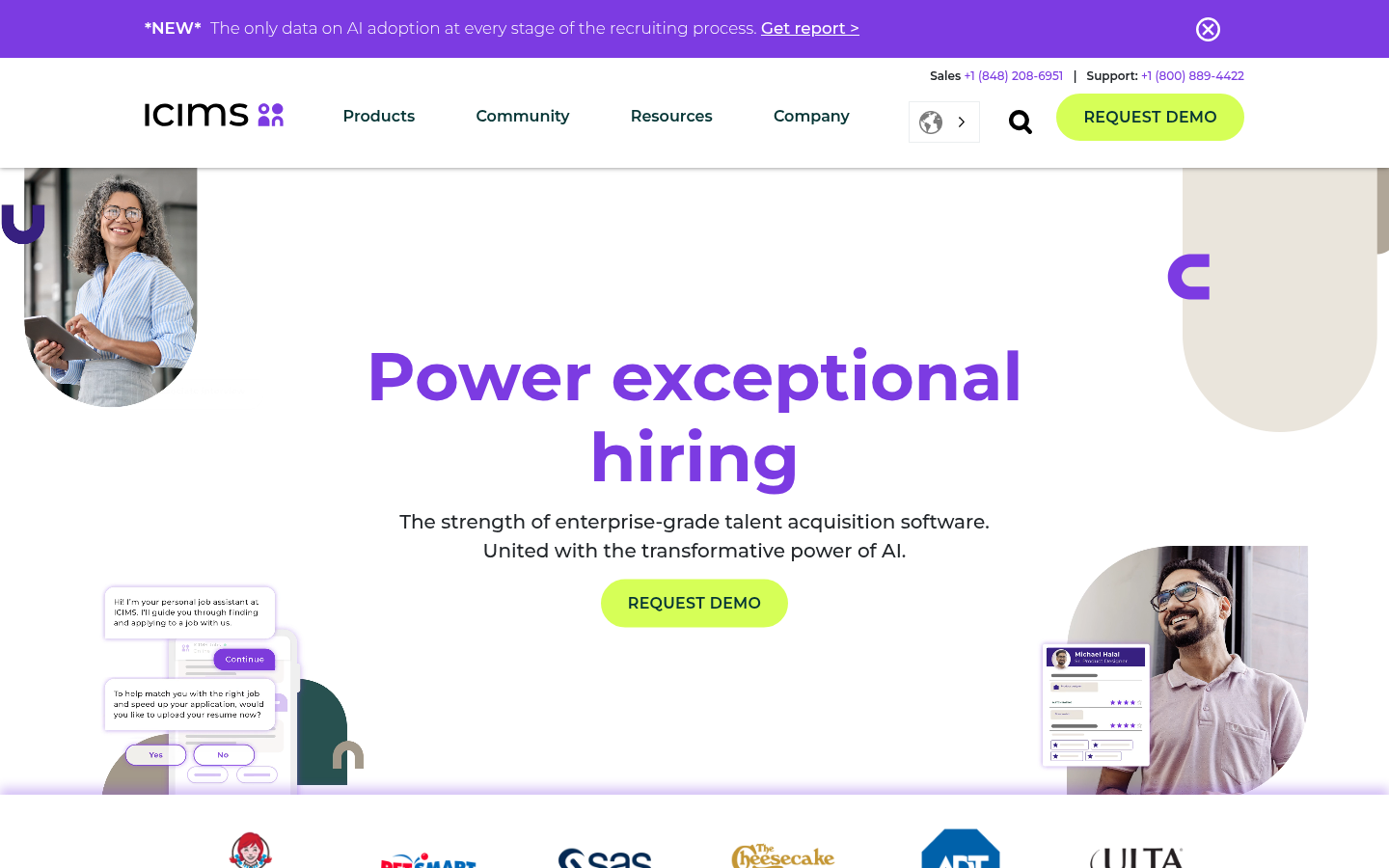
The large-enterprise default for HR-tech-heavy stacks.
iCIMS leads in HR-tech integration breadth: deep connectors to Workday, SAP SuccessFactors, Oracle HCM, and the rest of the HRIS landscape. For organizations where the CRM has to live inside a broader HR-tech ecosystem, that integration depth matters.
Key features:
- Enterprise-scale candidate database.
- Deep HRIS and ATS integrations.
- Compliance and global-data-residency support.
- AI-driven candidate matching.
- Career-site and candidate-portal tooling.
Pricing: Quote-based; enterprise pricing band.
Where it falls short: Implementation is heavy and UI lags behind newer competitors. Plan for 6-9 months.
Best for: Large enterprises (5,000+ employees) with HRIS-integration as a top priority.
6. Jobvite.
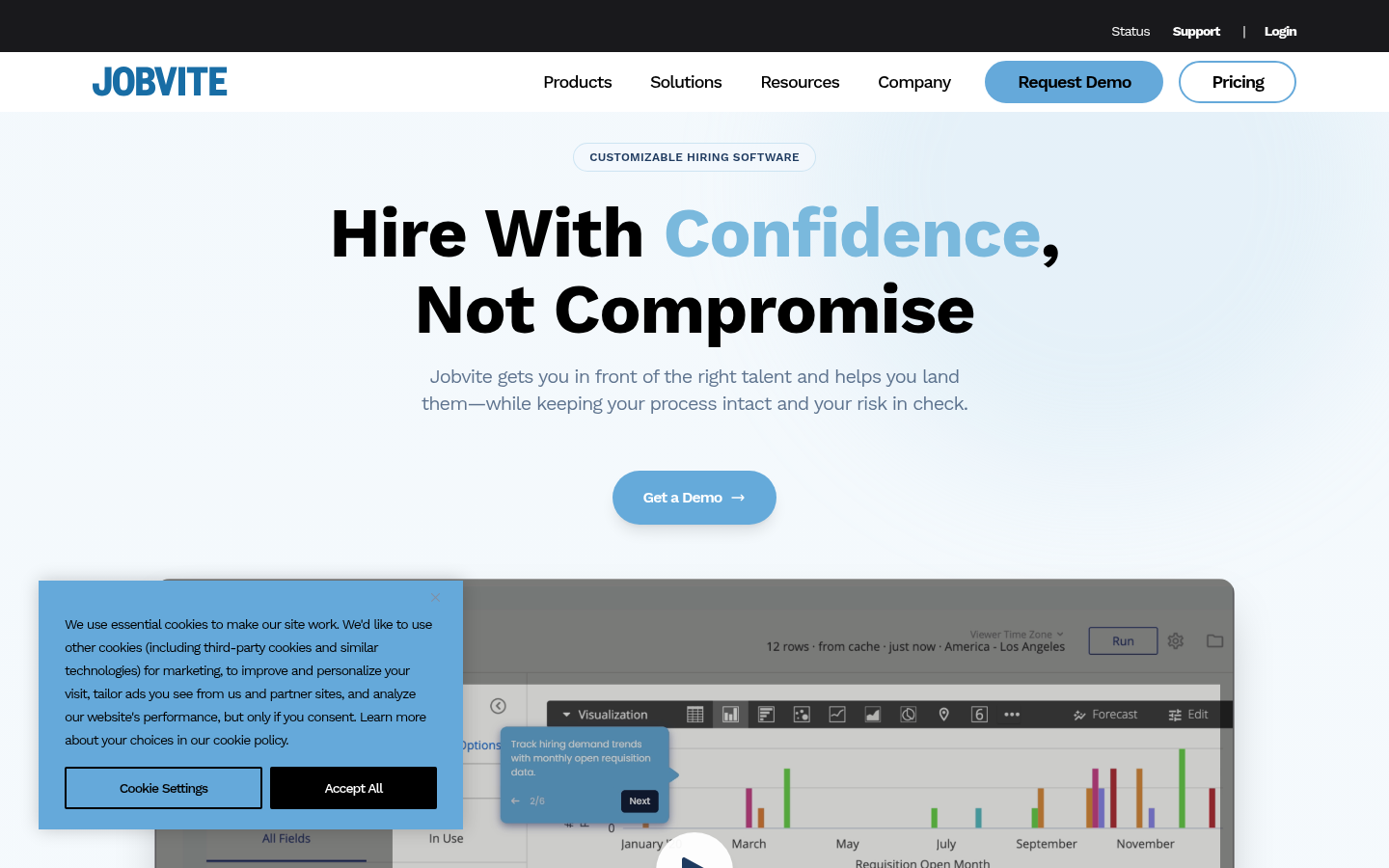
A mid-market ATS-plus-CRM with stronger candidate-engagement features than most competitors.
Key features:
- Combined ATS and CRM.
- Text-message recruiting and chatbot screening.
- Onboarding workflows in the same platform.
- Diversity reporting and analytics.
Pricing: Quote-based.
Where it falls short: Like SmartRecruiters, the all-in-one trade-off means depth varies by module. Teams that need deep AI sourcing or capture will pair Jobvite with a specialist.
Best for: Mid-market teams wanting integrated ATS, CRM, and candidate-engagement layers.
7. Bullhorn.
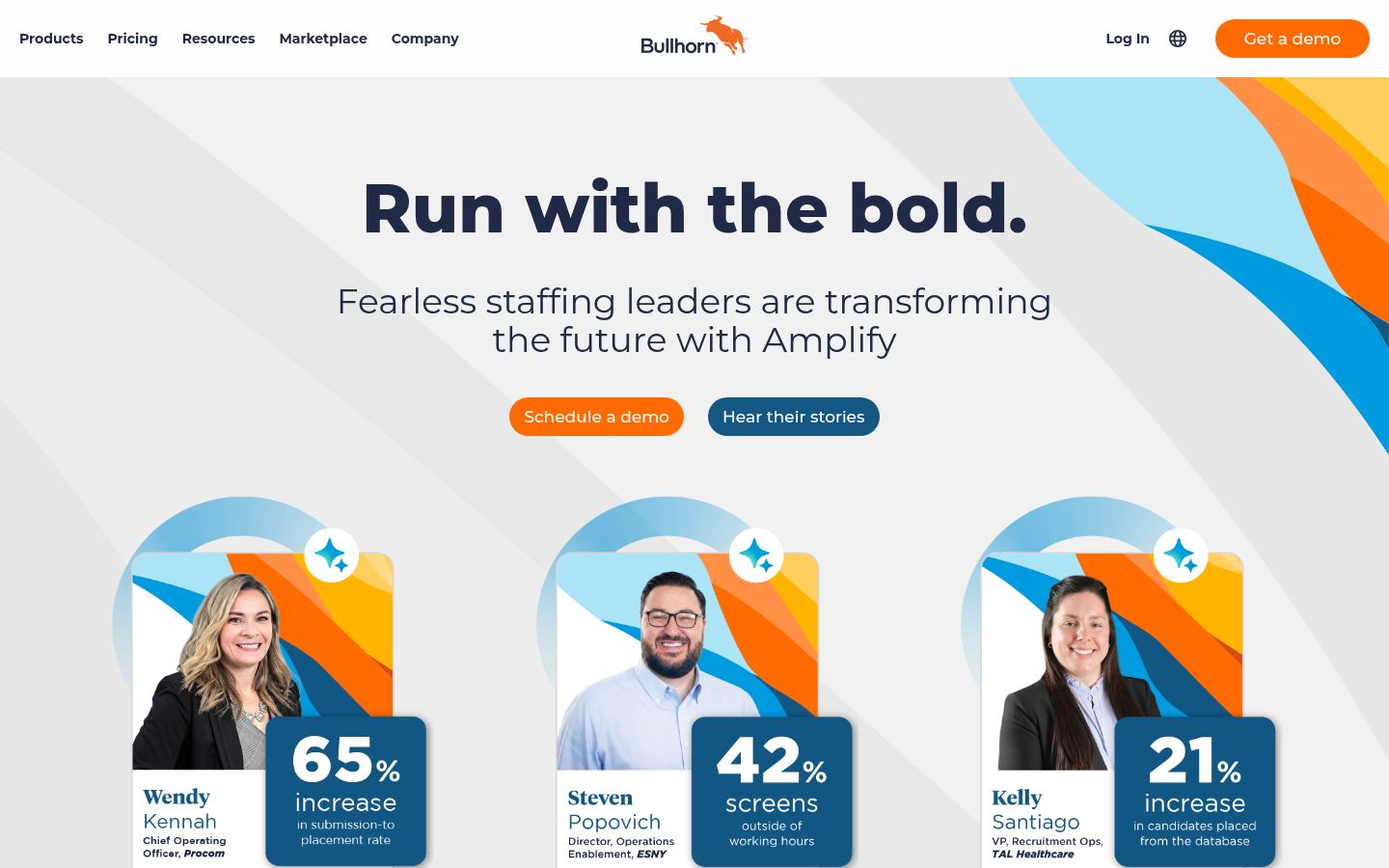
The category leader for staffing and executive search agencies.
Bullhorn's data model is built for the agency workflow: long candidate relationships, multiple-client-side reqs per candidate, commission tracking. For staffing and search firms, no other CRM matches it.
Key features:
- Agency-optimized candidate-and-client data model.
- Commission and placement tracking.
- Outreach automation and pipeline analytics.
- Marketplace of agency-focused integrations.
Pricing: Quote-based.
Where it falls short: Optimized for agencies; in-house corporate recruiting teams will find the data model awkward.
Best for: Staffing agencies, executive search firms, and contract recruiting operations.
8. Phenom.
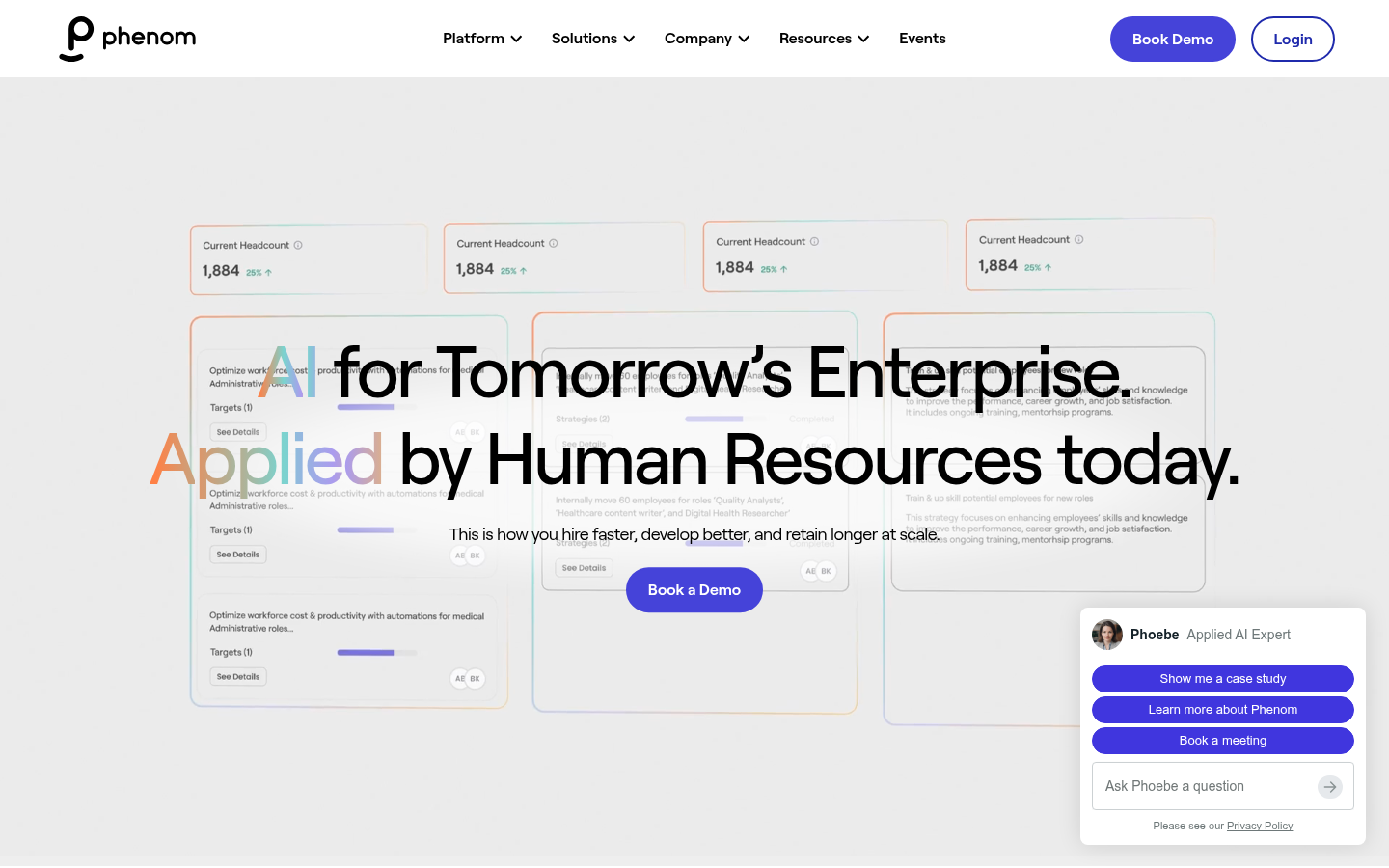
The candidate-experience platform that also functions as a CRM.
Phenom's strength is the candidate-facing side: career site, chatbot, personalized job recommendations. The CRM holds the candidate touchpoints across the career-site experience.
Key features:
- AI-personalized career-site experience.
- Conversational chatbot for top-of-funnel.
- Talent-community management.
- Internal-mobility surfacing.
- Analytics on candidate engagement.
Pricing: Quote-based; enterprise pricing band.
Where it falls short: The CRM is downstream of the candidate-experience layer; teams that already have a strong CX layer don't need Phenom's full stack.
Best for: Enterprise teams where the career-site experience is a strategic priority.
9. Eightfold.
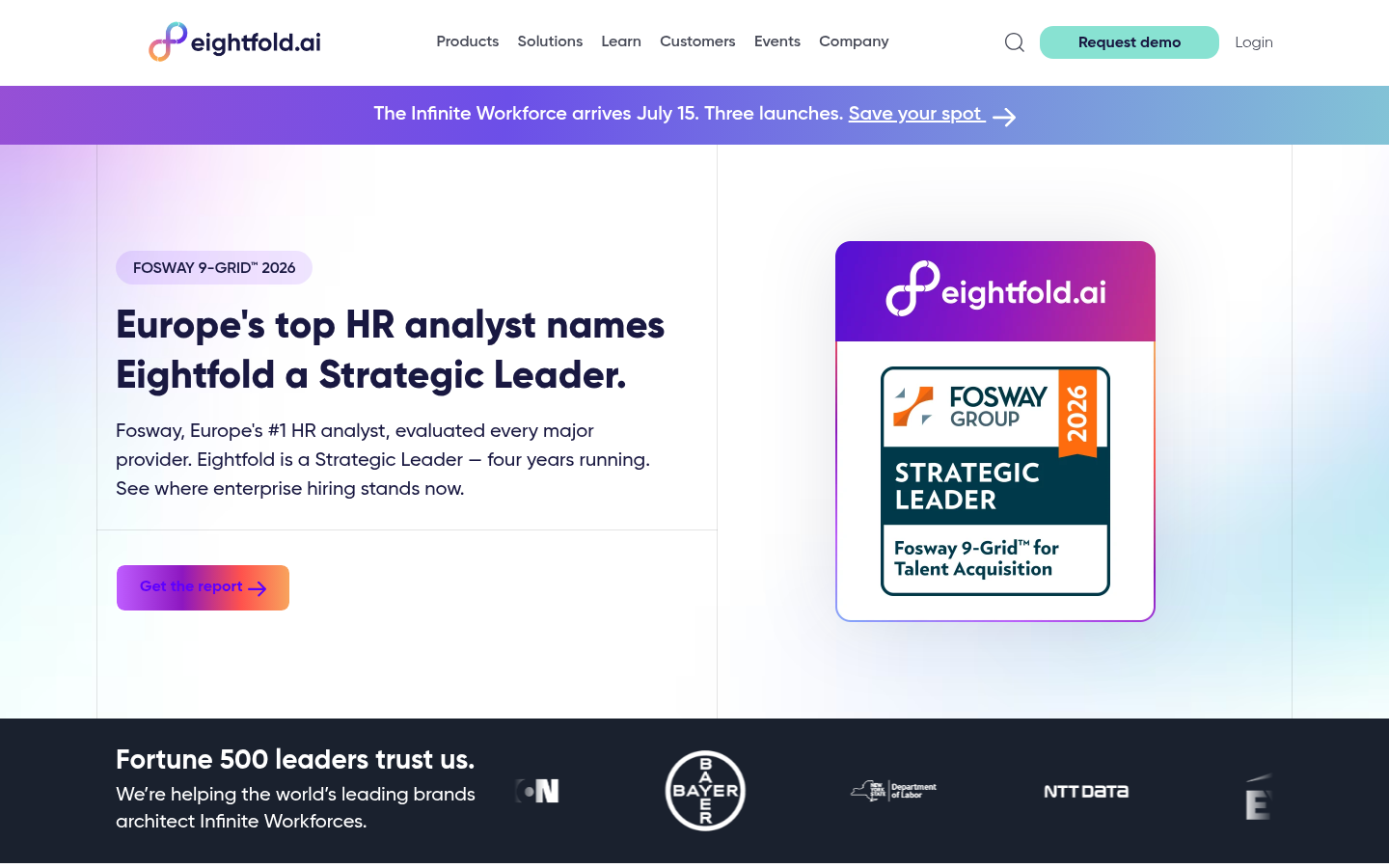
Eightfold positions itself as a talent intelligence layer rather than a pure CRM, with the data model built around career-trajectory prediction.
Key features:
- AI-driven career-pathing and candidate matching.
- Skills-graph-based talent discovery.
- Internal-mobility surfacing.
- Diversity reporting at scale.
Pricing: Quote-based; enterprise pricing band.
Where it falls short: The AI-first positioning is the selling point and the limitation. Teams that want operational CRM workflows often find Eightfold's data-science-heavy approach harder to operate than Gem or Beamery.
Best for: Enterprise teams treating CRM as a talent-intelligence layer rather than an operational tool.
10. Zoho Recruit.
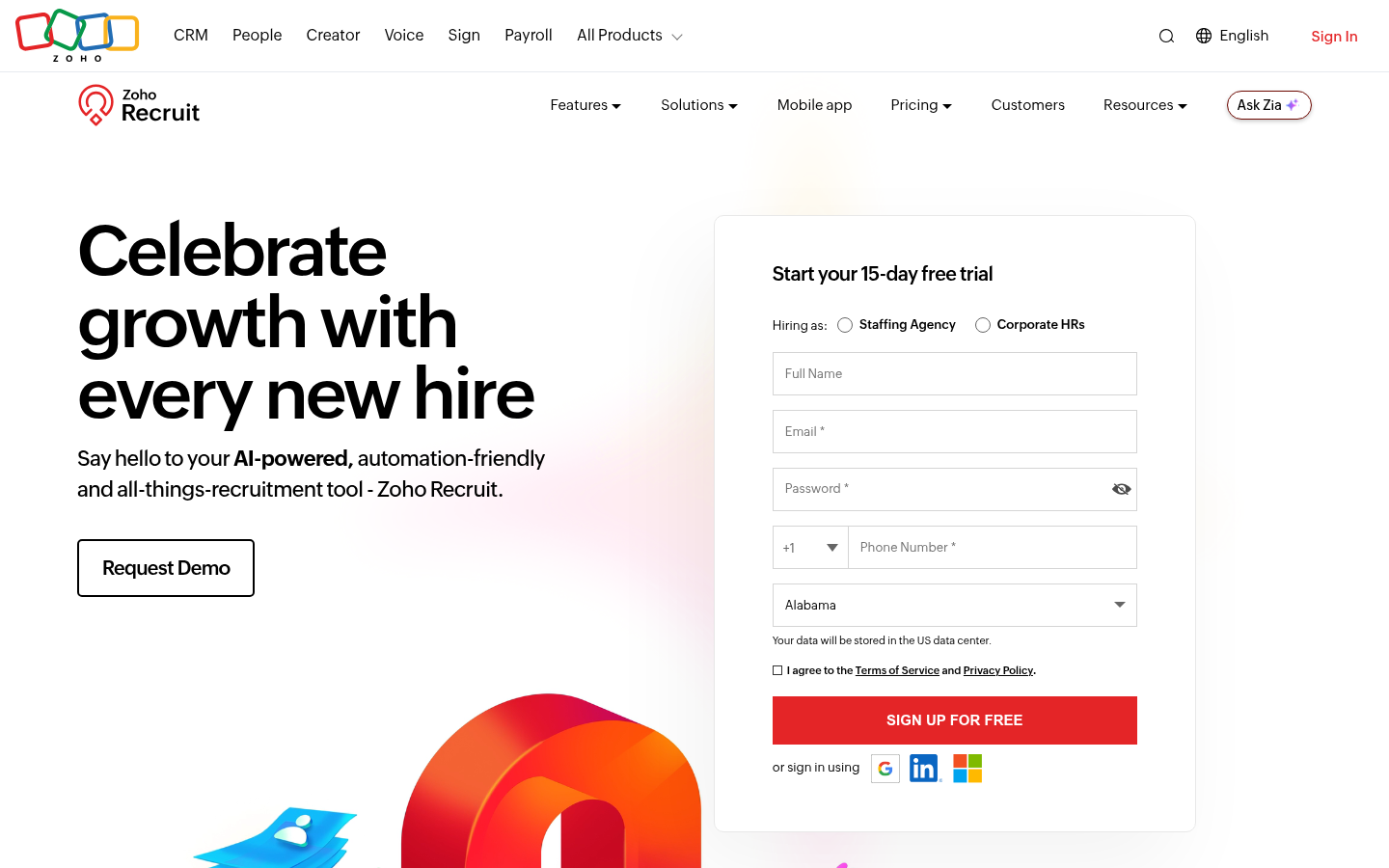
The affordable CRM option for small teams and individual agencies.
Zoho Recruit's strength is price and the ability to plug into the broader Zoho ecosystem (CRM, marketing, project management).
Key features:
- Combined ATS and basic CRM.
- Email and SMS outreach.
- Integration with Zoho ecosystem.
- Custom workflows and reporting.
Pricing: From $25/user/month.
Where it falls short: Depth is the trade-off. As teams scale past 20-30 active reqs, the limitations show.
Best for: Small in-house teams (under 5 recruiters) or independent agency recruiters.
How to pick the right CRM.
Three questions decide the choice.
First: how long is your candidate cycle? Under 30 days from req to offer, you don't need a CRM yet. Three to six months, you do.
Second: how much engineering investment can you make? Avature and iCIMS reward heavy configuration. Gem and SmartRecruiters reward speed-to-value.
Third: what's the source of your candidate data quality? The CRM is downstream of capture. Pair it with interview intelligence so the structured data flows in automatically.
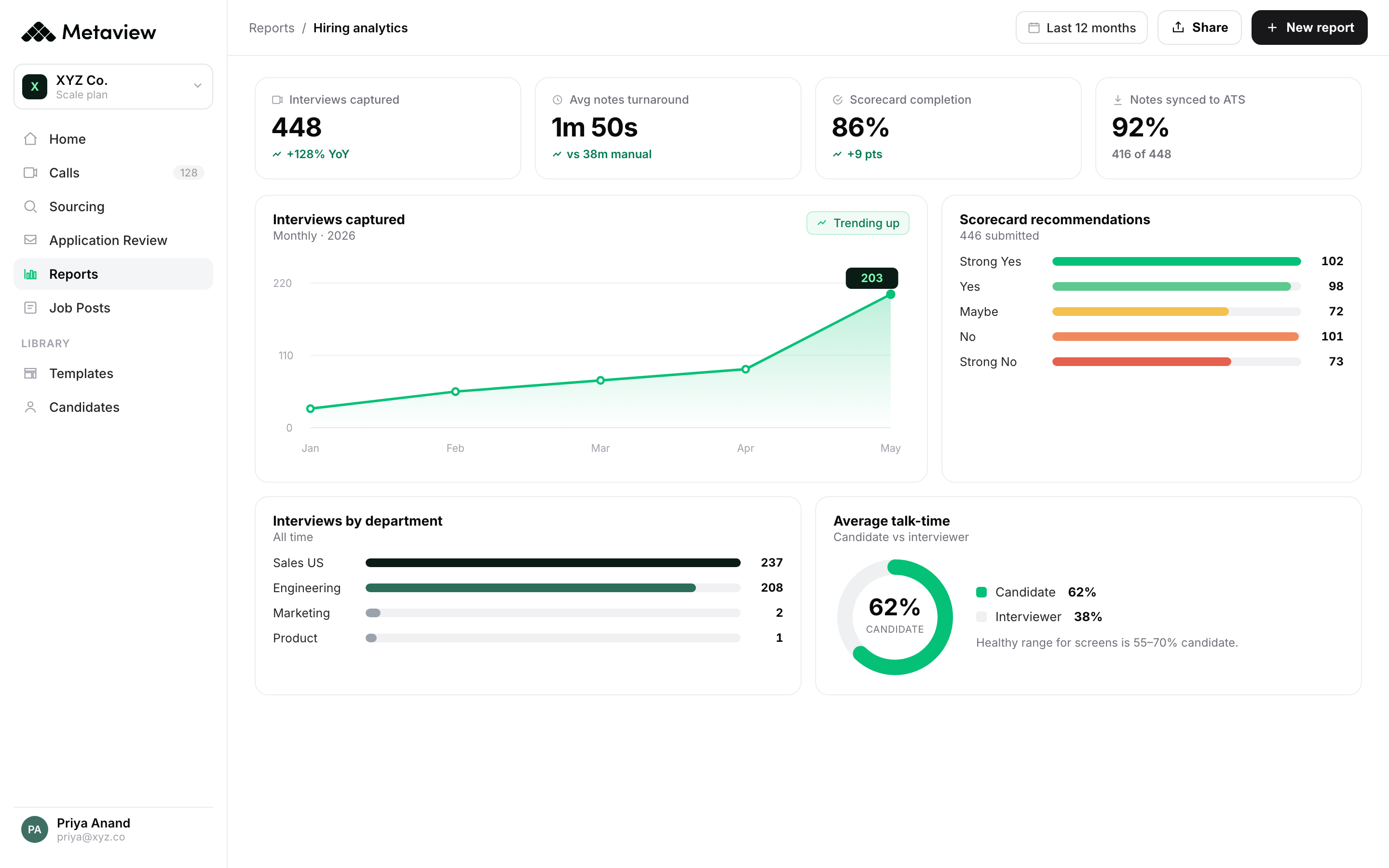
Metaview captures every interview across Zoom, Google Meet, Microsoft Teams, and phone, maps answers to your rubric, and writes structured scorecards back to Greenhouse, Ashby, Lever, SmartRecruiters, and 43 other ATSs and CRMs automatically.
4,000+ organizations run hiring on Metaview, including Catawiki, Brex, emnify, Quora, Workleap, Hudl, Robinhood, and Automattic.
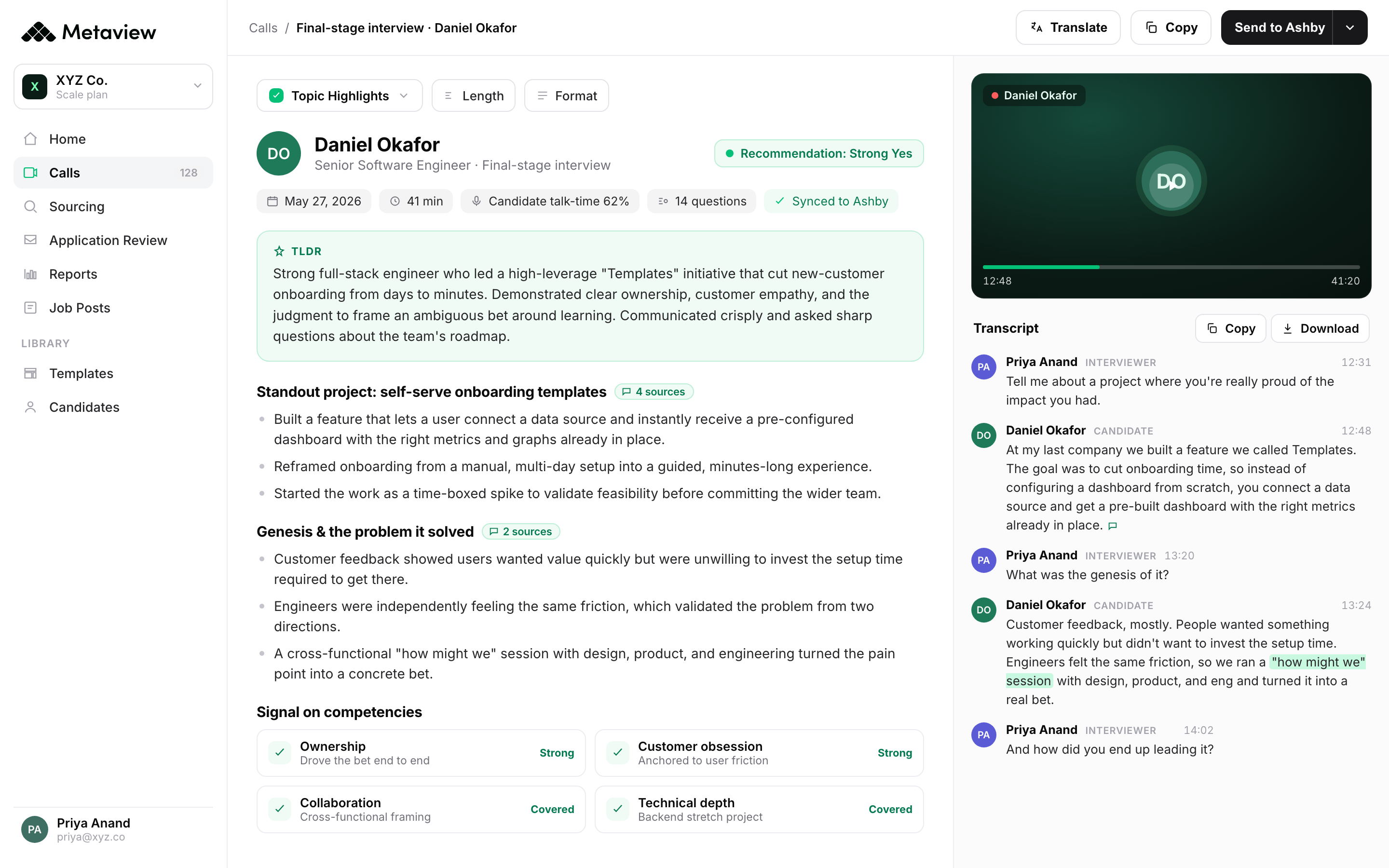
Bring Metaview into your hiring stack.
Live notes, structured scorecards, and ATS sync, set up in under 10 minutes.
Frequently asked.
What's the difference between a recruiting CRM and an ATS?
An ATS tracks candidates against open reqs. A CRM tracks candidate relationships across time, regardless of req status. Teams running multi-month senior or executive hires need both; teams closing in under 30 days can usually run on ATS alone.
Do I need both an ATS and a CRM?
Depends on cycle length. If senior hires take three months from first contact to offer, the candidate needs to live somewhere across those months. That's the CRM. If hires close fast, the ATS alone is enough.
What's the best recruiting CRM for scale-ups?
Gem for most scale-ups doing senior outbound. SmartRecruiters if you'd rather consolidate ATS and CRM into one platform.
What's the best CRM for staffing agencies?
Bullhorn. It's the category leader for staffing and search firms, with a data model purpose-built for agency workflows including commission and placement tracking.
How long does CRM implementation take?
Gem and SmartRecruiters: weeks. Beamery and Phenom: 3-6 months. Avature and iCIMS at enterprise: 6-12 months. Match implementation effort to in-house recruiting-ops capacity.
How do I keep CRM data clean?
Automate the write-back from upstream tools (sourcing, interview capture, outreach) so the recruiter never re-enters data manually. Manual data entry is the single largest source of CRM data rot.
