
LinkedIn Recruiter is the default sourcing tool. It is also where most of its work stops.
The platform is built for one thing: searching, contacting, and lightly managing candidates inside LinkedIn. Everything that happens after a candidate responds, the screening, the interviews, the decisions, the rubric, the pipeline analytics, sits in other tools.
Most teams do not replace LinkedIn Recruiter. They add to it. The right alternative depends on which stage of the funnel is leaking most.
This guide compares the 8 LinkedIn Recruiter alternatives talent teams pair with the platform in 2026, mapped to the specific gap each one fills.
The 8 alternatives at a glance.
Quick read on what each platform fills in. Per-tool sections below cover details and where each one falls short.
| Alternative | Category | Best for |
|---|---|---|
| Metaview | AI Sourcing plus interview signal | Teams that want sourcing that learns from interviews and runs beyond LinkedIn |
| AmazingHiring | Technical sourcing across developer communities | Engineering hiring with deep GitHub and Stack Overflow signal |
| Rival Recruit | Competitor talent mapping | Targeted sourcing from specific companies or team structures |
| Gem | Recruiting CRM and multi-channel outreach | Teams running continuous outbound that need pipeline analytics and email layered on top of LinkedIn |
| SourceWhale | Outreach sequence automation | Teams scaling structured email and LinkedIn message sequences without a full CRM |
| hireEZ | Outbound sourcing with contact enrichment | High-volume outbound where LinkedIn InMail alone is not enough reach |
| Ashby | All-in-one ATS with analytics | Scaling teams that want ATS, scheduling, and analytics in one platform |
| Greenhouse | Structured hiring ATS | Mid-market and enterprise teams that need standardized scorecards and compliance |
Where LinkedIn Recruiter falls short.
LinkedIn Recruiter is sourcing and outreach inside the LinkedIn dataset. Five gaps show up at every team that uses it as the only tool.
Talent coverage stops at the LinkedIn profile boundary. Engineers active on GitHub but quiet on LinkedIn, candidates with nontraditional career paths, and global talent in markets where LinkedIn is thin all live outside the search.
Outreach is InMail-bound. Multi-channel sequences across email and LinkedIn need a separate engagement layer, and personalization at scale needs templates and analytics LinkedIn does not surface. Collective, an AI sourcing agent, has that layer built in: one message goes out over email, WhatsApp, and chat, and every reply comes back to a single inbox.
Pipeline visibility is project-level, not pipeline-level. You can tag candidates inside a project, but cross-role and long-horizon relationship tracking belongs to a recruiting CRM.
There is no ATS underneath. Application management, interview scheduling, offer workflows, and structured scorecards all live in tools LinkedIn Recruiter integrates with rather than replaces.
And the interview itself is a black box. The signal a candidate gives during a screening call or technical loop never flows back into the next sourcing run.
1. Metaview.
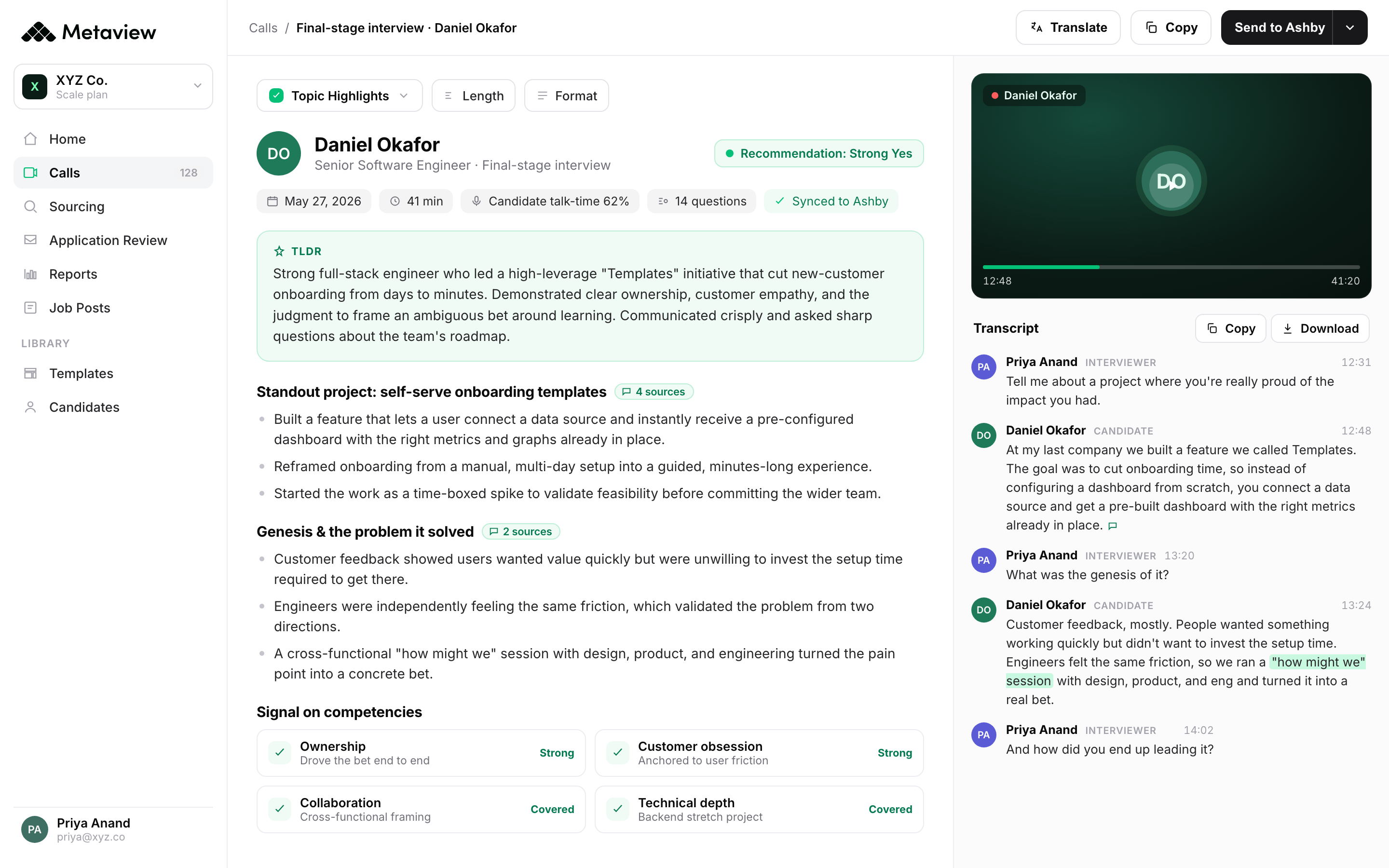
Category: AI Sourcing plus interview signal
Metaview closes the LinkedIn Recruiter gap from both ends. The AI Sourcing agent runs off intake calls and surfaces candidates across the wider talent market, not just LinkedIn. The Notetaker captures every interview as structured data that sharpens the next sourcing run.
The interview-to-sourcing feedback loop is the part LinkedIn does not have. Each accept or reject signal sharpens the Ideal Candidate Profile, and the agent re-evaluates the next batch automatically.
What it covers:
- AI Sourcing agents off intake calls across multi-source talent data
- Notetaker that captures interviews as structured, scorecard-aligned data
- Application Review for inbound triage with self-calibrating ICP
- Native ATS sync with Greenhouse, Ashby, Lever, Workable, Teamtailor
- Reports and pipeline analytics across the full funnel
Where it falls short: more than a 1:1 LinkedIn Recruiter replacement. If your only need is sourcing inside LinkedIn with light InMail outreach, Metaview is more product than you need.
Best for: teams that want sourcing that learns from interviews and runs beyond LinkedIn.
Chase Johnson, Technical Recruiting at Replit, described the weekly time impact directly.
I can confidently say that if you’re not using Metaview, you are wasting at least 10+ hours a week and giving your candidates a worse experience. The product is easily one of the best out there for companies actively hiring.”
2. AmazingHiring.
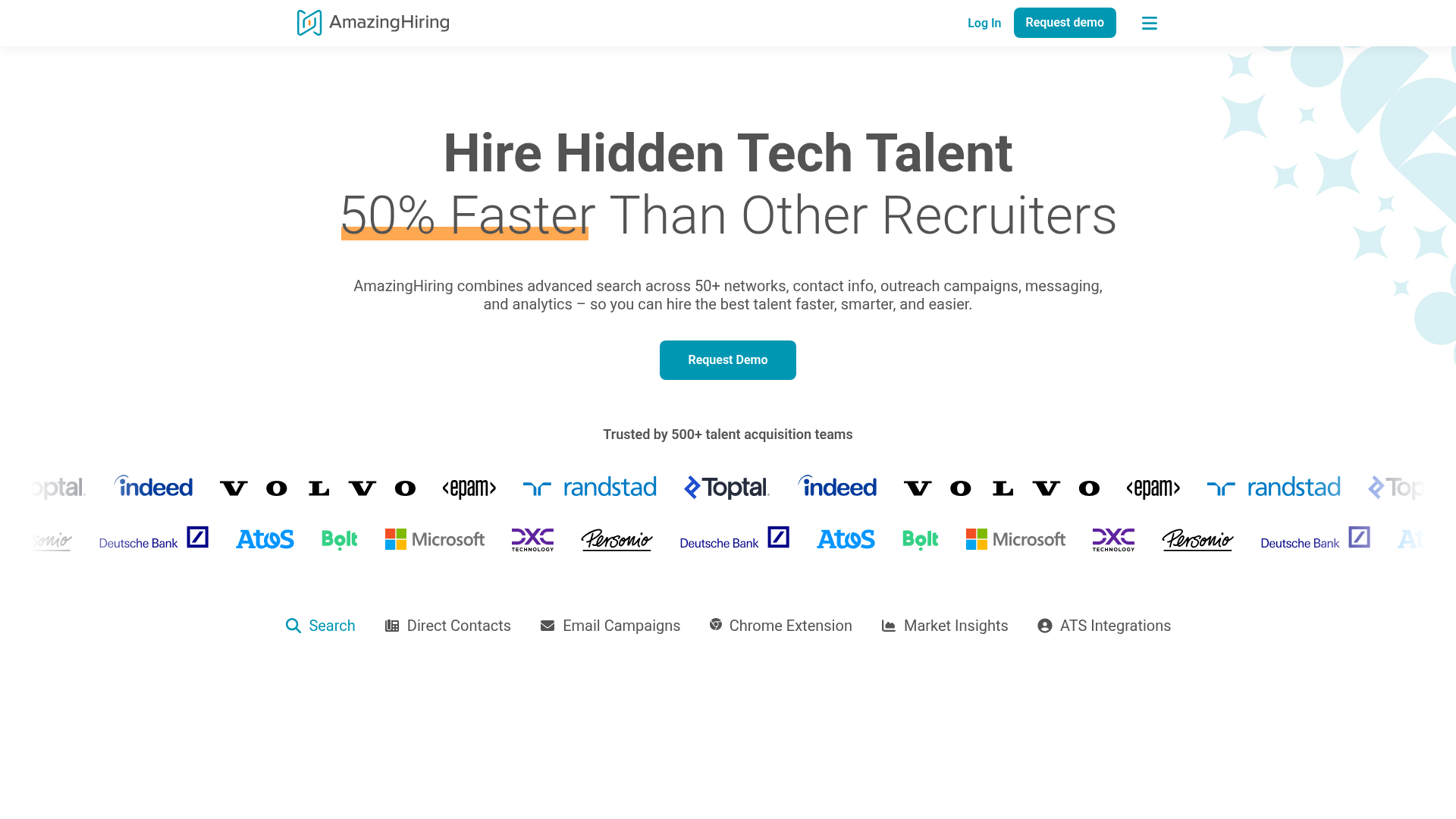
Category: Technical sourcing across developer communities
AmazingHiring aggregates technical profiles from GitHub, Stack Overflow, and other developer communities. For engineering hiring it surfaces candidates LinkedIn alone misses because the strongest signal is in code contributions, not titles.
What it covers:
- Aggregated technical profiles across GitHub, Stack Overflow, and more
- Advanced filters for programming languages and skills
- Insights into candidate activity and open-source contributions
- Chrome extension for sourcing while browsing
- ATS and CRM integrations
Where it falls short: narrow by design. Non-technical hiring needs a different tool.
Best for: engineering hiring with deep GitHub and Stack Overflow signal.
3. Rival Recruit.
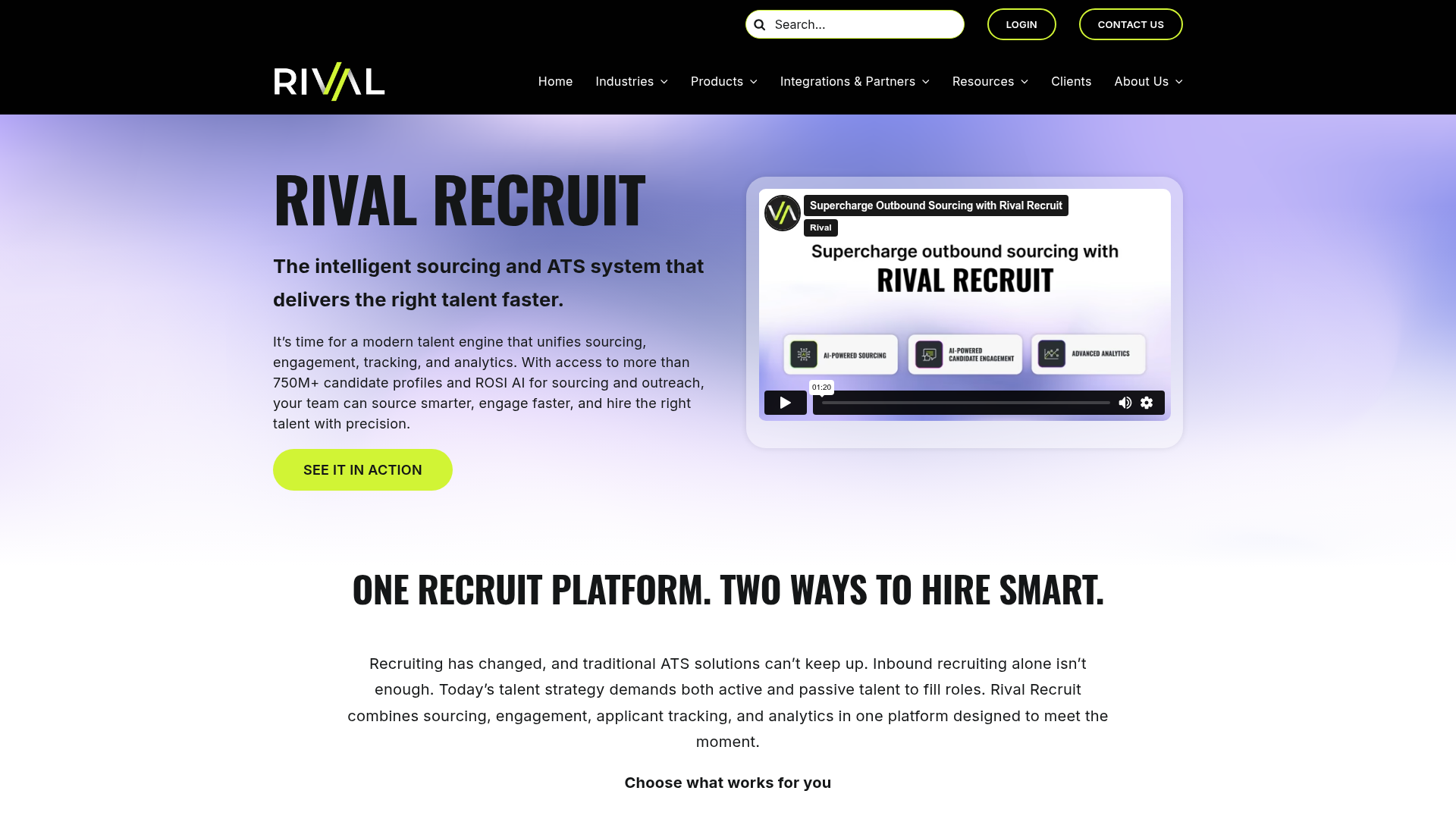
Category: Competitor talent mapping
Rival Recruit identifies talent by analyzing where candidates work now, where they have worked before, and how teams are structured across companies. The strongest fit is targeted sourcing from a specific competitor or team profile.
What it covers:
- Company and competitor-based talent mapping
- Employee movement and career path insights
- Advanced filters for targeted sourcing
- Talent pool analytics by company or role
- Export and ATS integration options
Where it falls short: narrow use case. If you need broad sourcing instead of targeted competitor mapping, this is the wrong tool.
Best for: targeted sourcing from specific companies or team structures.
4. Gem.
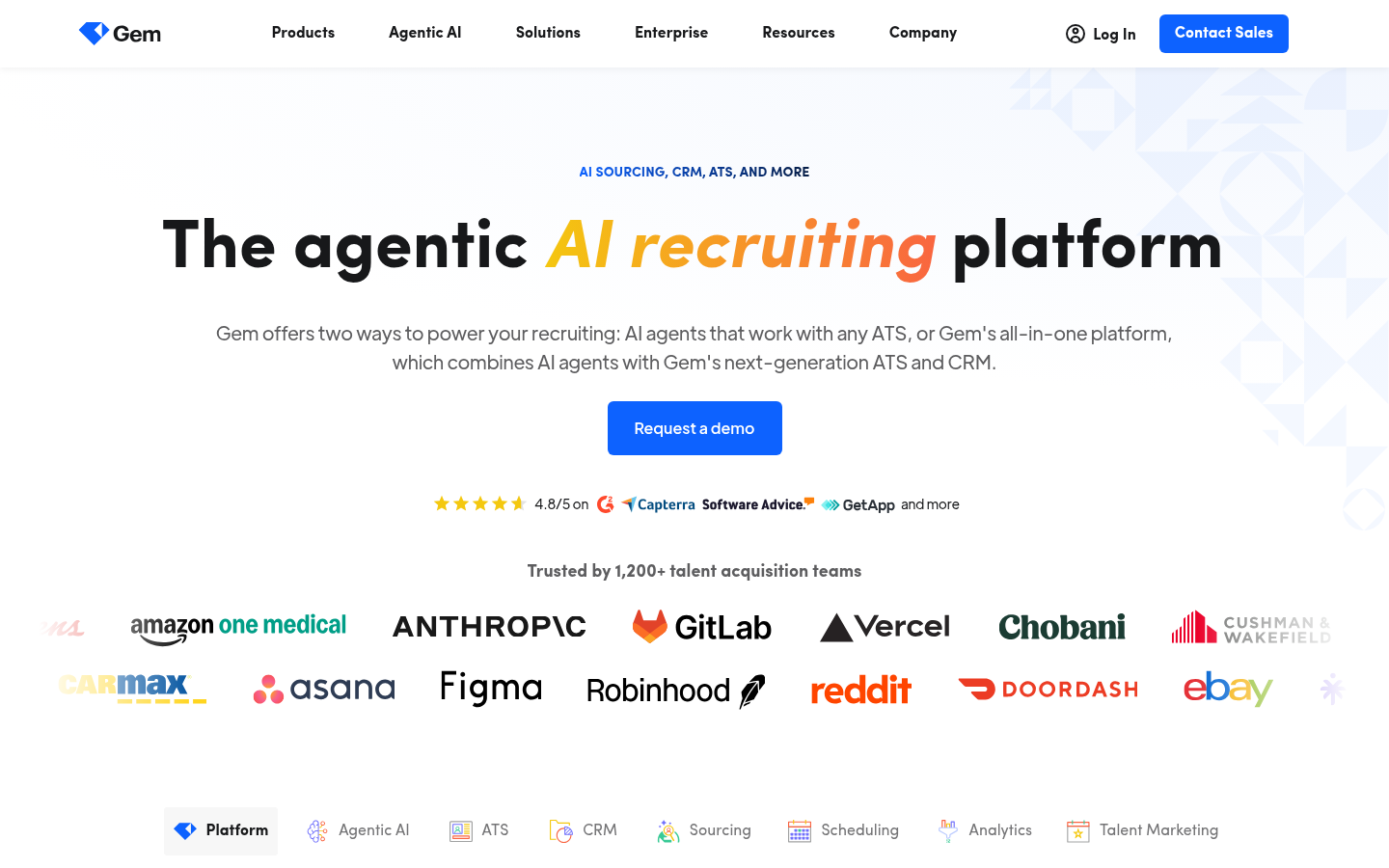
Category: Recruiting CRM and multi-channel outreach
Gem sits as the engagement layer on top of LinkedIn. It runs multi-channel sequences across email and LinkedIn, tracks every touchpoint, and reports on conversion at every stage. The personalization-at-scale gap LinkedIn cannot close is exactly what Gem fills.
What it covers:
- Multi-channel outreach across email and LinkedIn
- Outreach sequencing and templates
- Personalization tokens and dynamic messaging
- Response and engagement analytics
- ATS and LinkedIn integrations
Where it falls short: CRM, not sourcing. Pipeline volume still has to come from somewhere upstream.
Best for: teams running continuous outbound that need pipeline analytics and email layered on top of LinkedIn.
5. SourceWhale.
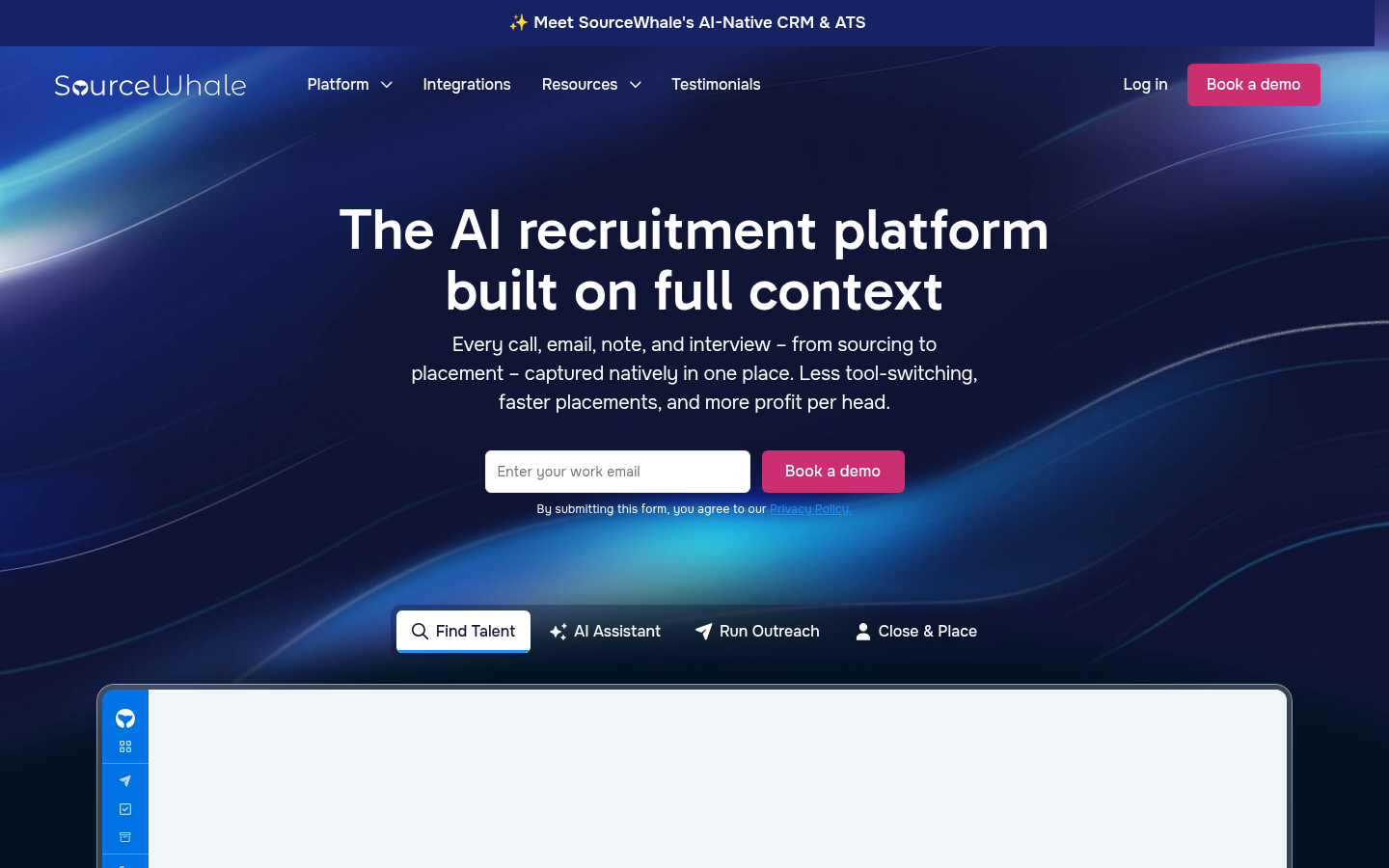
Category: Outreach sequence automation
SourceWhale focuses on structured outreach sequences across email and LinkedIn. The platform handles follow-up automation, reminders, and team-level outreach orchestration without the full CRM footprint.
What it covers:
- Automated email and LinkedIn message sequences
- Follow-up automation
- Outreach scheduling and reminders
- Team collaboration features
- ATS and CRM integrations
Where it falls short: no candidate database. Sourcing volume comes from LinkedIn or another tool; SourceWhale just runs the sequences.
Best for: teams scaling structured email and LinkedIn message sequences without a full CRM.
6. hireEZ.
Category: Outbound sourcing with contact enrichment
hireEZ combines sourcing, profile enrichment, and outreach in one platform. The contact enrichment is the differentiator: candidate email addresses that let you bypass InMail limits.
What it covers:
- AI-powered candidate discovery
- Email and multi-channel outreach automation
- Contact enrichment and data accuracy tools
- Talent pool management
- ATS integrations
Where it falls short: ends at engagement. Screening structure, interview signal, and decision-making sit outside.
Best for: high-volume outbound where LinkedIn InMail alone is not enough reach.
7. Ashby.
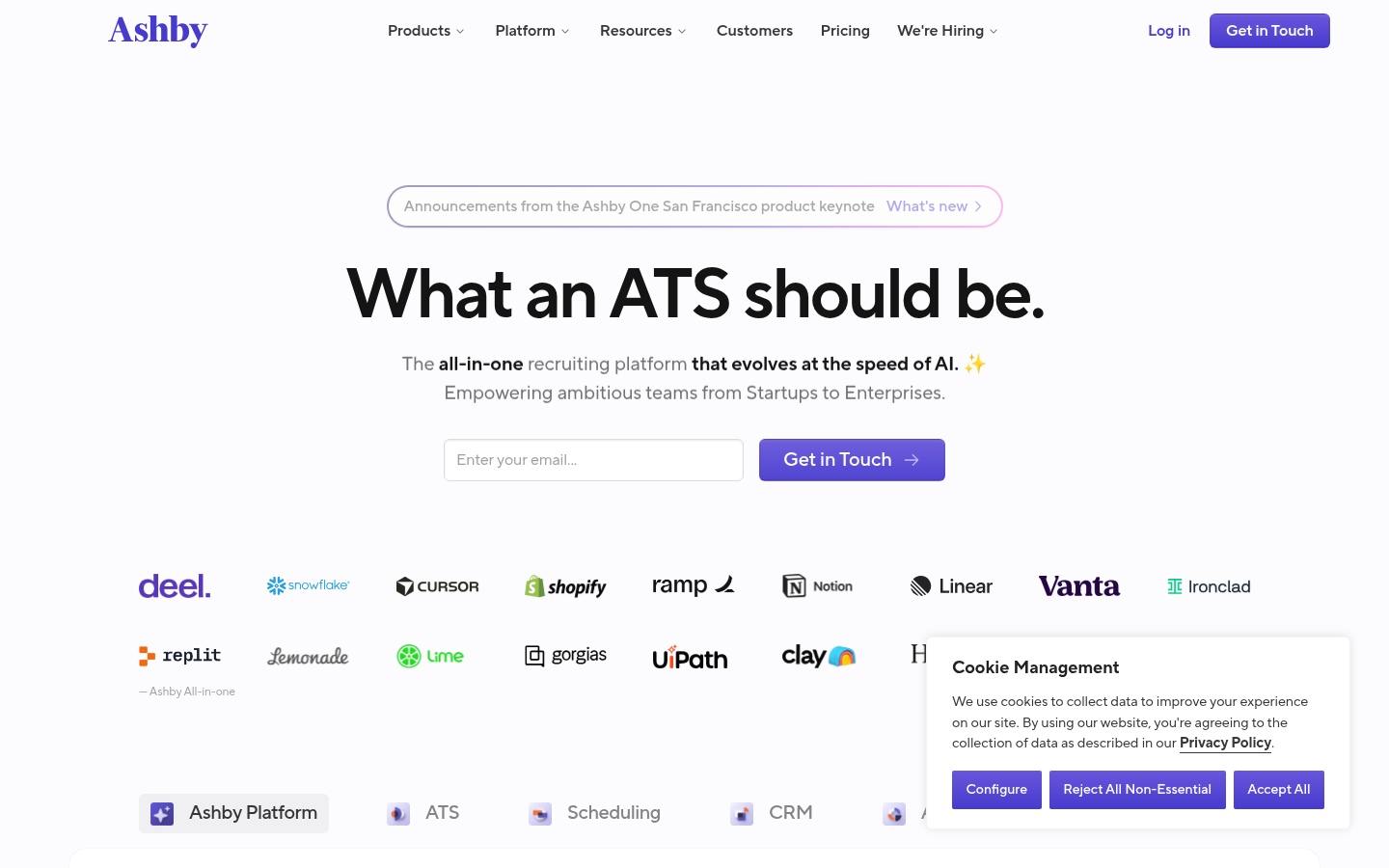
Category: All-in-one ATS with analytics
Ashby is the modern ATS most high-growth tech teams pick when they outgrow a basic tracker. The analytics layer is what makes it stand out: pipeline conversion by source, role, and interviewer in one view.
What it covers:
- Full-featured ATS with customizable workflows
- Built-in scheduling automation
- Advanced recruiting dashboards and analytics
- CRM functionality for passive talent
- Integrations with sourcing and interview tools
Where it falls short: not a sourcing platform. Outbound discovery and engagement still need a layer above.
Best for: scaling teams that want ATS, scheduling, and analytics in one platform.
8. Greenhouse.
Category: Structured hiring ATS
Greenhouse is the structured-hiring ATS most mid-market and enterprise teams default to. It anchors the workflow once candidates leave the sourcing stage, with strong interview kits, scorecards, and compliance support.
What it covers:
- Structured hiring workflows and interview kits
- Scorecards and standardized feedback collection
- Interview scheduling and coordination
- Extensive integration marketplace
- Reporting and compliance support
Where it falls short: the AI screening and sourcing layers are bolt-on rather than native. For teams whose biggest leak is upstream, Greenhouse is the foundation but not the unlock.
Best for: mid-market and enterprise teams that need standardized scorecards and compliance.
How to choose between LinkedIn Recruiter and the alternatives.
Pick based on the gap that hurts most. Six scenarios below.
Comparing other LinkedIn-adjacent tools? See our guides on LinkedIn Hiring Assistant vs Metaview AI Sourcing and hireEZ alternatives.
Bring Metaview into your hiring stack.
Live notes, structured scorecards, and ATS sync - set up in under 10 minutes.
Frequently asked.
Do LinkedIn Recruiter alternatives replace LinkedIn entirely?
In most cases, no. Recruiters typically use alternatives to supplement LinkedIn Recruiter, not replace it. The point is to fill specific gaps: deeper technical signal, multi-channel outreach, structured ATS workflows, or interview intelligence that LinkedIn does not provide.
How many alternatives should a team add alongside LinkedIn Recruiter?
Most teams pair LinkedIn Recruiter with one ATS and one or two specialized tools for sourcing depth, CRM and outreach, or interview signal. More than that and you get tool sprawl without the leverage.
Are LinkedIn Recruiter alternatives only useful for large teams?
No. Smaller teams often benefit more because the per-recruiter time savings have a bigger relative impact. Tools that remove manual work or improve signal quality pay back fastest when there are fewer hands on the funnel.
What is the biggest gap LinkedIn Recruiter does not cover well?
Interview signal and downstream workflow. LinkedIn is strongest at discovery and outreach. Most teams rely on other tools once candidates enter the interview process, and on a layer that captures what actually happened in those interviews.
How should recruiters decide which alternative to add first?
Start with the stage where time or quality is leaking. If sourcing depth is the gap, AmazingHiring or Metaview. If pipeline conversion is the gap, Gem. If ATS workflow is the gap, Ashby or Greenhouse. The tool that solves the biggest leak pays back first.
