
Running a recruitment agency means doing two jobs at once. You're selling to clients on Monday, sourcing for them on Tuesday, debriefing them on Wednesday, and explaining why the candidate ghosted on Thursday.
Your tools either help, or they cost you placements.
The right software stack frees the partner's time, keeps every recruiter consistent across mandates, and gives your leaders real visibility into what's happening across the desk.
The wrong stack leaves you rebuilding the same coversheet for the 50th time and losing candidates between the cracks.
This guide compares 15 tools for agency desks in 2026, ordered by the part of the workflow they handle best. Each section covers what the tool does for an agency desk, where it falls short, and who it fits.
All 15 tools at a glance.
| Tool | Category | Best for | Pricing starts at |
|---|---|---|---|
| Metaview | Interview intelligence | Capturing client and candidate calls into structured reports | Free with work email |
| Bullhorn | Agency CRM and ATS | Enterprise staffing agencies | Quote-based; from $99/user/month |
| Recruit CRM | Agency CRM and ATS | Small to mid-sized agencies | From $99/user/month |
| Recruiterflow | Automation-first CRM | Agencies wanting workflow automation | From $99/user/month |
| Loxo | AI agency platform | Consolidating a fragmented agency stack | Free tier; paid tiers on request |
| JobAdder | Agency ATS and CRM | Agencies that want a friendly UI without a long onboarding | Quote-based |
| Vincere | Full agency suite | Agencies running contract, temp, and perm in one place | Quote-based |
| Manatal | AI agency CRM | Agencies wanting AI features at an accessible price | Professional from $15/user/month |
| HireEZ | AI sourcing | Passive-candidate sourcing at scale | Quote-based |
| SeekOut | AI talent intelligence | Deep specialized and cleared talent | From $833/seat/month |
| Gem | Sourcing and outreach | High-volume outbound campaigns | Quote-based |
| GoodTime | AI interview scheduling | Coordinating dozens of concurrent searches | Quote-based |
| Paradox | Conversational AI | High-volume frontline and hourly hiring | Quote-based |
| LinkedIn Recruiter | Sourcing baseline | Outbound across 1B+ profiles | From ~$10K/seat/year |
| Arrange | Interview scheduling | Coordinating interviews between candidates and clients | Free Starter plan; Pro $35/user/month |
1. Metaview.
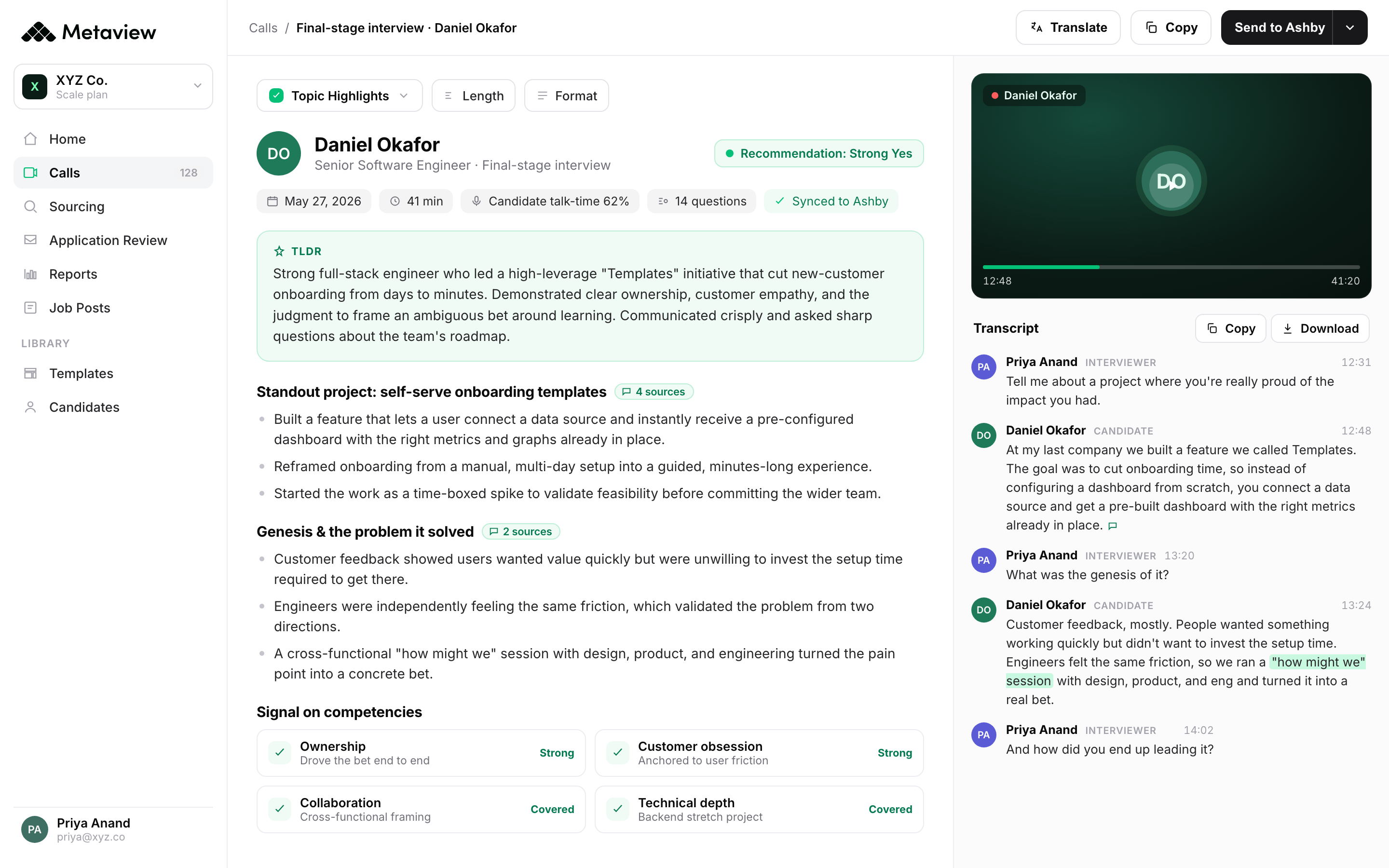
Metaview is the AI interview-intelligence layer built for the way recruitment agencies actually work.
The recruiter takes a 30-minute screening call, or the partner takes a 45-minute candidate intake. Metaview joins the call, transcribes it, structures the answers against the client's rubric, and pushes a polished coversheet into the CRM the moment the call ends.
For agencies, the value compounds across clients. Every client has their own preferred shortlist format.
Metaview lets you spin up a template per client, capture the call once, and ship a polished, on-brand candidate report inside the hour.
Multiply that across 30 active mandates and the partner's afternoon is suddenly free for the meetings that actually win business.
What you get on day one:
- Live capture across Zoom, Google Meet, Microsoft Teams, and phone.
- Per-client templates for coversheets, candidate reports, and intake summaries.
- Structured write-back to Bullhorn, Greenhouse, Ashby, Lever, and 60+ other systems. See our ATS integrations roundup.
- AI Sourcing to find off-list candidates by description, with notes that feed straight into the partner's brief.
- 50+ language transcription, SOC 2 Type II, GDPR controls on every tier.
- Free to sign up with a work email.
Post pitch, we used to not have any data. Now we have better documentation coming out of client meetings. I can be more present and engaged in the conversation, which helps to assess candidates more thoroughly and to look out for subtle red flags I might not pick up on when trying to transcribe everything.”
Our pick: any agency where the partner's call with the candidate or client is the most valuable hour in the cycle. The capture layer pays for itself in week one.
2. Bullhorn.
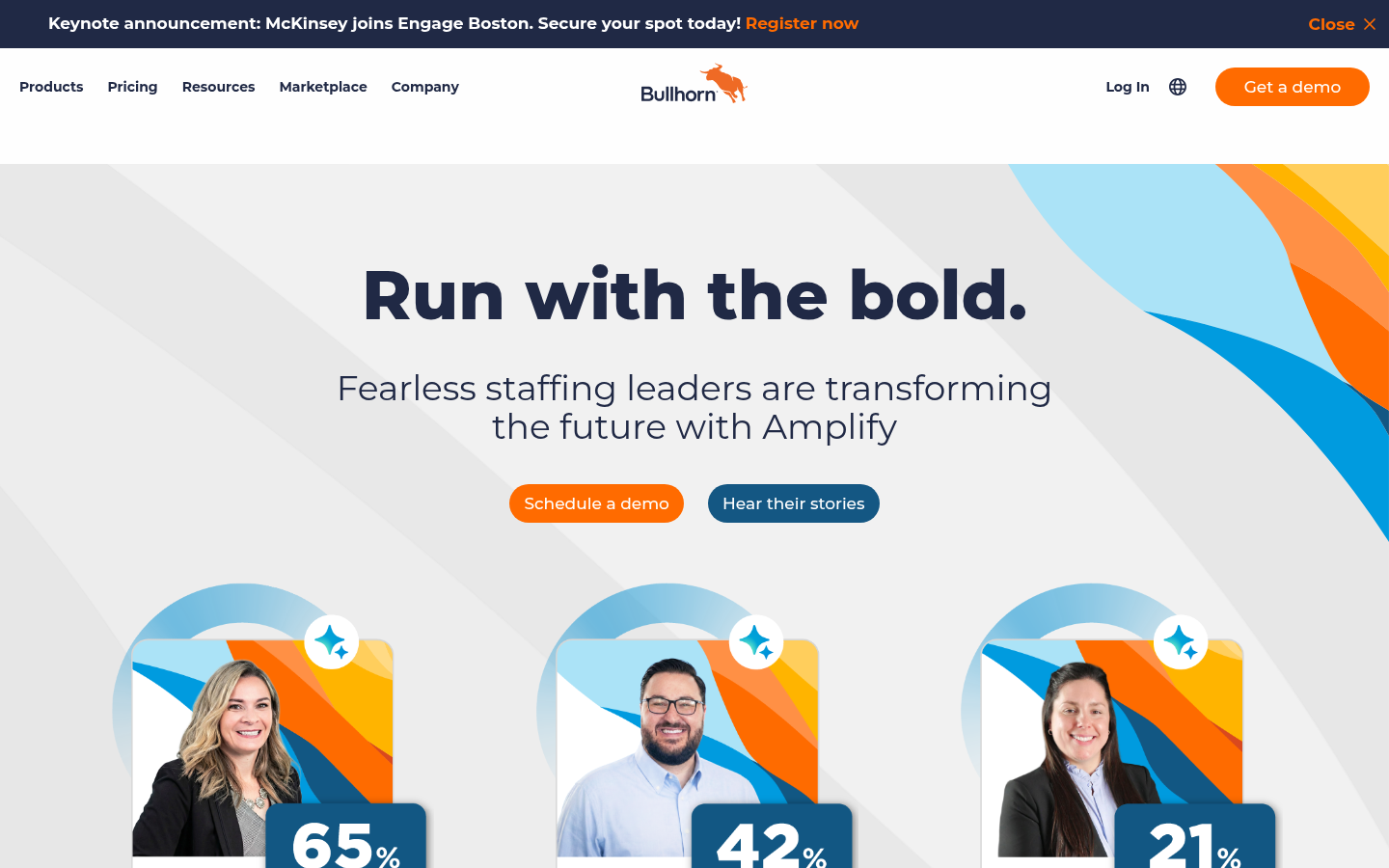
Bullhorn is the long-standing enterprise CRM and ATS for staffing and recruitment agencies. Strong on automation, deep on integrations, and built for the high-volume agency desk.
If your firm runs contract, contingent, or volume-perm placements, Bullhorn is probably already the system of record.
The Bullhorn Marketplace adds 100+ integrations on top, including Metaview for interview intelligence.
What you get:
- Unified CRM, ATS, and back-office for agency operations.
- Pipeline automation, sequence cadences, and job-board sync.
- Real-time reporting and KPI dashboards by recruiter and team.
- Bullhorn Marketplace with 100+ integrations including ATS scorecard write-back.
- Invoicing and back-office payroll add-ons.
Where it falls short: The interface is dated compared to newer agency CRMs. Implementation can take weeks. Best fit for firms with the volume to justify the setup.
Our pick: large staffing agencies running contract and contingent placements at scale where the back-office matters as much as the CRM.
3. Recruit CRM.
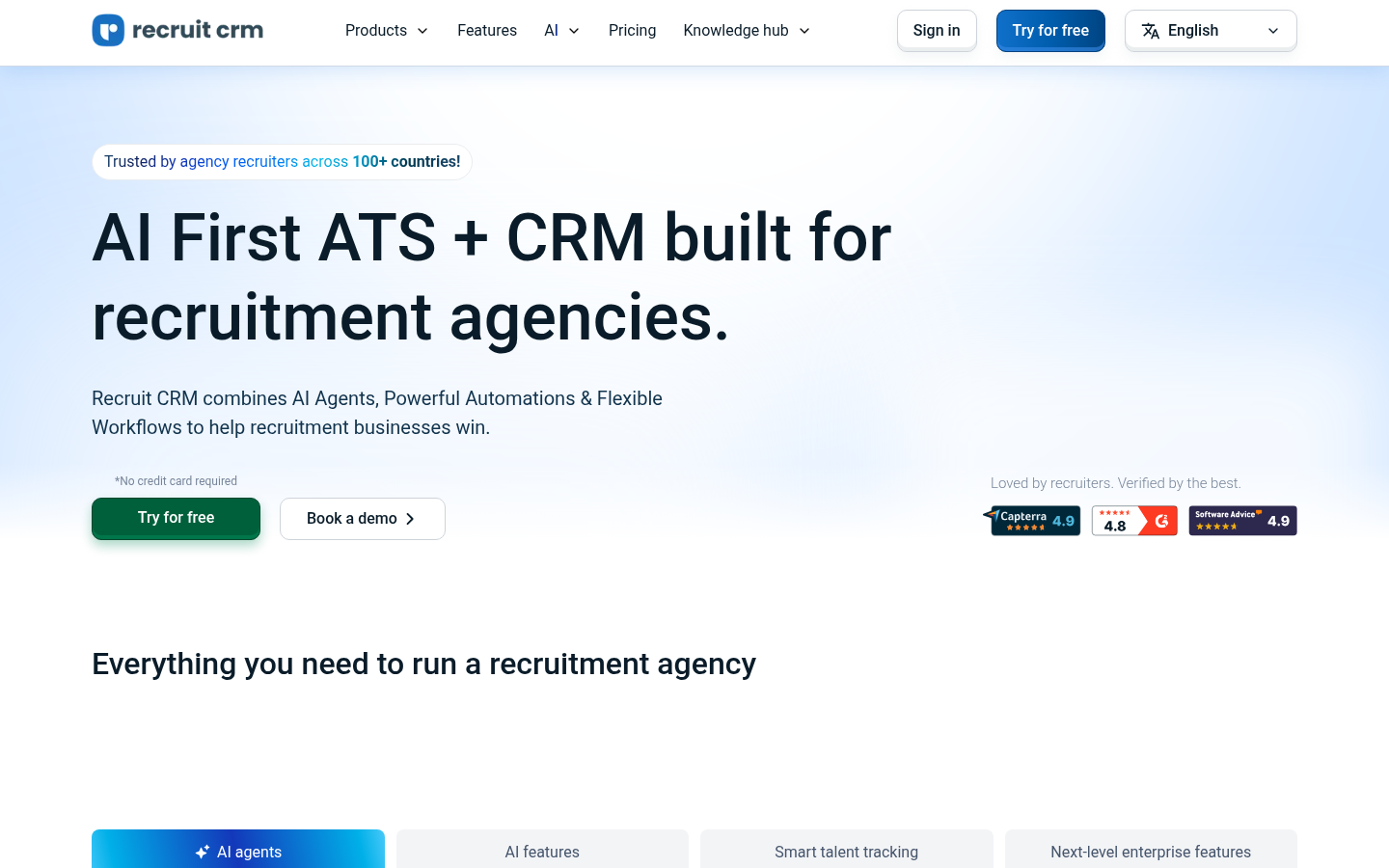
Recruit CRM is one of the most accessible CRMs in the agency category. 2,500+ agencies use it. Intuitive UI, fair pricing, and a built-in AI agent layer.
What you get:
- CRM and ATS with email and calendar sync.
- AI agents for resume parsing, candidate matching, and outreach.
- Chrome extension for one-click LinkedIn-to-CRM import.
- Client portal for sharing candidate progress.
Where it falls short: Less depth on the enterprise-reporting side than Bullhorn or Vincere. Designed for small-to-mid agencies; teams over 50 may find the dashboards limiting.
Our pick: boutique and mid-size agencies that want a modern CRM without a six-figure annual commit.
4. Recruiterflow.
Recruiterflow is automation-first by design. Sequencing, candidate enrichment, and pipeline rules are the core of the product. The CRM and ATS sit underneath.
What you get:
- Recruitment sequencing built directly into the CRM.
- Data enrichment to fill in candidate contact details automatically.
- Native AI agents for sourcing and outreach.
- Solid Chrome extension and LinkedIn integration.
Where it falls short: Reporting and analytics are thinner than Bullhorn or Vincere. The platform leans hard on automation, which can feel mechanical if you over-configure it.
Our pick: agencies whose competitive advantage is workflow velocity. Strong fit if outbound automation is the core of your service.
5. Loxo.
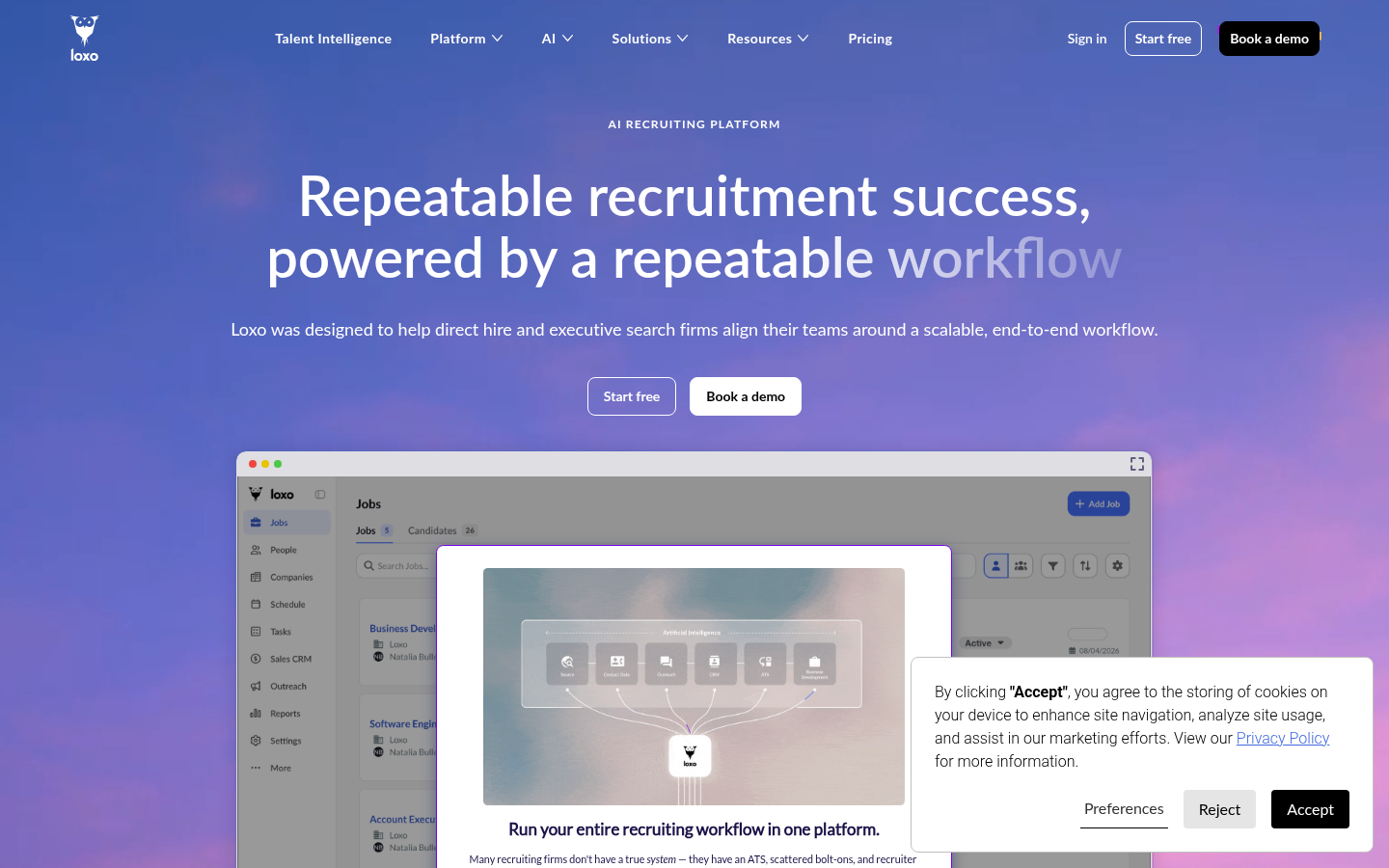
Loxo is the agency platform built to replace a messy multi-tool stack. ATS, CRM, sourcing, outreach, and AI assistants all live in one product.
The pitch is consolidation. For agencies that have grown into a patchwork of Bullhorn plus 4 add-ons, the appeal is real.
What you get:
- Full ATS, CRM, and AI sourcing engine in one place.
- 1.2B+ candidate profiles indexed for sourcing.
- AI outreach with email sequencing and analytics.
- Native phone, SMS, and email built into the platform.
Where it falls short: Doing many things means doing fewer of them deeply. Specialist sourcing tools (HireEZ, SeekOut) still have an edge on filter depth.
Our pick: agencies tired of a fragmented stack who want one bill, one login, and one place for the partner to look in the morning.
6. JobAdder.
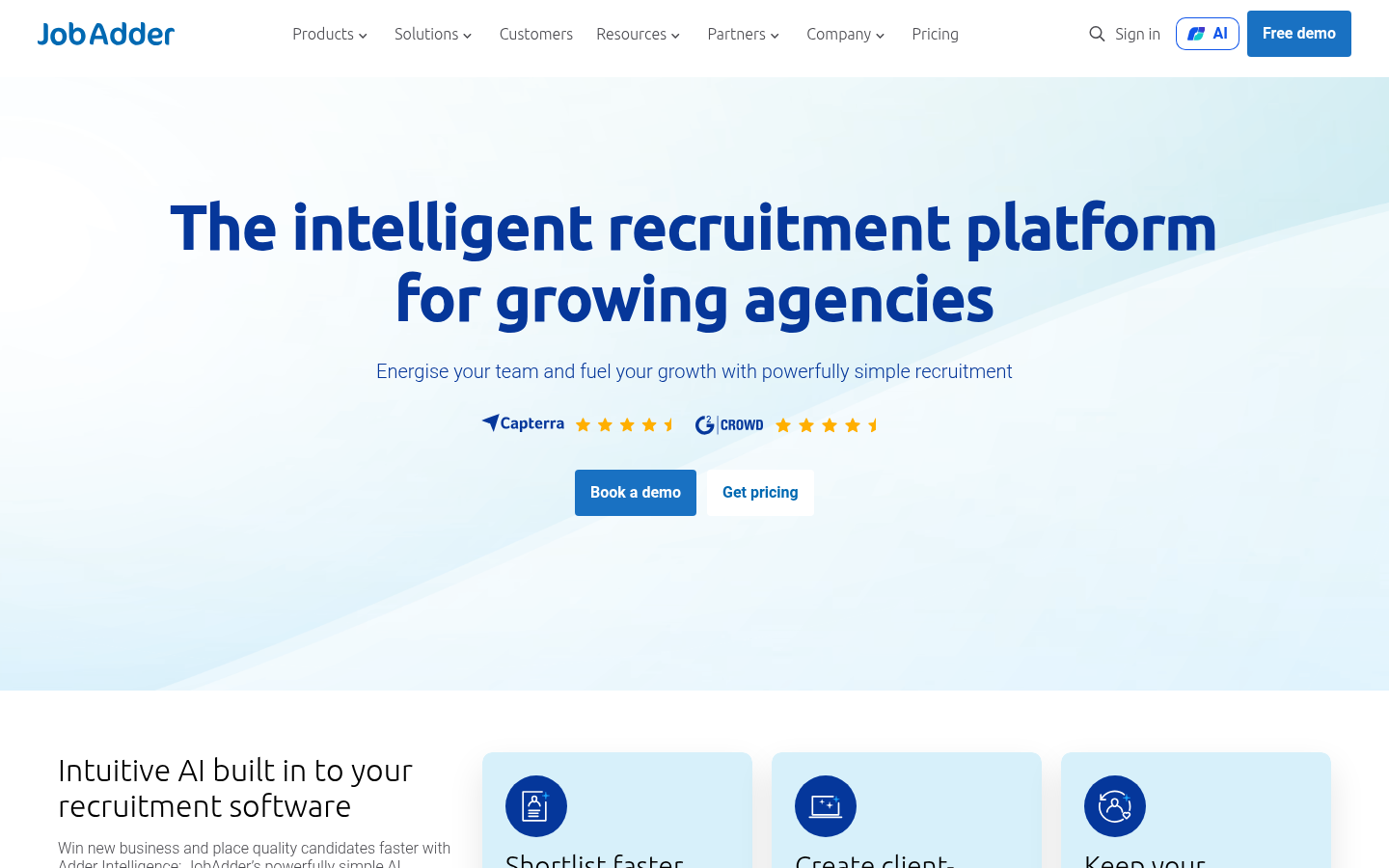
JobAdder is one of the more recruiter-friendly agency platforms on this list. The UI is genuinely pleasant, onboarding takes days not weeks, and the workflow is built around how a recruiter actually moves through their day.
What you get:
- Combined ATS and CRM with placement tracking.
- Job-board posting to 200+ boards from one screen.
- Calendar sync and pipeline automations.
- Strong customer support and an active community.
Where it falls short: Reporting layer is functional but not deep. The product is strongest in APAC and EMEA markets; less penetration in the US than Bullhorn.
Our pick: agencies that want a CRM their recruiters will actually open every morning, not the one they begrudgingly tolerate.
7. Vincere.
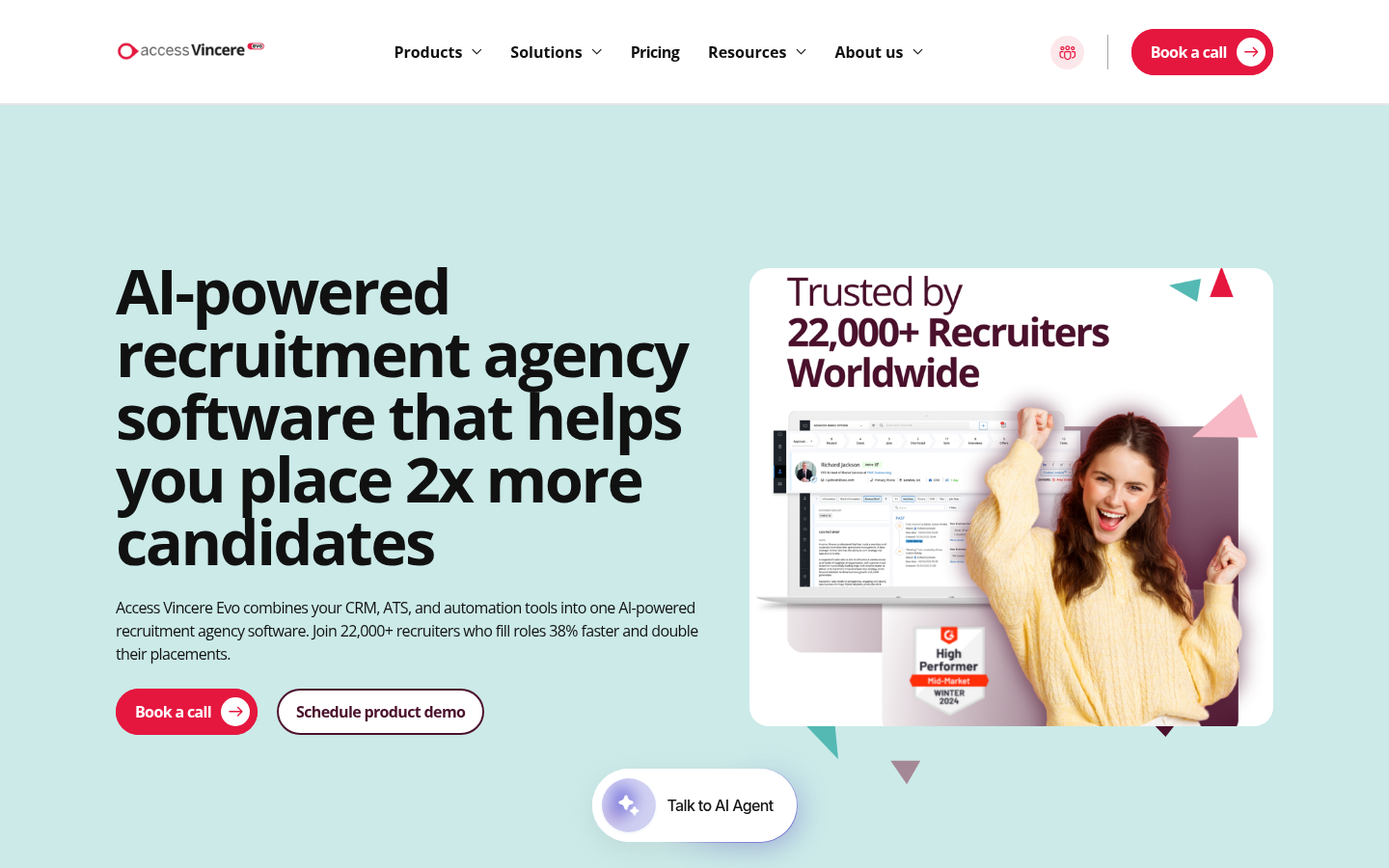
Vincere (now Access Vincere Evo) is the full-suite agency platform. 22,000+ recruiters use it across staffing, search, contract, and temp desks.
It handles ATS, CRM, mid-office, and analytics in one stack.
What you get:
- Combined ATS, CRM, mid-office, and analytics.
- Native support for contract, temp, and perm placements in one product.
- Vincere Intelligence: AI candidate matching and search.
- Mobile-first design for recruiters working between meetings.
Where it falls short: The breadth of the platform means a steeper learning curve. Some legacy customers report the post-Access acquisition product roadmap has slowed.
Our pick: agencies running contract, temp, and perm desks in parallel who need one CRM that handles all three without bolting on extra tools.
8. Manatal.
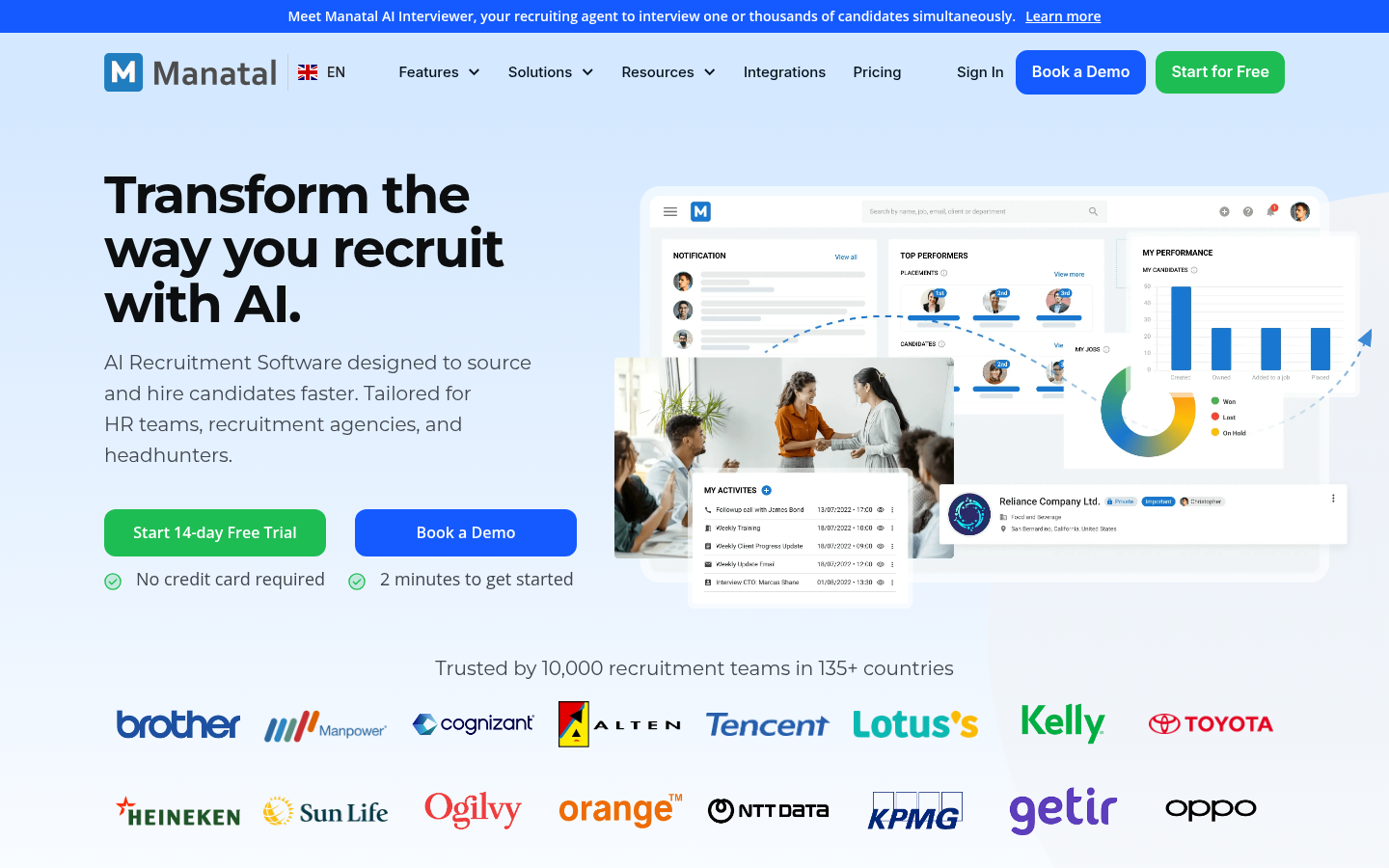
Manatal is an AI-driven recruitment platform built for agencies that want capable software without the enterprise price tag. Strong on social media enrichment, candidate scoring, and AI matching.
What you get:
- AI candidate recommendations and scoring.
- Social media enrichment to flesh out thin candidate profiles.
- Advanced search and filtering.
- Client and candidate portals for collaboration.
- Pricing from $15/user/month on the Professional plan.
Where it falls short: Less depth on enterprise reporting and contract/temp back-office than Bullhorn or Vincere. Best for desks that don't need full mid-office handling.
Our pick: small and mid-size agencies that want serious AI features without committing to a six-figure CRM line item.
9. HireEZ.
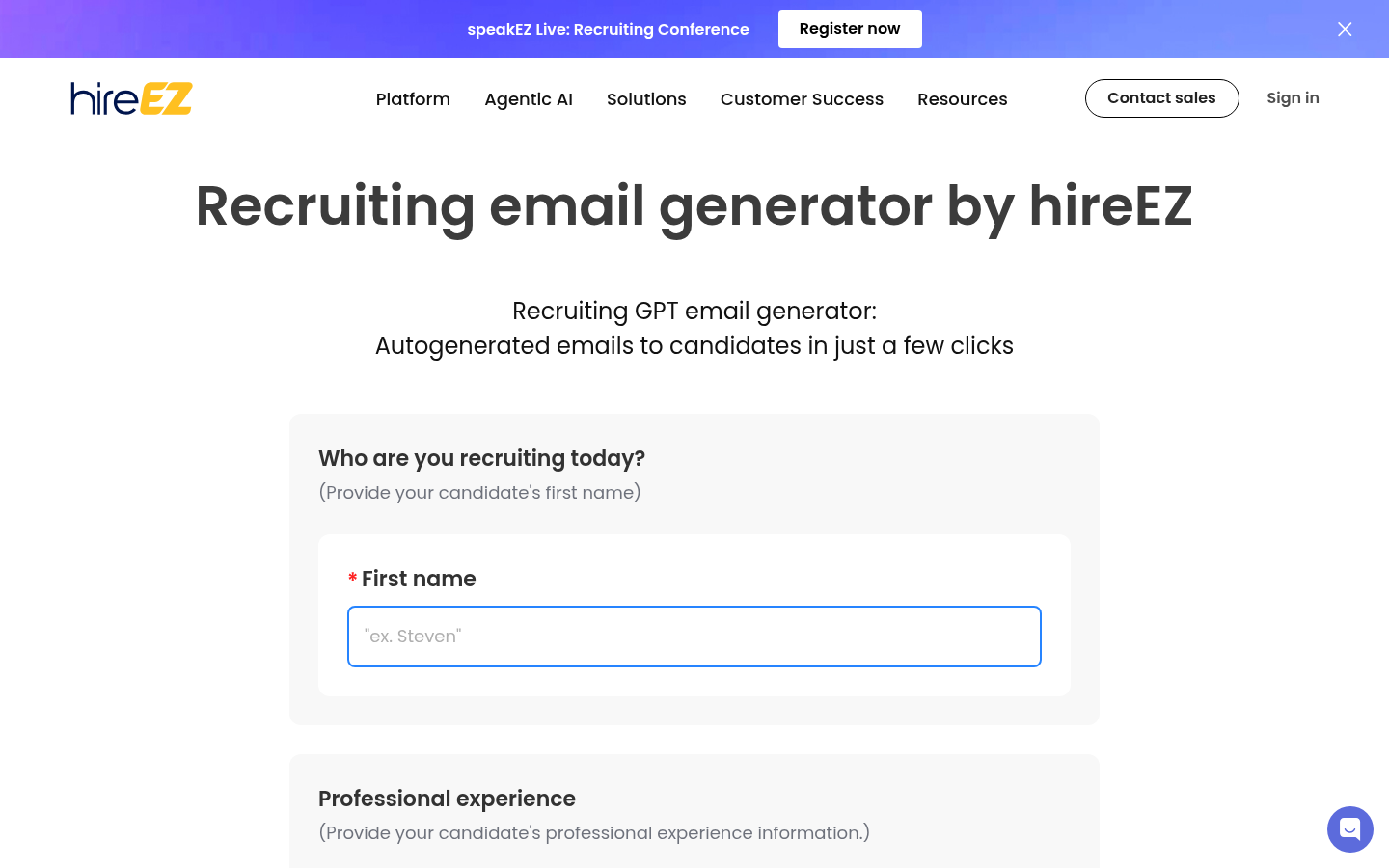
HireEZ is the leading AI sourcing platform for passive-candidate discovery at scale. The pitch is breadth: 750M+ profiles indexed from 45+ platforms, with AI matching across them.
What you get:
- Cross-platform sourcing engine (LinkedIn, GitHub, Stack Overflow, Behance).
- AI candidate matching against your role brief.
- Automated email outreach sequences with personalization tokens.
- Native ATS integrations for Bullhorn, Greenhouse, Lever, Workday.
Where it falls short: Contact information accuracy is uneven. G2 reviewers consistently flag bounce rates as high as 30% on some segments. Verify contact data before sending high-volume sequences.
Our pick: mid to large agencies running active sourcing where outbound volume drives placements. For budget-conscious teams, see our HireEZ alternatives guide.
10. SeekOut.
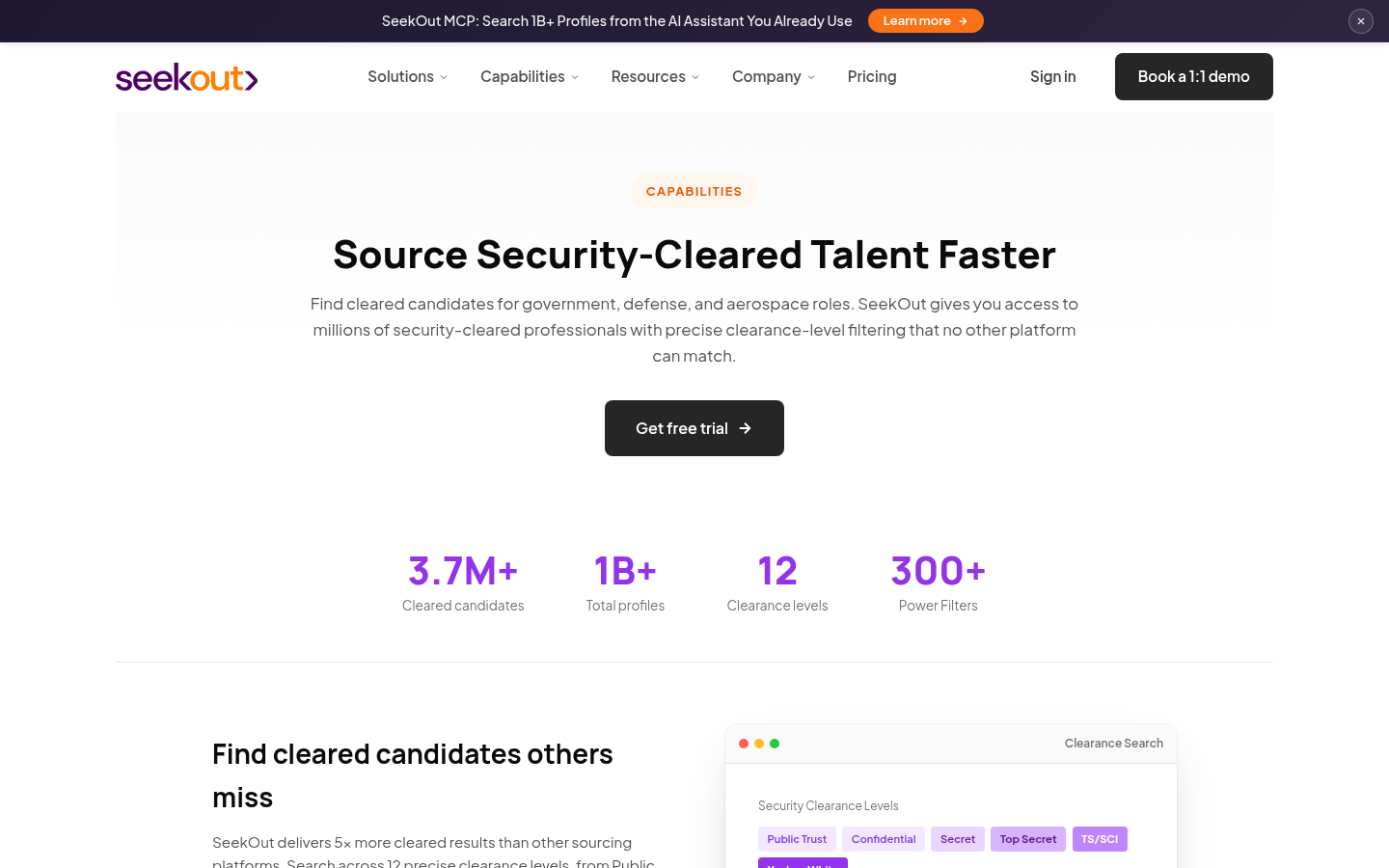
SeekOut is an enterprise talent intelligence platform with unusually deep specialized filters. 1B+ profiles, 3.7M+ security-cleared profiles, and rich diversity and veteran data.
What you get:
- Full-graph sourcing with specialized filters (clearance, diversity, technical skills, GitHub activity).
- SeekOut Assist: paste a JD, get auto-built Boolean and filter strings.
- ATS rediscovery on Greenhouse, Lever, Workday.
- 14-day trial.
Where it falls short: No perpetual free SKU. After the trial, paid seats run at $833 per seat per month or more.
Our pick: agencies running defense-adjacent, cleared-civilian, or specialized technical mandates where filter depth matters more than breadth. See our SeekOut alternatives roundup for the wider landscape.
11. Gem.
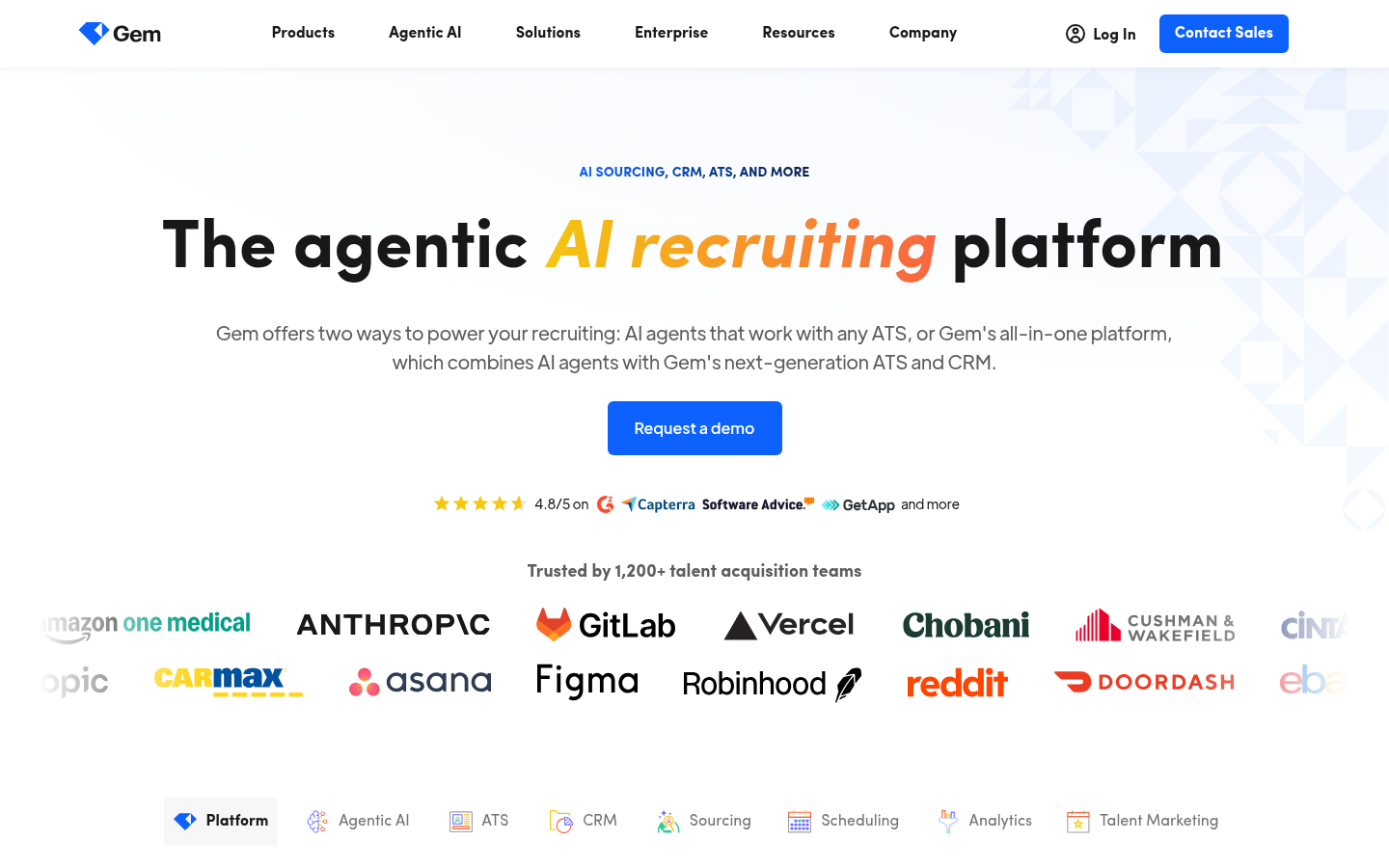
Gem is the sourcing and outreach platform that has expanded into a full ATS+CRM since acquiring ModernLoop. For agencies running heavy outbound, Gem is the center of the campaign workflow.
What you get:
- 800M+ profile sourcing engine.
- Email outreach with sequence analytics across reply rates and conversion.
- ATS and CRM unified, with native scheduling via ModernLoop.
- AI-led talent CRM with the Taylor AI assistant layer.
Where it falls short: Enterprise-only pricing. Originally built for in-house teams; the agency fit is workable but the data model wasn't designed mandate-first.
Our pick: agencies running heavy outbound campaigns where reply rates and sequence analytics drive the desk.
12. GoodTime.
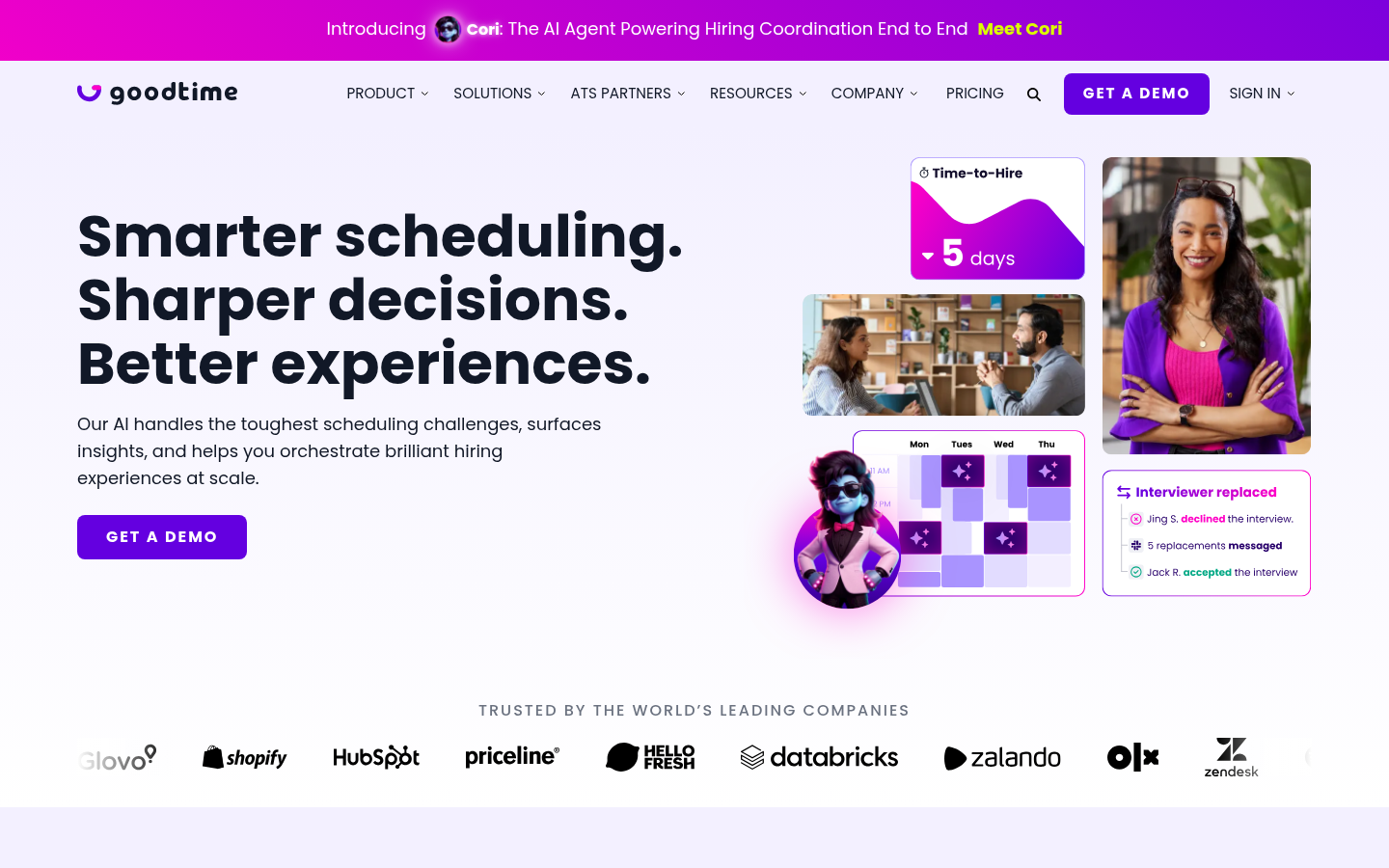
GoodTime is the AI scheduling platform built for agencies juggling dozens of concurrent client searches. It eliminates the back-and-forth of coordinating interviews by finding times that work across candidate, recruiter, and client calendars.
What you get:
- AI interviewer matching across multiple clients and roles.
- Candidate self-scheduling links.
- Calendar syncing across recruiters, clients, and external interviewers.
- Interviewer load balancing to prevent overbooking.
Where it falls short: Requires connecting client calendars to get full value, which not every client will agree to. For a wider category view, see our automated interview scheduling tools roundup.
Our pick: larger agencies where scheduling friction is a real bottleneck and the partner has the relationship capital to ask clients for calendar access. Agencies whose clients won't grant that access can look at Arrange, which gathers the client's and candidate's availability through emailed forms and needs a client calendar only for its Arrange Connect booking pages.
13. Paradox.
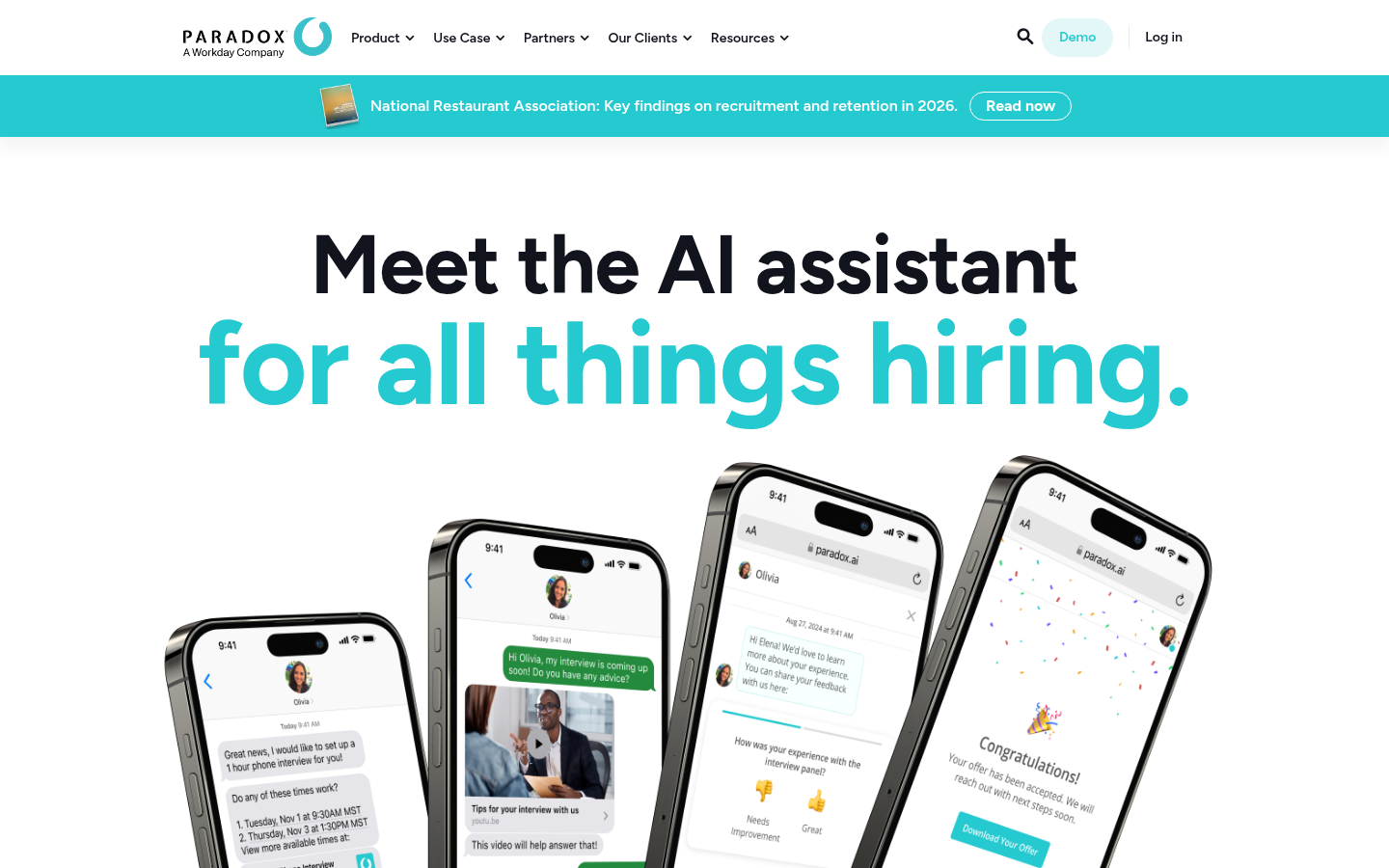
Paradox, powered by its AI assistant Olivia, is a conversational recruiting platform. It automates the high-volume side of agency work: screening, scheduling, FAQs, and onboarding.
Best fit for desks placing frontline, hourly, or volume retail roles.
What you get:
- Conversational AI for candidate screening and engagement.
- Automated interview scheduling and reminders.
- Multi-language support across SMS, WhatsApp, and web chat.
- Native integration with major ATS platforms.
Where it falls short: Primarily built for high-volume and frontline roles. Not the right tool for partner-led search or six-figure exec mandates.
Our pick: staffing agencies running high-volume hourly or contract desks where the funnel volume is too large for human screening.
14. LinkedIn Recruiter.
LinkedIn Recruiter is the baseline for agency outbound.
The 1B+ member graph and the InMail layer make it the default place to start every new mandate, especially when the client expects LinkedIn-sourced candidates as table stakes.
What you get:
- Full LinkedIn member graph search with structured filters.
- InMail credits for outbound to passive candidates.
- Native ATS integration via Recruiter System Connect for Bullhorn, Greenhouse, Lever, Workday.
- Saved searches and project-level alerts.
Where it falls short: Per-seat pricing ($10K+ per year per seat) gets painful at scale. Targeting is keyword-and-filter, not context-aware, and the platform doesn't learn from which candidates you've moved forward.
Our pick: every agency as the baseline. Pair with HireEZ or Gem for the layer that learns from your search history and verifies contact data.
15. Arrange.
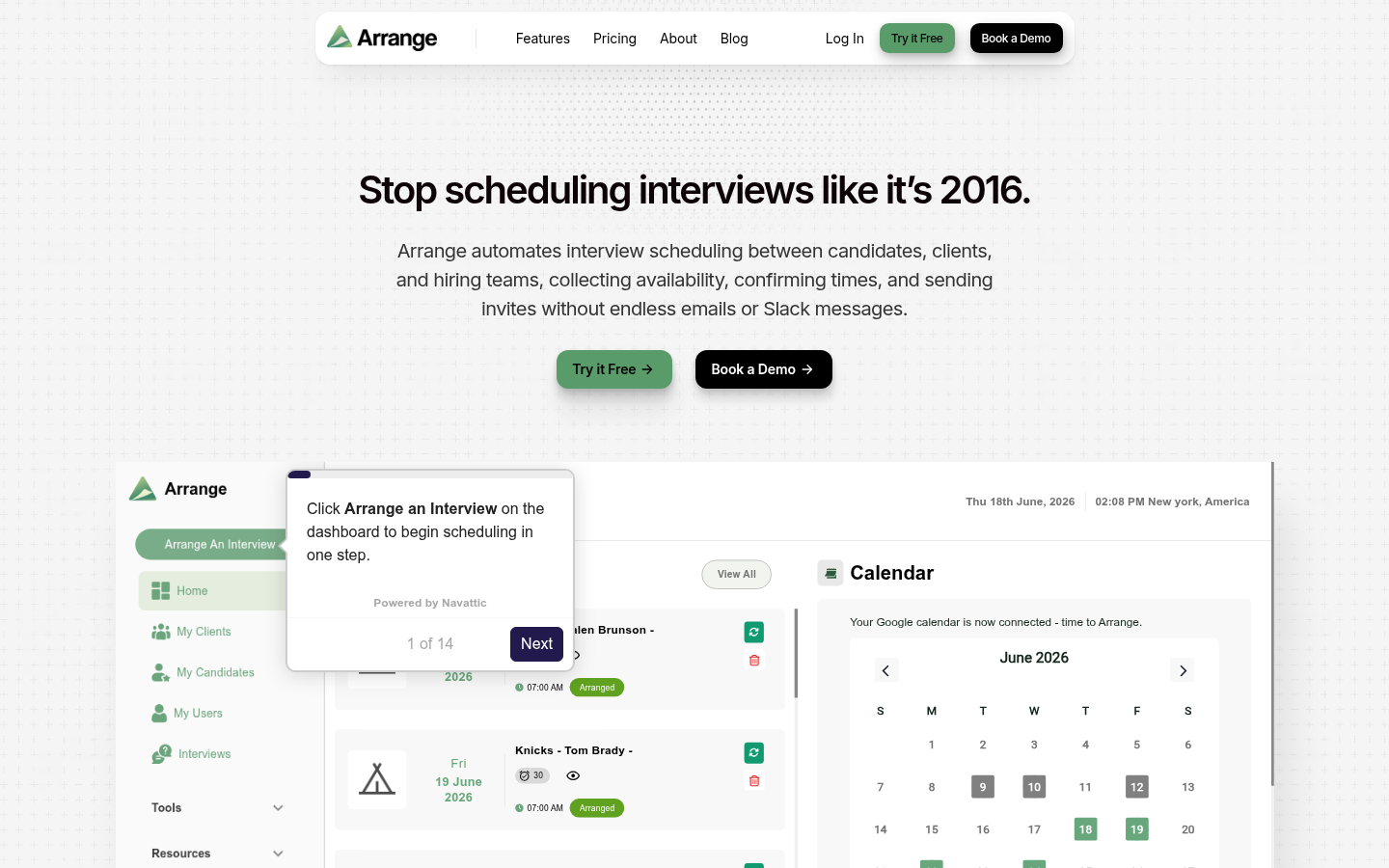
Arrange is an interview scheduling platform built for the recruiter in the middle, coordinating availability between candidates, clients, and hiring teams.
Candidates and clients share their availability through branded emails and forms, and neither side needs an account. When the times line up, Arrange sends the calendar invites and confirmation emails automatically.
What you get:
- Client First, Candidate First, and Matchmaker flows. Matchmaker collects both sides' availability in parallel and books the first open time.
- Candidate scheduling links to paste into a candidate submission, so the client can offer times or ask for the candidate's.
- Arrange Connect, which merges several hiring managers' calendars into one booking view for panel interviews.
- A live stage tracker with reminders, edits, and rescheduling from one dashboard.
- Google and Outlook calendar sync, automatic Zoom, Meet, or Teams links, and ATS integrations including Loxo, Crelate, Recruiterflow, and Recruit CRM.
- White-labeled booking links and a custom domain on the Enterprise plan.
- A free Starter plan for one user, and Pro at $35/user/month with a 14-day free trial.
Where it falls short: The free Starter plan covers a personal booking link and 1:1 bookings for one user; the recruiter flows, hiring manager calendar connections, and ATS integrations come with Pro. Panel booking through Arrange Connect is also the one flow that asks the client's hiring managers to connect their calendars.
Our pick: agency recruiters who coordinate interviews between candidates and a client's hiring managers every day, and want the client to book without creating an account or connecting a calendar.
How to choose the best tool.
You're a boutique or mid-size agency. Recruit CRM or Recruiterflow as the CRM. Metaview for the capture layer. LinkedIn Recruiter as the sourcing baseline. Manatal if budget is the binding constraint. That's the lean stack.
You're a large staffing agency running contract and contingent volume. Bullhorn or Vincere for the system of record. Metaview for client and candidate calls. HireEZ or Gem for outbound. Paradox for the frontline funnel. GoodTime when scheduling becomes the bottleneck.
You're a search-focused agency (retained or exec). See our best executive search software tools roundup for the search-specific stack. Loxo or Recruit CRM as the CRM. Metaview for partner-led calls. SeekOut for cleared or specialized mandates.
You're a one-person desk or independent recruiter. Loxo's free tier or Manatal at $15/user, plus the Metaview free tier for capture, plus LinkedIn Recruiter as soon as the desk pays for itself. Layer up as the firm grows.
For more on the broader landscape, see our executive search strategy guide and the wider best CRM for recruitment roundup.
Bring Metaview into your hiring stack.
Live notes, structured scorecards, and ATS sync - set up in under 10 minutes.
Frequently asked.
What is recruitment agency software?
Recruitment agency software is the stack of tools used by staffing and recruitment agencies to manage candidates, clients, mandates, sourcing, scheduling, and interviews across many concurrent searches. It typically combines an agency-specific CRM and ATS with sourcing engines, scheduling automation, and interview-intelligence layers like Metaview.
What is the best CRM for a recruitment agency?
It depends on agency size and desk mix. Large staffing agencies running contract and contingent volume usually choose Bullhorn or Vincere. Boutique and mid-size agencies tend to land on Recruit CRM, Recruiterflow, or JobAdder.
How is recruitment agency software different from a general ATS?
Agency software is built around multiple clients and many concurrent mandates per recruiter. General ATSs like Greenhouse or Ashby map to job reqs and stages, so agencies running them end up bolting on custom fields and workarounds to make the basic agency workflow work.
Do recruitment agencies need AI software in 2026?
Most agencies already use AI in some form. The leverage points are interview intelligence (Metaview), AI sourcing (HireEZ, SeekOut, Gem), and conversational AI for high-volume desks (Paradox). The tools don't replace recruiters. They handle the repetitive admin so recruiters spend more time on relationships.
How much does recruitment agency software cost?
Pricing ranges from $15/user/month at the low end (Manatal) through $99/user/month for most mid-market agency CRMs (Recruit CRM, Recruiterflow, Bullhorn), up to quote-based enterprise pricing for Vincere, JobAdder, and the AI sourcing tools. Most agencies should expect to spend $200 to $500 per recruiter per month across the full stack.
What's the easiest way to start with AI in an agency stack?
Start with the capture layer. Adding Metaview to your existing call workflow takes 10 minutes and the recruiter doesn't change anything else about how they work. From there, layer in AI sourcing once outbound volume is the bottleneck, and add conversational AI if your desk runs high-volume frontline placements.
