
Healthcare hiring is the slowest, most regulated, most consequential corner of recruiting.
Every hire affects patient care. Every credential has to verify. Every interview has to assess two things at once: clinical competence and the human qualities that decide whether the candidate belongs on a care team.
Most ATSs handle the first half. Almost none handle the second.
This guide compares the 5 healthcare recruiting platforms most teams shortlist in 2026, segmented by what kind of org you run. The right pick depends on your size, your role mix, and where in the funnel your bottleneck actually lives.
What to look for in healthcare recruiting software.
Five things to filter on, in roughly this order.
1. Compliance and credentialing. State licenses, background screening, EEO and HIPAA tracking, audit trails. This is the floor. Any tool you consider has to handle this without manual workarounds.
2. Multi-location coordination. If you run more than one facility, centralized visibility is non-negotiable. Distributed hiring without a central view becomes spreadsheets and Slack threads inside a month.
3. High-volume workflows. Healthcare hiring is rarely low-volume. Whatever you pick has to handle job distribution, application management, and screening for hundreds of open roles without falling over.
4. Interview consistency. This is the gap most ATSs leave open. Clinical competence is one half of the hire; bedside manner, communication, cultural fit are the other half. If the tool doesn’t structure that assessment, the recruiters and hiring managers will, and inconsistently.
5. Integration with the rest of the stack. Your ATS sits next to your HRIS, payroll, scheduling, and credentialing systems. The fewer manual handoffs between them, the faster the hire actually moves.
The 5 tools at a glance.
Read the table by what kind of org you are. The right pick is rarely about features in isolation; it’s about whether the platform was built for your shape of healthcare hiring.
| Tool | Best for | Healthcare strength |
|---|---|---|
| Metaview | Any size, layered on top of an existing ATS | Interview intelligence: clinical competence, bedside manner, cultural fit |
| Hireology | Multi-location SMB (home care, urgent care, senior living) | Built for high-turnover, multi-site healthcare hiring |
| iCIMS | Large hospital systems and national networks | Enterprise credential management, EEO and HIPAA tracking |
| SmartRecruiters | Mid-to-large systems with collaborative hiring panels | Mobile-first for clinicians and medical directors on-floor |
| Workable | Single-location practices and healthcare startups | HIPAA-compliant, healthcare-specific job board integrations |
1. Metaview.
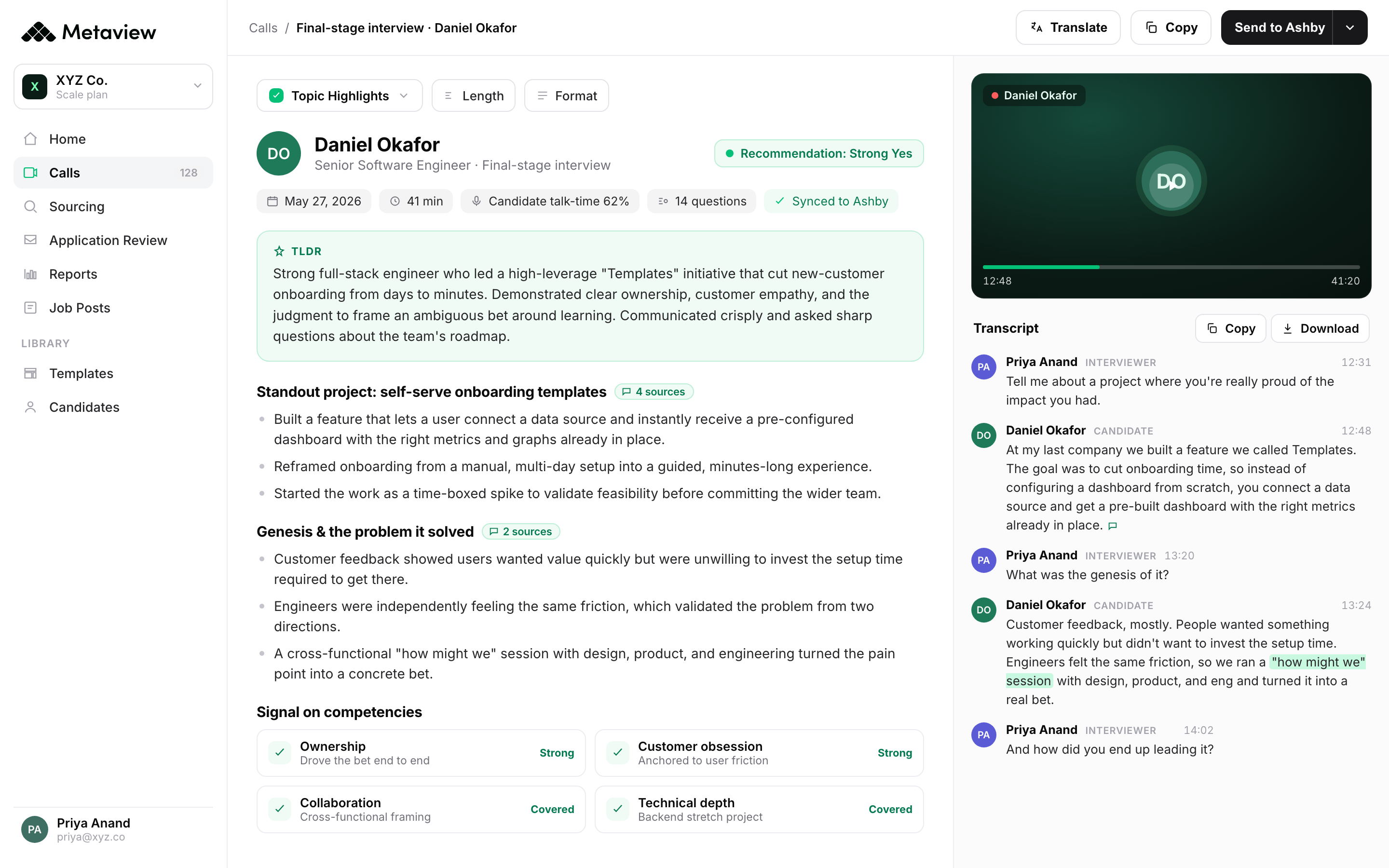
Best for any healthcare org running clinical interviews at scale, layered on top of your existing ATS.
Metaview isn’t an ATS. It’s the AI layer that sits above whichever one you run (Workday, iCIMS, Hireology, Workable, anything) and structures the parts an ATS can’t reach.
For healthcare specifically, that’s the interview itself. Clinical competence is one half of the hire. Bedside manner, communication, and cultural alignment with your care values are the other half, and neither shows up in a resume filter.
Metaview captures every screen and panel, structures the conversation against your rubric, and pushes the signal back into the ATS automatically. Recruiters and hiring managers see what differentiates successful hires across facilities and roles.
What it covers:
- Automatic transcription and structured summarization of every interview
- AI sourcing and candidate rediscovery from your existing ATS
- Structured scorecards for clinical competence, empathy, and cultural fit
- Compliance-friendly documentation for regulated environments
- Reporting on patterns across interviewers, facilities, and roles
- Native integrations with Workday, iCIMS, Greenhouse, Lever, and 40+ ATSs
Where it falls short: Metaview is not a system of record. You still need an ATS underneath for the pipeline, the credential checks, and the regulatory tracking. Metaview adds the intelligence layer, not the spine.
Best for: healthcare teams whose ATS is fine but whose interview signal is scattered, inconsistent across facilities, or invisible to leadership.
Every time the AI presents a candidate, the recruiter says fit or not. That feedback flows into the ideal-candidate profile. Over time, it becomes a company-wide read on what good looks like.”

2. Hireology.
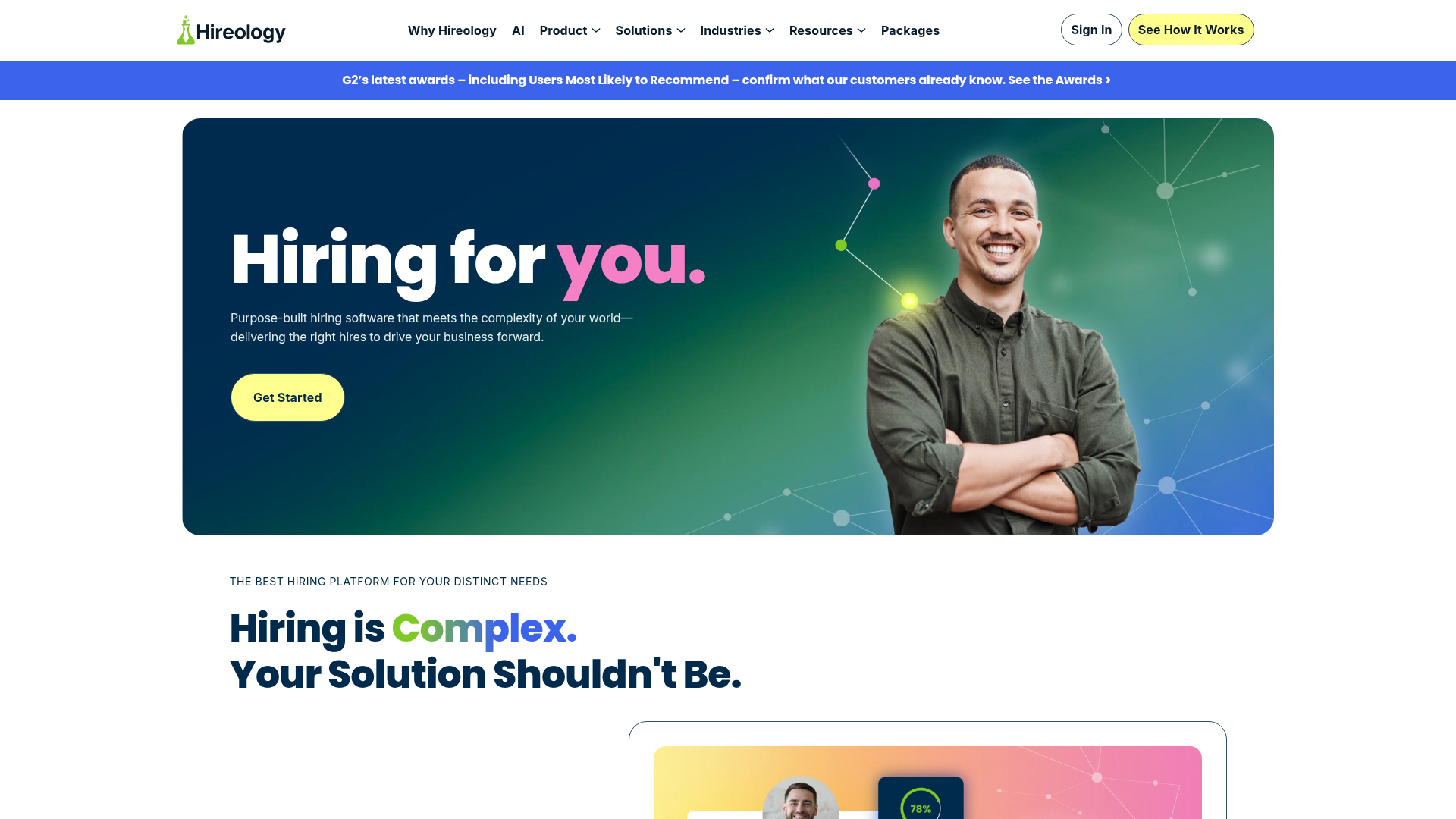
Best for multi-location SMB healthcare (home care, urgent care, senior living).
Hireology is an ATS purpose-built for high-turnover, multi-site healthcare. Distributed hiring is its core competence: home care agencies, senior living groups, urgent care chains.
It centralizes job distribution across locations, automates reference and background checks, and tracks candidate credentials in one place. Pre-built role templates for RNs, CNAs, LPNs save the setup work.
What it covers:
- Multi-location, high-volume hiring workflows
- Streamlined background checks and credential verification
- Pre-built job templates for clinical and support roles
- Built-in onboarding tools for faster start dates
Where it falls short: narrow vertical focus by design. If you’re a hospital network or you hire heavily outside the home care, senior living, urgent care, or automotive verticals, Hireology is a tight fit.
Best for: small-to-midsize healthcare orgs hiring at volume across multiple sites.
3. iCIMS.
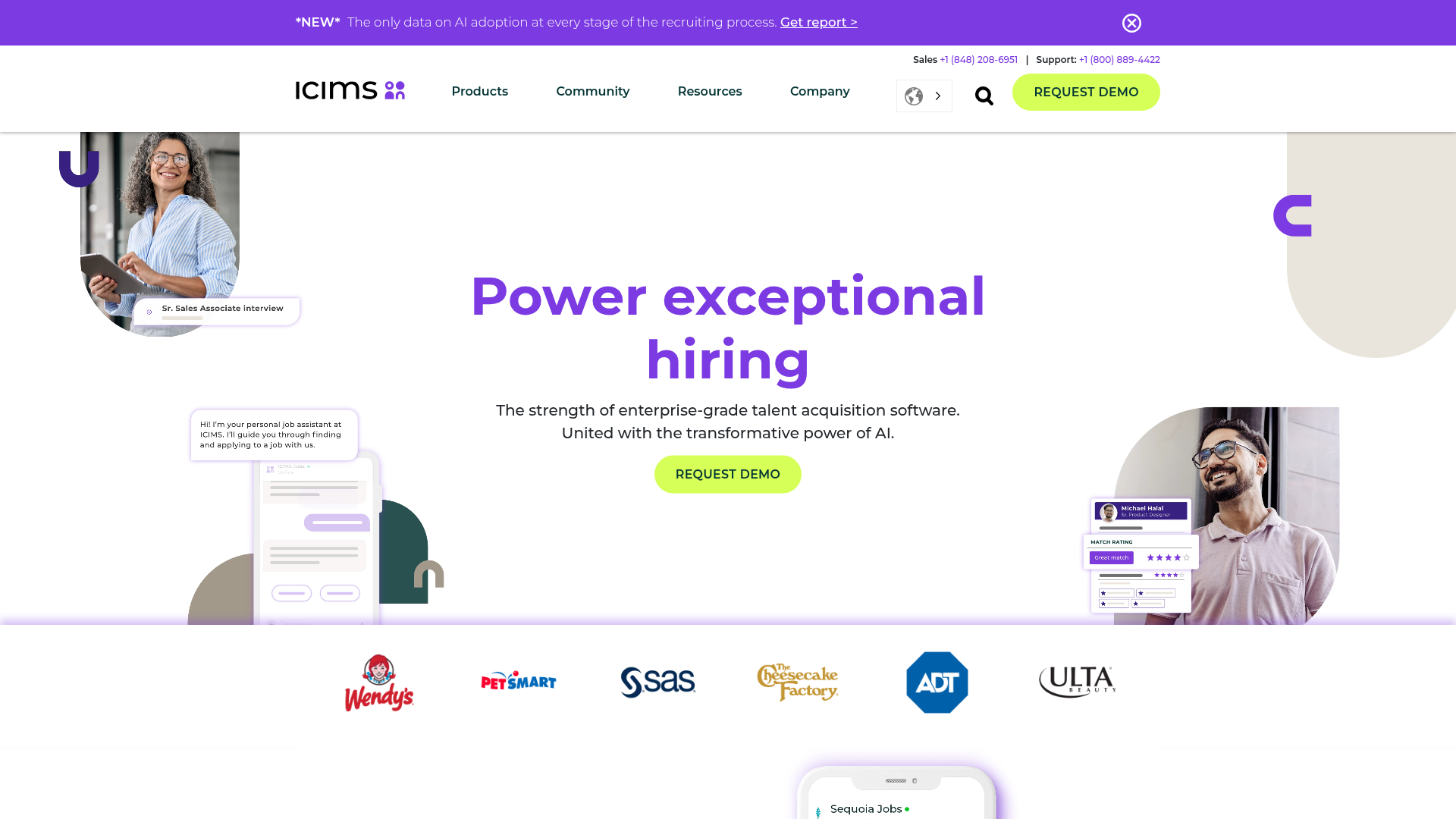
Best for large hospital systems and national healthcare networks.
iCIMS is the enterprise pick. It’s built for organizations juggling hundreds of open roles across departments, facilities, and regions, with the compliance overhead to match.
Multi-step credential verification, EEO and HIPAA tracking, role-based access for different hiring stakeholders. The integrated CRM and onboarding modules keep candidate data centralized across the full lifecycle.
What it covers:
- Enterprise ATS with built-in compliance and credentialing
- Candidate relationship management for passive healthcare talent
- Strong DEI and regulatory reporting
- Integrations with payroll, scheduling, and HRIS systems used in healthcare
Where it falls short: implementation is heavy. iCIMS rewards orgs with the IT capacity to configure it properly; smaller systems often end up using 20% of the platform and paying for 100%.
Best for: large hospital networks and health systems that need end-to-end talent management with audit-grade compliance.
4. SmartRecruiters.
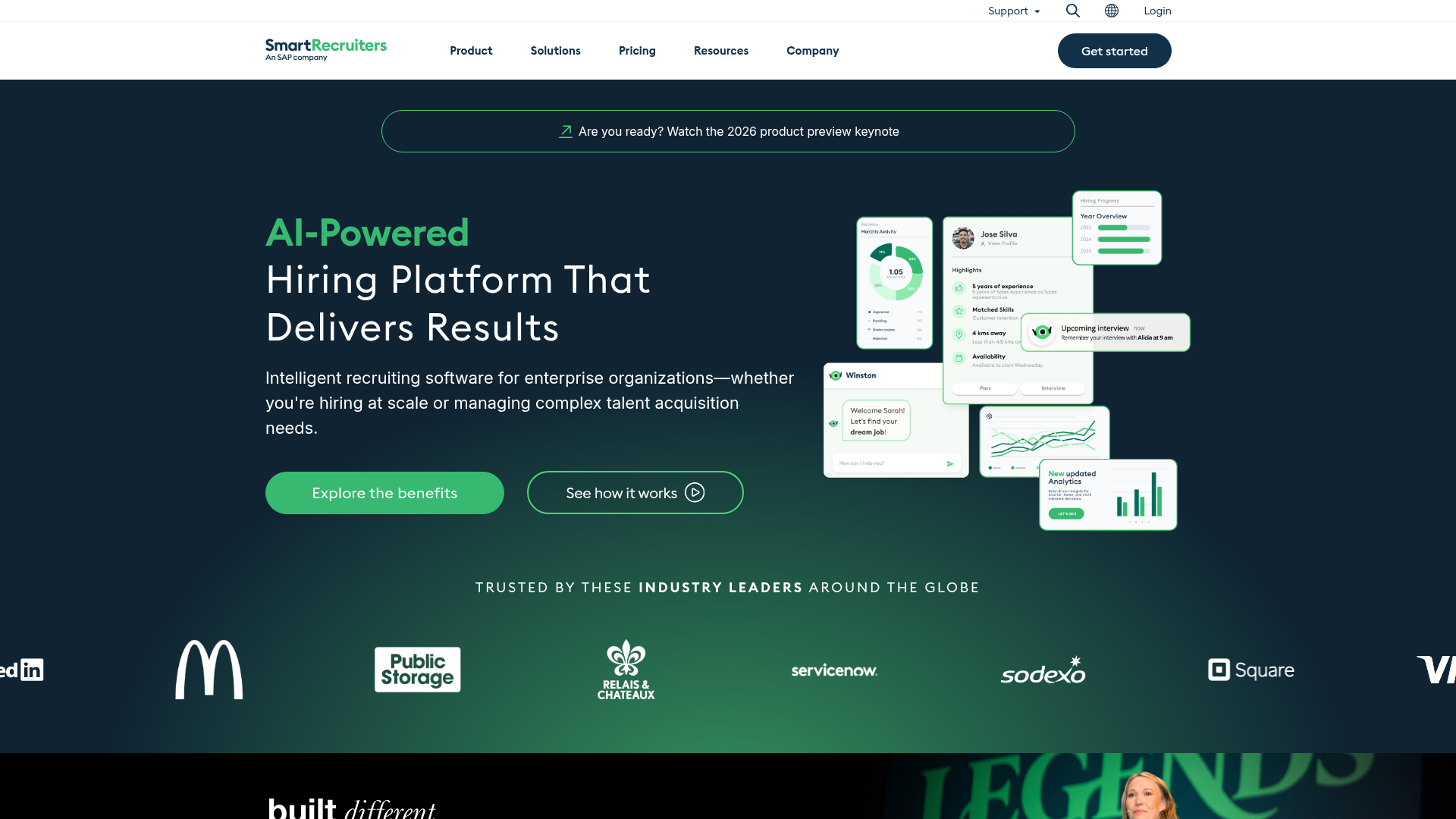
Best for mid-to-large healthcare systems with collaborative hiring panels.
SmartRecruiters works well when hiring decisions involve multiple stakeholders. HR partners, department heads, medical directors, charge nurses can all participate without anyone juggling spreadsheets.
The mobile-first experience is the differentiator: managers can review applications, leave feedback, and approve offers from a patient floor or remote facility without losing context.
What it covers:
- Unified, cloud-based platform for recruiters and hiring managers
- Mobile-first experience for clinicians and on-floor leaders
- Automated job posting and candidate tracking for high-volume roles
- Integrations with healthcare job boards and background-screening vendors
Where it falls short: credential-management depth is lighter than iCIMS or Hireology. You may need to layer a verification tool for state-license-heavy hiring.
Best for: mid-to-large healthcare systems where collaboration across distributed stakeholders is the bottleneck.
5. Workable.
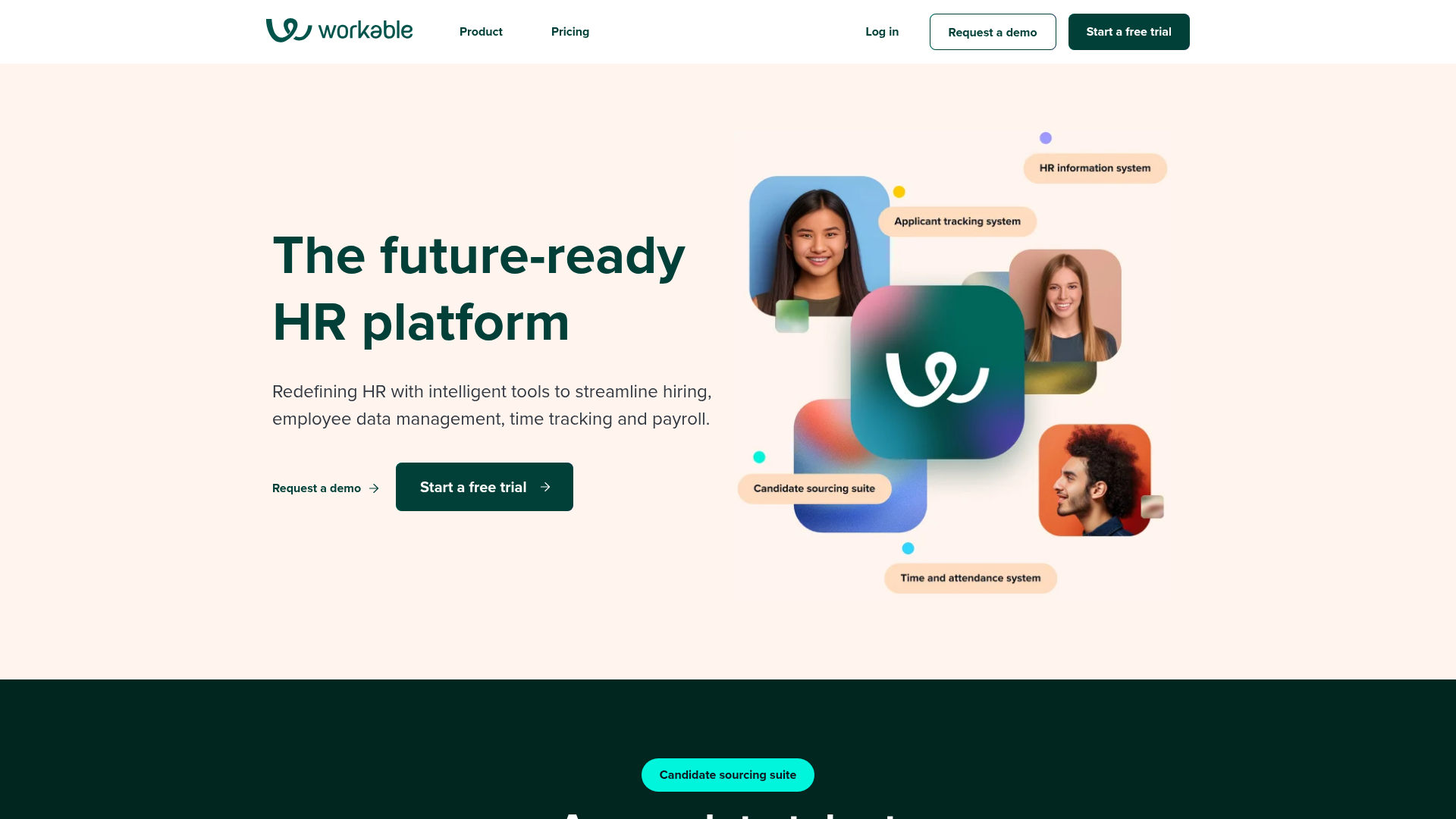
Best for single-location practices and healthcare startups.
Workable is the lightweight pick. Easier to set up than enterprise platforms, more intuitive than vertical-specific ATSs, and HIPAA-compliant out of the box.
Integrations with healthcare-specific job boards (Health eCareers, HospitalCareers) extend the reach without the enterprise overhead. AI sourcing and structured interview kits handle the basics.
What it covers:
- AI-assisted sourcing and candidate ranking for clinical roles
- Access to general and healthcare-specific job boards
- Structured interview guides for clinical and administrative positions
- Secure, compliant data handling for patient-facing organizations
Where it falls short: depth is shallow vs Hireology or iCIMS on credential tracking and multi-site workflows. Teams that outgrow it usually move to a vertical-built tool.
Best for: healthcare startups, single-location practices, and fast-growing medical groups.
How to choose.
Match your situation to the scenarios below. Each callout points at the tool we’d pick first.
For a broader read on how AI is changing the ATS market, see our Lever alternatives guide. For the deeper ATS-vs-CRM distinction, see CRM vs ATS for recruiting teams.
Bring Metaview into your hiring stack.
Live notes, structured scorecards, and ATS sync - set up in under 10 minutes.
Frequently asked.
What should I look for in healthcare recruiting software?
Three things to filter on first: credentialing and license verification, compliance audit trails (HIPAA, EEO), and integration with your HRIS. After that, ask whether the tool handles the interview itself, where most of the assessment risk lives for clinical roles.
How is healthcare recruiting different from other industries?
Strict credential and license checks, high turnover (especially in nursing and allied health), and the fact that every hire touches patient care. The hiring bar is two-sided: clinical competence and bedside manner. A resume filter only covers the first one.
Can a small healthcare practice get value from recruiting software?
Yes. Workable is the most common pick for single-location practices and startups; Hireology suits multi-site SMB groups. Both centralize applications, automate scheduling, and handle the basic compliance footprint without enterprise overhead.
How does AI improve healthcare recruitment?
The biggest gain is interview consistency. AI captures the conversation, structures the assessment against your rubric, and surfaces the soft-skill signal (empathy, communication, cultural fit) that recruiters can’t reliably score from memory. That’s the half of the hire most ATSs leave open.
Do I need a healthcare-specific ATS or can a general one work?
It depends on volume and mix. High-turnover, multi-location hiring (home care, urgent care, senior living) benefits from a vertical-built tool like Hireology. Lower-volume practices and clinics do fine with a general ATS like Workable, paired with HIPAA-compliant configuration.
