
Hiring senior leaders is one of the hardest jobs in recruiting. Long search cycles, picky candidates, anxious clients, and a partner whose hour with each candidate has to count.
The tools that earn a seat in a search firm protect that hour and keep the mandate moving between calls. A general applicant tracking system (ATS) models one employer's job requisitions, so an external firm running dozens of mandates for different clients ends up working around its own system of record. The candidate relationship management (CRM) systems built for search model the mandate instead.
A sourcing tool that returns volume instead of fit buries the researcher, and a stack with no capture step leaves the partner reconstructing each candidate conversation for the client report.
This list covers 18 tools that executive search and staffing firms use, in five groups: search CRMs, sourcing and market intelligence, interview capture, general ATSs for in-house executive recruiting, and the project and LinkedIn tools that sit around them. Each entry covers what the tool does for the agency workflow, where it falls short, and who it fits.
All 18 tools at a glance.
| Tool | Category | Best for | Free tier |
|---|---|---|---|
| Metaview | Interview intelligence | Capturing partner-led candidate conversations | Free with work email |
| Ezekia | Search CRM | Boutique and mid-size retained search firms | None |
| HireEZ | AI sourcing | Passive-candidate sourcing at scale | Limited trial |
| Thrive TRM | Search CRM | Enterprise executive search and TA firms | None |
| Ashby | All-in-one ATS | In-house executive recruiting teams | None |
| Greenhouse | Enterprise ATS | Structured hiring at scale | None |
| Lever | ATS + CRM hybrid | Relationship-driven recruiting teams | None |
| Gem | Sourcing + outreach | In-house teams running outbound at scale | None |
| SeekOut | AI talent intelligence | Deep specialized and cleared talent search | 14-day trial |
| Crunchbase | Market intelligence | Mapping companies and executive moves | Limited free |
| Bullhorn | Staffing CRM/ATS | Enterprise staffing agencies | None |
| Recruit CRM | Search CRM | Small to mid-sized recruiting agencies | Free trial |
| Recruiterflow | Automation-first CRM | Agencies wanting heavy workflow automation | Free trial |
| Notion | Workspace + docs | Internal search documentation | Free tier |
| ClickUp | Project management | Multi-client coordination | Free tier |
| Asana | Project management | Structured deliverables and client reporting | Free tier |
| Taplio | LinkedIn growth | Personal brand for partners and consultants | 7-day trial |
| LinkedIn Recruiter | Sourcing | Baseline outbound across 1B+ profiles | None (enterprise) |
1. Metaview.
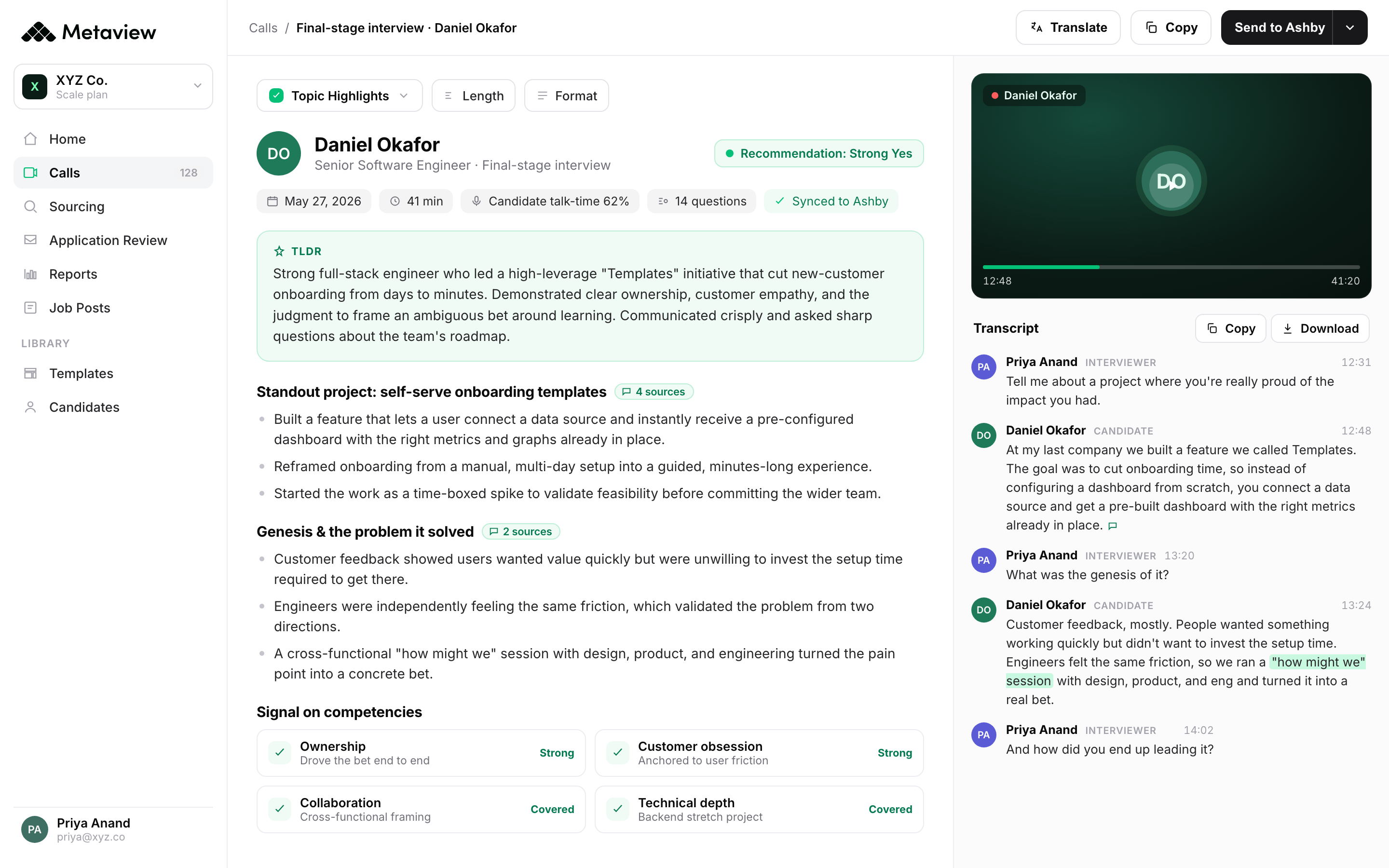
Metaview is the Agentic Recruiting Platform: AI agents for sourcing, application review, screening, interview notes, outreach, and reporting. For a search firm, the two that touch the partner's day are the Notetaker and AI Sourcing.
When the partner takes a candidate call, the Metaview Notetaker joins as a visible participant, records and transcribes the conversation, and turns it into structured notes in the template you chose, plus a scorecard draft that the partner reviews and submits.
It's how agencies like The Bowdoin Group scale executive search without scaling headcount, and how Raines International standardized every search practitioner's follow-up, scorecard, and report across the firm.
For staffing agencies specifically, the value compounds across mandates. Every client has their own preferred shortlist format.
Metaview's notes templates let you keep a format per client, so the same call produces the summary each client expects without a researcher reformatting it. Elizabeth Calder, Vice President of People and Talent at The Bowdoin Group, puts it plainly: “Some clients want short, bulleted summaries. Others prefer verbose executive-level readouts.”
The partner gets their afternoon back. The researcher gets a head start on the next brief.
What you get on day one:
- Live capture across Zoom, Google Meet, Microsoft Teams, Webex, and phone calls.
- One-paragraph candidate summaries generated from the call, alongside the full transcript.
- Scorecard drafts that submit directly into Ashby and Lever, and a browser extension that autofills the objective fields of Ashby and Greenhouse scorecards.
- Integrations with 114 ATSs, including Bullhorn, Ezekia, Recruit CRM, and Recruiterflow. See our ATS integrations roundup.
- AI Sourcing, which searches the web, your connected ATS, and your past Metaview conversations from one plain-language brief and returns candidates with the reasoning for each. Its Deep Research mode answers market-mapping questions with charts, tables, and profile sets.
- Support for 50+ languages, SOC 2 Type II certification, and GDPR and CCPA compliance.
- A free Notetaker plan; paid plans are priced per agent rather than as one flat fee.
Every follow-up, scorecard and report looks and sounds the same, no matter who prepares it. We've accelerated our searches by cutting administrative time, freeing our search practitioners to advise clients and develop critical relationships.”

Our pick: any executive search or staffing agency where the partner's hour with each candidate is the most valuable hour in the cycle, and where the client report is still written up by hand afterwards.
2. Ezekia.
Ezekia is one of the few CRMs designed specifically for the executive search workflow, not adapted from a general recruiting tool.
The data model is built around long-cycle relationships, mandate-style engagements, and the off-list candidates that retained search firms rely on.
What you get:
- Engagement-centric CRM (mandates, not job reqs).
- Off-list candidate tracking with rich biographical and career data.
- Client portals for sharing candidate progress.
- Integration with LinkedIn Recruiter, email, calendars.
Where it falls short: Smaller install base than the giant ATSs, which means fewer third-party integrations out of the box. Pricing is enterprise-only and varies by firm size.
Our pick: boutique to mid-size retained search firms that want a CRM that thinks in mandates, not job posts.
3. HireEZ.
HireEZ is the leading AI sourcing platform for passive candidate discovery at scale. The pitch is breadth: 750M+ profiles indexed from 45+ platforms, with AI matching across them.
What you get:
- Cross-platform sourcing engine (LinkedIn, GitHub, Stack Overflow, Behance, etc.).
- AI candidate matching against your role brief.
- Automated email outreach sequences with personalization tokens.
- Native ATS integrations for Greenhouse, Lever, Workday, Bullhorn.
Where it falls short: Contact information accuracy is uneven. G2 reviewers consistently flag bounce rates as high as 30% on some segments. The breadth comes with a noise penalty.
Our pick: mid to large search teams running active sourcing where the top of the funnel needs significant outbound. Verify contact data before sending high-volume sequences. For budget-conscious teams, see our HireEZ alternatives guide.
4. Thrive TRM.
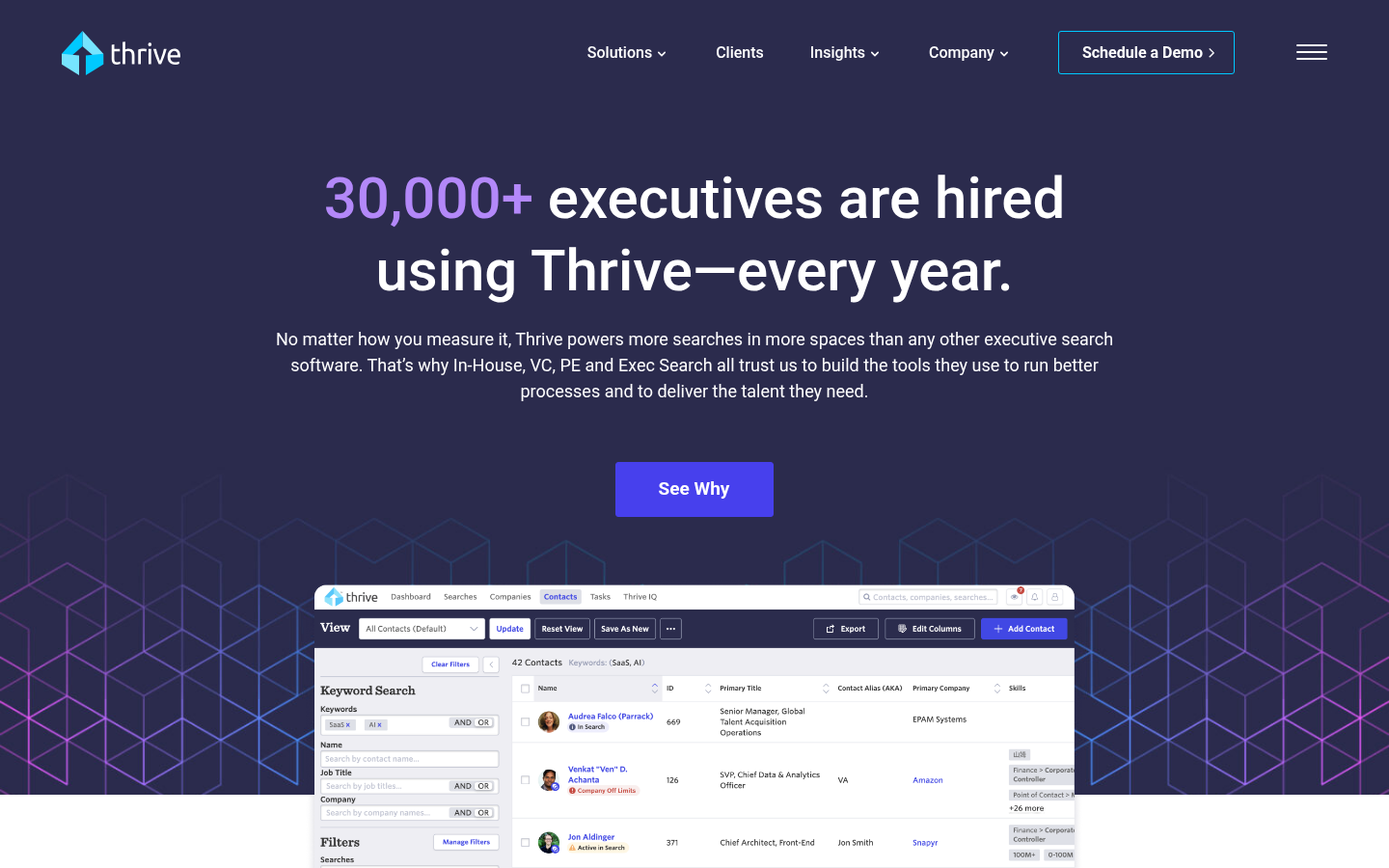
Thrive TRM is a talent-relationship-management platform built specifically for executive search firms and in-house TA teams running mandate-style searches.
The reporting layer is where Thrive earns its place on this list. Industry benchmarks across submission rates, time-to-shortlist, and offer-to-acceptance are built into the platform.
What you get:
- Mandate management with stakeholder workflows.
- Industry benchmarking against anonymized aggregate data.
- Client-facing reporting dashboards.
- LinkedIn and email integrations for candidate sourcing.
Where it falls short: Enterprise-only pricing with multi-week implementation. Not the right fit for a 1-3 person boutique that just needs a clean CRM.
Our pick: enterprise executive search and large in-house TA functions where benchmarking is part of the value the firm sells.
5. Ashby.
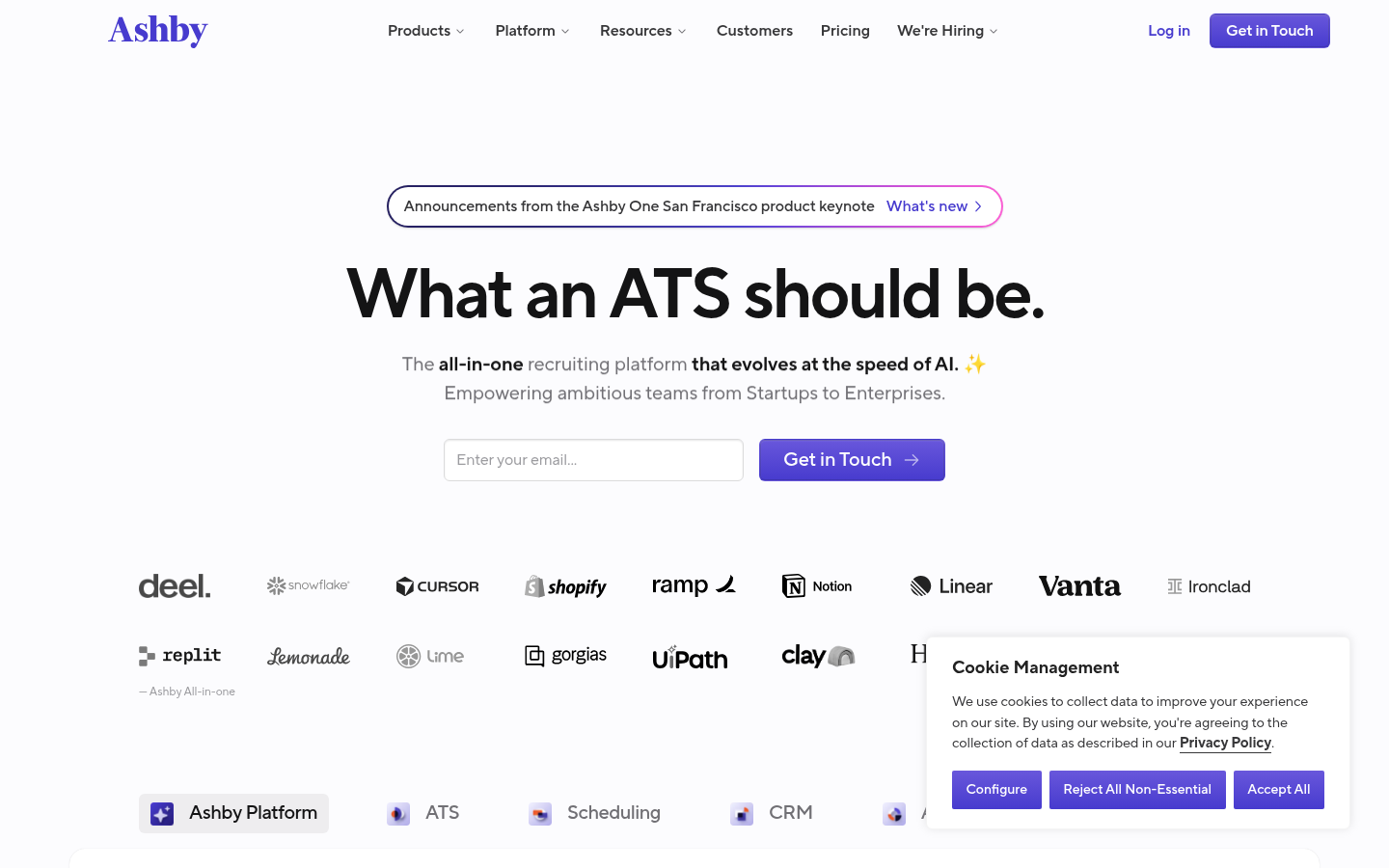
Ashby is the all-in-one recruiting platform that's quickly become the default for high-growth in-house teams. ATS, CRM, sourcing, scheduling, and analytics in one product.
What you get:
- ATS with strong native interview-kit and scorecard tooling.
- Built-in scheduling (no Calendly bolt-on needed).
- Best-in-category native analytics across funnel, source, and stage.
- API and webhook layer that's developer-friendly.
Where it falls short: Ashby is built for in-house teams, not external search firms. The data model maps to "company hiring", not "search firm running mandates for many clients". Not the right tool for a pure retained search firm.
Our pick: in-house executive recruiting functions at 200+ person companies who need a modern ATS plus analytics in one place.
6. Greenhouse.
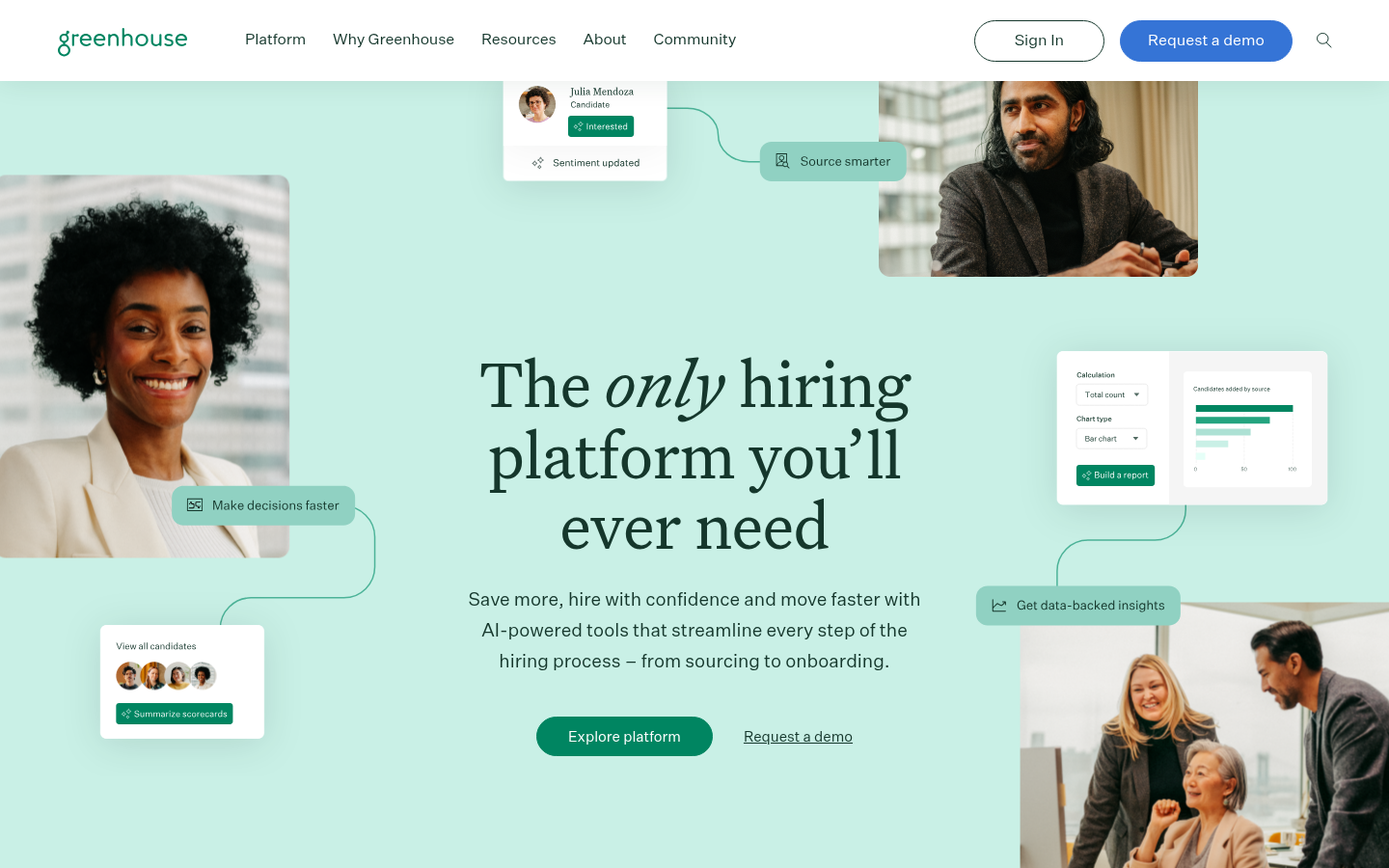
Greenhouse is the enterprise-grade ATS that defined structured hiring at scale. For in-house executive recruiting teams inside larger companies, Greenhouse is usually the system of record.
What you get:
- Job-req and stage-based pipeline with rich approval workflows.
- Structured interview kits and scorecards mapped to competencies.
- 250+ marketplace integrations including most analytics and sourcing tools.
- Robust permissions for multi-stakeholder visibility.
Where it falls short: Greenhouse thinks in job reqs and stages, not in mandates and engagements. For external search firms running 30+ active mandates at once, the abstractions don't fit.
Our pick: in-house executive recruiting at 500+ person companies, especially when Insights Plus adds the deeper reporting layer.
7. Lever.
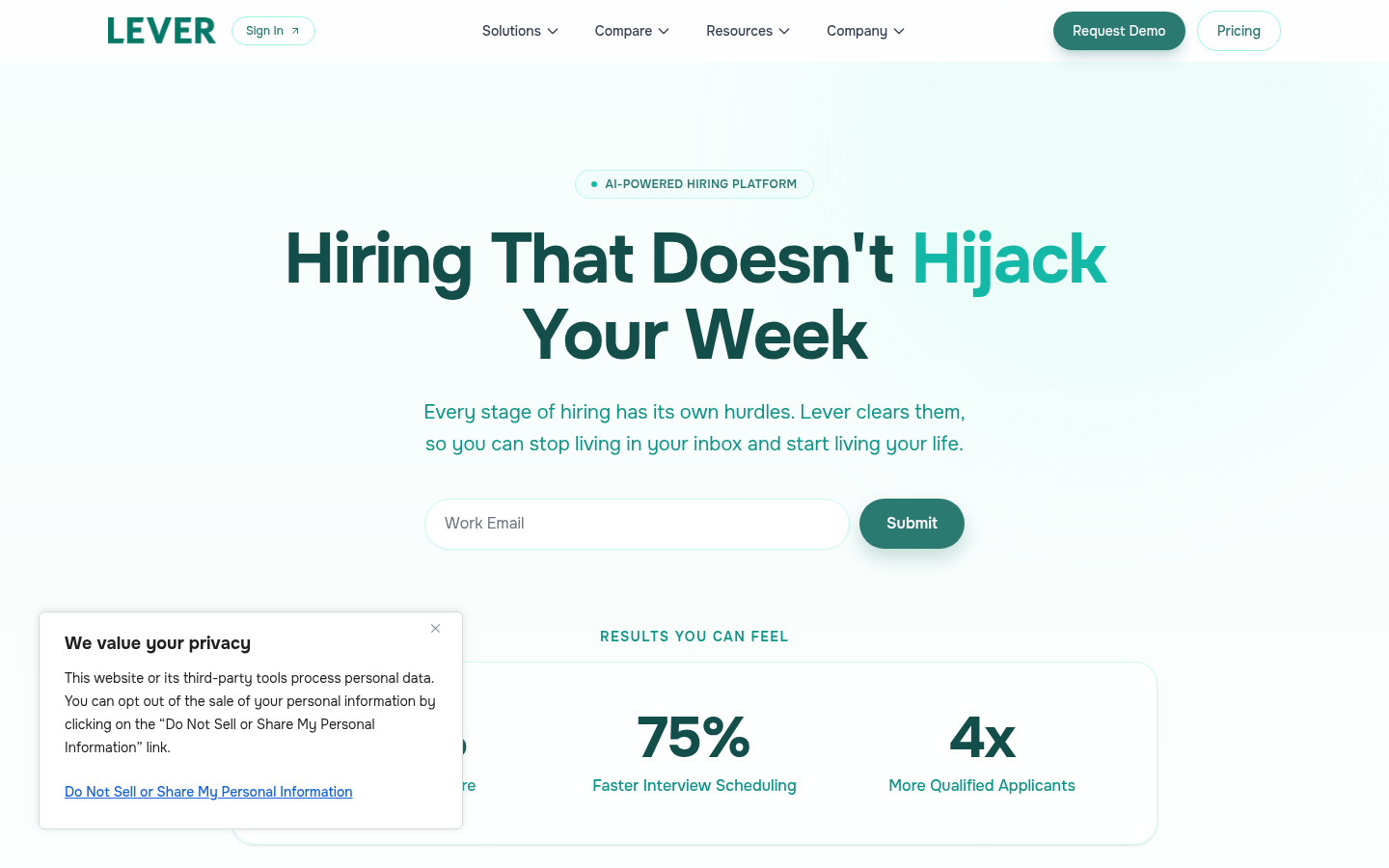
Lever blends ATS and CRM in one product. The hybrid model fits search-style work better than a pure ATS because it lets you nurture passive candidates over months without forcing them into a specific req.
What you get:
- Unified ATS plus CRM with relationship-aware pipelines.
- Nurture campaigns for passive candidates.
- Marketplace integrations for sourcing, scheduling, and analytics.
- Now part of Employ Inc. alongside JazzHR and Jobvite.
Where it falls short: Lever's roadmap has slowed since the Employ acquisition. Some teams report less frequent product investment compared to Ashby's pace.
Our pick: in-house teams whose hiring is relationship-led (executive search, senior IC roles) but who don't need a dedicated search-firm CRM. See our best Lever integrations roundup for stacks built on Lever.
8. Gem.
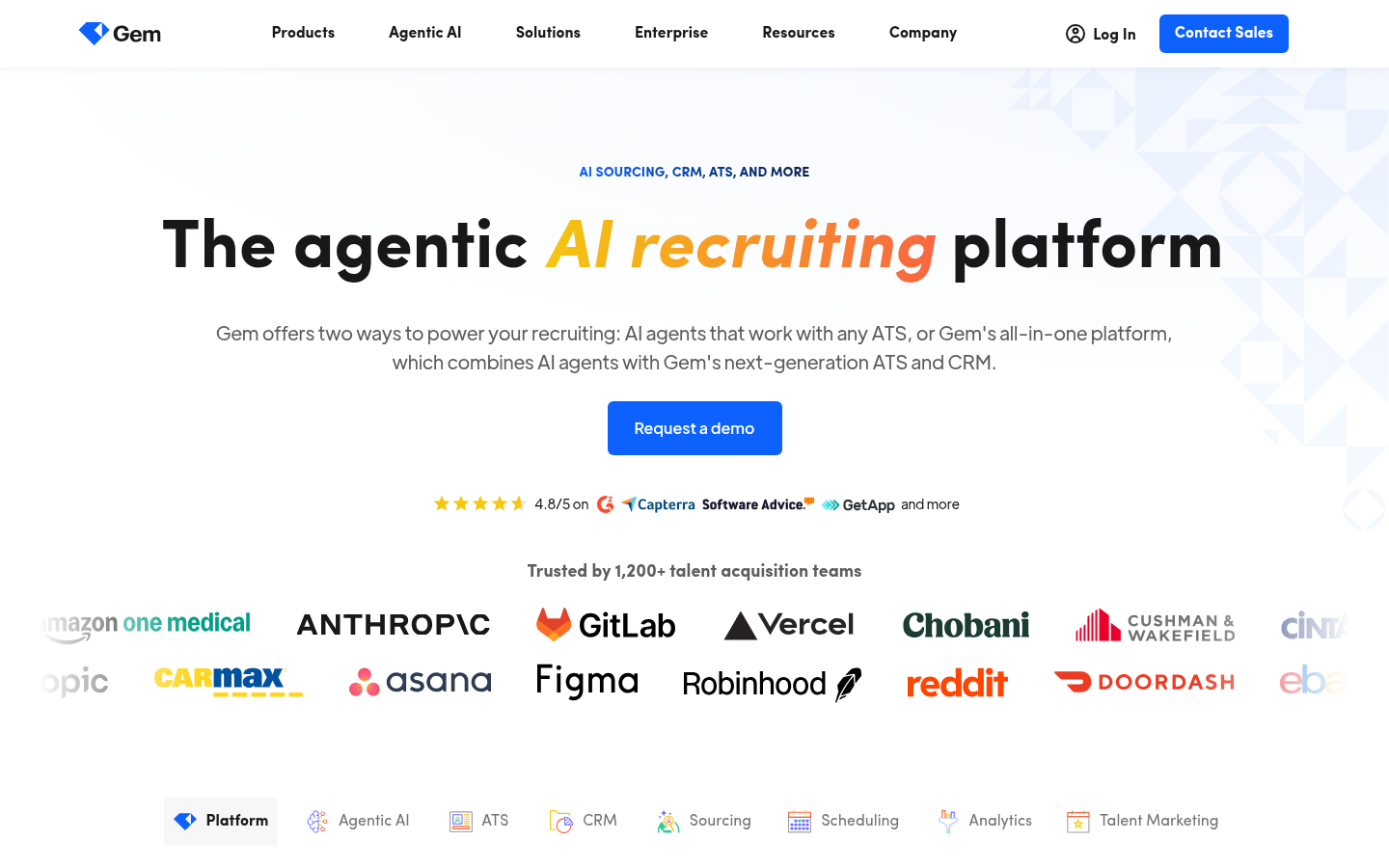
Gem is the sourcing and outreach platform that has expanded into a full ATS+CRM since acquiring ModernLoop. For in-house teams running outbound at scale, Gem is the center of the workflow.
What you get:
- 800M+ profile sourcing engine with verified contact info.
- Outreach sequences with analytics on reply rates and conversion.
- Gem ATS, CRM, sourcing, and automated interview scheduling in one connected system.
- AI agents for sourcing, application review, and fraud detection.
Where it falls short: Enterprise-only pricing. Some legacy customers report friction between the original Gem sourcing product and the newer all-in-one push.
Our pick: in-house teams running heavy outbound where sourcing volume drives the pipeline. Especially strong fit for Ashby-first stacks.
9. SeekOut.
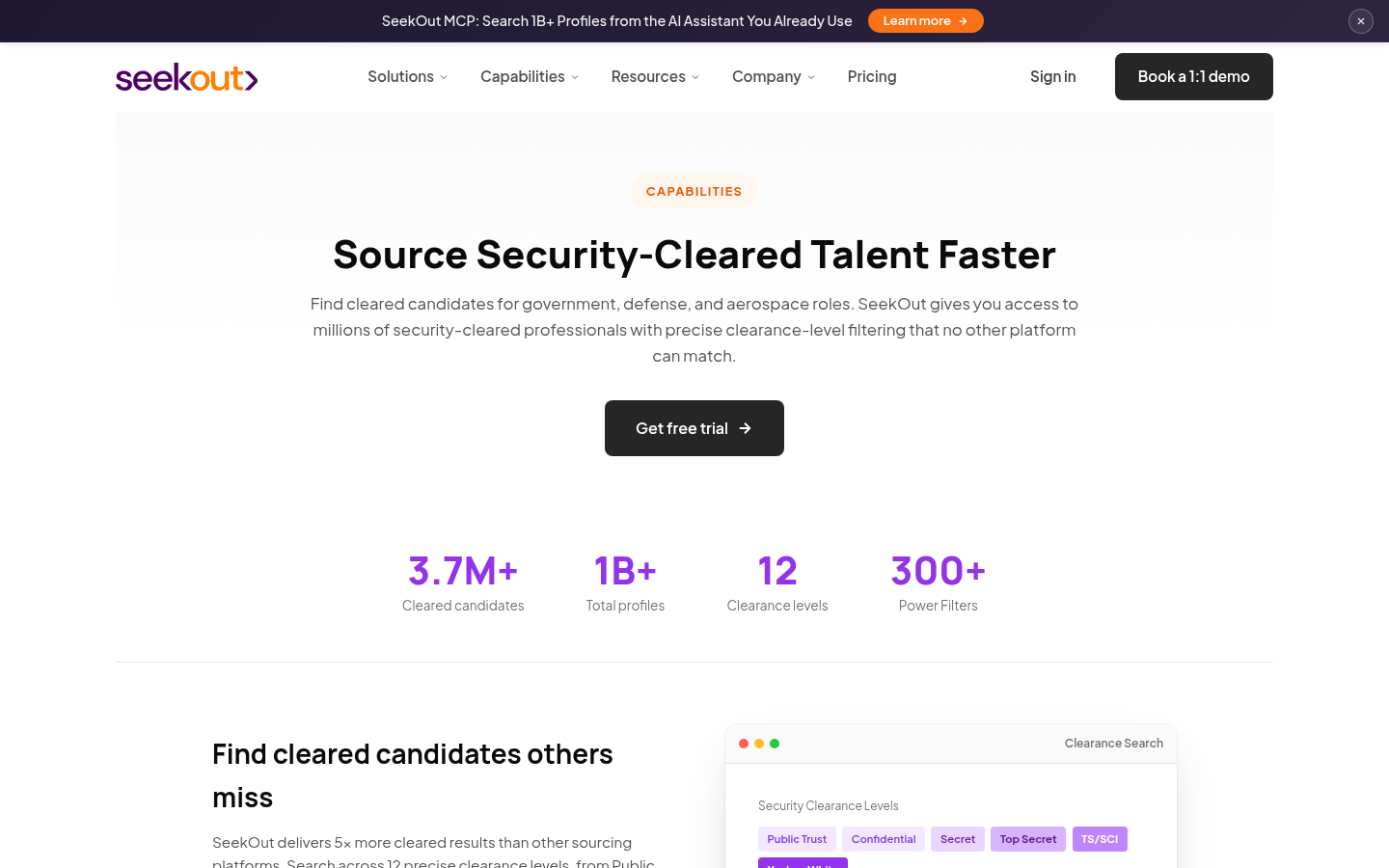
SeekOut is an enterprise talent intelligence platform with unusually deep specialized filters. 1B+ profiles, 3.7M+ security-cleared profiles, and rich diversity and veteran data.
What you get:
- Full-graph sourcing with specialized filters (clearance, diversity, technical skills, GitHub activity).
- SeekOut Assist: paste a JD, get auto-built Boolean and filter strings.
- ATS rediscovery on Greenhouse, Lever, Workday.
- 14-day trial.
Where it falls short: There is no free plan once the trial ends, and paid seats run at $833 per seat per month or more, so a seat only earns its keep on the mandates where SeekOut's filters do work LinkedIn Recruiter cannot: cleared roles and deep technical searches.
Our pick: executive search firms running defense-adjacent, cleared-civilian, or specialized technical mandates. For general roles, see Metaview Sourcing or our SeekOut alternatives roundup.
10. Crunchbase.
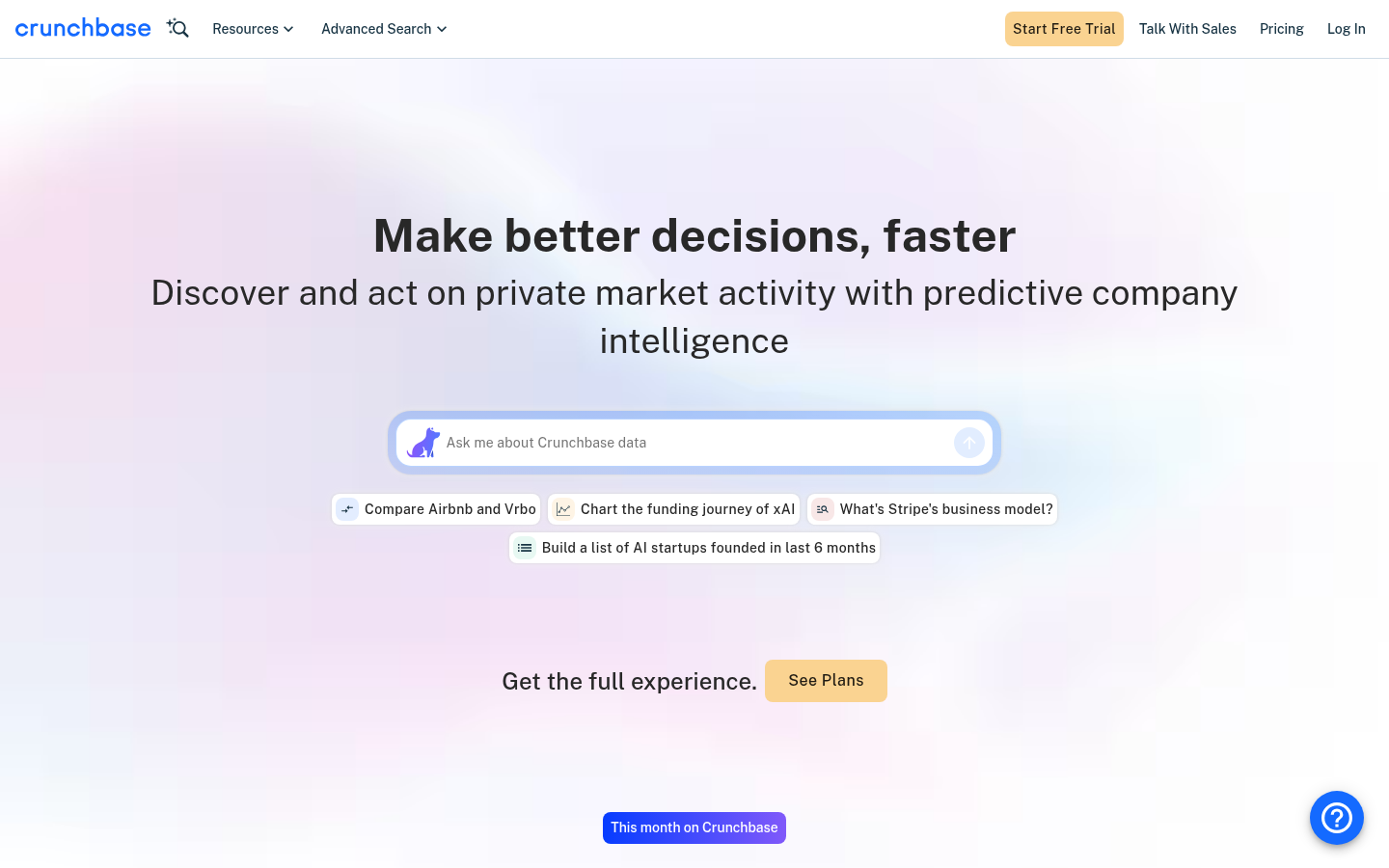
Crunchbase isn't a recruiting tool. It's a market-intelligence database that executive search consultants use to map executive moves, fundraises, and company expansions.
What you get:
- Company and funding data across millions of organizations.
- Executive person profiles with role history.
- Custom alerts on fundraises, leadership changes, and acquisitions.
- API access for piping data into your own CRM.
Where it falls short: Crunchbase data accuracy varies widely outside the tech sector. For non-tech executive search (industrial, healthcare, retail), supplement heavily with LinkedIn and direct research.
Our pick: partners running tech-sector executive search who need market context before reaching out to a target. Pair it with a structured talent mapping process so the intel actually informs the shortlist.
11. Bullhorn.
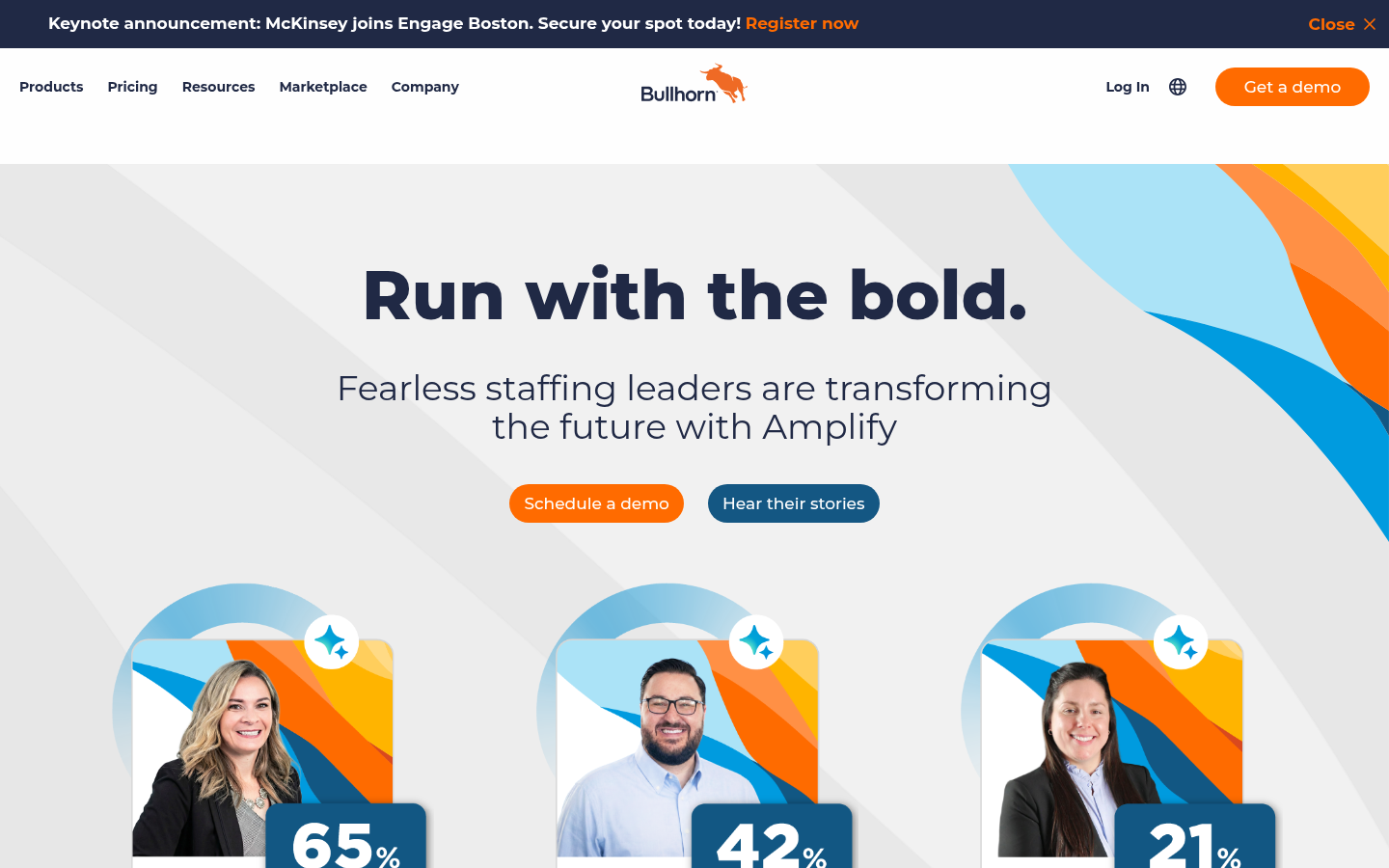
Bullhorn is the long-standing enterprise CRM and ATS for staffing and recruitment agencies. Strong on automation, deep on integrations, and built for high-volume agency workflows.
What you get:
- Unified CRM, ATS, and back-office for agency operations.
- 43% placement-rate uplift claim, with the data shown on their homepage.
- Bullhorn Marketplace with 100+ integrations including Metaview.
- Strong job-board sync and invoicing.
Where it falls short: Bullhorn is built for contingent and contract staffing volume, not retained executive search nuance. The interface is dated compared to newer CRMs.
Our pick: large staffing agencies running contract and contingent placements at scale. Less natural fit for pure retained search. For a wider view of the agency-CRM landscape, see our recruitment agency software roundup.
12. Recruit CRM.
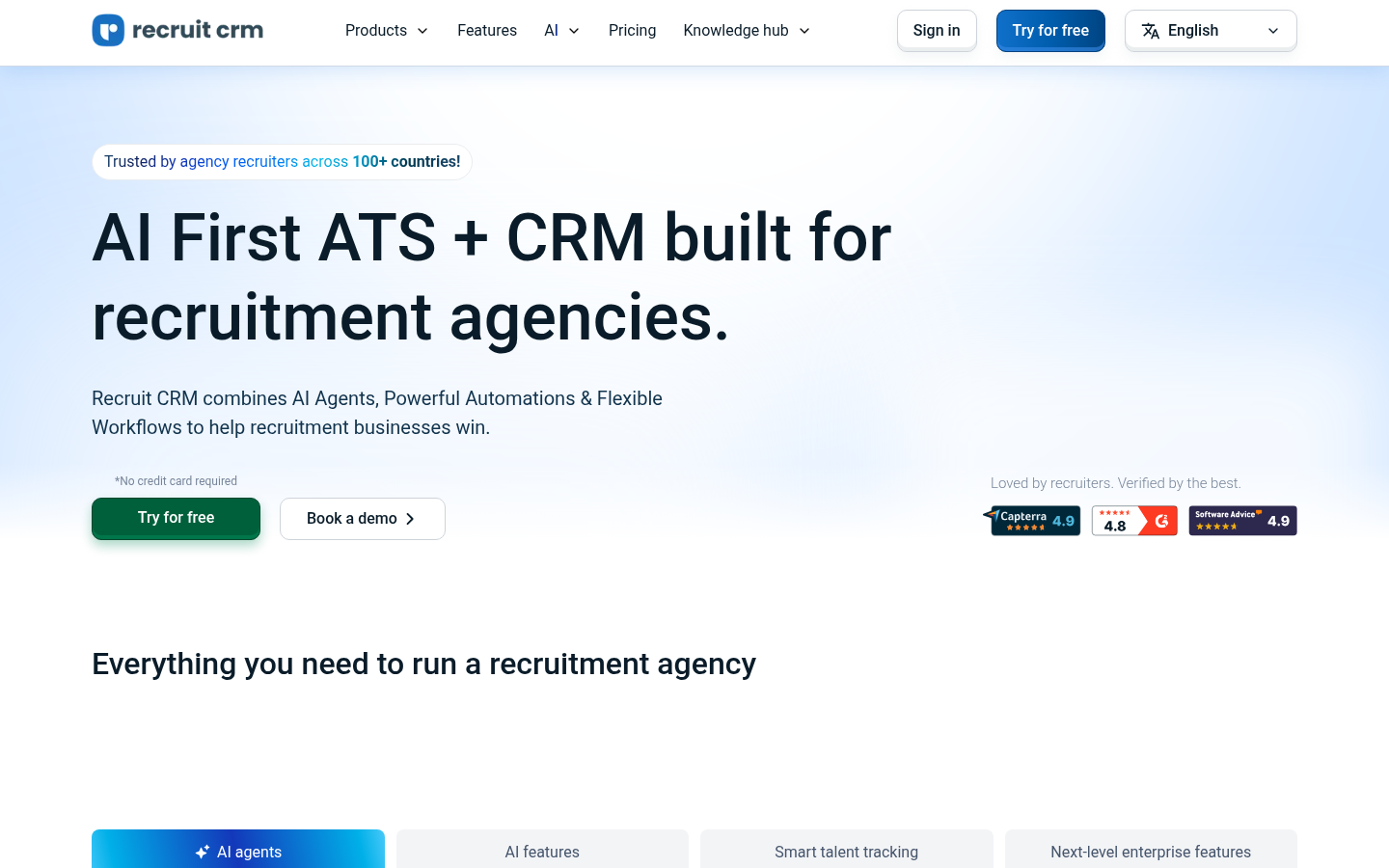
Recruit CRM is one of the most accessible CRMs in the search-agency category. 2,500+ agencies use it. Intuitive UI, fair pricing, and a built-in AI agent layer.
What you get:
- CRM + ATS with email and calendar sync.
- AI agents for resume parsing, candidate matching, and outreach.
- Chrome extension for one-click LinkedIn-to-CRM import.
- Pricing starts at around $99 per user per month.
Where it falls short: Less depth on the enterprise-reporting side than Thrive or Bullhorn. Designed for small-to-mid agencies; teams over 50 may find it limiting.
Our pick: boutique and mid-size search agencies that want a modern CRM without a six-figure annual commit.
13. Recruiterflow.
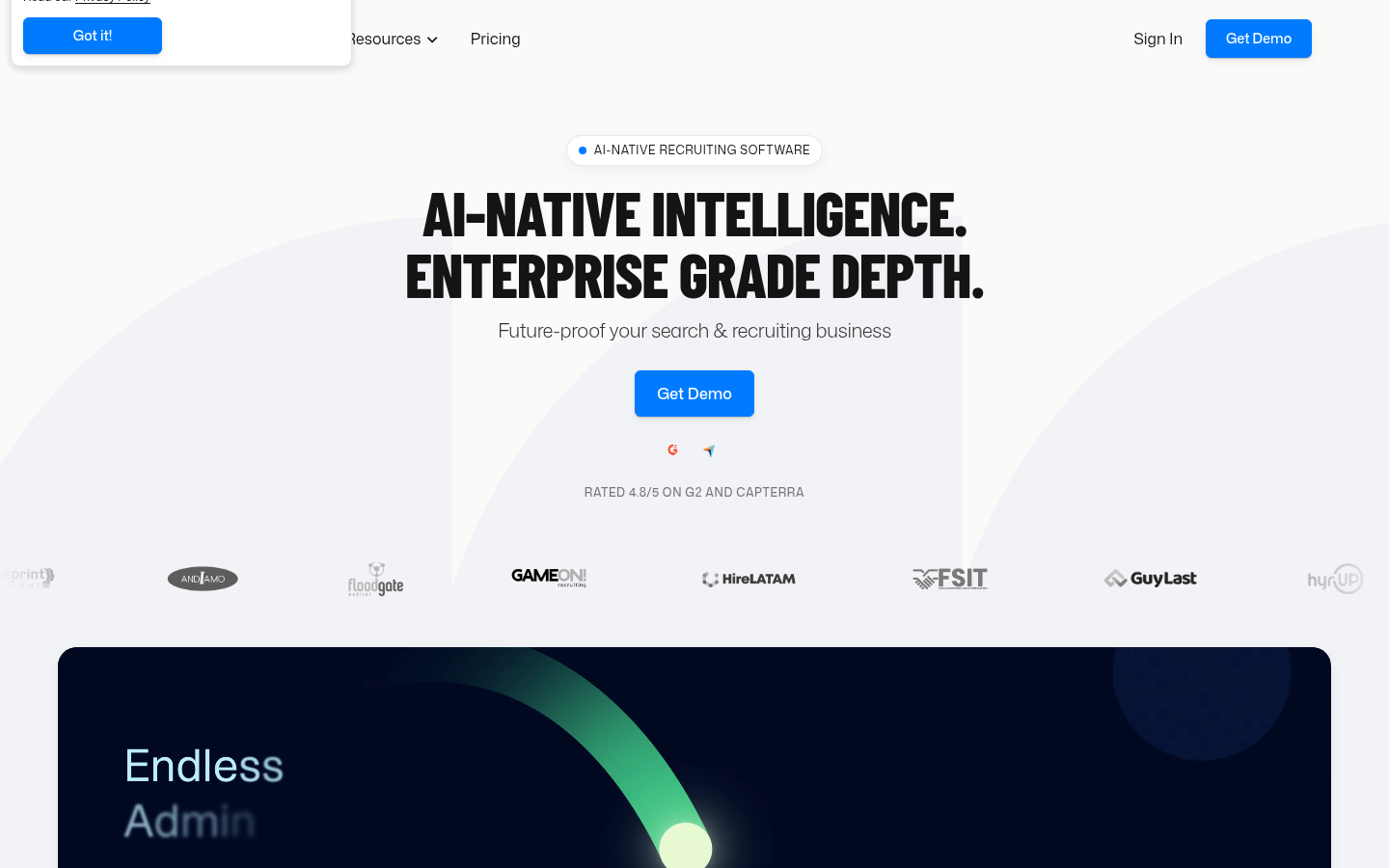
Recruiterflow is automation-first by design. Sequencing, candidate enrichment, and pipeline rules are the core value, with the CRM and ATS sitting underneath.
What you get:
- Recruitment sequencing built into the CRM.
- Data enrichment to fill in candidate contact details.
- Native AI agents for sourcing and outreach.
- Solid Chrome extension and LinkedIn integration.
Where it falls short: Reporting and analytics are thinner than Thrive's. The platform leans hard on automation, which can feel mechanical if you over-configure it.
Our pick: agencies whose competitive advantage is workflow velocity. Strong fit if outbound automation is the core of your service.
14. Notion.
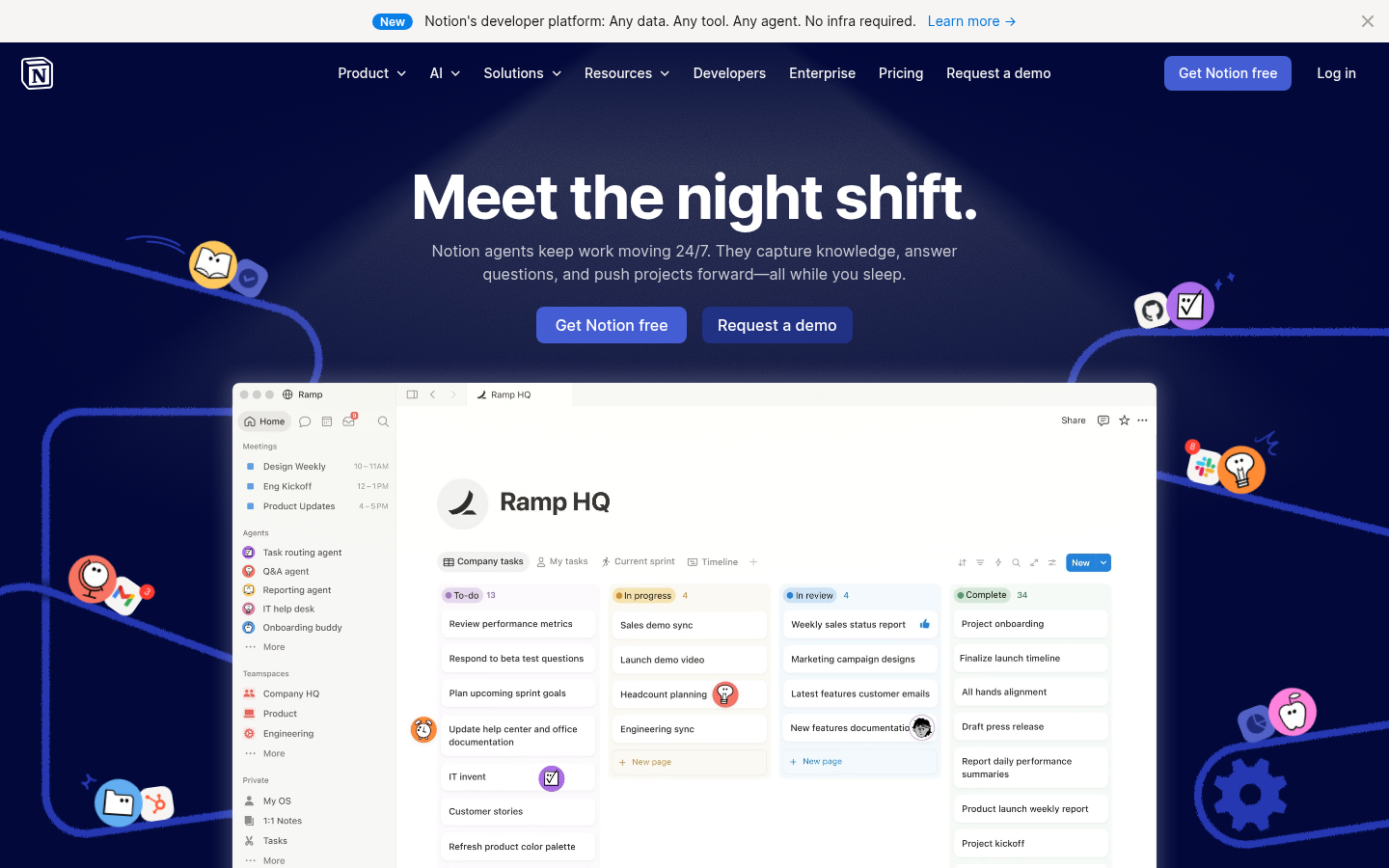
Notion isn't search software, but most modern search firms run their internal knowledge in Notion. Mandate briefs, candidate dossiers, internal playbooks, and client-facing materials all live there.
What you get:
- Flexible workspace for docs, databases, and wiki content.
- Custom Agents (Notion's AI layer) for automating workflows across docs.
- Per-page sharing and client guest access.
- Free tier supports small teams; paid plans start at $10/user/month.
Where it falls short: Notion is not a CRM. Don't try to make it one. The relational data model exists but it doesn't carry the workflow rigor a real search CRM does.
Our pick: internal documentation and knowledge sharing. Pair with a real search CRM for the actual mandate workflow.
15. ClickUp.
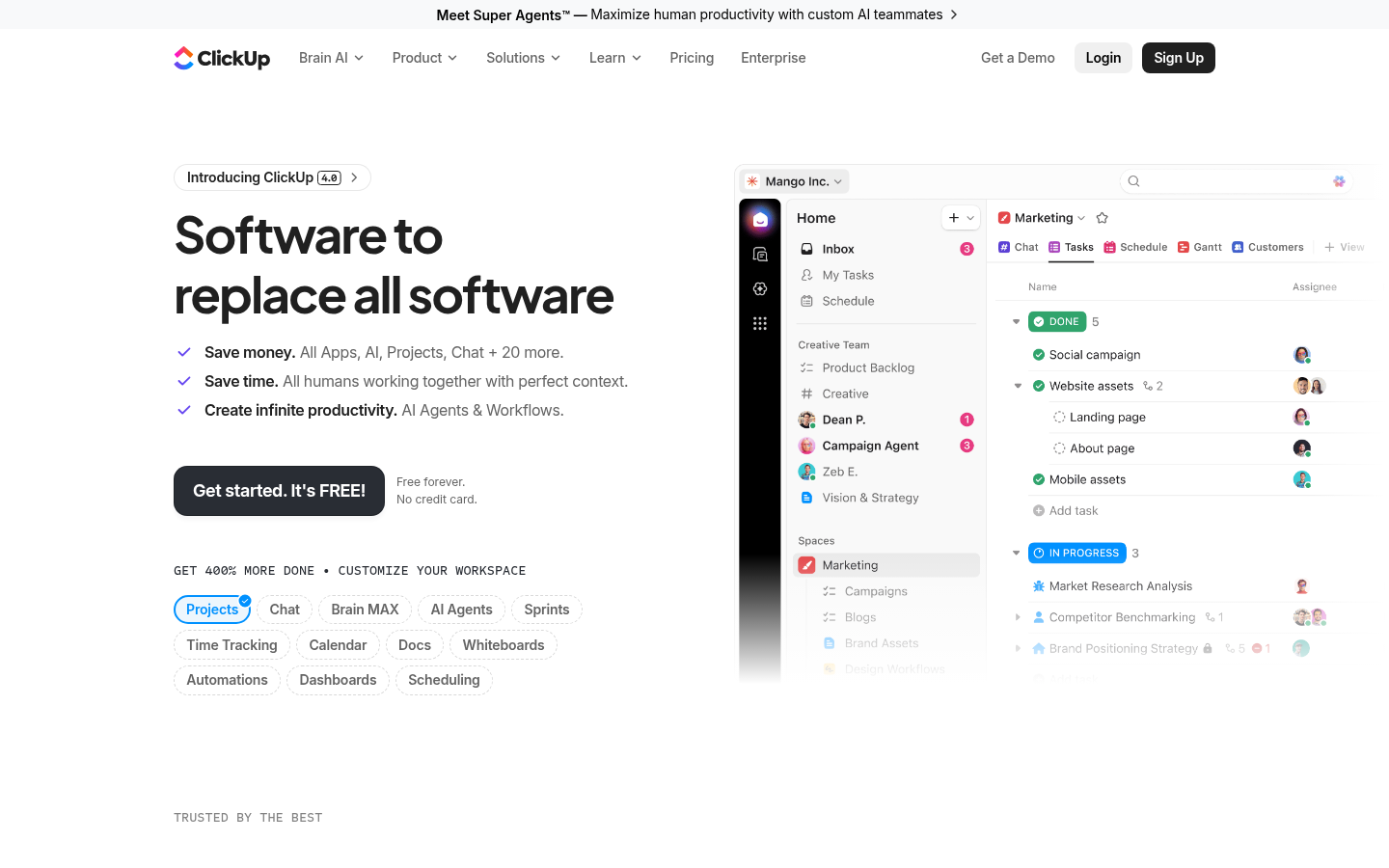
ClickUp is project management software that some search firms use to coordinate multi-mandate, multi-stakeholder work.
What you get:
- Tasks, lists, boards, and Gantt views.
- Docs and chat built into the same product.
- Custom statuses for mandate stages.
- Free tier covers small teams.
Where it falls short: ClickUp is broad. Too broad for search-specific work. Customization can become a project of its own. The tool serves better as a general operations layer than a search workflow tool.
Our pick: small and mid-size search teams that need light project coordination across many active mandates.
16. Asana.
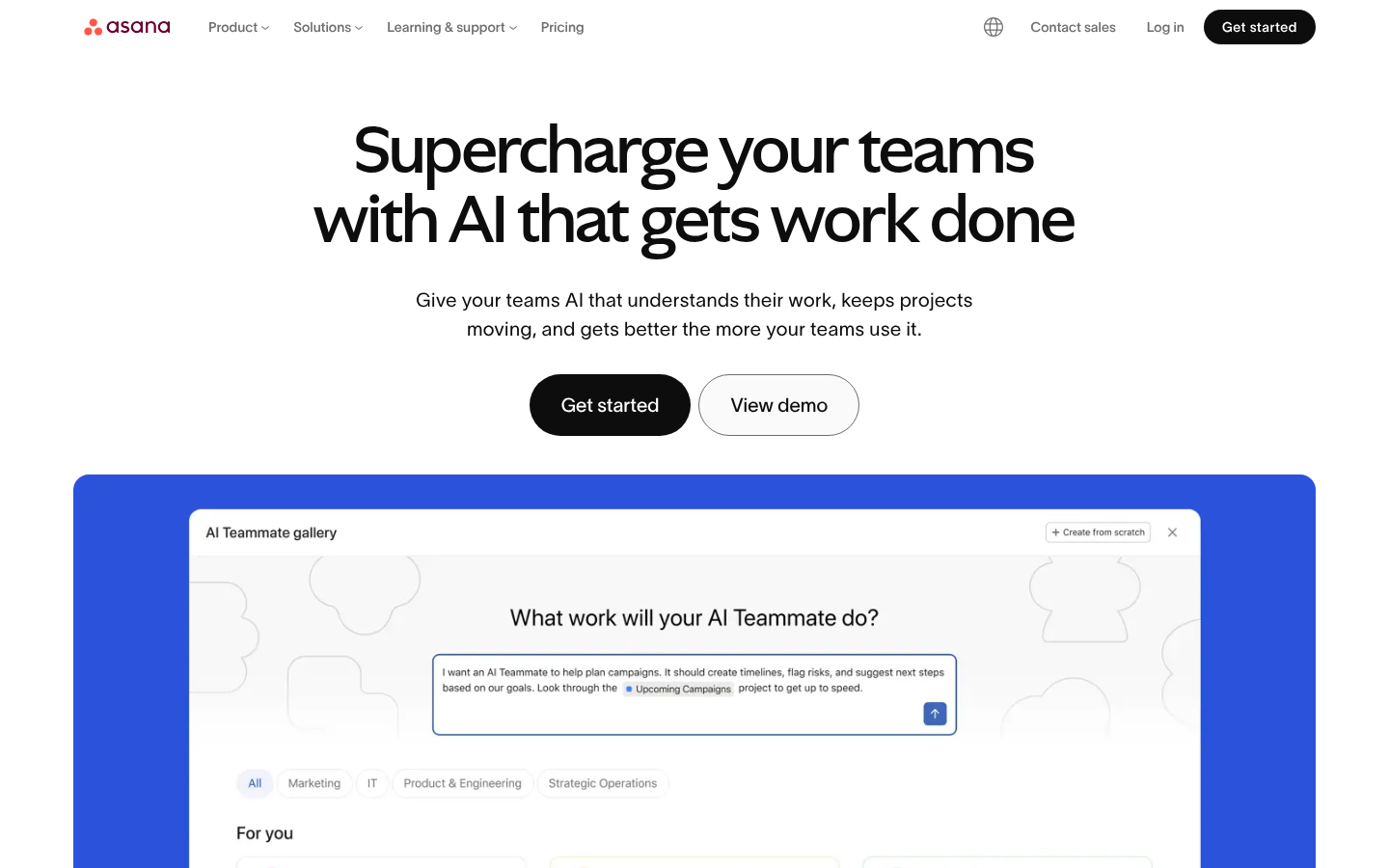
Asana is the cleaner, more opinionated alternative to ClickUp. Search consultants use it to drive structured client-facing project plans and internal mandate sprints.
What you get:
- Goal-led project structure with milestones and dependencies.
- Templates for repeatable workflows (kickoff, shortlist, debrief).
- Reporting dashboards across project portfolios.
- Free tier supports up to 10 users.
Where it falls short: Same caveat as ClickUp. Asana doesn't know what a search mandate is. The structure has to be added by you.
Our pick: mid-size firms that already have a real CRM and need clean external-facing project reporting for clients.
17. Taplio.
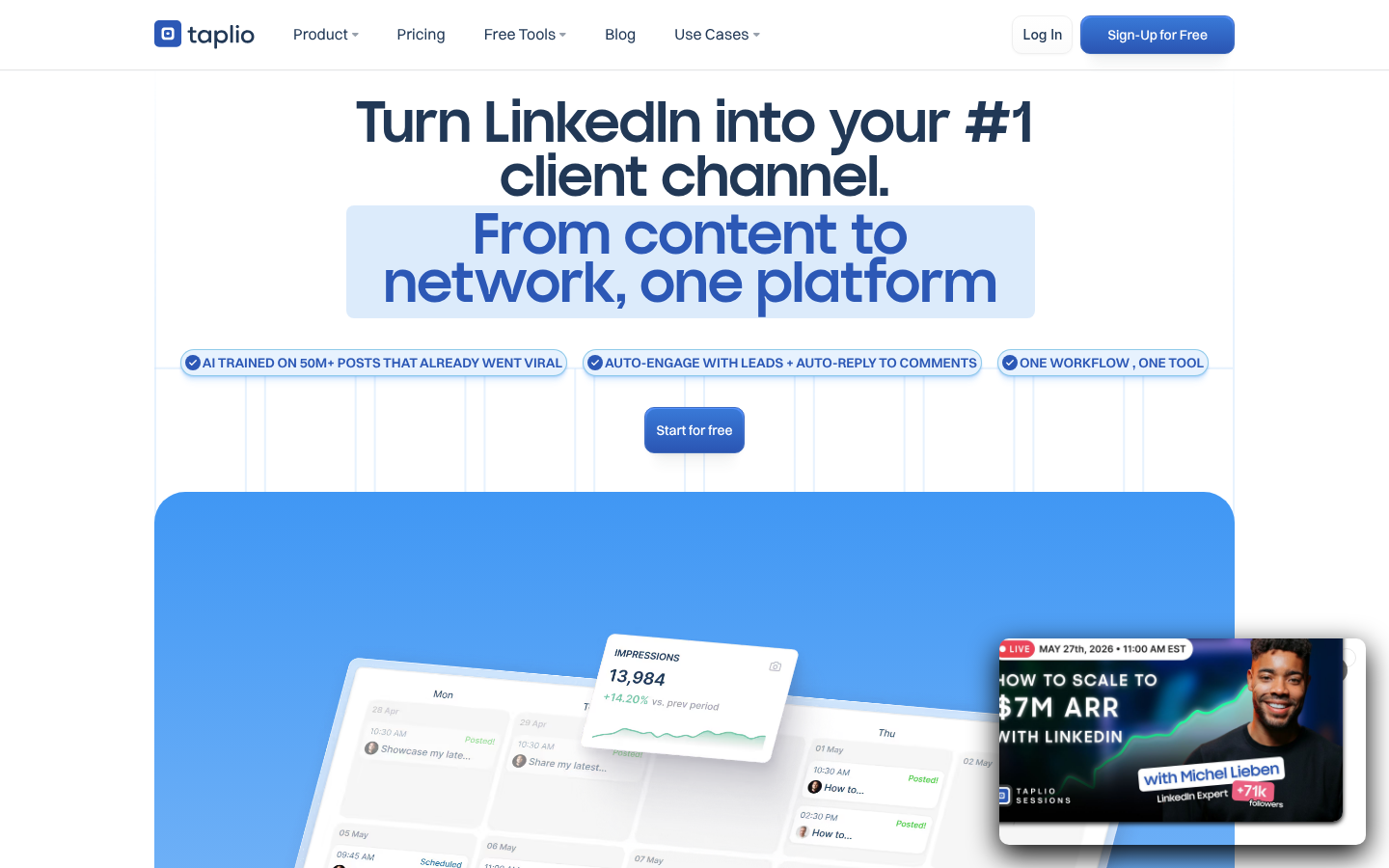
Taplio is an AI-powered LinkedIn content and growth platform. Search partners use it to build personal brand, attract inbound mandates, and engage with potential candidates passively.
What you get:
- AI-assisted LinkedIn post drafting tuned to your voice.
- Scheduling, analytics, and engagement tracking.
- Lead discovery from comments and reactions on your posts.
- Pricing starts at $39/month after the 7-day trial.
Where it falls short: Taplio is a personal-brand tool, not a search workflow tool. The output is engagement and audience growth, not pipeline.
Our pick: individual partners and consultants whose business depends on personal brand and inbound interest.
18. LinkedIn Recruiter.
LinkedIn Recruiter remains the baseline for executive search outbound sourcing. The 1B+ member graph and the InMail layer make it the default place to start every new mandate.
What you get:
- Full LinkedIn member graph search with structured filters.
- InMail credits for outbound to passive candidates.
- Native ATS integration via Recruiter System Connect for Greenhouse, Lever, Workday, Ashby.
- Saved searches and project-level alerts.
Where it falls short: Per-seat pricing ($10K+ per year per seat) gets painful at scale. Targeting is keyword-and-filter, not context-aware, and the platform doesn't learn from which candidates you've moved forward.
Our pick: every search firm as the baseline. Pair with Metaview Sourcing or HireEZ for the layer that learns from your search history.
How to choose the best tool.
You're a boutique or mid-size retained search firm. Ezekia or Recruit CRM as your CRM. Metaview for the capture layer. LinkedIn Recruiter as the sourcing baseline. That's the lean stack.
You're an enterprise executive search firm. Thrive TRM or Bullhorn for the system of record. Metaview for interview intelligence. HireEZ or SeekOut for specialized sourcing. Crunchbase for market context.
You're an in-house executive recruiting team inside a larger company. Ashby or Greenhouse as the ATS. Lever if your hiring is unusually relationship-driven. Metaview on top of any of them for the capture layer.
You're an individual partner or consultant. Recruit CRM or Recruiterflow at the low end, Metaview free tier for capture, Taplio for personal brand, LinkedIn Recruiter for sourcing. Layer up as the firm grows.
For more on building out the broader agency stack, see our executive search strategy guide and the wider recruitment agency software roundup.
Bring Metaview into your hiring stack.
Live notes, structured scorecards, and ATS sync - set up in under 10 minutes.
Frequently asked.
What's the difference between an ATS and a CRM in executive search?
An ATS tracks candidates through the stages of a specific job req. A search CRM holds long-term relationships across many mandates and years, where the same candidate may appear on shortlists for ten different roles before accepting one. Executive search runs on relationships first and requisitions second, which is why search-specific CRMs (Ezekia, Thrive TRM, Bullhorn) handle the workflow differently from a general ATS.
Do I need search-specific software, or can I use a general ATS?
For external search firms, search-specific software wins because its data model assumes long-cycle, multi-mandate, multi-stakeholder work. For in-house executive recruiting teams inside a hiring company, a general ATS like Ashby or Greenhouse usually suffices because the workflow is single-employer.
Where does AI help most in executive search?
In three places. Sourcing agents (Metaview AI Sourcing, HireEZ, SeekOut) return candidates from a written brief instead of hand-built Boolean strings. Interview capture (the Metaview Notetaker) records the partner's call and drafts the notes and scorecard, so the client report starts from a transcript instead of memory. Market mapping (the Deep Research mode in Metaview AI Sourcing, or Crunchbase) answers questions like where a target company has been hiring from before the first outreach goes out. None of them makes the placement decision; the partner does.
Are executive search tools suitable for small or boutique firms?
Yes. Recruit CRM and Recruiterflow are priced for small to mid-size agencies, Metaview has a free Notetaker plan, and Notion, ClickUp, and Asana all have free tiers. The enterprise systems (Thrive TRM, Bullhorn) only become necessary when firm size or client reporting demands them.
How do executive search platforms integrate with my existing systems?
Look for native integrations with LinkedIn Recruiter, your email and calendar, and any client-side ATS you regularly hand candidates to. Search-specific CRMs (Ezekia, Bullhorn, Recruit CRM) all have native LinkedIn import. Metaview integrates with 114 ATSs, including Greenhouse, Ashby, Lever, Workday, and Bullhorn. Its scorecard drafts submit directly into Ashby and Lever, so the capture step plugs into whichever system of record sits underneath.
How many tools should an executive search firm use?
Three to five. One search CRM as the system of record, one interview capture tool, one sourcing tool, and optionally a market intelligence database and a project tool for client-facing plans. Every extra tool is another place the same candidate record has to be updated, so add one only when it removes a step the team does by hand.
