
Most sourcing starts cold. You open LinkedIn, build a boolean string, and build a candidate spreadsheet that goes stale by Friday.
Every new req is a fresh search, even when already pre-validated talent is sitting in your ATS from interviews you ran six months ago.
Those past interviews already cost the team thousands of dollars in screening, panel time, debriefs, and scorecards. Most of that work goes unused after the role closes, even when a near-miss candidate would be a perfect fit for the role that opened this morning.
Candidate rediscovery flips the default. It treats your ATS as the first sourcing channel, not the last-resort archive.
With AI now able to read structured interview notes as searchable signal, the work is already done. You just have to know how to surface it.
Why rediscovery is the highest-ROI first move.
Cold sourcing has a meaningful cost. Every minute spent building a new boolean string is a minute not spent on candidates already in your system.
The candidates you've interviewed have given you their motivators, their fit gaps, and a clear read on whether they'd say yes to the next role. That's a head start most cold-sourced candidates can't match.
The case for rediscovery as the first move isn't just intuition. The Alignment Report data tells the same story across multiple cuts.
According to Metaview's 2026 Alignment Report, which surveyed 505 recruiting leaders and hiring managers across North America and EMEA:
Rediscovery is the AI play with the cleanest ROI line for a TA team. The proof points you need are in interviews you've already paid for. The workflow that surfaces them runs on the same agent your hiring managers already see in their pipeline.
It also helps recruiters:
- Accelerate time to fill by skipping early-stage screening
- Increase quality of hire because candidates have already been evaluated
- Improve candidate experience for finalists who came close but missed
- Lower cost per hire since most of the work was done previously
- Build long-term, relationship-driven hiring pipelines
That's the cost of starting cold: the candidates who would have said yes if you'd reached them sooner. The rediscovery sweep is the cheapest insurance against that loss.
What makes the ATS searchable.
Rediscovery as a strategy depends on the data and systems underneath it. Four prerequisites turn the practice from ad-hoc memory work into a repeatable, AI-scalable workflow.
The biggest unlock isn't a new tool. It's the substrate beneath the search.
Structured competency-based scorecards, native ATS integrations, and queryable candidate signal turn every past interview into a real data point, not a folder no one opens.
| What you need | Without it | With Metaview |
|---|---|---|
| Well-structured interview records | Scattered scorecards across different docs and interviewers. | Structured AI Notes anchored in your scorecard rubric. |
| Integrated ATS and interviewing tools | Notes stuck in a separate tool, manual copy-paste, lost version history. | Feedback and scorecards push to every candidate profile automatically. |
| Searchable, structured candidate profiles | Keyword search only, behavioral signal and competency tags invisible. | AI extracts skills and tags them at the candidate level. |
| A team that treats rediscovery as a first-class channel | "Recruiter memory" as the backup-plan default. | The ATS sweep is the opening move on every search. |
The 6-step rediscovery playbook.
The 6 steps below run in sequence on every new role. Some teams skip steps when memory is fresh. The value compounds when you run them all, every time.
1. Start every search in your ATS.
Before launching new sourcing, search the candidates your team has already met. They've expressed interest, gone through evaluation, and built familiarity with your company.
They're materially easier to re-engage than candidates you've never spoken to.
The ATS sweep takes 15 minutes and resets the bar for what "cold" even means. Before LinkedIn opens, do this:
- Filter by similar past roles within the last 18 months
- Pull up shortlists from roles that closed late or got reopened
- Review past finalists for similar competencies
- Surface internal referrals that were paused
A meaningful percentage of new roles can be filled from the sweep alone.
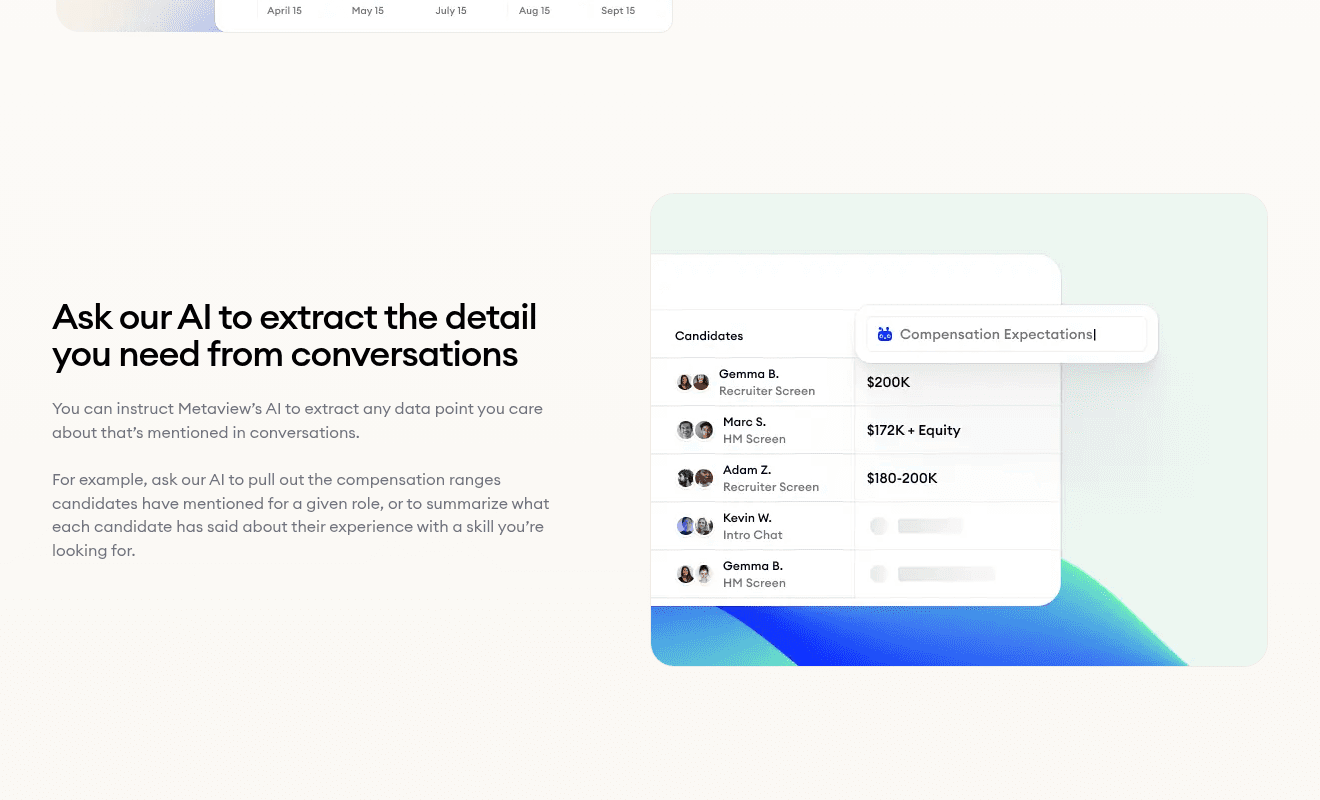
- 1Type the role and the signal in plain English. No boolean syntax, no inverted commas around quoted phrases.
- 2Toggle the search sources. Rediscover from the ATS alone, the Metaview interview corpus alone, or both with the open web layered in.
- 3Tighten or loosen the must-have signals so the agent knows exactly what counts as a fit for this specific role.
2. Reassess the role and map to past candidates.
Every role evolves. What mattered six months ago may not matter today. Rediscovery works best when you align current role requirements with the historical strengths revealed in past interviews.
By remapping competencies, you can spot candidates who may now be a perfect fit, even if they were a near miss the first time around. Evidence over memory is the discipline that makes this step work.
Ask:
- What are this role's must-have competencies, in priority order?
- Who in the ATS demonstrated those competencies in past interviews?
- Did any finalists excel on the priorities now relevant, but miss on areas now less relevant?
- Has the team or stage changed in ways that make a past "not yet" into a current "yes"?
3. Re-read past interview summaries and feedback.
This is where structured interview data pays off. The real power of rediscovery comes from revisiting the rich insights captured during prior interviews, not relying on vague recollections.
Look for:
- Strengths aligned to new priorities
- Growth potential since the last interview
- Interviewer comments signaling future fit on a different team or stage
- Reasons for rejection that may no longer matter (timing, role mismatch, location, market conditions)
Done well, this step turns each past interview into a re-usable data point that gets stronger with every cycle you run.
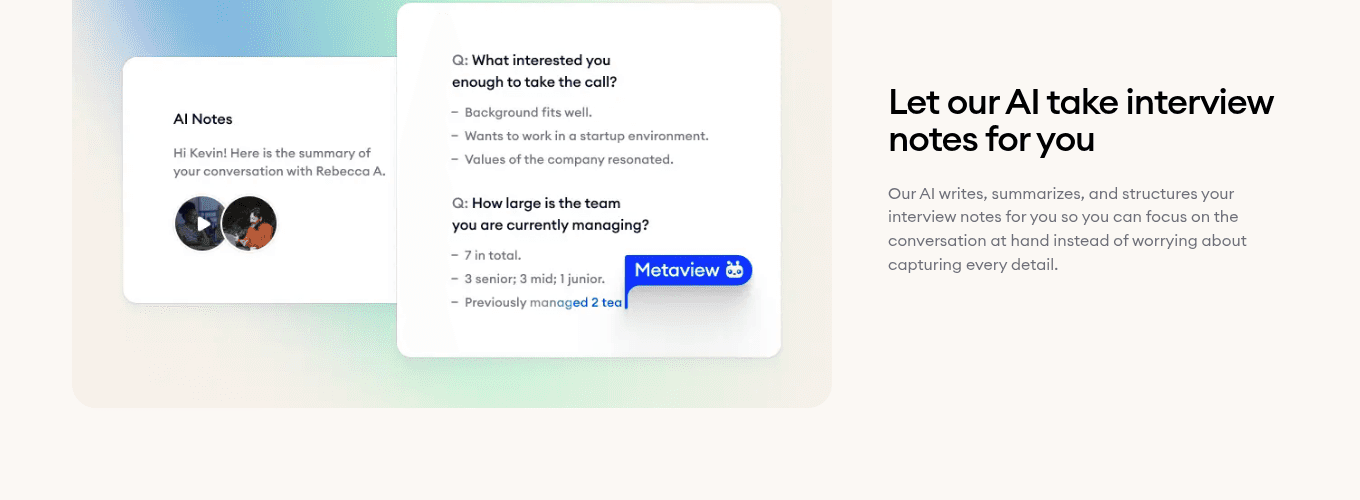
- 1Topic chips at the top: scan motivators, quota attainment, and fit-gap signals without re-reading the full transcript.
- 2Structured Q&A summary. The interview becomes a queryable data point, not a folder no one opens.
- 3Inline recording with timestamp jump-to, for when the AI summary needs human verification on a high-stakes call.
4. Build a shortlist and re-qualify.
Once you've identified promising past candidates, validate whether they're still aligned, available, and interested. Re-qualification ensures your shortlist contains high-intent, high-fit prospects before the team invests deeper time.
This is also where personalized outreach earns its place. Shared history, not cold generic, is the difference between a polite "no" and a real conversation.
Reach out to 5-10 rediscovered candidates with:
- Personalized context that references the prior conversation
- Updates about the team or company, especially anything that's changed in their favor
- Why you believe they may now be a better fit
- An invitation to reconnect on the specific role
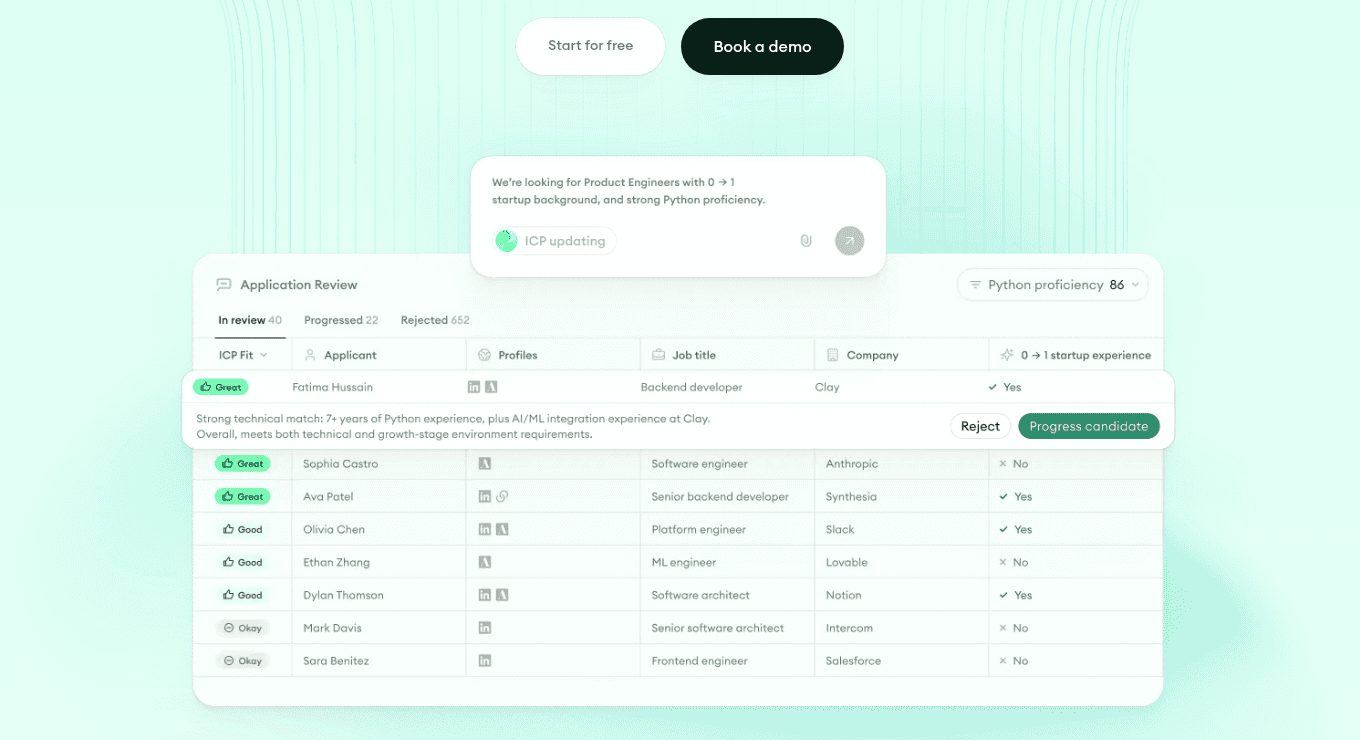
- 1Shortlist table with ICP-fit flags. Each rediscovered candidate carries the reasoning trail from the past interview.
- 2Provenance tag: whether the signal came from an ATS profile or a Metaview interview record. Re-qualification reads both.
- 3One-click Progress action pushes the candidate back to the ATS pipeline at the stage you pick.
5. Present rediscovered candidates early to hiring managers.
Hiring managers appreciate momentum, and rediscovered candidates create an immediate sense of progress. Bringing them forward early demonstrates strategic thinking, because the candidates already carry context and performance signal the team can react to.
It also helps everyone align quickly on what good looks like before fresh sourcing starts. Momentum and alignment compound on each other.
Present rediscovered candidates alongside:
- The past interview performance summary
- What has changed in the role or the team since the last conversation
- Why this person may now be a better match
- The specific signal you want to validate in the next call
This builds trust with hiring managers and shows how deeply you've considered their needs.
6. Keep rediscovered candidates warm.
Rediscovery compounds over time. Even when someone isn't the right fit today, light-touch nurturing keeps them open to a future conversation.
By maintaining warmth, you build a self-renewing pipeline that gets stronger with every search. A rich, positive hiring pool is the long-run competitive moat for any TA team.
How Metaview makes rediscovery scalable.
Manual rediscovery doesn't scale past 50 reqs a quarter and 12 months of interview history. A diligent recruiter can hold a handful of near-hires in working memory.
They can't hold a year of interviews across a dozen roles. They can't search profile fields for the soft signal that made each candidate strong.
That's the gap AI now closes. AI recruiting assistants turn the interview transcript itself into a queryable layer, on top of the structured profile data the ATS already holds.
They extract competencies, identify strengths and gaps, summarize past performance, and compare candidates to new role requirements in seconds, not days.
Our AI Sourcing agent runs that workflow end-to-end. Tell it the role and the signal that matters. It reads your ATS profile data and your Metaview interview signal in one query, three layers.
Top matches surface with provenance tags so you know where each one came from. "Yes" candidates push back into your ATS pipeline at the stage you pick.
The full feature scope and the ATS integrations supported at launch sit on the AI Sourcing launch post.
Customers we work with use this pattern week-in, week-out. TA leaders at Brex, Quora, and Workleap routinely rediscover candidates from interviews they ran six or more months earlier, with the conversation signal pulled back into the new search context.
The compounding effect is the point. Every interview captured today makes the next search faster.
Bring past candidates back to the fore today.
Building a world-class hiring pipeline doesn't always require starting from scratch. Candidate rediscovery gives you a scalable, efficient way to tap into proven talent, reduce sourcing waste, and keep quality high even as hiring needs shift.
Your ATS is one of your most powerful sourcing channels. Candidate rediscovery makes it operational. With Metaview running on top, the playbook becomes the workflow, and the workflow runs itself.
Frequently asked.
Does rediscovery replace traditional sourcing?
No, it complements it. Rediscovery gives you high-intent candidates fast. Outbound builds the new pipeline behind them. Most teams find rediscovery yield exhausts after the first 5-10 candidates surfaced per role, at which point outbound runs in parallel. The right cadence is rediscovery first, outbound second, never one or the other.
Which roles get the highest rediscovery yield?
Recurring roles you re-hire for repeatedly carry the most signal. Sales, engineering, and ops roles at scaling companies are the strongest cases. Roles where a team got expanded or a stage got launched also yield well, because the finalists from the prior round often map to the new opening. Net-new roles with no prior history are the weakest case. Outbound is the right opener there.
What types of data do you need for effective rediscovery?
Structured interview notes, centralized candidate profiles, consistent tagging, and integrated ATS + interview data. If you don't have structured notes yet, the transcript-only fallback path still works: AI can extract signal from raw transcripts, though the precision is lower. Start capturing structured notes now and your rediscovery pipeline starts compounding in 6 months.
How does AI help with candidate rediscovery, and where does it stop?
AI reads interview transcripts, extracts competencies, matches candidates to new roles, and surfaces high-fit past candidates with provenance. The recruiter still owns the re-qualification call, the personalization of outreach, and the hiring-manager presentation. AI compresses the search. It doesn't replace the judgment about which rediscovered candidates are worth the team's time.
Which ATSes does Metaview support for rediscovery?
Ashby, Bullhorn, Ezekia, Gem, Greenhouse, Lever, Loxo, SmartRecruiters, and Workday are live today. Connect the ATS through the integrations panel in your Metaview admin settings. The credential exchange takes about 10 minutes for most. Check the integrations page for the latest list. New ATSes ship into the rotation monthly, so if yours is missing today, the Metaview team can confirm the timeline.
Bring Metaview into your hiring stack.
Live notes, structured scorecards, and ATS sync - set up in under 10 minutes.
