
Pick the wrong ATS and you’ll spend the next two years working around it.
Pick the right one and it disappears into the background, doing the unglamorous work of moving candidates through stages, scheduling interviews, and keeping the audit trail clean.
The trouble with most “best ATS” lists is they pretend there’s one right answer. There isn’t. The right pick depends on your size, your hiring volume, and whether you’re an in-house team or a staffing agency.
Here are 12 platforms worth knowing, segmented by the kind of org you run, and a note at the end on where Metaview fits alongside any of them.
The 12 platforms at a glance.
| ATS | Best for | Key strength |
|---|---|---|
| Workable | Small business | Easy setup, broad job-board distribution |
| Breezy HR | Small business / startups | Visual pipelines, fast team collaboration |
| Zoho Recruit | Small business / Zoho ecosystem | Affordable automation, ecosystem integrations |
| Hirex | Small business | AI matching and screening, with onboarding built in |
| Ashby | Scaleup | Advanced analytics, deep customization |
| Greenhouse | Scaleup / enterprise | Structured hiring, interview kits, scorecards |
| Lever | Scaleup | ATS + CRM in one platform |
| SmartRecruiters | Enterprise / global | Mobile-first, distributed-team workflows |
| iCIMS | Enterprise | Compliance, credentialing, recruiting suite |
| Oracle Taleo | Enterprise (Oracle HCM) | Deep Oracle HCM integration |
| Bullhorn | Staffing agency | Agency-focused ATS + CRM combined |
| JobAdder | Staffing agency | Placement workflows, client management |
| Recruit CRM | Small / mid staffing firm | Combined ATS + CRM with candidate search |
Best ATS for small businesses.
Small-business ATSs prioritize ease of use, fast setup, and built-in job posting. Less customization, more out-of-the-box.
Workable.
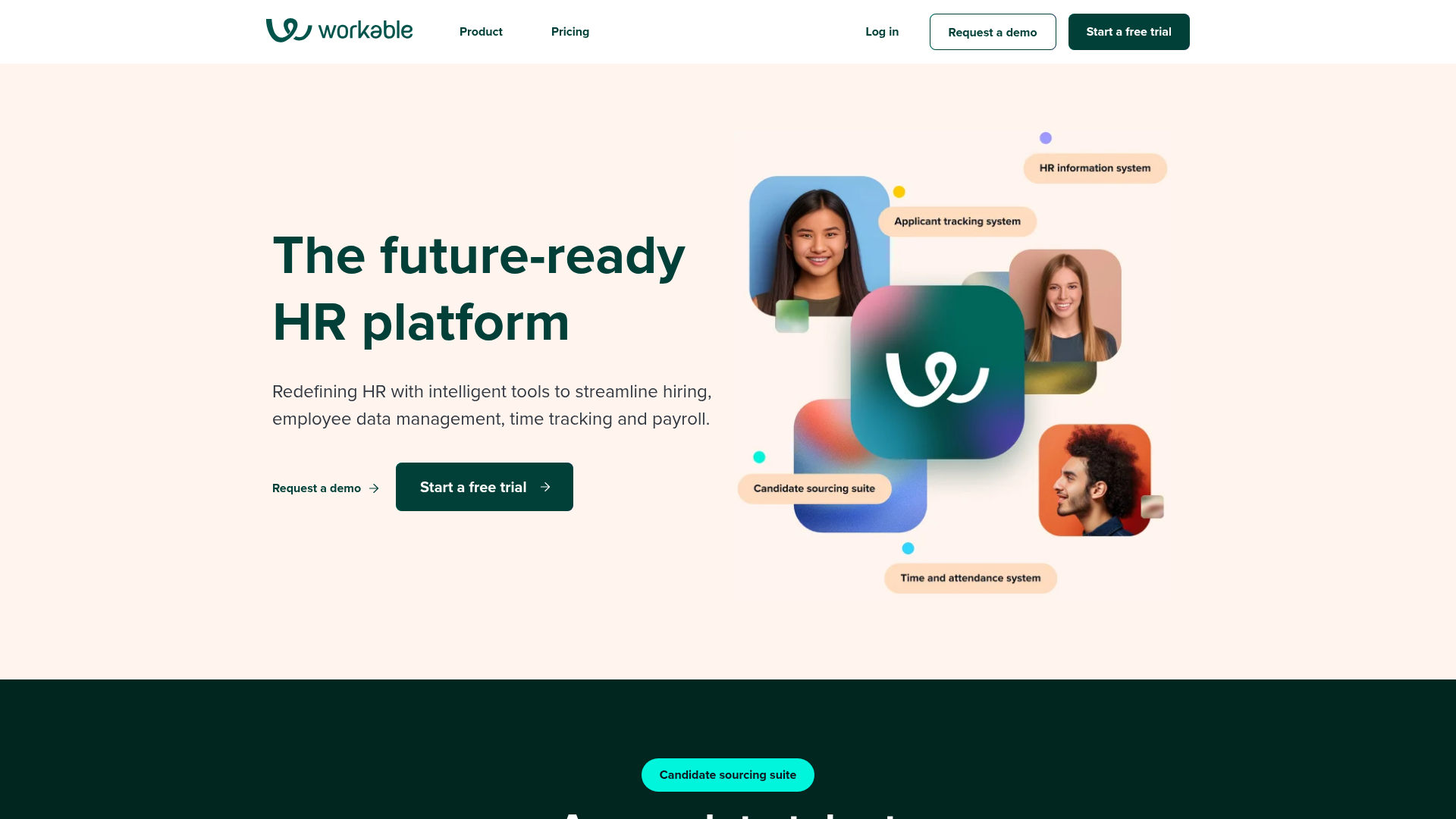
Workable is one of the most widely used ATSs for small and mid-size companies. The balance of ease-of-use and functionality is what wins it most adoption.
Recruiters can post jobs to hundreds of boards from one screen, run basic sourcing, and track candidates without enterprise complexity.
What it covers:
- Job posting to hundreds of boards
- Built-in candidate sourcing tools
- Automated interview scheduling
- Collaboration tools for hiring managers
- Candidate evaluation workflows
Where it falls short: depth is shallow on analytics and custom workflows. Once you need pipeline forecasting or custom approval chains, look at Lever, Ashby, or Greenhouse.
Best for: small and mid-sized teams that want a single, simple hiring platform without the overhead.
Breezy HR.
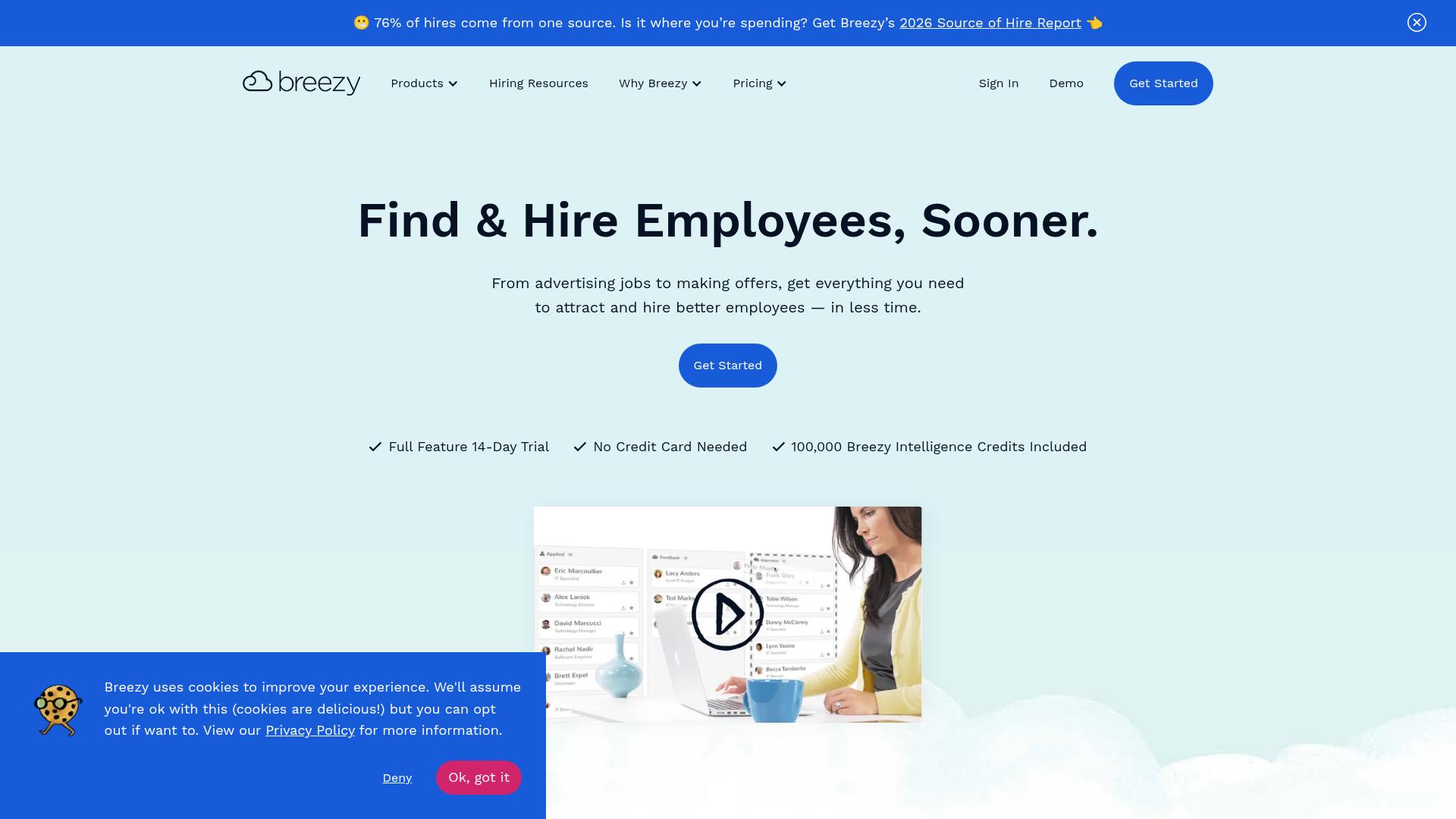
Breezy HR is built for startups and small teams that want a visual, drag-and-drop pipeline. The interface gets out of the way; the team can collaborate without a training session.
Automated scheduling and candidate messaging cover the basics. There’s no enterprise depth, and that’s the point.
What it covers:
- Visual pipeline management with drag-and-drop stages
- Automated interview scheduling
- Email and candidate communication tools
- Collaboration features for hiring managers
Where it falls short: limited analytics and reporting depth. Once your hiring requires structured competencies or pipeline forecasting, you’ll outgrow it fast.
Best for: startups and small teams that want structure without an implementation project.
Zoho Recruit.
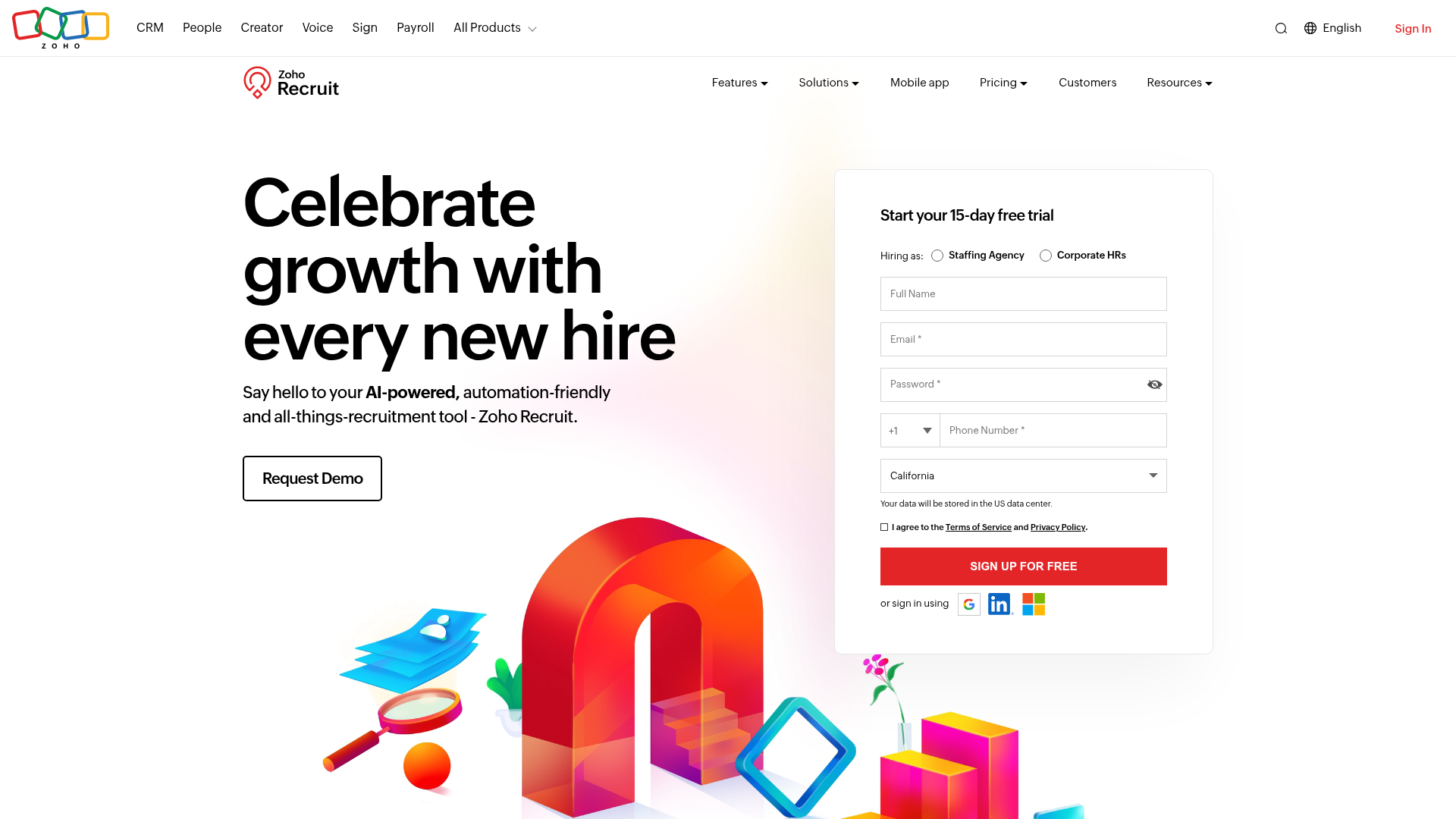
Zoho Recruit is the budget pick with more customization than peers. The native fit with the rest of the Zoho ecosystem (CRM, People, Books) is the differentiator.
Less polished than Workable or Breezy, but more flexible if you’re already in the Zoho stack.
What it covers:
- Resume screening and candidate tracking
- Customizable recruiting pipelines
- Automation for candidate communication
- Native integration with Zoho business tools
- Reporting and workflow customization
Where it falls short: interface is dated compared to Workable, Breezy HR, and modern scaleup ATSs. Adoption can lag if recruiters are used to slicker tooling.
Best for: budget-conscious teams already standardized on the Zoho ecosystem.
Hirex.
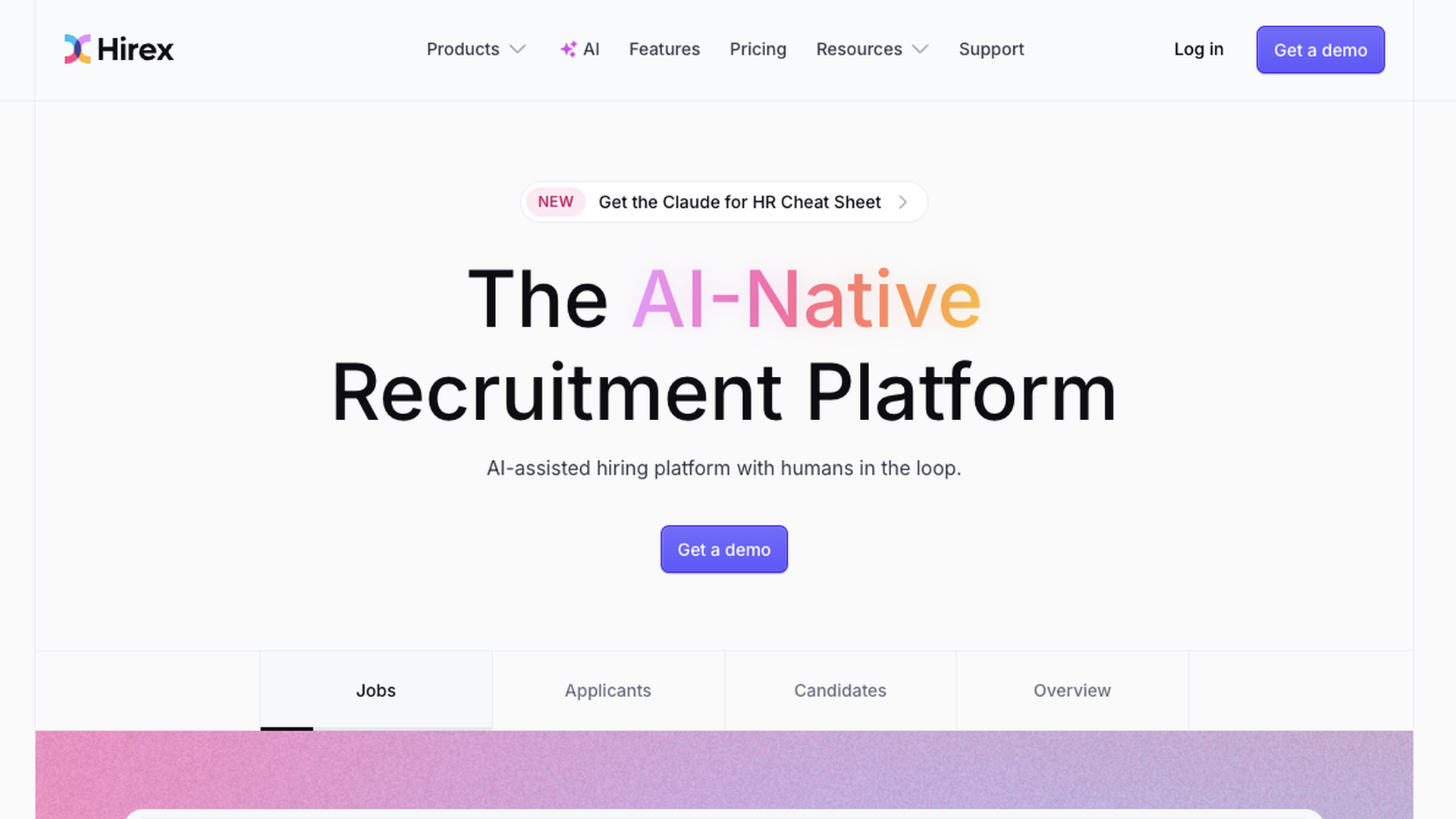
Hirex is an AI-powered ATS for teams that have outgrown spreadsheets and shared inboxes but do not want a tool that arrives with its own instruction manual. Applicant tracking, pipelines, resume parsing, screening, automation, analytics, career pages, assessments, video interviewing, and onboarding sit in one platform.
Recruiters get a clear view of the pipeline by default, and Hirex puts AI-powered candidate matching and screening in its higher tiers. The company describes its AI agents as sourcing candidates, reviewing applications, summarizing interviews, and generating reports from one connected system.
What it covers:
- One-click job posting to top job boards, with customizable pipeline stages
- Resume parsing and AI match scoring against the role
- Candidate scorecards, assessment tests, and one-way video interviews
- Career page builder and collaborative hiring tools
- Onboarding with documents, task management, and a new hire portal
Where it falls short: workflow customization stays deliberately simple, so teams with complex, multi-brand or multi-country approval chains will hit limits.
Best for: growing SMBs that want a straightforward ATS implementation and good value.
Best ATS for scaleups.
Scaleup ATSs handle higher hiring volume with more sophisticated collaboration and analytics. Structured hiring becomes the differentiator here.
Ashby.
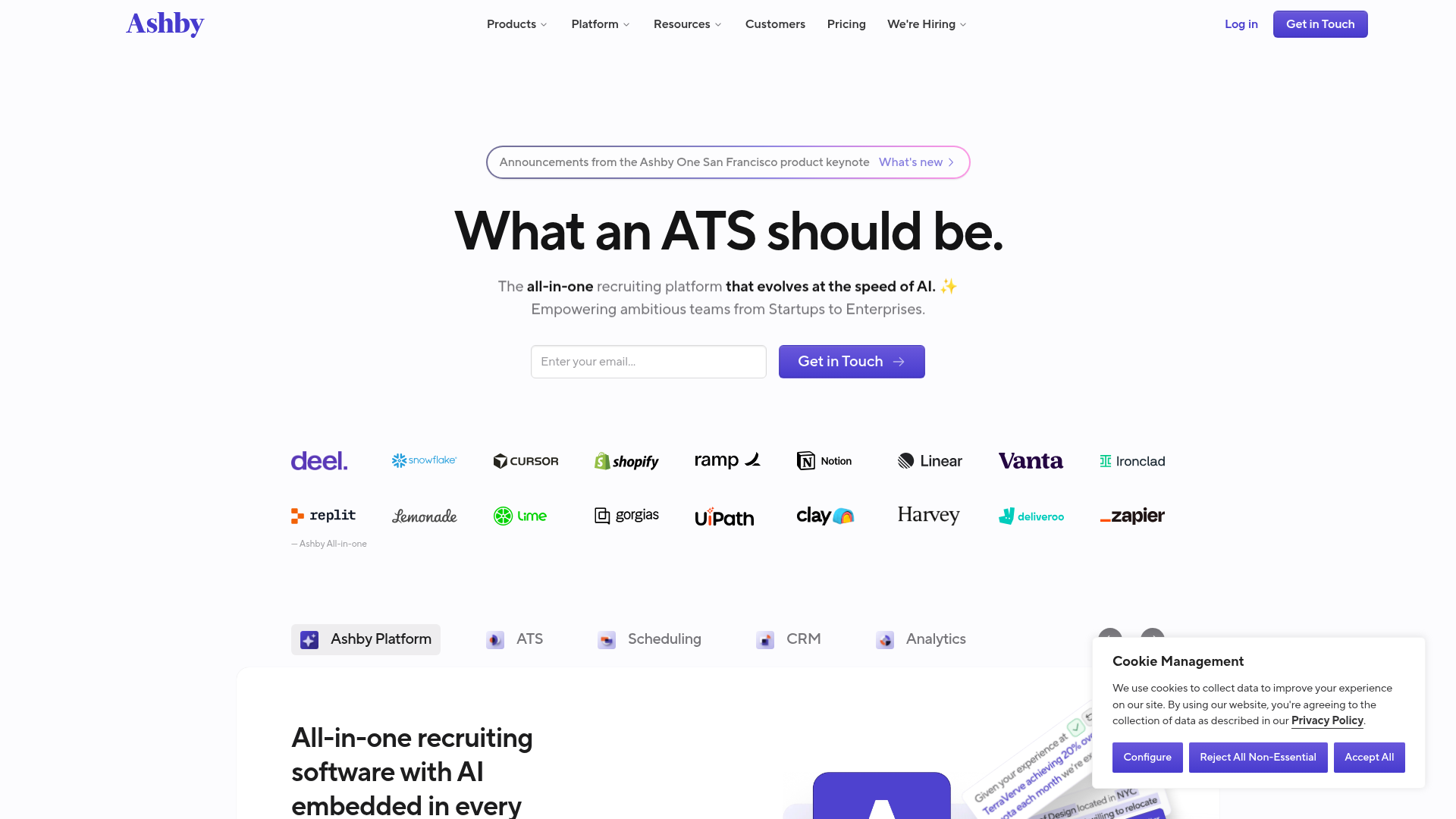
Ashby combines ATS, recruiting CRM, scheduling automation, and analytics in one platform. Among scaleups and modern tech companies, it’s become one of the fastest-growing picks.
Operations leaders pick Ashby for the analytics depth: pipeline performance, hiring velocity, funnel conversion, all configurable in detail.
What it covers:
- Combined ATS and recruiting CRM
- Advanced recruiting dashboards and analytics
- Highly customizable hiring workflows
- Automation for scheduling and candidate updates
- Strong API and integration ecosystem
Where it falls short: configurability cuts both ways. Teams that don’t invest in setup get a shallow version. Recruiters who want a fast day-one experience often pick Lever or Greenhouse instead.
Best for: data-driven scaleups that want deeper visibility into recruiting performance.
Greenhouse.
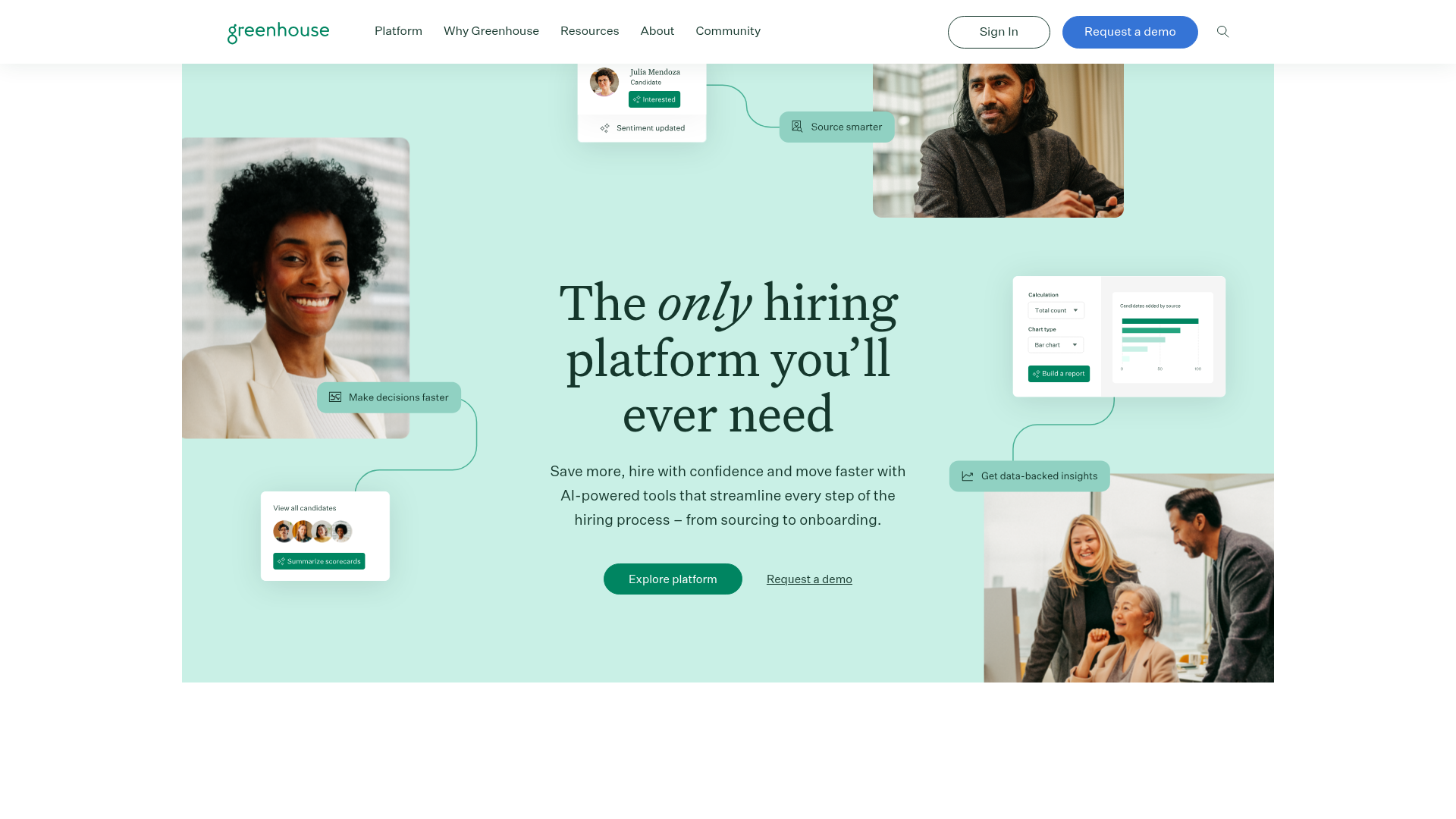
Greenhouse is the structured-hiring pick. Hiring plans, defined competencies, interview kits, standardized scorecards. The methodology is built into the product.
Interviewers leave feedback against the same scorecards every time, which reduces variance and makes calibration possible across teams.
What it covers:
- Structured interview kits and scorecards
- Hiring plans and evaluation frameworks
- Collaborative feedback workflows
- 400+ integration marketplace
- Recruiting analytics and reporting
Where it falls short: candidate-engagement and CRM features are thinner than Lever’s. Pair with a CRM tool if proactive sourcing is core to your funnel.
Best for: organizations that want to enforce hiring consistency and interview structure at scale.
Lever.
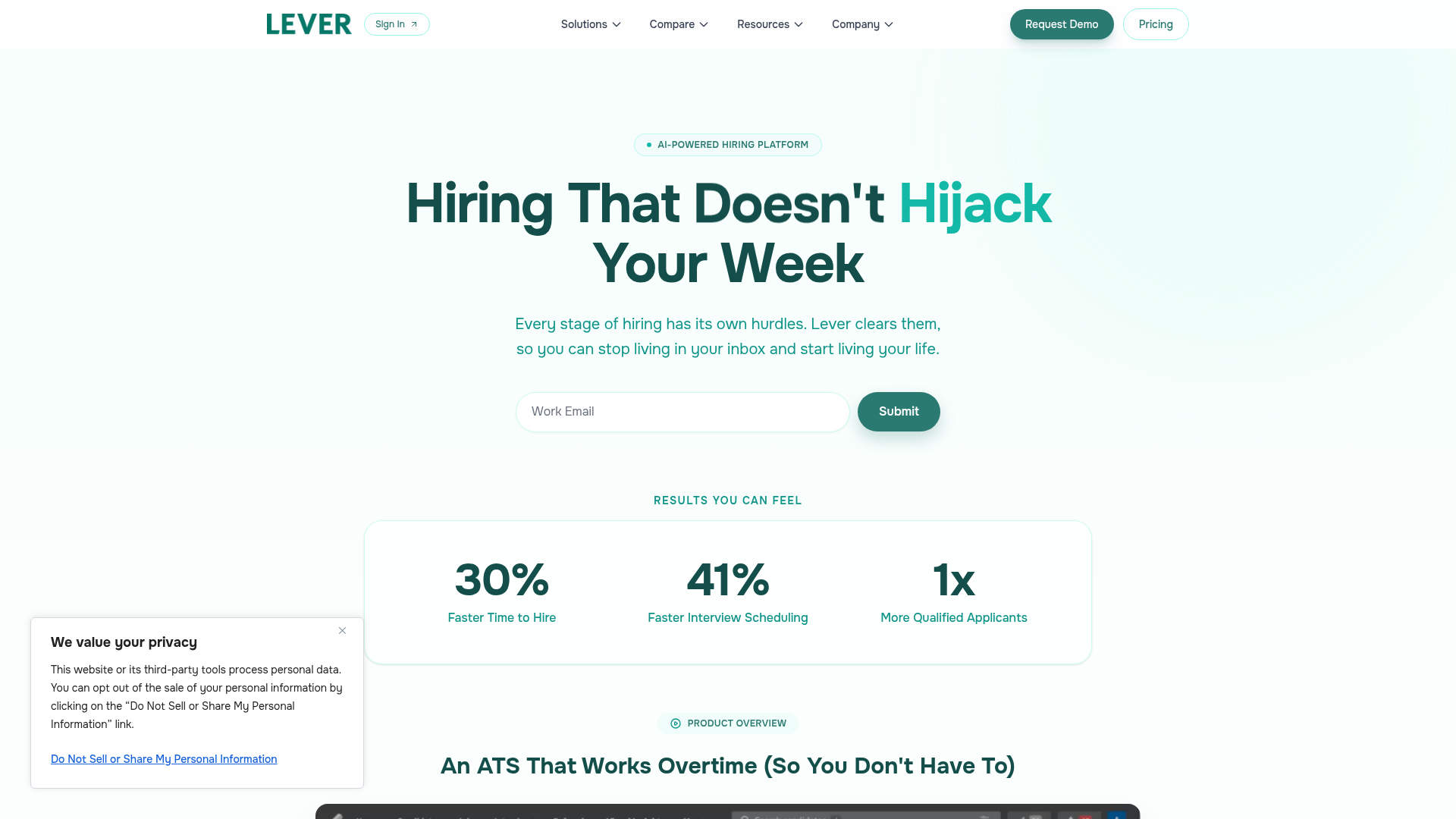
Lever combines ATS and recruiting CRM in one platform. Applicants and prospects sit in the same pipeline, which makes it natural to nurture passive candidates between roles.
Where Greenhouse leads on structure, Lever leads on relationship management. Strong pick if sourcing and proactive recruiting are central to how you hire.
What it covers:
- Combined ATS and recruiting CRM
- Candidate pipeline management and nurturing
- Automated communication workflows
- Interview scheduling and collaboration tools
- Pipeline visibility and reporting
Where it falls short: structured-hiring depth is lighter than Greenhouse’s. If you want the tool itself to enforce interview kits and scorecards, Greenhouse is the safer pick.
Best for: scaleups that prioritize sourcing and long-term talent engagement.
Best ATS for enterprise.
Enterprise ATSs handle multi-region, multi-business-unit hiring with compliance depth and HRIS integration.
SmartRecruiters.
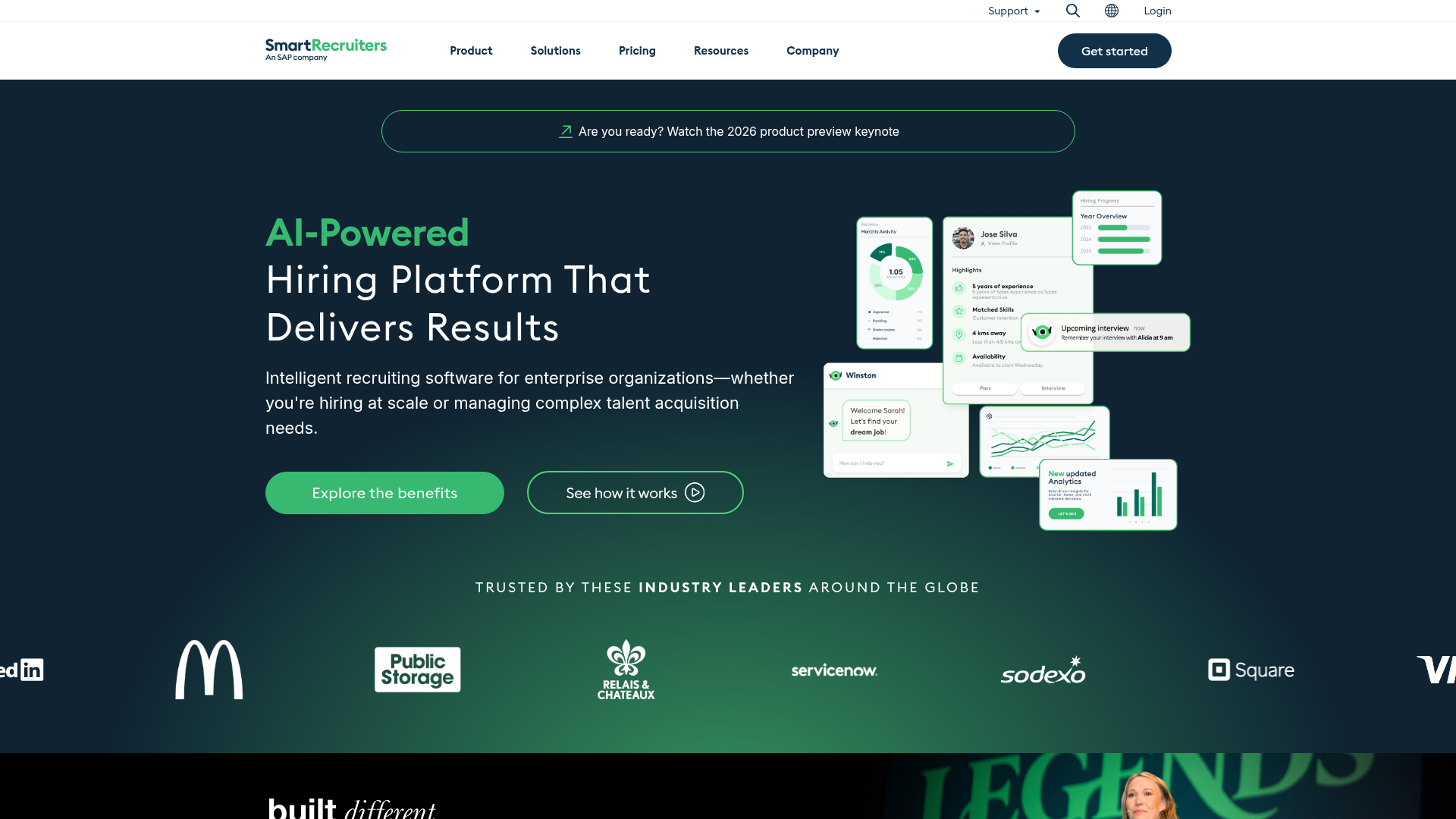
SmartRecruiters is built for large, distributed recruiting teams. Mobile-first, global by default, with strong workflow customization for multi-region hiring.
Hiring managers can review applications and approve offers from anywhere, which suits stakeholders spread across time zones. SmartRecruiters is now part of SAP SuccessFactors and is sold as natively integrated with SAP, so if your HRIS is SuccessFactors, that integration is the first thing to check.
What it covers:
- Enterprise-grade recruiting workflows
- Global hiring support across regions
- Collaboration tools for distributed teams
- Advanced automation and reporting
- Extensive integration marketplace
Where it falls short: credential and compliance depth is lighter than iCIMS. Better fit for global commercial hiring than for heavily regulated verticals.
Best for: large global recruiting teams managing distributed hiring across regions and business units.
iCIMS.
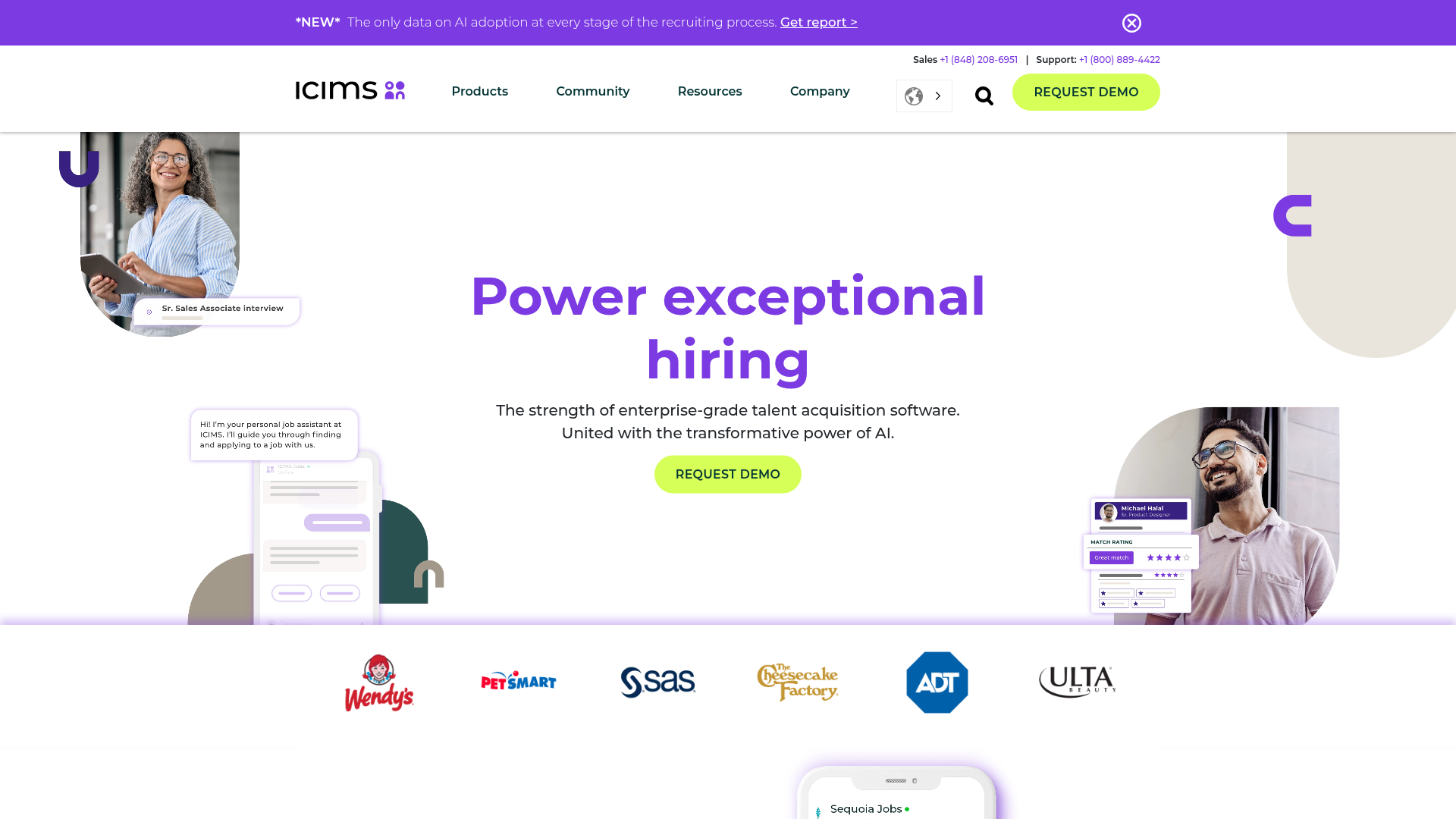
iCIMS is the enterprise pick when compliance is a first-class concern. Credential management, EEO and audit-grade reporting, recruiting CRM, career-site management - all under one roof.
The implementation is heavy, but for organizations with the IT capacity and the regulatory exposure, it’s the safest enterprise bet.
What it covers:
- Enterprise recruiting suite with ATS and CRM
- Advanced reporting and analytics
- Compliance and regulatory support
- High-volume recruiting capabilities
- Integration with HR and talent systems
Where it falls short: implementation overhead is real. Smaller organizations often end up using 20% of the platform and paying for 100%.
Best for: large enterprises that need audit-grade compliance and end-to-end talent management.
Oracle Taleo.
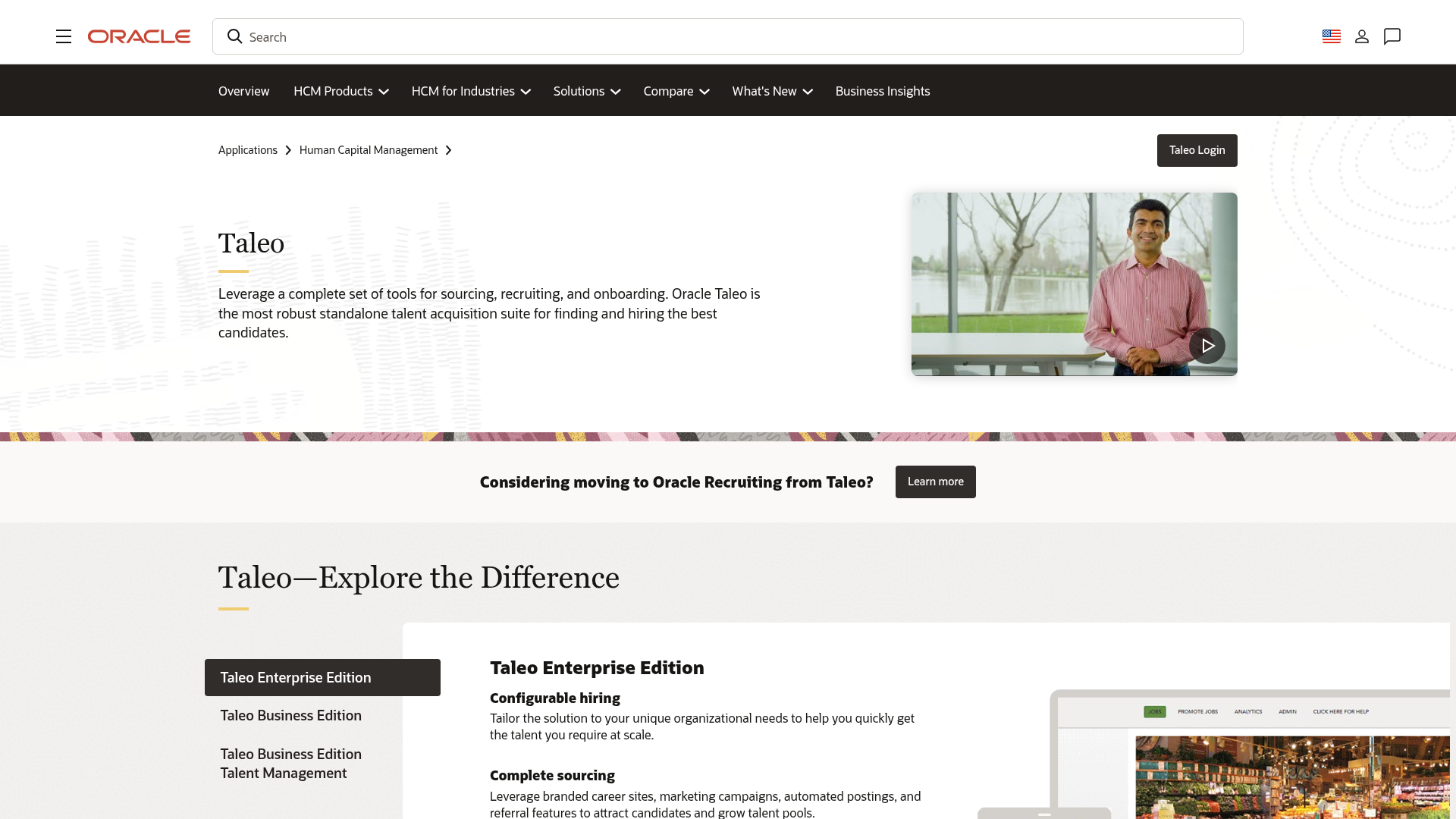
Oracle Taleo is the natural pick for organizations already running Oracle HCM. The integration story is the only one in this category, and it’s deep.
Outside the Oracle ecosystem, Taleo rarely wins on its own merits. Inside it, the consolidation argument is hard to beat.
What it covers:
- Enterprise-grade recruiting infrastructure
- Native Oracle HCM integration
- Compliance and regulatory support
- Tools for managing large candidate pipelines
- Workflow automation for enterprise recruiting
Where it falls short: interface is dated and the product roadmap has slowed materially. Greenfield enterprise teams usually pick SmartRecruiters or iCIMS instead.
Best for: enterprise teams already standardized on Oracle HCM.
Best ATS for staffing agencies.
Staffing-agency ATSs combine candidate tracking with client management. The job order, the candidate, and the placement all sit in one record.
Bullhorn.
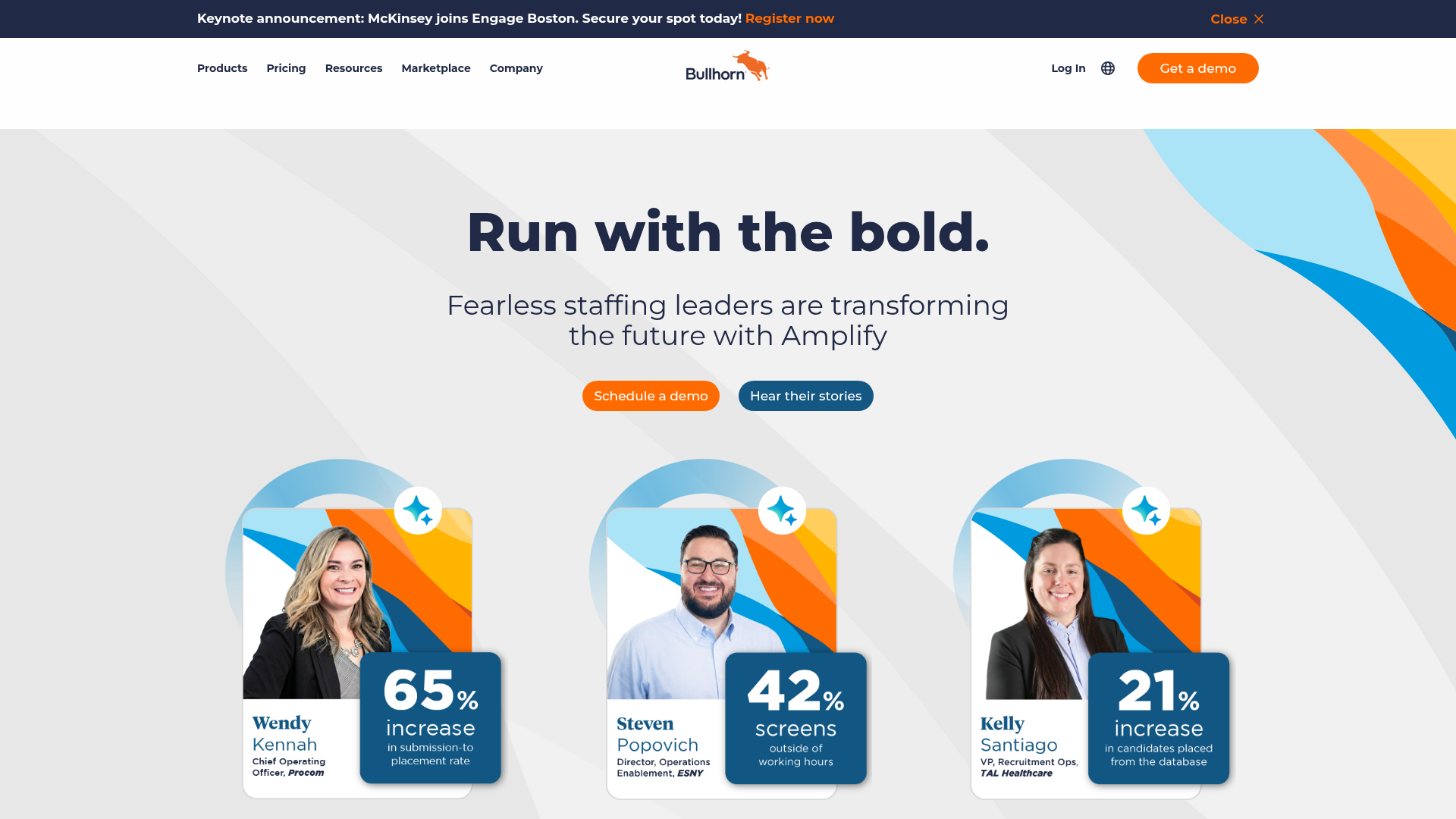
Bullhorn is the most comprehensive ATS for staffing agencies. ATS, CRM, candidate database, client tracking, placement workflows, and reporting in one platform.
The full agency lifecycle lives here. For high-volume staffing, the automation depth pays back the price.
What it covers:
- Combined ATS and CRM for agency recruiting
- Candidate database management
- Client relationship tracking
- Placement tracking and reporting
- Workflow automation for high-volume staffing
Where it falls short: complexity and price are high. Small staffing firms often pick JobAdder or Recruit CRM as a lighter alternative.
Best for: established staffing firms managing large candidate databases and multiple client relationships.
JobAdder.
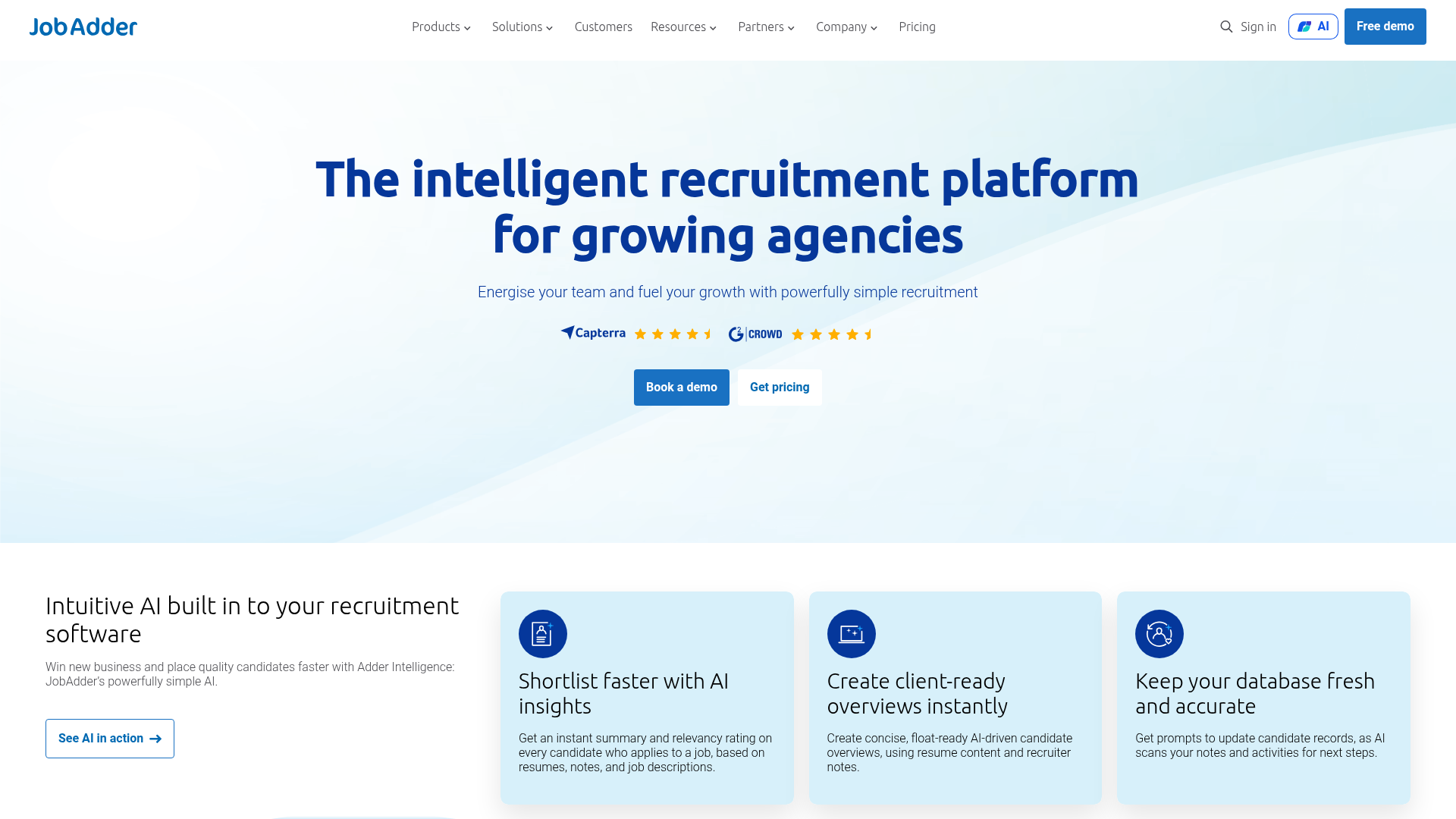
JobAdder is purpose-built for staffing and recruitment agencies, with a focus on usability and fast onboarding compared to Bullhorn.
Strong on candidate-and-client communication tracking, with automation that suits agencies juggling many active job orders at once.
What it covers:
- Combined ATS and CRM functionality
- Candidate sourcing and resume parsing
- Client and job-order management
- Communication tracking with candidates and clients
- Workflow automation for placements
Where it falls short: reporting and analytics depth is thinner than Bullhorn. Heavy data-driven agencies sometimes outgrow it.
Best for: small-to-mid agencies that want agency-style workflows without Bullhorn-scale complexity.
Recruit CRM.
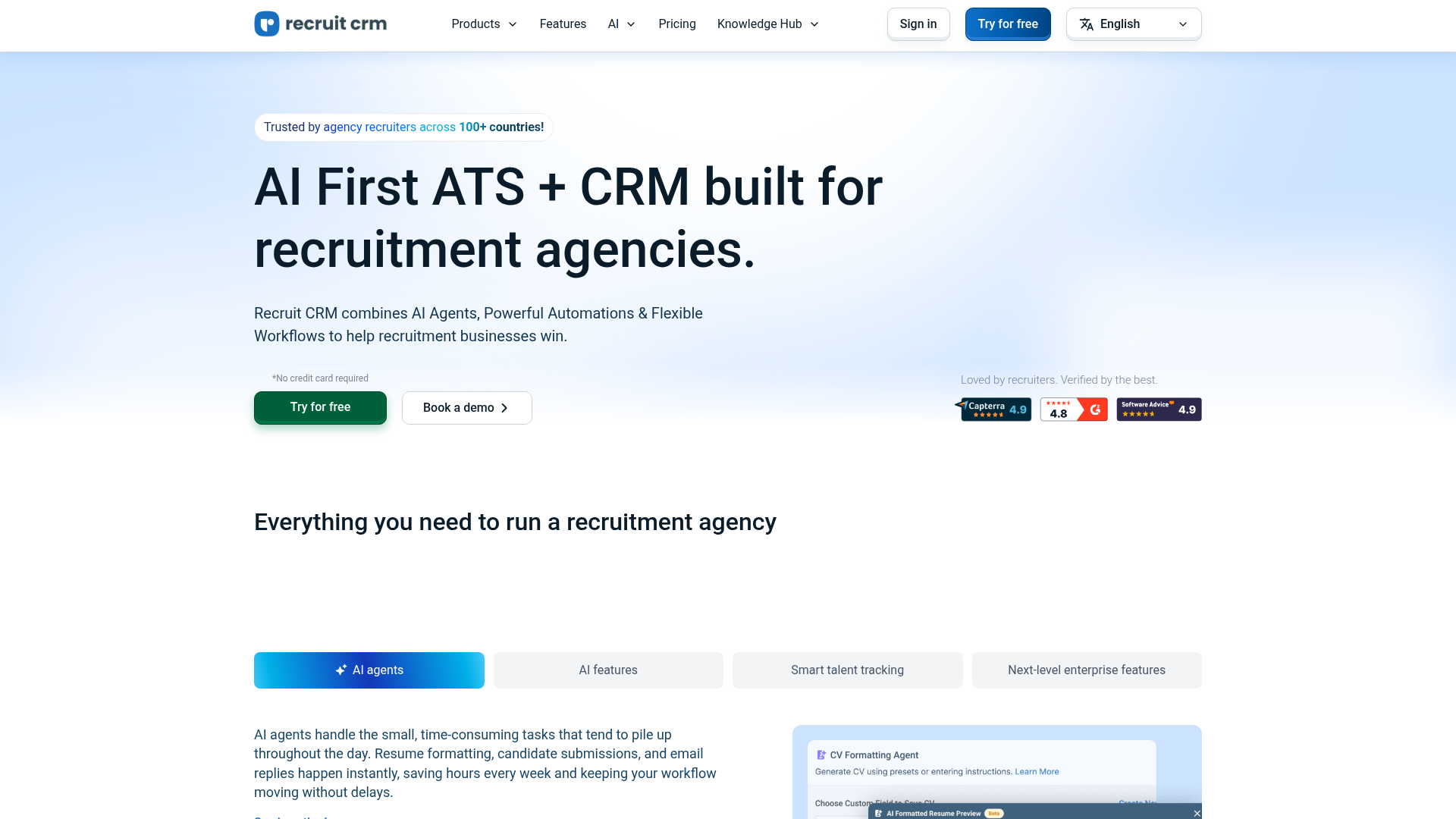
Recruit CRM is the lightweight pick for small and mid-size staffing firms. Candidate management, client tracking, and outreach in one interface, with strong resume parsing and search.
Built-in email and communication tools mean agencies don’t need a separate outreach stack.
What it covers:
- Combined ATS and CRM platform
- Resume parsing and candidate search
- Candidate and client communication tools
- Placement tracking and reporting
- Pipeline management for agency recruiting
Where it falls short: depth is shallower than Bullhorn’s on high-volume placement workflows and reporting. Agencies that need Bullhorn-grade automation across many concurrent job orders will outgrow it.
Best for: small and mid-size staffing firms looking for an affordable agency platform.
How Metaview fits with any ATS.
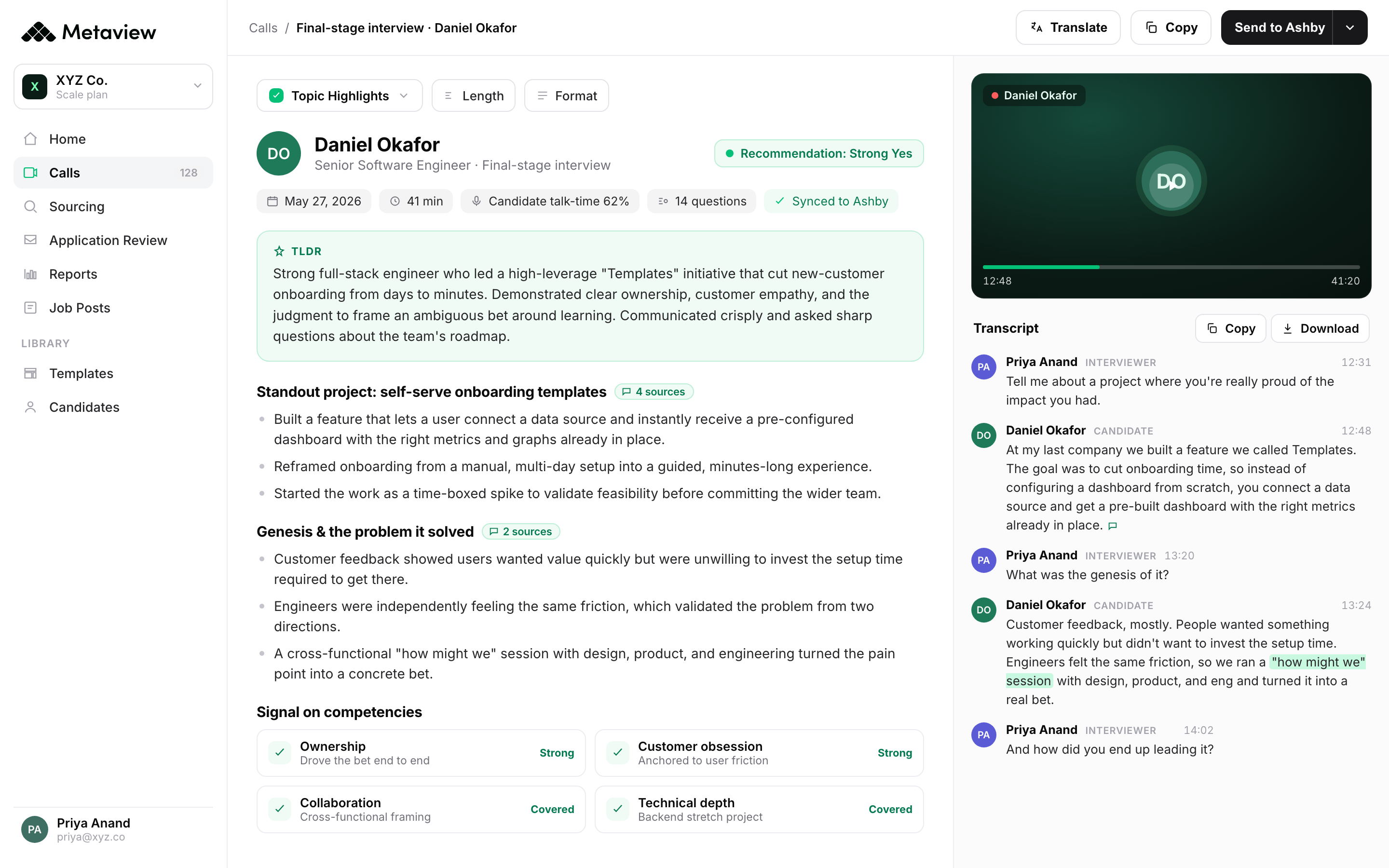
Metaview is a separate working surface that runs alongside whichever ATS you choose. The ATS stays the system of record. Metaview’s agents do the work around it: AI Sourcing searches the web, your connected ATS, and your past Metaview interviews from one prompt; Application Review reads every application against the role’s criteria and shows its reasoning for each candidate; the Notetaker joins interviews as a visible participant, records and transcribes them, and drafts the scorecard; Reports query your own interview data. Every progress, reject, and hire decision stays with a human.
For this comparison, the gap that counts is the interview. Most ATSs hold the scorecard and the stage history but no record of what was said in the screen, the panel, or the debrief, so the write-up depends on what the interviewer remembers afterward.
The interviewer reviews the drafted scorecard and submits it. Writeback into the ATS is per system: direct scorecard submission for Ashby and Lever, and a browser extension that autofills the objective sections of Ashby and Greenhouse scorecards while the interviewer completes the subjective fields and the recommendation. In other systems the interviewer reviews the draft in Metaview and then completes the scorecard in the ATS.
Every time the AI presents a candidate, the recruiter says fit or not. That feedback flows into the ideal-candidate profile. Over time, it becomes a company-wide read on what good looks like.”

How to choose.
Match your situation to the scenarios below. Each callout points at the platform we’d pick first.
For the deeper read on Lever specifically, see our Lever alternatives guide. For the ATS-vs-CRM distinction, see CRM vs ATS for recruiting teams.
Bring Metaview into your hiring stack.
Live notes, structured scorecards, and ATS sync - set up in under 10 minutes.
Frequently asked.
How long does it take to implement an ATS?
Small-business platforms (Workable, Breezy HR, Zoho Recruit) set up in a few days. Mid-market (Ashby, Greenhouse, Lever) usually takes 2-4 weeks for proper workflow configuration. Enterprise (iCIMS, Oracle Taleo) is a multi-month project.
Do small companies really need an ATS?
Once more than one person is screening candidates, or candidates arrive from more than one source, yes. Spreadsheets and shared inboxes lose track of who has been contacted and who said what, and the audit trail starts to count the moment a hire is contested.
What’s the difference between an ATS and a recruiting CRM?
An ATS tracks candidates who have applied to open roles. A recruiting CRM holds people who have not applied yet, so you can nurture them between roles. Several platforms in this list combine both (Lever, Ashby, iCIMS, Bullhorn, JobAdder, Recruit CRM); with the others, check whether the CRM side is a module, an add-on, or a separate purchase.
Can an ATS reduce hiring bias?
Partially. Structured scorecards (Greenhouse, Ashby) standardize which data points get captured per candidate. The assessment itself still happens in the interview, and the ATS holds no record of what was said there. Metaview’s Notetaker records and transcribes the interview and drafts the scorecard from the conversation, so the interviewer reviews a draft grounded in the transcript instead of writing from memory.
When should we review our ATS?
Every 18-24 months, or whenever your hiring volume jumps a step (1 to 5 roles a month, 5 to 20, 20 to 100+). Each step usually outgrows the tier of ATS that worked at the previous one.
