
You've spent another quarter scrolling LinkedIn for a role you still haven't filled. Profiles blur. The inbox stays empty. The "just source more candidates" advice from your last 1:1 lands as a request to do the same thing harder.
The fix isn't more volume. Active sourcing's bottleneck is precision, not effort. The teams who land top-quality outbound hires this quarter are the ones running a tighter discipline before they ever open a search tab, and pointing AI Sourcing at their own owned data, not the same open web every recruiter is grepping.
Active sourcing is the proactive-identification slice of outbound recruiting: the recruiter does the work to find the right person before that person ever sees the role. Done well, it stops being the part of the job that exhausts the team and starts being the part that compounds in their favor.
This post is the active sourcing discipline that turns wrong candidates, found slowly into right candidates, found fast.
Why precision beats volume in active sourcing.
Most active sourcing reads to candidates as cold, generic, and easy to ignore. Most of it reads to recruiters as a grind. Both perceptions trace back to the same root cause, which is starting the search before calibration before the search has happened.
When the recruiter and hiring manager aren't sharply aligned on what "qualified" looks like for this specific role at this specific stage, every profile is a guess. The wins are accidental. The losses pile up as hours scrolling.
The case for treating active sourcing as a precision discipline isn't a hunch. According to Metaview's 2026 AI Hiring Alignment Report, surveying 505 recruiting leaders and hiring managers across North America and EMEA, the numbers point one way.
Sourcing precision is downstream of alignment, alignment is downstream of how the recruiter and hiring manager work together, and the teams using AI to compress the manual work in between are the ones whose partnerships read as excellent.
Active vs passive: where each one earns its place.
Active and passive recruiting both belong in a balanced hiring strategy. They work differently and earn their place in different contexts. The point of getting the binary clean is that you stop reaching for the wrong one out of habit.
Active recruiting carries the load when inbound is thin, when the role is confidential, when the requirements are precise enough that a job post wouldn't surface the right people, or when the market is so competitive that waiting for applications burns weeks you don't have.
- Candidates find the job post and apply, or they don't.
- Works only when the brand and inbound volume can carry the search.
- Falls short on confidential, niche, senior, and tough-sell roles.
- Recruiter evaluates whoever applies, instead of targeting who's needed.
- Pipeline depends on the right people happening to see the post.
- Recruiter proactively identifies and engages target candidates.
- Reaches people who aren't on the market today but match the spec.
- Carries confidential, niche, senior, and tough-sell roles.
- Targets a specific persona, not a general applicant pool.
- Recruiter owns the pipeline and shapes who comes through it.
Passive sourcing handles the high-volume and broad-appeal roles, where inbound is healthy and the math works on its own. Most teams run a mix. The mix tilts active when inbound thins, requirements tighten, or the role is one the market doesn't apply to.
How to source actively with precision.
The steps below are sequential, and the order matters. Each one removes a class of guesswork the next step would otherwise inherit. Run them in order and the search itself becomes the easy part.
1. Calibrate with the hiring manager before the search.
Calibration is the single highest-impact move in active sourcing and the most-skipped one. Before sending a single InMail, build a shared definition of "great" against actual profiles.
Pull a 20-profile calibration batch and review every profile with the hiring manager in real time. Start by asking whether anyone on the existing team is the pattern they want to replicate. Then watch how they react to each profile as you scroll.
Uber's original sourcer Chris Adams names the signal recruiters miss most often in that session.
Reading their nonverbal communication as to how they're reading a profile in general will help you a ton."

The 30 minutes you spend here saves hours of misaligned sourcing later. The hiring manager surfaces signals they couldn't articulate in the JD intake, and you leave with a calibrated bar.
2. Write a persona as a search-spec, not a wish-list.
A good persona is a search instruction the AI Sourcing agent can run against. A bad persona reads like a JD and forces the recruiter to translate it into Boolean strings under their breath.
The difference is specificity. A wish-list says "strong written communication." A search-spec says "writes at least one external long-form post a quarter, on the topics in this list." A wish-list says "experience in a fast-paced environment." A search-spec says "shipped a feature at a company under 200 people in the last 18 months." The persona is a search-spec, and specificity here creates speed later.
Validate the persona alongside the 20-profile calibration batch from step 1, then re-validate after the first 10 outreach replies. The persona is the brief AI Sourcing runs against, so the sharper it is, the less work the agent leaves on your plate.
3. Source against owned data first, open web second.
The open web is what every team using LinkedIn Recruiter is searching. Your ATS and the conversation signal Metaview holds on your own past candidates are unique to you, not the open web. Outreach into that pool wins replies at rates a cold InMail blast cannot match.
Your ATS holds silver medalists, near-miss candidates, and people who would have been a great fit for a role that didn't exist yet. That layer is the foundation of candidate rediscovery as a sourcing channel in its own right. Notetaker captures the conversation signal underneath those records: motivators, quota attainment, "why they passed last time," what they're open to next. That signal stays buried in profile-only ATS search.
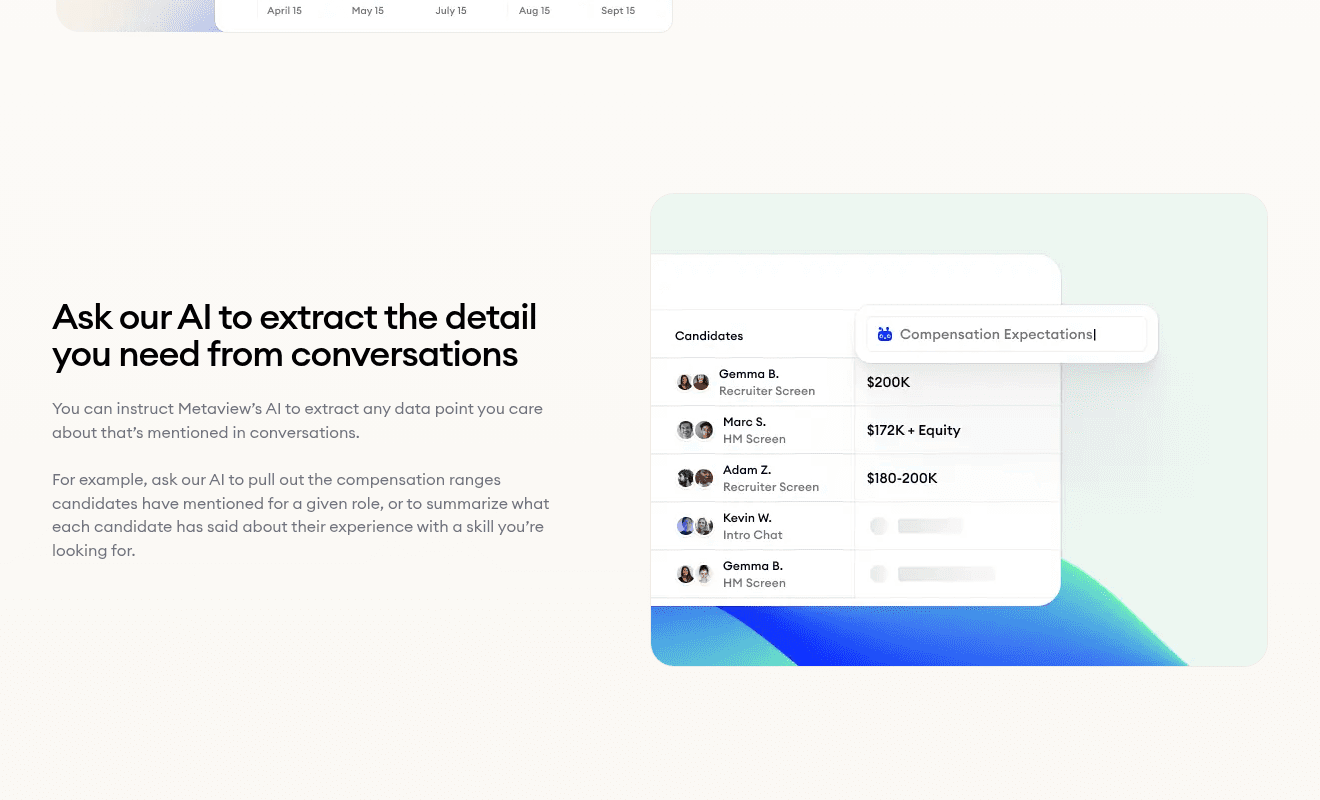
- 1The persona becomes the search-spec the agent runs against, with no Boolean strings to maintain.
- 2Active search reads owned data and the open web at once, with provenance per candidate.
- 3Calibration loops feed back. Accept or reject a candidate, the agent sharpens the next active pass.
4. Run the AI Sourcing agent continuously, not as a campaign.
"AI sourcing" used to mean a Boolean string with a fancier label. Now it means an agent that holds the persona in memory, watches for fits as they surface, and tells the recruiter why each one matches.
Continuous beats campaign because the candidates you want aren't all on the market the day your req opens. Some surface a week later. Some surface two months later. An agent that keeps watching catches them; a campaign that runs for the first 10 days misses them.
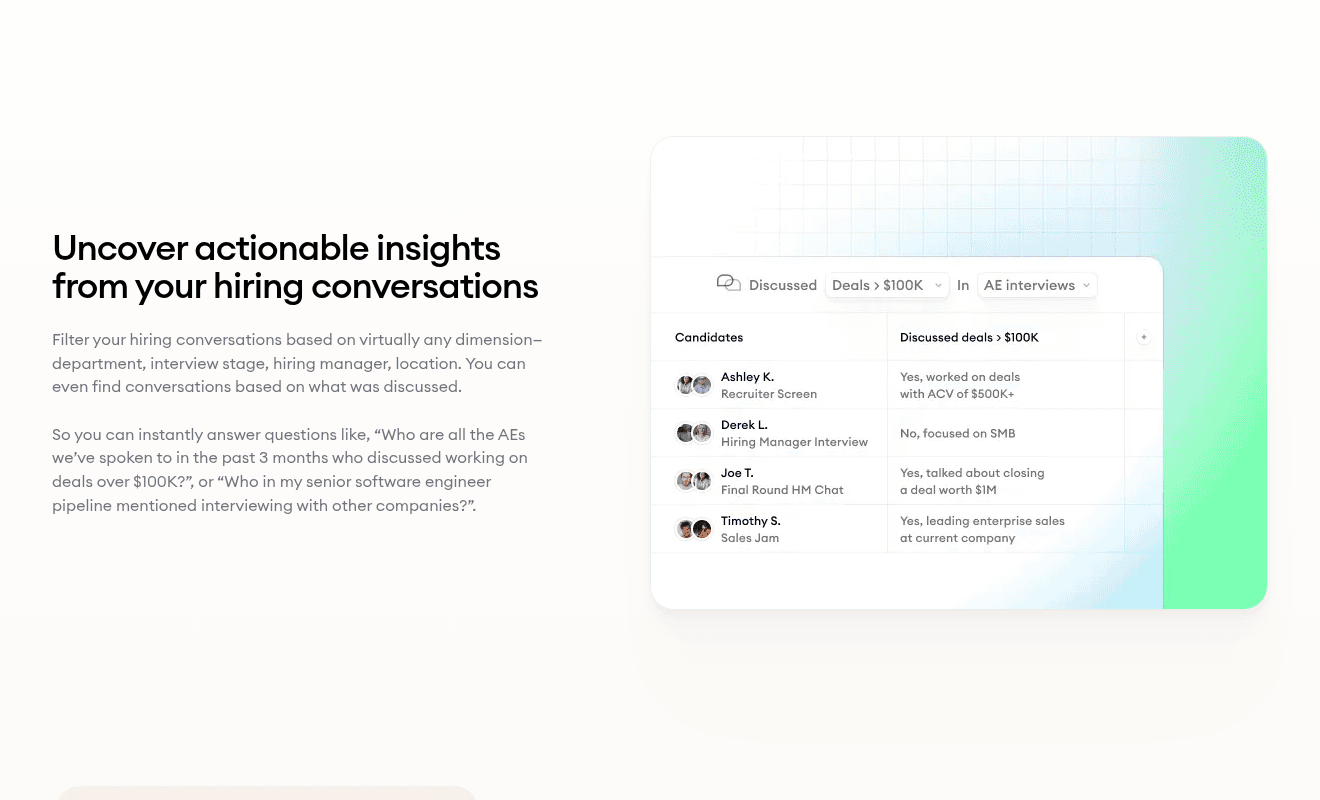
- 1Each match comes with the reasoning trail. The recruiter sees why this candidate scored against the persona.
- 2Provenance tags every result. Owned-data candidates surface alongside open-web ones, sorted by fit, not by source.
- 3Approved candidates route to the right pipeline stage in your ATS. Active sourcing closes its own loop.
Where most active sourcing efforts fail.
Most active sourcing efforts don't fail because the recruiter isn't trying hard enough. They fail because the system rewards the wrong thing. Three failure modes recur often enough to name.
All three failure modes share the same root: starting the search before calibration is done and before owned data has been swept. The discipline above stops each one at the source.
How the compounding effect closes the loop.
The shift from "active sourcing as a campaign" to "active sourcing as a discipline" comes from one structural change: the interview record stops being a debrief artifact and starts being a search input for the next role.
The candidates who passed your panel are evidence of what "great" looks like. The candidates who didn't are evidence of where the persona drifted. Both shapes feed back into the agent's brief for the next role, and the loop closes here.
We've completed over 1,900 calls using this platform, saving 77 full workdays. We're not just automating note-taking, we use the multi-source feature so each interviewer goes in unbiased but informed enough to cover new ground."

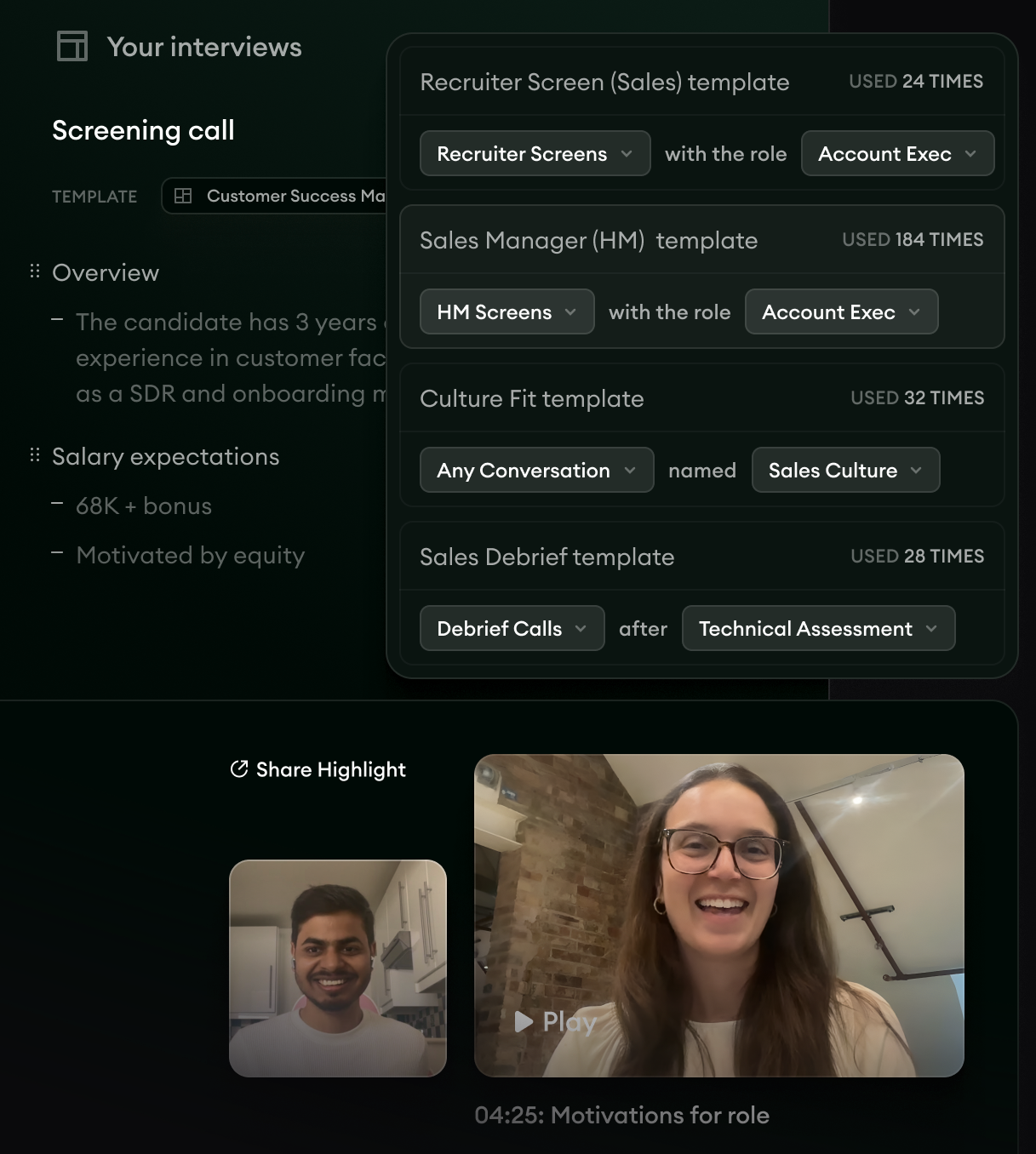
- 1Every interview becomes structured signal: motivators, evidence on the must-haves, what they didn't get to in the role.
- 2The rubric-mapped output is what the active sourcing agent reads on the next similar req.
- 3Patterns from candidates who succeeded shape future briefs. Patterns from candidates who didn't recalibrate the bar.
The recruiter who reopens a similar req next quarter starts warm. Past panel scores become persona-fit evidence for new candidates. The reasons a previous finalist passed get encoded into the next agent brief as exclusions, not as forgotten footnotes in a Slack thread.
This is sourcing as a discipline, not as a fresh-start every quarter. Active sourcing stops being the part of the job that exhausts the recruiter and starts being the part that compounds in their favor.
Source proactively, with less activity.
Active sourcing is the most powerful tool in the recruiter's toolkit. It doesn't have to be the most exhausting one.
The teams that win this quarter aren't the ones running more volume. They're the ones running tighter calibration, sharper personas, and owned-data sourcing with a continuous agent.
The broader picture sits inside the full talent sourcing strategy. Active sourcing is its proactive-identification core.
Metaview lets the discipline run in practice. AI Sourcing reads the interview signal Notetaker captures, surfaces matches against the persona, and routes approved candidates back to your ATS at whichever stage fits the role.
The recruiter who runs this finds the right candidates faster. The time saved goes to the work the agent can't do, which is the conversations with the people who matter.
Frequently asked.
How long should an active sourcing project take, end-to-end?
Plan for about two weeks from kickoff to shortlist for a specialist role. Day 1 to 2 covers the 20-profile calibration batch with the hiring manager and persona finalization. Day 3 to 7 covers the AI Sourcing agent running across ATS, past interviews, and open web, with daily review of surfaced matches. Day 8 to 14 covers personalized outreach and reply triage. Roles that are simpler or that have richer ATS history compress this further; deeply niche or confidential roles can extend to four weeks.
Does active sourcing work for high-volume or early-career roles, or only for senior and niche?
It works for high-volume and early-career roles too, but for a different reason. At the senior and niche end, active sourcing is about finding the people who won't apply. At the high-volume and early-career end, it's about identifying standout candidates whose resumes don't read as obvious: strong potential without the polished keywords, or non-traditional career paths that pattern-match well against the persona once a real recruiter reviews. The discipline is the same; the output is a high-potential pipeline you wouldn't get from inbound alone.
What's the right mix of active and passive sourcing?
The mix is a function of company stage and role type, not a fixed ratio. An early-stage company with weak employer brand and niche roles runs closer to 70 percent active, 30 percent passive. An established consumer brand with strong inbound volume on broad-appeal roles runs closer to 30 active, 70 passive. The decision rule: when the role's requirements are specific enough that a job post wouldn't surface the right people, active carries the load. When the role is broad and the inbound is healthy, passive carries it.
How do we measure whether active sourcing is working?
Five metrics surface the signal: response rate (the outreach quality check), source-to-screening conversion (the persona accuracy check), source-to-offer conversion (the pipeline-quality check), time-to-first-interview (the speed check), and panel rating on sourced candidates (the candidate-quality check). Track all five per channel and per recruiter. The channels that pass the bar earn more investment; the ones that don't get cut.
Can active sourcing damage employer brand if reach-outs go wrong?
Yes, and the prevention is in the outreach itself. The 3-strike personalization rule: every reach-out references something specific the candidate did (a shipped project, a post, a talk, a public contribution), every reach-out explains why this candidate was selected (not "we're hiring"), and every reach-out leaves an out (a respectful close that lands well even if the candidate isn't interested). Recruiters who run this rule consistently see their brand strengthen over time, even with candidates who don't engage.
Bring Metaview into your hiring stack.
Live notes, structured scorecards, and ATS sync - set up in under 10 minutes.
