
A 9/80 work schedule compresses two weeks of full-time work into nine days. Employees work slightly longer days and take a third day off every other week, usually a Friday. The total hours don’t change. The calendar does.
It isn’t a new idea. Aerospace, engineering, and government employers have run 9/80 for decades. What’s new is talent acquisition leaders looking at it as a recruiting lever rather than an HR policy. Offered to the right candidate, for the right role, it can be the detail that closes an offer, and it costs nothing in salary.
This is a TA leader’s primer on the 9/80 schedule. The mechanics take two minutes to understand. The real question, the one this guide is built around, is when to put 9/80 on the table and when to leave it off.
What a 9/80 schedule is.
A 9/80 work schedule compresses 80 hours of work into nine days across a two-week pay period. Employees work eight nine-hour days, one eight-hour day, and take one full day off every two weeks. Usually Friday, sometimes Monday.
The simplest version looks like this:
| Week | Mon | Tue | Wed | Thu | Fri |
|---|---|---|---|---|---|
| Week 1 | 9 hrs | 9 hrs | 9 hrs | 9 hrs | 8 hrs |
| Week 2 | 9 hrs | 9 hrs | 9 hrs | 9 hrs | Off |
Total: 80 hours over nine working days. Same as a traditional 5/40 schedule by hours, with 26 extra full days off per year and no comp change.
It’s sometimes written as 9x80. The flex version, where individual employees pick which Friday or Monday is off with manager approval, is the version most TA leaders are evaluating in 2026.
How 9/80 compares with the two other common patterns.
| Schedule | Structure | Trade-off |
|---|---|---|
| 5/40 (traditional) | 5 days x 8 hours | Predictable coverage, no extra day off |
| 9/80 | 8 days x 9 hours + 1 day x 8 hours | Extra day off every two weeks, longer daily hours |
| 4/10 | 4 days x 10 hours | Three-day weekend every week, 10-hour shifts |
9/80 sits between the two. More flexibility than 5/40, less daily fatigue than 4/10.
The five-question decision framework.
The schedule mechanics are easy. The strategic question, should we offer this for this role, in this market, against this competitor set, is the harder one. Run candidate roles through these five questions before adding 9/80 to the offer.
Is the work project-based or coverage-based?
Project-based roles (engineering, design, research, finance, marketing) absorb longer days well because the work moves in blocks. Coverage-based roles (support, sales floor, healthcare, retail) do not. Pulling a person off rotation every other Friday creates a coverage gap that has to be staffed. If coverage-based, offer flexibility a different way: hybrid days, flexible hours, or a four-day workweek with reduced hours.
Is the team async-ready or sync-dependent?
A 9/80 schedule across a team works smoothly if Friday off can be staggered. It breaks down if the entire team has to be in the same meeting on the same day. Ask the hiring manager what happens if this person is offline every other Friday and a different person is offline the alternate Friday. If “nothing changes,” you’re clear. If “we lose the weekly cross-team sync,” fix the sync before offering the schedule.
Is the candidate giving you a flexibility signal?
Candidates rarely ask for 9/80 by name. They ask around it: “I have a long commute,” “I’m balancing parenting on my non-custody weeks,” “I’m finishing a graduate program on Fridays.” Each one is a flexibility signal, and the schedule is one of three or four levers you can pull in response. The next section is where Metaview makes those signals visible.
Does payroll support a split workweek?
The compliance trap lives here. Under standard US overtime rules, employees on a 9/80 schedule could trigger overtime on the nine-hour days unless the official workweek is structured so the eight-hour Friday splits across two pay-period weeks. HR and payroll have to confirm this before the schedule is in the offer letter, not after.
Is the schedule a permanent program or a per-role negotiation?
There’s a real difference between “our company offers 9/80 as a benefit” and “this role can negotiate a 9/80 schedule with manager approval.” The first is a published policy that has to apply consistently. The second is a per-offer lever. Most TA leaders are better served by the per-role version, at least until they have the operational pattern to commit to a company-wide program.
The benefit candidates won’t tell you about until they do.
Compressed schedules don’t show up in salary surveys because they don’t change cash comp. They show up in two places that matter more for hiring metrics: offer acceptance, and 12-month retention.
The stakes are well documented: 67% of teams lose qualified candidates to competitors who move faster, according to Metaview's 2026 AI & Hiring Alignment Report, surveying 505 recruiting leaders and hiring managers across North America and EMEA. Speed is part of that. So is acknowledging what a candidate actually asked for.
Two patterns we see in interview-data signals captured across the Metaview platform:
- Candidates with a flexibility signal in their first conversation are far more likely to bring up the schedule, hybrid policy, or remote eligibility again in the final-stage conversation. If the signal isn’t addressed before the offer, the offer comes back with a counter or a decline.
- Candidates whose flexibility signal was acknowledged early in the process show measurably less hesitation in the final-stage call. They’ve already mentally moved in.
If you’re a TA leader with a 70% acceptance band you’re trying to push to 85%, this is one of the highest-yield levers you have. Flexibility is closer to a closer than most leaders realize.
How Metaview surfaces the flexibility signals candidates send.
Most recruiters know the signals are there. Almost none can pull them out of 12 hours of interview audio after the fact. That’s the gap interview intelligence closes.
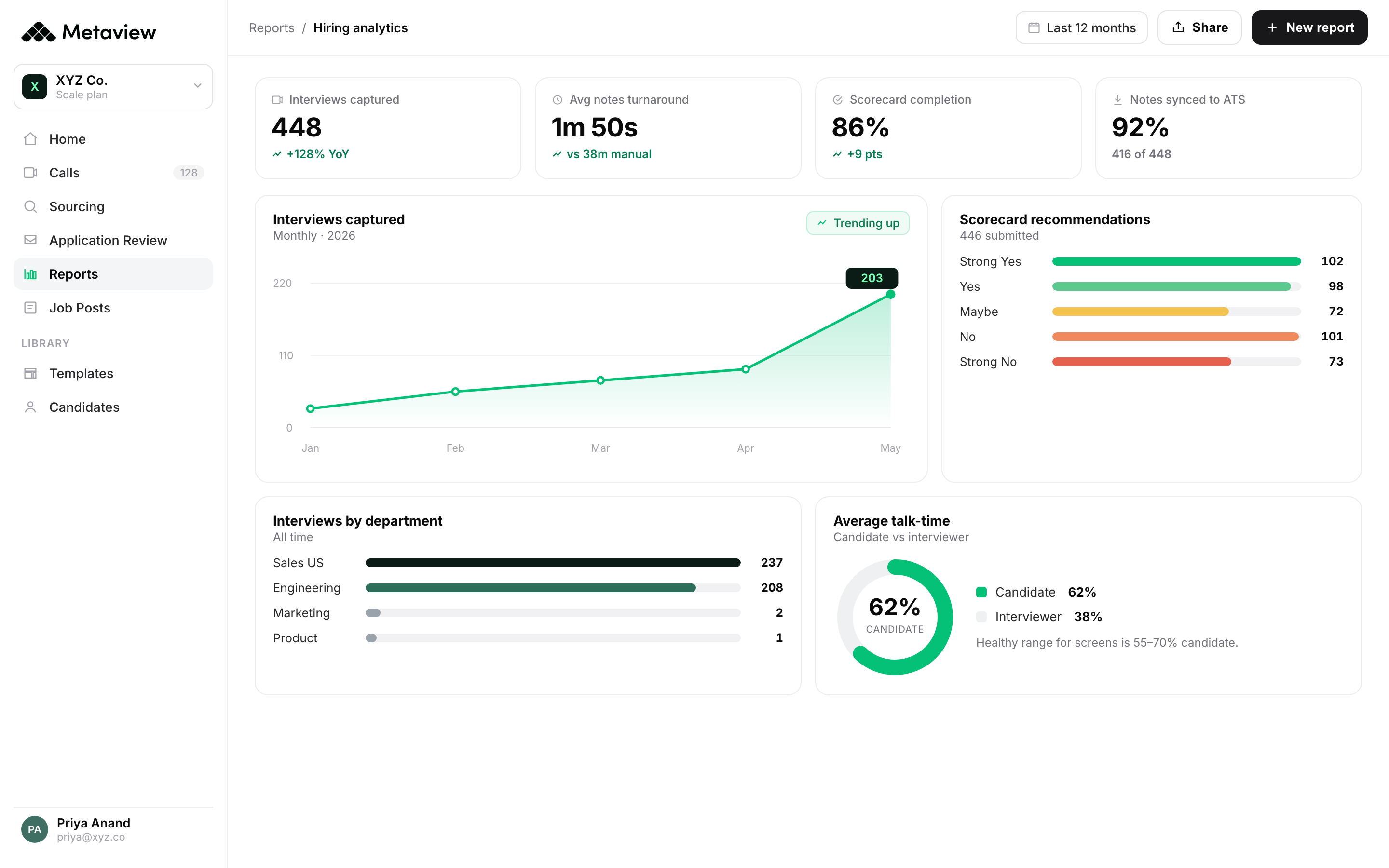
Metaview captures every spoken word in your interviews, which means the I have a long commute line from the phone screen, the I’m balancing parenting mention in the hiring manager round, and the I’m finishing a graduate program line in the panel all stay searchable across the process.
Scorecards write themselves. Debriefs surface action items the panel almost missed. And the offer-stage call can open with “Stephanie mentioned a long commute in the phone screen, and a graduate program wrapping up on Fridays in the panel. Let’s talk about how that fits with our 9/80 program before we get to comp.” That’s the difference between a generic offer and a tailored close.
The real competitive advantage is effective AI adoption versus everyone else. The teams doing this well are building alignment at every stage. AI earns its keep when it both strips out the mechanical work and surfaces the signal that helps recruiters actually close. Alignment isn’t just a kickoff, it’s infrastructure.”

Three places the agentic recruiting platform plugs into this workflow:
| Where | What changes |
|---|---|
| Phone screen | Notetaker captures the full conversation. AI Filters surfaces lines that signal commute, location, schedule, parenting, education, or relocation constraints. |
| Hiring manager round | Answers lets the recruiter query the captured corpus, “show me every line where the candidate talked about Fridays,” before the debrief, not after. |
| Offer prep | Multi-Source Summaries pulls the flexibility signals across every round into one offer-prep brief. The recruiter walks into the offer call with the levers already lined up. |
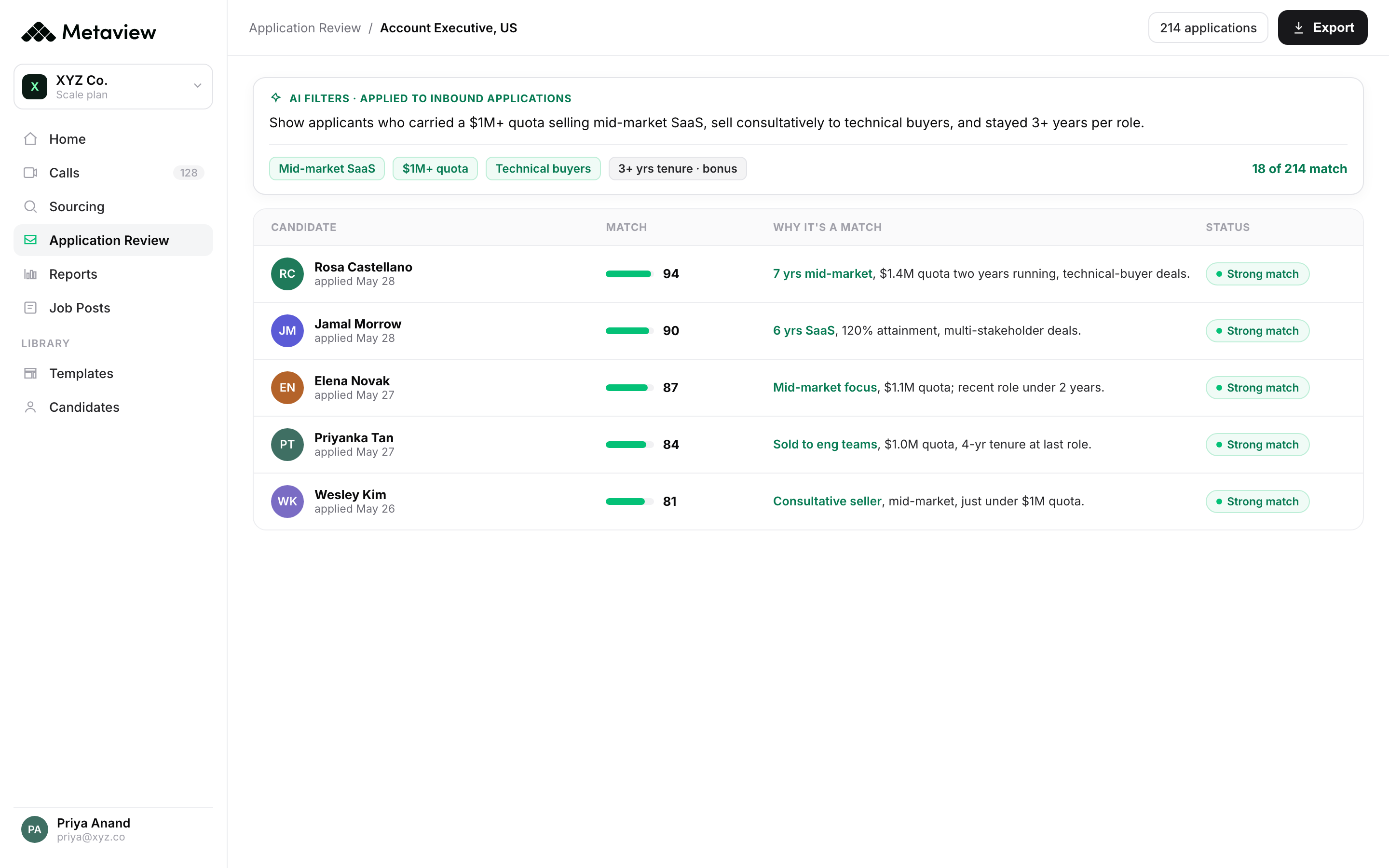
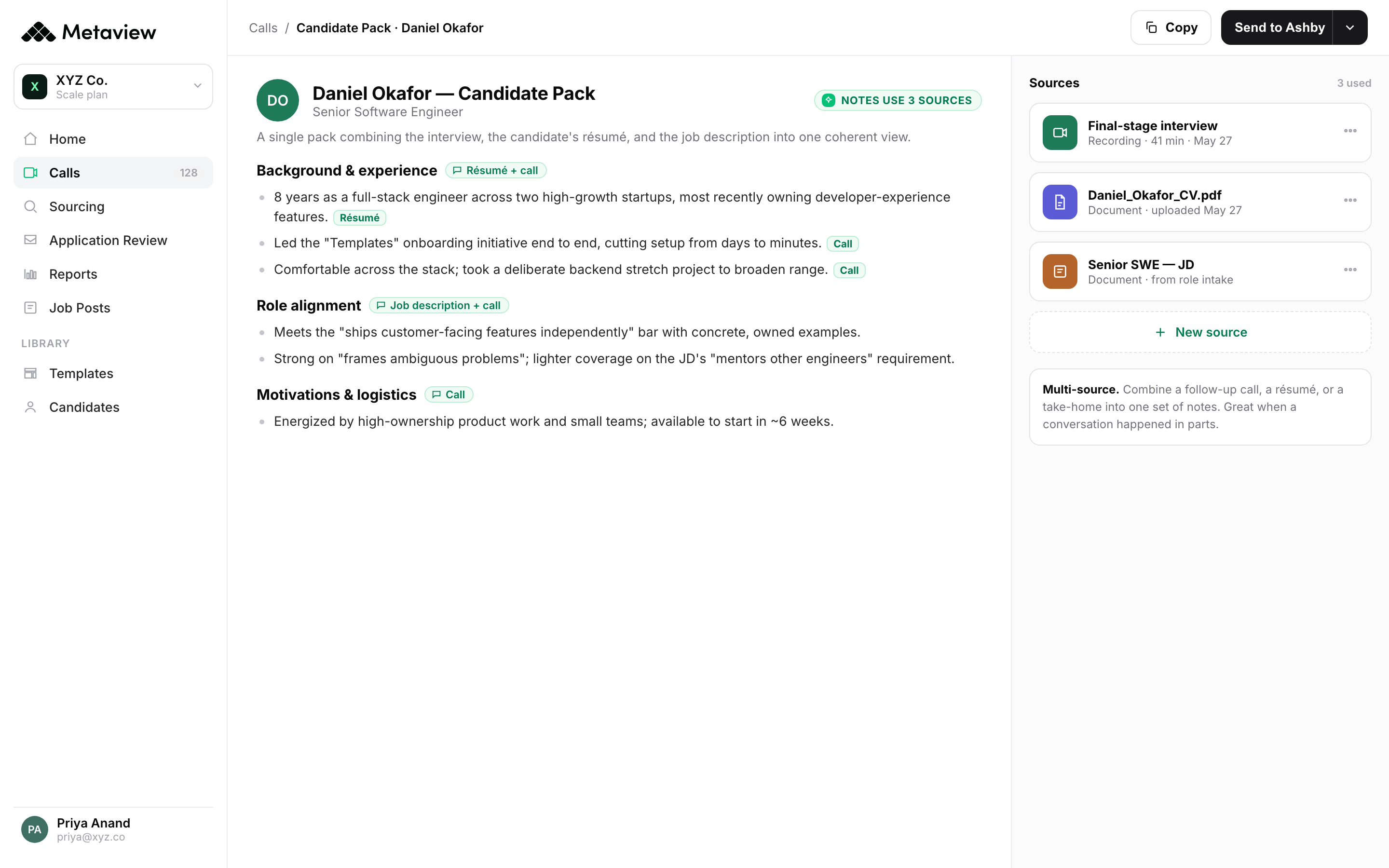
At Brex, Joel Baroody, VP of Talent, runs final-stage offer prep against the captured signal from every prior round. Recruiters walk in knowing which flexibility levers each finalist mentioned, which deal-breakers got flagged in screen, which compensation cues came up in the panel. Across the platform, customers running this playbook see 30% fewer interviews per hire on average.
The schedule itself doesn’t close the candidate. The acknowledgment of what they need does.
Drawbacks worth naming honestly.
Three things to be straight with hiring managers and candidates about before the offer.
| Drawback | Why it matters | Mitigation |
|---|---|---|
| Longer days are real | Nine-hour days create a different cognitive load than eight-hour days, especially in heavy-meeting roles. Candidates with caregiving, long commutes, or health considerations may prefer five eight-hour days even with the alternating Friday off. | Offer the schedule, don’t sell it. Make opting out a one-form change without manager negotiation. |
| Cross-team coordination needs explicit handling | If half a team is off Week 1 Friday and half is off Week 2 Friday, recurring cross-team meetings have to live Tuesday through Thursday. That’s a small operational tax. | Move standing syncs off Fridays before the schedule rolls out. Document the meeting-day rule in the program one-pager. |
| Manager discretion has to be predictable | A program where some managers approve liberally and others approve almost never creates internal-equity issues that show up in engagement surveys six months later. | Publish the eligibility criteria, or commit to manager-level discretion with explicit boundaries. Pick one. |
A simple implementation policy.
If you decide 9/80 belongs in your benefits stack, the rollout matters as much as the policy itself. A defensible five-step path:
- Run a 90-day pilot in one project-based department. Engineering or finance are the standard starting points.
- Define the official workweek split. The eight-hour Friday lands between two workweeks so the schedule stays inside overtime thresholds. Confirm with payroll, in writing.
- Stagger Fridays across the team. Half the team takes Week 1 Friday off, the other half takes Week 2 Friday off. Cross-team meetings live Tuesday through Thursday.
- Write the eligibility criteria. Project-based work, manager approval, performance criteria, 90-day notice for opting out. Document once, apply consistently.
- Measure two things at 90 days. Voluntary attrition among pilot participants versus the rest of the department. Offer acceptance rate for open reqs in the pilot department versus the rest of the company. If both move in the right direction, expand. If they don’t, refine before expanding.
This is the program version. For per-role negotiation, the same five questions above are the rubric, applied one offer at a time, by the TA leader who owns the close.
Bring Metaview into your hiring stack.
Live notes, structured scorecards, and ATS sync - set up in under 10 minutes.
Frequently Asked Questions.
Is a 9/80 schedule legal?
Yes, in most US jurisdictions, but the official workweek has to be structured so the eight-hour Friday splits across two pay-period weeks. Otherwise standard overtime rules can trigger on the nine-hour days. Confirm with payroll and legal before publishing the policy.
How many hours per day does a 9/80 schedule require?
Nine hours Monday through Thursday, one eight-hour Friday, and one Friday off in a two-week period. 80 hours total across nine working days.
Which industries use 9x80 most often?
Engineering, government, manufacturing, technology, and research environments where work is structured around projects rather than continuous customer coverage. Coverage-based industries like retail, healthcare, hospitality, and customer support usually need a different flexibility model.
Can employees pick their day off?
That depends on whether the company runs 9/80 as a published program or a per-role negotiation. In a program, the day off is typically standardized or rotated for coverage. In a negotiation, the day off is part of the offer itself.
Is a 9/80 schedule the same as a four-day workweek?
No. A four-day workweek typically reduces total hours and gives an extra day off every week. A 9/80 schedule keeps the same total hours, distributes them across nine days instead of ten, and gives an extra day off every other week.
How do you measure whether a 9/80 program is working?
Two metrics. Voluntary attrition among program participants versus the rest of the company. Offer acceptance rate for open reqs in pilot departments versus the rest of the company. Measure at 90 days, then quarterly.
